
Author: James
Substantial Numbers of Non-Citizens Vote Illegally in U.S. Elections

By James D. Agresti
December 15, 2016
The issue of voter fraud was one of the most heated sources of controversy during the 2016 presidential election, and it continues to be so.
After Hillary Clinton’s campaign announced that it was supporting recounts in several states won by Donald Trump, Trump responded with a series of Twitter posts accusing Clinton of hypocrisy for refusing to accept the results of the election after she insisted that he “must.” He then tweeted, “In addition to winning the Electoral College in a landslide, I won the popular vote if you deduct the millions of people who voted illegally.”
Several major media outlets pounced on Trump’s comment. The New York Times, for example, reported that “virtually no evidence of such improprieties has been discovered.” The Times editorial board then called Trump’s statement “a lie,” and the Washington Post’s Fact Checker declared “this is a bogus claim with no documented proof.”
These media reports and Trump’s comment are all misleading. There is material evidence of substantial vote fraud, though it does not prove that Trump would have won the popular vote if such fraud were prevented. It only shows that this is a possibility.
This evidence is documented in a 2014 paper published by the journal Electoral Studies. Based on survey data and election records, the authors of this paper found that the number of non-citizens who voted illegally in the 2008 election ranged “from just over 38,000 at the very minimum to nearly 2.8 million at the maximum.” Their “best estimate” is that 1.2 million or “6.4% of non-citizens actually voted.”
As detailed below, this paper has uncertainties that the authors readily acknowledge, but attempts to dismiss it have been flawed and deceitful. Moreover, there are several reasons why significantly more non-citizens may have voted in the 2016 presidential election than in the 2008 election.
The Electoral Studies Paper
In 2014, the academic journal Electoral Studies published a paper by three scholars who analyzed the results of a large survey conducted by a group at Harvard University. This study also made use of polling data from YouGov and voter registration and turnout data from Catalist, a firm that equips “progressive organizations” with data to help them “persuade and mobilize” people.
In this 2008 survey of 32,800 respondents, 339 identified themselves as non-citizens, and 38 of these non-citizens checked a box that said “I definitely voted” in the 2008 general election or were recorded in the Catalist database as voting in that election. At face value, this means that 11.2% (38/339) of non-citizens voted in the 2008 election.
Applying this 11.2% figure to the Census Bureau’s estimate of 19.4 million adult non-citizens in the U.S., this amounts to 2.2 million non-citizens who voted illegally in the 2008 election. After weighting these results and accounting for margins of error, the authors estimated that a maximum of 2.8 million non-citizens voted in 2008.
On the low side, the authors noted that only five non-citizens who said they voted were recorded in the Catalist database as voting. If these were the only people who voted, it would mean that 1.5% (5/339) of non-citizens voted. Applied to 19.4 million adult non-citizens, this amounts to 290,000 votes. After weighting these results and accounting for margins of error, the authors estimated that a bare minimum of 38,000 non-citizens voted in the 2008 election.
Using other data from the survey, the authors refined their high and low estimates to produce a “best guess” that 6.4% or 1.2 million non-citizens cast votes in 2008. The survey also showed that 81.8% of non-citizen voters reported that they voted for Obama.
As the authors explain, these figures are “quite substantial” and “large enough to change meaningful election outcomes, including Electoral College votes and Congressional elections.” More specifically, they noted that “non-citizen votes could have given Senate Democrats the pivotal 60th vote needed to overcome filibusters in order to pass” Obamacare. This is because Democrat Al Franken of Minnesota captured this 60th seat:
with a victory margin of 312 votes. Votes cast by just 0.65 percent of Minnesota non-citizens could account for this margin. It is also possible that non-citizen votes were responsible for Obama’s 2008 victory in North Carolina. Obama won the state by 14,177 votes, so a turnout by 5.1 percent of North Carolina’s adult non-citizens would have provided this victory margin.
In the 2016 election for North Carolina’s governor, the current Republican governor recently conceded defeat based on a shortfall of about 10,000 votes. The Census Bureau’s estimate for the adult non-citizen population of North Carolina is 479,000 people. Hence, if 2.1% of them cast added votes for the Democrat, this supplied the margin of victory.
Trump currently trails in the popular vote by about 2.6 million. Hence, in order for his statement to be true, 12.6% of the 21 million non-citizen adults in the U.S. recorded by the Census Bureau would have had to cast added votes for Clinton. This is within the realm of possibility given that the study also found that “roughly one quarter of non-citizens were likely registered to vote” in 2008 and 2010.
Flawed Critiques
Before the 2014 paper was officially published, two of its authors wrote an overview of it for the Washington Post. Criticism was swift and intense, and the Post placed links to four critiques of this article over the top of it, along with the authors’ reply to three of them.
Most of these criticisms were formalized in a paper published by Electoral Studies in 2015, which accused the authors of the original paper of “cherry-picking.” In the context of public policy, cherry picking means to selectively choose only the data that supports a certain conclusion while ignoring any data that does not. It is the equivalent of lying by omission.
This 2015 paper was written by three scholars, two of whom are managers of the Harvard survey cited in the study, and the third a manager with YouGov.
The central argument of their two-page paper is that all of the people in the survey who identified themselves as non-citizen voters either did not vote or were actually citizens. This argument rests on two flawed assumptions.
First, the critics assume that people who stated “I definitely voted” and specifically identified a choice of candidate did not vote—unless Catalist verified that they voted. This is illogical, because Catalist is unlikely to verify respondents who use fraudulent identities, and millions of non-citizens use them.
This is shown in a 2013 investigation by the U.S. Social Security Administration, which found that about 1.8 million illegal immigrants worked in 2010 by using a Social Security number “that did not match their name.” Furthermore, the study found that another 0.7 million illegal immigrants worked in 2010 with Social Security numbers that they obtained by using “fraudulent birth certificates.” Notably, a Social Security number is a common requirement for voter registration.
The Harvard survey and Catalist data evince such identity fraud, because 90% of all survey respondents were matched by Catalist, while most non-citizen respondents were not. In the 2008 and 2012 surveys, only 41% and 43% of non-citizens were matched by Catalist respectively. These low match rates are revealing given that the Catalist database contains reams of data on “more than 240 million unique voting-age individuals.” This amounts to 98% of the 245 million adults who live in the U.S.
Hence, to ignore all votes not matched by Catalist will ensure that most non-citizens are excluded. This is especially true of those who fraudulently use a Social Security number, who are the very same people who have an open door to voting.
Their second irrational assumption is that some citizens in the Harvard survey misidentify themselves as non-citizens, but non-citizens never misidentify themselves as citizens. Hence, they dismiss all votes by people who don’t claim to be non-citizens in two separate surveys. This has the effect of narrowing the field of non-citizens to only those who took the survey in both 2008 and 2010. It also excludes anyone who stated on one survey that they are a non-citizen and stated on another that they are a citizen.
The critics make a legitimate point that random errors by survey respondents will overcount non-citizens. This is because far more citizens were sampled in this survey. For instance, if a survey sampled 100,000 citizens and 100 non-citizens, and 1% of them misidentified themselves, this would mean 1,000 citizens called themselves non-citizens, but only one non-citizen said he was a citizen.
Such logic makes sense in a vacuum where all other evidence is ignored, but the reality is that misidentification of citizenship is not just a random phenomenon. This is because illegal immigrants often claim they are citizens in order to conceal the fact that they are in the U.S. illegally.
This is proven by a 2013 study published in the journal Demographic Research, which compared Census Bureau survey data on citizenship to the number of naturalized citizens recorded by the U.S. Office of Immigration Statistics. The study found that certain major groups of immigrants—including Mexican men of all ages, Mexican women aged 40 and older, and immigrants who have been in the U.S. for less than five years—frequently misrepresent themselves as citizens.
As a worst-case example, the study found that “the number of naturalized Mexican men with fewer than five years of U.S. residence is nearly 27 times higher” in the Census data than the number recorded by the Office of Immigration Statistics. In other words, only about 4% of Mexican men who claim to be citizens and have been in the United States for less than five years are actually citizens.
Now watch how the critics employ their flawed assumptions to claim that “the rate of non-citizen voting in the United States is likely 0.” Again, 38 respondents in the 2008 Harvard survey said they were non-citizens who “definitely voted” in the 2008 general election or were recorded in the Catalist database as voting in that election. Yet:
instead of examining the 2008 presidential election, the critics focus on the 2010 mid-term election when the presidency was not at stake, and turnout was lower. In 2010, 489 people identified themselves as non-citizens in the survey, and 13 of them said they voted or were recorded in the Catalist database as voting. This cuts the number of voters from 38 to 13.
then they dismiss anyone who did not also take part in the 2012 survey, which narrows the pool of non-citizens from 489 to 105, or by 79%.
then they dismiss anyone who did not say they are non-citizens in both 2010 and 2012. This further narrows the pool of non-citizens from 105 to 85, leaving only 6 voters.
then they dismiss anyone who did not appear in the Catalist database as voting, which cuts the number of voters in 2010 from 6 to 0.
The critics do this without spelling out the implications of their assumptions, without providing a comprehensive and transparent accounting of these numbers, and without mentioning that this was a mid-term election.
They also analyze the 2012 presidential election, and their methods are even more problematic. In this case, 695 people identified themselves as non-citizens in the survey, and 61 of them said they voted or were recorded in the Catalist database as voting. Yet:
they dismiss anyone who did not also take part in the 2010 survey, which narrows the field of non-citizens from 695 to 105, or by 85%.
then they dismiss anyone who did not say they are non-citizens in both 2010 and 2012. This reduces the number of non-citizens from 105 to 85. Note that the survey only asked 15 of these non-citizens if they voted in 2012, and 10 of them said they did.
then they dismiss all 10 of these people, because they do not appear in the Catalist database as voting. Moreover, they do this while failing to reveal that all of these people specifically identified their choice for president—nine for Obama and one for Romney.
then, buried in a footnote, they mention that one person who identified herself as a non-citizen in both the 2010 and 2012 surveys was matched by Catalist as voting in 2012. They say that this “appears to be the result of a false positive match with Catalist,” because the person “stated in both the 2010 and 2012 survey that she was not registered to vote.” This argument is based on the unspoken assumption that non-citizens would never lie about voting, even though such an admission could expose them to criminal penalties.
Throughout the body of their paper, the critics consider Catalist to be the only valid measure of voting, but when this does not serve their purpose, they dismiss Catalist in a footnote. Such duplicity pervades their analysis. They level the charge of cherry picking even as they engage in it.
Beyond all of the evidence above, the authors of the 2014 Electoral Studies paper have written a working paper that debunks their critics with many more facts.
Legitimate Caveats
The authors of the 2014 Electoral Studies paper repeatedly explain that there is room for uncertainty in their results. To that end, they provide a wide-ranging estimate for the number of non-citizens who voted illegally in the 2008 election.
However, one major aspect of their analysis does not quantify margins of error, even though it could be a large source of inaccuracy. This is the fact that the Harvard survey does not provide a truly random sample of the American public.
The Harvard survey uses data from an internet poll conducted by YouGov. The weakness of internet polls is that they are extremely vulnerable to selection bias or non-response bias. This occurs because certain people are far more likely to participate in these polls.
As explained in the textbook Mind on Statistics, “Surveys that simply use those who respond voluntarily are sure to be biased in favor of those with strong opinions or with time on their hands.” In other words, such polls are not based on random samples of people, and they can be misleading.
The Harvard survey attempts to correct for this flaw by using a process called “matching.” This entails selecting a portion of the survey respondents that “mimics the characteristics” of the target population. These characteristics include “age, race, gender, education, marital status, number of children under 18, family income, employment status, citizenship, state, and metropolitan area … religion, church attendance, born again or evangelical status, news interest, party identification and ideology.”
Matching is a common and generally accepted procedure for turning non-random samples into random ones. However, as the Harvard survey points out, matching relies on the “assumption” that there is “no difference” in how people would answer the survey if they have the same characteristics (like race, age, and news interest). This assumption may be false in some cases, because people can differ in ways that transcend such characteristics.
The authors of the 2014 Electoral Studies paper acknowledge this limitation by writing that their conclusions apply “if” the weighted survey data “is fully representative of the non-citizen population.” This is a big “if” given that the underlying data comes from an internet poll, even though it has been matched.
Another source of uncertainty is the fact that the study uses survey data from the Census Bureau to measure the number of non-citizens in the United States. As detailed above, this will produce an undercount of non-citizens, because many illegal immigrants conceal the fact that they are non-citizens. In the words of the Congressional Budget Office, figures for the number of illegal immigrants in the U.S. “are subject to considerable uncertainty.”
Along the same lines, the Harvard survey may undercount the number of non-citizen voters, because it effectively asks them to admit in writing to a federal crime. Per the authors:
Non-citizen voters have incentives to misrepresent either their citizenship status or their voting status. After all, claiming to be both a non-citizen and a voter is confessing to vote fraud, and the Federal Voter Registration Application specifically threatens non-citizens who register with a series of consequences. … This possible penalty would tend to reduce the proportion of non-citizen voters who would report having voted.
The 2016 Election
The number of non-citizens who voted in the 2016 election may be significantly higher than in 2008, because:
Trump campaigned on a promise to crack down on illegal immigration, and this may have driven non-citizens to vote against him.
the number of adult non-citizens in the U.S. recorded by the Census Bureau has risen from 19.4 million in 2008 to 21.0 million in 2016.
shortly before the election, Obama publicly stated that election records are not cross-checked against immigration databases and “there is not a situation where the voting rolls somehow are transferred over and people start investigating, et cetera.” This let non-citizens know that they stand little chance of being caught if they vote.
Likewise, early in 2016, the Obama administration supported a court injunction to prevent Kansas, Alabama, and Georgia from requiring people to provide proof of citizenship in order to register to vote.
So-Called Fact Checks
Some of the nation’s most prominent fact checkers have scoffed at Trump’s assertion that he won the popular vote if illegal votes are deducted.
The Washington Post’s Fact Checker dismissed Trump’s claim as “bogus” and attributed it to “a self-described conservative voter fraud specialist” who has “declined to provide any evidence to back it up, even though reporters have asked.”
The Post’s analysis, written by Glenn Kessler, completely ignored the fact that Trump’s statement is supported to a degree by the 2014 Electoral Studies paper. Kessler is clearly aware of this study, because he quotes its lead author and links to an earlier Post fact check that cites the study. Yet, Kessler doesn’t even hint at what the study shows. Instead, he provides a link that says “we’ve previously given Trump four Pinocchios for making a number of bogus claims about alleged voter fraud.”
Worse still, in both of these fact checks, the Post declares that Trump took the study “out of context.” This is a blatant falsehood, but Kessler says it is so because the lead author of the study wrote that “almost all elections in the US are not determined by non-citizen participation, with occasional and very rare potential exceptions.” This does not in any way contradict Trump, who quoted the authors of the study word-for-word as follows:
Non-citizen votes could have given Senate Democrats the pivotal 60th vote needed to overcome filibusters in order to pass health-care reform and many other reforms, and other Obama administration priorities. … It is also possible that non-citizen votes were responsible for Obama’s 2008 victory in North Carolina.
Kessler and his fellow Post reporter had good reason to know that these words are accurate and in-context, for the authors of the study wrote them in the Post, and the Fact Checker linked to their article.
PolitiFact, another popular fact checking organization, also published a misleading analysis of this issue. This pertains to the number of non-citizens who are registered to vote, which is another finding from the 2014 Electoral Studies paper. PolitiFact says that “Trump accurately cites the study” but is still wrong, because the study was “rebutted multiple times for the methodology it uses.”
PolitiFact then gives the distinct impression that the people who conducted the study are nobodies who merely wrote an article for the “Monkey Cage” blog of the Washington Post. PolitiFact does this by failing to mention that the study was published in a peer-reviewed academic journal and by failing to cite any credentials of the study or its authors, even though two of them, Jesse Richman and David Earnest, are university professors.
In stark contrast, PolitiFact touts the study’s critics with phrases like “three experts,” “peer-reviewed article,” “a political science professor,” “an election expert,” “an associate policy analyst,” and “experts who actually gathered the underlying data.”
PolitiFact’s analysis provides no indication that anyone in this organization read the body of the original paper, read the authors’ replies to their critics, or judiciously examined any of the attacks on the paper. It simply portrays the authors as unaccomplished and their critics as reliable.
This appeal to authority is especially deceitful given that two of the three “experts who actually gathered the underlying data” have made donations to left-leaning political causes. These are Brian Schaffner and Samantha Luks, who are among the three scholars who wrote the 2015 paper in Electoral Studies that criticized the original paper.
In 2004, Schaffner donated to America Coming Together, a liberal organization “heavily funded by billionaire George Soros” that was “on the cutting edge of national politics.” In 2016, Schaffner gave $250 to Hillary Clinton, and Luks donated to the Democratic Congressional Campaign Committee.
Incidentally, the same federal records show no political donations for the three authors of the original study.
In sum, PolitiFact neglects the actual facts of this complex issue and makes it seem as if this is a case of “the experts” versus people with no credibility. That is not fact-checking but shilling for a particular point of view.
Conclusion
Contrary to the claims of certain major media outlets and fact checkers, a comprehensive analysis of this issue shows that substantial numbers of non-citizens vote illegally in U.S. elections. However, contrary to Trump, the data does not prove that he would have won the popular vote if this fraud did not take place. Instead, it only shows that this is a reasonable possibility.
https://www.justfactsdaily.com/substantial-numbers-of-non-citizens-vote-illegally-in-u-s-elections/
Family income levels can play a major role in the quality of a child’s education

January 25,2017
compiled by the staff of the Ridgewood blog
Ridgewood NJ, According to Sterling Lloyd, assistant director at the Education Week Research Center and coauthor of the Quality Counts report, the grading framework rewards states with a “well-rounded approach to education.” Broadly speaking, in states at the top end of the ranking, parents have the resources to support their children’s learning in well-funded schools; students report high academic achievement in the classroom; and graduates are able to pursue careers in an economy where opportunities are available to them.
Family income levels can play a major role in the quality of a child’s education. As Lloyd explained, “it certainly helps for parents to be able to provide stability and resources.” A child from a high-income family may enjoy greater access to books and a personal computer, as well as access to extracurricular activities that require some monetary investment. These educational tools and learning experiences are generally less available to poorer children. (https://247wallst.com/special-report/2017/01/20/states-with-the-best-and-worst-schools-4/?utm_source=247WallStDailyNewsletter&utm_medium=email&utm_content=JAN232017A&utm_campaign=DailyNewsletter)
The Education Week Research Center rated New Jersey Schools second best in the USA:
2. New Jersey
> Overall grade: B
> Per pupil spending: $15,946 (6th highest)
> High school graduation rate: 89.7% (2nd highest)
> Pct. 3 & 4 yr. olds enrolled in preschool: 63.7% (2nd highest)
Only three states report a higher median annual household income than New Jersey’s $72,222. Partially because of its strong tax base, New Jersey invests heavily in its public school system. The Garden State spends the equivalent of 4.8% of its taxable resources on its schools, second in the country only to Vermont. Each year, nearly $16,000 per student are spent on New Jersey schools — more than all but five other states.
While the connection between school spending and educational outcomes is complex, in New Jersey, high spending accompanies strong academic performance. The state has some of the largest shares both of math and english-proficient eighth graders, and about 38% of 11th and 12th grade advanced placement test scores in New Jersey are 3 or better — high enough to qualify for college credits — the sixth largest share of all states.
https://247wallst.com/special-report/2017/01/20/states-with-the-best-and-worst-schools-4/?utm_source=247WallStDailyNewsletter&utm_medium=email&utm_content=JAN232017A&utm_campaign=DailyNewsletter)
NJ STATE SENATOR CALLS FOR HIGH SCHOOL STUDENTS TO UNDERGO ANNUAL ADDICTION SCREENINGS

LILO H. STAINTON | JANUARY 24, 2017
Proposal would expand use of an evidence-based screening and referral program now in place at some healthcare clinics to all public and private high schools statewide
New Jersey’s high school students would receive annual addiction-risk assessments under a new proposal designed to reduce substance-use disorders among young people and improve their chances for a healthy, productive life as adults.
Sen. Joseph Vitale (D-Middlesex), a longtime champion of efforts to curb addiction and limit the harm associated with drug use, introduced a bill Monday that would expand the use of an evidence-based screening and referral program now in place at some healthcare clinics to all public and private high schools statewide. The process is already used in several other states including Massachusetts, staff said.
Hours later, Vitale announced he would also partner with Senate President Steve Sweeney (D-Gloucester) and Sen. Tom Kean (R-Union) to craft legislation to advance several plans Gov. Chris Christie outlined recently to address the growing opioid epidemic. Christie devoted some two-thirds of his State of the State address earlier this month to New Jersey’s addiction crisis.
N.J. Senate hearing to probe alleged fraud by top U.S. turf company

By Christopher Baxter and Matthew Stanmyre | NJ Advance Media for NJ.com
on January 24, 2017 at 5:07 PM, updated January 24, 2017 at 5:11 PM
A state Senate panel will hold a hearing Monday on a report that the leading maker of artificial sports fields in the U.S., FieldTurf, for years sold a popular line of turf to taxpayers across the country after knowing it was falling apart.
The hearing, scheduled for 1 p.m. in Trenton before the Senate Commerce Committee, comes in response to an NJ Advance Media investigation published in December that called into question whether the company had committed fraud.
“This is a first step in our effort to determine exactly what happened and to take the action necessary at the state level to ensure that taxpayers are protected,” the chairwoman of the committee, Sen. Nellie Pou (D-Passaic), said in a statement.
She called the findings of the investigation “incredibly concerning.” The company has denied any wrongdoing.
The committee will hear testimony from FieldTurf executives, school officials and others who have been invited to testify, the statement said.
NJ property taxes up $700M in 2016 — See how your bill compares

RIDGEWOOD VILLAGE
2016 avg: $17,181
2015 avg: $16,798
Change: 2.30%
By Michael Symons January 24, 2017 7:26 PM
Property taxes increased by more than $700 million across New Jersey in 2016, the most in six years, according to a New Jersey 101.5 compilation of tax data.
That added $196 to the average residential property tax bill, a 2.35 percent jump to $8,549. That’s the same percentage increase as in 2015, which was the most since 2011.
The tax levy increased by 2.54 percent statewide, or nearly $703 million. The levy last rose by that percentage in 2011, and the last time it grew by that many dollars or more was in 2010.
The levy can increase by more than Gov. Chris Christie’s signature 2 percent cap because of exceptions for pensions, health benefits, debt, construction and emergencies. Also, governments that are under the cap one year can “bank” that increase to use in any of the next three years.
Christie spokesman Brian Murray said the governor didn’t want the exemptions. Murray said rising property values largely triggered the slight tax increase and that annual increases in property taxes have averaged 2.04 percent since 2010.
“The annual increase would have been lower had the Legislature not incorporated exceptions to the 2 percent caps, exemptions the governor advocated against,” Murray said. “But more importantly, the rate of increase is far below the astounding 7 percent-per-year tax growth New Jersey averaged during the decade preceding the governor’s arrival in office.”
Ridgewood Village Council Revised Public Workshop Agenda

file photo by Boyd Loving
THE RIDGEWOOD VILLAGE COUNCIL’S
PUBLIC WORKSHOP AGENDA
JANUARY 25, 2017
REVISED
1. 7:30 pm – Call to Order – Mayor
2. Statement of Compliance with Open Public Meeting Act
Mayor: “Adequate notice of this meeting has been provided by a posting on the bulletin board in Village Hall, by mail to the Ridgewood News, The Record, and by submission to all persons entitled to same as provided by law of a schedule including the date and time of this meeting.”
3. Roll Call – Village Clerk
4. Flag Salute/Moment of Silence
5. Public Comments (Not to Exceed 3 Minutes per Person – 40 Minutes in Total)
6. Discussion:
d. Policy
1. Municipal Aid Grant Application – Resurface North Pleasant Avenue
2. Municipal Aid Grant Application – Safe Street to Transit
7. Motion to Suspend Work Session and Convene Special Public Meeting
Special Public Meeting Agenda:https://www.ridgewoodnj.net/…/1209-village-council-special-p…
8. Motion to Adjourn Special Public Meeting and Reconvene Work Session
9. Special Public Meeting – See Attached Agenda
10. Presentation
a. Ridgewood Public Library – Preliminary Presentation on Renovation Plans
11. Discussion
a. Ridgewood Water
1. Award Second Year of Contract – Landscaping Services
2. Award of Contract – Cold Water Meters and Accessories
3. Award Second Year of Contract – Pipes, Appurtenances and Service Materials
b. Parking
1. CBD Parking – Parking Garage Discussion
2. Sherman Place Discussion
3. Authorize Ordinance to Assist Drivers with Disabilities
4. Chestnut Street and North Walnut Street – Change in Parking Allocations
c. Budget
1. Award of Contract – Purchase of Vacuum Tank Unit
2. Award of Contract – Purchase of Sludge Hauling Tanker Truck Chassis
3. Award of Contract – Professional Services – Upgrade Traffic Signals
4. Award of Contract – Professional Services – Tax Assessment Map
5. Graydon Pool Fees
6. Authorize Designation of an Acting Municipal Court Administrator
7. Liquid Waste Acceptance Program
d. Policy
1. Removed from Agenda
2. Schedler Property – Next Steps
3. Committee By-Laws Timeline Discussion
4. Uber Discussion
e. Operations
1. Authorize Membership Agreement with PVSC and NJWCPS
2. Authorize Girl Scout Project – Tree Nursery at Parks in Flood Plain
3. Authorize Bus Stop Ordinance – NJ Transit
12. Manager’s Report
13. Council Reports
14. Public Comments (Not to Exceed 5 Minutes per Person)
15. Resolution to go into Closed Session
16. Closed Session
a. Legal – Contract for Parking; Town Garage
17. Adjournment
Fake news? Meet the guy who practically invented it

photo by ArtChick
Charles Runnells , The News-PressPublished 8:01 a.m. ET Jan. 22, 2017 | Updated 7 hours ago
People talk about “fake news” like it’s something new.
it’s not.
Media prankster Joey Skaggs has been doing it since the 1960s — long before Facebook, Twitter and the so-called “fake news” crisis. He’s concocted all kinds of bizarre schemes to fool gullible news reporters and their unsuspecting audiences.
Take, for example, his infamous “cat house for dogs” — a brothel for stressed-out dogs that got national attention in the 1970s.
Or his portable confession booth parked outside the Democratic National Convention in 1992, complete with Skaggs disguised as a Catholic priest.
Or his annual Father’s Day Parade that doesn’t actually exist. That is, until a Chinese TV crew decides to visit Manhattan, and Skaggs has to come up with something for them to film, including official T-shirts and actors pretending to be parade participants.
None of those things were real, of course. But that didn’t stop the news media from reporting on them.
Skaggs isn’t sure if those reporters completely bought his hoaxes or if they did the stories with a knowing wink-wink to the audience. But either way, he says, it’s a problem.
“If they were totally gullible, that’s understandable,” he says. “It’s a good story, and I give them good visuals.
“But if it’s wink-wink, why is it wink-wink? What am I replacing that’s more newsworthy? That’s a tremendous problem. They could be covering something more important.”
Skaggs and his hoaxes are the stars of the new documentary “Art of the Prank,” one of more than 50 films being shown next week at the annual Bonita Springs International Film Festival.
The fest features screenings of narrative, documentary, animated and short films. It also hosts workshops and Q&A sessions with the films’ creators and stars, including Skaggs.
“Art of the Prank” couldn’t be more timely, Skaggs says. Fake news is all over social media — bogus news stories designed to sway public opinion or generate page views, regardless of facts, truth or journalistic ethics.
“Of course, there’s a big difference between that and what I do,” he says. “I’m calling attention to fake news, but a lot of people don’t see that. They want to shoot the messenger.”
Governor Chris Christie Delivers Draft Legislation to Allow Immediate Treatment for Diagnosed Drug Addictions Without Prior Authorization by Insurance Carriers

January 24,2017
the staff of the Ridgewood blog
Trenton, NJ – Governor Chris Christie delivered draft legislation today mandating that people seeking immediate treatment for diagnosed substance abuse disorders should no longer wait for prior authorization from their insurance carriers, making good on a promise he made during his State of the State address earlier this month.
“When a person who is in the throes of a deadly drug addiction realizes he or she needs help, they should not be blocked at the treatment center doors because their insurance carrier requires a prior evaluation that could take weeks to complete. Their lives hang in the balance; they cannot wait, which is why I am expediting the legislative process by delivering a draft bill to legislators who are eager to introduce it,” said Governor Christie.
The proposed legislation carries multiple provisions, including:
• No one will be turned away for insurance reasons from treatment if a licensed provider prescribes substance abuse disorder treatment
• Insurance coverage for treatment of a substance abuse disorder will be required and any waiting period that could derail a person’s recovery will be eliminated
• No longer will lives be put at risk by layers of needless bureaucracy; people diagnosed with a substance abuse disorder will have covered treatment for 180 days, starting the day they need it, including long term out-patient treatment with no interference from their carrier
• Covered medication-assisted treatments will be required to be provided without the imposition of prior approval from a carrier
• Onerous pre-payment obligations imposed by providers will be prohibited, and instead, patients will only be required to pay their copayment, deductible or co-insurance for their treatment
• In addition, treatment for substance abuse disorders must be covered by the carrier to the same extent as any other covered medical condition without increased copayments, deductibles or co-insurance
• The Office of Attorney General will be tasked with monitoring this system to prevent waste, fraud or abuse, and to ensure providers are not improperly treating patients or filling beds that could be used by others in need of treatment.
Gannett Laying off 141 Employees at North Jersey Media group

file photo by Boyd Loving
January 24,2017
the staff of the Ridgewood blog
Ridgewood NJ, Gannett owner of the Bergen Record is issuing layoff notices to 141 employees in a second major round of job cuts since it purchased North Jersey Media group.
Many long-time readers of the Ridgewood blog know there was not much love loss between this blog and the former owners of the Bergen Record, the Borgs. The Ridgewood blog was frequently the target of their ire.
The Record like most of New Jersey’s local media worked in collusion with the far left and seemed to support every new tax, and regulation chasing every business out of the state along with most retirees and high earning tax payers.
While we hate to see people lose their job, we know the same consideration would not be given to us.
The company said Monday the cuts will take place across its North Jersey Media Group, which includes The Record, the Herald News of Passaic County and NorthJersey.com
The McLean, Virginia-based Gannett Co. Inc. has previously eliminated over 100 jobs at the newspaper group right after purchasing the papers last summer.
The company says North Jersey Media Group is reorganizing to meet the growing digital demands of its readers and advertisers.
Women’s March on Washington what’s with the Outfits
January 24,2017
the staff of the Ridgewood blog
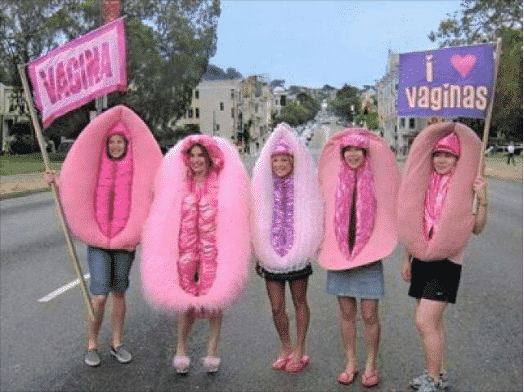
Ridgewood NJ, Massive peaceful protests marked the first full day of Donald Trump’s presidency as marchers converged on Washington and in cities and towns around the globe. Coined the Women’s March on Washington various liberal women’s groups descended on DC,”vowing to keep the pressure on an administration that has sowed worldwide unease”
The Ridgewood blog has one question, what’s with the outfits and Vagina costumes? Were women protesting fashion sense?


And one more question why not clean up your mess?

Reminder :Obamacare Architect Jonathan Gruber Twice Admits Fooling Stupid Americans

Reader comments , “The individual mandate ensured that the pool would not only be sick people.
The mandate also protects taxpayers. People without health insurance will get sick and wind up in hospitals. The uninsured will be a burden to hospitals that do charity work (not Valley). They are healthy right now. Eventually some will find out that they have an illness or they may have an accident. Then they will need charity care and can run the risk of going bankrupt. I do not want to underwrite their medical bills- the way we used to. I don’t care if they go bankrupt.”
Obamacare Architect Jonathan Gruber Twice Admits Fooling Stupid Americans
Ridgewood NJ, In the clip , Massachusetts Institute of Technology Professor Jonathan Gruber appears on a panel and discusses how the reform earned enough votes to pass.
He suggested that many lawmakers and voters didn’t know what was in the law or how its financing worked, and that this helped it win approval.
“Lack of transparency is a huge political advantage,” Gruber said. “And basically, call it the stupidity of the American voter or whatever, but basically that was really, really critical for the thing to pass.”
Ridgewood dodges Worst of Noreaster Weather

January 24,2017
the staff of the Ridgewood blog
Ridgewood Nj, despite prophecies of doom from the national weather service, Ridgewood like much of Bergen County got through the Noreaster relatively unscathed. Reports of high winds are always a danger in the Village with so many older trees.
PSE&G even sent out a reminder courtesy of the Village Website, “that it was preparing for the approaching storm system that could bring heavy rain and gale-force winds. ”
Fortunately for residents, while winds were high and rain was heavy little damage is being reported this morning.
Ridgewood Honours in Eagle Scouts

January 24,2017
the staff of theRidgewood blog
Ridgewood NJ, The Eagle is the highest recognition that Scouting offers to Scouts. It is earned through the advancement program, and only a small percentage of boys who begin in Scouting receive this honor. The wearer of the Eagle award is the epitome ofScouting’s best efforts and beliefs.
Eagle Scout Court of Honor , Mayor Kundsen said , ” Always a privilege to be part of this wonderful event! Congratulations Alex and Dan!” In the photo above the Mayor is pictured with Councilmen Voigt .




