Ridgewood NJ, Saturday September 3rd ,from 10 am to 2 pm, stop by and meet Yaxel Ortiz and watch the master cigar roller make fresh Y.O.’s.
Yaxel Ortiz the super boutique cigar maker from Cuba has now produced his first blend fro his new factory in Nicaragua available in only a select group of retailers .
The Tobacco Shop of Ridgewood
10 Chestnut Street
Ridgewood, New Jersey 07450
Ridgewood NJ, Anybody ready for Fall? Before you get your sweaters out of storage, visit the Ridgewood Public Library in person or online and get your reserves in for some of the best new literary Fall releases. Here’s an insider tip: reserve The Nix by Nathan Hill. It’s a horrible title, but a great book about a man trying to either ruin or reconnect with the mother who left him.https://buff.ly/2bMLvdt
Looking for something new to read? Try a new novel by a debut author.
We all know the best place to go for book recommendations is the Ridgewood Public Library, but when you can’t get to us, check out some of these awesome sites for book lovers.
Do you want to join a book group? Are you in a book group and want some book recommendations? The Ridgewood Public Library can help. Visit our Book Group page online to see what we’re reading this month https://buff.ly/2bABnHM or stop by the Circulation Desk and ask for one of our Reader’s Advisors who can help you find your book group’s next great read.
I have accepted the invitation of President Enrique Pena Nieto, of Mexico, and look very much forward to meeting him tomorrow.
10:33 PM – 30 Aug 2016
The Washington Post first reported Tuesday night that Trump was considering the last-minute trip to Mexico City. Trump tweeted confirmation shortly before he took the stage for a rally in Washington state Tuesday night, but he did not mention the visit in his remarks.
Pena invited the mogul to visit him and discuss campaign issues, unidentified sources told the Post. The effort was reportedly facilitated by his campaign’s CEO Steve Bannon.
The Republican nominee has been publicly wrestling over whether to soften his immigration position and essentially reverse the hardline stance that he carried him through the primary.
Trump is scheduled to give a major immigration speech Wednesday night in Phoenix, during which he is expected to clarify his position. The trip to Mexico will be sandwiched between that speech and a fundraiser he’s slated to attend in California that morning.
Ridgewood schools are still ranked highly, and even are ranked above Tenafly by several organizations. Niche.com also rates the entire Ridgewood public school district as 7th best in the state (Tenafly is 15).
As far as the real estate market goes, I am certainly no realtor, but I can tell you that homes around $1M in the Upper Ridgewood area (near Willard School) are still going in bidding wars and for above asking price. I have several friends who recently purchased in the area and some who are currently looking for a larger house within Ridgewood, and these are the stories I hear. In some cases I have heard that 20% down isn’t even enough for houses $1M+.
Some countervailing thoughts:
1. Wall St/Finance mostly drives the top of the market. That end is definitely soft and will remain that way. One might argue that the huge bonuses created a market segment that is inherently unsustainable. The 4k-5k sq ft homes are definitely going to be hard to sell. If you are around the $1MM mark there remains a robust market
2. A home should not be viewed as a real estate investment. Historically, residential real estate keeps pace with inflation over time (decades). In the short term there are of course peaks and valleys. I have been in Ridgewood for almost 40 years, so I have seen dramatic increases and long flat periods. that’s real estate.
3. School system is in decline? Based on these arbitrary metrics from magazines trying to sell copy? I don’t see it.
4. Taxes in Ridgewood have always been high. This is not a new development.
5. I am an early baby boomer. I am still here. When and if I leave Ridgewood it will have nothing to do with the real estate market or the school system–it will be a lifestyle decision.
6. Apart from the unpleasant crew (Aronsohn et al) that recently tried to disrupt the fabric and culture of this village, this has been a very nice place to live and raise kids for many years. It will continue to be. Take the long view–don’t plan your life around the ups and downs of the real estate cycle.
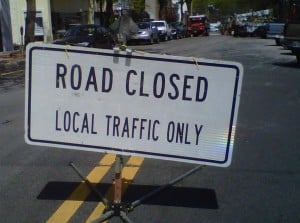
TRAFFIC ALERT – MILLING AND PAVING ON VILLAGE ROADS – SCHEDULE
August 31,2016
the staff of the Ridgewood blog
Ridgewood NJ, In preparation for road paving, on Monday, August 29th milling and paving will begin on Kenilworth Road, Linwood Avenue (between Oak and Maple) and Robinson Lane (between Walnut and Cottage ). See planned schedule below.
Schedule –
August 29th – Kenilworth – Milling
August 30th – Kenilworth – Paving
August 31st – Linwood (Oak to Maple), Robinson (Walnut to Cottage) – Milling
September 1st – Linwood (Oak to Maple), Robinson (Walnut to Cottage) – Paving
This work could take several days.
Please allow time for potential delays in traveling on or near these roads.
The economic argument above is all I needed to counter your complete fantasy of $1MM houses being in great demand, but let me also comment on the rest.
2. The 40 years that you claim to have been in Ridgewood for happened to be the 40 years when the financial sector exploded in size, and NYC being the financial center benefited tremendously. Additionally, home ownership steadily increased to an all time high in 2004. Unless you have not read the news for 8 year now – all of that is GONE. That is history. Finance is rapidly shrinking, homeownership is at lower than it has ever been since 1984. This despite mortgage rate being lower than it has been in forever.
3. Those ‘arbitrary rankings’ are what new homeonwers make their decision based on. And who will I believe – what multiple magazines claim or what you claim? And how is it that school districts like Short Hills, West Windsor and Tenafly are unaffected by the randomness of those surveys?
4. If taxes were already ‘high’ shouldn’t they stop rising then? What is the logic of already ‘high’ taxes going even higher – for no additional services whatsoever?
5. For a vast majority of people without money to burn, it is a rational decision based on their own income and costs vs. quality of services. I just pointed out that the equation is very unfavorable right now when it comes to Ridgewood.
6. The long view is that the state of NJ is bankrupt given how horribly underfunded its pensions are. Militant union will not let their benefits be haircut. So you are looking at combination of significantly higher taxes, fewer services and constant disruptions from striking unions. Math is math. The bill will come due – the can can only be kicked down just so much further down the road!
The FBI has responded to recent concerns about U.S. voting systems being targeted for cyberattacks as Election Day approaches, saying the agency takes the threat “very, very seriously” and is working to “equip the rest of our government with options.”
FBI Director James Comey addressed the issue while speaking to government and private-industry experts attending the Symantec Government Symposium in Washington, D.C.
“We take very seriously any effort by any actor,” he said, “to influence the conduct of affairs in our country, whether that’s an election or something else.”
His comments come one day after news surfaced about FBI warnings to the states that hackers had infiltrated one state board of election and targeted another.
Three days ago, Senate Minority Leader Harry Reid, D-Nev., sent a letter to Comey, expressing concern that “the threat of the Russian government tampering in our presidential election is more extensive than widely known and may include the intent to falsify official election results.”
In late June an “unknown actor scanned a state’s Board of Election website for vulnerabilities” and, after identifying a security gap, exploited the vulnerability to conduct a “data exfiltration,” or unauthorized data transfer, the FBI said in a recent bulletin.
Earlier this month, hackers used the same vulnerability in an “attempted intrusion activities into another state’s Board of Election system,” the FBI said.
Economic reality is making it increasingly obvious that we are in the midst of Obamacare’s long anticipated death spiral. Most recently, Aetna joinedUnitedHealthcare and Humana as the third of the “big five” insurance firms to announce major cuts to its Obamacare exchange business.
For insurers, it’s simple math: Premiums collected must exceed claims paid. If too few healthy, low risk individuals enroll to offset the costs of insuring unhealthy, high risk individuals, the math doesn’t work. This imbalance forces insurers to raise premiums on the low risk individuals who do enroll to cover the costs of insuring high risk individuals. The rising premiums cause even more healthy individuals to drop coverage – resulting in what has been called a death spiral.
Hint: It’s not primarily poverty, political grievances, feelings of marginalization or lack of integration. When will world leaders wake up?
BY RYAN MAURO
Tue, August 30, 2016
Almost 15 years after the 9/11 attacks, the West is still debating the cause of such terrorism even as repeated studies and common sense points in one direction: Islamist ideology based on certain religious interpretations.
Now we can add another study to this heap of evidence, as a new study of foreign fighters has confirmed that ideology is the primary factor.
The new study released by the Canadian Network for Research on Terrorism, Security and Society is based on interviews with 40 foreign fighters who went overseas to join Islamist terrorist groups in Iraq and Syria and 100 other relevant players, such as their family members and online supporters.
Of these, 15 joined the Islamic State (ISIS or ISIL), 12 joined Jabhat al-Nusra (Al-Qaeda’s Syrian wing), three joined the Free Syria Army and 10 joined other rebel groups, mostly jihadist in nature.
Here are five of the most important findings from the study:
The primary factor is religious interpretation.
“As our interactions with these individuals are so heavily mediated by a religious discourse, we also think that religiosity (i.e., sincere religious commitment, no matter how ill-informed or unorthodox) is a primary motivator for their actions. Religion provides the dominant frame these foreign fighters use to interpret almost every aspect of their lives.”
And:
“There is a real concern with real moral issues, with knowing and doing the right thing—again, not as determined by the seeming apathetic and corrupt surrounding society but by some higher or transcendent authority.”
This is the obvious conclusion that many observers have sought to deny, such as when former State Department Deputy Spokesperson Marie Harf said ISIS is caused by unemployment and subsequently defended her comments. She was laughed out of her job, but her illogical understanding of the problem remains pervasive as many Westerners desperately seek to find a more comforting and relatable cause than Islamism for Islamist terrorism.
One Western Muslim told the authors, “The zeal of jihad always struck me when I would sit in my room and read Quran with English translation. I would wonder how jihad was fought today.”
The political gripes of the Islamist terrorists are a subset of their religious gripes.
“[Most] provided justifications for being a foreign fighter that were largely moral and religious in character, more than explicitly political.”
The researchers found that the decision to become a foreign fighter was more about rejecting Western governments and societies than a decision to combat Western foreign policy.
The common mantra that Islamist radicalization is simply a religious expression of political protests over Western “imperialism” is false. The primary factor is the adoption of the ideology and those that hold that ideology will become exponentially more infuriated over the West’s foreign policy. If you believe in resurrecting the caliphate, then you’ll rage against the West’s presence in the Middle East that stands in your way.
It’s not about inequality.
“None indicate, directly or indirectly, that forms of socio-economic marginalization played a significant role in their motivations to become a foreign fighter.”
Here we have yet another study finding no connection between Islamist radicalization and unemployment, poverty, lack of education, broken families, mental illness, etc. About half of the foreign fighters in this sample went to university and one-third graduated.
The study identified five “ecological niches of homegrown terrorism:” Late modernity (our Internet-driven society); the immigrant experience (most come from Muslim immigrant families); youthful rebellion; ideology and group dynamics.
The linkage between Islamism and lack of integration is overemphasized.
“The correlation between marginalization or lack of integration and radicalization are not as robust as commonly assumed.”
Previous studies have shown a linkage between a lack of assimilation and Islamist radicalization. For example, Marc Sageman’s pivotal study based on 400 biographies of Al-Qaeda members found that80% “were, in some way, totally excluded from the society they lived in.”
This study doesn’t deny that a correlation exists, but rather that the correlation is played up too much. The authors refer to how some respondents described feeling out of place in the West as they saw how it conflicted with their faith. In these cases, the religious belief is prompting the individual to marginalize himself, as opposed to Western society marginalizing the individual and pushing him towards radical beliefs.
They aren’t lone wolves.
“The process of self-radicalization needs to be legitimated to be complete.”
The researchers found that, in most cases, “outside mentors” enter the Islamist’s life and guide him into becoming a foreign fighter. They are not lone wolves if they are being led, even if it is online.
The West can either craft a strategy for each Islamist terrorist group it goes up against, starting over and over with each new manifestation or it can target the common variable between all of them. This study, like others before it, finds that the common variable is Islamism and its foundational religious interpretations.
Ryan Mauro is ClarionProject.org’s national security analyst, a fellow with Clarion Project and an adjunct professor of homeland security. Mauro is frequently interviewed on top-tier television and radio. Read more, contact or arrange a speaking engagement.
Posted by John Kartch and Alexander Hendrie on Thursday, July 28th, 201
Hillary Clinton has made clear she intends to dramatically raise taxes on the American people if elected. She has proposed an income tax increase, a business tax increase, a death tax increase, a capital gains tax increase, a tax on stock trading, an “Exit Tax” and more (see below). Her planned net tax increase on the American people is at least $1 trillion over ten years, based on her campaign’s own figures.
Hillary has endorsed several tax increases on middle income Americans, despite her pledge not to raise taxes on any American making less than $250,000. She has said she would be fine with a payroll tax hike on all Americans, she has endorsed a steep soda tax, endorsed a 25% national gun tax, and most recently, her campaign manager John Podesta said she would be open to a carbon tax. It’s no wonder that when asked by ABC’s George Stephanopoulos if her pledge was a “rock-solid” promise, she slipped and said the pledge was merely a “goal.” In other words, she’s going to raise taxes on middle income Americans.
Hillary’s formally proposed $1 trillion net tax increase consists of the following:
Income Tax Increase – $350 Billion: Clinton has proposed a $350 billion income tax hike in the form of a 28 percent cap on itemized deductions.
Business Tax Increase — $275 Billion: Clinton has called for a tax hike of at least $275 billion through undefined business tax reform, as described in a Clinton campaign document.
“Fairness” Tax Increase — $400 Billion: According to her published plan, Clinton has called for a tax increase of “between $400 and $500 billion” by “restoring basic fairness to our tax code.” These proposals include a “fair share surcharge,” the taxing of carried interest capital gains as ordinary income, and a hike in the Death Tax.
But there are even more Clinton tax hike proposals not included in the tally above. Her campaign has failed to release specific details for many of her proposals. The true Clinton net tax hike figure is likely much higher than $1 trillion.
For instance:
Capital Gains Tax Increase — Clinton has proposed an increase in the capital gains tax to counter the “tyranny of today’s earnings report.” Her plan calls for a byzantine capital gains tax regime with six rates. Her campaign has not put a dollar amount on this tax increase.
Tax on Stock Trading — Clinton has proposed a new tax on stock trading. Costs associated with this new tax will be borne by millions of American families that hold 401(k)s, IRAs and other savings accounts. The tax increase would only further burden markets by discouraging trading and investment. Again, no dollar figure for this tax hike has been released by the Clinton campaign.
“Exit Tax” – Rather than reduce the extremely high, uncompetitive corporate tax rate, Clinton has proposed a series of measures aimed at inversions including an “exit tax” on income earned overseas. The term “exit tax” is used by the campaign itself. Her campaign document describing this proposal says it will raise $80 billion in tax revenue, but claims some of the $80 billion will be plowed into tax relief. How much? The campaign doesn’t say.
This proposal completely fails to address the underlying causes behind inversions: The U.S. 39% corporate tax rate (35% federal rate plus an average state rate of 4%) and our “worldwide” system of taxation, which imposes tax on all American earnings worldwide. The average corporate rate in the developed world is 25%. Thirty-one of thirty-four developed countries have cut their corporate tax rate since 2000. The U.S. has not. Hillary’s plan moves in the wrong direction.
ATR is tracking Clinton’s full tax record at its dedicated website, HighTaxHillary.com
Many millennials hate interacting with people, according to a new survey.
Nearly a third of people 18 to 24 prefer ordering from the drive-thru at restaurants because “they don’t feel like dealing with people,” according to a study by Ohio-based Frisch’s Restaurants, which owns and franchises 120 Big Boy Restaurants.
That’s bad news for fast-food employees.
It gives restaurant chains an added incentive to invest in automation technology, such as digital tablets that allow customers to buy food without human interaction.
Many restaurant chains, such as McDonald’s and Panera Bread, are already heavily invested in automation. Both have rolled out digital tablets at restaurants nationwide.
The technology has been praised for helping to improve customer-service speed and accuracy.But it also threatens to eventually replace human workers — especially as labor costs rise, according to analysts and labor activists.
The dumbing down of elementary and secondary education has made its way to the collegiate level; too many unprepared students are admitted despite their inability to do college-level work.
COMMENTARY BY
Charles Sykes@SykesCharlie
Charles J. Sykes is senior fellow at the Wisconsin Policy Research Institute and a talk show host at WTMJ radio in Milwaukee, Wisconsin. He has written for The New York Times, The Wall Street Journal, and USA Today and is the author of “A Nation of Victims,” “Dumbing Down Our Kids,” “Profscam,” “The Hollow Men,” “The End of Privacy,” and “50 Rules Kids Won’t Learn in School.”
Let’s concede at the outset that many students find their college years enlightening and enriching. But something is rotten in the state of academia, and it is increasingly hard not to notice.
There once was a time when employers could be reasonably certain that college graduates had a basic sense of the world and, as a minimum, could write a coherent business letter. That is simply no longer the case, as some academic leaders appear ready to admit.
Harvard’s former president, Derek Bok, mildly broke ranks with the academic cheerleaders when he noted that, for all their many benefits, colleges and universities “accomplish far less for their students than they should.” Too many graduates, he admitted, leave school with the coveted and expensive credential “without being able to write well enough to satisfy employers … [or] reason clearly or perform competently in analyzing complex, nontechnical problems.”
Bok noted that few undergraduates can understand or speak a foreign language; most never take courses in quantitative reasoning or acquire “the knowledge needed to be a reasonably informed citizen in a democracy.” Despite the massive spending on the infrastructure of higher education, he conceded, it was not at all clear that students actually learned any more than they did 50 years ago.
This knowledge deficit has been a long time coming.
Indeed, a recent survey of the nation’s top-ranked public universities by the American Council of Trustees and Alumni found that only nine of them required an economics course for graduation; just five required a survey course in American history; and only 10 required that students take a literature course. Despite the lip service given to “multiculturalism” on campus, the study found that: “Fewer than half required even intermediate study of a foreign language.”
This knowledge deficit has been a long time coming.
By 1990, the cost of four years at an elite private college had passed the median price of a house in the United States. But a survey sponsored by the National Endowment for the Humanities in 1989 found that a majority of college seniors would flunk even a basic test on Western cultural and historical literacy: 25 percent could not distinguish between the thoughts of Karl Marx and the United States Constitution (or between the words of Winston Churchill and those of Joseph Stalin), 58 percent did not know Shakespeare wrote “The Tempest,” and 42 percent could not place the Civil War in the correct half-century.
Most seniors were unable to identify the Magna Carta, Reconstruction, or the Missouri Compromise; they were “clearly unfamiliar” with Jane Austen’s “Pride and Prejudice,” Fyodor Dostoevsky’s “Crime and Punishment,” and Martin Luther King Jr.’s “Letter From a Birmingham Jail.”
The question is no longer whether students have learned specific bodies of knowledge; it is whether they are learning anything at all.
These concerns now seem almost—quaint. The fact that college students had huge gaps in their knowledge was old news by the early 1990s. But today the question is no longer whether students have learned specific bodies of knowledge; it is whether they are learning anything at all.
>>Purchase Charles Sykes’ Book: “Fail U.: The False Promise of Higher Education“
In their widely cited book “Academically Adrift,” Richard Arum and Josipa Roksa concluded that 45 percent of students “did not demonstrate any significant improvement in learning” during their first two years of college. More than a third (36 percent) “did not demonstrate any significant improvement in learning over four years of college.”
Traditionally, the authors wrote, “teaching students to think critically and communicate effectively” have been claimed as the “principal goals” of higher education. But “commitment to these skills appears more a matter of principle than practice,” Arum and Roksa found.
“An astounding proportion of students are progressing through higher education today without measurable gains in general skills,” they wrote. “While they may be acquiring subject-specific knowledge, or greater self-awareness on their journeys through college, many students are not improving their skills in critical thinking, complex reasoning, and writing.”
But those are precisely the skills that employers increasingly expect from college graduates. A 2013 survey of employers on behalf of the Association of American Colleges and Universities found that 93 percent of employers say that a demonstrated capacity to think critically, communicate clearly, and solve complex problems is more important than a candidate’s undergraduate major.
More than three-quarters of the prospective employers of new college graduates said they wanted colleges to put more emphasis on such basic skills as “critical thinking, complex problem solving, written and oral communication, and applied knowledge.”
Trashing the Curriculum
So how could we spend so much for so little? The most obvious answer is that colleges and universities frankly don’t care whether students learn much of anything.
Once again, Harvard’s Bok is willing to admit that administrators have few incentives to worry about something as irrelevant as student achievement because student learning can’t be monetized and doesn’t do anything to advance academic careers. “After all,” he writes, “success in increasing student learning is seldom rewarded, and its benefits are usually hard to demonstrate, far more so than success in lifting the SAT scores of the entering class or in raising the money to build new laboratories or libraries.”
The dumbing down of elementary and secondary education has made its way to the collegiate level.
There are, of course, other factors at work. The dumbing down of elementary and secondary education has made its way to the collegiate level; too many unprepared students are admitted despite their inability to do college-level work. Nearly four out of 10 college faculty now agree with the statement “Most of the students I teach lack the basic skills for college-level work.” This inevitably contributes to the flight from teaching (few professors want to teach remedial courses) and the overall lowering of standards.
This general indifference to what, if anything, students learn is embodied in the modern curriculum that enables students to study just about anything, without necessarily learning much at all.
Ridgewood NJ, The Village of Ridgewood, in an effort to expidite the conclusion of this project and to minimize traffic interference, has met with PSE&G and has agreed to allow working on Saturdays to expedite the upgrade project.
Saturday work takes place generally from 7am to 5pm; with some need to mobilize in advance to be ready to work. PSEG has brought in extra manpower and will be working on Saturdays into the 3rd week of September.
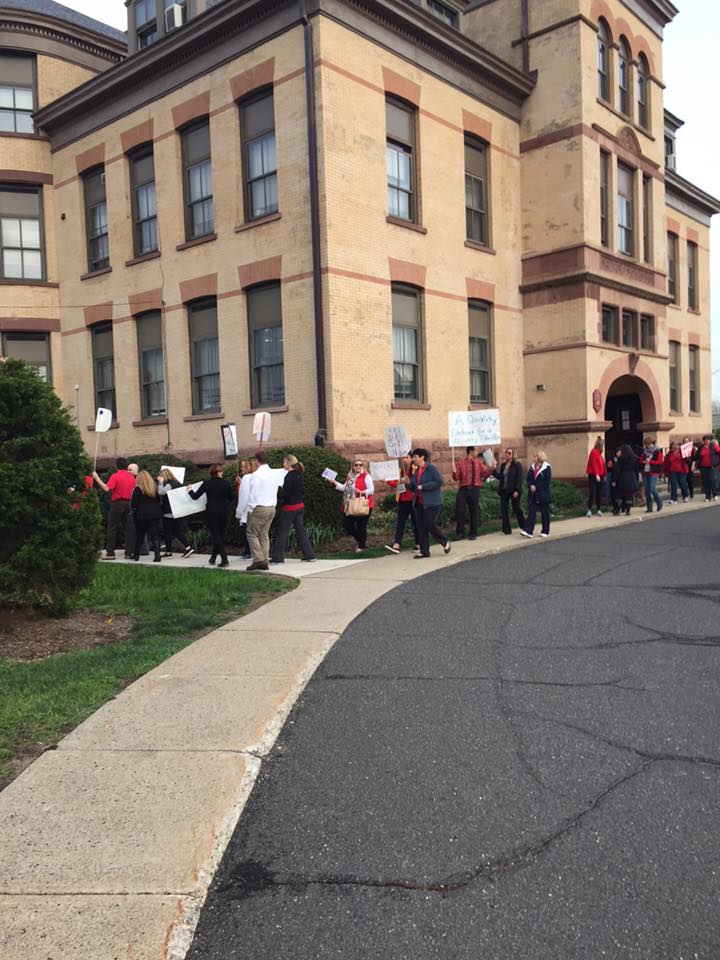
I sincerely hope our Board of Education can remain strong against these union boss Thugs. ( I hate to say it because many teachers don’t want to picket and would be happy to sign what is offered. Their top officers have nothing better to do than prove how superior they are to other leaders and would gladly use “Sticks and stones” since it appears “names will never hurt our RBA.”) And students, you will get better recommendations from people who actually know you than a teacher who has lots of students.
Teachers in Ridgewood complain about being paid less than other “professionals” or similarly educated folks – just a crock! (Really do not consider their behavior “professional” in any respect.) They have it made in our town and are holding the taxpayers hostage. Most of us are tired of your whining and livid at how you are taking this out on the kids and most of us do not speak up because we know you will retaliate against our children. Shame on you!
My vote is “NO” until the BOE settles the teacher contract. I have a feeling I am not alone in my thinking. My kids are in High School now. I am in NEED of teacher recommendations, etc……. I’ll be darned if I will support a tax increase for 5/6 year olds to socialize.
Ridgewood had a full day kindergarten at Hawes school 25 years ago. Were records kept as to how successfully that worked out? They had to quit when class sizes became too big. All our elementary schools have an extra classroom to be used for kindergarten? And extra teachers and aides must be hired (and provided with benefits for life.) This is a very costly endeavor.
Ridgewood students have very little free time to participate in all the activities this town offers. We did not have all these options years ago, but my child was still cranky and tired when he came home from a full day of kindergarten.