The new back-to-school: Deeper discounts, longer sales
Hadley Malcolm, USA TODAY 11:53 a.m. EDT August 11, 2014
You may be basking in the last few weeks of summer and counting down to Labor Day getaways, but for retailers it was time to go back to school a month ago.
That’s when many of them started promotions for one of the biggest shopping periods of the year — one that’s also become perhaps the most prolonged shopping period of the year, with families buying back-to-school items from practically the fourth of July until after classes start. Deloitte’s annual back-to-school shopping survey out last month found that more than a quarter of parents plan to finish their shopping after the start of the school year.
“We’re seeing it expanded out throughout the season,” says Steve Bratspies, executive vice president of general merchandise for Walmart. He says customers are shopping more frequently and making smaller basket purchases over a longer period of time rather than doing one huge buy.
And that means stores are throwing absurdly cheap prices — think 17-cent notebooks — and price-matching guarantees at customers in an effort to stay relevant and competitive over three months of back-to-school shopping.
• Staples is offering a 110% price-match: If a customer finds a product cheaper somewhere else, Staples will match the price plus give the customer back 10% of the difference. And those 17-cent notebooks are part of a list of items at low prices for the entire shopping season. Rulers, glue, paper, colored pencils, erasers, crayons, ballpoint pens and markers are all on sale for a dollar or less through Labor Day.
• Walmart has 30% more back-to-school items available online than last year and is reducing prices on 10% more back-to-school items than last year both online and in stores. This month, a price-matching pilot program rolled out store-wide. It allows customers to enter an ID code listed on their in-store receipt at Walmart.com and compare the prices of everything they bought to all advertised prices from that week. If Walmart’s prices were more expensive, it will refund the difference in the form of an e-gift card.
Federal Aid Is Likely Driving College Costs Up
Jillian Frost / August 11, 2014
Federal financial aid for higher education was supposed to grow the market, bring down costs and help families afford this critical step to financial security.
But a recent report finds the effort to provide educational assistance to students has turned into decades of unaccountable federal spending on higher education.
According to the report from the Center for College Affordability and Productivity, the federal student aid system “contributes to skyrocketing costs, finances a wasteful academic arms race, weakens academic standards, lowers educational opportunity, and worsens the underemployment/overinvestment problem.”
As authors Richard Vedder, Christopher Denhart, and Joseph Hartge explain:
“The most striking thing to observe is that, not only have tuition fees risen after adjusting for inflation, but the rate of increase is rising since 1978. Federal involvement in providing student financial assistance is also growing over time… Before 1978, increases in tuition fees after adjusting for overall inflation were roughly 1 percent a year. In the era of substantial federal student aid after 1978, inflation-adjusted tuition fee increases have ratcheted up to 3-4 percent a year.”
It’s not just students who feel this burden. Taxpayers currently shoulder nearly $90 billion of the $1 trillion dollars of student loan debt now in default. The CCAP report also details shortcomings on the part of the federal government to account for risk in making federal student loans:
“The federal student loan programs are fundamentally unique because any consideration of risk is largely ignored when deciding whether to make a loan… During the past 11 years, the number of seriously delinquent student loans has grown by about 15.41 percent per year on average, outpacing those loans that are merely delinquent (fewer than 90 days past due on payments) which averaged 13.54 percent annually. In other words, student loan debt is growing at an unsustainable pace.”
Moreover, the federal government’s current accounting practices largely fail to account for market risk, which means the costs to taxpayers of student loans probably are higher than estimated. Federal student loan programs fail to take into account students’ credit worthiness, major or whether the student has a co-signer, which means federal student loans probably cost the government money, rather than turn a profit as is often claimed. Fair-value accounting, which takes into account market risk, would be a far more accurate reflection of the cost of federal student loans.
Attempts to rein in college costs by expanding the Pay As You Earn Plan, as President Obama did, or allowing for the refinancing of student loans, as Sen. Elizabeth Warren, D-Mass., proposes, encourage further borrowing without creating pressure on colleges to limit spending and keep tuition reasonable.
The Dynamic Repayment Act of 2014, offered by Sens. Marco Rubio, R-Fla., and Mark Warner, D-Va., is little better. It would expand federal involvement in higher education by not only requiring “every borrower of a federal student loan to pay 10 percent of his monthly income upon graduation,” it would “garner those payments through paycheck withholding.” The withholding provision in particular would, as a recent report from The Heritage Foundation detailed, enshrine the federal government in lending.
As Congress prepares to reauthorize the Higher Education Act, a number of other bills have been introduced, the most promising of which is the Higher Education Reform and Opportunity Act (HERO) proposalfrom Sen. Mike Lee, R-Utah, and Rep. Ron DeSantis, R-Fla.
HERO would restructure higher education by decoupling federal financing from accreditation and allowing states to permit any entity to credential individual courses. This could help reduce college costs, decrease federal involvement in higher education and make for a more customized college experience for students who choose to attend.
‘Open Space’ Travesty Says It All
Aug. 11
By Matt Rooney | The Save Jersey Blog
Everything that drives me crazy about Trenton played out in last week’s passage of a new “Open Space” measure, Save Jerseyans, setting up a ballot question for the November election and another expenditure which we can ill-afford.
Bad logic. Reckless spending. And a little good old fashioned horse trading?
In case you’re not aware of the background information, SCR-84 results in a proposed constitutional amendment on New Jersey’s next general election ballot which, if approved by the voters, dedicates $150 million per year for open space conservation over 30 years. That’s a roughly $4 billion investment at a time when our government just declined to make an additional, pre-planned $2.4 billion payment towards our chronically underfunded pension system.
And it doesn’t make much sense, does it? At least not right now regardless of how you feel about open space land preservation. But it’s part of a disturbing trend where our legislators shirk their responsibility to make tough decisions by passing reckless constitutional amendment proposals that are designed, at least in part, to boost Election Day turnout. Last year’s minimum wage question and 2012′s higher education Big Labor stimulus package were apparently just the beginning.
Set aside for a moment your conceptions of what government should do or what you know it can afford. Personally, I think open space is great idea as a general concept. Government should use smart zoning and general funds to create parks and prevent our entire state from resembling that planet-sized capital city from the Star Wars movies.
What you may not know is that New Jersey taxpayers have already preserved an area of land, inside our state’ boundaries, that’s approximately the same size as Delaware – almost 2,000 square miles.
BAGHDAD — In a surprise speech late Sunday, Iraqi Prime Minister Nouri al-Maliki resisted calls for his resignation and accused the country’s new president of violating the country’s constitution, a speech that plunged the government into a political crisis while it battles advances by Islamic State militants. (Yacoub, Salama/Associated Press)
Ouch! Hillary Clinton Blames Rise of Islamic Militants on Obama Policies
Posted by Jim Hoft on Sunday, August 10, 2014, 7:30 PM
In September 2011 in an interview with VOA Hillary Clinton said,
“Al-Qaeda was on the path of defeat.”
Posted by Jim Hoft on Sunday, August 10, 2014, 7:30 PM
In September 2011 in an interview with VOA Hillary Clinton said,
“Al-Qaeda was on the path of defeat.”
This was before the Benghazi massacre one year later.
But now she’s singing a different tune…
In an interview published Sunday, Hillary Clinton blamed the rise of Islamic militants in Iraq-Syria including ISIS on Barack Obama’s foreign policy.
AFP reported:
Former secretary of state Hillary Clinton blamed the rise of Islamist militants in Iraq and Syria on failures of US policy under President Barack Obama, in an interview published Sunday.
Clinton specifically faulted the US decision to stay on the sidelines of the insurgency against Syria’s President Bashar al-Assad as opening the way for the most extreme rebel faction, the Islamic State.
“The failure to help build up a credible fighting force of the people who were the originators of the protests against Assad —- there were Islamists, there were secularists, there was everything in the middle -— the failure to do that left a big vacuum, which the jihadists have now filled,” Clinton told the Atlantic.
As Ridgewood-based Forget Me Not Foundation grows, it touches more lives
AUGUST 10, 2014 LAST UPDATED: SUNDAY, AUGUST 10, 2014, 10:28 AM BY VIRGINIA ROHAN STAFF WRITER THE RECORD
But Emma — who was born still on Aug. 11, 2009 — has nonetheless touched many lives. And she will never be forgotten.MITSU YASUKAWA/STAFF PHOTOGRAPHER
The foundation supplies support and items such as a memory box, below, for grieving parents.
In addition to Melissa and Dave Barry’s commitment to celebrating their daughter’s birthday every year, the Ridgewood couple started the non-profit Forget Me Not Foundation in Emma’s memory. Its mission is to support families who have lost babies during pregnancy, childbirth or shortly after birth, and to help educate the medical community about the emotional needs of families who suffer these losses.
The Barrys have achieved much on both fronts in the four years since their foundation’s inaugural “An Evening to Remember” fundraiser.
“We just had this idea that we wanted to help people who went through a similar experience as us, losing a pregnancy or a newborn baby, but we didn’t really have any specific goals. We just knew we wanted to help people,” Melissa Barry says of that first benefit. “So, we had the fundraiser and it was a great success, and we made some money, and we were like, ‘OK, so now what do we do?’ We met with some people at Hackensack [University Medical Center] and had some conversations and figured out some ways to best help these families. And what we found was that a lot of hospitals don’t have the bereavement materials that they need.”
– See more at: https://www.northjersey.com/community-news/family/as-the-forget-me-not-foundation-grows-it-touches-more-lives-1.1065070#sthash.AcEIEv1K.dpuf
Readers comment on Village “controversial” ordinance 3066
3066 states “Upon completing its review of the application, the Village Council or Planning Board, as applicable, shall take whatever action it deems to be appropriate under the circumstances and advise the applicant in writing of its decision.”
Under current ordinance, try responding to a developer that has spent money developing an application and preliminary analysis, “this is a no-brainer”, we aren’t having a hearing. Maybe, I’m wrong. Perhaps it is all just coincidence that 3066 was passed and we now have had this flurry of development applications.
This ordinance was pushed through when Pfund was mayor in the months leading up to Valley Hospital Master Plan proposal before the Planning Board. If you want find the author of this then look to Mr Collins and the other Valley attorneys and the Ridgewood Village attorney. It might have been Brancheau who was tasked to prepare #3066, but it was others who were pulling the strings. Remember that at the opening Valley Hospital presentation to the Council on Sept 27 2006, it was Pfund who told Audrey Meyers “off camera” (but still amplified for all to hear), “I do not see a problem with this”.
It’s time to pull the plug on our turf fields. The locations are not conducive to turf material. With the over $100,000 in repairs we could take that money to go back to grass. The money we have spent in fixing each if these damaged episodes could have been used for another employee or two in our maintenance dept which is short employees (our town’s landscape is falling apart and w the taxes we pay, our town should be looking well attended and it’s not!! The best landscaped areas are the ones donated by kind vendors, not our village tax dollars.). What about the Schedler property for turf, or Habernickel Farm, or Citizens park or one of the elementary schools that don’t flood?
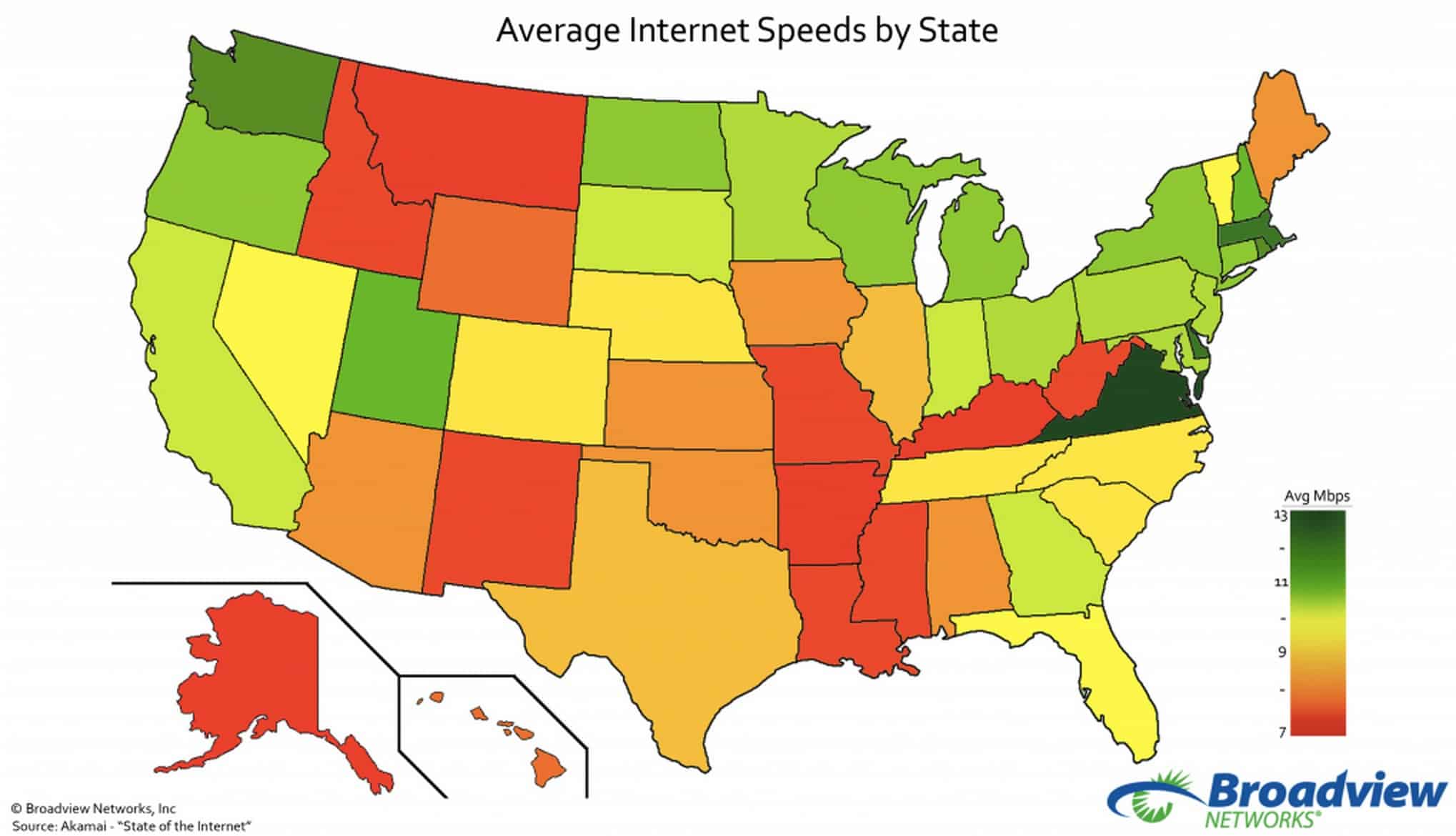
Map of US Shows How Your State’s Internet Speed Stacks Up Against the Rest
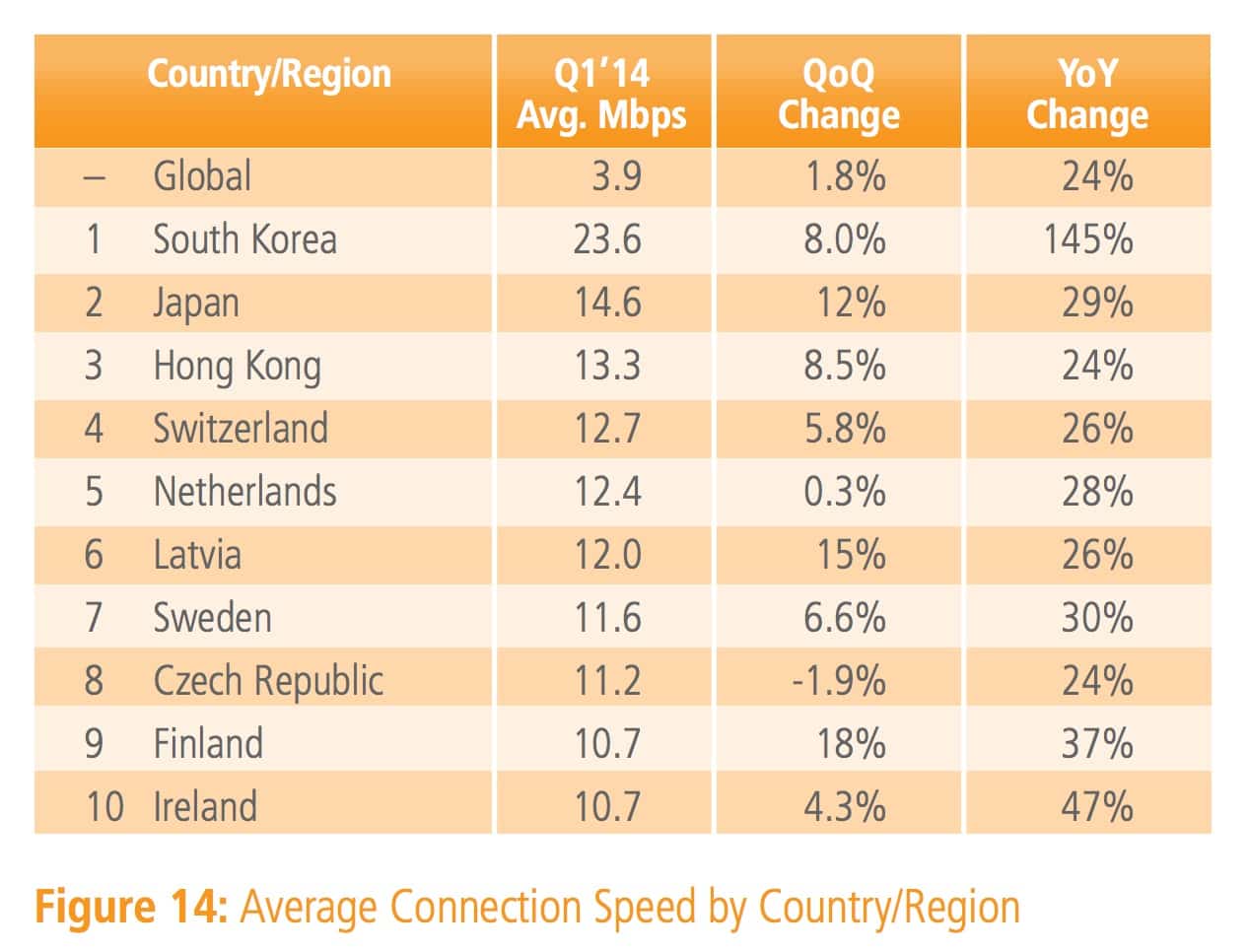
But in Akamai’s 2014 State of the Internet report, it becomes painfully clear that internet speeds in the United States lag compared to the rest of the world leaders. In fact, the United States doesn’t even fall into the top 10 in average connection speeds.
In the first quarter of 2014, Virginia’s average connection speed came in at 13.7 mbps – just more than half of the average speed of world leader South Korea:
Jimmy Carter has had a long-standing reputation as authoring the most ineffective foreign policy of any modern presidency.
To be honest, Carter deserves better.
When the man from Plains, Ga., moved to 1600 Pennsylvania Ave, he came wearing the anti-establishment headdress. In particular, when it came to foreign and defense policy, Carter promised that his policies would be anything but business as usual.
America, Carter claimed, could do less in the world. So he planned to pull U.S. troops out of Korea. His foreign policy would be based on fostering “human rights” and talking peace instead of war.
From the beginning, however, almost no foreign policy initiative went right. While the Camp David accords eventually led to the 1979Egyptian-Israeli peace treaty, they did not yield a peace agreement between Israel and the Palestinians, because the Palestinians rejected them from the start. As war rages between Israel and Hamas today, the accords never delivered on the promise of delivering a road map to long-term peace.
Where Carter struggled most, however, was over relations with the Soviet Union. Moscow saw Washington’s post-Vietnam malaise as a clear sign that the American century had ended early. The Soviets went on the offensive in almost every corner of the globe.
The Soviet invasion of Afghanistan galvanized Carter in a manner that has been mostly forgotten. Most Americans recall Carter’s feckless decision to pull the U.S. team out of the upcoming Olympics in Moscow, a self-defeating gesture that accomplished little. But as his presidential term neared its end, Carter apparently decided he was tired of being a foreign-policy doormat for Moscow.
He declared the “Carter Doctrine,” warning the Soviets that he would protect U.S. interests in the Middle East “by force if necessary.” And he ordered the establishment of a rapid deployment force, which would be capable of delivering a massive U.S. military capability into the Persian Gulf.
Further, Carter ordered the development of new generations of military capability and even proposed increasing defense spending, which had been in free-fall since the end of the Vietnam War.
This burst of seriousness didn’t save his presidency. The poor state of the U.S. economy, coupled with the embarrassment of the hostage situation at the U.S. embassy in Tehran, crippled his re-election efforts. Still, Carter left office amid signs that he had learned from his mistakes.
A common joke among conservatives during the 2012 campaign was that if Obama got re-elected, Americans would see what Carter’s second term would have looked like. But Carter might have been a bolder president in his second term. Obama, on the other hand, clearly has not. His second-term agenda has lurched from embarrassment to failure and back again.
Further, Obama has shown no signs of acknowledging that his own policies have contributed much to the reversals he has suffered on virtually every front, from managing Moscow to the mushrooming threat of transnational terrorism.
In no corner of the world had Obama seen more setbacks than in the Middle East. And he is running out of time to clean up his mess before leaving office.
Most of what Obama has broken can’t be fixed. But he could give the next U.S. president a fighting chance by following Carter’s example and doing something.
Reversing the atrophy of American military capabilities would be a start. He could also work to build solid relations with the countries the U.S. will need to build a solid foundation for a Middle East policy. The U.S. needs a string of strong bilateral alliances from Turkey to Jordan, Israel, Egypt, Morocco, Niger, Tunisia, and Algeria to help restore stability to the Middle East and North Africa.
For now, however, comparing Obama to Carter is an insult to Carter.
AUGUST 10, 2014, 6:00 PM LAST UPDATED: SUNDAY, AUGUST 10, 2014, 11:39 PM BY HERB JACKSON RECORD COLUMNIST THE RECORD
Sen. Cory Booker last year saw what ignoring a little-known opponent can do. He was slammed for not winning a special election by the landslide his celebrity and overwhelming financial advantage suggested was possible.
Now he’s running again, and a new poll shows him under the 50 percent mark that signifies a safe incumbent. And that’s with virtually unknown and underfunded Republican opponent Jeff Bell trailing by just 10 points.
So once again, Booker faces questions about expectations.
The Quinnipiac University poll released Wednesday showed Booker would receive 47 percent of the vote and Bell 37 percent if the election were held now. The poll has a margin of error of 2.9 percentage points, meaning Booker’s true support could be as low as 44.1 or as high as 49.9.
Bell, the surprise winner of June’s low-turnout primary, who also won an upset in the June 1978 Senate primary, is almost within striking distance — even though 77 percent of voters haven’t heard of him and his latest disclosure report shows his campaign $46,000 in debt, while Booker’s campaign has $3.5 million to spend.
The poll’s findings caught the attention of some national political writers who were focusing on other states in this year’s Senate races, but there is also historical evidence that a truly competitive race from Bell could be just a mirage. Summer polls, taken before candidates start advertising and voters pay attention, have been off the mark before.
Identity Theft occurs when someone uses your personally identifying information like your name, Social Security number, or credit card number without your permission to commit fraud or other crimes. According to the Federal Trade Commission, approximately 9 million Americans have their identity stolen each year. Identity thieves may use your personally identifying information to establish lines of credit, bank accounts, credit card accounts and other forms of credit. You may not find out your identity has been compromised until you receive a bill in the mail or are contacted by a debt collector.
Here is a reference guide for how to prevent identity theft and what you should do if you are a victim.
AUGUST 10, 2014 LAST UPDATED: SUNDAY, AUGUST 10, 2014, 1:21 AM BY JENNIFER V. HUGHES SPECIAL TO THE RECORD THE RECORD
In the past few years, members of the Kaiser family have radically transformed the back yard of their Ho-Ho-Kus home, starting with a patio, a deck and a built-in barbecue.
Drainage projects came next, followed by additional plantings, exterior lighting and, finally, a full-sized pool.
“My husband likes to grill and I like not to cook,” said Michelle Kaiser, who said their three teenagers adore the pool and their extended family from the city loves to visit the great outdoors. “As the years have gone by, we’ve been able to make it into the space that we really love and really can use.”
Creating outdoor living spaces is one of the hottest trends in landscape architecture, local and national experts say.
“There is a real focus on the exterior of your home,” said Mark Borst, owner of Allendale-based Borst Landscape & Design, which did the project on the Kaiser home. “It’s almost like creating a different room for your house. It’s about the barbecue, outdoor rooms that have a roof but open sides, a fireplace. There are outdoor TVs with surround sound. Everything you think of normally having inside is creeping outside.”
Seeking Lower Taxes, Companies Flee the U.S.
Arthur Laffer / Stephen Moore / @StephenMoore / August 10, 2014
The last several months have seen a wave of American companies merging with foreign companies, a process known as “inverting.” In effect, inversion is the corporate equivalent of a renunciation of American citizenship. By some estimates, about $250 billion of these deals have been consummated since the start of the year, and another $100 billion could be finalized soon.
As inversions have exploded onto the policy scene, Washington is scrambling to find ways to counteract a trend that could deprive the federal treasury of tens of billions of tax dollars, which Washington believes belong to the government. In President Obama’s own words, “My attitude is I don’t care if it’s legal, it’s wrong.”
Inversions vividly illustrate the amazing dysfunctions of the U.S. corporate tax code. The corporate tax raises $250 billion per year, or 1.5% of GDP, which is one of the lowest tax revenues in the world. And, the U.S. has the highest corporate tax rate in the world. If that’s not enough, compliance costs are huge and the corporate tax is a job killer.
An inversion occurs when an American company merges with a smaller company in a lower-tax jurisdiction such as Ireland. The deal is structured so the smaller company acquires the larger American company. Operations and management often remain in the U.S., but the legal headquarters is changed to the lower-tax jurisdiction.
By inverting, the company is no longer legally U.S.-based and thus is not required to pay U.S. taxes on profits earned abroad.
A notable requirement — IRS code 7874 added as part of the American Jobs Creation Act of 2004 — is that the shareholders of the smaller target company must end up owning at least 20% of the inverting company’s shares. Obama wants to raise this requirement to 50%.
U.S. Tax System Onerous
The rush to invert is a direct result of the 39.1% U.S. corporate tax rate, including state and local corporate taxes, compared with an average corporate tax rate for the rest of the world of 25%.
U.S. corporate taxes also apply to world profits, not just profits earned in the U.S., which makes an inversion cost-effective for an American company operating abroad. Anyone who is watching these inversions happen and still believes that tax rates don’t matter is living in a parallel universe.
The recent rush to invert is in part because other nations are cutting their corporate tax rates — the U.K., Japan and Spain most recently — making the cost savings much greater for U.S. companies. The other reason companies are rushing to invert now is to preempt discriminatory legislation proposed by the Obama administration.
The chart below encapsulates the problem. The U.S. was once a low corporate-tax rate nation; now we are the highest. The 39.1% U.S. rate has been effectively unchanged for 20 years, but the rest of the world has been slashing rates. This is a phenomenon we have called “supply-side economics goes global.”
We have also talked to CEOs who say they can negotiate sweetheart tax deals to bring their corporate tax rate below 10% and sometimes down to zero.
Blame Everyone Else
The administration’s response is simple: Blame everyone else for the dysfunctional tax code and then outlaw inversions retroactively. Because most inversions involve foreign minnows swallowing U.S. whales, a 50% foreign-ownership requirement, if made retroactive to May 2014, would make most of the mergers that have already taken place illegal and very expensive.
We believe the Obama proposal is pure demagoguery and would encourage multinational companies to avoid the U.S. altogether, meaning even fewer U.S. jobs. The Obama plan is like seeing a raging fire in a building and locking all the doors shut so no one can get out.
After the midterm elections, Congress and the White House could strike a bipartisan deal to slow down the inversion process, including some corporate-tax-rate reduction. A corporate tax rate of 28% could be “paid for” in part by closing corporate “loopholes” such as the wind tax credit and other energy subsidies.
Democrats will insist on repealing tax deferral on foreign-held profits. But even so, if the U.S. corporate tax rate is lowered enough, deferral will be less advantageous, and such a trade-off may be worthwhile.
In the longer term, Paul Ryan’s tax plan includes a swap of a value-added tax for a corporate profits tax. The Ryan plan is consistent with the Laffer Complete Flat Tax proposal. Because value added is essentially GDP and corporate tax revenues are between 1.5% and 2% of GDP, a full corporate tax switch from a tax base of profits to value-added would imply a corporate value-added tax rate in the low single digits.
We would put the odds of a partial corporate tax holiday on repatriated profits at 50-50. Companies with profits stored overseas could repatriate their earnings back to the U.S. at a lower tax rate. A tax holiday with a temporary tax rate of 5% to 10% could bring back to the U.S. as much as $1 trillion to $2 trillion parked overseas, raising as much as $50 billion for the Treasury.
Our view is simply that government doesn’t need more money; government needs to spend less. Thus, this $50 billion of additional taxes should be offset by permanent corporate-tax rate-reduction, dollar for dollar.
Tax On U.S. Jobs, Wages
We have always believed that the case for tax reform will catch on politically when American workers and unions start to see that this isn’t just a tax on corporate shareholders but on domestic workers as well.
The U.S. corporate tax sends jobs abroad by encouraging outsourcing, and it also lowers wages in the U.S. Kevin Hassett at the American Enterprise Institute finds that “corporate tax rates affect wage levels across countries. Higher corporate taxes lead to lower wages.”
Somebody please tell this to the Teamsters’ James Hoffa.
Another proposal would be to have the U.S. join other countries and move to a territorial tax system. American companies would simply pay the tax in the country in which their plant or facility is located. Republicans are skittish about this idea, worrying it would only further the incentive for businesses to move plants and jobs offshore.
Top Dems Urge Reform
The U.S. corporate tax is on the verge of complete collapse. Former Treasury Secretary Tim Geithner and former Fed Chairman Paul Volcker have advised Obama that the current corporate tax is an economic loser.
“The U.S. corporate tax incentivizes American businesses to move jobs offshore,” according to Volcker. “Unless the rate is cut substantially, this trend will continue and American workers will pay the price.”
Adds Geithner: “I do think there’s an overwhelmingly compelling case for broad-based corporate tax reform. The basic imperative is to get the incentives better and the fundamentals better for people creating and building things in the United States.”
Summertime is when the blood supply runs lowest. By donating blood you give patients hope! Tuesday, August 12 from 3 to 8pm at Red Cross, 74 Godwin Avenue, Ridgewood, NJ. Sign Up online at redcrossblood.org or call Melanie Hazim at 201/652-3210