NJ Senate panel advances bill to eliminate residency requirement for many teachers
A bill to roll back state residency requirements for teachers and other school district employees in nearly half of New Jersey’s counties cleared its first legislative hurdle today. (Friedman/Star-Ledger)
JUNE 19, 2014 LAST UPDATED: THURSDAY, JUNE 19, 2014, 2:43 PM BY BY SALVATORE TRIFILIO CORRESPONDENT
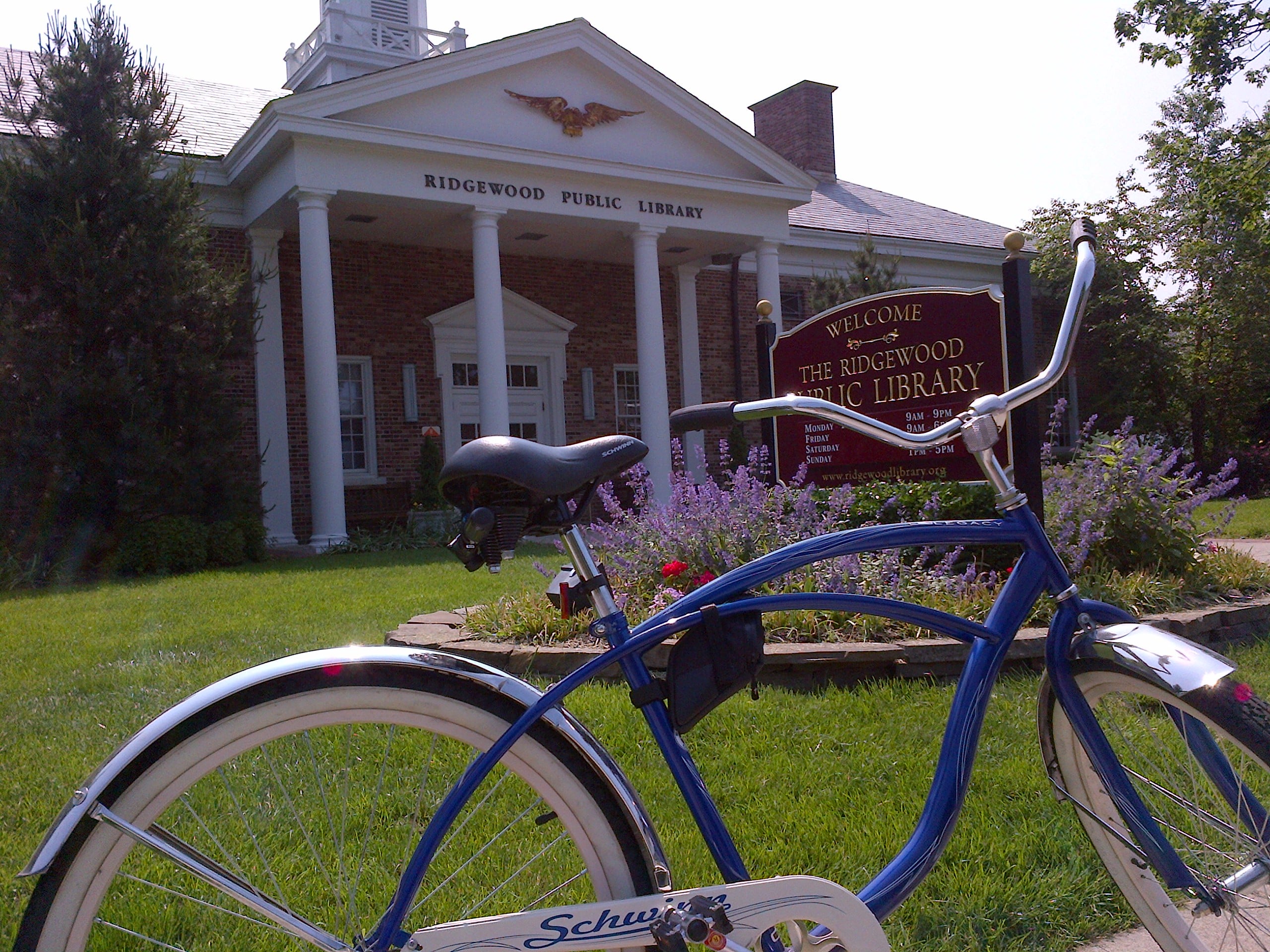
The café at the Ridgewood Public Library is reopened for business.
June 1 marked the first day of business for Grazia Nigro-Mastellone, a former teacher at The Village School in Waldwick and current Ridgewood resident.
She and her parents, Mimi Nigro and Angelo Nigro, are the new proprietors of the café after being awarded the public bid on March 28.
The café closed last January when the previous owner needed to take care of a personal situation, according to library officials.
Library administrators are excited to see the café bring some life back into their entranceway.
Readers not very forgiving of BOE lack of Action in at lest voicing skepticism and Protecting Students of BF and Travell .
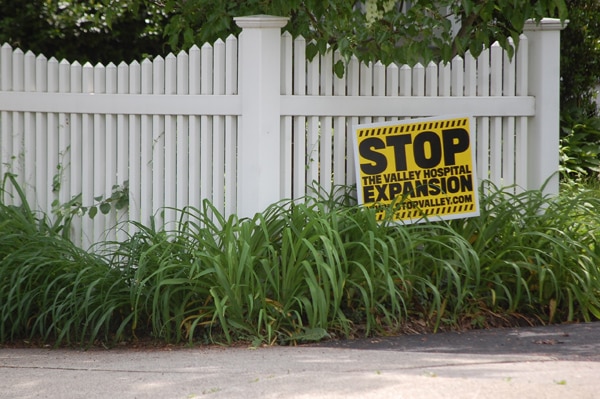
So sad that The Record (in an article posted to its website today) is trying to make it seem like Sheila Brogan (the Ridgewood Board of Education President) is happy about the Planning Board decision. She actively helped Valley Hospital by claiming that the massive 6-10 year construction proposed by Valley would have no impact on the education of Ridgewood students at the B.F. Middle School right next door to Valley. We won’t forget, Sheila.
Her testimony was disappointing and was not in line with the BOEs fiduciary duty to protect the students. Forget about the construction period, the final product of a 94 foot tall building and a building moved over next to BF on top of the current parking lot would impact the students forever. And the track and field participants.
Please explain how her saying “construction would have no impact on the education of kids at B.F and Travell” shows that she means well? If you’re saying she “meant” to help Valley, then I understand. But having BF and Travell kids go thru 6 years of construction doesn’t indicate that she means well. Remember this at election time ,br><br?>
Someone was listening besides the Planning Board :A place to downsize
JUNE 20, 2014 LAST UPDATED: FRIDAY, JUNE 20, 2014, 12:31 AM
A place to downsize Tess Giuliani to the editor:
Ridgewood reminds me of the village I grew up in, Garden City, N.Y., where my family still lives. Both are beautiful, historic towns.
I remember how the Garden City Hotel, a 1901 historic landmark designed by Stanford White, stood proudly in the middle of town. Sadly, this magnificent building came down in 1973. An ugly gaping hole remained on the site for 10 years, surrounded by a chain link fence. Finally, a new Garden City Hotel with Wyndham luxury condos was opened in 1983
Why did it take 10 years? Longtime residents tell me that 40 years ago, the idea of downtown condos in Garden City was unacceptable to many villagers. What changed? Over time the residents got tired of the eyesore, and their personal concerns also changed as they got older.
In 2001, I put my Ridgewood home on the market and found that the best housing for me was an apartment complex right here. I wanted to stay in town and stay involved. Though as it happened, I stayed in my house another 11 years, the apartment prospects had not changed. The best complex in 2001 was still the best in 2012 – so I moved in.
As a designer I’ve worked with hundreds of clients in Ridgewood, developing creative spaces from the smallest full bathroom to the most stately, grand house dubbed The New American Classic by DesignNJ. Today’s clients among the “young seniors” ask me to “create uncluttered, beautiful spaces that reflect our tastes and make our lives easy.”
They hope to downsize from a big house to a nice apartment in Ridgewood, with covered parking, elevators, central air, large windows, nice kitchens and baths and ample closets. But where are they? I found only one.
The Enclave invites the community to an open exchange of information, pros and cons and all views, on Thursday, June 26 at 7 p.m. at the Ridgewood Library Arts Studio. I’ll certainly be there, and would like to suggest that we review these websites in advance for more background: downtownridgewood.com and citizensforabetterridgewood.com – See more at: https://www.northjersey.com/opinion/opinion-letters-to-the-editor/letter-a-place-to-downsize-1.1038600#sthash.PNUkkp9Q.dpuf
Pete and all of CRR have done an amazing job. It may be time for others to step up and take leadership roles at CRR. Pete and a few others are private citizens who have put COUNTLESS hours into this effort for the last 6 or 7 years. They’d probably like to get some time to relax. Meanwhile, Valley will probably launch another expansion idea, eventually.
Yes, Thanks you to CRR and all those folks who attended these meetings for years and spent their own money. While I have donated a small amount in the past, I agree it would be great for people to take this opportunity to donate again.
I hope they have a big celebration as they should be really proud of themselves!
The CRR is a most amazing example of grass roots community activism. These guys stared down Goliath and never blinked. Congratulations to Pete McKenna, Lisa Baney, Lorraine Reynolds, Marla Sherman and everyone else in that organization that never gave up hope. They should make a movie.
Everyone who has congratulated CRR should make sure they have chipped in to repay the money spent! We all owe a tremendous debt to the hardworking CRR; lets find out how much they are in the red, and help out!
Reader asks Why is it such a big deal to ask to volunteer an annual payment in lieu of taxes (PILOT)
The hospital gets lots of “free” services from the Village, including police & fire, road maintenance on streets around the Linwood property and satellite offices, snow removal on those streets, etc. Why is it such a big deal to ask to volunteer an annual payment in lieu of taxes (PILOT) to at least cover for those costs ? Every time a fire alarm gets pulled in Valley, the RW fire department has to reset it. That apparently happens a lot. Ridgewood police are called every time something gets stolen or a patient loses the plot, which also apparently happens a lot. There is no quid pro quo between a PILOT for these Village services and Valley’s expansion as #16 suggests. If Audrey, the Valley Board, and their supporters think there should be a quid pro quo between a PILOT and their expansionary vision, then they are completely out of touch with their community here in Ridgewood.
Handball Wall dedicated to the memory of Michael Feeney at Hawes School June 20,2014
the Ridgewood Police
Ridgewood NJ, Yesterday morning a dedication ceremony took place at Hawes School. A handball wall was dedicated to the memory of Michael Feeney, a Hawes student who lost his battle with cancer in 2013.The construction of the wall in the courtyard consisted of bricking over unused steel doors in the school courtyard. Numerous organizations came together to make it possible including Ridgewood Home & School Association, Dad’s Night and Ridgewood PBA Local 20.
Here’s what the Obama administration wants you to know about health insurance premiums under Obamacare: On average, people who selected subsidized insurance plans through the federally-run insurance exchange paid $82 a month, out of their own pockets, for health insurance. People who selected “silver” health plans—the most popular tier of coverage offered in the exchange—paid less: $69 per month, on average. Almost 70 percent of the people who signed up for subsidized plans through the federal exchanges are paying less than $100.
Those are the average premium prices that the Obama administration highlights in a press release touting a new government report on Obamacare and health premiums.
But there are several things to remember about those figures.
One is that they’re incomplete. The data released by the administration doesn’t account for premiums in the 14 states that ran their own exchanges this year.
Another is that those averages conceal an awful lot of variation. Even with the federally run exchange covering the majority of states, Obamacare varies quite a bit from state to state. Out of pocket insurance costs in Mississippi averaged about $23 a month, but came in at $148 in New Jersey. About a third of people buying subsidized coverage through the federal marketplace were paying more than $100. And the report focuses on the majority of participating individuals who bought subsidized coverage: 14 percent of people whoselected plans in the federal exchange through the end of open enrollment got no tax credits at all.
That’s another thing to remember: The administration’s premium averages are based on out-of-pocket costs after the law’s tax credits and subsidies are factored in. Those subsidies end up offsetting quite a bit of the cost of insurance under Obamacare. But if you strip away the subsidies, individual market health insurance has, on average, become significantly more expensive in the wake of Obamacare, according to a newly published analysis by the Manhattan Institute.
Relying on a 3,137 county comparison of the five cheapest individual plans available prior to Obamacare with the five cheapest plans through the exchanges, the study by health policy fellow Yevgeniy Feyman found that, on average, premiums were up 49 percent under Obamacare. Again, that’s an average, and it masks some variation—in New York, which had unusually restrictive, badly designed health insurance market rules prior to Obamacare, premiums are actually down quite a bit—but it indicates that the overall trend for unsubsidized premiums is up.
The difference, then, is being made up by federal subsidies. According to the administration’s report, those subsidies are carrying 76 percent of the total cost of subsidized insurance plans selected in the federal exchange. The out-of-pocket average is $82. But the actual average premium price, without subsidies, is $346.
To the extent that insurance is relatively cheap, it’s because taxpayers are footing a big chunk of the bill. Obamacare didn’t reduce the price of insurance; if anything it raised it—and then used tax revenues to cover the difference.
That’s frequently how subsidies work—they lower the out-of-pocket price tag, but, by separating consumers from meaningful price signals, they also distort markets in ways that drive up the overall cost, leaving the public to pick up the ever-growing tab.
Average Worker Pays over $16,000 in Income and Payroll Taxes
Washington, DC (June 19, 2014)—U.S. wage earners face a 31.3 percent tax burden on pre-tax income according to the latest analysis from the nonpartisan Tax Foundation. Although this burden is high, the average across the 34 OECD countries is slightly higher, at 35.8 percent.
Using the latest data from the OECD, the report hones in on U.S. tax policy and explains the breakdown of the average U.S. worker’s tax burden, how it compares to other developed countries, and why workers, instead of employers, bear the weight of the tax burden.
An average wage earner’s tax burden is comprised of income and payroll taxes. Although a little more than half of a worker’s payroll tax burden is paid by his, he ultimately pays this tax through lower take-home pay.
While the revenues from these taxes pay for government programs, it is important to know what the cost of these programs are from the average worker’s perspective.
Key findings include:
The total tax burden faced by wage earners in the United States is 31.3 percent of their pre-tax earnings, paying $16,658 in taxes in 2013, with $8,196 in individual income taxes and $8,462 in payroll taxes. In the absence of income and payroll taxes and the benefits they provide, the average worker would take home nearly $5,000 in additional annual income for a total of $53,223. The total tax burden faced by average U.S. workers is the 26th highest in the OECD and below the 34-country average of 35.8 percent. The average U.S. worker faces an above average income tax burden (15.4 percent vs. the OECD average of 13.3 percent) and a below average payroll tax burden (15.9 percent vs. the OECD average of 22.6 percent). Many OECD countries have high payroll taxes, such as France, which places a payroll tax burden of 38.5 percent on average workers. In some countries, over 50 percent of a workers total tax burden is paid by their employer. Many countries in the OECD, including the United States, have special provisions for families with children that lower their overall tax burdens.
“Although the United States and most OECD countries are known for having progressive tax systems that tax high-income earners more than low- or moderate-income earners, a large portion of the tax burden still falls on the average worker,” said Tax Foundation Economist Kyle Pomerleau.
“Even here in the United States, which has lower tax burdens than most other OECD countries, average workers end up paying nearly one-third of their income in taxes. It is true that governments in the OECD, especially European countries, provide more government programs. However, their workers end up paying a much higher price for them.”
Barack Obama, Hillary Clinton alliance under strain
Hillary Clinton’s “Hard Choices” caused barely a ripple when her aides sent an early copy to the White House. Privately, President Barack Obama’s aides shrugged when asked what they thought about the book. Some didn’t even crack it open. But one anecdote showed the strains just below the surface. (Haberman, Brown/Politico)
New Jersey is sixth most expensive state for nursing home care, survey found
New Jersey’s elderly and disabled paid the sixth-highest amount in the nation for nursing home care last year, although the state ranked in the middle as far as availability and quality of service, a survey released today said. (Livio/The Star Ledger)
The Summer Music Academy provides lessons and performing opportunities for beginning, intermediate and advanced level musicians. Students from all districts are welcome! Program highlights include string orchestras, jazz bands, woodwind, brass and percussion ensembles, drum set classes and the 2014 Guitar Camp. All students are encouraged to join this dynamic program.
Click here for the brochure and registration form.
Sign Up for Space Camp at Hawes School Two sessions: June 27 – July 11 or July 14 – July 25
Is your son or daughter interested in Space? Have they completed grades 2-4? Sign them up for summer space camp where they learn astronomy by going into a planetarium, build and launch model rockets, learn about the history of flight, solve problems in groups, play space games, enjoy physical fitness (rope climbing, zip lining, and more), perform experiments and make art projects. It’s going to be a blast!
RHS and RPL Team Up for Summer Reading for All incoming ninth and rising tenth graders
In order to enrich the experience for students and encourage reading over the summer, Ridgewood High School and the Ridgewood Public Library are offering their Second Annual Teen Readers Tru 9&10 book discussion groups on selected titles. All incoming ninth and rising tenth graders will have the opportunity to voluntarily choose to read one or more of the selected books and then participate in a discussion group led by library volunteers and high school student mentors.
RHS Students inducted into World Languages’ Honor Society and National Honor Society
Ridgewood NJ , Nearly 200 RHS students, representing five different languages, were inducted the World Languages’ Honor Society Ceremony for excellence in their chosen language.
Seventy-six RHS juniors were inducted into the National Honor Society for the Class of 2015. This year’s group marks the 50 year anniversary of the National Honor Society at RHS.