Boy Dies After Leaping From 2nd-Floor Window of New Jersey Elementary School in Apparent Suicide: Source
By Brian Thompson
Updated at 10:38 PM EST on Friday, Mar 6, 2015
A student at a New Jersey elementary school plunged to his death from a second-story window in what police are investigating as a suicide, a law enforcement source familiar with the case tells NBC 4 New York.
The boy, in fifth grade at Grant Elementary School in Dumont, was initially taken to a hospital in critical condition after the jump around noon Friday, authorities say. The source said he later died at Hackensack University Medical Center later in the afternoon.
A law enforcement source said the boy got into a dispute with a classmate during a game of chess. Afterward, the boy passed his classmate a note, then went to the window, opened it and jumped, the source said.
Schools superintendent Emmanuel Triggiano said there were other students in the classroom at the time.
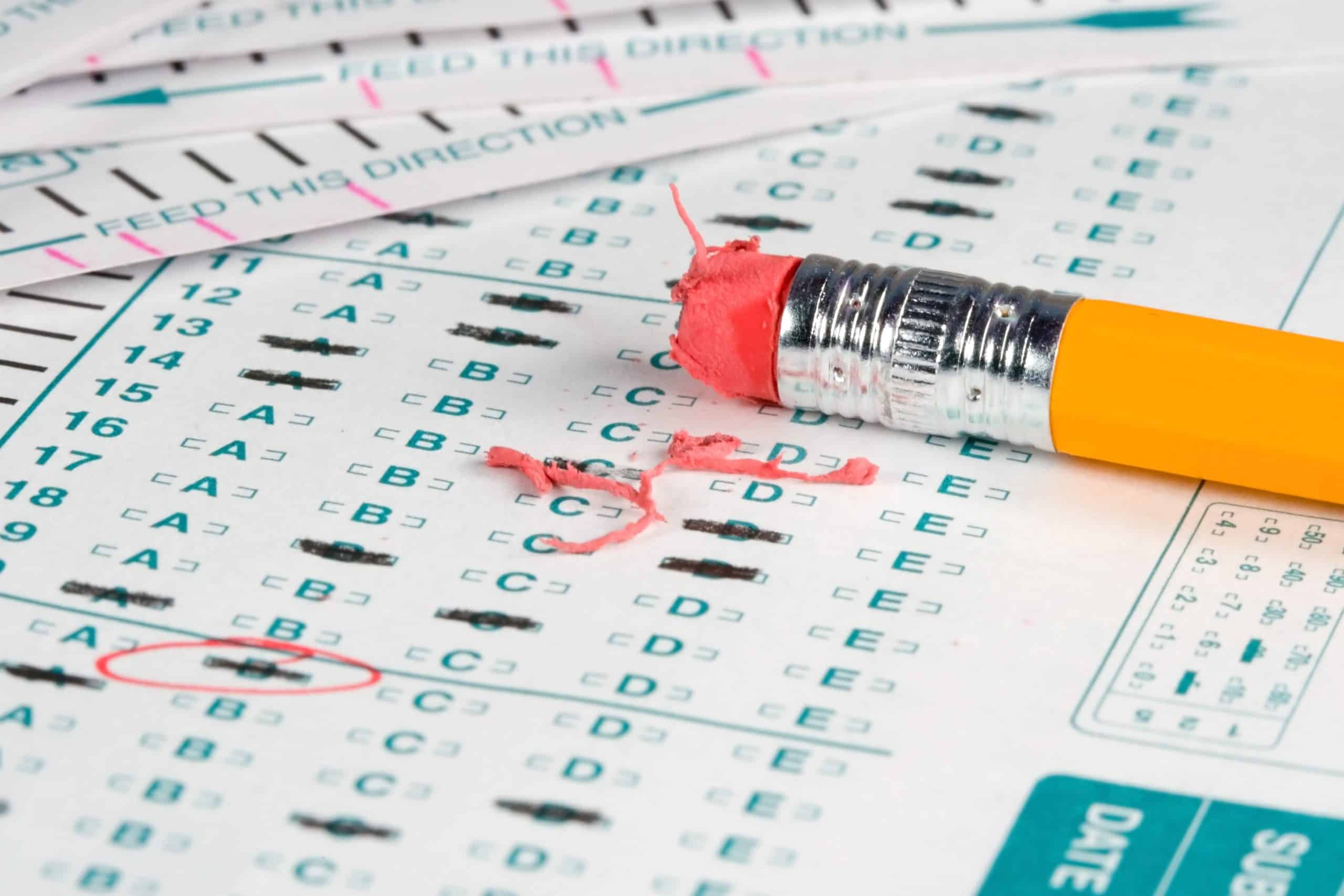
As New Jersey schools began administering new online state exams on Monday, a few affluent communities reported large numbers of students opting out.
In Livingston, the suburb where Gov. Chris Christie grew up, school officials said about 1,100 students declined to take the tests, more than a quarter required to take them.
In Princeton, more than half of the high-school students who are scheduled to take them in coming days said they wouldn’t.
These districts appeared to be among the biggest pockets of resistance to the tests aligned with the Common Core, a set of expectations adopted by most states that spell out what skills children should master in each grade. (Brody/Wall Street Journal)
Reader says Common Core :The most important reason appears to be the intimate connection between federal funding to support state staffing positions for education
Why are school districts so adamant about subjecting our children to this? The most important reason appears to be the intimate connection between federal funding to support state staffing positions for education. For example, in Alaska 43% of the jobs in the department of education are federally funded. An Alaskan legislator also pointed out that two-thirds of their educational administrative costs are federally funded. Concern over this intimate connection creates a culture of silence where teachers and administrators fear losing their jobs. Another reason is school administrators believe they must have 95% participation on the standardized test in order to receive funding for their schools. Local districts also comply with the tests because they have been both pressured by the federal government and conditioned to obey federal mandates (however unconstitutional).
The SBAC and PARCC tests and Common Core are acts of educational tyranny never agreed to, never voted on by parents or legislatures, and never discussed or debated. This system of so-called educational reform is radical, egalitarian, socialist and counterproductive. Should we accept this conversion to nationalized education with unflinching obedience? It is up to us. Will we protect our children from planned failure based on poorly designed schemes? Or will we refuse this poorly disguised federal tyranny? I will refuse. A growing number of parents are joining me. Will you?
Mary Anne Marcella is a parent and public school teacher who wants the best for her children and students. Her views are her own and do not necessarily reflect the views of others in the education field.
A Letter from Dr. Fishbein on PARCC, Policies and Procedures
February 24, 2015
Dear Parent or Guardian:
Next week, we will begin the implementation of the New Jersey state-mandated PARCC assessments in our schools. Although we have been administering state-mandated assessments for decades, these particular required assessments have been subject to much debate and controversy.
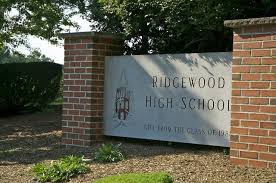
Simply, all New Jersey public school districts are mandated by the State of New Jersey to administer these assessments and students are required to participate. On Monday, February 23, 2015, the Ridgewood Board of Education updated Policy #2622 – Student Assessment. (A link to the policy is provided below.)
The State of New Jersey does not recognize parents who do not permit their children to take the PARCC assessments. However, in preparation for the administration of PARCC in the Ridgewood Public Schools, we have developed an administrative process we will follow under Procedure #2622 – Student Assessment. Because this is a procedure, it is not subject to Board of Education approval. (A link to this procedure is provided below.)
Below are links to relevant FAQ information from the New Jersey School Boards Association (NJSBA) and from the New Jersey Department of Education (NJDOE). In addition, significant PARCC information may be found on the Curriculum, Instruction and Assessment page of our district website at www.ridgewood.k12.nj.us. The link to the PARCC information is located on the right side of the page.
Rep. Garrett congratulates Old Tappan Resident Soyoung Park for taking first place in the 2014 Congressional Art Competition
Rep. Scott Garrett announces the 2015 Congressional Art Competition has begun, and I am currently accepting submissions in my New Jersey district offices.
February 19,2015
the staff of the Ridgewood blog
Ridgewood NJ, The Congressional Art Competition is sponsored by the U.S. House of Representatives, and it is open to all 9th-12th graders. The first-place winner from each congressional district is invited to attend a reception in Washington, D.C., and the winning artwork is displayed in the U.S. Capitol for a year.
Attached, you will find the 2015 guidelines and the Student Release form. All applicants must live in New Jersey’s 5th Congressional District to participate. Students who wish to submit artwork in the competition must do so by Friday, April 24, 2015. All artwork must be labeled clearly on the back with the artist’s name, address, phone number, title of piece, and medium. A typed copy of the Student Release form, signed by both the teacher and the student, must be attached to the back of the artwork to certify the originality of the piece.
Although the competition does not require artists to frame the artwork unless they win, we strongly encourage all participants to frame the artwork according to the guidelines and to attach a wire to the back for hanging. If the student is unable to frame the artwork, it should still be covered and a wire should be attached on the back, so it can be displayed with the rest of the artwork.
This year, the reception will be held at Sussex County Community College. My staff will forward details about the reception as soon as they are available. All students, parents, and teachers will be invited to the reception.
Artwork may be dropped off at my Eastern District Office, 266 Harristown Road, Suite 104, Glen Rock (201-444-5454) or my Western District Office, 83 Spring Street, Suite 302A, Newton (973-300-2000) between now and April 24. Please call in advance to let my staff know you will be dropping off the artwork.
I sincerely hope you will consider participating in this wonderful opportunity. Please do not hesitate to contact Christina Garfinkle at my Eastern District Office at (201) 444-5454 if you have additional questions.
2015 Student Release Form
2015 Rules and Regulations for Students and Teachers
How much does your state spend on welfare? New Jersey spends 22 percent
By Jason Russell | February 12, 2015 | 12:29 pm
Wyoming spends the smallest portion of its budget on welfare programs, according to fiscal year 2013 data released by the Census Bureau. About 13 percent of Wyoming’s budget goes to welfare, with education getting 30 percent of the budget, and the rest going to other various government functions.
On the other hand, Tennessee spends the highest portion of its budget on welfare, at 36 percent. Tennessee spends slightly less on education with 32 percent of its budget dedicated to schools, and the rest going to other functions, especially highways.
Nationwide, state governments collectively spend $2 trillion, with $520 billion of that going toward welfare programs, or just under 26 percent. Education is the highest category of state government spending, with 30 percent of state government spending nationwide.
Child-porn charges in Pines Instagram case hinge on youths’ age, actions
Felony charges as severe as child pornography could be in store for a 13-year-old girl and two boys, ages 12 and 15, accused of creating an Instagram account dedicated to nude and sexually explicit photos of Broward minors, a prosecutor said Friday.
“No decisions have been made. Things are still under investigation. We are not sure what, if any, charges are going to be filed,” Assistant State Attorney Maria Schneider, head of the Broward State Attorney’s Office juvenile unit, said. “But potentially, the charges could be felonies, from child porn on down. It all depends on the age of the child depicted and what they’re doing.”
Pembroke Pines police on Thursday filed charges with state prosecutors for review. No arrests have been made and none of the youngsters has been taken into custody. Because of their ages, their identities have not been disclosed, Pembroke Pines Sgt. Carlos Corretjer said.
Police also would not say how many minors were exploited on the Instagram photo-sharing account or what schools the subjects or the alleged perpetrators attended.
Gov. Scott Walker College Dropout ,Next President of the United States , maybe its a good thing
Famous, Rich, and Successful People Who Were High School or College Dropouts
I’m a firm believer that most college students would be better off dropping out of school and investing the money they now spend on college. Then take the four years they would have spent on college and travel, work, play, and spend time with smart people talking about important things. It would be your choice on what’s important, not a professor, not a dean, not a faculty committee.
You don’t have to go to college to be a success. Even if you go for awhile, you don’t have to graduate to be a success. Here are just a few of the people who have become famous and/or successful without graduating from college and/or high school.
A survey conducted by Bloomberg in 2010 show that the school of hard knocks was the number one source (tied with the University of California) for CEOs of S&P 500 companies. Harvard was the #3 source (along with the universities of Texas, Missouri, and Wisconsin). The school of hard knocks features CEOs who never graduated from college.
Of the top 400 richest Americans in 2011, 27 graduated from high school but did not attend college. Another 36 were college dropouts.
S. Daniel Abraham, billionaire founder of Slim-Fast. Joined the Army at the age of 18 and fought in Europe during World War II. Did not attend college.
Roman Abramovich, richest man in Russia, billionaire. Dropped out of college. He studied at the Moscow State Auto Transport Institute before taking a leave of absence from academics to go into business. He later earned a correspondence degree from the Moscow State Law Academy.
Abigail Adams, U.S. first lady. Home schooled.
Ansel Adams, photographer. Dropped out of high school.
Bryan Adams, singer, songwriter. High school dropout.
Calpernia Adams, transsexual showgirl. Never attended college. As she noted, “My parents thought that college leads you away from God, so they hadn’t saved any money.”
Don Adams (born Donald James Yarmy), comedian, actor, game show host, voice talent. Most famous for his role in the Get Smart TV series, Adams dropped out of DeWitt Clinton High School in New York City to work as an usher before entering the Marine Corps during World War II. After a variety of jobs, he began working in television in 1954.
Sandy Adams, U.S. congressperson. Dropped out of high school at the age of 17 to join the Air Force. Later got her GED and attended the police academy before being hired as a deputy sheriff. She took night classes at a nearby college and finally received a college degree.
William Adams, aka Will.i.am, singer, songwriter, music producer, founder of the Black Eyed Peas, actor, entrepreneur. He formed his first group in high school. Never attended college.
Gautam Adani, commodities billionaire from India. Dropped out of college.
Adele, aka Adele Laurie Blue Adkins, singer and songwriter. Intended to go to college but got signed to a recording deal just after her high school graduation.
Sheldon Adelson, billionaire casino owner. Dropped out of City College of New York to become a court reporter. He made his first fortune doing trade shows.
Trace Adkins, country music singer and songwriter, actor. Studied at Louisiana Tech University but never officially graduated. Went to work on an oil rig instead.
Mortimer Adler, author, educator, editor. Left high school at the age of 15 to work. Later received his high school equivalency degree and attended Columbia University.
Ferran Adria, chef. Has been called the world’s greatest chef. Did not finish high school.
Miguel Adrover, fashion designer. High school dropout.
Ben Affleck, actor, screenwriter. Left the University of Vermont after one semester; then dropped out of Occidental College to pursue acting.
Andre Agassi, tennis player, winner of 8 Grand Slam titles. Quit school in the ninth grade and turned tennis pro at the age of 16. His father would drive the kids to school but, instead, actually took them to local tennis courts to practice.
Dianna Agron, singer, dancer, actress. “I didn’t take the typical path and go to college after high school. Instead, I saved up money from teaching dance classes and moved to L.A.”
Christina Aguilera, singer, songwriter. Never finished high school.
Danni Ahse, multimillionaire businesswoman, adult entertainment website operator, model, producer, dancer. High school dropout who later earned an equivalency degree.
Danny Aiello, actor. Dropped out of high school at the age of 16 to join the army. Later received a high school equivalency degree.
Troy Aikman, Superbowl-winning football quarterback, TV sports commentator. In 2009, he finally graduated from UCLA, 20 years after leaving college to play in the National Football League. Aikman had promised his mother, when he left school just two courses shy of a degree, that he would return and finish. In 2009, at the age of 42, he finally fulfilled that commitment, earning A’s in his last two courses, thus earning a bachelor’s degree in sociology.
Malin Akerman, model, actress. Enrolled in York University (Toronto) but left after about a year to see what else was out there. She moved to Los Angeles to become an actress.
Dennis Albaugh, billionaire founder of pesticide company Albaugh Inc. Earned a 2-year agriculture business degree from Des Moines Community College. Did not continue on to a 4-year degree.
Edward Albee, playwright. Dropped out of Trinity College after three semesters.
Jack Albertson, Oscar-winning actor. High school dropout.
Chuck Allen, banker, co-founder of the National Scholastic Surfing Association, and founder of the U.S. Amateur Snowboard Association. At the age of 19, he moved from Oklahoma to California and began working odd jobs until he was established enough to move on to a banking career.
Paul Allen, billionaire co-founder of Microsoft, founder of Xiant software, owner of Seattle Seahawks and Portland Trailblazers. Dropped out of the University of Washington to work for Honeywell. A year later he convinced Bill Gates to drop out of Harvard and move to Albuquerque, New Mexico to start up Microsoft.
Peter Allen, singer, songwriter, composer. High school dropout.
Rick Allen, rock star member of Def Leppard. High school dropout.
Woody Allen, screenwriter, actor, director, and producer. Was thrown out of New York University after one semester for poor grades. Also dropped out of City College of New York. As he admitted, “I was thrown out of college for cheating on the metaphysics final. I looked within the soul of the boy sitting next to me.”
Glen Allsopp, Internet marketer, founder of ViperChill. Dropped out of college at the age of 18 to move to Cape Town, South Africa to work as a social media manager.
Steven-Elliot Altman, author. Left school at the beginning of the 10th grade and ran away from home. Entered college at the age of 16 and earned a degree at 19.
Joy Alukkas, billionaire jeweler. Never attended college. Immediately after high school, he moved to the Gulf to open a jewelry store.
Dhirubhai Ambani, billionaire Indian businessman. High school dropout.
Wally “Famous” Amos, multimillionaire cookie entrepreneur, author, talent agent. Dropped out of high school at the age of 17 to join the U.S. Air Force.
Hans Christian Andersen, short story author, fairy tales. Left home at the age of 14 to find work. Later attended Copenhagen Univesity.
George “Sparky” Anderson, baseball player and manager. Did not attend college.
Paul Thomas Anderson, director of such movies as “Boogie Nights” and “Magnolia.” He attended film school at New York University but quit after two days because one professor dissed “Terminator 2” and another gave him a C for a writing assignment.
Tom Anderson, co-founder of MySpace. A high school dropout.
Walter Anderson, publisher, editor. High school dropout who later earned an equivalency degree.
André 3000, see André Benjamin.
Mario Andretti, race-car driver, author. High school dropout who later earned an equivalency degree.
Anthony Andrews, actor. High school dropout.
Julie Andrews, Oscar-winning actress, singer, author. The dropped out of high school.
Jennifer Aniston, actress. She never attended college. Instead she moved to Los Angeles to become an actress.
“Jennifer Aniston says getting a nose job was the best thing she ever did. But keep in mind, she didn’t go to college, her marriage failed, her mom hates her, and she was in that Kevin Costner movie.” — Danielle Fishel, The Dish
Carmelo Anthony, basketball player. Left college after his freshman year to play in the NBA.
Shiri Appleby, actress. Went to the University of Southern California for a year and a half before acting in Roswell TV show. In 2010, she is working on her associate degree via the University of Phoenix and then intends to transfer to UCLA.
Christina Applegate, actress. High school dropout.
Edwin Apps, British artist. High school dropout.
Micky Arison, billionaire chairman of Carnival Cruise Line. Dropped out of the University of Miami.
Joan Armatrading, singer, songwriter. High school dropout.
Billie Joe Armstrong, front man for Green Day punk rock band. High school dropout. As he noted, “I finally realized that high school didn’t make any sense for me then. So I quit.”
Louis Armstrong, jazz musician, singer. Dropped out of high school.
Peter Arnell, advertising executive. Never attended college. Talked his way into the advertising business after graduating from high school.
Eddy Arnold, country music singer and member of the Country Music Hall of Fame. He was 11 when his father died, so he turned to singing at church picnics and other venues to support his family. By the age of 17, he was singing in nearby honky-tonks and made his first radio appearance. He debuted at the Grand Ole Opry in 1943. Between 1945 and 1983, 145 of his songs made the country charts, with 28 of them at #1. He sold more than 85 million records.
Cliff Arquette, aka Charlie Weaver. Comedian, entertainer. High school dropout.
Mathangi Arulpragasam, aka M.I.A., rapper. Did not attend college.
Julian Assange, Wikileaks founder, software programmer. Studied mathematics at the University of Melbourne but dropped out because other students were doing research for the Pentagon’s Defense Advanced Research Projects Agency.
Brooke Astor, wealthy socialite, author, philanthropist. Dropped out of high school.
John Jacob Astor, multimillionaire businessman. America’s first multimillionaire. He dropped out of high school.
Chet Atkins, country singer, author. He was a high school dropout.
Efva Attling, musician, jewelry designer. She dropped out of silversmith school to become a model. She later joined a band called X Models. She finally returned to designing her own jewelry.
Jane Austen, novelist. She and her sister attended schools in Oxford, Southampton, and Reading until the age of 11. After that time, their father taught them at home. She did not attend college.
“Stone Cold” Steve Austin, WWE champion wrestler, actor. He dropped out of the University of North Texas a few credits shy of a physical education degree. The then took a job as a freight dockworker. And then enrolled in the Dallas Sportatorium wrestling school.
Gene Autry, singing cowboy, actor, songwriter, producer, businessman, author, baseball team owner. He was a high school dropout.
Richard Avedon, photographer. High school dropout.
Willy Aybar, baseball player. High school dropout.
Dan Aykroyd, actor, comedian. He dropped out of Carleton University in Ottawa, Canada.
“I’m watching businesses leave our state. A lot of it is in the district I represent,” said Auth. “I totaled up all the county budgets throughout the state. It’s like $6.5 billion a year in New Jersey. That’s a lot of money.”
State Assemblyman Robert Auth thinks the Garden State Abolish Its County Government
by Michael Grass February 8, 2015
State Assemblyman Robert Auth thinks so and has proposed a first step to do just that. He’s introduced a measure that would direct a state commission to recommend ways to the legislature on how best to eliminate New Jersey’s counties.
“It’s just duplicative services,” Auth told The Star-Ledger. “The budget and the state’s economy are in such a bad way at this point that one of these local forms of government has to go. And in our state it would be county government.”
Auth thinks that the state government and municipal governments can provide the services that New Jersey’s 21 county governments provide.
Usually with the topic of local government consolidation, discussions revolve around municipalities dissolving or consolidating services with a county government—not the other way around.
John Donnadio, executive director of the New Jersey Association of Counties, told The Star-Ledger that “we should be looking at consolidating and dissolving municipalities as opposed to county government.”
New Jersey is a complicated place to say the least. It has 565 municipal governments, many of them concentrated in the northern part of the state, adjacent to New York City.
While Auth, who lives in Bergen County, might be frustrated with county government in North Jersey he may want to take a field trip to South Jersey.
FEBRUARY 9, 2015, 9:59 PM LAST UPDATED: MONDAY, FEBRUARY 9, 2015, 10:02 PM
BY HANNAN ADELY
STAFF WRITER |
THE RECORD
A movement to get parents to keep their children from taking new state exams next month — fueled by protests on social media and encouragement from the teachers union — is gaining steam.
New Jersey requires all students to take the tests, but they do not need to sit for the exams to go on to the next grade or graduate.
State Education Commissioner David Hespe has urged school leaders to respond to the growing opt-out movement by explaining to parents the merits of the tests. In meetings, letters and online communications, school leaders say the tests will provide detailed information about what each student knows, better prepare teens for college entrance exams and build critical thinking skills.
But they are also trying to address parents’ complaints that the tests cut into instruction time, hamper creativity and fail to adequately measure learning. Some parents have delivered heartfelt pleas to school officials about the stress their children feel.
“We try to provide a balanced approach and let parents know there are benefits to taking the test. All they hear about is negative,” said Mark Toback, superintendent of Wayne schools.
Ash Wednesday Services at Old Paramus Church, Ridgewood This year Ash Wednesday is on February 18th. Traditionally, services are held to remember this, the first day of Lent, a season of reflection and sacrifice, in anticipation of Easter. Services this year will be held at 7 a.m., 11:30 a.m. and 7:30 p.m., with Old Paramus Pastor, Rev. Rob Miller, officiating . Organist, Stewart Holmes, will play at the 7 a.m. and the 7:30 pm services. Imposition of ashes as well as communion will be part of each service. Members of the community are welcome to participate in any of these services. The church is located at 660 East Glen Avenue at Route 17 South. For more information visit the church website, www.oldparamus.org or call the church office at 201 444-5933, weekdays, from 9:30 to 1:30.
FEBRUARY 1, 2015, 10:45 PM LAST UPDATED: SUNDAY, FEBRUARY 1, 2015, 10:46 PM
BY HANNAN ADELY
STAFF WRITER |
THE RECORD
In an effort to cut down on rising costs, the state is capping a program that allows students to attend schools outside their own district at no extra cost, limiting some Bergen and Passaic schools to just a handful of open spots for the coming school year.
“It’s fiscally unsustainable,” state Education Commissioner David Hespe said in an interview. “The program has increased fivefold. The cost has increased fivefold.”
The education commissioner is also considering preventing additional students from high-performing schools, which would include many in Bergen County, from participating. The program was meant to give students access to better schools, but many of the students who took advantage already had good schools in their hometown, Hespe said.
State officials say they need to stop the Interdistrict Public School Choice Program’s growth because it has ballooned to about 5,000 students at a cost of $50 million a year. But supporters of the program say the decision to cap it seems to contradict the Christie administration’s stated policy of creating more taxpayer-financed options for students who don’t want to attend struggling local schools.
How did Camden, N.J. come to have one of the highest spending AND worst performing school districts in the nation?
The recent history of Camden, New Jersey, which is the poorest small city in America, provides a case study of the tragic ineffectiveness of government programs at ameliorating poverty. State and federal taxpayers have spent hundreds of millions of dollars on various redevelopment programs in Camden over the years, but the money never ended up where it was supposed to and the promised revival of this fallen manufacturing town never happened.
By far, the largest initiative to combat poverty with government largess has been directed at Camden’s public schools. New Jersey spends about 60% more on education per pupil than the national average according to 2012 census figures, or about $19,000 in 2013. In Camden, per pupil spending was more than $25,000 in 2013, making it one of the highest spending districts in the nation.
But all that extra money hasn’t changed the fact that Camden’s public schools are among in the worst in the nation, notorious for their abysmal test scores, the frequent occurrence of in-school violence, dilapidated buildings, and an on-time graduation rate of just 61 percent.
This is the story of how Camden became one of the nation’s best funded and worst performing school districts, which is the first in a three-part video series on Camden public school system.
Another round of ‘school report cards’ released; include new career, tech info
January 30, 2015, 7:58 PM Last updated: Friday, January 30, 2015, 7:58 PM
By HANNAN ADELY
Staff Writer | The Record
New Jersey school report cards released Friday show how well schools are educating children and include for the first time a breakdown of how many students take career and technical courses.
The School Performance Reports, searchable online, give a school-by-school picture on measures including test scores, graduation rates and absenteeism and offer comparisons among schools that have similar demographics.
“Each year, the school performance reports present information designed to give local districts a more complete snapshot of where their schools stand in terms of how well their students are moving toward college and career readiness,” said state Education Commissioner David Hespe.
Participation in career and technical education was added as a school measure under a package of bills that Governor Christie signed in December to boost vocational education.
Pressure builds for fresh look at N.J. building codes in wake of Edgewater fire
JANUARY 29, 2015, 5:39 PM LAST UPDATED: THURSDAY, JANUARY 29, 2015, 8:31 PM
BY JEAN RIMBACH AND LINH TAT
STAFF WRITERS |
THE RECORD
Pressure is mounting for a review of state building codes — and even a potential construction moratorium — in the aftermath of a fast-moving fire that destroyed more than half of an Edgewater apartment complex last week and left hundreds homeless.
Officials in Mercer County on Thursday called for an emergency review of state construction codes before a residential community planned by the same developer for Princeton gets evaluated by the state. And Assemblyman Scott Rumana, R-Wayne, said he is working on legislation that will put a moratorium of up to two years on the approval and construction of multi-family housing developments until the state’s building code is revised.
“The goal is not have any New Jersey residents’ lives at stake. But equally as important, it’s to not put our first responders into these buildings, which I would call fire traps,” said Rumana. “I have too much experience in seeing the failures of these types of facilities — if this fire happened seven or 10 hours later, who knows how many people could have died?”
A five-alarm blaze at the Avalon at Edgewater destroyed much of the 408-unit complex, shut schools and roadways, temporarily displaced nearby residents and brought to the surface long-standing issues in the firefighting community about lightweight wood construction — a cheaper, faster and legal style of building that is common in New Jersey and elsewhere.