Posted on Leave a comment

Education Savings Accounts: Advancing Choice in States with Blaine Amendments

School-Choice-700x466


Both research and legal precedent demonstrate that the ability to direct ESA funds to multiple education services and products separates ESAs from school vouchers. This is a critical distinction for states to recognize when considering parental choice options. Blaine amendments to state constitutions, such as the provisions in the Arizona and Nevada constitutions, have an ignoble history and should be repealed. Moreover, the distinctive policy design of ESAs makes the accounts well-positioned to withstand legal challenges based on Blaine amendments.

Diversity and Customization in ESA Use Among Arizona Families

In 2011, Arizona lawmakers enacted the nation’s first law establishing ESAs. The state deposits a portion of a child’s allotted funds from the state education formula into a restricted-use bank account that parents use to buy educational products and services for their children. Parents and students can use the accounts for online classes, private school tuition, personal tutors, saving for college, and financing a variety of other learning experiences. Every child is different, and with an account, students and their parents can design an education as unique as they are.

After lawmakers enacted ESAs, teachers unions and other special interests challenged their legality in court. Arizona unions based their suit on the state’s Blaine amendment, which prohibits public funds from flowing to religious institutions. In 2014, Arizona courts ruled in Niehaus v. Huppenthal that ESAs do not violate the state constitution.

Arizona families have used these accounts to pay for a wide variety of education-related services, products, and providers. In 2013, the Friedman Foundation for Educational Choice (now EdChoice) conducted the first study of Arizona families’ purchases with the accounts.[1] Among those students, the study found that approximately 34 percent of account recipients used their funds for multiple learning experiences.[2]

Between 2012 and 2014, lawmakers expanded ESA eligibility to include children from active duty military families, children who had been adopted through Arizona’s foster care system, preschoolers with special needs, siblings of account holders, and students in public schools rated “D” or “F” on the state report card system. An updated analysis using ESA data from the Arizona Department of Education from the end of the 2013–2014 school year and the complete 2014–2015 school year, and including these new populations of eligible students, found relative stability in the proportion of families using their accounts to customize their children’s learning experience. Research from this time period found 28 percent of families using their ESAs to pay for multiple education services, products, and providers.

Although there was a modest decrease in the percentage of families using their ESAs for multiple services over the course of the two evaluations—from 34 percent to 28 percent—these results demonstrate that with a larger and different cohort of students over a different time period, a similar percentage of students still customized their learning experience with an account. In the analysis of families participating in the 2011–2012 school year, all participating students were children with special needs. These latest data include students made eligible through changes in the law since the first report. New eligibility criteria and the passage of time did not change how families value the accounts’ flexibility. Parents continue to access a diverse menu of products and services to meet their children’s learning needs.

Legal Challenge to ESA in Nevada

The American Civil Liberties Union (ACLU) brought a lawsuit similar to that in Arizona against a recently established ESA program in Nevada. In September 2016, the Nevada Supreme Court upheld the accounts as constitutional as far as the state’s own Blaine amendment provisions are concerned. The program remains suspended, however, because the court ruled that lawmakers must revise the statute’s funding provisions—statutes specific to Nevada law that do not have national implications.

The research findings from Arizona are relevant for Nevada families waiting to use ESAs. In 2015, Nevada lawmakers made history by making every child attending a public school in the state eligible for an ESA. Before any children were able to take advantage of the new option, the ACLU filed suit to block the program. In Duncan v. State of Nevada, the ACLU made claims similar to claims made by teachers unions in Niehaus v. Huppenthal. Citing the Nevada constitution’s Blaine amendment, the ACLU attempted to block the Silver State’s ESA program by arguing that it constitutes state aid to religious institutions.

Blaine Amendments’ Ignoble Roots

During the latter half of the 19th century, Catholic families sought to establish Catholic schools as an alternative to the publicly funded common schools emerging in the United States at the time. Common schools sought to assimilate all students to a general sort of Protestantism, including use of the King James Bible and conducting devotional activities.[3] Maine Senator James G. Blaine sought to prohibit aid to “sectarian” schools. As the U.S. Supreme Court acknowledged in Mitchell v. Helms, the effort had “a shameful pedigree that we do not hesitate to disavow…. Consideration of the amendment arose at a time of pervasive hostility to the Catholic Church and to Catholics in general, and it was an open secret that sectarian was code for Catholic.”[4]

Although the federal amendment failed, Congress subsequently required territories seeking admittance to the union to include similar prohibitions on public funds supporting religiously affiliated schools. That requirement, in conjunction with the 14 states that already had Blaine-type language prior to the federal effort, resulted in 29 states having such restrictions by 1890, and 38 states had adopted Blaine amendments by 1959.[5]

ESA Design: Helping to Withstand Blaine-Based Lawsuits

Nevada’s Blaine amendment says that “no public funds of any kind or character whatever, State, county or Municipal, shall be used for sectarian purpose.”[6] Thankfully for Nevada families, in September 2016, the state supreme court upheld ESAs as constitutional. The court held that ESAs provide money to families, who can use funds to pay for a variety of education-related products and services such as private tutors, private school tuition, and other expenses.[7] Families will be able to access ESAs pending identification of an appropriate funding source for the accounts.[8]

The defining feature of ESAs—that parents can make multiple choices for their children’s education—helped them survive a Blaine-based legal challenge in Arizona where the state supreme court had deemed a voucher program unconstitutional. In the 2013 Arizona Court of Appeals’ unanimous opinion, Judge Jon Thompson wrote that “[t]he ESA does not result in an appropriation of public money to encourage the preference of one religion over another, or religion per se over no religion. Any aid to religious schools would be a result of the genuine and independent private choices of the parents.”[9] In 2014, the Arizona Supreme Court denied the union’s appeal of the lower court’s decision, allowing the court of appeals decision to stand.

Critically, ESA funds are not reserved for specific schools or education providers. Funds are deposited into parent-controlled accounts, and parents can use the funds for an education-related provider, product, or service of choice. The ESA option “does not require any student to be enrolled in a private school, much less a ‘sectarian’ private school.”[10] The ability to direct dollars to multiple education services is a critical distinction between ESAs and other parental choices in education, including K–12 private school vouchers.

Customization Makes ESAs Unique Education Choice Mechanisms

The distinctive policy design of ESAs enables accountholders to finance multiple learning options beyond tuition at a private school. It also makes the accounts well-positioned to withstand Blaine amendment–based legal challenges. Such lawsuits against private school vouchers have alleged that these scholarships constitute state aid to religious institutions. Yet nearly 30 percent of Arizona ESA families are making multiple education decisions simultaneously in determining how and where their children learn. In this way, Arizona parents’ customization demonstrates what the courts have reasoned: ESAs are functionally different from other parental choices in education. Nevada courts reached the same conclusion.

—Lindsey M. Burke is Will Skillman Fellow in Education Policy Studies in the Institute for Family, Community, and Opportunity at The Heritage Foundation. Jonathan Butcher is the Director of Education Policy at the Goldwater Institute.

Posted on Leave a comment

The Ridgewood Crew Team Takes Home Two First Place Finishes

Ridgewood Crew
October 28,2016
the staff of the Ridgewood blog
Ridgewood NJ, The Ridgewood Crew team competed in their first regatta on October 8, the Tail of the Passaic. The team garnered two first-place finishes, including  the Men’s Varsity 1x; and the Women’s Varsity 4x Ridgewood Crew also took home five-second place finishes.

In addition to the four semifinalists, 25 students have been identified as Commended Students in the most recent competition.

Posted on Leave a comment

The Nation’s Report Card Shows Higher Percentages of 4th- and 8th-Graders Reached Proficient Level in Science in 2015 Than in 2009

super_sciencesaturday_theridgewoodblog

October 28,2016

by the
National Assessment Governing Board

Ridgewood NJ,  The Nation’s Report Card: 2015 Science shows scores have improved overall, and higher percentages of the nation’s fourth- and eighth-grade students demonstrated mastery of science on the 2015 assessment compared with the 2009 assessment. The results also show score gaps narrowing by race/ethnicity. The average score of 12th-grade students did not change between 2009 and 2015.

In 2015, 22 percent of 12th-graders performed at or above the Proficient achievement level, which denotes competency over challenging subject matter. Additionally, 38 percent of fourth-graders and 34 percent of eighth-graders performed at or aboveProficient — an increase of 4 percentage points at both grades compared with 2009.

“Seeing these gains in science from our fourth- and eighth-graders makes me hopeful about the future of our nation’s students,” said former Wyoming Gov. James Geringer, director of policy and public sector strategies at the Environmental Systems Research Institute and member of the National Assessment Governing Board, which sets policy for NAEP. “But that progress needs to continue since only about one-third of students, or even fewer, have the science skills they need.”

The National Assessment of Educational Progress (NAEP) — known as The Nation’s Report Card — is the largest nationally representative, continuing assessment of what America’s students know and can do in various subjects. The 2015 science assessment measured students’ knowledge of physical science, life science, and Earth and space sciences. The assessment also measured how well students implement science practices, like using scientific principles and engaging in scientific inquiry.

National science results are available for students at grades four, eight, and 12; state-level results are available at grades four and eight.

National highlights include:

Performance Improves at Grades Four and Eight

At grades four and eight, students scored higher in 2015 than in 2009 in all three science content areas: physical science, life science, and Earth and space sciences.
From 2009 to 2015, the percentage of students performing below the Basic achievement level decreased by 4 percentage points at grades four and eight.

Score Gaps Narrow by Race and Gender at Grades Four and Eight

The score gaps between black and white students and between Hispanic and white students at both grades four and eight have narrowed since 2009.
In 2015, fourth-grade male students scored about the same as fourth-grade female students, eliminating the gender difference.
At grade eight, male students scored higher than female students, but the difference between their scores in 2015 was smaller than the difference between their scores in 2011 (3 points versus 5 points).
At grade 12, male students outperformed female students by 5 points. The gap between their scores in 2015 was not statistically different from the 2009 gap.

State highlights include:

Some Sizable Gains Made at Grades Four and Eight

Between 2009 and 2015, scores at both grades rose in 15 states and jurisdictions: Arizona, Arkansas, Department of Defense Education Activity (DoDEA) schools, Florida, Georgia, Hawaii, Indiana, Mississippi, North Carolina, Oklahoma, South Carolina,Tennessee, Texas, Utah and Wyoming. Of these, DoDEA schools, Tennessee, Utah and Wyoming had a percentage of students performing at or above Proficient that was greater than the average percentage for national public schools in 2015.
From 2009 to 2015, four states and jurisdictions showed score gains at grade four that were larger than the national average score gain: Arizona, DoDEA schools, Georgia and Tennessee. At grade eight, three states had this distinction: Nevada, Tennesseeand Utah.

Score Gaps Narrow and Close by Race and Gender

The following states saw a statistically significant narrowing of average score gaps between black and white students from 2009 to 2015: Arkansas (a decline of 10 points), Oklahoma (8.9) and Tennessee (8.6) at grade four; and Illinois (7.8) at grade eight.
The following states saw a statistically significant narrowing of the average score gap between Hispanic and white students from 2009 to 2015: Massachusetts (a decline of 8.7 points), Connecticut (8.2), Illinois (6.7) and Nevada (5.9) at grade four; and New York (8.9), Illinois (7.4), Connecticut (7.1), Wyoming (6.9) and Arizona (5.6) at grade eight.
For fourth grade, several states closed the average score gap by gender — meaning statistically significant score differences between female and male students were found in 2009 but not in 2015 — specifically, Hawaii (a decline of 4.2 points), Maine(3.5), North Carolina (2.4), South Dakota (2.4) and Ohio (1.8).
The gender score gap closed at grade 8 in Wyoming (a decline of 6.5 points), Rhode Island (6.4), New Mexico (4.8), Georgia (4.6), and Montana (4.0), and in 13 other states.

Tennessee stands out as a state that showed large score gains at grades four and eight and narrowed score gaps between black and white fourth-graders from 2009 to 2015, and its students are outperforming the nation (public schools) at grades four and eight.

“We’ve set high expectations across the board for our students in Tennessee, and our NAEP performance continues to reflect the hard work and progress our students and teachers are making,” said Candice McQueen, Tennessee commissioner of education. “To me, the most encouraging part of today’s science results is that all of Tennessee’s students are showing what is possible. We’ve narrowed or eliminated gaps between groups of students, and we are continuing to make huge strides in where we have been historically to build a new future for our children.”

Emphasizing science in and outside of the classroom is tied to student performance in the subject, as shown in data collected through NAEP student and teacher questionnaires about educational experiences. Overall, students with more exposure to science scored better on the 2015 science assessment than students with less exposure:

Eighth-graders who participate in hands-on activities or investigations in science class every day or almost every day, as reported by their teachers, scored 12 points higher than students who never or hardly ever engage in these activities.
Eighth-grade students who self-reported that they have visited a museum, zoo or aquarium to learn about science outside of a school trip scored 7 points higher than students who have not participated in those activities outside of school.
Students who have teachers with access to school-provided scientific tools for teaching science — such as telescopes, microscopes and thermometers — also scored higher. Eighth-graders whose teachers reported the highest level of access to these tools scored 16 points higher than eighth-graders whose teachers reported no access. Twelfth-graders who reported having access to such tools scored 37 points higher than 12th-graders without access.

“Students who have more opportunities to dig in deep and fully engage do better in science,” said Missouri science teacher Susan German, a panelist at the Oct. 27 event announcing the NAEP results. “They should be spending less time buried in a textbook and more time doing hands-on activities, such as investigating which insulator works best in keeping soda cold or how height and mass influence the size of impact craters. Parents should do as much as they can to expose their children to science outside of the classroom too — even if it’s as simple as taking them on a walk through a park.”

About the Assessment

The 2015 science assessment was conducted in grades four, eight and 12 and reported at the national level for each. State-level results for grades four and eight are available for 46 states and U.S. Department of Defense schools that voluntarily participated in the assessment. (Alaska, Colorado, the District of Columbia, Louisiana and Pennsylvania did not have the necessary sample size in 2015 for state-level results to be reported.) For grades four and eight, national results reflect the scores of both public and private school students, while state-level results reflect the scores of public school students only.

NAEP performance results are presented as average scale scores and as achievement levels, reported as the percentages of students performing at or above Basic, Proficient and Advanced. Basic denotes partial mastery of the subject, Proficient denotes competency over challenging subject matter and Advanced represents superior work. Scale scores range from 0 to 300. Because NAEP scores and achievement levels are developed independently for each subject, results cannot be compared across subjects. Performance results also cannot be compared with data from before 2009, when the new science framework was introduced. The last assessment for fourth- and 12th-graders took place in 2009, and the last assessment for eighth-graders was administered in 2011.

Check out this video illustrating NAEP data to see how science education can translate into a related career path.

See the full report card here.

The National Assessment of Educational Progress is the largest nationally representative, continuing evaluation of the condition of education in the United States. It has served as a national yardstick of student achievement since 1969. Through The Nation’s Report Card, NAEP informs the public about what American students know and can do in various subject areas and compares achievement among states, large urban districts and various student demographic groups. The National Assessment Governing Board oversees and sets policy for NAEP. Follow NAEP on Facebook and Twitter.

NAEP is a congressionally authorized project sponsored by the U.S. Department of Education. The National Center for Education Statistics, within the Institute of Education Sciences, administers NAEP. The commissioner of education statistics is responsible by law for carrying out the NAEP project.

The National Assessment Governing Board is an independent, nonpartisan board whose members include governors, state legislators, local and state school officials, educators, business representatives and members of the general public. Congress created the 26-member Governing Board in 1988 to oversee and set policy for NAEP. Follow the Governing Board on Facebook and Twitter.

Posted on 1 Comment

These 2 N.J. universities rank in the top 100 worldwide

princeton


By Adam Clark | NJ Advance Media for NJ.com
on October 25, 2016 at 1:06 PM, updated October 25, 2016 at 1:28 PM

PRINCETON — A new ranking of the world’s best universities places both Princeton and Rutgers universities in the top 100.

Princeton cracked the top 10 in U.S. News and World Report’s 2017 Best Global Universities rankings, earning the eighth spot on the list. Rutgers tied with the University of Florida for 82nd.

While Princeton improved in the rankings from 13th last year, Rutgers dropped from 60th.

The rankings cover the top 1,000 institutions from 65 different countries and are heavily based on the universities’ reputation for academic research both regionally and globally. Also among the dozen factors considered are the number of publications and citations produced the university.

“United States universities do especially well in the Best Global Universities rankings because they place an enormous emphasis on academic research,” said Robert Morse, chief data strategist at U.S. News

American universities claimed the top five spots on the list, with Harvard University claiming the title as the best university in the world.

https://www.nj.com/education/2016/10/these_2_nj_universities_rank_in_the_top_100_worldw.html#incart_m-rpt-2

Posted on Leave a comment

Helping Your Sons And Daughters Prepare For The Business World

unemployment-line

October 27,2016

the staff of the Ridgewood blog

Ridgewood NJ, Each year, parents send their sons and daughters off to college with high hopes that in four years – give or take – they will earn a degree and embark on successful careers.

But while moms and dads may fret most about grades and study habits, they can give their offspring a real boost if they also insist the students carry some of the financial burden for college, says Matt Stewart, an entrepreneur and co-founder of College Works Painting (www.collegeworks.com/about), an internship program that provides practical business experience for college students.

That means getting a job – either during the school year or over the summer break, or both.

“College students are much more invested in the experience if they have to help pay for college, rather than have mom and dad take care of everything for them,” Stewart says. “There’s a natural tendency to work a little harder on classwork when at least a part of the tuition or dorm room costs come out of your own pocket.”

But beyond that personal-responsibility aspect, it’s worth noting that businesses are seeking job candidates with real-world work experience.

“Those on-the-job lessons are invaluable,” Stewart says.

For example, interns with College Works Painting operate their own house-painting business with hands-on guidance from mentors.

The benefits for students of working their way through college include:

• A regular paycheck. The rising cost of higher education has put paying the full price of college out of reach for many parents, and scholarships and grants often provide only a small percentage of the costs. The more students can pay themselves, the lower their student-loan debt will be when they enter the workforce.
• Practical experience. Nothing prepares you for work like work, Stewart says. A classroom can train students on certain skills necessary for their career choice, but on-the-job experience is just as valuable. Even if a part-time job is unrelated to career aspirations, a student might learn such skills as collaboration, time management and customer relations.
• Resume enhancement. One of the weaknesses recent college graduates sometimes have is their resumes can be skimpy. A few summer jobs can help tremendously, Stewart says, giving managers who might consider hiring you more confidence that you have experience beyond listening to professorial lectures and cramming for final exams.
• Additional references. Hiring managers want to talk with people who know your work habits, and while it’s nice that a favorite professor or a high school football coach is willing to say good things, it’s even better to have references who can discuss relevant job skills.

“Having any job can be beneficial, but if you can you should try to land an especially challenging job or internship,” Stewart says. “When you graduate, you’re going to face stiff competition in the job market. The more you’ve been able to stretch yourself past your comfort zone and develop new skills, the greater the odds are that you’ll be the one picked out of all the applications that come pouring in.”

About Matt Stewart

Matt Stewart is co-founder of College Works Painting (www.collegeworks.com/about), which provides business experience for thousands of college students each year. The award-winning program also offers high-quality house-painting services for homeowners.

Posted on Leave a comment

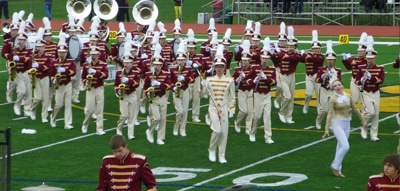
Ridgewood High School Bands Poinsettia and Amaryllis Sale

Marching band


Sunday, October 30th, 2016 from 12:00p to 4:30p

Ridgewood High School

Ridgewood, NJ

Students will be selling door to door on 10/30/16 with a delivery December 3 and 4, 2016

Sizes and prices as follows:
6″ Red or white – $10
10″ Red or white- $25
Amaryllis – $15

Orders accepted until 11/18/16.  Please contact Lorissa Lightman: [email protected]  for more information. Orders/ checks made out to RHS Band Assoc can be mailed c/o Lorissa Lightman, 659 Spring Ave., Ridgewood, NJ  07450

For more information on the band program and a list of events, visit www.rhsbands.org

Posted on Leave a comment

Groups sue to remove PARCC test as graduation requirement

o-STANDARDIZED-TESTS-facebook

BY HANNAN ADELY
STAFF WRITER |
THE RECORD

Several New Jersey civil rights and advocacy organizations have sued to stop the state from using exams called PARCC as a graduation requirement, arguing it will prevent disadvantaged students and students who boycott the test from graduating.

The Latino Action Network, the Latino Coalition of New Jersey, the Paterson Education Fund and the Education Law Center filed the lawsuit in the Appellate Division of the New Jersey Superior Court on Friday. The Education Law Center and American Civil Liberties Union of New Jersey are representing the groups.

https://www.northjersey.com/news/groups-sue-to-remove-parcc-test-as-graduation-requirement-1.1682345?utm_campaign=Observer_NJ_Politics&utm_content=New%20Campaign&utm_source=Sailthru&utm_medium=email&utm_term=New%20Jersey%20Politics

Posted on 1 Comment

“Meeting Regulations” Posted Along with Every Ridgewood BOE Agenda Maybe Considered Unlawful and Unconstitutional

Ridgewood_BOE_theridgewoodblog

October 25,2016

by Boyd Loving

Ridgewood NJ, In light of the current lawsuit being heard in Hudson County Superior Court, in which a man claims his freedom of speech rights were violated when he was ejected from a public meeting for making comments not appreciated by those running the meeting, could these “Meeting Regulations” posted along with every Ridgewood BOE agenda be considered unlawful/unconstitutional and, therefore, expose Ridgewood taxpayers to potentially expensive litigation?

 “Comments shall be limited to issues. If personal remarks or discourteous statements are
made, the presiding officer shall require the speaker to stop.”
Posted on 1 Comment

RHS New Players Presents Trunk or Treat on October 30

Ridgewood ,07450, 201, Village of Ridgewood , Ridgewood NJ,  Village Council , Ridgewood Board of Education, Ridgewood Schools

photo courtesy of Gail McLaughlin McCarthy

Halloween tales in The Little Theatre, followed by trunk or treating in the RHS parking lot. $7 in advance / $10 at the door. Click here for more information and the registration form.

Posted on 1 Comment

Ridgewood Board of Education Meeting Monday October 24th at 7:30pm

BOE_theridgewoodblog
October 24,2016
the staff of the Ridgewood blog

Ridgewood NJ, At the October 10 meeting, the Board of Education approved the three-year contract with the Ridgewood Education Association (REA) that was ratified by the REA on September 28. Click here to read a letter to the Ridgewood community from the Board.

The Ridgewood Board of Education will hold a Regular Public Meeting on Monday, October 24, 2016 at 7:30 p.m. The meeting will be held in the Board Room at the Education Center, 49 Cottage Place. The public is invited to attend the meeting or view it live via the district website at www.ridgewood.k12.nj.us using the “Live BOE Meeting” tab on the district website, or on Fios tv channel 33 or Optimum 77.

Click here to view the agenda  for the October 24, 2016  Regular Public Meeting.

Click here to view the minutes of the September 26, 2016 Regular Public Meeting.
.

Click here to view the 2016-2017 Budget presented at the May 2, 2016 Regular Public Meeting.

Click here to view the Full Day Kindergarten Recommendation presented to the Board at their March 7, 2016 Regular Public Meeting.

Posted on 3 Comments

Governor Christie held his latest Fairness Town Hall in New Providence and Hammered the Tax Fairness Message

Chris_christie_theridgewoodblog
October 23,2016
the staff of the Ridgewood blog
Ridgewood Nj, On Tuesday, despite the Governor’s legal trouble, Governor Christie held his latest Fairness Funding Town Hall in New Providence, continuing to make the case for massive property tax relief and equal funding for every student in our state.
The Governor made it clear that its unacceptable to allow the failed, court-ordered school funding format to continue to fail inner-city students and short-change our surburban schools and taxpayers. The largest force opposed the Governor’s Fairness Funding Formula is the NJEA. They have spent millions to buy the support of Trenton Democrats to block any effort to reform school funding, making property taxpayers foot the bill for a failed formula.
The Governor’s plan to provide equal funding to every student across our state would translate into more money and property tax relief for 75% of school districts in the state. In New Providence, the Governor’s plan could translate into a $3,232 reduction in the average homeowner’s yearly property tax bill.
Posted on Leave a comment

Bold New School Voucher Referendum in Atlantic City

Jesse Kurtz

Atlantic City NJ, Atlantic City Councilman Jesse Kurtz proposed a school voucher referendum. The city council approved it unanimously. Now Atlantic City voters will decide on the future of K-12 education in their city. If they approve the referendum, all Atlantic City children will receive a $10,000 scholarship to attend the school of their parents’ choice at the same time that taxes will be reduced for the Atlantic City taxpayer.

Posted on 2 Comments

Principal, teachers reminisce about Ridgewood High School

RHS

file photo by Boyd Loving

BY MATTHEW SCHNEIDER
STAFF WRITER |
THE RIDGEWOOD NEWS

Ridgewood High School (RHS) has a long history and has been a part of the school district’s “tradition of excellence” for the past 125 years.

The school has also made an impact on former students outside of the classroom, partially shaping their lives in addition to giving them a fine educational experience.
https://www.northjersey.com/news/education/principal-teachers-reminisce-about-rhs-1.1680801

Posted on 2 Comments

Reader says taxpayers pay for the “red shirting” in Ridgewood

football

Redshirting is the practice of postponing entrance into kindergarten of age-eligible children in order to allow extra time for socioemotional, intellectual, or physical growth. This occurs most frequently where children’s birthdays are so close to the cut-off dates that they are very likely to be among the youngest in their kindergarten class. (https://en.wikipedia.org/wiki/Redshirting_(academic) )


A gifted athlete will always shine. Parents hold back because they think that one more year will make their kid a gifted athlete. Doesn’t work that way.

A ridgewood parent held his son back because the boy was small. Got news for them, dad is small too. One year won’t make him taller.

I have heard of parents holding back in 8th grade. Manipulating the system. And yes, taxpayers pay for the red shirting. One year 2 eighth grade best friends were magically held back at the expense of taxpayers. I don’t know if the gamble paid off. Never saw the names in the sports pages.

Do you think all day K will stop this problem? It is just another gift for a minority of taxpayers. Taxes are the gift that keep on giving.

Posted on 2 Comments

Yes, an after-school Satan Club could be coming to your kid’s grade school

SATAN’ CLUB

by Rick Anderson

Lilith Starr, a devil’s advocate in every sense, is in a rush to get her After School Satan Club started.

As founder of the Satanic Temple of Seattle, she’s under pressure from national satanic headquarters — located in the Colonial witch trials city of Salem, Mass. — to launch a counter-strike strike against grade school Christianity by opening an after-school Satan Club.

“I think many people have the misunderstanding that we are some kind of tongue-in-cheek troll group,” said Starr, 44, a Harvard grad who sometimes dresses in church robes and, when circumstances demand, paints her lips and part of her face black.

“But in reality we are a very serious religion, with our own shared narrative, culture and symbols, a code of ethics — our Seven Tenets — and worship in the form of activism.”

https://www.latimes.com/nation/la-na-satanic-after-school-20160928-snap-story.html