TRENTON, N.J. – Republican Chris Christie’s final budget as New Jersey governor has not yet passed through the Democrat-controlled Legislature, but already fiscal woes that could result in program cutbacks or higher taxes are on the horizon for whoever who succeeds him.
Christie unveiled a $35.5 billion 2018 spending blueprint on Tuesday without proposing tax increases or slashes to programs, but tax cuts enacted under his watch, a ballooning pension payment and mandated education spending will saddle his successor with challenging budget decisions.
Christie can’t run for re-election because of term limits. None of the leading Democratic and Republican candidates running to succeed him has unveiled his or her own prospective budget. While they’ve already begun to signal how they might approach the looming problems, it’s difficult to tell exactly how they would balance the budget.
A closer look at the issue:
WHAT’S THE PROBLEM?
Topping the list of issues is an estimated $1.1 billion hole from the reduction of the sales tax and phase-out of the estate tax that Christie and lawmakers agreed to last year as part of a deal on funding transportation.
Next year’s budget will also confront the prospect of a roughly $1.5 billion increase in the pension payment, if the current schedule is adhered to. And then there’s the school-spending formula approved by the Supreme Court that Christie failed to fund over seven years to the tune of about $1 billion a year.
There’s also significant uncertainty surrounding what could happen to federal aid the state gets, including more than $4 billion a year from the expansion of Medicaid as part of the Affordable Care Act. President Donald Trump and Republican-led Congress promise to repeal and replace the law.
Special interests spent $68.3 million last year lobbying the public, state lawmakers and Gov. Chris Christie’s administration. While total spending was down 2.5 percent from 2015, “spending to promote more funding for state transportation improvement kept lobbying expenditures relatively high,” according to the Election Law Enforcement Commission, which compiled the data.
You remember that one: the fight to replenish the broke fund that pays for road and rail improvements by hiking the gas tax for the first time since Ronald Reagan was president.
Health care was another issue that prompted lots of lobbying.
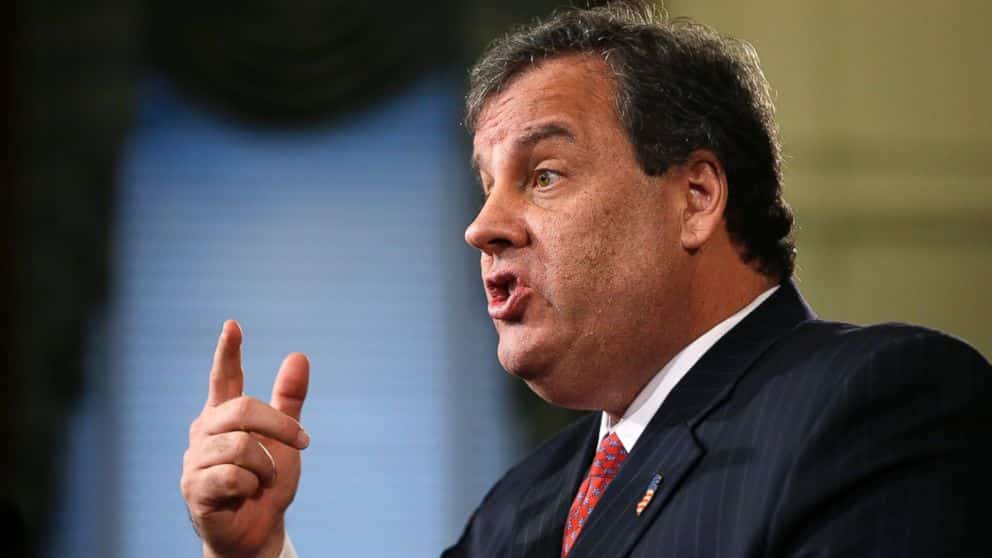
Trenton NJ, Governor Christie unviels his final budget as governor ;
“This is the ninth time I’ve come before a joint session to address our state’s budget. Each time I’ve had specific goals in mind; guiding principles to follow. Government should get smaller. Taxes shall not be increased. Our core commitments must be met. Each time, with varying degrees of struggle, harmony and acrimony, we have reached these goals – I have stuck to those principles. Let me assure you that today will be no different.
– Governor Chris Christie, New Jersey State Budget Address, February 28, 2017
The Fiscal Year 2018 budget will be the eighth and final state budget of Governor Chris Christie’s tenure. When Governor Christie entered office in 2010, New Jersey was enduring an unprecedented fiscal crisis, with an immediate $2.2 billion mid-year fiscal deficit, as well as an unthinkably large $10.7 billion projected budget gap for Fiscal Year 2011 — more than a third of the prior year’s budget. At that time, it was uncertain whether the State would be able to meet its payroll within two months.
The staggering $13 billion two-year gap represented the culmination of years of reckless tax-and-spend policies and shortsighted budgeting practices that ignored economic realities. While state and national economies faltered, spending in Trenton under the previous administration continued unabated at unsustainable levels — increasing 58 percent from 2001 to 2008. The previous governor’s Fiscal Year 2010 budget was propped up with temporary income tax hikes, corporate surtaxes, reliance on one-time federal stimulus funds, temporary employee furloughs and other desperate gimmicks.
Today, Governor Christie is presenting his eighth consecutive balanced budget built on a foundation of fiscal restraint and responsibility. The Fiscal Year 2018 budget will fund $2 billion less in discretionary spending than was spent in Fiscal Year 2008.
The Governor’s Proposed Fiscal Year 2018 Budget:
• Calls for $35.5 billion in State appropriations, a 2.6 percent increase, largely due to non-discretionary costs.
• Contains $2 billion less in discretionary spending than the Fiscal Year 2008 budget.
• Includes the largest pension payment in New Jersey history with a $2.5 billion contribution to the State’s defined benefit funds.
o This will bring total pension contributions by the Christie Administration to $8.8 billion.
o That will be more than two and a half times the total contributions made by all governors combined during the 16-year period from Fiscal Year 1995 through Fiscal Year 2010.
• Renews the Governor’s commitment to higher education in New Jersey. Overall, higher education funding is maintained at a total of $2.2 billion in Fiscal Year 2018.
• Proposes a seventh-consecutive year of the highest amount of school aid supporting Pre-K through Grade 12 education in New Jersey history. The Fiscal Year 2018 budget proposes more than $13.8 billion for education, an increase of $523.2 million.
• Provides more than $17 billion in direct and indirect property tax relief, nearly half the total budget, including $13.8 billion in school aid and $1.5 billion in municipal aid.
• Continues more than $1 billion for direct property taxpayer relief programs:
o 423,300 seniors and citizens with disabilities will receive an average Homestead Benefit of $511, while 169,500 other homeowners earning up to $75,000 will receive an average Homestead Benefit of $397.
o 138,200 seniors and citizens with disabilities will continue receiving Property Tax Freeze benefits averaging $1,401, while 25,100 new beneficiaries will receive their first year of benefits averaging $219.
Investing In New Jersey’s Transportation Infrastructure
Today, Governor Christie proposed a $400 million supplemental appropriation in this Fiscal Year. These funds will be invested and spent quickly over the next 100 days to address bridge deficiencies and road conditions in all of New Jersey’s 21 counties. Further, these funds will be used to expedite technology enhancements and other infrastructure improvements for New Jersey Transit and will allow the New Jersey Department of Transportation to deliver the largest construction program in state history. The results will be smoother roads, safer bridges and a more technologically sound mass transit system.
In October 2016, Governor Christie signed legislation that reauthorized the New Jersey Transportation Trust Fund Authority Act. As a result of that legislation, Governor Christie’s fiscal 2018 budget provides a record $2 billion State Transportation Capital Program. The Program includes over $1.3 billion for State and local highway and bridge projects, and another $677 million for mass transportation projects.
Ensuring Access To Care While Keeping Down Costs
The NJ FamilyCare program currently provides comprehensive health care coverage to more than 1.8 million New Jersey residents at a projected $4.2 billion cost to the Fiscal Year 2018 budget. The program serves individuals eligible for both Medicaid and the Children’s Health Insurance Program (CHIP), and represents a partnership between the State and the federal government. The NJ FamilyCare program, while having some of the highest income limits in the nation, has traditionally provided health coverage exclusively to low-income families, seniors and people with disabilities. On January 1, 2014, Governor Christie expanded the program, using 100 percent federal funding, to provide health coverage to low-income childless adults.
The proposed Fiscal Year 2018 budget represents the fourth full fiscal year of the NJ FamilyCare expansion, and while a fraction of the costs associated with this eligibility group have shifted to the State budget, the expansion continues to represent a tremendous value for New Jersey. Since the Governor’s decision to expand NJ FamilyCare in 2014, an additional 487,000 uninsured New Jersey residents have gained coverage under this program. Not only did this expansion provide reliable medical coverage to many formerly uninsured residents, the infusion of federal dollars has generated meaningful savings to the State budget. Through Fiscal Year 2018, the shift of State costs to the federal government combined with the reduction in demand for Charity Care has resulted in a cumulative savings of $2 billion to the State.
Commitment To World-Class Healthcare
With the goal of ensuring a stable and accessible hospital system that provides care of the highest possible quality, the Department of Health’s budget makes significant investments in three hospital subsidy programs: Charity Care, Graduate Medical Education and Delivery System Reform Incentive Payments.
• Charity Care. Governor Christie’s expansion of NJ FamilyCare has led to a dramatic increase in NJ FamilyCare enrollment, which continues to be funded almost entirely by the federal government. The associated decrease in uninsured residents has reduced by more than half the documented claims for uncompensated care submitted by New Jersey’s hospitals. Since the expansion took effect on January 1, 2014, 487,000 low-income residents have gained health insurance through NJ FamilyCare, a 38-percent increase in program enrollment. This fundamental shift allows for a $25 million reduction in State funding for Charity Care in Fiscal Year 2018. The Fiscal Year 2018 budget provides $252 million in combined federal and State support to offset the costs hospital facilities incur in treating the uninsured.
• Graduate Medical Education (GME). The Fiscal Year 2018 budget increases support to New Jersey’s teaching hospitals by $30 million, with the total amount available through the Graduate Medical Education program now totaling $218 million. This marks the third year in a row that funding for this critical program has been increased, with the total amount available now more than triple the funding provided when Governor Christie took office. This enhanced commitment to GME will help to ensure that New Jersey residents have continued access to an adequate number of well-trained doctors.
• Delivery System Reform Incentive Payment (DSRIP). Funded at $166.6 million, the Delivery System Reform Incentive Payment (DSRIP) program was launched in Fiscal Year 2014 as a replacement for the Hospital Relief Subsidy Fund. The program continues to reward innovation and quality by distributing funds to hospitals based on measurable improvements in health outcomes.
Continued Emphasis On Community-Based Care And Services
Governor Christie is committed to fundamentally changing the way services and programs support individuals with developmental disabilities and their families, by moving away from a system that has historically focused on institutionalization to one that emphasizes home and community-based services and supports. To this end, resources have been refocused to provide people with intellectual and developmental disabilities with the ability to live as independently as possible with the proper supports.
The five-year Olmstead settlement agreement, signed February 2013, covered fiscal years 2013 to 2017 and required 600 placements over that time period. By the end of Fiscal Year 2018, the Department expects to have placed a total of 737 individuals, well exceeding the requirements of the Olmstead agreement due in large part to the acceleration of placements from the closure of North Jersey Developmental Center and Woodbridge Developmental Center in Fiscal Year 2015.
In addition to the Olmstead commitment to move individuals with developmental disabilities out of developmental centers, Governor Christie’s determination to provide services in the community includes funds to develop additional community placements and services that divert admissions to developmental centers. The Fiscal Year 2018 budget provides $89.7 million of new State and federal funding to create community placements and services, including Olmstead placements.
As a result of reforms initiated under the Medicaid Comprehensive Waiver, adults with intellectual and developmental disabilities that are living independently or with family are becoming eligible for substantially increased in-home support services for which the State will receive a federal match. When the Supports Program is fully implemented, it is expected to generate approximately $100 million in matching funding on previously State-only costs to create an estimated $200 million program, which will allow for the further expansion of services.
Family Services
The Fiscal Year 2018 budget continues and enhances the Christie Administration’s commitment to providing a wide array of services to children and families throughout New Jersey through Department of Children and Families (DCF) programs.
• Child Protection and Permanency (CP&P). The Fiscal Year 2018 budget includes a total of $986.6 million in State and federal funds for the operations and services provided by this DCF Division that is responsible for investigating allegations of child abuse and neglect
• Children’s System of Care (CSOC). This program helps more youth remain at home, in school and in their own communities, while still receiving the full scope of services they require, and provides coordinated care for more than 61,000 children and adolescents. The Fiscal Year 2018 budget includes a total of $592.5 million in State and federal funds for the operations and services provided by this Division, an increase of $24.3 million over the fiscal 2017 Appropriations Act.
• Family Success Centers. The Governor’s proposed budget protects funding for these centers which are community-based organizations that provide a wide array of services ranging from day care, resume writing and parenting classes to domestic violence prevention and substance use disorder services. The number of Family Success Centers in New Jersey will increase to a total of 58 in Fiscal Year 2018.
Lead Safety
Through continuing and increased appropriations, Governor Christie’s Fiscal Year 2018 budget continues to address lead concerns in New Jersey, ensuring the State remains a national leader on this issue. Governor Christie has added $10 million in additional State funding to effectuate the update in lead regulations to make New Jersey’s standards for identifying elevated blood-lead levels in children consistent with those of the federal Centers for Disease Control and Prevention.
The Department of Community Affairs will continue working through nonprofit organizations to remediate lead-based paint hazards affecting low- and moderate-income households in New Jersey.
The Fiscal Year 2017 budget provided $10 million to reimburse school districts for costs related to lead testing between July 13, 2016, and July 13, 2017. School districts that tested their water during that time period can continue to seek reimbursement in Fiscal Year 2018 from unexpended Fiscal Year 2017 balances.
Advocates and immigrants urge lawmakers to make New Jersey a sanctuary state, one that will not cooperate with ICE if it makes broad sweeps of undocumented communities
Immigrants and advocates concerned about the national crackdown on the undocumented may have a sympathetic ally in legislative Democrats, but it’s doubtful Gov. Chris Christie will support any of their suggestions for protecting those born abroad who consider New Jersey their home.
Testifying to high levels of fear and anxiety among the state’s immigrant communities, a number of lawyers and advocates, as well as two undocumented young people, told an Assembly committee last Friday that the state and local governments should take steps to protect immigrants, or at least turn a blind eye to the recently launched federal crackdown on the undocumented. One even suggested that New Jersey declare itself a sanctuary that refuses to help federal authorities arrest the undocumented.
“You should consider passing a resolution declaring New Jersey a sanctuary state and risk losing federal funds,” the Rev. Seth Kaper-Dale, a Highland Park pastor whose Interstate-RISE organization recently was approved as a refugee resettlement agency, urged the Assembly Regulatory Oversight and Reform and Federal Relations Committee. Kaper-Dale, who is running for governor under the banner of the Green Party, termed the Trump administration’s executive orders and policies regarding immigration “a planned and coordinated attack based on race and ethnicity.”
He found fame in the 1980s impersonating Frank Sinatra, President Ronald Reagan and countless others on “Saturday Night Live,’’ followed by numerous Hollywood gigs, stand-up routines and a drive-time radio show.
So for Joe Piscopo, the weeknight scene at a high-dollar fund-raising gala in the tuxedo-packed Starlight Roof room at the Waldorf Astoria hotel seemed perfect for a little Ol’ Blue Eyes.
But Mr. Piscopo pocketed his “New York, New York” for the night — literally, as he travels with an instrumental version of the song on his iPhone for just such occasions — opting instead to trade a Jersey-centric joke or two with Stephen Baldwin, encourage guests to donate, offer praise to the hosts and scoot offstage.
“I could have rocked that room, I really could have rocked it,” he said. “But then all of the sudden I’m the court jester and the credibility of someone who is representing the people of a state goes away.”
Kean Urges NJ Senate Democrats to Spend Less Time Criticizing Washington & More Time Working to Fix New Jersey
February 19,2017
the staff of the Ridgewood blog
Trenton NJ, Senate Republican Leader Tom Kean called on New Jersey Senate Democrats to spend less time criticizing Washington and more time working to fix problems here in New Jersey:
Senate Republican Leader Tom Kean called on Senate Democrats to stop working for headlines and start working for New Jersey. (SenateNJ.com)
“With Senate Democrats so focused on federal affairs in Washington, they’ve ignored work on reforms they have the power to advance in Trenton that could have a real impact on the lives of every New Jerseyan.
“They’ve planned votes to express opposition, but they haven’t planned any votes on cutting property taxes, nor have they planned votes on creating opportunities for students and job seekers, or on ethics reforms that would help to rebuild trust in our government institutions.
“Rather than work for headlines, Senate Democrats should start working for New Jersey.”
Senate Democrats blocked efforts by Senate Republicans to bring the following three bills up for a vote that would address New Jersey’s crisis of affordability and help to rebuild residents’ trust in government.
S-1557 (Beck) – Provides full forfeiture of pension of elected or appointed official convicted of any crime touching office. S-1888 (Doherty) – Establishes State Transportation Cost Analysis Task Force. S-2554 (Kyrillos) – Sets level for health care benefits; requires employee contributions; prohibits reimbursement of Medicare Part B; adds member to SHBP/SEHBP plan design committees; requires retirees to purchase health care through exchanges.
As the New Jersey Senate debated a pair of symbolic resolutions on immigration last week, a new bill that has the potential to devastate our state budget and cause unbelievable harm to New Jersey taxpayers was introduced by Senate Democrats with little fanfare.
This new legislation, S3007, follows a proposal floated by President Trump to withhold federal funds from so-called sanctuary cities that refuse to cooperate with federal immigration law enforcement efforts.
The president’s proposal has yet to become actual federal policy or law.
Still, Democrats in the state Senate rushed forward with an ill-conceived response which would require the state to reimburse local governments for the loss of any federal funds resulting from their status as a sanctuary jurisdiction.
Our concern with S3007 centers on the great cost that may result from this reckless bill. We worry about the harm it could cause to hard-working New Jersey families that already struggle to get by in our extremely expensive state.
The potential impact of this legislation on our friends and neighbors is beyond immense.
Ridgewood NJ, public frustration continues to grow towards the New Jersey Assembly spending so much time and energy attacking President Trump instead of focusing on any of New Jerseys myriad of serious problems.
Trenton is ignoring everything from property tax relief, school funding, pension payments and reform, the list is endless. New Jersey ranks the number one state to move out of, and ranks near the bottom in almost every economic category, but instead of working on the difficult issues the state faces , Trenton Democrats and some Republicans assisted by the New Jersey media are engaging non-stop Trump bashing.
Assembly, New Jersey, 39th, Republican Holly Schepisi summed it up best ,”Tomorrow we have a “special” voting session in Trenton to vote on such pressing NJ matters as providing guidance to our municipalities on affordable housing, fixing the Pension crisis, reforming the school funding formula…..just kidding! Instead of fixing any of NJ’s major issues, we are voting on at least seven political resolutions targeting our President.”
Schepisi went on to call out her ccolleagues, ” Over the past several days several of my colleagues in the State Legislature have indicated they would try to move forward legislation protecting “Sanctuary Cities” who lose federal funding by mandating the State of NJ pay these cities any monies lost by their refusal to comply with federal law. While I understand the motive behind such bills seeks to protect the legislators’ constituent cities, the practical implications are financially destructive for all of the non-sanctuary areas of the State.
New Jersey is almost broke. We have not made a full payment on our pension obligations in decades. A majority of our schools receive virtually no funding from the State. Indeed most of the areas I represent receive less than $500 per student per year. On the flip side, below are just some of the numbers of aid currently being provided to our “Sanctuary Cities”. If these bills were to go through, the State would be on the hook for hundreds of millions of dollars of additional aid into these communities. MONEY THAT DOES NOT EXIST.
In Newark,19-percent of all city residents are undocumented entrants. Newark currently receives $206.7 million in federal aid, amounting to $733 per resident or $2,932 per family of four. This aid is on top of an additional $742 million in school aid given to Newark by the State of New Jersey and $31 million in transitional aid also given by the State of New Jersey.
Jersey City, also a sanctuary city with more than 10 percent of residents being undocumented, receives $148 million in federal aid on top of $417 million in school aid given by the State of New Jersey.
Other NJ sanctuary cities include:
Trenton – $10 million in federal aid, $229 million in State school aid
Camden- $52 million in federal aid, $280 million in State school aid
Union City – $32.5 million in federal aid, $179 million in State school aid
West NY – $17 million in federal aid, $94 million in State school aid
Inability to replenish ‘rainy day’ savings account is significant problem for Garden State
Missed revenue projections have sent Gov. Chris Christie scrambling to close sizable budget shortfalls in recent years, and a new report recommends several key policy changes that New Jersey could enact to help insulate itself against forecasting problems in the future.
Some of the suggestions follow basic rules of commonsense, like being more transparent and putting aside more money each year so that unexpected budget problems don’t have a major impact on important programs and services.
But other recommendations take on the budget-forecasting process itself, including suggesting the Christie administration should consider consensus forecasting, where input is taken from legislative staff and outside economic advisors, and also updating annual projections more regularly to keep tabs on any problems as they develop during the fiscal year.
Trenton NJ, on Wednesday February 8 the state of New Jersey announced that Due to the impending severe winter storm, the State of New Jersey has authorized the closing of state offices on Thursday, February 9, for all non-essential employees. Essential employees should report to work on their regular schedule.
The winter storm is expected to continue throughout the day, bringing heavy snow, gusty winds and reduced visibility throughout the State. Current road conditions are available at the New Jersey Department of Transportation website at www.NJ511.org.
New Jersey is one of 23 states still trying to boost its tax revenue levels to pre-recession levels, according to a Pew Charitable Trust report.
At its peak, the fourth quarter of 2007, the state took in $8.7 billion in revenue. It hit a low point at the end of 2011, with only $7.1 billion in revenue that quarter.
As of the end of 2016, the state’s quarterly tax revenue was 10.9 percent lower than the third quarter of 2008, Pew found, as the state took in $7.8 billion.
Ridgewood NJ, Senate Republican Leader Tom Kean called on New Jersey Senate Democrats to spend less time criticizing Washington and more time working to fix problems here in New Jersey:
Senate Republican Leader Tom Kean called on Senate Democrats to stop working for headlines and start working for New Jersey. (SenateNJ.com)
“With Senate Democrats so focused on federal affairs in Washington, they’ve ignored work on reforms they have the power to advance in Trenton that could have a real impact on the lives of every New Jerseyan.
“They’ve planned votes to express opposition, but they haven’t planned any votes on cutting property taxes, nor have they planned votes on creating opportunities for students and job seekers, or on ethics reforms that would help to rebuild trust in our government institutions.
“Rather than work for headlines, Senate Democrats should start working for New Jersey.”
Ridgewood NJ, As inauguration day approaches for president-elect Donald Trump, NJ politicians continue to make fools out of themselves. While some are sitting out the inauguration, others are protesting or criticizing Trumps cabinet picks.
Yesterday “environmental advocates” in New Jersey leveled scathing criticisms of Trump’s cabinet picks and issuing warnings that environmental protections stand to be significantly weakened under his administration. They were accompanied by former governors Jim Florio and Christine Todd Whitman who called on all sides in the state’s 2017 gubernatorial race to draw up plans to counteract environmental deregulation at the state level. State level , folks this is New Jersey who are you kidding?
This is the same Christine Todd Whitman who stole money from New Jersey Pensioners, and who initiated the Pension crisis we currently find ourselves in with her actions. This is also the same Christine Todd Whitman that as head of the EPA and assured rescue workers that the air was fine at the World Trade Center site post 9/11.This is the same Jim Florio who looked to tax New Jersey out of business before it became fashionable.
New Jersey is by all negative measures, taxes, quality of life, cost of living, job growth leading the nation in failure.
Recent reports suggest 37% of people in N.J. are among the working poor and New Jersey leads the nation 5 years in a row for the state with the most people moving out of. New Jersey’s Pensions are in crisis, drug addiction is rampant, crime is on the rise, cities roads and bridges are dilapidated. The reality is if you live in New Jersey you far bigger things to worry about than who gets sworn in on January 20th. Maybe politicians who do not attend the inauguration will donate their days pay to the state to help pay for some of their mistakes. Otherwise we suggest its time to get to work and do your job.
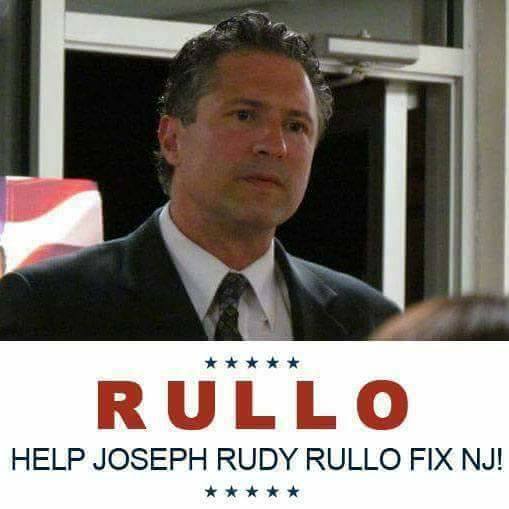
Ridgewood Nj, Joseph Rullo, a longshot GOP candidate who entered the race more than a year ago in 2015 has been in nonstop campaign mode.
Rullo is patterning his campaign on the Trump campaign with a heavy use of social media, and drain the swamp mantra pointed at Trenton.
Rullo promises as Governor I will reduce property taxes, repeal the .23 gas tax, dissolve the transportation SLUSH fund, Veto all tax increases, cut billions in political earmarked jobs and contracts, eliminate state income taxes on pensions for retirees and add 1 billion in new revenue sources to further lower taxes. I Will dissolve the Transportation Trust Fund and consolidate all highway authorities eliminating redundant high-level management positions, eliminate high-cost earmark & specialty contracts tied to contributors. It will produce millions in savings with shared services and purchases. I will eliminate tolls and repeal the gas tax with the savings from the new efficient transparent highway entity. I will also eliminate 1.3 billion in pension fees to NYC politically connected brokerage houses and replace with licensed brokers in the state investors division to pay towards pension payment. Superintendents and business administrators need to be reduced drastically. Instead of having one superintendent and business administrator per school district, we need to cut the number to one per county. By consolidating superintendents & business administrators, we can save $50 million per year by eliminating superintendents alone. And will work to also eliminate municipal tax assessors to one per county. I will fire hundreds of high-salary patronage jobs like indicted Port Authority’s David Wildstein, as an example, saving hundreds of millions of dollars to cut taxes.
After winning 7 polls Rullo tells the Ridgewood blog If the election were held today without the rigging, we would win huge.
When asked yesterday if he feared backing Trump in very blue New Jersey, Rullo called Hillary a gun grabber.
Rullo told NJ.com “People are understanding that in Trenton, it’s all about helping friends and family and contributors,” he added. “I am prepping a massive overhaul of Trenton. I’m not in the establishment.”
By Erin Petenko | NJ Advance Media for NJ.com
on January 10, 2017 at 8:16 AM, updated January 10, 2017 at 4:47 PM
EDITOR’S NOTE: This story has been updated to reflect the correct percent reduction of teen births between the 2006-2010 Census and the 2011-2015 Census.
Young people are waiting longer to settle down, and some are not doing it at all.
When they do, they are having children at a slower rate than their predecessors, according to data from the 2011-2015 American Community Survey snapshot.
The median age of first marriage in New Jersey has increased about a year since the 2006-2010 survey. At the same time, the number of male and female residents who have never been married has increased 5 percent.
Large cities such as New Brunswick, Camden and Newark have some of the highest percentages of never-married residents.