Ridgewood NJ, could New Jersey pull off the transfer of SALT deductions into Charitable Contributions ? We guess it depends on how you define Charitable Contributions.
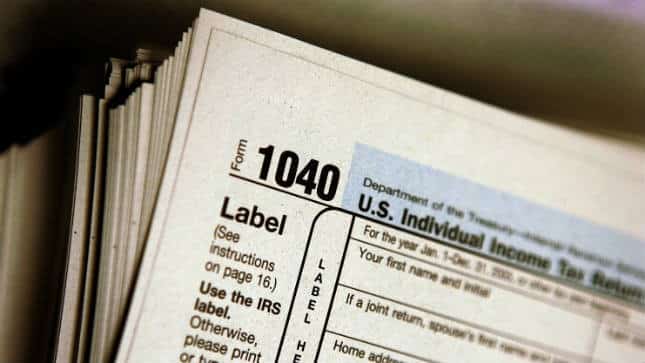
So we referred to IRS Publication 526 Cat. No. 15050A Charitable Contributions, https://www.irs.gov/pub/irs-pdf/p526.pdf
The IRS defines Charitable Contributions :
Types of Qualified Organizations Generally, only the following types of organizations can be qualified organizations. 1. A community chest, corporation, trust, fund, or foundation organized or created in or under the laws of the United States, any state, the District of Columbia, or any possession of the United States (including Puerto Rico). It must, however, be organized and operated only for charitable, religious, scientific, literary, or educational purposes, or for the prevention of cruelty to children or animals. Certain organizations that foster national or international amateur sports competition also qualify.
2. War veterans’ organizations, including posts, auxiliaries, trusts, or foundations, organized in the United States or any of its possessions (including Puerto Rico).
3. Domestic fraternal societies, orders, and associations operating under the lodge system. (Your contribution to this type of organization is deductible only if it is to be used solely for charitable, religious, scientific, literary, or educational purposes, or for the prevention of cruelty to children or animals.)
4. Certain nonprofit cemetery companies or corporations. (Your contribution to this type of organization isn’t deductible if it can be used for the care of a specific lot or mausoleum crypt.)
Examples of Charitable Contributions—A Quick Check Use the following lists for a quick check of whether you can deduct a contribution. See the rest of this publication for more information and additional rules and limits that may apply. Deductible As Charitable Contributions Not Deductible As Charitable Contributions Money or property you give to: Money or property you give to: Churches, synagogues, temples, mosques, and other religious organizations Federal, state, and local governments, if your contribution is solely for public purposes (for example, a gift to reduce the public debt or maintain a public park) Nonprofit schools and hospitals The Salvation Army, American Red Cross, CARE, Goodwill Industries, United Way, Boy Scouts of America, Girl Scouts of America, Boys and Girls Clubs of America, etc. War veterans’ groups
Expenses paid for a student living with you, sponsored by a qualified organization
Out of pocket expenses when you serve a qualified organization as a volunteer Civic leagues, social and sports clubs, labor unions, and chambers of commerce Foreign organizations (except certain Canadian, Israeli, and Mexican charities) Groups that are run for personal profit Groups whose purpose is to lobby for law changes Homeowners’ associations Individuals Political groups or candidates for public office
Cost of raffle, bingo, or lottery tickets
Dues, fees, or bills paid to country clubs, lodges, fraternal orders, or similar groups
Tuition
Value of your time or services
Value of blood given to a blood bank Table 1.
Page 2 of 22 Fileid: … tions/P526/2016/A/XML/Cycle04/source 9:03 19Jan2017 The type and rule above prints on all proofs including departmental reproduction proofs. MUST be removed before printing.
Page 2 Publication 526 (2016)
This is where is gets interesting:
5. The United States or any state, the District of Columbia, a U.S. possession (including Puerto Rico), a political subdivision of a state or U.S. possession, or an Indian tribal government or any of its subdivisions that perform substantial government functions. (Your contribution to this type of organization is deductible only if it is to be used solely for public purposes.)
Example 1. You contribute cash to your city’s police department to be used as a reward for information about a crime. The city police department is a qualified organization, and your contribution is for a public purpose. You can deduct your contribution.
Example 2. You make a voluntary contribution to the social security trust fund, not earmarked for a specific account. Because the trust fund is part of the U.S. government, you contributed to a qualified organization. You can deduct your contribution. Examples. The following list gives some examples of qualified organizations. Churches, a convention or association of churches, temples, synagogues, mosques, and other religious organizations. Most nonprofit charitable organizations such as the American Red Cross and the United Way. Most nonprofit educational organizations, including the Boy Scouts of America, Girl Scouts of America, colleges, and museums. This also includes nonprofit daycare centers that provide childcare to the general public if substantially all the childcare is provided to enable parents and guardians to be gainfully employed. However, if your contribution is a substitute for tuition or other enrollment fee, it isn’t deductible as a charitable contribution, as explained later under Contributions You Can’t Deduct. Nonprofit hospitals and medical research organizations. Utility company emergency energy programs, if the utility company is an agent for a charitable organization that assists individuals with emergency energy needs. Nonprofit volunteer fire companies. Nonprofit organizations that develop and maintain public parks and recreation facilities. Civil defense organizations.
Ridgewood NJ, North American Moving Services has just released its annual US Migration Report for 2017 based on household moves from one US state to another last year.
In 2017, the top five inbound US states were: Arizona, No. 1 with 67% inbound moves vs. 37% outbound, followed by Idaho (63%-37% in-out), North Carolina (62-38%), South Carolina (62-38%) and Tennessee (58-42%).
The top five outbound US states last year were No. 1 Illinois (32% inbound moves vs. 68% outbound), followed by Connecticut (38%-62% in-out), New Jersey (38-62%), California (40-60%), and Michigan (41-59%).
Illinois has been among the top five outbound states in each year from 2011 to 2017 and was No. 1 or No. 2 in each of those years except 2011 when it was No. 3. New Jersey has been in the top five outbound states in each of the last seven years from 2011 to 2017. Connecticut has been in the top five outbound states every year since 2011 except for 2012, and Michigan every year except 2013. Last year was the first time that California was among the top five outbound states.
For the top five inbound states, Arizona has been included every year except 2011, and it’s been No. 1 or No. 2 in each of the last four years. South Carolina has been in the top five inbound states in each of the last seven years, and North Carolina every year except two (2011 and 2015). Florida has been among the top five inbound states in most years but wasn’t in 2017, it was replaced in the top five by Tennessee, which made its debut last year.
Brick Township NJ, Attorney General Christopher S. Porrino and the Office of the Insurance Fraud Prosecutor (OIFP) announced that a former Brick Township employee today was sentenced to five years in state prison for stealing more than $940,000 from the township’s health insurance program.
Kim E. Bogan, 52, of Brick, was sentenced in accordance with a plea agreement reached when she pleaded guilty to second-degree theft by deception on October 24, 2017. She must also pay $941,354.77 in restitution to Brick Township under the terms of the plea agreement and sentence imposed by Superior Court Judge Linda G. Baxter in Ocean County.
During her plea hearing, Bogan, who worked in the township’s Building Department, admitted that between January 2011 and April 2017 she assisted an-out-of-state health care practitioner in submitting false claims to her employee health insurance program, which is self-funded by Brick Township. The claims were for treatments purportedly rendered to individuals covered under Bogan’s policy.
Bogan admitted she allowed the practitioner to submit claims on her insurance for services she knew had not been rendered and then endorsed the insurance checks when they were mailed to her, knowing the money was stolen.
“This defendant is going to prison for willingly participating in a health care claims scheme that cost Brick Township taxpayers – her own friends and neighbors – nearly a million dollars,” said Attorney General Porrino. “Her sentence sends a message that stealing money from health care plans is a serious crime with serious consequences, no matter what role you play in the illegal plot.”
“Through her illegal acts, the defendant stole taxpayer dollars meant to cover health care services for township employees. In addition to serving time in prison, she will be responsible for repaying those stolen funds,” said Acting Insurance Fraud Prosecutor Christopher Iu. “We will continue to aggressively investigate and prosecute individuals who commit these kind of health care claims crimes.”
ROSELAND NJ, Upon the release of its White Paper exploring what it calls “The most complex environment ever to legalize recreational cannabis use,” lawyers at Brach Eichler observed that the initial organization of the industry could result in a windfall to the State exceeding $1 billion — before a single ounce is delivered.
The figure is based on the State creating an aggressive privatization of the industry in which large technology, testing, cultivation, transportation and other industry participants compete for roles and pay upfront licensing, franchising, and other fees.
“The State needs $3 billion to close its budget gap and it so far has identified cannabis as contributing $300 million from sales tax,” says John D. Fanburg, Managing Member and Chair of the Health Law Practice at Brach Eichler. “Presumptively, if there is a $2 billion recreational cannabis market in New Jersey, privatized functions could be offered in RFPs that provide lengthy contracts – the type that attract investors who pay-up for predictable returns. A billion dollars is probably a modest estimate of the opportunity New Jersey can potentially realize as it legalizes recreational cannabis.”
The White Paper, The Business, Regulatory and Legal Challenges — and Opportunity — of Legalized Cannabis in New Jersey, which explores the differences between New Jersey’s presumed recreational cannabis legalization versus circumstances in states with existing programs, warns that “New Jersey holds complexities not faced by other states unrelated to the production, distribution, sale, and use of marijuana, but attributed to a simple fact of life: this is New Jersey, and almost everything is harder here.”
“Home rule is the principal culprit,” says Charles X. Gormally, Member and Chair of the Litigation Practice for Brach Eichler. “It’s the third rail of New Jersey politics, so great care will be taken to protect the will of municipalities in drafting the Cannabis Statute.
“Part of the social justice initiative will be to provide economic opportunities in urban communities, which will be very appealing to some municipalities. However, it’s inevitable that there will be great tension between local officials and regulators about who gets what part of the pie – and why.”
The White Paper observes solutions developed in other states around not only Industry Structure, but a variety of oversight, taxation, and participation issues, including sections on Home Rule, Property Taxes, Delivery, Banking, Commerce, Public Health, Testing Product Safety, Regulatory Authority, Criminality, and Cannabis as Tourism. While the Administration has not indicated any specific direction on any of the issues broached in the White Paper, Mr. Gormally says it will be “unavoidable” that fiscal issues dominate the dialogue.
“The ultimate social justice would be to immediately decriminalize possession, but that does not provide the long-term political leverage that will lead to a healthy industry and a leveraging of the state’s interests. You have a lot of smart people in the incoming Administration who have already seen that current legislative proposals will not generate the $300 million they already have allocated to programs they are committed to enact immediately.
“At the edges of this industry you have a black-market cohort that wants to legitimize its crop and reduce the risks of its current distribution program; and another cohort with access to a massive pool of capital if margins are protected,” says Mr. Fanburg. “In the middle is a new administration desperate to lead the State back to economic relevance and a legislature determined to protect programs that are threatened by fiscal realities. So, while it is unlikely that the state goes all the way and monetizes every component of the industry, as they start to tinker with a new Statute, the opportunity to generate upfront cash will prove at least partially irresistible.”
I am the original poster and I am VERY aware of which NJ residents get hurt by this bill.
These are the same NJ residents that Obama forced a tax hike on in 2010. These are the same NJ residents that NJ Democrats are chomping at the bits to hike taxes on.
These NJ residents are hurt in the new tax bill because NJ Democrats bleed them dry at the state level. Someone earning the same amount in Texas is going to get a net tax cuts.
Repeat after me – these NJ residents are being looted by Democrats, such as Josh Gottheimer.
This bill is bad for NJ but that’s not an indictment of the bill it’s an indictment of the politicians we elect and the state finances we have been complicit in creating. Josh needs to go not because he did or did not vote for this bill but because he can’t bring home the bacon. NJ is a net out flow state yet we just got our heads handed to us because our state costs are too damn high. In 10 years NJ will be populated by those that can’t move, and those that somehow have their snout in the teacher, fireman, policeman, state worker pension trough. Young state pension workers will have to live here and support old state pensioners. That math just won’t add up.
Wake up NJ. Boeing, ATT (who move down out of NJ), Comcast, Wells Fargo, and about 12 more companies so far have announced employee bonuses, wages, increased capital spend, and hiring all due to tax cut. That is all great for middle class and everyone else
Illoinis (another high tax state) like NJ calculate it is losing people at the rate of one every 4 minute every to low tax states. Wonder how NJ is doing for mid to high income families leaving the state? How many will leave when Murphy gets his way.
How can anyone defend a 11-13% state income tax in a state that is bankrupt. How can anyone defend ridgewood property tax that is some cases are 50-100k on houses that lose value every year, with schools getting worse, services declining, and no end in sight. Can we really defend a 110 million annual school budget? How many adminstrators do we need? How many vehicles does the schools need? We neeed to really look into this budget and trim the fat. The kids are getting shortchanged. Walk into the high school and look at the teacher absense list and how many kids get assigned to just sit in a large room with a supervisor but no lessons.
We need to wake up, the federal government is finally doing something. Local should be easier with proper leadership.
Ridgewood NJ, the latest Tax Foundation ratings are out and once again New Jersey ranks dead last in business climate . #50 New Jersey ranked in the bottom 5 along with
#49 New York , #48 California ,#47 Vermont and #47 District of Columbia .
Neighboring states ,#15 Delaware ,#26 Pennsylvania and #49 New York .
According to the Tax Foundation , “The absence of a major tax is a common factor among many of the top 10 states. Property taxes and unemployment insurance taxes are levied in every state, but there are several states that do without one or more of the major taxes: the corporate income tax, the individual income tax, or the sales tax. Wyoming, Nevada, and South Dakota have no corporate or individual income tax (though Nevada imposes gross receipts taxes); Alaska has no individual income or state-level sales tax; Florida has no individual income tax; and New Hampshire, Montana, and Oregon have no sales tax.
This does not mean, however, that a state cannot rank in the top ten while still levying all the major taxes. Indiana and Utah, for example, levy all of the major tax types, but do so with low rates on broad bases.
The states in the bottom 10 tend to have a number of afflictions in common: complex, nonneutral taxes with comparatively high rates. New Jersey, for example, is hampered by some of the highest property tax burdens in the country, is one of just two states to levy both an inheritance tax and an estate tax, and maintains some of the worst-structured individual income taxes in the country . “
Trenton NJ, A state Senate panel quickly advanced a Democratic bill that would give some elected officials bigger pensions, pushing through a vote on Thursday in about one minute and without any debate or public testimony.
The New Jersey Pension and Health Benefits Commission has stated that there are a combined $90 billion in unfunded liabilities for future pension and retiree healthcare benefits .
The bill known as (S3620) would allow certain elected officials, such as the outgoing Camden Mayor Dana Redd, to re-enroll in the Public Employees’ Retirement System (PERS) even if they were removed due to switching from one elected office to another.
Effectively, the bill creates a special exemption that allows Redd to cash in on a bigger public pension at a time when public workers who are not politically connected have seen cutbacks to their benefits and a freeze in yearly cost-of-living adjustments for retirees since 2011.
The legislation is moving quickly because Senate President Steve Sweeney (D-Gloucester), a Redd ally, has given the bill special status, allowing it to move forward without a customary review by a public body that scrutinizes the cost of pension and health benefits legislation and makes recommendations to lawmakers.
In a “hail Mary” the bill could be approved by the Assembly and Senate and signed by Gov. Chris Christie who is another Redd ally during the waning days of the lame-duck Legislature. A full vote in the Assembly and Senate could be held on the bill before the legislative session ends on Jan. 9.
Doing something “swift and broad” will be far harder in light of the coming mass exodus of big dollar taxpayers caused by the double whammy of Herr Trump’s corporate tax hand outs (paid for by blue state property tax payers) combined with Murph’s soak-the-successful tax plan. The iceberg has been spotted, NJ is closing in on it fast and they are running out of other people’s money.
If New Jersey were a corporation it would have declared bankruptcy years ago. Murphy want to “tax the rich” to raise only a fraction of what the state needs to meet its obligations. The Republican tax plan beats him to the punch by removing the deduction for state and local taxes which are already unsustainably high. Things will only get worse as the wealthiest individuals start to leave the state in greater numbers and the mess will be left to the middle class to clean up.
So, about those union pension payments, can we cut a deal on them now or would you rather we default on them later?
Trenton NJ, Attorney General Christopher S. Porrino today announced arrests of 79 child predators and child pornography offenders in “Operation Safety Net,” a nine-month, multi-agency child protection initiative led by the New Jersey Regional Internet Crimes Against Children (ICAC) Task Force. Partnering agencies targeted sex offenders who exploited the internet and social media, making arrests in every New Jersey county and deploying, for the first time, a new van equipped as a mobile cyber forensics lab, as well as a new canine trained to sniff out electronic devices, to assist in execution of search warrants.
Those arrested in Operation Safety Net included 10 “hands-on” offenders, including child predators in California and Indiana who allegedly tried to have children transported interstate from New Jersey by adult traffickers so they could have sex with the children; four men in New Jersey who allegedly sought to lure children for sex; a camp counselor who allegedly sexually assaulted a girl, 14, under his supervision; a youth minister who allegedly sent lewd photos of himself to a young girl; and a man, 24, who allegedly used a phone app to record underage girls performing sex acts on themselves. Those arrested also included numerous defendants, ranging in age from 14 to 75, who allegedly amassed and/or distributed large collections of child pornography, including a Trenton police officer, a swimming coach, a piano teacher, an IT professional from Morris County who allegedly had over 138,000 files of suspected child pornography (possibly over one million), a mechanic from Mercer County who allegedly had over 10,000 files of child porn, and three brothers in Cumberland County who allegedly had nearly 5,000 files of child pornography.
The operation was conducted by the ICAC Task Force, which is led by the New Jersey State Police and includes the New Jersey Division of Criminal Justice (DCJ), U.S. Homeland Security Investigations (HSI), all 21 County Prosecutors’ Offices, and many other state, county and local law enforcement agencies. Attorney General Porrino made the announcement at the Hamilton Tech Center with DCJ Director Elie Honig, Acting State Police Superintendent Colonel Patrick Callahan, Supervisory Special Agent Craig Vanderhoff of HSI Human Trafficking/Child Exploitation Group, Mercer County Prosecutor Angelo Onofri, Atlantic County Prosecutor Damon Tyner and representatives of other participating agencies. The Division of Criminal Justice exhibited its new cyber forensics van, and the State Police showcased its new electronics detection dog, Mega, both of which contributed greatly to the success of Operation Safety Net.
“The men we arrested lurked in the shadows of the internet and social media, looking for opportunities to sexually assault young children or to view such unspeakable assaults by sharing child pornography,” said Attorney General Porrino. “We set up a wide safety net in this operation to snare these alleged predators and to protect children, which remains our highest priority. With our new mobile forensics lab and electronics-sniffing dog, we’re even better equipped to uncover the evidence that will keep these offenders behind bars, where they cannot threaten or further exploit vulnerable victims.”
“I want to thank all of the many agencies and individuals who participated in this massive, unprecedented and highly collaborative effort to protect our children and communities in New Jersey and elsewhere,” Porrino added.
“We charged 10 men with hands-on predatory conduct against children, including attempted interstate trafficking of children for sex, sexual assault, luring, sending obscene images to a child, or manufacturing child pornography,” said Attorney General Porrino. “These cases highlight the fact that viewing child pornography is part of a continuum of deviant behavior that often leads to or drives other sex crimes.”
“The charges against Castillo reveal a dangerous child predator who went to great lengths in the belief that he was flying two very young girls to California so he could sexually assault them,” said Attorney General Porrino. “Had we not arrested him with our federal and California partners, the allegations indicate he would have continued to seek victims, including children as young as toddlers.”
“We’ve made these proactive child protection investigations a top priority by adding more staff for them at the state level and considerable new resources, including the mobile forensics lab and electronics detection dog,” said Director Elie Honig of the Division of Criminal Justice. “There’s no question that by collaborating across all levels of law enforcement and arresting these offenders, we protected innocent children who might otherwise have been sexually abused and exploited. We’ve also ensured that all these men who victimized children – or re-victimized them by viewing child pornography – will face justice.”
“The individuals who share this horrific material will not stop unless they are apprehended and removed from the public,” said Colonel Patrick Callahan, Acting Superintendent of the New Jersey State Police. “The nine-month investigation conducted by the New Jersey Regional Internet Crimes Against Children Task Force and partnering agencies has ensured that children throughout the country will not fall victim to the actions of these depraved individuals. These arrests should put anyone looking to engage in this behavior on notice that law enforcement will be relentless in our efforts to put them behind bars.”
In addition to investigating numerous cyber tips from the National Center for Missing and Exploited Children, the ICAC Task Force in Operation Safety Net conducted proactive investigations to apprehend offenders by monitoring peer-to-peer file-sharing networks and identifying the IP addresses of individuals sharing child pornography. Detectives also conducted undercover chat investigations on social media platforms, which led to arrests of alleged hands-on offenders and defendants attempting to lure children.
Two proactive investigations initiated by the New Jersey State Police extended beyond New Jersey’s borders – with assistance from other state and federal authorities – to apprehend defendants charged with allegedly attempting to arrange the interstate trafficking of young children for sex:
George Castillo, 36, of Inglewood, Calif., faces federal charges of transportation of a minor with intent to engage in criminal sexual activity and production of child pornography, as well as New Jersey charges including first-degree conspiracy to commit child trafficking. Castillo allegedly solicited an undercover New Jersey State Police detective – who pretended to be trafficking children – to fly a 4-year-old girl to Los Angeles so he could sexually assault her. He also allegedly solicited an undercover police detective in Washington, D.C., who posed as a father, to bring his “daughter,” 9, to Los Angeles for sex at the same time the undercover from New Jersey was expected to arrive with the other girl. He was arrested on April 4 at Los Angeles International Airport when he arrived to meet the girls and their adult escorts. The charges stem from investigations by the New Jersey State Police, New Jersey Division of Criminal Justice, U.S. Attorney’s Office for the District of Columbia, Metropolitan Police Department/FBI Child Exploitation Task Force in Washington, D.C., and, in Los Angeles, the U.S. Attorney’s Office for the Central District of California, U.S. Homeland Security Investigations, LAX Task Force, and Los Angeles Police Department. The undercover investigators identified Castillo in separate investigations targeting pedophiles using the internet and social media.
Joseph Donohew, 26, of Brownsburg, Indiana, is charged in Indiana with attempted child molestation. He allegedly offered money to an undercover New Jersey State Police detective, whom he met on an instant messaging platform, to have sex with a 9-year-old girl. The undercover represented that he had a daughter, 9, and Donohew allegedly sent him $100 as a down payment to bring the girl to Indiana for sex. Donohew was arrested on July 13 at a gas station in Indiana, where he allegedly was to meet the father and girl. He had purchased a nightgown for the girl depicting characters from a Disney movie he believed was her favorite. The New Jersey State Police worked with the FBI, Brownsburg Police Department, Indiana State Police and Hendricks County Prosecutor’s Office in Indiana.
Eight other defendants were arrested in New Jersey in Operation Safety Net on charges related to various types of alleged “hands-on” conduct, including sexual assault, luring a child, conveying obscene materials to a child, and manufacturing child pornography:
William Esker, 22, of Bayonne, N.J., was charged on Sept. 7 by the Hudson County Prosecutor’s Office with aggravated criminal sexual contact for allegedly engaging in sexual conduct with a girl, 14, over whom he had direct supervision as a camp counselor. He also is charged with providing obscene material to a child and endangering the welfare of a child.
Donald Beckwith, 34, of Browns Mills, N.J., is charged in Delaware with sexual solicitation of a minor and attempt to commit unlawful sexual contact with a minor. Beckwith, a captain in the Air Force stationed in New Jersey, met a girl, 14, through an online chat group for children and allegedly engaged her in sexual conversations, ultimately asking her to meet him in person. He allegedly met the girl twice in Delaware. The first time, he allegedly reached under her shirt and tried to touch her breast, and the second time he allegedly hugged her and repeatedly asked her to lie on a bed in the back of his vehicle and watch a movie with him. The New Jersey State Police arrested Beckwith on Aug. 16 in an investigation initiated by the Delaware State Police. Detectives allegedly found over 10 nude images of an underage girl on his phone.
Michael DeBlock, 22, of Hopatcong, N.J., a youth minister, was arrested on Oct. 10 and charged by the Sussex County Prosecutor’s Office with possession of child pornography and conveying obscene materials to a child. DeBlock allegedly exchanged sexual photos and texts with a girl, 14, including a photo of his penis.
Brandon Morris, 24, of Hammonton, N.J., was arrested on Oct. 17 and charged by the Atlantic County Prosecutor’s Office with manufacturing child pornography, endangering the welfare of a child by sexual conduct, conveying obscene materials to a child, and possession of child pornography. Morris allegedly engaged multiple underage girls in conversations on FaceTime, instructing them to perform sexual acts on themselves, which he recorded.
A 17-year-old student from Bergen County, whose name is not being released due to his juvenile status, was arrested on Aug. 17 and charged by the Bergen County Prosecutor’s Office with manufacturing, distributing and possessing child pornography, as well as invasion of privacy. The juvenile allegedly had over 1,000 files of suspected child pornography on his electronic devices, including video recordings he allegedly made by hiding his smartphone in a private bathroom in order to record underage boys who were nude, showering or urinating.
Craig Kirschner, 39, of Marlboro, N.J., was arrested on Aug. 21 and charged by the Hudson County Prosecutor’s Office with luring a child, attempted sexual assault of a minor, and conveying obscene material to a minor. Kirschner allegedly solicited an undercover detective, whom he believed to be a 15-year-old male, to meet for oral sex. The detective was monitoring a mobile app when he encountered Kirschner. After the undercover detective identified himself as a 15-year-old boy, Kirschner allegedly sent him photos of an erect penis, asked him to meet for oral sex, and stated “I can be generous for your trouble.”
Isaac Toney, 40, of Trenton, N.J., was arrested on July 17 by the New Jersey State Police and charged with luring a child. He allegedly used a mobile app to solicit an undercover detective, whom he believed was a 14-year-old male, for oral sex. He was arrested at Veterans Park in Hamilton, Mercer County, where he allegedly was to meet the “boy” for a sexual encounter.
Robert Elmi, 63, of Gillette, N.J., was arrested by the New Jersey State Police on Nov. 9 on a charge of luring a child. Elmi had placed an ad on Craigslist soliciting a relationship with a younger female. An undercover State Police detective responded, posing as a young girl and indicating to Elmi that she was 13. Elmi allegedly communicated with the “13-year-old” for several weeks by text and email, ultimately arranging to meet her at a diner. He allegedly told the “girl” he would take her back to his apartment, where they would drink, watch TV, kiss and perform oral sex on each other. Elmi was arrested by the State Police at the diner.
Forty-one defendants are charged with second-degree distribution of child pornography, which carries a sentence of five to 10 years in prison, and 66 defendants are charged with third-degree possession of child pornography, which carries a sentence of three to five years in prison. Out of the 41 charged with distribution, six are charged with distributing 25 items or more, and therefore are subject, if convicted, to a mandatory minimum sentence of five years in prison under the strict child pornography law signed by Governor Christie in August 2013. Out of the 66 defendants charged with possession, 25 are charged with possession of 100 or more items and are subject to a presumption of imprisonment under that law, even if they have no prior criminal record. More of the defendants may face those enhanced charges and penalties once full forensic examinations of their computers and electronic devices are completed.
On July 21, 2017, Governor Christie signed a new law which will take effect Feb. 1, 2018 and will further enhance penalties for possession and distribution of child pornography. The new law expanded the definition of child pornography to include child erotica. In addition, the new law makes it a first-degree crime to distribute 1,000 or more items depicting the sexual exploitation of a child, with a mandatory parole ineligibility period of one-third to one-half of the sentence imposed. The new law also makes it a first degree crime to possess 100,000 or more items of child pornography, and a second-degree crime to possess anywhere between 1,000 and 99,999. Under the new law, videos depicting the sexual exploitation of a child will count more heavily than still images, each counting for 10 images.
Eleven defendants arrested in Operation Safety Net would qualify as second-degree “super-possessors” under the new law to go into effect in 2018. Because it was not in effect when they were arrested, they cannot be charged under the tough new law, but these 11 arrests illustrate how offenders routinely amass huge collections of child pornography, which soon will make them subject to the enhanced penalties:
William Camargo, 48, of Millington, N.J., an IT professional , allegedly had more than 138,000 files of suspected child pornography, and possibly more than one million files (determination awaiting full forensic examinations of computer equipment);
Callen Kapschock, 55, of Hamilton, Mercer County, N.J., a mechanic, allegedly had more than 10,000 files of suspected child pornography;
Md F. Uddin, 43, of Elizabeth, N.J., an engineer, allegedly had more than 5,000 files of suspected child pornography;
Kody Knotts, 22, of Millville, N.J., along with his two brothers immediately below, allegedly had a combined total of nearly 5,000 files of suspected child pornography;
Alexander Knotts, 27, of Millville, N.J.;
Kyle Knotts, 23, of Millville, N.J.;
Laurence Duque, 42, of Dayton, N.J., allegedly had over 4,000 files of suspected child pornography;
Gregory Piszczek, 35, of Woodbridge, N.J., an IT professional, allegedly had over 4,000 files of suspected child pornography;
Kevin Groeger, 63, of Cranford, N.J., a postal worker, allegedly had over 2,000 files of suspected child pornography;
Pasquale “Charles” Albano, 75, of Point Pleasant, N.J., allegedly had over 1,000 files of suspected child pornography; and
Juvenile Male, 17, referenced above, allegedly had over 1,000 files of suspected child pornography.
Operation Safety Net made extensive use of two key new tools: an electronics detection canine and a mobile forensics van. Both contributed greatly to the success of the operation. As electronic devices become smaller and easier to hide, the importance of dogs trained to detect them increases. There are thumb drives available that are hidden in or disguised as cuff links, bracelets, LEGO blocks, coins and other everyday items. Throughout the operation, the canine was used at State Police and Division of Criminal Justice (DCJ) search warrant scenes. The canine was used for a preliminary walk-through and would identify devices and loose electronic storage media not in plain view. The detectives would then thoroughly search the area where that evidence was found to ensure all digital evidence was recovered.
Rapid triage of computers at search sites – also called forensic previewing – is a critical component of child pornography investigations. Such forensic previewing can result in the immediate arrest of individuals who otherwise might be left to continue direct illicit sexual contact with minors, preventing further abuse of victims. The previewing of computers at search sites has often had to occur in close proximity to the alleged perpetrator and often in potentially dangerous environments. As an example, in the last operation, two DCJ detectives were hospitalized after the suspect at the search warrant scene attempted to gain control of one detective’s handgun, resulting in a dangerous struggle. To maintain the integrity of the evidence gathering process, it is important for the forensic examiner to have the proper equipment to work with and the proper environment to work in. For these reasons, DCJ purchased a customized van, equipped with the appropriate desks and electrical and other equipment, which is used on-site for the forensic previewing of computers and computer-related equipment. This van enabled detectives in Operation Safety Net to safely examine suspected devices within the van and conduct more extensive previews at the scene, increasing the number of charges carrying enhanced penalties.
The following 58 additional men were arrested in Operation Safety Net on charges of possession and/or distribution of child pornography:
Paul Marinelli, 52, of South Brunswick, N.J., a Trenton police officer, charged with possession of child pornography.
James Cutrone, 54, of Hazlet, N.J., a youth swim coach, charged with distribution of child pornography.
Bryan San Andreas, 37, of Toms River, N.J., a piano teacher, charged with possession of child pornography.
John Parsons, 50, of Vineland, N.J., charged with possession of child pornography.
Donald Williams, 39, of Camden, N.J., charged with distribution of child pornography.
Kevin Wenng, 35, of Cliffwood Beach, N.J., charged with possession of child pornography.
Victor Kurynow, 58, of Bedminster, N.J., charged with attempted possession of child pornography and conveying obscene materials to a minor.
Paul Fuhs, 44, of Laurel Springs, N.J., charged with possession of child pornography.
Ryan Stemetzki, 26, of Maple Shade, N.J., charged with possession and distribution of child pornography.
Robert Ruff, 56, of Delran, N.J., charged with possession of child pornography.
Robert King, 63, of North Wildwood, N.J., charged with possession and distribution of child pornography.
Jason Locke, 42, of Manchester, N.J., charged with possession of child pornography.
Stephen Slawinski, 60, of Morris Plains, N.J., charged with possession and distribution of child pornography.
Herbert Ferreira, 43, of Dover, N.J., charged with possession and distribution of child pornography.
Joseph Maruca, 26, of Berkeley Township, N.J., charged with possession of child pornography.
James Gilbertson, 60, of Manchester, N.J., charged with possession of child pornography.
Christopher Todd, 49, of Lyndhurst, N.J., charged with possession and distribution of child pornography.
Alexis Gonzalez, 28, of Hackensack, N.J., charged with possession of child pornography.
Raul Rodriguez, 33, of Jersey City, N.J., charged with possession of child pornography.
Dhanendhran Govender, 32, of East Windsor, N.J., charged with possession and distribution of child pornography.
Luis Pacheco-Loja, 30, of Belleville, N.J., charged with possession and distribution of child pornography.
Robert White, 66, of Morristown, N.J., charged with possession and distribution of child pornography.
Jonathan Latiff 40, of Jersey City, N.J., charged with possession and distribution of child pornography.
Anthony Gerace, 43, of Egg Harbor Township, N.J., charged with distribution of child pornography.
Antonio Baang, 26, of Galloway Township, N.J., charged with possession of child pornography.
Richard Lake, 65, of Trenton, N.J., charged with possession and distribution of child pornography.
Federico Flores, 29, of Rahway, N.J., charged with possession and distribution of child pornography.
James Agin, 69, of Westwood, N.J., charged with possession and distribution of child pornography.
Fortino Rosales-Rodriguez, 22, of Oaklyn, N.J., charged with possession of child pornography.
Justin Saavedra, 22, of Clifton, N.J., charged with distribution of child pornography.
Daniel Braz, 39, of South River, N.J., charged with possession and distribution of child pornography.
Nelson Cintron, Jr., 54, of Collingswood, N.J., charged with possession and distribution of child pornography.
Michael Brown, 28, of Pennsauken, N.J., charged with possession and distribution of child pornography.
Erik Baez, 38, of Sicklerville, N.J., charged with possession and distribution of child pornography.
Larry Gonzalez, 45, of Elizabeth, N.J., charged with possession and distribution of child pornography.
Erik Johnson, 49, charged by Union County Prosecutor’s Office with possession and distribution of child pornography.
Marco Biason, 68, of Dover, N.J., charged with possession of child pornography.
Brian Neilson, 55, of Metuchen, N.J., charged with possession of child pornography.
Thomas Smith, 54, of Woodstown, N.J., charged with possession and distribution of child pornography.
Zachary Brawer, 31, of Paramus, N.J., charged with possession and distribution of child pornography.
Brian J. Gardner, 74, of Nutley, N.J., charged with possession and distribution of child pornography.
John T. Ruffner, 37, of Lumberton, N.J., charged with possession of child pornography.
John Skubiak, 62, of Deptford, N.J., charged with possession and distribution of child pornography.
Nicholas J. Novak, 66, of Ocean Township, Monmouth County, N.J., charged with possession and distribution of child pornography.
Eric MacAfee, 41, of Seaside Heights, N.J., charged with possession of child pornography.
Jeison Padilla, 29, of Somerville, N.J., charged with possession of child pornography and conveying obscene materials to a minor.
Justin England, 31, of North Plainfield, N.J., charged with possession and distribution of child pornography.
Eric Yourish, 61, of North Plainfield, N.J., charged with possession of child pornography.
Christopher Dunham, 22, of Rockaway, N.J., charged with possession and distribution of child pornography.
Justin Piccola, 23, of Randolph, N.J., charged with possession and distribution of child pornography.
Nicolas Bencze, 36, of Maywood, N.J., charged with possession and distribution of child pornography.
Michael Yosco, 70, of Garfield, N.J., charged with possession of child pornography.
Male Juvenile, age 14, of Bergen County, N.J., charged with possession of child pornography.
Julio Garcia, 29, of Bridgeton, N.J., charged with possession and distribution of child pornography.
Joseph Lawitz, 34, of Hamilton, Mercer County, N.J., charged with possession of child pornography.
James Livas, 22, of Hopatcong, N.J., charged with possession and distribution of child pornography.
Robert Fuscarino, 27, of Hopatcong, N.J., charged with possession and distribution of child pornography.
Donovan Roots, 19, of Pilesgrove, N.J., charged with possession and distribution of child pornography.
The charges against the defendants in Operation Safety Net are merely accusations and the defendants are presumed innocent until proven guilty.
Washington DC, Congress is trying to make headway on tax reform, President Donald Trump said earlier this month that welfare reform will be one of the next big items on the White House agenda.
New Jersey is already in the top 10 states in total amount of Welfare expenditures . We can only speculate that Phil Murphy’s “sanctuary state ” will increase that number dramatically .
Here is the top ten states with the highest expenditures on public welfare. Note the enormous difference between California and New York and the rest of the country.
1. California – $103 Billion
2. New York – $61.4 Billion
3. Texas – $35.4 Billion
4. Florida – $27.2 Billion
5. Pennsylvania – $26.7 Billion
6. Illinois – $21 Billion
7. Ohio – $20 Billion
8. Massachusetts – $18.6 Billion
9. New Jersey – $17.3 Billion
10. Michigan – $16.3 Billion
Note that the top ten states listed above spend more on public welfare ($346.9B) than all of the bottom forty states (plus the District of Columbia) combined ($262.7B). Regardless of how populated any particular state is, you want to pay attention to these numbers because they foreshadow future budget problems. When you consider the fact that many states run operating deficits and have enormous debt problems, you begin to wonder if some of these numbers are sustainable for the long term.
Ridgewood NJ, according to the Bergen Record ,Democratic Gov.-elect Phil Murphy said Tuesday that he is “confident” his proposal to increase taxes on New Jersey’s millionaires will go through, even as Democratic leaders in the Legislature have cooled on the idea in light of GOP tax plans being considered in Congress.
Murphy and his Democratic allies say that the bill would increase taxes on income over $1 million from a top rate of 8.97 percent to 10.75 percent. The Fantasy is that the new tax could generate up to $600 million for the state, which Murphy claims the state will use to increase funding for New Jersey’s public schools.
The are going to need it ,again according to the Bergen Record there will be $1.2 billion less revenue available next fiscal year than the current year. Specifically: $700 million in one-time revenues are in the current budget . The two largest being $300 million in legal settlements principally related to environmental claims and $321 million for sale of public broadcasting assets. And, the continued phase out of the estate tax, a decrease in the sales tax rate and exclusions/deductions in the income tax will result in $520 million less revenue from these sources.
The remaining tax base will yield $1 billion at best and that ‘s not sufficient to cover the lost revenue and address normal program growth. How to address this “squeeze” will be a challenge.
The current year or 2018 looks equally disturbing, the current budget has only a $409 million surplus that’s barely 1 percent of spending. There is no money in the Rainy Day Fund.
An none of this is taking into account greater outmigration according to Jordan Amin, a tax partner at EisnerAmper, “I think where some of these provisions that are affecting New Jersey harder than some other states — like the repeal of the state and local tax deductions — the incoming governor wants to increase the highest income tax rate in the state, currently 9 percent, to 10.75 percent, and I think that that may meet some opposition, now that some of the state taxes are not going to be deductible at the federal level. And we have all read about people supposedly fleeing New Jersey for other low-tax or no-tax jurisdictions, such as Florida. I think that there is some concern (the tax) … could cause a greater migration outward.”
Your editorial today misses several points. If Murphy wants to spend more, then all New Jerseyans should pay higher taxes. Your support of his tax hike on upper income individuals and families is nothing less than “Willie Sutton” economics. In addition, I have been living in a Fort Lee 171 family co-op for ten years, about 25% of the shareholders leave for FL for half the year. They have been FL residents for many years, from what I gather. A higher top marginal rate will really accelerate the exodus.
Murphy’s tax and spending plan will face a fundamental economic reality, government spending does not boost an economy. Less regulations will make New Jersey more attractive to the business community as will lower marginal tax rates.
New Jersey should have one of the best state economies in the nation based on several factors. Instead, both Republicans and Democrats have implemented policies that in the final analysis have driven businesses out of the state in the 40 years I have been living here. In addition, New Jersey is far down on the list of companies that are looking to expand. The laws of economics and principles of finance cannot be overridden by statist politicians. In short, Murphy should check his premises about how an economy works.

![InboundOutbound[1]](https://theridgewoodblog.net/wp-content/uploads/2018/01/InboundOutbound1.png "New Jersey has been in the top five outbound states in each of the last seven years from 2011 to 2017")
![Kim-Bogan[1]](https://theridgewoodblog.net/wp-content/uploads/2018/01/Kim-Bogan1.jpg "Former Brick Township Employee Sentenced to Five Years in Prison for Stealing More than $940,000 in Claims from Township Health Insurance Program")






![Operation_Safety_Net_1[1]](https://theridgewoodblog.net/wp-content/uploads/2017/12/facebook_d1cc917631922dbfd2d2_Operation_Safety_Net_11.jpg "Attorney General Porrino Announces Arrests of 79 Alleged Child Predators & Child Pornography Offenders in “Operation Safety Net”")