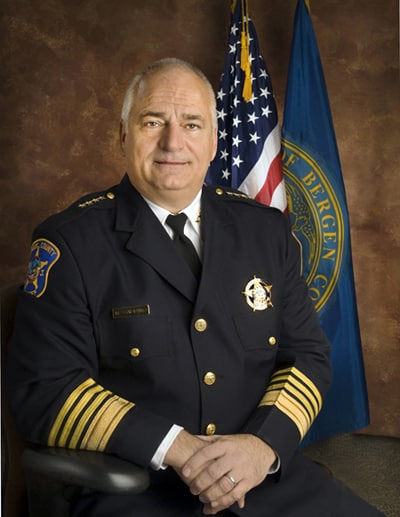
Bergen County Sheriff Michael Saudino – $138,000 in salary plus $129,987 from pension as an Emerson Borough police retire
MARK LAGERKVIST | MARCH 14, 2016
Loophole in law lets some state employees collect retirement money while working at new job
The ranks of retired public officials who collect more than $100,000 a year from New Jersey pensions have more than doubled in the past five years, according to an NJ Spotlight analysis of state Treasury data.
When 2015 ended, 2,296 retirees were collecting six-figure pensions from state pension plans. It is a 131 percent increase above 2010, when the count was 992.
The top of the “$100K Club is loaded with retired school executives. Former Essex County College president A.Z. Yamba leads the pack with $195,000 in annual retirement pay. Of the 30 pensioners who get $150,000 or more, 22 retired as educators.
But in sheer numbers, police and fire officials are predominate. Nearly half – or 1,131 pensioners – belong to the Police and Firemen’s Retirement System.
Of those PFRS retirees, 93 percent – or 1,050 – took advantage of a “special retirement” provision in state pension law. It allows law-enforcement officers – but not other public employees – to collect full benefits after 25 years of service, regardless of age.
When Joseph Blaettler opted for special retirement at age 46, the former Union City deputy police chief started collecting $134,773 a year from PFRS in 2009. If he reaches age 80 – his statistical life expectancy – he will cash more than $4.5 million in pension checks.
lt Gov Kim Guadagno with former Freeholder John Mitchell
In any election year other than 2017, New Jersey’s Lieutenant Governor Kim Guadagno would be considered one of the leading stars in the national GOP firmament. Indeed, she has a “star” quality about her that is reminiscent of my former boss in whose administration I served quite proudly, Christie Whitman. Alan Steinberg, PolitickerNJ Read more
State Senator Mike Doherty (R-23) endorsed Donald Trump for president in October of 2015, back when pundits and many in the Republican establishment imagined that his candidacy was nothing more than just a passing fad, a trend that would come to an end before the presidential contest got serious. But now, five months after that endorsement, Trump’s flame is anything but extinguished as he continues to dominate the Republican field as the frontrunner. Polls have him far surpassing the only other Republican candidates left in the race: Texas Senator Ted Cruz and Ohio Governor John Kasich. He is earning endorsements left and right in New Jersey, but Doherty will always be able to claim he was first. Alyana Alfaro, PolitickerNJ Read more
Are the days of wining and dining over at N.J. Statehouse?
The Auditor noticed that lobbyists last year spent about $70 million to sway public officials and public opinion – the second highest amount in state history. But precious little of that money went toward wining, dining and entertaining state bigwigs. Lobbyists paid only $2,439 in 2015 on meals, trips and entertainment in 2015. And officials wrote a check and paid lobbyists back for nearly $500 of these funds. The Auditor, NJ.com Read more
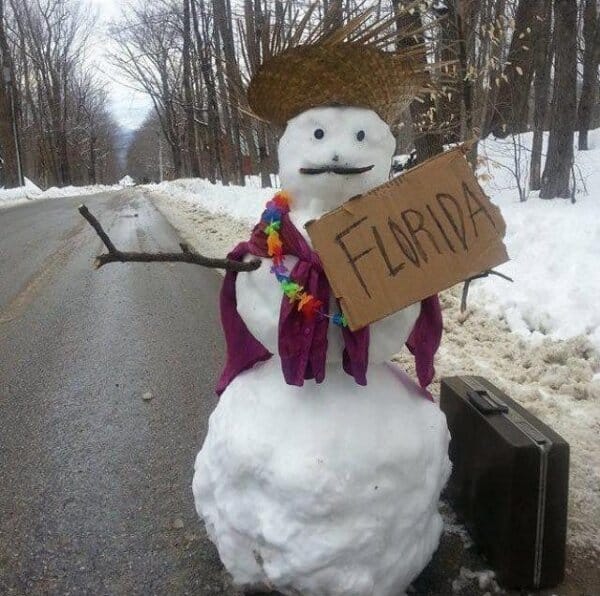
New Jersey lost its richest resident late last year when billionaire David Tepper decamped to the tax friendly climes of Florida.
Tepper registered to vote in Florida last October, listing his residence as a Miami Beach condominium, and followed up in December by filing a court document declaring that he is now a resident of the state. He also carried out a business reorganization on Jan. 1 that relocated his Appaloosa Management from New Jersey to Florida, which is free of personal income and estate taxes.
The move could save Tepper hundreds of millions of dollars in state taxes several years from now. Florida has been pitching itself as a warm-weather tax haven to hedge fund managers in the Northeast, some of whom face a 2017 deadline to pay taxes on billions of dollars in performance fees that they had kept offshore for years. A Florida residence could offer partial relief to New York and New Jersey money managers who face the prospect of surrendering at least half of the deferred money to federal, state and local taxes.
“Anyone who has a large deferral coming due in 2017” is thinking about ways of reducing the tax hit, said Anthony Tuths, a tax attorney in the New York office of Withum who advises alternative investment funds. “What is easier than packing up your house in New York City and moving down to Miami?”
Senate President Steve Sweeney (D-3) and veteran Senator Ronald L. Rice (D-28) exchanged harsh words in the Senate Democratic caucus chamber this afternoon before state Senator James Beach (D-6) stepped in to keep the men apart. Max Pizarro, PolitickerNJ Read more
Prior to a Monday’s session, where several bills from an anti-poverty initiative from Assembly Speaker Vince Prieto (D-32) were on the board list, Assembly Minority Leader Jon Bramnick (R-20) laid the blame for New Jersey’s dire financial straits at the Democratic majority’s feet. Bramnick and Assembly members Anthony Bucco (R-25) and Amy Handlin (R-13) joined him in saying that majority rule from tax-payers should determine spending. JT Aregood, PolitickerNJ Read more
The late Gov. Alfred E. Driscoll, a founding father of the modern state constitution, probably would have been appalled with state Senate President Stephen Sweeney’s approach to New Jersey’s hallowed charter.
In 1947, Driscoll urged the 81 delegates who had been chosen to draft the new document to refrain from padding it with their pet legislative projects. Stick to “basic fundamental principles,” he said.
A poll released Monday shows New Jersey following national trends in residents’ gloomy assessment of their income and the larger economy. The study from Stockton University’s polling institute found that a majority of New Jersey residents feel their income has failed to keep up with increases in the cost of living. 55 percent of respondents described their income as “falling behind the cost of living,” while 37 percent said it was “just keeping pace.” JT Aregood, PolitickerNJ Read more
By Brent Johnson | NJ Advance Media for NJ.com
on March 03, 2016 at 8:33 PM, updated March 04, 2016 at 7:33 AM
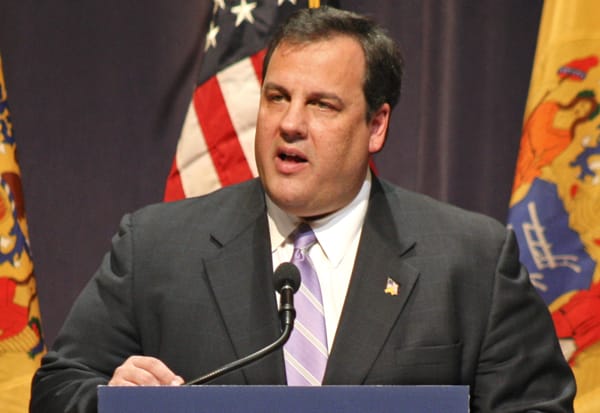
TRENTON — Facing calls for his resignation and scrutiny over his endorsement of Donald Trump for president, Gov. Chris Christie stood at a podium for nearly two hours Thursday and answered questions about a slew of topics during a sprawling Statehouse news conference.
Here is a closer look at what he discussed:
1. His focus on New Jersey
Christie was repeatedly criticized for spending so much time out of state on his own presidential campaign. Then after endorsing Donald Trump last week and campaigning for him, af few irked Republican state lawmakers called on Christie to either get off the trail or step down.
But Christie stressed Thursday that he has been in New Jersey 19 of the 22 days since ending his White House bid. He emphasized that he will not be “a full-time surrogate for Donald Trump.” And, he said, he has “absolutely no intention” to resign.
“I am here,” he said. “I am back to work.”
Amid rumors he could be Trump’s pick for vice president or U.S. attorney general, Christie said he is “not interviewing (for) or considering any other public job” and plans to finish his second and final term as governor.
2. Why he is backing Trump
Some supporters said they felt betrayed when Christie threw his support behind Trump, whom he once said was “unfit” to be president and whom many establishment GOP members say is a danger to the party.
But Christie said he and Trump have been friends for 14 years and that the billionaire businessman and former Atlantic City casino tycoon has the best shot among the Republican field at beating Democratic front-runner Hillary Clinton in the general election.
The governor added that his endorsement “doesn’t change me being serious and policy-minded and all those things.”
“But I have to make a choice,” he said. “I don’t sit on the sidelines. I don’t wait for other people to make things happen. I try to make things happen. So now I’m trying to make things happen to make sure Hillary Clinton doesn’t become president of the United States.”
3. Why his campaign failed
Christie gave several reasons for why his campaign for president failed: He couldn’t raise enough money, which made it hard to respond to attack ads in New Hampshire. There were too many candidates in the race. And there was Trump.
“If he had not been in the race,” Christie said, “I would have been the nominee.”
4. About those newspapers
Christie ‘not surprised’ at The Star-Ledger calling for his resignationGov. Chris Christie comments on his reaction to two of the state’s largest newspapers calling for his resignation. The N.J. governor held a press conference on March 2, 2016 to talk about jobs and employment in the state. (Courtesy NJTV)
Shortly after Christie’s Trump endorsement, Joseph McQuaid, the publisher of the New Hampshire Union Leader, said the governor swore to him weeks before he would not endorse the businessman. But Christie said he did not lie.
Christie said McQuaid called him two days after the governor placed sixth in the New Hampshire primary election. McQuaid wanted to know if it was true Christie was endorsing Trump that day.
“I said, ‘Absolutely not true. I am not endorsing anyone,'” the governor recalled. “It was two days after the primary.”
Christie said when he ultimately decided to throw his support behind Trump, “I knew Joe was going to mad. But I made a choice. He obviously doesn’t like Donald Trump.”
The Union Leader had endorsed Christie, but after the Trump endorsement, it retracted and declared, “Boy were we wrong.”
Christie also slammed The Star-Ledger, which called on him to resign Thursday morning. He said the paper “never supported me, my policies, or my existence.”
Star-Ledger columnist Tom Moran responded by saying the paper backed him in his 2013 re-election bid, as well as on pension reform, a property tax cap, and more.
Posted by Laurie Ehlbeck On March 01, 2016 2 Comments
By Laurie Ehlbeck
We haven’t even made it out of the first quarter of 2016 but there is already plenty for small businesses in New Jersey to be concerned about on the upcoming legislative calendar. Senator Sweeney and Speaker Prieto seem determined to continue to challenge the economic stability of our state by introducing bills to nearly double minimum wage, mandate all employers provide sick leave and attempt to convince the voters that a pension payment must be constitutionally required. Sweeney and Prieto are creating what may ultimately amount to the most hostile session in state history in terms of damage caused to the small business community.
When it comes to minimum wage it is imperative that as a society we are honest about what it truly is. Minimum wage is not now, nor has it ever been, a vehicle in which to feed a family 4. It is an entry level wage that is earned almost exclusively by teens and young adults seeking work experience and a smooth transition into a career. Raising the minimum wage again, especially to the rate of $15 will have one direct effect. It will result in a loss of job opportunities for those seeking to expand their skill sets. It will not alleviate poverty. It will not empower the middle class. It will leave teenagers wondering what to do after school.
According to a recent study, 63 percent of workers who earn less than $9.50 per hour are the second or third earner in their family and 43 percent of these workers live in households that earn over $50,000 per year. In spite of what the proponents would have you believe, minimum wage earners are not an impoverished, disenfranchised group of struggling single mothers just trying to make ends meet. Most are teenagers from middle class families and many more are sharing the responsibility of providing for their families, not breaking under the burden of putting food on the table.
BY DUSTIN RACIOPPI
STATE HOUSE BUREAU |
THE RECORD
Governor Christie on Monday nominated a Republican judge for a long-vacant seat on the state Supreme Court and named a successor for the state’s outgoing acting attorney general, moving to fill two high-profile vacancies that loomed as question marks over the rest of his tenure.
But he refused to discuss anything else — not his disappointing bid for the White House, not his controversial endorsement of Donald Trump. He conducted his first local news conference since dropping out of the race last month in regimented fashion, at least four times swatting down off-topic questions and telling one reporter, “Permission denied.” Christie also blocked the opportunity for anyone to ask him about the U.S. Supreme Court’s decision Monday morning, favorable to his administration, to decline ruling on a case challenging billions of dollars in cuts to the public employee pension fund, therefore allowing the reductions to stand.
Now, after his brief and tightly controlled appearance in Trenton, Christie sets off to campaign with Trump in Ohio and Kentucky during the Super Tuesday nominating contests having laid down a challenge to Democrats in New Jersey that he also hopes will resonate in Washington, D.C.
The death last month of U.S. Supreme Court Justice Antonin Scalia has triggered a battle between Republicans who control Congress and President Obama, who has 11 months left in his term, over who will fill the conservative justice’s seat on n the bench, potentially shaping the court for years to come.
N.J. public employee unions irked by Christie call to cut health benefits
Gov. Chris Christie’s budget address came with a public challenge to cut $250 million from state employees’ health benefits. Samantha Marcus, NJ.com Read more
US Supreme Court declines to hear case about NJ pensions
BY SALVADOR RIZZO
STATE HOUSE BUREAU |
THE RECORD
The U.S. Supreme Court has declined to rule on a major case involving payments to New Jersey’s pension system for public employees.
The case concerned Governor Christie’s decision to cut billions of dollars in payments he had once promised for the retirement system.
Christie began to cut those payments in 2014 despite signing laws in his first term that pledged more than $16 billion over seven years for the troubled retirement system.
Public worker unions sued, arguing that Christie and the state Legislature could not skip the higher payments. The New Jersey Supreme Court disagreed, ruling 5-2 in June that the seven-year plan was not legally binding.
New Jersey faced $153.5 billion in outstanding debt obligations last July, hitting a new record, according to a report released by state officials Friday.
The cost of public employee benefits, school construction and transportation projects drove the 6.9 percent, or $9.9 billion, increase for fiscal 2015.
But not all of the increase was attributed to new debt.
Treasury Department officials said New Jersey transitioned to a new accounting methodology for pension and post-retirement health benefits last year. Those bookkeeping methods, which are more stringent than what the state used previously, were designed by the Governmental Accounting Standards Board.
Growth in unfunded pension liabilities, unfunded medical benefits for retirees, and the effect of switching to the new accounting standards contributed an $8.5 billion increase in the state’s non-bonded debt.
On the other hand, New Jersey’s bonded debt rose $1.4 billion, or 3.35 percent, according to the report, led by a $755 million surge in borrowing for school construction projects and $609 million in added borrowing for the state’s troubled Transportation Trust Fund.
That fund’s borrowing authority runs out at the end of June, and Governor Christie and lawmakers have not said how it will be renewed – through more borrowing, an increase in New Jersey’s gas tax, or another method.
SOMERVILLE — A prosecutor under scrutiny for his murder-suicide finding in the deaths of a prominent New Jersey couple will be replaced by a federal prosecutor, Gov. Chris Christie’s office announced Thursday.