Christie administration ends waiver for food stamp work requirement
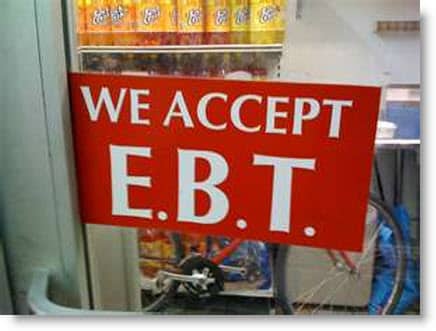
About 11,000 New Jerseyans may have their food assistance discontinued after Gov. Chris Christie’s administration said Thursday that the state is no longer offering a certain waiver in the program. Brent Johnson and Samantha Marcus, NJ.com Read more
In the days prior to Christmas, two hastily called Judiciary committee hearings were called in an effort to change the NJ State Constitution, ensuring one party control of the State in perpetuity. Practically no notice was provided, no information was shared, no questions were answered and no experts testified. Regardless of your political leanings, anyone who favors open, transparent, good government should reject what transpired. So far the Star Ledger and the Daily Record editorial boards have denounced this political gamesmanship. Below please find an Op Ed piece regarding this issue.
Lame Duck Redistricting Scheme Raises More Questions than It Answers
By Assemblyman Michael Patrick Carroll and Assemblywoman Holly Schepisi
Schemes hatched in lame duck sessions of the Legislature should always give reason for pause, but changing voting rights without considerable public discussion is reckless. A proposed constitutional amendment with a significant but unknown impact on the voting rights of New Jersey’s citizens deserves more than the hasty, slapdash, non-transparent treatment the Democrats are giving this measure.
Ignoring the Legislature’s responsibility to hold fact-finding hearings, Chairman John McKeon dismissed concerns about fast-tracking the proposal changing the way the state redraws its legislative districts. “The people of New Jersey will have the opportunity to vote on whatever is on the ballot,” he said at last week’s Assembly Judiciary Committee hearing.
We did not support this plan in part because the sponsors couldn’t answer basic questions. How can voters make an informed decision about a constitutional amendment when the Legislature itself does not fully understand it?
What’s the rush? Legislative districts won’t be reconfigured again until 2021. When the 1966 Constitutional Convention considered the standards used today, it met for three months and had 14 meetings full of expert testimony. Additionally, there were six meetings specifically on apportionment. In this process, the Democrats are advancing a plan after only two brief committee meetings with no expert testimony and only one member of the public commenting.
Their amendment relies on a decades-old report by Dr. Donald Stokes, who served on the Apportionment Commission in 1981 and 1991. Many of his assumptions are based on demographics from almost a generation ago. No one can deny that New Jersey has changed significantly in a quarter century. Does Stokes’ modeling still hold true? Were the demographics he used in 1993 accurate on what we know today?
The amendment deviates from the report on even more critical aspects. Stokes used legislative elections to create his models and proposal, but this amendment ignores them. Instead, it relies on federal and gubernatorial elections that have little to do with drawing up legislative districts. Why exclude legislative races to determine how those districts should be drawn? That’s like using baseball statistics to figure out how football should be played.
Their plan requires only a quarter of districts to be competitive, but allows the remaining 75 percent to have no contest at all. Why not maximize the number of competitive districts? The Stokes test for determining whether a map is fair requires the popular vote across the state to be represented among the districts as a whole and be responsive to the shifts of public opinion. When electoral tides move strongly toward one party, that party should fairly quickly win an effective majority of seats. Using the 2011 legislative election returns, a fair map should have resulted with 21 Democrat and 19 Republican Senators, rather than the 24-16 split that has remained since that election.
Further, the amendment intentionally excludes the equal representation requirement in the state Constitution. Every state respects equal population requirements, the bedrock of American democracy since “no taxation without representation.” Yet, the Democrats intentionally left it out in favor of gerrymandering districts, which almost always shift groups of voters to limit the voting rights of others. They may point to the compactness requirement in the constitution, but this amendment makes federal law pre-eminent.
Why do the sponsors want to make this change? Democrats have held a legislative majority since 2001 and hold their largest majority in 40 years.
The plan was conceived behind closed-doors by Democratic political operatives with essentially a super PAC in East Brunswick. They introduced it to the Assembly Judiciary Committee on November 17, even though it was not mentioned during a previous meeting just three days earlier. With little more information than a Politico article, it passed on a party-line vote the week before Christmas.
By the end of the next day, the Democrats wanted to limit the number of members on the redistricting commission in their plan without explanation. They called the committee back the following Monday, but that meeting started four hours late after most of the media and public left. This contempt for transparency and lack of serious inquiry into this proposal’s ramifications is striking and should be a matter of serious concern to anyone who values New Jersey’s voting rights.
While parties may disagree on the result of the map every ten years, New Jersey’s electoral process has been routinely praised by academics when compared to other states. Why weren’t those experts invited to the committee hearing? Shouldn’t we know what other states do before moving forward with a constitutional amendment? Surely if this plan were all the Democrats say, there would have been a line of academics ready to back them up.
In no other profession would you first enact a policy to know what is in it. The lack of information, transparency and candor is reason enough to be concerned with where the state is headed under a Democratic majority. This constitutional amendment blindly leads the public into forever changing the way New Jersey votes.
By Samantha Marcus | NJ Advance Media for NJ.com
on December 28, 2015 at 7:08 PM, updated December 29, 2015 at 7:15 AM
TRENTON — New Jersey’s Unclaimed Property Administration connected $123 million in unclaimed assets with their rightful owners or heirs in the fiscal year that ended in June, according to an audit of the agency.
The state paid out $125 million in 2014 and $107.5 million in 2013.
But plenty remains unclaimed. Nearly $264 million was turned over to the state in the last fiscal year alone.
“It is common that in the normal course of business that individuals or businesses lose track of either checks that were issued to them or bank holdings,” according to the state website. “Once property reaches the defined abandonment period with no activity, the holder of this property will turn the property over to the state.”
The Unclaimed Property administration is merely the custodian. You never give up your right to claim these assets. “If property is not claimed it remains in the Unclaimed Property Trust Fund in perpetuity or until a valid claim is submitted and processed,” the website said
file photo by Boyd Loving New Jersey is the only state which Americans tend to have an unfavorable opinion of
As America prepares to celebrate its 239th birthday this Saturday, YouGov compiled a ‘State of the States’, asking Americans how they feel about each and every state that forms our country.
This research shows that New Jersey is the only state in the country which people tend to have a negative opinion of. 40% of Americans have an unfavorable opinion of New Jersey while 30% have a favorable opinion of the state, giving the state a net favorability rating of -10%. In contrast, Alabama, the second least popular state in the country, has a net favorability rating of +8%, as 39% of Americans have a favorable view of Alabama and 31% have an unfavorable opinion. After Alabama the least popular states are Illinois (+9%), Mississippi (+9%) and Indiana (+12%).
Hawaii is the most popular state in the union with a net favorability rating of +56%, with 67% of Americans having a favorable view of the state and only 11% having an unfavorable opinion. Hawaii is followed by Montana (+43%), Wyoming (+42%), Alaska (+42%) and Maine (+42%).
In the final weeks before the Christie administration closed a facility in Woodbridge for people with developmental disabilities, hundreds of state workers earned $2.7 million just for showing up — including some seen playing cards and watching TV, according to a report by the Office of the State Auditor. Susan K. Livio, NJ.comRead more
N.J. revenues fell further behind Christie projection in November
New Jersey tax collections so far this year were set back further in November by increasingly sluggish corporation business tax collections. Samantha Marcus, NJ.com Read more
N.J. Democrats to address four proposed amendments to state constitution
DECEMBER 15, 2015, 10:56 PM LAST UPDATED: TUESDAY, DECEMBER 15, 2015, 10:56 PM
BY DUSTIN RACIOPPI
STATE HOUSE BUREAU |
THE RECORD
As Governor Christie prepares for a four-day bus tour of New Hampshire to bolster his presidential campaign, Democrats in New Jersey will set in motion a plan to circumvent Christie’s executive authority by pushing for changes to the state constitution that would dedicate funding for transportation and pensions, allow casinos in North Jersey, and amend how legislative districts are drawn.
On Thursday, Democrats — who control the state Legislature — also plan to vote on three separate measures to override Christie vetoes. And that’s in addition to more than 100 bills scheduled for votes as the legislative session heads into its final weeks. Whatever bills aren’t addressed by the end of the session would have to be reintroduced next year.
Adding to the customary frenzy of the lame-duck session are the potential implications that some of the legislative actions could have on Christie’s White House bid and on the next gubernatorial election, in 2017.
Lame-duck sessions are “usually pretty busy with little things that people want to get done,” Loretta Weinberg, the Senate majority leader, said. “This is major stuff.”
The four proposed constitutional amendments would bring wide changes to the state: allowing up to two casinos in North Jersey; requiring the state to make quarterly payments into the public employee pension fund; dedicating all gas tax proceeds to the nearly-broke Transportation Trust Fund; and adjusting the legislative redistricting process. Changes to the state constitution must be approved by New Jersey residents. The votes scheduled for legislative committees Thursday would begin the process of getting those proposals on the 2016 ballot.
Although Christie has been supportive of the idea of expanding gambling outside Atlantic City and putting it to voters to decide, he has called amending the constitution for measures that don’t require it “governance by temper tantrum.” He was especially critical last week of Senate President Stephen Sweeney’s proposal to require quarterly pension payments, calling it a guaranteed tax increase to New Jersey residents and businesses.
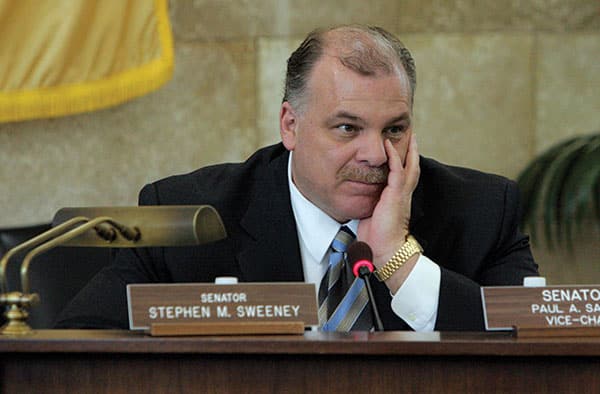
Sweeney, D-Gloucester, joined with Christie, a Republican, in 2010 and 2011 to reform the public employees’ pension and health benefits system, including requiring the state to make increased contributions into the pension fund over seven years. After three budgets of Christie’s that reduced those payments, and a state Supreme Court decision telling lawmakers and the governor to find a solution, Sweeney has proposed making the payments a constitutional requirement.
Christie accused Democrats of catering to unions and said during his radio show last week that Sweeney’s proposal is “totally about playing politics” since Sweeney is expected to run for governor in 2017. Any Democratic gubernatorial candidate is likely to seek the support of unions, who have strong influence in the state and spend heavily in state elections.
NJ Senator Mike Doherty (R-23) questioned New Jersey’s outsized spending on transportation infrastructure, saying that he has not found a satisfactory explanation as to why the state pays more than ten times what similarly populous states like Massachusetts pay to fix their roads, bridges and highways
Sweeney Trots out ‘New Jersey – Investing in You’ with Key Senators
They came bearing gifts in the Christmas season, – $174 million’s worth, to be precise – state Senate President Steve Sweeney (D-3) and his colleagues in the Senate Democratic Caucus, the statehouse cough-up of seven weeks-worth of round table visits around New Jersey in the respective districts of the senators who now stood sedately at attention with Sweeney. Max Pizarro, PolitickerNJ Read more
DECEMBER 14, 2015, 7:30 PM LAST UPDATED: MONDAY, DECEMBER 14, 2015, 7:59 PM
BY SALVADOR RIZZO
STATE HOUSE BUREAU |
THE RECORD
Democrats and Republicans in the state Senate unveiled competing economic plans for New Jersey on Monday, with each side promising a lasting fix to the haphazard way the state has been funding major expenses such as pensions and road projects over the years.
The dueling plans are as ambitious as their details are hazy.
On the Democratic side, Senate President Stephen Sweeney outlined a plan to invest at least $1 billion over the next four years on transportation projects, school initiatives, new study commissions and a new “infrastructure bank.”
His plan calls for expanding pre-kindergarten to 17 school districts that do not now offer it; extending light rail service farther into Bergen County and widening the eligibility range for tax breaks on retiree income, raising the income limit for married couples from $10,000 to $100,000. Funding for higher-education scholarships also would grow.
But Senate Democrats did not include a funding mechanism; Sweeney said his proposal would spur enough economic activity to pay for itself, namely by enticing older residents to stay in-state instead of moving after they retire.
“This state has been starved of investment for too long, and we now need to refocus,” he said at a Statehouse news conference.
Following Friday morning’s release of Senate President Steve Sweeney’s (D-3) proposal to amend the state constitution and allow the expansion of casino gaming into North Jersey, the New Jersey State Building and Construction Trades Council has announced its official support for Sweeney’s amendment. JT Aregood, PolitickerNJ Read more
Day of verbal assaults in N.J. was vintage Christie
DECEMBER 9, 2015, 11:49 PM LAST UPDATED: THURSDAY, DECEMBER 10, 2015, 12:05 AM
BY DUSTIN RACIOPPI
STATE HOUSE BUREAU |
THE RECORD
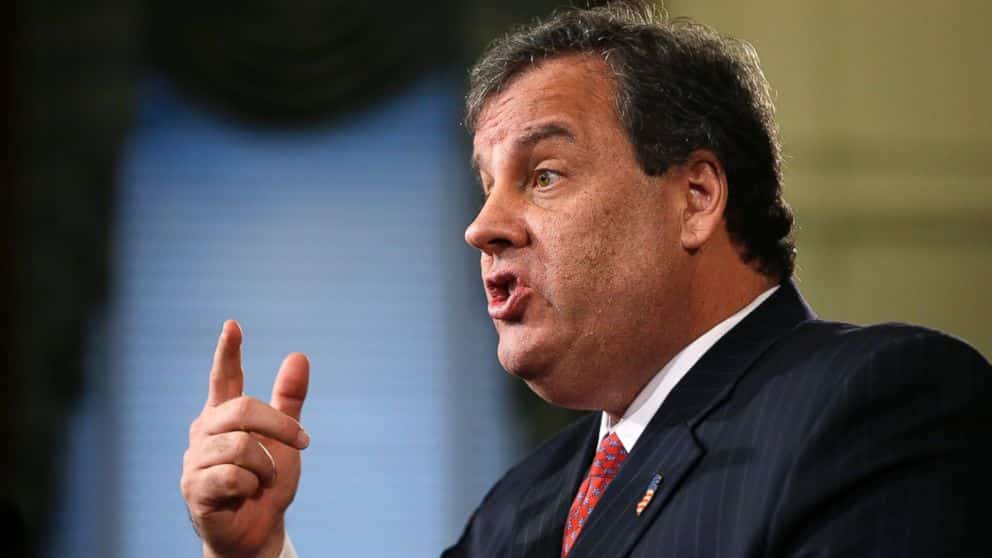
In a rare public event in New Jersey this week, Governor Christie ripped into the state’s largest business community for nearly 40 minutes, stealing headlines by telling leaders to “get a spine” and quit playing “kissy-face” with “crazy and liberal” Democrats he said were bought and paid for by union “pigs.”
But he was far from done.
Over the course of that speech to the New Jersey Business and Industry Association, and later during his monthly radio call-in show, Christie attacked or insulted at least a half-dozen other targets, some familiar, some not.
Tuesday’s string of attacks was a vintage version of the Christie who rose to national fame hurling invective at his adversaries and dressing down supporters if they strayed from the path.
Christie spared few from his withering critiques, from former governors to “liberal lunatics” in the Legislature to the “brutally liberal, ridiculous” media to a Senate aide. He even took a jab — jokingly — at the hapless Philadelphia 76ers, who plan to move their practice facility to Camden next year.
His speech to business leaders and the radio show were the only public events on his schedule Tuesday. On Wednesday, Christie did not attend a groundbreaking ceremony for Subaru’s new headquarters in Camden, one of the many achievements — along with luring the 76ers to New Jersey — he’s touted as part of his tax-incentive program.
Warning that “pigs will be charging down State Street” in Trenton if voters elect a Democratic governor after he leaves office, Gov. Chris Christie on Tuesday urged New Jersey’s business community to join his fight against public employee unions. Matt Arco, NJ.Com Read more
Ridgewood NJ, Senator Kevin O’Toole (R-Bergen, Essex, Morris, Passaic) said New Jersey’s addition of 15,200 private-sector jobs in October and an updated total of 24,100 new jobs in the past two months shows that Republican reforms are working and the state’s economic rebound would be enhanced with the advancement of more Senate Republican jobs policies.
“New Jersey is creating jobs at a fast pace under Governor Christie’s administration not seen in recent memory, thanks to ample reductions in red tape and our investments in real private sector job creation, workforce training and smart economic development,” said O’Toole, a member of the Senate Budget & Appropriations Committee. “Our unemployment rate has fallen nearly a full point this year to 5.4 percent, and in the months ahead we’re on track to recover all of the 258,000 jobs lost under the previous administration. Indeed, this is a far cry from what happened under the previous governors where taxes and fees were raised 115 times while the unemployment rate skyrocketed to 9.8 percent.”
O’Toole emphasized, “Not counting Great Recession years, the 15,200 private-sector jobs we created in October alone are more than twice the 7,400 private-sector jobs created in former Gov. Jon Corzine’s best year and more than six times the 2,400 jobs created in Gov. Corzine’s second-best year.”
Senator O’Toole also pushed for the continued advancement of the Senate Republican’s 36-bill package to jumpstart job creation and economic growth without costing taxpayers extra money. So far, 15 of the bills have garnered Senate Democrat sponsorship; 12 have garnered Assembly Democrat sponsorship; the Senate has advanced or fully passed 11 of them and the Assembly has advanced or passed a number of them as well, and the governor just signed into law an innovation bill to help start and grow small businesses by allowing private online investments.
“The investments and incentive programs we’ve enacted under this governor to attract and retain job creators are working, and must continue in a transparent and accountable way until legislative Democrats allow votes on bills to make New Jersey’s nation-high taxes competitive with other states,” O’Toole said. “This new state jobs report is positive and we need to continue that momentum built under Governor Christie by passing Senate Republican solutions to lower costs of doing business and cut even more red tape.”
Sweeney pushes forcing bigger N.J. pension payments by changing constitution
State Sen. President Stephen Sweeney introduced legislation Monday that would cement state officials’ promises to fund government workers’ pensions in the New Jersey constitution. Samantha Marcus, NJ.com Read more
DECEMBER 2, 2015 LAST UPDATED: WEDNESDAY, DECEMBER 2, 2015, 6:43 PM
BY HUGH R. MORLEY
STAFF WRITER |
THE RECORD
The New Jersey Commission of Investigation (SCI) on Wednesday released a report targeting businesses known as multi-dealer locations that the agency said enable hundreds of car dealers to operate beyond the state’s regulatory authority.
The report, which identifies 11 multi-dealer locations (MDLs) in the state – including five in Bergen and Passaic – said they are part of a system that is open to abuses, such as non-payment of taxes by the dealers at the location, consumer fraud, and “suspicious financial transactions on a domestic and international scale.’’
Most of the report focused on the activities at one MDL, New Jersey Auto Dealers Mall in Bridgeton in Cumberland County, where 1,214 dealers are registered. The report said that dealer was a “sham that serves as the foundation for an amalgam of consumer and bank fraud, unpaid taxes, suspicious financial transactions and other questionable, unscrupulous and possibly illegal activities.” The owner also had ties to organized crime, the report said.