Chef Cesar Sotomayor of Cafe 37 in Ridgewood on ice cream, Whole Foods and keeping trim
NOVEMBER 12, 2014 LAST UPDATED: WEDNESDAY, NOVEMBER 12, 2014, 1:21 AM THE RECORD Print
Cesar Sotomayor
Café 37, Ridgewood
Cesar Sotomayor, 38, owes his love of cooking to his Venezuelan roots — as a child in Caracas, his grandmother cooked for 10 family members each day. Sotomayor “grew up in the kitchen.”
A few years after his arrival in the United States in 1999, a chance meeting with chef Michael Latour at Burlington Coat Factory in Paramus landed him a spot in Latour’s Ridgewood restaurant, where Sotomayor did menial tasks such as dicing vegetables and sanitizing the kitchen, all while learning the trade.
His five years at Latour, combined with an associate’s degree in hotel and restaurant management from Bergen Community College, landed him in the head chef position at Ridgewood’s Village Green in 2007. During his six-year tenure, he established his own cooking style, and in July 2012, the Hawthorne resident opened Café 37, also in Ridgewood, serving modern American cuisine. The restaurant received 2 1/2 out of 4 stars from The Record in 2012.
Here, Sotomayor talks about Whole Foods, his weakness for ice cream, and how to stay slim when you’re surrounded by food.
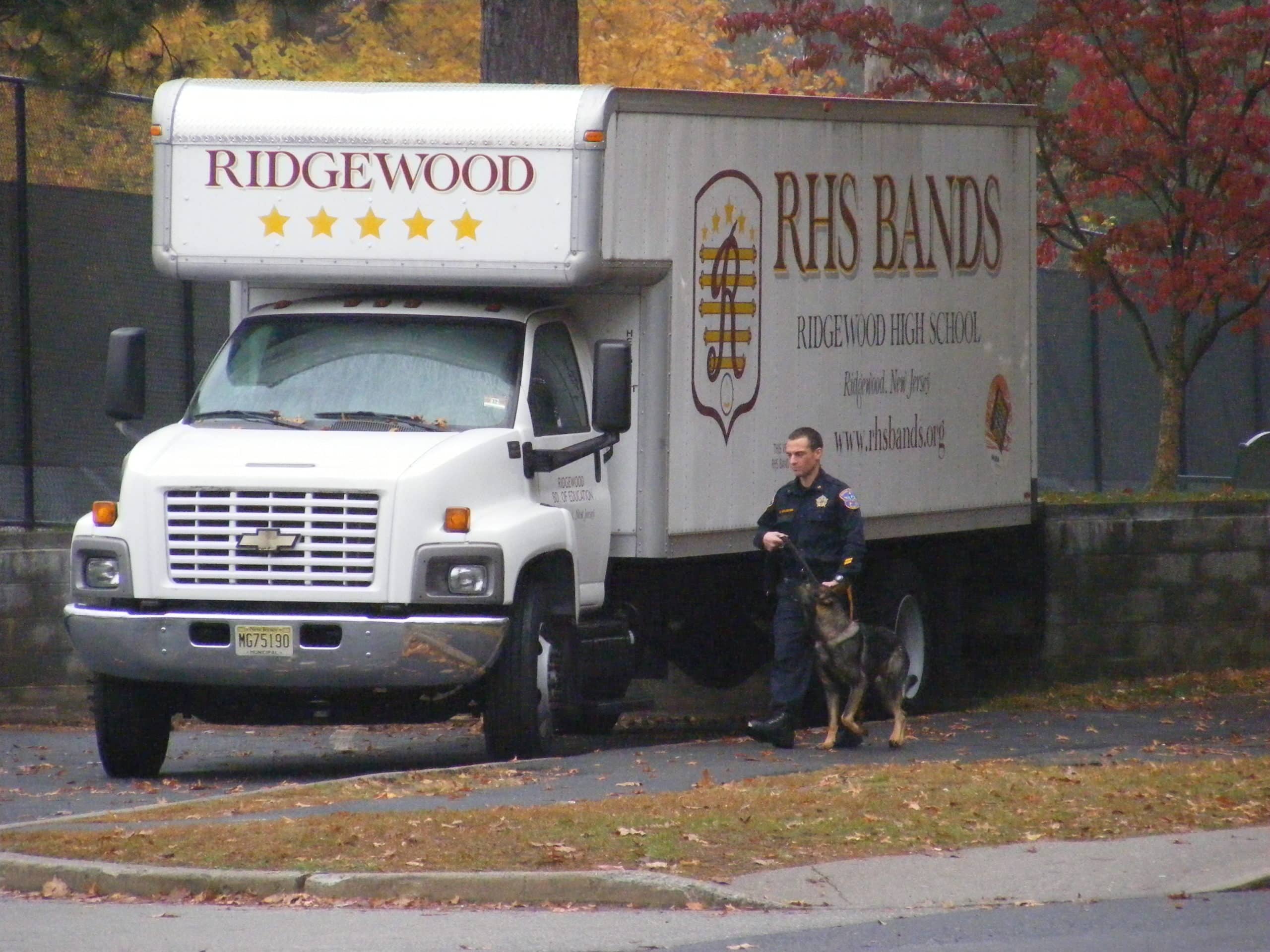
Drug sweep at Ridgewood High School November 12,2014 Boyd A. Loving 9:28 AM
Ridgewood NJ, A unannounced drug sweep of Ridgewood High School was conducted on Wednesday, 11/12. Ridgewood PD uniformed and plain clothes officers along with members of the Bergen County Sheriff’s Office K-9 Unit were observed entering the East Ridgewood Avenue side of the High School building shortly before 0900 hours.
Professor John Gruber Comments on Obamacare amount to the political and legislative equivalent of a terrorist attack.
All village residents of every political stripe should find his behavior abhorrent, blatantly violative of multiple critical constitutional principles undergirding our small ‘r’ republican democracy. Shall he be forgiven because he is a dedicated political progressive, whose motives are therefore pure and well above reproach? Shall his demonstrably faithless acts, performed over a long period of time but seemingly unregulated by the nagging influence of conscience that constantly operates in the minds of the rest of us who have always loved this country and our fellow countrymen, go uncondemned solely because they were undertaken at the behest of a man, the color of whose skin effectively renders him immune to political criticism? Does the fact of his having been raised in Ridgewood give us his former neighbors special status, relieving us from the need to speak out because of an overriding and certainly understandable desire to avoid doing anything that might negatively impact property values? Or do we choose to remain mute because, despite being the tree from which this particular political apple has frankly not fallen very far, his parents remain our neighbors and true friends?
MIT Professor John Gruber has now clearly shown the world that modern progressive liberals in this country believe, and are ready, willing, and able to act on their belief that their supposedly noble and enlightened political ends justify any seedy, mendacious, ‘big lie’-propagating, Alinsky-inspired, Cloward-Piven strategy-driven means they may wish to employ. Look at the latest video and you will see this horribly corrosive attitude in full flower, revealing not a hint of self-consciousness, but clearly articulated in the context of an otherwise apparently normal panel discussion held before an apparently large but depressingly credulous and sympathetic professional audience. Professor Gruber puts in a performance that should make the cockiest of barnyard roosters and the proudest of peacocks start looking for new respective lines of work. The catastrophically politically destructive concepts he shamelessly propounds have absolutely no place in our culture. And yet, instead of witnessing the entertaining spectacle of his friends and colleagues in the political and professional progressive elite climbing atop and over each other in a mad rush to avoid being seen in the same intellectual zip code as Professor Gruber, which by all that is right and good in this world should be in full swing by now, we are treated to the increasingly familiar, if no less distressing, chorus of crickets.
Professor Gruber’s behavior should be recognized for what it is: naked political jihad. At this point, we cannot continue to regard it as fringe behavior that will fizzle out, a ‘la Bill Ayers and the Weathermen. No, it has significant momentum now, and will surely continue, and likely get much worse, unless and until enough of the rest of us stop taking our beautiful national heritage for granted, and start caring enough about the enormous existential threats now darkening our doorstep to become personally educated on the major issues we collectively face as a culture.
Hoping for a parking garage, Ridgewood to survey Hudson St. lot
NOVEMBER 11, 2014 LAST UPDATED: TUESDAY, NOVEMBER 11, 2014, 5:40 PM BY LAURA HERZOG STAFF WRITER | THE RIDGEWOOD NEWS
One lot = a lot of parking hopes.
In preparation for a parking garage, to be built by either the county or Ridgewood, the village is planning to survey the Hudson Street lot.
This survey follows a recent vote by the Bergen County Board of Chosen Freeholders to transfer $180,000 from a 2002 rail network capital bond to the Bergen County Improvement Authority (BCIA), which will then lead to a parking feasibility study in Ridgewood, with eyes on the Hudson Street lot.
Ridgewood officials and BICA representatives have been talking for about a year on the potential partnership to create a multistory parking garage on Hudson Street.
Last Thursday, the BCIA planned to “take up a resolution to approve funding for a study of Ridgewood,” according to Mayor Paul Aronsohn.
According to Village Engineer Chris Rutishauser, the village’s survey of the lot would show the county that “we’re sharing the cost.”
“As we all know, we’re really serious about building a parking garage, particularly at the Hudson Street site. Regardless of how that garage gets built, we have some work to do,” said Village Manager Roberta Sonenfeld, noting that a preparatory environmental engineering study of the site will also need to be paid for. “This [survey] is about $6,300 worth of work … We’re going out with [a request for proposal] for the environmental.”
At last Wednesday’s public work session, the council also discussed its latest plans for new parking measures that would offer short-term alleviation for parking woes, while the village remains focused on plans to build a garage, one way or another.
Planning Board Amendment to Meeting Schedule – November 17th
PLANNING BOARD
AMENDMENT TO MEETING SCHEDULE
Special Public Meeting: Monday, November 17, 2014
Change of Date and Location
In accordance with the provisions of the “Open Public Meetings Act,” please be advised that the Planning Board has scheduled a special public meeting and work session for MONDAY, NOVEMBER 17, 2014, in the RIDGEWOOD HIGH SCHOOL STUDENT CENTER, 627 E. RIDGEWOOD AVENUE, RIDGEWOOD, NJ beginning AT 7:30 p.m.
The Board may take official action during this Special Public Meeting at which time the Board will continue the public hearing concerning a proposed amendment to the Land Use Plan Element of the Master Plan which would recommend changes in zone district classifications and boundaries within the Central Business District and surrounding area including AH-2, B-3-R, C-R and C Zone Districts.
The proposed master plan amendment and related exhibits are at the office of the Secretary of the Ridgewood Planning Board on the third floor of Village Hall, 131 North Maple Avenue, Ridgewood, New Jersey and are available for public inspection Monday-Friday between the hours of 8:30 a.m. and 4:30 p.m. The amendment and exhibits are also posted as a courtesy on the Village’s website at www.ridgewoodnj.net.
All meetings of the Ridgewood Planning Board (i.e., official public meetings, work session meetings, pre-meeting assemblies and special meetings) are public meetings which are always open to members of the general public.
Research Shows that Small Government Is Efficient Government
By DANIEL J. MITCHELL SHARE
I’ve argued that we’ll get better government if we make it smaller.
And Mark Steyn humorously observed, “our government is more expensive than any government in history – and we have nothing to show for it.”
But can these assertions be quantified?
I had an email exchange last week with a gentleman from Texas who wanted to know if I had any research on the efficiency of government. He specifically wanted to know the “ratio of federal tax dollars collected to the actual delivery of the service.”
That was a challenge. If he simply wanted examples of government waste, I could haveoverloaded his inbox.
But he wanted an efficiency measure, which requires apples-to-apples comparisons to see which jurisdictions are delivering the most output (government services) compared to input (how much is spent on those services).
My one example was in the field of education, where I was ashamed to report that the United States spends more per student than any other nation, yet we get depressingly mediocre results (though that shouldn’t be a surprise for anyone who has looked at this jaw-dropping chart comparing spending and educational performance).
But his query motivated me to do some research and I found an excellent 2003 study from the European Central Bank. Authored by Antonio Afonso, Ludger Schuknecht, and Vito Tanzi, the study specifically examines the degree to which governments are providing value, and at what cost.
The objective of this paper is to provide a proxy for measuring public sector performance and efficiency. To do this we will put together a number of performance indicators in the government’s core functions. …We will set these indicators in relation to the costs of achieving them. We will, hence, derive simple performance and efficiency indicators for 1990 and 2000 for the public sectors of 23 industrialised OECD countries. …As a first step, we define 7 sub-indicators of public performance. The first four look at administrative, education, health, and public infrastructure outcomes. …The three other sub-indicators reflect the “Musgravian” tasks for government. These try to measure the outcomes of the interaction with and reactions to the market process by government. Income distribution is measured by the first of these indicators. An economic stability indicator illustrates the achievement of the stabilisation objective. The third indicator tries to assess allocative efficiency by economic performance.
Here’s a flowchart showing how they measured public sector performance.
I should explain, at this point, that I’m not a total fan of the PSP measure. Most of the indicators are fine, but some rub me the wrong way.
I think an even distribution of income is a nice theoretical concept, for instance, but I don’t think it can be mandated by government (unless the goal is to make everybody poor). Economic stability also isn’t necessarily a proper goal. I’d much rather live in a society that oscillates between 7 percent growth and -2 percent growth if the only other alternative was a society that had very stable 1 percent growth.
But enough nit-picking on my part. What did the study find when looking at public sector performance?
Indicators suggest notable but not extremely large differences in public sector performance across countries… Looking at country groups, small governments (industrialised countries with public spending below 40 percent of GDP in 2000) on balance report better economic performance than big governments (public spending above 50 percent of GDP) or medium sized governments (spending between 40 and 50 percent of GDP).
These are remarkable findings. Nations with small governments achieve better outcomes. And that’s including some indicators that I don’t even think are properly defined!
But what’s most amazing is that the above findings are simply based on an examination of outputs.
So what happens if we also look at inputs to gauge the degree to which governments are delivering a lot of bang for the buck?
Public expenditure, expressed as a share of GDP, can be assumed to reflect the opportunity costs of achieving the public sector performance estimated in the previous section. …Public expenditures differ considerably across countries. Average total spending in the 1990s ranged from around 35 percent of GDP in the US to 64 percent of GDP in Sweden. The difference is mainly due to more or less extensive welfare programs. …we now compute indicators of Public Sector Efficiency (PSE). We weigh performance (as measured by the PSP indicators) by the amount of relevant public expenditure, PEX, that is used to achieve a given performance level.
And what did the experts discover? Just below is a chart showing the results. There’s a lot of data, particularly if you’re looking at individual countries. To see the bottom-line results, look at the numbers circled in red.
As you can see, countries with small governments are far more productive and efficient.
We find significant differences in public sector efficiency across countries. Japan, Switzerland, Australia, the United States and Luxembourg show the best values for overall efficiency. Looking at country groups, “small” governments post the highest efficiency amongst industrialised countries. Differences are considerable as “small” governments on average post a 40 percent higher scores than “big” governments. …This illustrates that the size of government may be too large in many industrialised countries, with declining marginal products being rather prevalent.
The conclusion of the study makes some very important observations.
Unsurprisingly, countries with small public sectors report the “best” economic performance… Countries with small public sectors report significantly higher PSE indicators than countries with medium-sized or big public sectors. All these findings suggest diminishing marginal products of higher public spending. …Spending in big governments could be, on average, about 35 per cent lower to attain the same public sector performance.
Though I can’t help but wonder what the results would have been if Hong Kong and Singapore also were added to the mix.
After all, I don’t consider the United States to have a “small” government. Same for Japan, Switzerland, and Australia. Those are simply nations where government isn’t as big and bloated as it is in France, Italy, Sweden, and Greece.
Imagine the results if you could measure public sector performance and public sector efficiency for the United States and other developed nations in the pre-World War I era, back when the burden of government spending averaged less than 10 percent of economic output.
I strongly suspect we got far more “bang for the buck” when government was genuinely small.
But I don’t want to make the perfect the enemy of the good, so let’s focus on the results of the study. The clear message is that big governments spend a lot more and deliver considerably less.
And that’s a very worrisome message since the burden of government is projected to increase substantially in the United States thanks to demographic changes and poorly designed entitlement programs.
So at the very least, we should do everything possible to reform those programs to keep America from becoming Greece.
And once we achieve that goal, then we can try to reduce the size and scope of government so we’re more like Hong Kong and Singapore, with only about 20 percent of GDP diverted to government.
Then, in my libertarian fantasy world, we can cut, prune, privatize, and eliminate until government once again only consumes about 10 percent of economic output.
New report examines what American businesses look like and what would happen to them if we fixed the tax code
Washington, DC (Nov 11, 2014)—As the American economy continues its slow recovery, both sides of the aisle are looking to business tax reform as a means of fixing present financial woes and avoiding future pitfalls. Some policymakers and taxpayers argue for higher taxes on business investment, while others fight for lessening the corporate tax burden. However, the conversation is often driven by misinformation about what the U.S. economy, business landscape, and tax code look like and how they function together.
In an effort to help ensure that the debate over business tax reform is fact based and easily digestible, the nonpartisan Tax Foundation has released a major new study, Business in America: Illustrated. The report examines the vast array of business types and sizes, the sectors of the economy they serve, and the effect of taxes on U.S. businesses and the people they employ.
Business in America is a visual guide to business, taxes, and the economy with more than 40 illustrations accompanied by concise and easily digestible analyses. Here are a few examples of the key takeaways:
The U.S. labor force as a percent of population is smaller today than in the past 30 years. 95% of businesses pay their taxes through the individual income tax code, not through the corporate tax code. Large companies earning more than $100 million pay more than 90% of all corporate income taxes. Corporations face high effective tax rates across all industries, although the rates vary by industry due to the profitability of an industry in a given year, how much business they do overseas, and different benefits in the tax code. Effective and smart tax reform could grow the economy by $2.5 trillion.
After months of debate over the relationship between corporate inversions and the U.S. tax code, tax reform will be a key issue for the newly elected congress. As the President and Congressional leaders work toward an effective compromise, it is crucial that they understand what American businesses look like, how the tax code is failing those businesses and the people they employ, and where there is room for improvement.
“Americans often look at businesses impersonally. We think of them as lifeless entities that earn profits and don’t do much else,” said Tax Foundation President Scott Hodge. “When we think of businesses this way, it becomes very easy to think that business taxes are somehow different than other taxes. But the reality is that businesses are simply groups of people; they are workers, consumers, and shareholders. This means that when we tax businesses, we actually tax people. Workers get lower wages, consumers pay higher prices, and shareholders receive lower returns.”
Holocaust Survivor Pens ‘Thank You’ To Vets And Liberators
(Newsmax) – A survivor of the Auschwitz and Buchenwald concentration camps who would forge a new life in America as a famed tailor says he owes everything to God and the “soldiers, sailors, airmen and Marines of the U.S. Armed Forces” who liberated him.
“Everything I am or will ever be I owe to God and the soldiers, sailors, airmen and Marines of the U.S. Armed Forces who fought and died to liberate me,” writes Martin Greenfield in a New York Post column.
Greenfield, who came to the United States after the war, says that Americans who believe “that America has seen her best days” just need to look to the members of the armed forces to be proven wrong.
“America is bigger and stronger than the vexing problems we now face. Lest one doubt this, simply look at our nation’s 2.4 million Armed Forces members. There you will find the best of us,” he says.
Greenfield, whose first job after arriving in America was as a floor boy in a Brooklyn garment factory, would eventually work his way up the ladder and within a decade was making suits for the factory and its famous clients, according to a Washington Post profile.
The author of the new book “Measure of a Man: From Auschwitz Survivor to Presidents’ Tailor,” Greenfield says of the men and women who liberated the concentration camps, “they rescued me, and America welcomed me here and eventually claimed me as one of her own.”
He also praises the families of the veterans.
– See more at: https://www.teaparty.org/holocaust-survivor-pens-thank-vets-liberators-66895/?utm_source=rss&utm_medium=rss&utm_campaign=holocaust-survivor-pens-thank-vets-liberators#sthash.MyFjw1nl.dpuf
Got Freedom? Thank a Veteran NJ Tea Party Coalition
On the 11th hour of the 11th day of the 11th month of 1918 an armistice between Germany and the Allied nations came into effect. On November 11, 1919, Armistice Day was commemorated for the first time.
In 1919, President Wilson proclaimed the day should be “filled with solemn pride in the heroism of those who died in the country’s service and with gratitude for the victory”. There were plans for parades, public meetings and a brief suspension of business activities at 11am.
In 1926, the United States Congress officially recognized the end of World War I and declared that the anniversary of the armistice should be commemorated with prayer and thanksgiving. The Congress also requested that the president should “issue a proclamation calling upon the officials to display the flag of the United States on all Government buildings on November 11 and inviting the people of the United States to observe the day in schools and churches, or other suitable places, with appropriate ceremonies of friendly relations with all other peoples.”
An Act (52 Stat. 351; 5 U. S. Code, Sec. 87a) was approved on May 13, 1938, which made November 11 in each year a legal holiday, known as Armistice Day. This day was originally intended to honor veterans of World War I.
A few years later, World War II required the largest mobilization of service men in the history of the United States and the American forces fought in Korea. In 1954, the veterans service organizations urged Congress to change the word “Armistice” to “Veterans”.
Congress approved this change and on June 1, 1954,
November 11 became a day to honor all American veterans, where ever and whenever they had served.
The following is a list of Veterans Day discounts on restaurants, goods, services and events for 2014.
Friends, family fighting for Ridgewood’s ‘Strong Mom’
NOVEMBER 10, 2014 LAST UPDATED: MONDAY, NOVEMBER 10, 2014, 1:04 PM BY LAURA HERZOG STAFF WRITER | THE RIDGEWOOD NEWS
“I love you, too.”
In the past, Ridgewood resident Glenn Prettitore, like anyone, would not have thought much of hearing his wife Kerrie say this.
But in the past six months of showering Kerrie at her bedside with utterances of “I love you,” Glenn has only heard her say “I love you, too” twice.
Since a fight for her life began in the spring, 42-year-old Kerrie, a mother of three young children, is now barely verbal, after emerging from a recent coma.
Besides “I love you, too,” Kerrie – a graphic designer who loved ones described as a quietly strong, kind, and nonjudgmental neighbor, wife, friend, and avid snowboader – can just say “what,” “yes,” “no” and “OK,” and make occasional undistinguishable sounds.
“These things come out, she says them. Deep down, they’re there. In my mind, these connections are there… [but] I say it probably 100 times when I’m there, and I’ve heard it twice,” he said during a recent phone call before going to Kerrie’s bedside at the Kessler Institute for Rehabilitation in West Orange.
This state of minimal consciousness is the result of a single administration in mid-March of the chemotherapy drug fluorouracil: Kerrie’s body was unable to break the drug down, since Kerrie, who was receiving the preventative chemotherapy after recovering from colon cancer surgery, also had a previously undiagnosed genetic disorder called DPD deficiency.
Before entering a coma, Kerrie had a severe and painful reaction to the chemotherapy, because, according to cancer researchers, the DPD enzyme is needed to break down the chemotherapy drugs fluorouracil and capecitabin.
Writing to Our Troops: Don’t Know Where to Start? Tips:
The Adventures of Rush Revere Series is a proud sponsor of Operation Gratitude, a tremendous organization that sends care packages to military heroes serving overseas. Every package and letter from home reminds our troops how much we all care.
In honor of Veterans Day, we need your help with Mission: Letters From Home! The mission involves teaming up with Operation Gratitude to send letters to service personnel. This is a wonderful and simple homeschool, or class, project for your students to bring lasting joy to our troops.
Here are a few simple tips on writing letters to our troops:
Start with a salutation such as, “Dear Service Member,” or “Dear Hero.” Share a little about your class, or your life, what the military means to you. If you can’t find the right words, consider making a drawing or painting.
Please send your class letters or artwork in one big envelope to:
Letters From Home c/o KARHL Holdings, LLC. 4521 PGA Boulevard, Box 258 Palm Beach Gardens, Florida 33418
Veterans Are the Real 1 Percenters Bruce Klingner / November 11, 2014
Mentioning “1 percenters” conjures up images of protest and class warfare. But there is another 1 percent who are beyond politics: the men and women who serve in America’s armed forces, as well as the veterans who served before them.
Despite over a decade of ceaseless war against terrorism, fewer than 1 percent of the U.S. population has been on active duty.
A smaller share of Americans now serve in the military than at any point since the era between World Wars I and II, according to a Pew Research study. In 1975, 70 percent of members of Congress had military service. Today, only 20 percent do.
Thankfully, we live in a time where we at least have a culture that appreciates our veterans.
After Desert Storm, it became fashionable again to appreciate and praise the U.S. military.
Gone was the stigma of Vietnam, when returning service members didn’t wear uniforms in public lest they be spit on or called baby-killers. No longer would our service members suffer the disparagement that Rudyard Kipling wrote of, “For it’s Tommy this, and Tommy that, and ‘Chuck him out, the brute!’” But it’s “‘Savior of his country’ when the guns begin to shoot.”
The heinous attacks on 9/11 resurrected the flame of patriotism that had faded in the hearts of so many Americans. Flags resting dormant in closets came back out to be displayed proudly and demand for new flags skyrocketed. The nation came together in a way not seen since Pearl Harbor —first in grief, then in resolve.
We saw acts of selfless courage, first by firefighters and police officers risking their lives to give aid, then by service members who sallied forth into harm’s way to impose retribution for the attack. Even when people criticized the wars in Iraq and Afghanistan, they still praised the men and women who volunteered to serve in the military.
“Thank your for your service” seems such a pitifully inadequate acknowledgement of gratitude and respect for someone who spends months away from their loved ones, who endure hardships and dangers that ordinary people shirk from. And what can one offer to the families of those who gave the last full measure of devotion by sacrificing their lives to defend us?
We who benefit from their service should honor it by urging our government to provide the funding to enable the military to carry out its missions. And provide the medical care for those returning home wounded in body and spirit.
From the old veterans bent with age to the young men now hunched over in a cold, dark foxhole, perhaps you can stand a little straighter today, knowing our nation is forever indebted to you. As George Orwell wrote, “People sleep peaceably in their beds at night only because rough men stand ready to do violence on their behalf.”
So to my father and my son—both U.S. Marines—and to all the other men and women who ever put on our country’s uniform, I humbly and respectfully thank you for unfailingly standing your post on the ramparts in order to keep us safe.
Harding Pharmacy & Liquors Set to close on 11/15
November 11,2014
Boyd Loving
Ridgewood NJ, Harding Pharmacy & Liquor, located at 305 East Ridgwood Avenue at the corner of North Maple Avenue, will be closing its doors for good on Saturday, November 15. Current proprietor Myron Lesh, who purchased the business in the early 1980’s, confirmed this when spoken to in person today.
Rumors are that a “sandwich shop” will soon occupy the premises. Mr. Lesh will become a pharmacist at an existing pharmacy located in HoHoKus; all Harding prescriptions will be transferred to that location. No word on who purchased the liquor license, which is good only in Ridgewood.
Mr. Lesh was unable to negotiate a new lease with the building’s owner, CLOTCO, Inc. of Boca Raton, Florida, whose principal owner is Emily S. Danson.
Those in the know say that Harding was in business for 50 years at the same location.
NJ Transit continues customer service improvements
By David Matthau November 10, 2014 12:05 AM
Share on Facebook Share on Twitter
New Jersey Transit, the third largest transit system in the U.S., is continuing its efforts to improve customer service by seeking feedback from its rail and bus customers.
NJ Transit trains (Annette Petriccione, Townsquare Media NJ)
In 2011, the agency launched its Scorecard initiative, which includes an online customer survey that gives riders the chance to rate NJ Transit’s overall performance in several areas including communication, rail and bus comfort, parking lot safety and customer service.
Customers are also able to offer suggestions for improvement, which NJ Transit said it uses to make meaningful management decisions.
“Soliciting customer feedback and getting customer satisfaction is now a top priority at NJ Transit. We encourage people to reach out to us with emails and through customer satisfaction surveys. If there’s something that we’re missing, we want to hear from our customers,” said William Smith, a spokesperson for NJ Transit.
One of the improvements made thanks to the customer service surveys is more accessibility to Wi-Fi. “A program has been launched to offer Wi-Fi at many train stations across the state. Currently there are 40 rail stations that are on-air, and by the end of the year, another 30 stations will be added to the network,” Smith said.
Read More: NJ Transit continues customer service improvements | https://nj1015.com/nj-transit-continues-customer-service-improvements/?trackback=tsmclip
Obamacare architect Jonathan Gruber said that lack of transparency was a major part of getting Obamacare passed because “the stupidity of the American voter” would have killed the law if more people knew what was in it.
Gruber, the MIT professor who served as a technical consultant to the Obama administration during Obamacare’s design, also made clear during a panel quietly captured on video that the individual mandate, which was only upheld by the Supreme Court because it was a tax, was not actually a tax.
“This bill was written in a tortured way to make sure CBO did not score the mandate as taxes. If CBO scored the mandate as taxes, the bill dies. Okay, so it’s written to do that. In terms of risk rated subsidies, if you had a law which said that healthy people are going to pay in – you made explicit healthy people pay in and sick people get money, it would not have passed… Lack of transparency is a huge political advantage. And basically, call it the stupidity of the American voter or whatever, but basically that was really really critical for the thing to pass… Look, I wish Mark was right that we could make it all transparent, but I’d rather have this law than not.”