Police Recruit Scandal : Reader says Village Council showed a shear lack of ethics
Its not that simple. It not just like getting a regular job… you have a certain window of time that if they miss will jeopardize them getting the job at all.
Also the most important thing…. the offered them a promise of employment… they left …lost health care…. they went through extensive testing and purchased equipment all at the taxpayers expense. All of which the vc approved… that dosnt bother you?
Even if you could care less about the two kids. Your no appalled by the shear lack of ethics and responsibility the Village Council showed by doing this?
Ridgewood Schools Food delivery ban: NO MENTION of a non-compete clause in his letter.
mom with a POV
I’m not personally affected by Dr. Fishbein’s decision, but I am disgusted that Dr. Fishbein can send a letter to every parent in the district LYING about why he was putting an end to outside vendor deliveries. There was NO MENTION of a non-compete clause in his letter. He claimed student safety and too much staff time being used as the reasons. He then said that he was happy to listen to solutions proposed by the vendors. Now we hear:
Superintendent Daniel Fishbein said no vendors proposed a solution that addressed his concern about the non-compete clause with Pomptonian Food Service, the district’s contracted food management service provider since 1987.
“Each of the proposals that have come to me, I believe, had to do with leaving lunches behind, and that doesn’t work,” said Fishbein, whose decision was first announced in a letter earlier this month, about a week before the ban began.
Which is it, Dr. Fishbein? Student safety? Administrative time? Potential loss of money? The parents deserved to hear the TRUTH from our superintendent, not patronizing lies.
And speaking of patronizing, the last time I checked #1,#2 & #4, people are allowed to spend their money as they see fit. No one asked you what kind of car you drive or how big your TV is. Parents have the right to make their kid’s lunch, have the kid make their own lunch or have it bought and delivered (until recently). It’s not your money to spend.
Amid Ethics inquiry, South Jersey Democrat Is Giving Up House Seat for a New Job
WASHINGTON — Representative Robert E. Andrews announced on Tuesday that he would resign from Congress after more than two decades, but said it had nothing to do with a bleak outlook for Democratic chances of retaking the House or with an ethics investigation into alleged misuse of his campaign funds.
“I love Congress, but I love my family more,” Mr. Andrews, who represents part of southern New Jersey, said in an interview.
Mr. Andrews said at his Haddon Heights office that he would leave office on Feb. 18 to lead the government relations practice of Dilworth Paxson, a law firm that once employed his wife and is run by partners who attended his wedding.
“It’s an offer that won’t be there at the end of my term,” said Mr. Andrews, who added that he joined the firm, which has offices in Washington, New Jersey and Pennsylvania, to “help my family be financially secure.”
He has two college-age children, but the resignation also coincided with a sinking feeling among Democrats that their chance of recapturing the House is slipping away. His move comes in the wake of the decision to retire by Representative George Miller, Democrat of California and another key ally of the House Democratic leader, Nancy Pelosi. (Horowitz/New York Times)
Hoarding our road salt at MetLife Stadium, public safety on icy roads a public health hazard: Salt on our wounds, Jersey style
Read official Met Life brag sheet, below: “NJTA and NJDOT have the capacity to stockpile nearly 60,000 tons of salt within 30 miles of the stadium. Statewide, the storage capacity for both agencies jumps to 222,000 tons.” – official pr from state of NJ and Met Life Stadium
Thousands of pounds of precious and much needed road salt is sitting in East Rutherford at MetLife stadium, instead of being distributed to the hundreds of towns who have desperately begged for this life saving salt over the past few days here in New Jersey.
And, like a path of salt crumbs visible to all, this line leads from East Rutherford to Trenton.
The state Sports Authority, a department under the New Jersey Governor Chris Christie’s command, controlled the MetLife organization and plans for road safety, including the wise decision to protect Super Bowl day from potential snow or ice threats to travelers.
But the Super Bowl, as we all know, was a warm day, well above freezing.
A Winter Storm Warning has been issued for our area from midnight tonight through 6 pm Wednesday.
We are expecting 4-8 inches of heavy, wet snow, and up to 1/3 inch of ice. Heavy snow and ice creates a significant risk of downed trees and power lines, and potential power outages. Prepare now for possible loss of power.
Due to a severe state-wide shortage of road salt, we cannot guarantee enough salt to treat secondary roads. Our priorities are the major arteries, and those roads leading to Valley Hospital. Therefore, we anticipate extremely hazardous driving conditions on most village streets.
The Office of Emergency Management urges all residents to stay off the roads tomorrow for your own safety. If possible, do not drive, stay indoors, and stay away from downed trees and power lines.
Help us by keeping sidewalks and fire hydrants free of ice and snow.
REAGARDING SANITATION: Wednesday, Bulk Pick up for February 5th on the West side is cancelled. In order to ensure the safety of our employees, please place your refuse containers at the end of your driveway before 6:00AM on Thursday, February 6th and Friday, February 7th. Sanitation for West Side and East Side February 6th and 7th will only be collected at the end of your driveway.
PSE&G Contact Number in Case of Power Outage
If you experience a power outage – be sure to contact PSE&G at 1-800-436-7734 to report the power outage.
NJ TRANSIT OUTLINES WINTER STORM SERVICE SCHEDULE FOR WEDNESDAY, FEBRUARY 5
February 4, 2014
NEWARK, NJ — Due to the anticipated impact from the approaching, powerful winter weather system, NJ TRANSIT has adjusted its service schedule for Wednesday, February 5. All customers are strongly advised to check njtransit.com before traveling for up-to-the-minute service information before starting their trip
The weather system is expected to generate heavy snow and freezing rain late this evening and continuing into the morning hours. This will generate a major impact on tomorrow morning’s commute with the potential to continue throughout the entire service day. Should customers plan to travel during the morning peak period when conditions are expected to be at their worst, NJ TRANSIT specifically encourages that they build additional time into their travel plans, expect potentially lengthy service delays, and be safe.
The following service advisories are in effect for Wednesday, February 5:
Rail Service: On Wednesday, February 5, NJ TRANSIT will operate trains on a storm schedule on all rail lines except the Atlantic City Rail Line, which will operate a regular weekend schedule. Service levels on the storm schedule will match the enhanced holiday schedule normally implemented on Martin Luther King, Jr. Day and Presidents’ Day. Visit njtransit.com or click here to view the detailed storm schedule.
Bus Service: While every effort will be made to continue operating bus service systemwide on a regular weekday schedule on Wednesday, February 5, customers may experience delays, detours or service adjustments on certain routes in the event of significant snowfall or ice accumulation. Customers are advised to plan accordingly and allow additional travel time, as buses will be subject to local road conditions.
Light Rail Service: On Wednesday, February 5, NJ TRANSIT will operate regular weekday scheduled service on the RiverLINE as well as Hudson-Bergen Light Rail. Newark Light Rail will operate on a modified weekday schedule with service every ten minutes during the morning peak period. All light rail customers should expect delays in service, particularly during the morning commute.
Access Link Paratransit Service: On Wednesday, February 5, Access Link service will be suspended statewide until 12 noon. In addition, all transfer trips will be cancelled statewide. Access Link customers may call 1-800-955-2321 for periodic weather updates.
In addition, NJ TRANSIT is reminding customers of the following:
Systemwide Cross-Honoring in Effect on Wednesday, February 5: To give customers additional travel options during winter weather conditions, NJ TRANSIT has implemented full systemwide cross-honoring on Wednesday, February 5, enabling customers to use their ticket or pass on an alternate travel mode—rail, light rail or bus—including private bus carriers.
Waiting Room Hours Extended Through Wednesday, February 5: Due to the impending storm, all NJ TRANSIT rail station buildings and waiting rooms will remain open, including evenings and overnight, through Wednesday, February 5.
UPDATE 2.05.14 at 5 A.M.: SCHOOLS CLOSED TODAY, WEDNESDAY, FEBRUARY 5
Due to the severity of the winter storm, the Ridgewood Public Schools are CLOSED today, Wednesday, February 5, 2014. All after-school activities are also canceled.
North Jersey towns scrambling for salt ahead of storm
Tuesday, February 4, 2014 Last updated: Tuesday February 4, 2014, 6:24 PM
BY MATTHEW MCGRATH
STAFF WRITER
The Record
Old Man Winter seems determined to rub salt into North Jersey’s frostbitten wounds with another storm Wednesday and one predicted for this weekend, but there isn’t any left.
The Westwood Department of Public Works on Tuesday had one truckload of salt for its roads in advance of a Wednesday’s winter storm, said Rick Woods the DPW superintendent. He’s fielding calls from other towns looking to borrow some.
“We’re waiting days for deliveries,” Woods said. “I don’t know what the issue is.”
The Bergen County Department of Public Works had 2,000 tons on hand, or just enough to handle one storm. County DPW workers closed the gates Tuesday afternoon on a long line of municipal crews hoping to get resupplied with salt in advance of Wednesday’s storm.
– See more at: https://www.northjersey.com/news/North_Jersey_towns_scrambling_for_salt_ahead_of_storm.html#sthash.LBlcdl4u.dpuf
One of the great libertarian victories of the past few decades was the tax revolt of the late 1970s and early 1980s. But this story isn’t told often in history books and popular media. In the new issue of Cato Policy Report, historian Brian Domitrovic looks back on the great successful effort a generation and a half ago to slow the growth of big government.
Tax Revolt! It’s Time to Learn from Past Success
By Brian Domitrovic
For about 15 years now, the federal government, in all its myriad activities, has been in major expansion mode. The Federal Reserve, the regulatory apparatus, the tax code, the police and surveillance machinery of the state — all of these extensions of the government have broadened their reach, power, and ambition in significant fashion since the late 1990s.
The basic metric that reflects all this is the level of federal spending. In 2013 the government of the United States spent 55 percent more money — in real, inflation-adjusted terms — than it did in 1999. Economic growth in that 14-year span has been 30 percent. Where government at all levels soaked up 32 percent of national economic output in 1999, it took in 37 percent in 2013 — an increase of nearly a sixth, in less than a decade and a half. By way of comparison, for the first 125 years of this nation’s existence under the Constitution, through 1914, government spending was largely parked between 3 percent and 6 percent of national output.
The gorging on the part of government in our recent past has been so unrelenting that aside from flashes from the likes of the Tea Party, the public is meeting the development with quiescence. At $6.4 trillion per year, total government spending is now so immense that any yearning for something smaller and more reasonable from our minders in the state runs the risk of appearing as quaint and otherworldly. Government that is huge and ever-expanding is a matter of concern in its own right. But perhaps less understood is an additional problem: the developments of the current millennium are inuring a rising generation of Americans to the immovable fact of big government.
We now not only have Leviathan, but also a crucial intellectual component of its perpetuation: government’s enormous growth ensures that memory of something different is harbored by fewer and fewer persons, getting older every year.
RECLAIMING A TRADITION
The moment is apt, then, to reclaim a tradition of our recent history, a tradition that the big-government 21st century is striving to suppress. This is the great successful effort to slow Leviathan of a generation and a half ago — the effort that gave us the Ronald Reagan revolution of the 1980s.
For despite the still large displacement of the economy, the market, and private life that the government brought about in the 1980s and 1990s, even in the wake of President Reagan’s major reforms, the scope of government in that era pales in contrast to what prevails today. From the early 1980s to the late 1990s, the Fed largely stuck to keeping the dollar sound against gold. Regulatory expansions planned in the 1970s did not come to pass thereafter. And the major spending initiatives tended to involve cuts, such as in welfare and defense.
Again, the outlay picture tells a tale. The federal government grew by 33 percent in real terms from 1983 to 1999, while the economy grew by 78 percent. Before the current millennium, we had a government that got bigger all right, but comfortably less than the economy did. Now, we have a government that leaves the economy in the dust when it comes to growth.
The achievements of the 1980s and 1990s stemmed from one source above all: the centerpiece of Ronald Reagan’s economics, the bill that Congress passed in the summer of 1981. This was the great tax cut that had been originally sponsored in Congress in the 1970s by Rep. Jack Kemp of New York and Sen. William V. Roth of Delaware, “Kemp-Roth.”
The tax cut of 1981 — which took all rates of the income tax down by an average of 23 percent, lowered the capital gains rate by 29 percent, and reduced business taxes — was the point of origin of the renaissance of the 1980s and 1990s whereby the economy expanded well in excess of the government.
The tax cut made everything else easy. First of all, it took the heat off the Fed. The Fed did not have to worry about stimulating the economy, because growth flowed from the tax cut. Furthermore, lower tax rates made loopholes less important as a source of profit, so business focused more on real entrepreneurship.
Competition, efficiency, and product development reached soaring new heights in the 18 years after 1981. And government spending at last decelerated. Forty million new jobs reduced the welfare rolls, while the collapse of Soviet communism made a portion of the defense establishment redundant.
The example of 1981 proves that efforts to constrain government to the benefit of the real economy can succeed. It remains the greatest resource that our recent history provides as we seek motivation and precedent to expand prosperity and freedom by shrinking government.
The scholarly discipline of history has not been helpful in terms of relating to us the achievements of the 1980s and 1990s, in particular the victory of the great tax cut of 1981. Professors write books with titles such as “Zombie Economics” and “Peddling Prosperity” when it comes to retelling the profound revolution that brought Kemp-Roth to the fore. I strove to correct this condition myself by authoring Econoclasts (2009), a narrative history of supply-side economics, the movement that seeded Kemp-Roth and the Reagan Revolution. Also, Larry Lindsey’s classic, countercultural study of the first benefits of the 1981 tax cut, The Growth Experiment, has now thankfully been re-released in a new and updated edition.
We have to cut through the academic and political obfuscation about “the last 30 years” (a progressive epithet today) and reexamine the policy clarity and impetus to reform that coalesced in the late 1970s and early 1980s and left in its wake an economy zooming ahead of government.
In particular, we should reflect upon the four major aspects of the movement that brought about the tax cut of 1981: its intellectual origins, its institutional period of development (which occurred in journalism as opposed to government), its capacity to incur political traction, and its relevance to an economy beset with the kind of big government that took hold in the United States in modern times.
FROM THE 1960S THROUGH THE ‘70S TO THE ‘80S: A USABLE PAST
The supply-side economics that culminated in the tax cut of 1981 first arose (avant la lettre: the term was coined in 1976) in the mainstream of academic economics, in the early 1960s work of the economist Robert A. Mundell. Mundell was working for the International Monetary Fund during the first, recession- prone years of the John F. Kennedy administration. Beginning in 1961 he published a series of papers showing that the best way for the United States to slough off bad times was to strengthen the dollar while cutting taxes.
One of these papers from 1963 was a model of insight — in 1999, when Mundell won the Nobel Prize in economics, the prize announcement cited this paper. Its purpose was to show that loose money and high taxes conduce to stagnation. Namely, if profits are to come in a depreciating currency, and be subject to increasing government levies, investors will prove reluctant to take risks to gain them. The result of loose money and high taxes is no-growth and unemployment. In contrast, a dollar solid in value (particularly against its classical metric, gold) and supported by tax cuts will call forth a business and jobs boom. Somehow Mundell’s advice was actually taken, if only by default, in the Kennedy years.
The great tax cuts of 1962 and 1964 — along with a new Federal Reserve vigilance about the dollar — yielded eight years of growth at 5 percent per year. But then the consensus unraveled. In 1968 and 1969, there were tax increases. From 1971 to 1973 the Fed and Treasury conspired with President Richard M. Nixon to untie the dollar from gold as well as from fixed exchange rates with other currencies.
The era of “stagflation” came upon the nation. After a double-dip recession in 1969–70, there was another more severe double-dip episode from 1973–75, and yet another still more severe from 1980–82. From 1969 to 1982, all told, growth was mediocre at 2.4 percent per annum, the price level nearly tripled, and stocks lost half their real value. It was the worst extended performance of the American economy since the Great Depression of the 1930s — and it remains debatable whether our own era of the Great Recession actually exceeds the magnitudes of the economic crisis of the long 1970s.
In the midst of these difficulties, an intellectual transition occurred. Mundell’s ideas, passed over and forgotten in the academy (not to mention policy) in the 1970s, began to resonate in journalism, particularly on the editorial page of the Wall Street Journal. The economist Arthur B. Laffer, a colleague of Mundell’s at the University of Chicago, caught the ear of Jude Wanniski of that page. The two began having extended discussions about how to overcome stagflation via dollar stability and tax cuts. Wanniski’s editor, Robert L. Bartley, took the initiative to convene monthly meetings at a Manhattan steakhouse where the group, including Mundell, now resident in New York at Columbia University, could talk things through.
By the latter part of the nasty 1973–75 stagflation-recession, when unemployment hit 9 percent in the context of double-digit inflation and a stock collapse of 45 percent, the Journal was publishing the insights of Mundell and Laffer on a regular basis. An endrun around the academy had been effected.
If the economic establishment was not going to promote low-tax, stable-money ideas adequately, then the major business media would. As the Journal plugged away, certain quarters of Congress, including the Joint Economic Committee, developed new thinking about economic policy along similar lines.
Kemp, representing a Buffalo, New York, experiencing de-industrialization in the face of stagflation, began crafting a bill to put things into practice. In 1977 Roth lent his name as a co-sponsor, and Kemp-Roth began life. The bill called for three successive yearly cuts in the income tax of 10 percent. The model was the tax cut of 1964, which had taken all rates of the income tax down by 30 percent and occasioned the great economic recovery of that era.
Taxes were particularly onerous in the 1970s because of the way they mixed with inflation. The tax code was not indexed for inflation, meaning when the regular 7 percent increase in prices came every year, a taxpayer was thrown into a higher tax bracket if earnings kept up with prices. If one got only a “cost-of-living” increase, real income was reduced — and the government kept the difference.
The situation was worse with respect to property and capital gains taxes. In the 1970s houses soared in value as hedges against inflation, and so did tax assessments on those houses. Stocks (and real estate) that went up with inflation were subject to a capital gains tax (that reached 49 percent) on the unreal gain.
Thus, by 1978 the inevitable happened: a national tax revolt. In California, where house prices had leapt some five-fold as people bid up land to hedge the dollar, property taxes increased proportionately. A movement organized by Los Angeles businessman Howard Jarvis brought a ballot measure requiring a permanent reduction in California property taxes. Proposition 13 won big in June 1978.
In Congress that same year, a little-known representative from Wisconsin, William A. Steiger (who would die that December at age 40) proposed a capital gains rate cut of 21 points. It became so popular that President Jimmy Carter signed it into law, though on the condition that Kemp-Roth be tabled. These first electoral and legislative moves in the direction of tax cuts gave way to four of the strangest years ever in the American economy.
From 1979 to 1981 inflation was above 10 percent each year, even though a recession occurred and growth totaled only 1.2 percent per annum. In 1982 inflation moderated to the still excessive level of 6 percent, but growth crashed to -1.9 percent. It was stagflation with a vengeance: a motionless — indeed, shrinking — economy in the context of intolerable increases in prices. In the latter portion of this quite terrible period, with the Journalhammering away at the taxcut, stable-money solution, Reagan pushed Kemp- Roth into law seven months into his presidency, in August 1981. However, the first year’s tax cut was reduced by half, to 5 percent. When the full 10 percent tax-cut installment arrived in the middle of 1982, the economy turned, and big, for the long term.
Stocks bottomed in August 1982, went up 30 percent the rest of the year, and over the next 18 years soared another eleven-fold. Inflation, intractable for a dozen years at an 8 percent average, plummeted to 3 percent immediately and stayed there to date. Unemployment tumbled from 11 percent to 5 percent, then to 4 percent, as the labor force expanded magnificently by 40 million. The amount of time spent in recession in the 18 years following 1982 was onefifth that lost to recessions in the 13 years of stagflation.
MAKING — USE OF THE LEGACY
The great Reagan tax cut of 1981 stands as one of the most successful policy initiatives of modern American history. It was borne into existence by the determination of a cadre of intellectuals, political organizers, unsung members of Congress, and a president who had had enough — as well as a proud and ambitious nation yearning once again to breathe free after a long decade of harsh experience. Indeed its scope was broadened to an extent in 1986, when further legislation also sponsored by Kemp brought the top rate of the income tax all the way down to 28 percent, one of the lowest ceilings in the entire hundred-year history of the income tax.
There were compromises along the way. In terms of money, 3 percent inflation, while a vast improvement over what had come before, still ate away at the dollar’s value, to the tune of a 40 percent devaluation each generation. In terms of taxes, Presidents George H. W. Bush and Bill Clinton both raised the marginal income tax rate. However, Clinton, at the behest of the Republican-led Congress, cut the capital gains rate. The result was that the paltry eight months’ worth of recession over the 18-year run from 1982 to 2000 was part of Bush’s record, not Clinton’s.
In all, there was consensus in these years that the tax code was supposed to get out of the way of an American economy brimming with potential. That potential had gone un-tapped and unrealized in the previous era of stagflation, when so much useful capital had to hide out in inflation and tax hedges on account of overweening government.
As for problems during this era of American renaissance, they showed themselves to be perfectly manageable, if not ephemeral. The wealth tossed off by the country over the long boom overwhelmed the “Reagan deficits” of the 1980s. The growth in “inequality” coincided with historic increases in living standards among lower earners.
And totally underappreciated today, the consensus on low and unobtrusive taxes took the pressure off the Federal Reserve. It was only when tax cuts did not come in the face of the huge 1999 and 2000 federal budget surpluses that the Fed began its contemporary activism, an activism which grew to an unimaginable extent in the aftermath of the Great Recession.
This is not to mention the unholy tide of regulation and spending, from Dodd-Frank to Obamacare, which has washed upon us since 2008. Given the resurgence of big government in the 21st century, private enterprise in this country has proven reluctant to explore the full extent of its legendary ambition.
Instead of conceding long-term mediocrity under Leviathan, we should take inspiration from our past, indeed our recent past. The last time we were stuck with 2 percent growth for the long term, the 1970s and the early 1980s, we mustered a means of narrowing government. The real results were so stellar that to recite them is to take us back to a world we have lost — but only 15 years ago.
Tax cuts, stable money, and the rendering of spending and regulation as superfluous are the formula of the supply-side revolution — the Reagan Revolution. They stand sentinel right there, not long ago in our history, as the way to advance through our sluggishness and purposelessness today.
Brian Domitrovic, who received his PhD in history at Harvard University, is chairman of the history department at Sam Houston State University and the author of Econoclasts: The Rebels Who Sparked the Supply-Side Revolution and Restored American Prosperity.
SIGNIFICANT WINTER STORM LATE TONIGHT INTO WEDNESDAY
URGENT – WINTER WEATHER MESSAGE
NATIONAL WEATHER SERVICE NEW YORK NY
406 PM EST TUE FEB 4 2014
…SIGNIFICANT WINTER STORM LATE TONIGHT INTO WEDNESDAY…
…WINTER STORM WARNING REMAINS IN EFFECT FROM MIDNIGHT TONIGHT
TO 6 PM EST WEDNESDAY…
* LOCATIONS…SOUTHERN CONNECTICUT…NORTHERN PORTIONS OF THE
NEW YORK CITY METROPOLITAN AREA AND PORTIONS OF NORTHEAST NEW
JERSEY.
* HAZARD TYPES…HEAVY SNOW ALONG WITH SLEET AND FREEZING RAIN.
* ACCUMULATIONS…SNOW ACCUMULATION OF 3 TO 6 INCHES…ALONG WITH
ONE QUARTER TO ONE HALF INCH OF ICE.
* VISIBILITIES…ONE QUARTER TO ONE HALF MILE AT TIMES.
* TIMING…SNOW DEVELOPING AFTER MIDNIGHT…THEN MIXING WITH AND
CHANGING TO SLEET AND FREEZING RAIN BY LATE MORNING.
* IMPACTS…TRAVEL WILL BE EXTREMELY DANGEROUS DUE TO SIGNIFICANT
SNOW AND ICE ACCUMULATIONS. THE COMBINATION OF SNOW AND ICE
ACCUMULATIONS WILL KNOCK DOWN TREE LIMBS AND POWER LINES.
PRECAUTIONARY/PREPAREDNESS ACTIONS…
A WINTER STORM WARNING MEANS SIGNIFICANT AMOUNTS OF SNOW…SLEET…
AND ICE ARE EXPECTED OR OCCURRING. THIS WILL MAKE TRAVEL DANGEROUS.
ONLY TRAVEL IN AN EMERGENCY. IF YOU MUST TRAVEL…KEEP AN EXTRA
FLASHLIGHT…FOOD… AND WATER IN YOUR VEHICLE IN CASE OF AN
EMERGENCY.
Ridgewood: Snow Total for Event (6:00 PM EST) – 8.0 inches Retweeted Bergen County OEM (@BergenOEM)
Ridgewood Police Reminder : Ice & Snow – Remove It Before You Go. It’s the law in New Jersey!
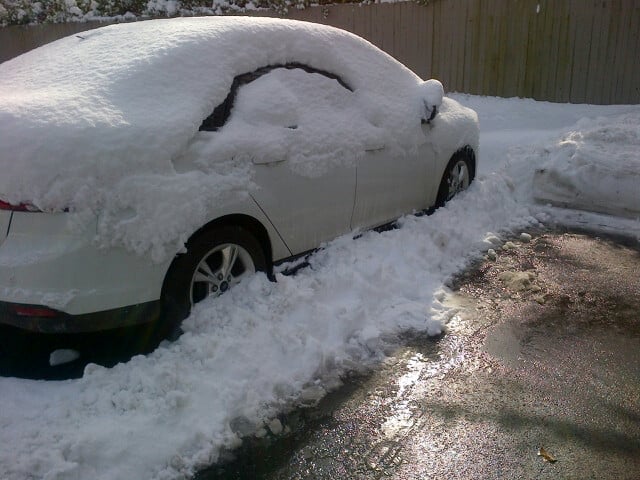
Remember to remove all ice and snow from your vehicle before driving, especially from the hood, windows and roof. It’s the law in New Jersey! Motorists who fail to do so face fines of $25 to $75 for each offense, regardless of whether the ice and snow is dislodged from the vehicle. If flying ice or snow causes property damage or injury to others, motorists face fines of $200 to $1,000 for each offense.
CBO nearly triples estimate of working hours lost by 2021 due to Affordable Care Act
No compelling evidence Obamacare increased part-time work: CBO
Tuesday, 4 Feb 2014 | 11:00 AM ET
A historically high number of people will be locked out of the workforce by 2021, according to a report by the Congressional Budget Office released Tuesday.
President Barack Obama’s signature health-care law will contribute to this phenomenon, the CBO said, citing new estimates that the Affordable Care Act will cause a larger-than-expected reduction in working hours—eliminating the equivalent of about 2.3 million workers in 2021.
In 2011, the CBO estimated the law would cause a reduction of about 800,000 full-time equivalent workers.
“CBO estimates that the ACA will reduce the total number of hours worked, on net, by about 1.5 to 2 percent during the period from 2017 to 2024, almost entirely because workers will choose to supply less labor—given the new taxes and other incentives they will face and the financial benefits some will receive,” said the report.
“The reduction in CBO’s projections of hours worked represents a decline in the number of full-time-equivalent workers of about 2.0 million in 2017, rising to about 2.5 million in 2024,” it added.
CBO: Obamacare slowing growth, costing 2.3M jobs
February 04, 2014, 10:15 am
By Erik Wasson
The new healthcare law will cost the nation about 2.3 million jobs by 2021 and contribute to a $1 trillion increase in projected deficits, the Congressional Budget Office (CBO) said in a report released Tuesday.
The nonpartisan agency’s report found the healthcare law’s negative effects on the economy will be “substantially larger” than what it had previously anticipated.
The findings from the nonpartisan agency immediately roiled the debate over the healthcare law on Capitol Hill ahead of a midterm election that Republicans hope will be dominated by the fight over ObamaCare.
It triggered a swift pushback from the White House, which sought to dismiss suggestions from Republicans that the healthcare law has contributed to a slower economic recovery.
The CBO is now estimating the law will reduce labor force compensation by 1 percent from 2017-2024 — twice the reduction it previously had projected. This will decrease the number of full-time equivalent jobs in 2021 by 2.3 million, the CBO said. It had previously estimated the decrease would be 800,000.
The budget scorekeeper said this decrease would be caused partly by people leaving the work force in response to lower wages offered by employers and increased insurance coverage through the healthcare law.
The agency also said employer penalties in the law would decrease wages, and part-year workers would be slower to return to the work force because they would seek to retain ObamaCare insurance subsidies.
Congressman Bob Andrews to Resign and join lobbying firm
Febuary 4,2014
the staff of the Ridgewood blog
Ridgewood NJ, Matt Rooney Save New Jersey blog is reporting the Congressman Bob Andrews is going to resign and join a lobbying firm and that State Sen. Donald Norcross is expected to run to replace Andrews and will be endorsed by the top names in South Jersey Democratic machine.
“I Don’t Know How President Obama Thinks That He’s Helping Us”
Amy Payne
February 4, 2014 at 6:30 am
On Super Bowl Sunday, Bill O’Reilly asked President Obama what many Americans are probably wondering.
“Was it the biggest mistake of your presidency to tell the nation over and over, ‘If you like your insurance, you can keep your insurance’?”
The President acknowledged that he has said he regrets the promise. But as O’Reilly pressed him on the details of Obamacare’s disastrous rollout, Obama said, “You were very generous in saying I look pretty good considering I’ve been in the presidency for five years. And I think part of the reason is, I try to focus not on the fumbles, but on the next plan.”
That may be a nice inspirational saying—look forward; don’t look back—but Obamacare is not in the rearview mirror.
The President told O’Reilly that HealthCare.gov is fixed, people are signing up for Obamacare, and “now it’s working the way it’s supposed to.”
But even for Americans with health insurance, many are just beginning to find out that the way Obamacare works is a nightmare.
“I don’t know how President Obama thinks that he’s helping us,” said Judy, a mother in her 50s whose premiums are going up 42 percent. “We can’t afford to pay these co-pays, to pay these deductibles, on what we’re making.”
Judy’s employer had to break the bad news to his team, as Heritage’s Alissa Tabirian reported:
Gary Simonetta, owner of the Pennsylvania small business, called his employees into a meeting during which they would “all find out for the first time how the Affordable Care Act will affect their medical coverage and how much they’re going to pay for it.”
…Despite choosing “the best option,” Simonetta revealed that the deductibles for employees with children would double, while his own monthly premium would increase by 63 percent.
“They call it the ‘affordable’ health plan? There’s nothing affordable about it,” said Jeff, one of the employees, after seeing his new deductible.
In the relative scheme of things, should these auto shop workers be thankful they are still employed? Businesses continue to report that Obamacare and rising health care costs are causing them to make changes and hesitate to hire people.