Ride-sharing app, which just closed a funding round, reaches mark faster than Facebook
By
DOUGLAS MACMILLAN and TELIS DEMOS
Updated July 31, 2015 8:50 p.m. ET
Uber Technologies Inc. has completed a new round of funding that values the five-year-old ride-hailing company at close to $51 billion, according to people familiar with the matter, equaling Facebook Inc.’s record for a private, venture-backed startup.
Uber raised close to $1 billion in the round, one of the people said, bringing the San Francisco company’s total funding to more than $5 billion. Uber had briefed investors on a plan to raise between $1.5 billion and $2 billion in the round, The Wall Street Journal reported in May.
the staff of the Ridgewood blogRidgewood NJ, the Ridgewood blog has spent the last couple of months talking to merchants, residents, readers, and insiders in order to get to get a full picture of the parking problems the Village faces. We boiled down the responses to the simplest terms.
Employee parking : At 930 am Chestnut street is full of parked cars , none of the stores are open so one can only assume employees are parking in all the spots,
Ken Smith Employee parking : Most feel $80 bucks a month seems a bit stiff for restaurant and retain workers .
Meter parking enforcement hours : Merchants felt their customers were paying for parking while restaurant guests were not . Some suggested longer meter hours , say till 9 pm with a reduction in parking rates as a way to better spread out the pain.
Valet Parking :Many merchants felt about all the Valet parking only added to the parking problems taking even more spots away from potential customers as well as the general disrespectful attitude or the employees or the Valet Parking companies.
Parking App: Many felt the over 55 set would be resistant , and almost everyone felt it eliminated the quick in and out shoppers by making parking to much work as well as the App made parking even more expensive.
Garage Location : While many merchants liked the idea of a garage they also voiced concerns about the location and the anticipated traffic tie ups when parkers enter and exit.
Garage : NJT Commuters from other towns would take the spots and add nothing to the local economy except more congestion.
Taxpayers : Almost everyone asked why aren’t developers , NJT, merchants and restaurants contributing to paying for parking , they are ones benefiting.
Parking fees : Many felt Ridgewood was pricing itself out ,with fees being to high .
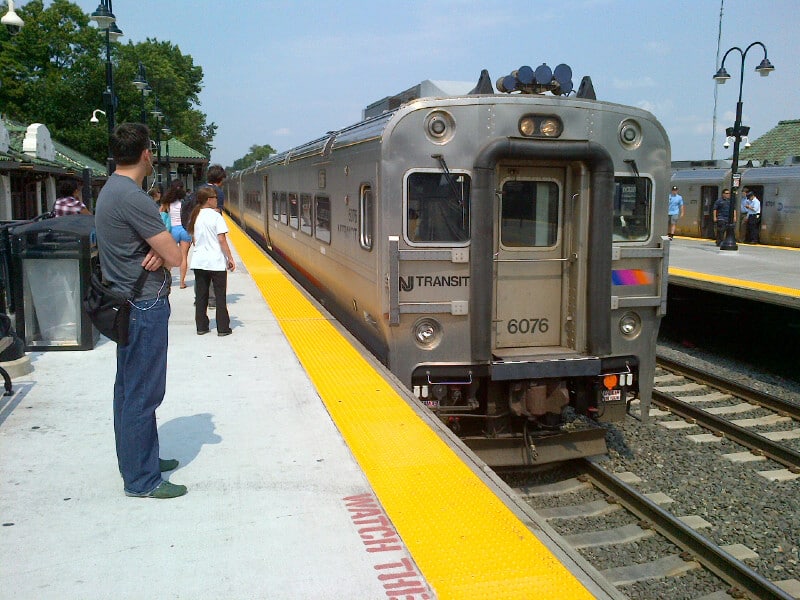
Ridgewood NJ, Summer heat and Amtrak power problems are once again causing delays for Amtrak and NJ Transit riders.NLT was reporting 30 min delays on trains in/out of Penn Station .
NJT ticket customers at NWK: can use the center platform fare gates for cross honoring with NJ PATH Trains.
NJT: Trains into/out of Penn Station New York are subject to delays up to 30 minutes due to Amtrak overhead power problems. NJT rail passes/tickets will be cross-honored with NJT and private carrier buses, PATH at 33rd, Hoboken, Newark and NY Waterway in South Ferry at Hoboken Terminal.
Amtrak claims it’s experiencing overhead wire problems in New York City.. Commuters were justifiable frustrated and took to the twitterverse “This is the third (or is it fourth?) time this week”: ,” if there are any lawyers out there, I’d be in for a class action law suit against NJT and Amtrak. We we are done with this.” , ” I’m tired of “Amtrak overhead wire problems”. Keep me interested…crew manipulation, ice patrol, something.”
JULY 23, 2015, 3:47 PM LAST UPDATED: THURSDAY, JULY 23, 2015, 6:13 PM
BY SHAWN BOBURG
STAFF WRITER |
THE RECORD
A planned reconfiguration of gates inside the Port Authority’s midtown Manhattan bus terminal is expected to reduce delays in the cramped building, agency officials said Thursday.
The changes, to take effect in early September, would consolidate NJ Transit bus service on the building’s third floor, eliminating the operational mess that ensues when private carriers and New Jersey’s mass transit buses try to navigate around each other in the same space. Currently, the third floor is split among NJ Transit and private bus operators.
The move was presented as another stop-gap measure to improve service out of the often-criticized terminal while the Port Authority explores options for replacing the building.
“We believe that our commuters will experience a more reliable trip while we work with staff to develop a new modern facility,” said Port Authority Chairman John Degnan.
Last year, amid pressure from commuters and some New Jersey lawmakers, the Port Authority agreed to put $90 million into improvements at the bus terminal, including revamped bathrooms, new air conditioning units and repairs to ceiling tiles. The agency also added new traffic management personnel inside the terminal last September to help keep buses moving, a change that agency officials said created significant improvement
Not that long ago, top NJ Transit officials were forced to resign when the decisions they made to leave trains and locomotives exposedduring Hurricane Sandy resulted in $100 million in equipment damages.
Ronnie Hakim, the former New Jersey Turnpike Authority director, was brought on board as executive director to fill the void. The turnpike authority had an overtime scandal following 2013-2104 snowstorms. Apparently that wasn’t a deterrent to Hakim becoming a top NJ Transit official. It might even have worked in her favor: She could show the boys how it’s done.
Maybe you read a more recent article about NJ Transit. They have 1,000 employees making six-figure salaries. Excuse me — that’s 1,001 such employees — because Michael Drewniak, Gov. Chris Christie’s former press secretary, just landed a job at NJ Transit paying $147,700. That policy-and-planning job was newly created just for him and didn’t require any transit experience. It’s just another made-to-order Trenton patronage job paid for with our transit dollars.
Does anyone in Trenton have oversight responsibility so they can require that NJ Transit officials spend transit funds on actual transit projects? Or, will the revenue from the recent 9 percent fare hike provide additional patronage opportunities?
How many NJ Transit commuters have six-figure incomes and receive 9 percent salary increases?
If a Hudson River rail tunnel has to be shut down for repairs, NJ Transit officials say they’d move commuters using a plan similar to the one enacted after Superstorm Sandy in 2012.
In October, Amtrak officials warned the two trans-Hudson tunnels would have to beclosed for one year at a time to fix flood damage from Sandy.
“We have contingencies to service those customers who would be displaced, “said Jennifer M. Nelson, an NJ Transit spokeswoman.
If one of the 105-year-old tunnels is closed, the number of trains to and from New York would be squeezed from 24 to six per hour. Close to 90,000 riders a day commute to Penn Station in New York and, of those, 30 percent would likely work remotely from home or another location, she said.
ULY 9, 2015, 8:22 AM LAST UPDATED: THURSDAY, JULY 9, 2015, 8:23 AM
ASSOCIATED PRESS
NEWARK, N.J. (AP) — New Jersey Transit engineers have voted to strike if their contract dispute is not resolved.
However, union members are hoping the federal government will create a panel to help bring about an agreement. Union officials say the creation of the board would be enough to forestall a strike for the immediate future.
JUNE 16, 2015, 1:05 PM LAST UPDATED: TUESDAY, JUNE 16, 2015, 1:09 PM
BY CHRISTOPHER MAAG
STAFF WRITER |
THE RECORD
The latest round of talks between NJ Transit and its labor unions has broken down, signaling increased tensions between the two sides over pay and benefits. Union members have been working without a new contract for four years, union leaders said.
The next step in the process requires intervention from President Obama, who must create a three-member Presidential Emergency Board to keep the sides negotiating and prevent a strike or labor lockout that could cripple the region’s economy. Nearly 955,000 people ride NJ Transit buses, trains and light rail every workday.
NJ Transit and its unions started negotiating through the National Mediation Board in 2011, soon after the old contract expired. As the process dragged on, more unions joined in, eventually creating a coalition that includes all 17 of NJ Transit’s unions, together representing 4,263 workers, said Thomas Roth, a labor consultant hired to represent the unions in the next round of negotiations. The final union, the International Brotherhood of Electrical Workers, joined the coalition last week, Roth said.
“To have all the unions that represent all the workers on the property, it’s very rare,” said Roth, who has been involved in labor disputes for 40 years. “In fact this is the first time we’ve ever had a coalition like this.”
After years of negotiation went nowhere, the unions asked the National Mediation Board to release them from talks. On Monday the board agreed, an indication that the sides are so far apart on subjects including salary increases, benefits and work rules that an agreement now is impossible.
By Carla Astudillo | NJ Advance Media for NJ.com
Email the author | Follow on Twitter
on June 08, 2015 at 11:31 AM, updated June 08, 2015 at 11:52 AM
Near what NJ Transit stops can you afford (and not afford) to buy a home?
The map below shows how much a home is worth surrounding every NJ Transit stop in New Jersey.
We found the median home values using Census data for the immediate area surrounding the train stops. For the stops in non-residential areas, like Newark Airport, we used the closest Census block to the stop.
Note: The bigger the circle stations are, the higher the home value.
Keep in mind is that home values around New Jersey train station stops are generally higher than areas further away.
JUNE 7, 2015, 10:59 PM LAST UPDATED: MONDAY, JUNE 8, 2015, 12:03 AM
BY CHRISTOPHER MAAG
STAFF WRITER |
THE RECORD
NJ Transit has a strong institutional culture of protecting the lives of its customers and workers from the dangers of trains, but a newly released study found that employees say the agency’s top leaders value on-time performance over safety and that overall, more can be done to keep workers out of harm’s way while on the job.
The findings of the $467,000 report commissioned by NJ Transit and conducted by Rail Safety Consultants of Pittsfield, N.Y., were confidential until now. And rather than an analysis of statistics on quantifiable mishaps, such as accidents, fires or switch failures, the report attempts to gauge NJ Transit’s attitudes, policies and procedures through a combination of employee surveys and inspector observations in the field.
The Record obtained the report through an Open Public Records Act request.
Survey results and firsthand observations found that train dispatchers and engineers take few risks, maintenance crews perform train and track inspections as required, supervisors speedily investigate accidents and injuries, repair shops are kept clean, and cellphone use is rare among workers on the rails.
Murders are way up so far this year in Manhattan, The Post has learned.
Sixteen people were killed around the borough between the first of the year and Sunday. Over the same period last year, the figure was 11. That’s an increase of about 45 percent.
Shootings in the borough have also soared.
There have been 50 “shooting incidents’’ since Jan. 1, compared with 31 in the same time period in 2014 — an increase of about 38 percent. Some of these “incidents’’ involved more than one victim.
The number of shooting victims nearly doubled, from 33 to 61.
“City Hall better wake up soon,” a police source said. “When murders and shootings go up in Manhattan, everyone is affected,’’ he said, pointing out that crime impacts business, tourism and the city’s economy as a whole.
He said there are a variety of reasons, from the plummeting number of “stop-and-frisks’’ to the fact that the city needs more officers. “The cops’ hands are tied,’’ he said.
A MESSAGE FROM PRESIDENT AND CEO JOE BOARDMAN REGARDING RESTORATION OF SERVICE ON THE NORTHEAST CORRIDOR
by Joe Boardman May 17, 2015
At Amtrak, the safety of our passengers and crew remains our number one priority. Since the tragic derailment, Amtrak staff and crew have been working around the clock to repair the infrastructure necessary to restore service for all the passengers who travel along the Northeast Corridor. Our repairs have been made with the utmost care and emphasis on safety, including complete compliance with Federal Railroad Administration directives.
Effective with departures from Philadelphia at 5:53 a.m. (Train 110) and New York City at 5:30 a.m. (Train 111) on Monday, May 18, Amtrak will restore normal service on the Northeast Corridor.
Although service along the Northeast Corridor will begin again tomorrow, the derailment of Northeast Regional Train 188 is a tragedy that we at Amtrak will continue to mourn and are dedicated to learning from.
PHILADELPHIA (AP) — Daylight on Wednesday revealed the destruction and devastation caused by an Amtrak train derailment in Philadelphia that left at least six people dead and injured dozens more, several critically.
Some survivors had to scramble through the windows of toppled cars to escape. One of the seven cars was completely mangled.
The accident has closed the nation’s busiest rail corridor between New York and Washington as federal investigators begin sifting through the twisted remains to determine what went wrong.
Train 188, a Northeast Regional, left Washington, D.C. and was headed to New York when it derailed shortly after 9 p.m. Tuesday. Amtrak said the train was carrying 238 passengers and five crew members.
Mayor Michael Nutter, who confirmed five deaths, said the scene was horrific and not all the people on the train had been accounted for.
Temple University Hospital’s Dr. Herbert Cushing said Wednesday a person died there overnight from a chest injury
“It is an absolute disastrous mess,” Nutter said. “I’ve never seen anything like this in my life.”
He said all seven train cars, including the engine, were in “various stages of disarray.” He said there were cars that were “completely overturned, on their side, ripped apart.”
More than 140 people went to hospitals to be evaluated or treated.
A bill that would add two members to NJ Transit’s Board of Directors advanced to the state senate for a future vote.
(Larry Higgs | NJ Advance Media for NJ.com)
By Larry Higgs | NJ Advance Media for NJ.com
Email the author | Follow on Twitter
on May 11, 2015 at 12:52 PM, updated May 11, 2015 at 12:54 PM
A bill that would add two commuters to NJ Transit’s board is rolling down the tracks toward a vote.
The bill, proposed by state Senators Nicholas Sacco, D-Bergen, and Raymond Lesnaik, D-Union, was unanimously cleared by the five members of the senate Transportation Committee Monday morning and will go to the full senate for a vote.
The bill would add two non-voting commuter members to NJ Transit’s eight member board of directors.
“It’s difficult to get public input into decisions that affect people’s lives by people who take public transportation to get to work,” Lesniak said. “By having two public members, who will be able to make a motion, to have it voted on, we will be doing better by giving (the board) more public input.”
Lesniak used the upcoming NJ Transit fare increase public hearings as an example of why riders need representation on the board. Some of them are at inconvenient locations or times for commuters to attend and voice their opinion.
The idea was supported by founders of the state’s newest commuter commuter group, the New Jersey Commuter Action Coalition. They questioned why the proposed members wouldn’t have a vote.
“If these individuals are allowed to attend meetings in their entirety and engage with the rest of the group to truly exchange ideas, I think it is a great start,” said Michael Phelan, NJCAN co-founder. “If they will sit there and observe and be asked to leave so that the adults can talk for real after the meeting, then it’s not good. Why wouldn’t these members of the public be as capable of absorbing facts and voting as those who are on the board?”
Phelan suggested that bill should require that the two commuter board members take the next two available voting seats, as they become available, and that those seats continue to be held by commuters going forward.
MAY 3, 2015, 10:59 PM LAST UPDATED: SUNDAY, MAY 3, 2015, 11:09 PM
BY CHRISTOPHER MAAG
STAFF WRITER |
THE RECORD
More buses. More trains. Big improvements, like a new tunnel under the Hudson River, and small ones, like better Internet connections. Getting home in time to tuck the kids into bed.
That’s what commuters say a proposed 9 percent jump in NJ Transit fares should help fund.
Oh, and spare riders the middle seat on trains.
“I loathe the middle seat. Who doesn’t?” said Tara Allerton, 41, an advertising executive and frequent NJ Transit commuter who wants more double-decker trains between New York City and her home in Ridgewood “to spend more time at home with my family.”
But NJ Transit officials say that the money — and some service cuts — are needed to close the agency’s $60 million budget gap.
Most transit riders said they understand that NJ Transit is not considering any service improvements, a fact confirmed by Nancy Snyder, an NJ Transit spokeswoman. Instead the proposed fare increase — the first one since a 2010 fare increase of 25 percent — is intended only to pay for basic operating expenses. But that alone won’t be enough. Late-night service cuts will be felt on the Pascack Valley and Montclair-Boonton rail lines.
“It’s a fare hike to keep the lights on, but it’s worse than that because there are service cuts,” said Janna Cherwitz, New Jersey policy analyst for Tri-State Transportation Campaign, which advocates for better mass transit.
Commuters will get their say this month, in a series of 10 hearings and public information sessions held at sites throughout the state, including Secaucus, Hackensack and Paterson. And it’s likely NJ Transit officials could get an earful.
Officials already know the agency has a problem with the on-time performance of its buses, and they know how riders feel about it. Only 69 percent of NJ Transit’s buses left on time during the first three months of 2015, according to a report presented to the agency’s customer service committee late last month. The agency received 3,459 complaints in March, according to the report. The most common problems included delayed and canceled trips, missed connections and no-show buses.
Train riders fare much better. During the 12 months that ended in March, 94 percent of trains left on time, according to NJ Transit.
Meanwhile, ridership continues to grow, increasing by 2.3 percent over the last year to 271.3 million passenger trips, a record, according to the agency’s latest financial report.
That has only increased the cries for better service, it seems.
“If they’re going to ask for more money, they should give us more trains,” said Randy Pernicone, who commutes from River Edge to his job in Manhattan as a finance executive for Anthem Insurance. “It’s frustrating.”
Michael McDaid of Ho-Ho-Kus echoed that sentiment.
“I would like to see more trains in the evenings and weekends,” said the 42-year-old, who rides the train to his job in Hoboken. “I guess they’re not really talking about that. But still, it would be nice.”