Ridgewood NJ, in the Tax Foundation’s annual comparison of state business climates New Jersey has once again ranked at the bottom of U.S. states as it has since at least 2015.
While neighboring states Delaware 15, Pennsylvania 26, Connecticut 44 , and New York 49.
The think tank ranked New Jersey 36th in unemployment insurance tax, 42nd in corporate business taxes, 46th in sales taxes, 48th in individual income taxes and dead last in number 50 in property taxes.
Joining New Jersey at the bottom of the ranking were New York, California, Vermont, Minnesota, Ohio, Connecticut, Maryland, Louisiana and Rhode Island.
Over two million people left New Jersey between 2005 and 2014, taking billions of dollars in income and economic activity with them, according to a state business group that blames high taxes for the exodus. Is anybody listening ?
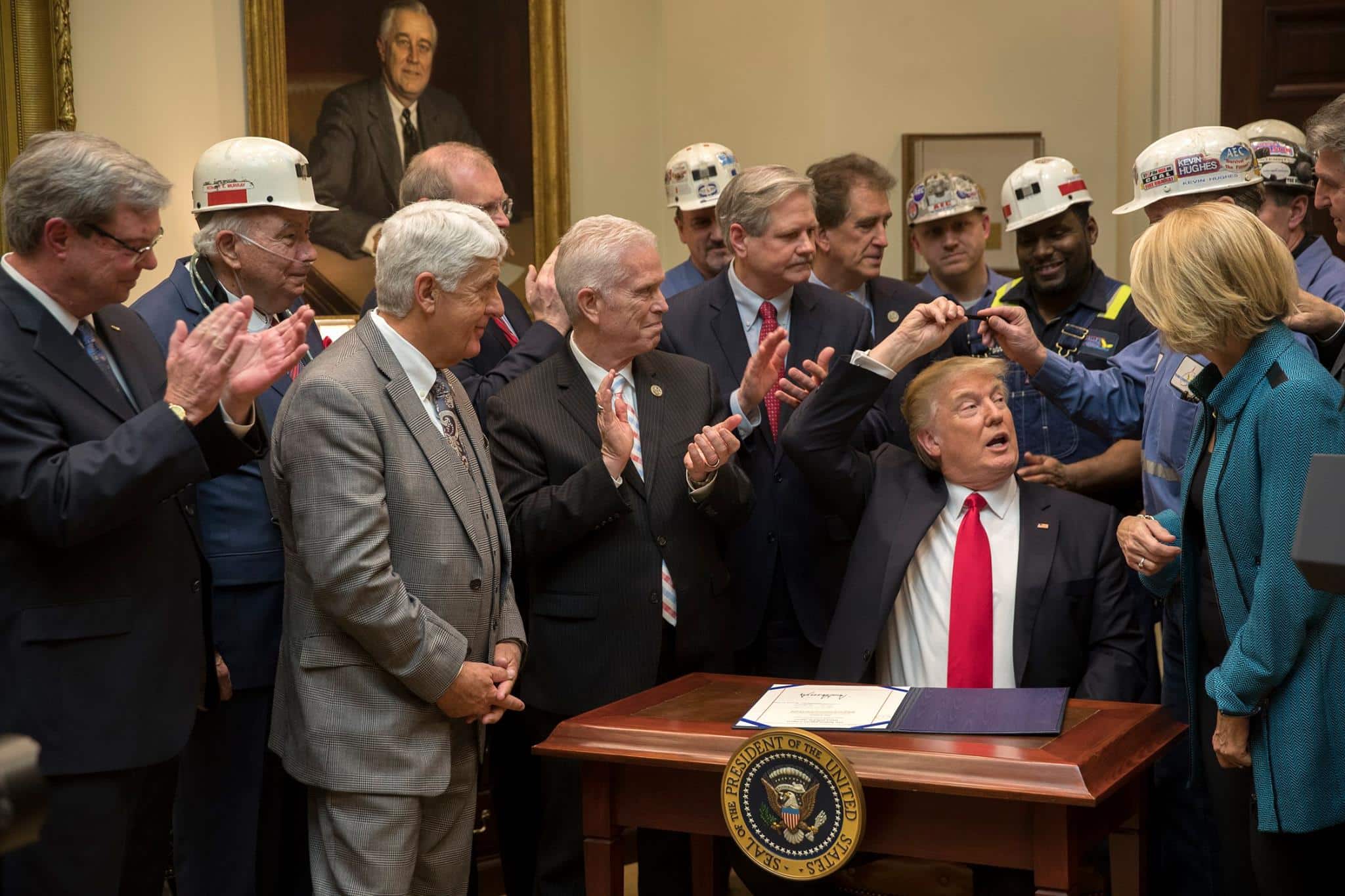
“Your government is working for you once again, not for the donors, not the special interests, but the hardworking taxpaying citizens of our country.” – President Donald J. Trump
October 14,2017
the staff of the Ridgewood blog
Washington DC ,President Donald J. Trump calls it ” Tax Reform for Hardworking Americans ” . Here is a short synopsis.
RAISE WAGES AND BRING JOBS HOME: President Donald J. Trump supports the unified framework for tax reform to bring back jobs and raise wages for American workers.
• Most economists agree that our corporate tax rate harms American workers by keeping their wages down.
o More than 70 percent of the corporate tax burden falls on American workers, according to a Congressional Budget Office analysis.
• Cutting the corporate tax rate from 35 percent to 20 percent, as proposed in the unified framework, could boost wage growth for the median household to almost four times its current rate, according to analysis from Council of Economic Advisors (CEA).
o This increase could provide $4,000 in additional income to the average American household, according to CEA analysis.
• Corporate profits are being kept offshore, benefiting foreign workers and harming our own. In 2016, firms kept 71 percent of foreign-earned profits abroad, according to the CEA.
• Tax reforms and cuts like those in the proposed framework encourage the investment needed to create jobs so Americans can get back to work and get well-paying jobs, based on date from the Bureau of Labor Statistics.
o After President Bush’s 2003 tax cuts, the economy created 7.8 million jobs over five years.
o After President Reagan’s 1981 tax cuts, the economy created 14.8 million jobs over five years.
o After President Kennedy’s tax cuts, the economy created 12.0 million new jobs over five years.
FAIR TAXES FOR HARDWORKING AMERICANS: The unified framework will cut taxes and put in place a fair tax code for American workers.
• Double the standard deduction so that more income is taxed at zero percent.
o The first $12,000 of income for individuals and $24,000 for married couples will be income tax-free.
• Consolidate the seven existing income tax brackets for taxable income to only three brackets: 12 percent, 25 percent, and 35 percent.
• Increase the Child Tax Credit and expand it to benefit more middle-income families and eliminate the marriage penalty.
• Create a new $500 tax credit for those caring for an adult dependent or elderly loved one.
EASY TAXES FOR HARDWORKING AMERICANS: The unified framework will make taxes easy for hardworking Americans and let them recover the hours wasted on filing complicated forms.
• The vast majority of Americans will be able to file their taxes on a single sheet of paper.
o American individuals and businesses spend more than 6 billion hours complying with the tax code, according to the IRS National Taxpayer Advocate.
o Individuals spend 13 hours, on average, and $210 to comply, plan, and file their tax return each year.
o $33.7 billion is the estimated out-of-pocket costs taxpayers spent on software and professional tax services, according to the National Taxpayers Union Foundation.
• The plan repeals the Alternative Minimum Tax, which effectively requires many taxpayers to do their taxes twice.
• The plan ends the job killing “Death Tax.”
o Close to 20 percent of family business owners say planning for the death tax affects their ability to create jobs, according to Family Enterprise USA.
o In 2016, family business owners spent an average of $74,940 on insurance for the death tax and $170,800 on other planning costs, according to Family Enterprise USA
Old Tappan NJ, Bob is an old friend of the Ridgewood blog and he is running for Assembly in District 39. Bob never forgets he is a small business owner . Bob is somone who can fight to set the balance right against ANTI-Business , ANTI-jobs Trenton.
District 39 is (Bergen and Passaic Conties) Bloomingdale, Closter, Demarest, Dumont, Emerson, Harrington Park, Haworth, Hillsdale, Mahwah, Montvale, Norwood, Oakland, Old Tappan, Park Ridge, Ramsey, Ringwood, River Vale, Saddle River, Upper Saddle River, Wanaque, Washington (Bergen), Westwood, Woodcliff
Unlike most modern day politicians Bob entered into politics to help the everyday people of New Jersey, like himself. After graduating from New York University, Bob opened a small insurance company with my wife, Elsa. While it was prosperous at first, the state of New Jersey began to pass heavy regulations that placed a burden on insurance companies like his. After all but six of my competitors went out of business because of these new laws I realized that it was very possible that I might also lose everything I had worked so hard for. It was at that point that I decided to reach out to my friend Senator Cardinale to see if there was any way that he could help me. With a little negotiation Senator Cardinale was able to get Allstate Insurance to work with me which stopped me from having to go out of business. Through this experience, I witnessed firsthand the power of the government to both destroy and to aid.
After Senator Cardinale had helped him Bob decided to try and return the favor. Little by little, Bob started to do additional work for him until finally he became an unpaid volunteer aide for him in Trenton. After working for Senator Cardinale for 25 years a seat in the Assembly opened up; and while Bob was hesitant at first to run for office, he realized that this was my opportunity to help people, just as Senator Cardinale had helped him.
So in 2014, against all odds and very tough competition, I won a seat in the assembly. Even after all his time in the New Jersey Legislature I have kept one rule; before Bob votes on anything he must ask himself how would I feel as a taxpayer seeing my own vote? Bob is an Assemblyman because he has witnessed firsthand the power of the government to both impede and to aid, and Bob wants to ensure it will not impede again.
Ridgewood NJ, The Garden State saw a net decrease in population, with the number of people that moved out of the state of roughly 33,700, costing New Jersey about $2.6 billion in taxable income between 2014 and 2015, according to a USA Today Network analysis of IRS migration data.
New Jersey is constantly ranked as the worst business climate in the USA and the state the leads the nation in people wanting to leave .
According to OpportunityNJ, New Jersey ranks dead last in national rankings on the impacts of our four most significant taxes: property, income, sales and corporate business tax.Outmigration of New Jersey residents has had a significant impact on the state’s economy. High taxes and numerous barriers for business operations are causing people to leave the state which has led to the loss of income, economic activity and job creation.
OpportunityNJ (ONJ) is a non-partisan, grassroots coalition comprised of New Jersey interests representing employers, employees, business, trade groups, community organizations and other concerned citizens in the State.
This exodus has become so concerning to New Jersey business leaders that they have championed a campaign to make the state more affordable for its residents and more attractive to out-of-state residents on the move.
“We are at the bottom of every tax ranking. We have an affordability issue. We know why people are leaving,” Michele Siekerka, president and CEO of New Jersey Business and Industry Association.
Her organization estimates that New Jersey has lost over $21 billion in adjusted gross income since 2004 from people leaving the state. That translates to about 87,000 jobs, $13 billion in lost economic activity and $4.6 billion in lost labor income, Siekerka said.
Addressing the affordability issue would help keep seniors and millennials, both of which are the leading demographic groups leaving New Jersey, Siekerka said. When seniors leave, they take with them the bulk of the lost income. But when millennials flee, they take with them a life time of potential earnings. It’s a hit to the state’s future workforce, which means the state sees no benefit from roughly $250,000 per student in public education spending.“We invest in our K-12 education system significantly to have a good product,” Siekerka said. “When millennials leave New Jersey, we aren’t getting a return on that investment.”
SENATOR BOB GORDON AND TRENTON ESTABLISHMENT HAVE INCREASED TAXES, REGULATIONS, AND FEES COSTING NEW JERSEY JOBS AND OPPORTUNITY
September 23,2017
the staff of the Ridgewood blog
New Milford NJ, District 38 Amazon’s recent announcement of an RFP for states and municipalities to bid on hosting their second national headquarters, highlights the disastrous state of New Jersey’s business climate.
“With our proximity to New York City, talented workforce, and access to mass transit and numerous airports, North Jersey would serve as the perfect spot for Amazon to open its second national headquarters,” said Kelly Langschultz, candidate for New Jersey State Senate, District 38. “However, Senator Bob Gordon and the Trenton establishment have made it nearly impossible to attract businesses like Amazon, by raising taxes and fees and implementing job crushing regulations, year after year. Our crumbling roads and infrastructure, and the failure of the NJ Transit system contribute to our worst-in-the-nation business climate.”
Amazon’s second headquarters would create nearly 50,000 jobs and provide additional tax revenue to state and local municipalities.
“As a small business owner, I know first hand how difficult it is to do business in New Jersey. If we are to attract multi-national companies like Amazon, we need to act quickly and it starts with changing our elected representation in Trenton,” charged Langschultz. “Bob Gordon has no plans to grow our economy, because Bob Gordon has never signed the front of a paycheck, rather he’s always cashed his tax-payer funded governmental salary.”
“If elected, I will fight to cut taxes, fees, and regulations so that we can attract businesses like Amazon, creating tens of thousands of new jobs and bringing in new tax revenues to our state,” said Langschultz. “We need bold leadership in Trenton dedicated to improving our economy. Unfortunately, our current Senator is more beholden to the special interests and Trenton lobbyists, than he is to you. This November, you can change that by changing who represents you.”
Kelly Langschultz, candidate for New Jersey State Senate, District 38, is a mom of four young children, community leader serving on the New Milford Town Council, small business owner, and former President of the Education Fund.
Ridgewood NJ, New estimates from the American Community Survey which is billed as the premier source for detailed information about the American people and workforce , suggest New Jersey lost about 13,000 people from 2015 to 2016, which would reverse several years of slow growth since the state was decimated by the housing crisis in the mid-to-late-2000s.
If this holds New Jersey may have lost population for the first time in a decade . Household formation is one of the key economic drivers . A loss of population could lead to further economic stagnation, a reduced tax base and a potential loss of a congressional district.
While many debate the issue analysis by NJ Advance Media (NJ.COM) shows about 226,000 people moved out of the state between 2015 and 2016, about 30,000 less than the total who moved to the Garden States from within the country and abroad.
With a historically low birth rate, New Jersey’s growth in recent years has hinged upon immigration . However the number of people leaving keeps growing, stagnating the state’s population on the cusp of nine million.
Poll after poll list New Jersey as the state most people want to leave . High taxes, particularly property taxes, estate taxes , high cost of living , state corruption and limited job opportunities are all sighted as reasons to flee New Jersey.
By Dr. Sean Stein Smith, September 8, 2017 at 8:14 AM
Dr. Sean Stein Smith.
As Labor Day recedes into our collective memory, and the warm glow of summer fades away, the collective New Jersey business community is faced with the following reality.
The current administration in Washington appears to have focused on comprehensive tax reform as a pillar for reform, and with Congress returning from recess, there is a real possibility this plan will become reality. Although many people from the NJ/NY area commute on Amtrak/Acela to Washington on an ongoing basis, the implications for small business may be overlooked in the hustle and bustle of everyday life. Regardless of whether or not the current political environment is perceived as favorable, or what other issues are continually ongoing, the reality of the situation is that tax reform is a real possibility.
Washington machinations are more than just fodder for Happy Hour conversation – these are issues and topics that can have a definite impact on your bottom line. As a CPA who lives in, has worked in, and who has advised entrepreneurs in New Jersey, but now works in New York, this is an issue I hear about and think about on a daily basis.
Posted September 04, 2017 at 07:00 AM | Updated September 04, 2017 at 07:04 AM
By Erin Petenko | NJ Advance Media for NJ.com
New Jersey’s private sector gained roughly 65,000 employees and 6,000 new establishments between 2015 and 2016, in line with the national average. It’s an improvement over the previous year, where the economy grew by only 55,000 jobs.
But annual wages increased slower here than in the rest of the country — residents gained an extra $429 per year, compared to the national average of $627.
Service-related industries dominate the state, employing nearly nine out of 10 New Jersey workers, while the manufacturing industry has experienced a long-term decline. By sector, education and health services gained the most employees, followed by professional services and the trade, transportation and utilities sector.
But what specific industries had the most growth? NJ Advance Media compared private industry data from the Bureau of Labor Statistics to learn what industries gained the most employees from 2015 to 2016.
A new bipartisan legislative panel will look into addressing a shortage of middle-skilled workers in New Jersey.
Melanie Willoughby with the New Jersey Business and Industry Association said 80 percent of manufacturers in the nation have a serious shortage of qualified applicants for skilled production positions.
“This is not where we want to be with the manufacturing industry in New Jersey that is worth over $44 billion, paying an average salary of $90,450 without a BA.”
Senate President Steve Sweeney wants to put a bond act on next year’s ballot that would provide hundreds of millions of dollars to expand and equip New Jersey’s vocational-technical schools.
“Not everyone is meant to go to college and there’s nothing wrong with having a trade. We want to make sure that our vocational schools are equipped to work with businesses for the future to make sure that they have the employees that they want.
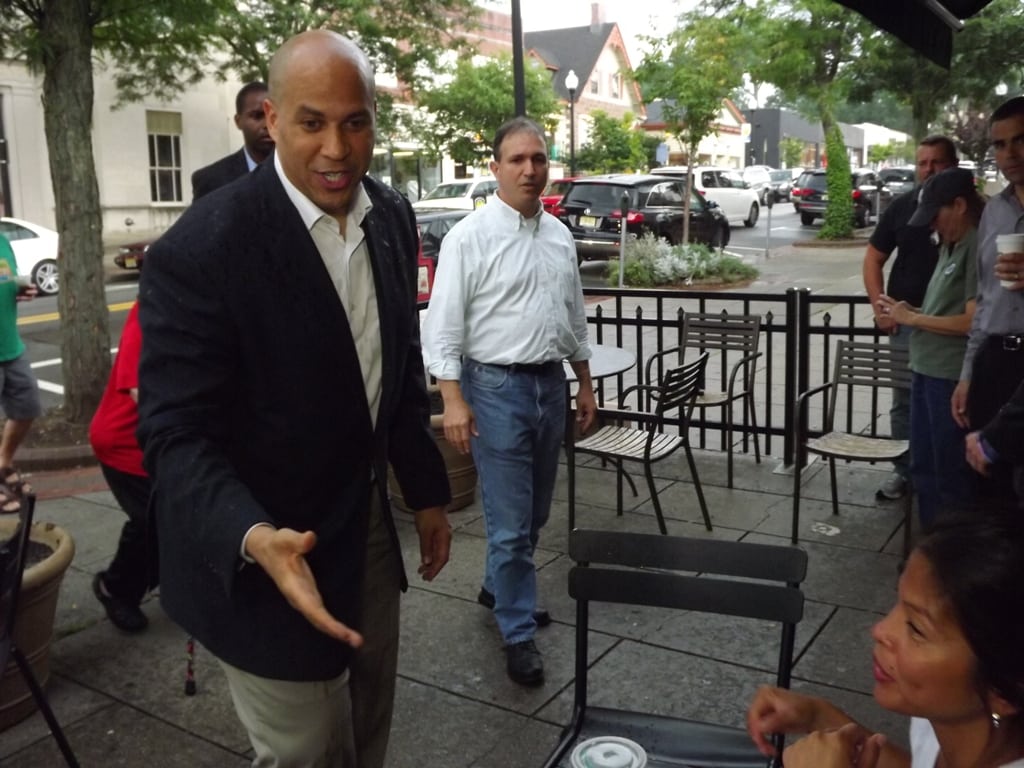
Senate Minority leader Chuck Schumer (D-NY), Sen. Cory Booker (D-NJ) and Sen. Chris Murphy (D-Conn.) all do not pay interns but support the minimum wage photo of Cory Booker by Boyd Loving
By Jonathon Trugman
August 12, 2017 | 10:53pm
One of the most valuable things a college student can do is complement his or her education with a summer internship.
Across America, kids from all schools and backgrounds compete for these experiences and résumé-building opportunities.
For many, it is their first real job and a chance make a little money. It could also be their first experience in a professional work environment.
You wouldn’t know it, but one of the least rewarding places to intern over the summer is on Capitol Hill.
So where in your county do property taxes hurt the most?
Last month, we showed you which towns in New Jersey had the highest property tax burdens, which is to say, those where the average property tax bill takes up the biggest share of median household income.
Here, we pulled out the top towns from each of New Jersey’s 21 counties.
New Jersey has the nation’s highest property taxes, but it’s much worse in some parts of the state than others. For example, Cumberland’s pain index is far lower than other counties. Top towns in eight counties did not crack our top 30 list for property tax pain.
Some of the state’s 565 municipalities were excluded from our analysis, as the median income margin of error was too high because of the American Community Survey’s small sample size.
For a special few Americans, such as Bill Gates, Steve Jobs, and Mark Zuckerberg, completing college was unnecessary — perhaps even a hindrance — to their vision and success. Most people, however, consider college to be fundamental to achieving their goals and doing well in life
In fact, the number of people attending degree-granting postsecondary institutions has grown to 17 million – a 30% increase since 2000, according to the National Center for Education Statistics.
Not all college degrees translate to financial success, however. In addition to nearly 70% of students graduating with debt in recent years, many graduates of even the country’s top-ranked schools are earning comparatively low salaries in the working world.
The average median salary for graduates who completed a four-year degree at one of the 206 schools the U.S. News & World Report considers to be the best national universities and national liberal arts colleges is nearly $54,000 a decade after graduating. Graduates from the 50 schools that produce the highest earners bring in nearly $70,000 on average.
On the other end of the spectrum, graduates from 84 schools report a median annual earnings of less than $50,000 a decade after entering school. Graduates from 15 schools report median earnings of less than $40,000 a year, and graduates from three less than $30,000.
In addition to being unable to promise high wages for students later in life, many colleges frequently increase tuition. Barely two decades ago, average tuition for a four-year private college or university was less than $15,000. Today, nearly three-quarters of the top ranked schools charged over $40,000 in tuition and fees in the 2016-2017 school year. This includes 33 of the schools that produced the lowest-earning graduates.
U.S. seniors are employed at the highest rates in 55 years.
By
Ben Steverman
July 10, 2017, 4:00 AM EDT
More and more Americans are spending their golden years on the job.
Almost 19 percent of people 65 or older were working at least part-time in the second quarter of 2017, according to the U.S. jobs report released on Friday. The age group’s employment/population ratio hasn’t been higher in 55 years, before American retirees won better health care and Social Security benefits starting in the late 1960s.
And the trend looks likely to continue. Millennials, prepare yourselves. Better yet, consider this and this, so you have a choice in the matter when your time comes.
Commuters coming into New York City from the north, south, east and west are irate.
The Long Island Railroad, New Jersey Transit, Amtrak and Metro North — not to mention the New York City subway, which moves 5.7 million people every weekday — have all been plagued by dramatic breakdowns and crashes over the past few months.
And as angry as all those commuters are, there is another group of people who should be even more livid — only they don’t know it yet.
That group consists of real estate developers and New York City building owners. And I will give you my prediction of what will happen if the commuting nightmare isn’t straightened out very soon.
As I type this column on Wednesday afternoon, there are 387 new buildings under construction in Manhattan. According to the New York City Department of Buildings, that will add 95.7 million square feet of new space to Manhattan’s already massive real estate inventory.
When you include construction in the Bronx (380 buildings), Brooklyn (1,625 buildings), Queens (1,251 buildings) and Staten Island (713 buildings), the city as a whole will add 225.6 million square feet of new space.
So how is this real estate boom connected with the problems commuters are having? Easy, the attractiveness of telecommuting is going to increase.
When Seattle officials voted three years ago to incrementally boost the city’s minimum wage up to $15 an hour, they’d hoped to improve the lives of low-income workers. Yet according to a major new study that could force economists to reassess past research on the issue, the hike has had the opposite effect.
The city is gradually increasing the hourly minimum to $15 over several years. Already, though, some employers have not been able to afford the increased minimums. They’ve cut their payrolls, putting off new hiring, reducing hours or letting their workers go, the study found.
The costs to low-wage workers in Seattle outweighed the benefits by a ratio of three to one, according to the study, conducted by a group of economists at the University of Washington who were commissioned by the city. The study, published as a working paper Monday by the National Bureau of Economic Research, has not yet been peer reviewed.