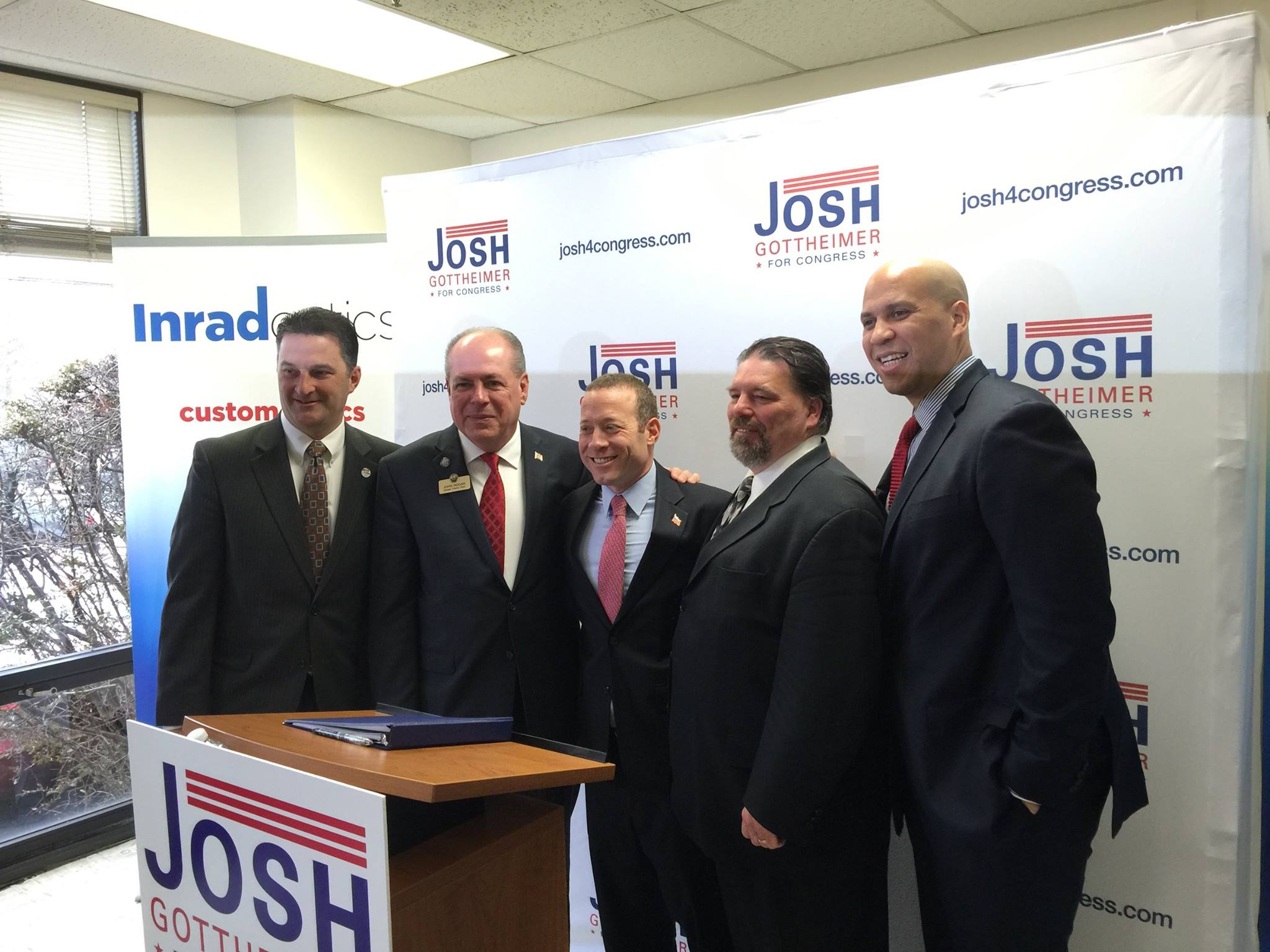
Ridgewood NJ, watch out New Jersey you could be next , for decades in California, a sacrosanct rule has governed public employees’ pensions: benefits promised can never be taken away.
But now the California Supreme Court has threaten to reverse that premise and open the door to benefit cuts for workers still on the job.
California Governor Jerry Brown said legal rulings may clear the way for making cuts to public pension benefits, which would go against long-standing assumptions and potentially provide financial relief to the state and its local governments.
ballooning expenses are an issue that Gov. Jerry Brown will face in his final year in office despite his earlier efforts to reform the state’s pension systems and pay down massive unfunded liabilities.
At issue is the “California Rule,” which dates to court rulings beginning in 1947. It says workers enter a contract with their employer on their first day of work, entitling them to retirement benefits that can never be diminished unless replaced with similar benefits.
It gives workers security that their retirement will be safe and predictable after a career in public service. But it also ties lawmakers’ hands in responding to exploding pension costs.
It’s widely accepted that retirement benefits linked to work already performed cannot be touched. But the California Rule is controversial because it prohibits even prospective changes for work the employee has not yet done.
New Jersey’s career politicians, like the Clinton Speech writer Gottheimer and out of touch elitist Phil Murphy are playing games, using gimmicks and illusions to take the eyes of the public off the true issue in New Jersey, the grotesquely high taxes it squeezes out of its very own citizens. They want to deflect the blame to D.C. and take the voter’s attention off their fellow Democrats. My friends, the citizens of New Jersey are not that stupid, our people want the politicians to cut the ever ballooning taxes that plague our state.
What needs to be done requires strength, intelligence and an uncompromising will to reduce spending in this state. It requires the leadership that will reverse this state’s anti-business climate to increase the tax base while reducing the tax burden. Sadly, I do not see any of this in Trenton. I see the grandstanding we are all accustomed to, not the leadership we so desperately need.
Gottheimer, who faces a challenge this November, may have gotten this idea from his former employers, the Clintons. Maybe his next suggestion is to have the Clinton foundation administer the charity.
The municipal, county and state officials should do what taxpayers want them to really do — cut taxes, cut spending — not come up with tax loopholes that either won’t pass muster or won’t be sustainable.
Gottheimer said, “The tax hike bill Congress passed last year is a ticking time bomb for New Jersey,” we are proudly declaring that New Jersey won’t shy from a fight. We won’t be America’s piggy bank.” I say to him, I no longer want to be Trenton’s piggy bank and the only ticking time bomb you need to worry about is the mad as hell citizens that want real tax reductions, not a pass the potato blame game.
“This is not partisan,” Mr. Murphy said. “This is a smart versus not smart.” I say, this is lazy and opportunist verses hard diligent work and tenacity. New Jersey is done with tricks and gimmicks, bring us change or resign! Pension reform, re-working the school funding formulas and instituting a pro-business environment is needed now.
Ridgewood NJ, North American Moving Services has just released its annual US Migration Report for 2017 based on household moves from one US state to another last year.
In 2017, the top five inbound US states were: Arizona, No. 1 with 67% inbound moves vs. 37% outbound, followed by Idaho (63%-37% in-out), North Carolina (62-38%), South Carolina (62-38%) and Tennessee (58-42%).
The top five outbound US states last year were No. 1 Illinois (32% inbound moves vs. 68% outbound), followed by Connecticut (38%-62% in-out), New Jersey (38-62%), California (40-60%), and Michigan (41-59%).
Illinois has been among the top five outbound states in each year from 2011 to 2017 and was No. 1 or No. 2 in each of those years except 2011 when it was No. 3. New Jersey has been in the top five outbound states in each of the last seven years from 2011 to 2017. Connecticut has been in the top five outbound states every year since 2011 except for 2012, and Michigan every year except 2013. Last year was the first time that California was among the top five outbound states.
For the top five inbound states, Arizona has been included every year except 2011, and it’s been No. 1 or No. 2 in each of the last four years. South Carolina has been in the top five inbound states in each of the last seven years, and North Carolina every year except two (2011 and 2015). Florida has been among the top five inbound states in most years but wasn’t in 2017, it was replaced in the top five by Tennessee, which made its debut last year.
Hackensack NJ, the Bergen County Historical Society proposes that moving forward in the 21st Century, a new way of thinking must exist in New Jersey when dealing with the threat facing historic structures….the very structures that define who we are, whether they were built in the 18th century to the 20th century.
One example may for officials on the County or State level to look to a state like Virginia. which has an interesting program, Here is the report, while lengthy it shows the benefits of their plan which provides economic tax incentives that homeowners can or private small businesses can take advantage of to help in the restoration and maintenance of historic properties.
There does seem to be a distinctive effort from certain sectors of our society to wipe out the past.
History is the study of the past as it is described in written documents. Events occurring before written record are considered prehistory. It is an umbrella term that relates to past events as well as the memory, discovery, collection, organization, presentation, and interpretation of information about these events. Scholars who write about history are called historians.
I am the original poster and I am VERY aware of which NJ residents get hurt by this bill.
These are the same NJ residents that Obama forced a tax hike on in 2010. These are the same NJ residents that NJ Democrats are chomping at the bits to hike taxes on.
These NJ residents are hurt in the new tax bill because NJ Democrats bleed them dry at the state level. Someone earning the same amount in Texas is going to get a net tax cuts.
Repeat after me – these NJ residents are being looted by Democrats, such as Josh Gottheimer.
Ridgewood NJ, the latest Tax Foundation ratings are out and once again New Jersey ranks dead last in business climate . #50 New Jersey ranked in the bottom 5 along with
#49 New York , #48 California ,#47 Vermont and #47 District of Columbia .
Neighboring states ,#15 Delaware ,#26 Pennsylvania and #49 New York .
According to the Tax Foundation , “The absence of a major tax is a common factor among many of the top 10 states. Property taxes and unemployment insurance taxes are levied in every state, but there are several states that do without one or more of the major taxes: the corporate income tax, the individual income tax, or the sales tax. Wyoming, Nevada, and South Dakota have no corporate or individual income tax (though Nevada imposes gross receipts taxes); Alaska has no individual income or state-level sales tax; Florida has no individual income tax; and New Hampshire, Montana, and Oregon have no sales tax.
This does not mean, however, that a state cannot rank in the top ten while still levying all the major taxes. Indiana and Utah, for example, levy all of the major tax types, but do so with low rates on broad bases.
The states in the bottom 10 tend to have a number of afflictions in common: complex, nonneutral taxes with comparatively high rates. New Jersey, for example, is hampered by some of the highest property tax burdens in the country, is one of just two states to levy both an inheritance tax and an estate tax, and maintains some of the worst-structured individual income taxes in the country . “
this letter was also published NorthJersey 7:03 a.m. ET Dec. 15, 2017
In regard to the federal tax reform debate, it’s amazing to read the many letters to the editor justifying the deduction of local taxes because New Jersey gets so little back from the U.S. government in comparison to other states. New Jersey’s disgraceful local taxes have nothing to do with the federal government or with the actions of other states and everything to do with the reckless fiscal mismanagement brought about by elected officials of both parties.
We have a pension system that will never be solvent unless it undergoes major reform. We have a public educational system supported by billions of dollars in spending — much of which is siphoned off before it ever gets to the classroom, and thus resulting in a failure of education in our major cities. We have more than 500 municipalities with a duplication of services that’s unique to New Jersey. And we have government workers making salaries and benefits together with retirement packages that are out of control and continue to escalate.
Rather than looking to the federal government for a handout so New Jersey can continue its profligate spending, we should be demanding sound solutions to our fiscal mess from our elected leaders.
Ridgewood NJ, Gov. Chris Christie’s special commission on public pensions and health benefits released its final report on Wednesday: only swift and broad reforms stand a chance of rescuing a system in crisis.
New Jersey’s benefits for state government workers are now on track to consume a quarter of the state’s annual operating budget in 2023, and “the cupboard of relatively easy reforms is now bare,” the report said.
As it was for Christie, the pension system will be one of Gov.-elect Phil Murphy’s most pressing and imposing tests.
Christie earned national acclaim for working with Democrats to revamp benefits for government workers by increasing the retirement age, freezing cost-of-living adjustments and forcing workers and state government to contribute more to the system., but the Christie’s administration didn’t live up to its own ambitious payment plan, making deep cuts to the pension contributions, and he eventually set the state on a slower, more modest ramp up to the full payment recommended by actuaries.
Governor elect Phil Murphy has said he’d like to meet or beat the Christie schedule, But according to the commission “something more is needed, and quickly,” The commission report went on “Neither the 2010-11 reforms, nor the limited initiatives taken since then, will do anything to stop benefits from consuming 26 percent of the budget five years from now.”
Christie could barely scrape money together to get through the first half of a 10-part ramp up to full pension funding with a $2.5 billion payment this year , but the state will need more than $6 billion in yearly payments .
Murphy has already promised to raise roughly $1.3 billion in new taxes , but measured under national accounting standards, the state is $134 billion short of what it needs to pay for current and future retirement benefits. Combined with local government employers, the total system has racked up $168 billion in unfunded liabilities and has assets to cover just 31 percent of its debts.
Washington DC, Congress is trying to make headway on tax reform, President Donald Trump said earlier this month that welfare reform will be one of the next big items on the White House agenda.
New Jersey is already in the top 10 states in total amount of Welfare expenditures . We can only speculate that Phil Murphy’s “sanctuary state ” will increase that number dramatically .
Here is the top ten states with the highest expenditures on public welfare. Note the enormous difference between California and New York and the rest of the country.
1. California – $103 Billion
2. New York – $61.4 Billion
3. Texas – $35.4 Billion
4. Florida – $27.2 Billion
5. Pennsylvania – $26.7 Billion
6. Illinois – $21 Billion
7. Ohio – $20 Billion
8. Massachusetts – $18.6 Billion
9. New Jersey – $17.3 Billion
10. Michigan – $16.3 Billion
Note that the top ten states listed above spend more on public welfare ($346.9B) than all of the bottom forty states (plus the District of Columbia) combined ($262.7B). Regardless of how populated any particular state is, you want to pay attention to these numbers because they foreshadow future budget problems. When you consider the fact that many states run operating deficits and have enormous debt problems, you begin to wonder if some of these numbers are sustainable for the long term.
Ridgewood Nj, The United States economy has been in a period of encouraging, consistent growth for several years now. According to 24/7 Wall Street ,the U.S. GDP has now increased uninterrupted for 14 straight quarters. The stock market continues to hit new all-time highs with yesterday marking the 61st closing high since Donald Trump became president , and the unemployment rate fell to 4.1% in October, the lowest it has been since the year 2000. Based on the most recent quarterly estimates from the Bureau of Economic Analysis, 24/7 Wall St. reviewed the growth or lack there of, of American state economies over the past three years more or less the time since the last nationwide quarterly economic contraction. Nationwide, GDP grew by 2.2% over the three years ending in the second quarter of 2017.
Using data provided by the Bureau of Economic Analysis, 24/7 Wall St. ranked all 50 U.S. states based on percent changes in real GDP growth in all 50 states from the second quarter of 2014 through the second quarter of 2017. and the U.S. Figures provided are adjusted to account for yearly inflation. GDP figures published by the BEA are preliminary and subject to annual revision. Figures on poverty rate, median household income, and educational attainment came from the American Community Survey. Employment and unemployment metrics were provided by the Bureau of Labor Statistics
New Jersey came in a better than expected 38th place while its neighbor to the north Connecticut came in 46th . New York came in 32nd and Pennsylvania came in a a respectable 27th.
38. New Jersey
> 3-year GDP growth: +0.9%
> Q2 2017 GDP growth: +2.3% (tied — 16th smallest increase)
> Fastest growing industry: Agriculture, forestry, fishing, and hunting
> Fastest shrinking industry: Utilities
> 3-year employment growth: +3.4% (17th smallest increase)
Ridgewood NJ, New Jersey has long been the punching bag of state tax scholars. The state has the worst state business tax climate of the 50 states and the third highest overall state and local tax burden (behind only Connecticut and New York). Any New Jersey resident knows they pay the highest property taxes in the country, but other taxes are also high: income taxes (5th highest top rate), corporate taxes (6th highest in collections), sales taxes (16th highest in collections), cigarette taxes (10th highest), and gas taxes (8th highest) are all high, and New Jersey is currently one of two states with both an estate and an inheritance tax (the estate tax half is scheduled to be repealed in 2019, but we’ll see if the new Governor changes this). The state has more outbound net migration than any other. One bright spot: you can drink away your sorrows, with a mere 12-cent per gallon beer tax, lower than 40 other states.
The state and local tax deduction considerably reduces the sting of New Jersey’s tax bill, and it’s no coincidence that four of thirteen Republican nay votes on the House tax bill came from New Jersey representatives. New Jersey Senate President Steve Sweeney and newly elected Governor Phil Murphy, both Democrats, had pledged to make a higher income tax on millionaires a key early priority in 2018.
Now, however (Politico):
“We’re going to have to re-evaluate everything” if a federal bill repealing the state and local tax deduction becomes law, New Jersey Senate President Steve Sweeney said Wednesday in Atlantic City. Just days before, Sweeney had said he would make passage of a millionaires tax his chief priority in the new administration. “I’m just saying that what’s happening in Washington is concerning the hell out of me,” he added.
The changes to SALT are likely driving the reassessment. As ITEP, a group that promotes millionaires’ taxes, has explained, the state and local tax deduction “makes state income tax hikes a good deal,” since “income and property taxes are effectively less costly to state residents than are sales and excise taxes.” Take it away and New Jersey residents must pay full freight for their state and local governments. That may explain the seemingly contradictory rhetoric that millionaires taxes won’t affect the economy but eliminating the SALT deduction will be terrible.
If federal tax reform prompts New Jersey to overhaul its tax code, it’s long overdue. There are 244 townships, 265 boroughs, 49 cities, 15 towns, 3 villages, and 677 school districts. The three-member board running Tavistock, NJ, is a majority of the borough’s 5 inhabitants. A 1912 article recounted the history of New Jersey tax administration, which is a seemingly unending tale of bloated local government, corruption, and inequitable assessment. In the 1960s, railroad scholar George Hilton noted that the state’s practice of loading its property tax burden onto interstate commerce had ruined the viability of every railroad crossing the state. A 2003 state report dryly observed that state revenues had grown 1,700 percent since 1970, compared to population growth of 19 percent and inflation growth of 483 percent. The state adopted a sales tax in 1966 and an income tax in 1976, both with promises that they would be used to reduce crushing property tax burdens. Today New Jersey still has the nation’s highest property taxes, but with high income and sales taxes as well. It’s probably time for a rethink.
Ridgewood NJ, Following Democrat Phil Murphy’s victory in New Jersey’s gubernatorial election on Tuesday, marijuana legalization in the state could very quickly become a reality. The incoming governor, made cannabis legalization a key part of his campaign platform. Murphy has promised to legalize pot for Garden State stoners aged 21 and older within his first 100 days in office, with an eye on raking in an estimated $300 million a year in taxes.
Murphy’s “Pot” proposal would legalize the recreational use of marijuana across the state. Democrats now have full control of the state’s legislature, and are making the issue a key part of their agenda going into 2018. New Jersey Senate President Steven Sweeney told the Washington Examiner this week that he is confident that a marijuana legalization bill will be signed into law before April.
If New Jersey legalize the recreational use of marijuana it would become the ninth state in the country to legalize the recreational use of marijuana, and the first to do so through legislation instead of a ballot initiative.
Even though a New Jersey marijuana legalization bill could be signed into law in the first few months of 2018, it would still take a while to go into effect. Legal experts claim it could take up to 18 months after the bill passes before adults 21 and older could start consuming cannabis legally.
Partnership Enables Same-day Delivery to Nearly 900,000 Households
November 2,2017
the staff of the Ridgewood blog
Ridgewood NJ, Kings Food Markets, upscale gourmet food market, and Instacart, the technology-driven, nationwide on-demand grocery delivery service, announced today a partnership to bring same-day delivery to nearly 900,000 households across New Jersey, New York and Connecticut.
Kings customers can now visit kingsdelivers.com or download the Instacart app to fill their virtual carts with all their favorite items — from the freshest produce and the finest meat to chef prepared items and everyday essentials — and have them delivered straight to their doorstep by Instacart, often in as little as an hour.
“Online shopping in the grocery space is continuing to flourish and we are thrilled to provide this convenient service to our communities” said Judy Spires, Chairman and Chief Executive Officer at Kings Food Markets. “We always aim to be the food and entertaining solution for our customers and now they will be able to receive their signature favorites and high quality food options to their homes, quickly and easily.”
This partnership will allow Kings customers in New Jersey, New York and Connecticut towns served by Instacart to enjoy the experience of grocery shopping online, and convenience of same-day home delivery. Instacart shoppers will fill customers’ orders in store – with access to every high quality product that Kings has always brought to local communities. Customers can use Promo Code KINGS20 to receive $20 off their first order of $35 or more. And for an extra savings, the delivery fee will also be waived on the first order.
“Instacart’s success hinges on our ability to offer customers same-day delivery from the stores they love within their own communities,” said Andrew Nodes, Vice President, Retail Accounts for Instacart. “We are proud to be partnering with Kings Foods Markets to give customers a convenient, time-saving option to get the fresh produce and unique products they’ve come to rely on from this beloved brand.”
Instacart delivery starts at just $5.99 on orders of $35 or more and is waived on the first order. Instacart Express membership is also available, enabling unlimited, free same-day deliveries on orders over $35. After a free trial period, Instacart Express membership is just $14.99 a month or $149 a year.
Trenton NJ, Attorney General Christopher S. Porrino and the New Jersey State Police announced that 676 data breaches were reported to the State Police in 2016 affecting more than 116,000 New Jersey account holders. October is National Cybersecurity Month, and the announcement – the first release of annual statistics on data breaches in the state – was made as New Jersey offered advice and resources to residents to protect their sensitive personal information. The Attorney General’s Office also highlighted legal actions taken this year by the Division of Law and Division of Consumer Affairs to address data breaches.
“Doing business online and on our devices has become so routine that it’s easy to let our guard down. But as these statistics on data breaches highlight, it’s critical that we protect our sensitive personal information from the many who seek to access it for harmful ends,” said Attorney General Christopher Porrino. “The internet touches almost all aspects of our daily life, whether we realize it or not, and Cyber Security Awareness Month is a good time to examine whether our accounts are secure. I urge everyone to take advantage of the great resources New Jersey offers in this area.”
To assist in tackling these security challenges, the New Jersey Cybersecurity & Communications Integration Cell (NJCCIC) acts as the state’s one-stop shop for cybersecurity information sharing, threat analysis, and incident reporting. Located at the State Police Regional Operations Intelligence Center (ROIC), the NJCCIC brings together analysts and engineers to promote statewide awareness of cyber threats and widespread adoption of best practices.
“Our mission is to help make NJ more resilient to cyber attacks. We encourage all NJ residents and businesses to reach out to the NJCCIC for advice, to subscribe to our alerts, and to report incidents via our website – www.cyber.nj.gov,” said Michael Geraghty, Director of the NJCCIC.
“The statistics compiled present a sobering picture of the challenges that face us when it comes to cyber security,” said Sharon Joyce, Acting Director of the Division of Consumer Affairs. “We urge citizens to use the resources available through the Division of Consumer Affairs in order to protect themselves and their loved ones from identity theft and other forms of cybercrime. In addition, the Division remains committed to protecting consumers from those companies that fail to safeguard or improperly gather personal information.”
The information released by the Attorney General’s Office and the State Police details data breaches in New Jersey occurring in 2016. Data breaches involve the unauthorized access to personal information, which may include a person’s first and last name linked with a social security number, driver’s license number, or account, debit, or credit card number. Under New Jersey law, any business that operates in New Jersey or any public entity that compiles or maintains computerized records that include personal information must disclose any breach of security to customers who are New Jersey residents and whose personal information was or believed to have been accessed by an unauthorized person.
The business sectors most often involved with breaches include finance/banking, health services followed by business services and retail trade. Other areas include education, restaurant, industrial/manufacturing, hotels, non-profits, non-medical insurance, and telecommunications, among others.
The methods used to breach security were led by phishing, a form of fraud in which the attacker tries to learn information such as login credentials or account information by masquerading as a reputable entity or person in email, instant message or other communication channels, and hacking. Website malware, employee incident, unauthorized email access and ransomware were also utilized.
The Division of Consumer Affairs offers the following Tips to Consumers:
Avoid clicking on e-mail links or attachments from unknown individuals, financial institutions, computer services or government agencies. To check out the message, go to the sender’s legitimate public website, and use the contact information provided.
Adjust device privacy settings to control sharing of data between applications, software and address books.
Choose a strong password containing letters, numbers and symbols. If a website offers two-factor authentication security, use it.
To protect your device from unauthorized access and malware software, install security software, often available from your internet provider, and ensure that firewall and anti-virus protections are updated continually.
Before disposing of any electronic device, wipe the hard drive using specialized software that will overwrite your information; or donate the device to a certified recycling facility that follows government standards for the destruction of data.
Avoid free Wi-Fi, especially for health, financial, and other personal transactions.
Before giving up your personal information to win a contest or participate in a survey, read the “Terms and Conditions” and “Privacy Policy” within the website or app. These sections should clearly lay out how the website will use and share your information.
Under federal law, consumers can get three free credit reports per year through www.annualcreditreport.com. New Jersey law entitles consumers to an additional three free credit reports annually – one from each of the national credit reporting agencies. Scrupulous checking of credit reports, bank and credit card statements, and subscription services can catch identity theft at its earliest stages.
Parents can report concerns about websites directed to children to the Division of Consumer Affairs, which enforces the federal Children’s Online Privacy Protection Act (COPPA). Parents should take advantage of parental control software offered by their internet service provider, adjust browser settings to limit children’s access, and review history logs to monitor usage.
Ridgewood NJ, Valley Hospital will be the only New Jersey participant in a nationwide screening of Defining Hope, an important new documentary about people weighing what matters most at the fragile junctures in life — and the nurses who guide them. The documentary is coming to select theaters nationwide for one night only — Wednesday, November 1 — in honor of National Hospice and Palliative Care Month. Valley will host the screening free of charge on that night at Ridgewood’s Bow Tie Cinemas Warner Quad movie theater at 6:30 p.m. (doors open at 6 p.m.) The screening will be followed by a panel discussion with Valley Palliative Care and Hospice experts.


![InboundOutbound[1]](https://theridgewoodblog.net/wp-content/uploads/2018/01/InboundOutbound1.png "New Jersey has been in the top five outbound states in each of the last seven years from 2011 to 2017")