Ridgewood Nj, The United States economy has been in a period of encouraging, consistent growth for several years now. According to 24/7 Wall Street ,the U.S. GDP has now increased uninterrupted for 14 straight quarters. The stock market continues to hit new all-time highs with yesterday marking the 61st closing high since Donald Trump became president , and the unemployment rate fell to 4.1% in October, the lowest it has been since the year 2000. Based on the most recent quarterly estimates from the Bureau of Economic Analysis, 24/7 Wall St. reviewed the growth or lack there of, of American state economies over the past three years more or less the time since the last nationwide quarterly economic contraction. Nationwide, GDP grew by 2.2% over the three years ending in the second quarter of 2017.
Using data provided by the Bureau of Economic Analysis, 24/7 Wall St. ranked all 50 U.S. states based on percent changes in real GDP growth in all 50 states from the second quarter of 2014 through the second quarter of 2017. and the U.S. Figures provided are adjusted to account for yearly inflation. GDP figures published by the BEA are preliminary and subject to annual revision. Figures on poverty rate, median household income, and educational attainment came from the American Community Survey. Employment and unemployment metrics were provided by the Bureau of Labor Statistics
New Jersey came in a better than expected 38th place while its neighbor to the north Connecticut came in 46th . New York came in 32nd and Pennsylvania came in a a respectable 27th.
38. New Jersey
> 3-year GDP growth: +0.9%
> Q2 2017 GDP growth: +2.3% (tied — 16th smallest increase)
> Fastest growing industry: Agriculture, forestry, fishing, and hunting
> Fastest shrinking industry: Utilities
> 3-year employment growth: +3.4% (17th smallest increase)
As of Ridgewood regimen for 40 years I’m so embarrassed that this business owner received a summons for such nonsense. If this business owner summons is not thrown out by the village attorney prosecutor and judge mayor and council manager Building department zoning department then that will be a shit storm like I never seen before. Because then we’re going to get every major news network in the CBD in the village Ridgewood to ride around take pictures of all the legal structures that will put up by you know hoo and where .and by hoo. And upper officials let it slide by. Because of dirty politics in the village of Ridgewood slime balls
Ridgewood NJ, in the Tax Foundation’s annual comparison of state business climates New Jersey has once again ranked at the bottom of U.S. states as it has since at least 2015.
While neighboring states Delaware 15, Pennsylvania 26, Connecticut 44 , and New York 49.
The think tank ranked New Jersey 36th in unemployment insurance tax, 42nd in corporate business taxes, 46th in sales taxes, 48th in individual income taxes and dead last in number 50 in property taxes.
Joining New Jersey at the bottom of the ranking were New York, California, Vermont, Minnesota, Ohio, Connecticut, Maryland, Louisiana and Rhode Island.
Over two million people left New Jersey between 2005 and 2014, taking billions of dollars in income and economic activity with them, according to a state business group that blames high taxes for the exodus. Is anybody listening ?
Old Tappan NJ, Bob is an old friend of the Ridgewood blog and he is running for Assembly in District 39. Bob never forgets he is a small business owner . Bob is somone who can fight to set the balance right against ANTI-Business , ANTI-jobs Trenton.
District 39 is (Bergen and Passaic Conties) Bloomingdale, Closter, Demarest, Dumont, Emerson, Harrington Park, Haworth, Hillsdale, Mahwah, Montvale, Norwood, Oakland, Old Tappan, Park Ridge, Ramsey, Ringwood, River Vale, Saddle River, Upper Saddle River, Wanaque, Washington (Bergen), Westwood, Woodcliff
Unlike most modern day politicians Bob entered into politics to help the everyday people of New Jersey, like himself. After graduating from New York University, Bob opened a small insurance company with my wife, Elsa. While it was prosperous at first, the state of New Jersey began to pass heavy regulations that placed a burden on insurance companies like his. After all but six of my competitors went out of business because of these new laws I realized that it was very possible that I might also lose everything I had worked so hard for. It was at that point that I decided to reach out to my friend Senator Cardinale to see if there was any way that he could help me. With a little negotiation Senator Cardinale was able to get Allstate Insurance to work with me which stopped me from having to go out of business. Through this experience, I witnessed firsthand the power of the government to both destroy and to aid.
After Senator Cardinale had helped him Bob decided to try and return the favor. Little by little, Bob started to do additional work for him until finally he became an unpaid volunteer aide for him in Trenton. After working for Senator Cardinale for 25 years a seat in the Assembly opened up; and while Bob was hesitant at first to run for office, he realized that this was my opportunity to help people, just as Senator Cardinale had helped him.
So in 2014, against all odds and very tough competition, I won a seat in the assembly. Even after all his time in the New Jersey Legislature I have kept one rule; before Bob votes on anything he must ask himself how would I feel as a taxpayer seeing my own vote? Bob is an Assemblyman because he has witnessed firsthand the power of the government to both impede and to aid, and Bob wants to ensure it will not impede again.
By Dr. Sean Stein Smith, September 8, 2017 at 8:14 AM
Dr. Sean Stein Smith.
As Labor Day recedes into our collective memory, and the warm glow of summer fades away, the collective New Jersey business community is faced with the following reality.
The current administration in Washington appears to have focused on comprehensive tax reform as a pillar for reform, and with Congress returning from recess, there is a real possibility this plan will become reality. Although many people from the NJ/NY area commute on Amtrak/Acela to Washington on an ongoing basis, the implications for small business may be overlooked in the hustle and bustle of everyday life. Regardless of whether or not the current political environment is perceived as favorable, or what other issues are continually ongoing, the reality of the situation is that tax reform is a real possibility.
Washington machinations are more than just fodder for Happy Hour conversation – these are issues and topics that can have a definite impact on your bottom line. As a CPA who lives in, has worked in, and who has advised entrepreneurs in New Jersey, but now works in New York, this is an issue I hear about and think about on a daily basis.
The only way to stem our tide of outmigration is to bring our economic policies in line with our direct regional competitors — Pennsylvania and New York
September 4,2017
written by OpportunityNJ June 26, 2017
Ridgewood NJ, New Jersey has many positive attributes. We added almost 60,000 jobs in 2016, the state’s largest gain since 2000, according to the New Jersey Department of Labor and Workforce Development. We have among the best K-12 public education systems in the nation and a highly skilled workforce including the highest concentration of scientists and engineers in the world — more than 225,000 statewide.
New Jersey also has a strong transportation network. We are home to the Port of New York and New Jersey, the third largest seaport in North America and the largest and busiest maritime cargo center on the East Coast. And we are among the national leaders in logistics and distribution. New Jersey is also a great recreation state with more than 130 miles of shoreline, beautiful parks, and mountains.
Despite these great assets, New Jersey remains a significant outlier, both nationally and regionally when comparing competitiveness and affordability including our state’s high cost of living and its heavy tax burden. New Jersey’s border states, Pennsylvania and New York, continue to be the No. 1 and No. 2 outmigration states for New Jersey residents and are challenging our competitiveness.
To reverse this trend we must examine our policies on taxation, revenue generation, and spending, and we must do so through the filter of competitiveness and affordability.
Outmigration by the numbers
In February 2016, the NJBIA issued Outmigration by the Numbers: How do we Stop the Exodus? This report found that New Jersey lost $18 billion in net-adjusted gross income over a decade. We have now updated this data to include 2015 data and have learned the loss has since grown to nearly $21 billion over 11 years (2004-2005 through 2014-2015). Further, we found the largest outmigration group continues to be millennials followed second by those nearing retirement and retirees.
Last November, New Jersey took the first step in the long road toward comprehensive tax reform by phasing out the estate tax and sharply increasing the income tax exclusion for pension and retirement income. The estate tax elimination and the pension tax reduction should help stem the outmigration of seniors and small businesses. While this is a good start, there is much more that must be done.
New Jersey ranks in the bottom six of every single tax category — income, property, sales, corporate, and inheritance. And we are in the bottom 10 of all states in combined state and local debt. Further, New Jersey residents pay the fifth-highest percentage of their household income on rent of any state and pay the fourth-highest median monthly rent of any state.
New Jersey’s top income tax rate is 8.97 percent and ranks as the sixth highest in the country. Our neighbors to the north and the west offer a better income tax rate than we do, with New York’s top income tax rate at 8.82 percent and Pennsylvania’s income tax rate flat at 3.07 percent.
Out-of-control property taxes
New Jersey has an average property tax bill of $8,549 and collects $2,924 per capita in property taxes, both of which are the highest in the nation. New York at $2,435 and Pennsylvania at $1,338 per capita are considerably lower than New Jersey, as is the national per capita of $1,300.
New Jersey has the fifth-highest corporate income tax (9 percent) in the nation. New York ranks 24th, offering a lower corporate tax rate of 6.5 percent. While Pennsylvania has a higher corporate income tax rate at 9.9 percent, it has a much more favorable personal income, property, and inheritance tax climate that offsets this tax impact.
While New Jersey is in the process of eliminating the estate tax by 2018, we still have an inheritance tax. Only five other states — Nebraska, Kentucky, Iowa, Pennsylvania, and Maryland — even have an inheritance tax. Further, while Pennsylvania has an inheritance tax, the state mitigates the impact of this tax on small businesses.
New Jersey’s debt picture is no different than its tax climate. We are near the bottom of the national rankings in every debt category. Overall, as of June 30, 2015 the state had more than $153 billion in bonded and nonbonded indebtedness according to the fiscal year 2015 state debt report.
The state’s high level of debt and the need to generate revenue to pay off the debt is a major factor that affects the ability to lower the state’s tax burden to improve the level of affordability for individuals, families, and businesses. However, we can no longer increase our tax burden in order to raise revenue to pay down this enormous debt. This would only make New Jersey even less competitive and would surely feed into an exit strategy for New Jersey businesses and residents.
The time is now to revisit and completely review our economic policies on taxation, revenue generation, and spending and we must do so with a sense of urgency. We must look at how we spend our tax dollars and be honest about the fact that our current economic paradigm is just not sustainable. Failing to do so now will compound the problem for the generations to come.
The only way to stem our tide of outmigration is to bring our economic policies in line with our direct regional competitors — Pennsylvania and New York. Becoming more competitive means becoming more affordable so that businesses will want to locate here and taxpayers will want to live here.
Ridgewood, NJ, Long-time friends and business partners Frank and Valerie O’Brien and Keith Hartig are pleased to announce the launch of their new professional painting business, Fresh Coat of Ridgewood.
Fresh Coat offers residential and commercial painting services including interior and exterior painting, wood staining and finishing, and other services for nearly every protective coating application. Their professional painters use quality, environmentally safe materials and the company offers a 24/7 receptionist, online scheduling and detailed quotes. Fresh Coat of Ridgewood serves Franklin Lakes, Mahwah, Paramus, Ramsey, Ridgewood, Waldwick, Wyckoff and the surrounding communities.
“We know from our own experience that it can be a real challenge to find a good painter you can trust. At Fresh Coat, every customer is a priority, and we treat you that way. We aren’t just coming in to put paint on walls – we want to make sure it’s done right, done professionally and done on time,” Keith said.
The idea to start a business started when Frank O’Brien, who has been a police officer for almost 9 years, decided he wanted to start planning his next steps. Frank and Valerie have friends in Texas who own the Fresh Coat franchise in Denton, so they started asking questions.
“It all spiraled from there and we asked Keith, who we’ve been friends with for a long time, if he wanted to come on board. Valerie has an office management background and Keith is experienced in customer service and sales, so it’s really a perfect fit for us to be working together,” Frank said.
For the owners, opening Fresh Coat is all about bringing a new, high quality painting business to their community and giving people a new, better option, whether they’re looking to have one wall painted or a whole house painted.
“Valerie and I – and Keith and his wife – bought houses in Bergen County and we’ve realized how subpar the painting industry was in our area. It was nearly impossible for us to get a call back from a quality painter, let alone a decent quote. At Fresh Coat, we offer a different level of customer service and professionalism. We want to change the industry,” Frank said.
As part of their commitment to customer service, Fresh Coat offers a 3-3-3 customer service pledge, so calls will be answered by a live person within three rings, a quote will be delivered within three days (customer schedule permitting) and the job will be started within three weeks.
Fresh Coat was founded in 2004 as part of Strategic Franchising Systems. Since 2015, Fresh Coat has been included in the Bond’s Top 100 and named to Entrepreneur Magazine’s Franchise 500 list. Fresh Coat is also part of the International Franchise Association, the Small Business Association’s Franchise Registry, VetFran and Minority Fran. All Fresh Coat employees are trained, dependable, fully insured and background-checked and Fresh Coat of Ridgewood is bonded and insured.
Executives are perturbed about New Jersey’s high taxes and the state government’s approach to business
New Jersey’s top business leaders are optimistic about the direction that the national economy is heading in this year, but as the state gets ready to elect a new governor, they are more cautious about New Jersey’s own immediate economic future.
The results of a new survey released yesterday by Rutgers University’s Real Estate and Policy Research Consortium revealed that enthusiasm among the state’s top business leaders has returned to the levels measured before the onset of the Great Recession in 2007, with 60 percent expecting some improvement in the national economy over the next 12 months.
At the same time, the survey found the executives still have concerns about New Jersey’s high taxes and state government’s handling of business policies, with nearly 50 percent saying they expect the state’s economic conditions to only remain about the same over the next year.
The results of the survey, outlined yesterday during a conference held at Rutgers University’s Bloustein School of Planning and Public Policy in New Brunswick, emerge as New Jersey remains locked in a pattern of slow growth in the wake of the recession, which officially ended in 2009. New Jersey only recently added back all of the private-sector jobs that were lost to the recession as the annual rate of growth here has trailed that of the national economy, while the federal job losses were all recovered in 2014.
Kellyanne Conway’s climb from pollster to White House counselor has been closely watched by the media.
When Conway joined the Trump administration, she and her husband, New York City lawyer George Conway, disclosed assets worth up to $39.3 million. Much of that wealth came from Kellyanne’s polling business, which she started in 1995, at the age of 28.
While attending law school at George Washington University, Conway worked as an assistant at a firm headed by Richard Wirthlin, who was President Ronald Reagan’s pollster and strategist.
You hate taxes but love buying stuff. So what’s better than reducing your tax burden by purchasing a slice of pizza or new floors for the house?
A growing number of New Jersey municipalities are introducing property tax rebate cards into the community — an idea birthed by Marlboro Township in 2012.
Residents register cards with their homes, and when they present their cards upon making a purchase at participating businesses, portions of those purchase are eventually shaved off their third-quarter property tax bills.
Since May 2016, Union Township residents realized $4,350 in property tax savings as of February with the Union VIP card, according to Fatimah Raymond, executive director of the town’s Special Improvement District.
Washington DC, We have a once-in-a-generation opportunity to do something big. President Trump has made tax reform a priority, and we have a Republican Congress that wants to get it done. This is something that Democrats should support too because it’s good for the American people.
The President is going to seize this opportunity by leading the most significant tax reform legislation since 1986 – and one of the biggest tax cuts in American history.
The President has focused on three things since his campaign: job creation, economic growth, and helping low and middle-income families who have been left behind by this economy. He understands that there are a lot of people in this country that feel like they work hard and still can’t get ahead. They are sick of turning their paychecks over to Washington and having no idea how their tax dollars are spent. They are frustrated by a tax code that is so complicated that they can’t even do their own taxes.
That’s why tax reform is such a big priority for this President. He cares about making the economy work better for the American people.
We are going to cut taxes for businesses to make them competitive, and we are going to cut taxes for the American people – especially low and middle-income families.
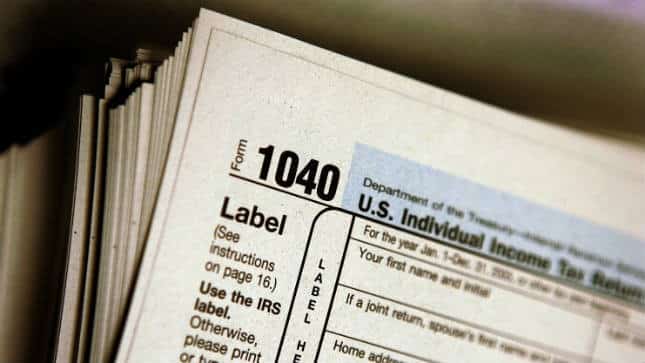
In 1935, we had a one-page tax form consisting of 34 lines and two pages of instructions. Today, the basic 1040 form has 79 lines and 211 pages of instructions. Instead of a single tax form, the IRS now has 199 tax forms on the individual side of the tax code alone. Taxpayers spend nearly 7 billion hours complying with the tax code each year, and nearly 90% of taxpayers need help filing their taxes.
We are going to cut taxes and simplify the tax code by taking the current 7 tax brackets we have today and reducing them to only three brackets: 10 percent, 25 percent, and 35 percent.
We are going to double the standard deduction so that a married couple won’t pay any taxes on the first $24,000 of income they earn. So in essence, we are creating a 0 percent tax rate for the first $24,000 that a couple earns.
The larger standard deduction also leads to simplification because far fewer taxpayers will need to itemize, which means their tax form can go back to that one simple page.
Families in this country will also benefit from tax relief to help them with child and dependent care expenses.
We are going to repeal the Alternative Minimum Tax (AMT). The AMT creates significant complications and burdens by requiring taxpayers to do their taxes twice to see which is higher. That makes no sense; we should have one simple tax code.
Job creation and economic growth is the top priority for this Administration, and nothing drives economic growth like capital investment. Therefore, we are going to return the top tax rate on capital gains and dividends to 20 percent by repealing the harmful 3.8 percent Obamacare tax. That tax has been a direct hit on investment income and small business owners.
We are going to repeal the death tax. The threat of being hit by the death tax leads small business owners and farmers in this country to waste countless hours and resources on complicated estate planning to make sure their children aren’t hit with a huge tax when they die. No one wants their children to have to sell the family business to pay an unfair tax.
We are going to eliminate most of the tax breaks that mainly benefit high-income individuals. Home ownership, charitable giving, and retirement savings will be protected – but other tax benefits will be eliminated.
This is not going to be easy. Doing big things never is. But one thing is for certain: I would not bet against this President. He will get this done for the American people.
Gary Cohn is the chief economic advisor to President Donald J. Trump and Director of the National Economic Council.
Ridgewood NJ, Small business owners probably think they have enough headaches already, what with meeting payroll, dealing with government regulations and pleasing customers.
Setting up a retirement plan for their employees is just extra red tape – and possibly expense – they can do without.
But creating such a plan is more doable than they may realize and even comes with benefits for the small business and its owner, says Andrew Denney, founder and CEO of Prosperity Financial Group (www.pfgmidwest.com).
“I’ve worked with some employee retirement plans where there was in excess of $500 million in the plan,” Denney says. “At the other end, I’ve seen businesses with as few as 10 employees set up a plan.”
Yet as a group, small businesses tend to forgo retirement plans.
For example, only 22 percent of workers at firms with fewer than 10 employees report having access to a workplace savings plan or pension, compared with 74 percent at firms with 500 or more, according to a Pew Charitable Trusts report.
Employee-sponsored 401(k) and IRA plans are among the more popular options for businesses that do offer a retirement benefit. Those savings plans allow the employees to deposit money routinely in the accounts with a deduction taken out of their paychecks.
Since these are tax-deferred retirement plans, the employees see a lower income-tax bill at the end of the year. Some employers also offer a company match, providing an even heftier balance to the accounts.
But employees aren’t the only ones who benefit. Denney says there’s also an upside for the small business owner, including:
• Employee recruiting and retention. Any business wants to hang onto good employees and offering a retirement plan helps do that. They’ll be happier knowing they’re more likely to have some financial security in retirement. A retirement benefit also serves as a recruiting tool. Imagine a job candidate who’s weighing similar offers from two businesses, but one has a retirement plan and the other doesn’t. “It separates you from the pack,” Denney says. • A lower tax bill. The business potentially can reduce its tax burden because a company’s contributions to the retirement plan are tax deductible. In some cases, the businesses also may qualify for a tax credit to help offset the cost of starting the plan, according to the IRS. • An opportunity to invest in your own retirement. Like their employees, small business owners may not want to work forever and need to set aside money for their own retirements. They’ll enjoy the same tax-deferred benefits the employees do as they build that nest egg.
“It’s worthwhile for a small business owner to investigate whether an employee retirement plan is more attainable than they might realize,” Denney says. “A financial professional with experience in setting up such plans can explain to them the advantages and disadvantages, and suggest which plan would work best for their situation.”
About Andrew Denney
Andrew Denney, founder and CEO of Prosperity Financial Group (www.pfgmidwest.com), has more than 13 years’ experience in the finance industry, where he advises clients in such areas as retirement planning, asset protection, estate planning and wealth management. Denney holds Series 7 and Series 66 securities registrations with LPL Financial, in addition to a life insurance license. He has a degree in finance from Missouri State University.
Securities offered through LPL Financial member FINRA and SIPC
Investment advisory services offered through Independent Financial Partners, a Registered Investment Adviser
Independent Financial Partners and LPL are separate entities
Ridgewood NJ, It’s often said that all it takes to change a person’s life – or the life of a business – is one big idea.
While it’s true that many individuals and businesses have gone a long way on the strength of a lone idea, plenty of others prospered even further because they are constantly innovating – coming up with one good idea after another.
“Businesses usually start out with an innovative idea,” says Mayur Ramgir (www.mayurramgir.com), president and CEO of Zonopact, Inc. “But they soon lose that innovative edge as they just try to survive with their day-to-day operations.”
Ramgir has seen the problem often while working with the clients of Zonopact, which provides companies with software products that help them streamline their processes, carving out more time for innovation.
“It’s easy to lose sight of your vision, and the kind of innovative thinking that got you to where you are, when you become bogged down in solving each day’s problems,” he says.
So why it is important that companies keep innovating?
• Other companies can claim your market share. Apple has become a perfect example of what a gap in innovation can leave. There hasn’t been much game-changing innovation from Apple since it released the iPad in 2010, thus giving its competition time to make up the ground that separated them from the tech juggernaut. Whether it was the death of Steve Jobs or another factor, there is no doubt that the technology gap has narrowed.
• Failure to meet consumer demands could put a company out of business. It was the late 1980s; hair was big, neon was cool and there was a Blockbuster Video Store on every corner. Fast forward to 2017, where the hairstyles have flattened out and Blockbuster is nowhere to be found. At least neon has made a nice comeback! Blockbuster failed to meet the changing demands of consumers who were going to their local grocery store or pharmacy to rent a movie out of what looked like a vending machine. As a result, the one-time $5 billion company was liquidated and now lives with the VHS tapes that used to fill its shelves.
• Lack of product-storage innovation hurts supply volume. It seems as though we hear the same story every year around Christmas; there is a hot item that every child has to have. The only problem is that there aren’t enough of the toys to go around, leaving plenty of disappointed faces around the tree on Christmas morning. Companies that do not have an innovative supply plan run the risk of falling short on getting products to their customers. This lack of foresight could give those customers an opportunity to walk away and discover other items.
“My advice to businesses out there is don’t stop,” Ramgir says. “Keep innovating and keep moving forward.”
About Mayur Ramgir
Mayur Ramgir (www.mayurramgir.com) is an International award-winning author, speaker, innovator and entrepreneur. Educated at Georgia Tech, MIT, Oxford and the University of Sussex, he currently serves as the President and CEO of the Boston-based Zonopact, Inc. An advocate of innovation, Ramgir’s book, “Unbarred Innovation: A Pathway to Greatest Discoveries,” was published in 2016. The book takes readers on a journey of self discovery and helps them realize that they are more than the sum of their parts.
Ridgewood NJ, So, you’re a smart, imaginative, persuasive millennial and – contrary to the bad rap your generation usually gets – you’re willing to work REALLY hard. You’re just waiting for all those boomers and Xers to get the heck out of the way so you can have your turn at the brass ring.
But why wait?
You and your well-educated and connected friends are in a great position to create your own success – by creating your own business. Survey after survey finds that millennials have a true entrepreneurial mindset; you like flexibility and independence, and you’re determined to pursue your passions. And, thanks to the accomplishments of others before you (the young founders of Airbnb and Uber, Facebook’s Mark Zuckerberg), you’re likely to get more support and less eye-rolling should you strike out on your own.
“With more resources available to start-up founders, and a new respect for what innovative thinkers can do, there’s no need to wait around for your corner office and executive title,” says Matt Stewart, an entrepreneur and co-founder of College Works Painting (www.collegeworks.com/about), an internship program that provides practical business experience for college students. “Why sit and dream about climbing the ladder at someone else’s business when you can create your own?”
The idea of building something from nothing is daunting but doable, says Stewart, who started his company with just four employees in 1993 and now operates nationwide. Here are some of his tips for getting started:
You don’t have to reinvent the wheel. Create opportunity by finding a business model that delivers solutions to an urgent need that customers have. Your customers should already understand your product or service and believe in its necessity, not just think that it would be “nice to have.” • Define what makes you unique. Once you’ve picked a service or product to focus on, find out what makes you different. Research competitors to determine their customers’ likes and dislikes. How can you pair your individual experience with a solution that addresses what’s missing in the marketplace? • Understand that competition is good. Try to avoid starting a business that doesn’t already exist. If there are similar products or services to yours, it means there’s a demand. Now it’s up to you to figure out how you can deliver something that’s different and better. • You don’t need to start the next Facebook. Don’t worry about entering the market with a huge company. Instead, focus on providing a great solution for a niche group of customers ¬and then over-deliver. You can’t service 1 million customers if you don’t know how to service 10. Focus on your first 10 customers. • Ready, shoot, aim. Don’t wait to get started. You won’t know if you’re onto something unless you start making sales. Your idea isn’t validated until you have paying customers. Don’t spend too much time planning; start engaging with potential customers as soon as you can.
If the fear of failing is holding you back, Stewart says, remember that there’s no better time to take a risk than when you’re first starting out.
“Meanwhile, you’re gaining work experience, learning to be a leader, and doing it on your own terms,” he says.
About Matt Stewart
Matt Stewart is co-founder of College Works Painting (www.collegeworks.com/about), which provides business experience for thousands of college students each year. The award-winning program also offers high-quality house-painting services for homeowners.
Ridgewood NJ, Small business Optimism soared in December by the most since 1980 as expectations about the economy’s prospects improved dramatically in the aftermath of the Trump election.
The National Federation of Independent Business gauge jumps to 105.8 in month after presidential election and expectations for business conditions are highest since 2002
The National Federation of Independent Business’s (NFIB) index jumped 7.4 points last month to 105.8, the highest since the end of 2004, from 98.4. While seven of the 10 components increased in December, 73 percent of the monthly advance was due to more upbeat views about the outlook for sales and the economy, the Washington-based group said.