As Democrats – many of them in South Jersey pivoting hard from their agreement with Governor Chris Christie on Atlantic City in order to emphasize distance and convenient opposition – slam the governor on an insolvent state Transportation Trust Fund, Christie barked back at his would-be tormentors. Max Pizarro, PolitickerNJRead more
The deadlock between Gov. Chris Christie and elected officials over a deal to rescue Atlantic City from a mounting financial crisis has the potential to send shockwaves through some of the state’s largest cities, a credit agency said Wednesday. Matt Arco, NJ.com Read more
on March 31, 2016 at 5:40 PM, updated March 31, 2016 at 5:41 PM
TRENTON — New Jersey’s public pension shortfall, already one of the worst in the country, got even bigger in 2015, according to new actuarial reports.
Unfunded liabilities in the state retirement system for government workers grew to $43.8 billion, as of July 2015. The state system had $85.2 billion in liabilities but just $41.4 billion in assets, 48.6 percent of the money needed to pay for promised benefits.
The unfunded liability reported at the end of July 2014 was $40 billion, but Department of Treasury officials said that figure has since been revised. The up-to-date data was not immediately available.
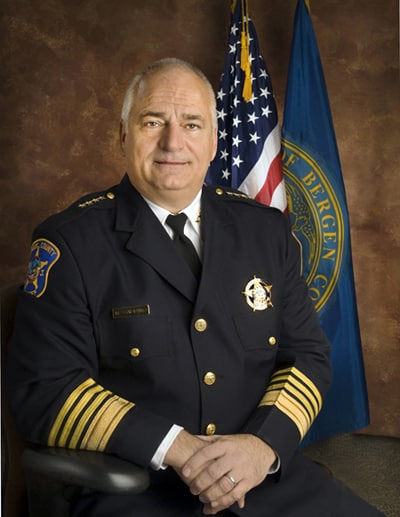
Bergen County Sheriff Michael Saudino – $138,000 in salary plus $129,987 from pension as an Emerson Borough police retire
MARK LAGERKVIST | MARCH 14, 2016
Loophole in law lets some state employees collect retirement money while working at new job
The ranks of retired public officials who collect more than $100,000 a year from New Jersey pensions have more than doubled in the past five years, according to an NJ Spotlight analysis of state Treasury data.
When 2015 ended, 2,296 retirees were collecting six-figure pensions from state pension plans. It is a 131 percent increase above 2010, when the count was 992.
The top of the “$100K Club is loaded with retired school executives. Former Essex County College president A.Z. Yamba leads the pack with $195,000 in annual retirement pay. Of the 30 pensioners who get $150,000 or more, 22 retired as educators.
But in sheer numbers, police and fire officials are predominate. Nearly half – or 1,131 pensioners – belong to the Police and Firemen’s Retirement System.
Of those PFRS retirees, 93 percent – or 1,050 – took advantage of a “special retirement” provision in state pension law. It allows law-enforcement officers – but not other public employees – to collect full benefits after 25 years of service, regardless of age.
When Joseph Blaettler opted for special retirement at age 46, the former Union City deputy police chief started collecting $134,773 a year from PFRS in 2009. If he reaches age 80 – his statistical life expectancy – he will cash more than $4.5 million in pension checks.
New York City’s pension system, which encompasses $160 billion in retirement funds, is rife with problems that leave it vulnerable to an “operational failure,” according to an independent report commissioned by the city comptroller’s office.
The report found that the city’s retirement system, the fourth largest in the country, needs additional resources, is understaffed and lacks many basic tools required to gain insight into the complicated risk embedded in its investments. Some managers rely on fax machines to send and receive vital information.
Ridgewood NJ, Just weeks since a potential strike was adverted and less than a year after NJ Transit closed a $56 million budget gap by raising passenger fares 9 percent, NJT now finds itself another $57 million in the hole. Slower ridership growth leading to lower-than-projected revenues leaves the agency 128 days to close the budget gap.
The biggest single hit “surprise “was a new contract for unionized bus workers, which cost the agency $46.6 million in additional salaries and benefits. NJ Transit also spent $18 million more than it expected on services by outside companies, including a program to overhaul the agency’s double-decker train cars, plus another $13 million on materials and supplies, to renovate facilities . Federal money partially offset some of these expenses , and NJ Transit expects more federal reimbursements to help off set budget gap.
According to NJT the biggest financial challenge is the new contract with 11 rail unions to increase pay for its 4,200 train workers by 21 percent between now and the end of 2019, including retroactive pay to 2011. NJT has not yet released the contract’s total cost, but Governor Christie reiterated it will not necessitate another fare increase. NJT last raised fares in July 2015.
Besides the new contract NJT will soon pay more money yest unspecified to use Northeast Corridor tracks belonging to Amtrak, this according to the Northeast Corridor Commission.
STATE SEN. Paul Sarlo is concerned about what he calls “nosy-bodies.” We are more concerned about transparency. And a bill Sarlo introduced early this year would greatly limit the public’s access to police videotapes. This is a misguided idea.
Sen. Paul Sarlo is concerned about what he calls “nosy-bodies.” We are more concerned about transparency. And a bill Sarlo introduced early this year would greatly limit the public’s access to police videotapes. This is a misguided idea. The Record Read more
Voters in dark on key details of casino expansion referendum
When New Jerseyans decide in November whether to approve two new casinos in the northern part of the state, they’ll likely have only a vague notion of what they’re voting on. Wayne Parry, Associated Press Read more
Are the days of wining and dining over at N.J. Statehouse?
The Auditor noticed that lobbyists last year spent about $70 million to sway public officials and public opinion – the second highest amount in state history. But precious little of that money went toward wining, dining and entertaining state bigwigs. Lobbyists paid only $2,439 in 2015 on meals, trips and entertainment in 2015. And officials wrote a check and paid lobbyists back for nearly $500 of these funds. The Auditor, NJ.com Read more
New Rutgers-Eagleton poll found that 56 percent of New Jerseyians oppose a gas tax hike.
Ridgewood NJ, Chanel 12 news reports that a new poll conducted by Rutgers-Eagleton Poll found that more than half of New Jersey residents are opposed to a gas tax increase. However, many of New Jersey’s lawmakers say that raising the gas tax is likely to happen.
New Jersey’s transportation fund is set to run out of money in June and the state’s legislators have not yet introduced a way to replenish the fund. Many have mentioned a gas tax hike as a way to increase revenue.
According to lawmakers ,the transportation fund pays more than a billion dollars each year for maintenance and repairs. Lawmakers have until June 30 to renew the fund.
Many political experts say that introducing the hike would be a politically unpopular proposal.
Critics of the increase in the gas tax point to the high cost of New Jersey road construction , the fact the New Jersey already allocates one of the high amounts of funding in the nation to roads and bridges thru tolls and gas tax . To many it appears that Trenton has used the (TTF) as a political slush fund to finance other state business ie … the TTF has financed everything but roads.
Many suggest an audit for the Transportation trust fund (TTF ) , and any money in the fund be specifically related to transportation projects only.
Billions of dollars, thousands of retired workers and dozens of laws are all entangled in the latest pension dispute at the state Supreme Court. Salvador Rizzo, NJ.ComRead more
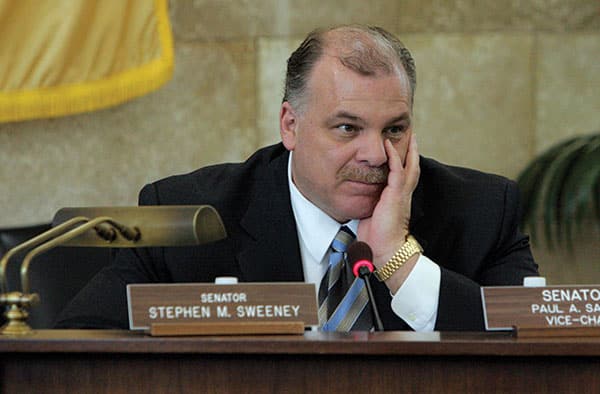
The late Gov. Alfred E. Driscoll, a founding father of the modern state constitution, probably would have been appalled with state Senate President Stephen Sweeney’s approach to New Jersey’s hallowed charter.
In 1947, Driscoll urged the 81 delegates who had been chosen to draft the new document to refrain from padding it with their pet legislative projects. Stick to “basic fundamental principles,” he said.
BY DAVE SHEINGOLD AND JOHN C. ENSSLIN
STAFF WRITERS |
THE RECORD
Reforms enacted in 2011 to keep the nation’s highest property taxes in check are showing signs of weakening as a growing number of New Jersey towns fail to stay within the 2 percent cap on increases that formed the cornerstone of the effort.
NEWARK – New Jersey Transit and rail union negotiators have reached a deal to avert a strike ahead of the Sunday deadline.
Hundreds of thousands of New Jersey riders would have been impacted by a strike, which was set to take effect at 12:01 a.m. Sunday.
After nearly nine hours of negotiation Friday, transit union spokesman Steve Burkert came out with other union leaders to announce the deal.
“We have reached a tentative agreement,” he said. “Thankfully for the commuters of NJ Transit the crisis has been averted. We thank our members for having faith in us in solidarity. We’re going home to our families.”
Burkert did not take any questions from the media following the announcement.
Gov. Chris Christie held a news conference soon after the announcement. He reiterated that a deal was reached, but said that it still needed to be ratified by the rail unions involved. He said that he would not discuss the financial details of the agreement until union leaders shared it with their members, but said that it would not require any immediate fare increases.
The major issues that were being negotiated were health care and wage increases. About 4,000 NJ Transit workers had been working without a contract for nearly five years.
New Jersey Transit and rail worker unions on Tuesday were closer to a contract agreement to head off a strike than they were a day earlier, a union official said. Associated Press Read more
Basics of dispute
The dispute revolves around a 5-year-old contract stalemate. Unions have demanded a deal similar to the one signed in 2014 by the Long Island Railroad, with an 18-percent pay raise over seven years plus retroactive pay from 2011, when the current contract came up for negotiation. The unions also want a modest increase in employees’ health insurance payments, capped at 2.5 percent of their base salaries.
NJ Transit told the Presidential Emergency Board, which has been mediating the latest discussions, that such a plan would cost the agency an additional $183 million by 2018. In a Feb. 19 letter to New Jersey’s Congressional delegation, NJ Transit said the union proposal was “excessive,” and included “platinum-level health benefits.”