

Business Hostility or Climate Fix? NJBIA Slams Controversial Climate Superfund Act as ‘Worst Ever’ for Consumers
the staff of the Ridgewood blog
Trenton NJ, A massive legislative battle is brewing in Trenton after the Senate Budget Committee advanced the controversial Climate Superfund Act (also known as the Polluters Pay Act).
While backers pitch the policy as a vital funding mechanism to pay for future climate resiliency and infrastructure projects, business advocacy groups are sounding the alarm. The New Jersey Business & Industry Association (NJBIA) has aggressively condemned the move, labeling it a retroactive financial penalty that will cripple the state’s economy and pass billions in costs directly to everyday consumers.
Here is a breakdown of what the bill does, why business leaders are calling it an act of “hostility,” and how it could reshape New Jersey’s energy supply chain over the next two decades.
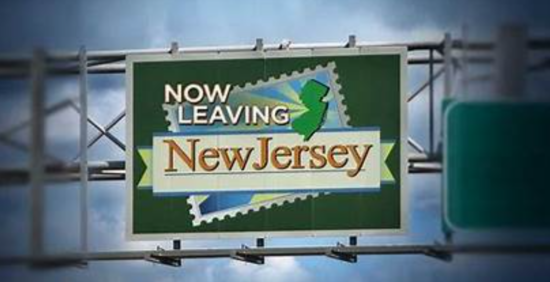
A $50 Billion Retroactive Penalty On Legal Products
According to NJBIA President and CEO Michele Siekerka, the legislation targets energy companies with a collective $50 billion retroactive penalty. Opponents point out that these fossil fuel entities have historically operated completely within the bounds of state and federal law to provide essential heating, gas, and electricity to New Jersey residents.
Siekerka argues that the policy creates a deeply unsettling precedent for any industry operating within the Garden State.
“Then there is the chilling and likely unconstitutional message that it tells our job creators: ‘Follow every law, follow every permit and regulation, and we can still retroactively penalize you billions of dollars, even when providing an essential service.’ That’s not just being unfriendly to business. That’s business hostility.”
— Michele Siekerka, NJBIA President & CEO
The Economic Ripple Effect: Higher Utility Bills and Job Losses
Industry experts stress that there is “no free lunch” when it comes to multi-billion dollar corporate penalties. If signed into law, the costs associated with the Polluters Pay Act are heavily anticipated to filter down to standard consumer bills, compounding the current affordability crisis gripping the state.
The potential economic consequences outlined by opponents include:
-
Rising Energy Costs: Households and small businesses could see utility and fuel prices tick upward consistently over the next 20 years.
-
Refinery Disinvestment: The penalties threaten future infrastructure investments within New Jersey’s two remaining active oil refineries.
-
Supply Chain Disruptions: Connected logistical networks, delivery firms, and gas distribution businesses will face direct financial tightening.
The True Impact on the Bayway Industrial Complex
To put the scale of the targeted industry into perspective, a recent joint economic report by the NJBIA and the New Jersey Institute of Technology (NJIT) highlighted the massive role of the Bayway Industrial Complex in Linden, NJ.
The data shows the complex is an economic juggernaut:
-
Generates $21.3 billion in total statewide economic output.
-
Contributes nearly $7 billion to New Jersey’s Gross State Product (GSP).
-
Sustains 35,000 direct and indirect jobs both inside and outside the facility fence.
Critics emphasize that the current language of the bill effectively tells the communities and workforces supported by these economic hubs that their contributions do not matter.
Global Context: New Jersey’s True Carbon Footprint
A central critique of the Climate Superfund Act is its lack of an accompanying objective economic study. Opponents point out that the legislation glosses over the fundamental societal benefits fossil fuels have historically provided, while ignoring the strict environmental guardrails already observed by regional providers.
Statistically, New Jersey is a very minor contributor to greenhouse gases (GHG):
-
National Emissions: New Jersey accounts for just 1.7% of the United States’ total GHG output.
-
Global Emissions: The state’s global carbon footprint sits at a mere 0.3%.
Advocates for the energy sector argue that these exceptionally low numbers are direct proof that regional companies already adhere to some of the strictest air quality rules and environmental protocols on earth.
Impending Legal Warfare: Is the Bill Unconstitutional?
Even if lawmakers push the bill across the finish line, it faces immediate, massive legal roadblocks that could cost New Jersey taxpayers millions in court fees.
Under the federal Clean Air Act, individual states generally lack the constitutional authority to impose retroactive financial liabilities on companies for global atmospheric conditions. Two other states that attempted similar climate legislation are already bogged down in intense federal court battles. Critics question why state policymakers are rushing to invite identical, high-stakes litigation to New Jersey rather than watching how those out-of-state legal battles resolve first.
As the bill moves forward, the business community continues to press lawmakers to pause and evaluate the real-world harm this could inflict on New Jersey’s long-term affordability and fragile economic climate.
Tell your story #TheRidgewoodblog , #Indpendentnews, #information, #advertise, #guestpost, #affiliatemarketing,#NorthJersey, #NJ , #News, #localnews, #bergencounty, #sponsoredpost, #SponsoredContent, #contentplacement , #linkplacement, Email: [email protected]
#NJPolitics #ClimateSuperfundAct #NJBIA #EnergyCosts #NewJerseyBusiness #TrentonNews #PollutersPay #AffordabilityCrisis






Democrats are hell bent on turning this state into a smaller, shittier California, and they are doing a bang up job of it.
The giant sucking sound you are about to hear, is that of Florida and sunbelt states turning up the jobs vacuum, whose nozzle is pointed directly at New Jersey.