Ridgewood NJ, the Village Mangers office confirmed that “ZERO” business opted in the Central Valet Parking program . That means that there are not any business in the Central Business District willing to Validate parking . Apparently we have all been misinformed about the parking problem .
Reader says …And if this wasn’t a big enough kick in the ass to Ridgewood’s taxpayers, Ridgewood Chamber of Commerce President Paul Vagianos had the nerve to stand in front of Council members last night and publicly bitch about the taxpayer funded Central Valet Parking Program. Mr. Vagianos expressed his personal disappointment over the single site chosen as a drop off/pick up location (Van Neste Square), saying it “lacked visibility.” In Mr. Vagianos’ opinion, a better location for single site operation would have been the western end of East Ridgewood Avenue (adjacent to the train tracks).
What Mr. Vagianos didn’t say last night was that both his restaurant and a commercial rental property he owns are closer to the western end of East Ridgewood Avenue. He also failed to mention that his restaurant does not currently participate in the reimbursement program associated with the Central Valet Parking Program.
Lodi NJ, Attorney General Christopher S. Porrino and the Division of Alcohol Beverage Control have ordered the liquor licenses of two North Jersey “gentleman’s clubs” to be sold or transferred to a bona fide third party by January 3, 2018, because of alleged noncompliance with a previous Consent Order.
The two clubs, Satin Dolls in Lodi and A.J.’s Gentleman’s Club in Secaucus, have until December 17, 2017 to cease providing live entertainment. The Satin Dolls club served as the fictional “Bada Bing” in the HBO television series “The Sopranos.” If live entertainment is provided after that date, the licenses will be suspended immediately and the owners will be subject to potential disciplinary charges.
The two clubs and their owners have been the subject of investigation and legal proceedings initiated by the Division for more than six years, during which the owners, various members of the Cardinalle family, sought to retain ownership of the licenses and continue to operate the businesses.
The Division has alleged that Anthony Cardinalle, who was criminally disqualified from maintaining involvement with the clubs’ operations, nonetheless continued to run the businesses. The Division also alleges that the owners failed to account for large amounts of cash flowing in and out of the businesses.
Under an order signed by Director David P. Rible on November 20, 2017, the Cardinalles’ involvement with the clubs must end.
“The Cardinalles may have wanted to keep the business in the family, but that’s not how it works. Their continued flouting of Alcoholic Beverage Control laws cannot and will not be tolerated,” said Attorney General Porrino. “Illegal activity was glorified at the ‘Bada Bing’ in the fictional world of Tony Soprano, but it has no place in modern-day New Jersey It’s time to shut it down.”
In 2011, a Consent Order with the companies Route 17 Entertainment Inc. (Satin Dolls) and Sea-Card Enterprises Inc. (A.J’s Gentleman’s Club) mandated that Luceen Cardinalle, the wife of Anthony who was listed as the sole shareholder of both corporations, turn over the licenses to her daughter, Loren Cardinalle. The Cardinalles were ordered to pay $1.25 million in penalties as a compromise in lieu of revocation of both licenses, and Loren Cardinalle was ordered to transfer both licenses to a bona fide third party by December 31, 2015.
“The holding of licenses to sell and serve alcohol is contingent upon the owners’ behaving in a reputable manner,” said Director Rible. “The Cardinalles, quite simply, have not played by the rules despite many opportunities to correct their behavior, and it’s time to get them out of the alcohol business once and for all.”
Anthony Cardinalle pled guilty in 1995 to federal income tax evasion for not reporting cash payments from “gentleman’s clubs” in which he held undisclosed interests. During the Division’s investigation, evidence was uncovered that Anthony Cardinalle was still actively involved with running the clubs.
Anthony Cardinalle was subsequently indicted by the federal government in January 2013 for participating in a conspiracy by the Genovese crime family related to the waste-disposal industry in New Jersey and New York. He pled guilty in December 2013 to racketeering conspiracy and conspiracy to commit extortion and was ordered to spend 30 days in jail and pay a fine and restitution.
As the 2015 Consent Order deadline approached, Loren Cardinalle asked the Division for permission to continue to hold the licenses. A series of extensions were granted, with the latest deadline set for September 28, 2017. After further investigation, the Division issued a Notice of Charges for criminal solicitation for prostitution and lewd activity on the licensed premises in May 2017. Those charges remain pending.
The Division continues to allege that Anthony Cardinalle is involved with the operation of the clubs, citing the following as evidence:
The Lodi Police Department advised the Division that Anthony Cardinalle has been the contact person for issues with the Satin Dolls license.
When police were called to the club because of a report of an attempted burglary, Anthony Cardinalle was the club representative dealing with the matter.
The Attorney General thanked the Division’s Investigation Unit for its work on this matter.
RHS Bands in annual Winter Concert
Wednesday, December 6 at 7:30 p.m.
RHS Campus Center
Free
The public is invited to this annual free concert featuring the school’s three curricular bands — the Symphonic Band, Concert Band and Wind Ensemble. Please click here for more information.
Mini New Players Program for grades K-4
Friday, December 15
4-7:30 p.m. (performance at 7 p.m.) Click here for details and registration form.
The Mini New Players Program offers students in Kindergarten through Grade 4 an opportunity to explore the world of theater. Under the supervision of New Players Company adult staff, the children will work with high school theater students playing fun-filled and stimulating games designed to spark their creativity and introduce them to the basics of drama. The program culminates in a brief performance for parents.
RHS New Players
The 2017-18 season continues with The Best Christmas Pageant Ever December 7-10, New Players in Concert, 42nd Street, Twelfth Night, and Student Written One Acts.
Click here for information on The Best Christmas Pageant Ever.
Click here for more information on the whole season.
RHS Maroon & White
Student Recital and Art Exhibit
Thursday, January 18 at 3:45 p.m.
RHS Learning Commons (recital), Carroll Art Gallery (exhibit and reception)
Yet again, the government wants to fix a problem that doesn’t exist. According to the Obama administration and the FCC, it is necessary to regulate internet service providers so that they don’t interfere with people’s access to the web. The claim immediately prompts one to ask: Who is being denied access to the web?
In the past twenty years, access to the internet has only become more widespread and service today is far faster for many people — including “ordinary” people — than it was twenty years ago, or even ten years ago. Today, broadband in Europe, where the internet is more tightly regulated, has less reach than it has in the United States.
The administration’s plan is rather innocuously called “net neutrality,” but in fact it has nothing at all to do with neutrality and is just a scheme to vastly increase the federal government’s control over the internet.
What is Net Neutrality?
We don’t know the details of the plan because the FCC refuses to let the taxpayers see the 300-page proposal before the FCC votes on it today. But, we do know a few things.
Currently, ISPs are regulated by the FCC, but as an “information service” under the less restrictive rules of so-called Title I. But now, the FCC wants to regulate ISPs as utilities under the far more restrictive Title II restrictions. For a clue as to how cutting edge this idea is, remember this switch to Title II regulation would put ISPs into the same regulatory regime as Ma Bell under the Communications Act of 1934.
So what does this mean for the FCC in practice? According to FCC Commissioner Ajit Pai, “It gives the FCC the power to micromanage virtually every aspect of how the Internet works.” More specifically, Gordon Crovitz at the Wall Street Journal writes:
[With Net Netruality,] bureaucrats can review the fairness of Google’s search results, Facebook’s news feeds and news sites’ links to one another and to advertisers. BlackBerry is already lobbying the FCC to force Apple and Netflix to offer apps for BlackBerry’s unpopular phones. Bureaucrats will oversee peering, content-delivery networks and other parts of the interconnected network that enables everything from Netflix and YouTube to security drones and online surgery.
The administration insists these measures are necessary because — even though there is no evidence that this has actually happened — it is possible that at some point in the future, internet service providers could restrict some content and apps on the internet. Thus, we are told, control of content should be handed over to the federal government to ensure that internet service providers are “neutral” when it comes to deciding what is on the internet and what is not.
Can Goods Be Allocated in a “Neutral” Way?
The problem is that there is no such thing as “neutral” allocation of resources, whether done by government or the marketplace.
In the marketplace, goods and services tend to be allocated according to those who demand the goods the most. Where demand is highest, prices are highest, so goods and services tend to go to where they are most demanded. This makes perfect sense, of course, and also reflects the inherent democracy of the markets. Where larger numbers of people put more resources is where more goods and services will head.
It is this mechanism that drives the marketplaces for food, clothing, and a host of other products. Consequently, both food and clothing have become so plentiful that obesity is a major health problem and second-hand clothing stores, selling barely-worn discarded clothing, are a boom industry, even in affluent neighborhoods. Similarly, cell phones have only become more affordable and more widespread in recent decades.
For industries where new firms may freely enter, and customers are not compelled to buy, companies or individuals that wish to make money must use their resources in ways that are freely demanded by others. Unless they have been granted monopoly power by government, no firm can simply ignore its customers. If they do, competing firms will enter the marketplace with other goods and services.
Although goods allocated in this fashion are — according to the administration — not being allocated “neutrally,” the fact is that more people now have more service at higher speeds than was the case in the past. Furthermore, even if firms (or the government) attempted to allocate goods in a neutral manner, it would be impossible to do so, because neither society nor the physical world are neutral.
In his recent interview on net neutrality, Peter Klein used the analogy of a grocery store. In modern-day grocery stores, suppliers of food and drink will negotiate with stores (using so-called “slotting allowances”) to have their goods advertised near the front of the store or have goods placed on store shelves at eye level.
If government were to tell grocery stores to start being more “neutral” about where it places goods, we can see immediately that such a thing is impossible. After all, somebody’s goods have to be at eye level or near the front of the store. Who is to decide? A handful of government bureaucrats, or thousands of consumers who with their purchases control the success and failure of firms?
In a similar way, bandwidth varies for various ISP clients depending on the infrastructure available, and the resources available to each client. And yet, in spite of the administration’s fear-mongering that ISPs will lock out clients of humble means, and the need to hand all bandwidth over to plutocrats, internet access continues to expand. And who can be surprised? Have grocery stores stopped carrying low-priced nutritious food such as bananas and oatmeal just because Nabisco Corp. pays for better product placement for its costly processed foods? Obviously not.
Who will Control the FCC?
All goods need not be allocated in response to the human-choice-driven price mechanism of the marketplace. Goods and services can also be allocated by political means. That is, states, employing coercive means can seize goods and services and allocate them according to certain political goals and the goals of people in positions of political power. There is nothing “neutral” about this method of allocating resources.
In the net neutrality debate, it’s almost risible that some are suggesting that the FCC will somehow necessarily work in the “public” interest. First of all, we can already see how the FCC regards the public with its refusal to make its own proposals public. Second, who will define who the “public” is? And finally, after identifying who the “public” is, how will the governing bodies of the FCC determine what the “public” wants?
It’s a safe bet there will be no plebiscitary process, so what mechanism will be used? In practice, bureaucratic agencies respond to lobbying and political pressure like any other political institution. Those who can most afford to lobby and provide information to the FCC, however, will not be ordinary people who have the constraints of household budgets and lives to live in places other than Washington, DC office buildings. No, the general public will be essentially powerless because regulatory regimes diminish the market power of customers.
Most of the interaction that FCC policymakers will have with the “public” will be through lobbyists working for the internet service providers, so what net neutrality does is turn the attention of the ISPs away from the consumers themselves and toward the regulatory agency. In the marketplace, a firm’s customers are the most important decision makers. But the more regulated an industry becomes, the more important the regulating agency becomes to the firm’s owners and managers.
The natural outcome will be more “regulatory capture,” in which the institutions with the most at stake in a regulatory agency’s decisions end up controlling the agencies themselves. We see this all the time in the revolving door between legislators, regulators, and lobbyists. And you can also be sure that once this happens, the industry will close itself off to new innovative firms seeking to enter the marketplace. The regulatory agencies will ensure the health of the status quo providers at the cost of new entrepreneurs and new competitors.
Nor are such regulatory regimes even “efficient” in the mainstream use of the term. As economist Douglass North noted, regulatory regimes do not improve efficiency, but serve the interests of those with political power:
Institutions are not necessarily or even usually created to be socially efficient; rather they, or at least the formal rules, are created to serve the interests of those with the bargaining power to create new rules.
So, if populists think net neutrality will somehow give “the people” greater voice in how bandwidth is allocated and ISPs function, they should think again.
Ridgewood NJ, Gov. Chris Christie’s special commission on public pensions and health benefits released its final report on Wednesday: only swift and broad reforms stand a chance of rescuing a system in crisis.
New Jersey’s benefits for state government workers are now on track to consume a quarter of the state’s annual operating budget in 2023, and “the cupboard of relatively easy reforms is now bare,” the report said.
As it was for Christie, the pension system will be one of Gov.-elect Phil Murphy’s most pressing and imposing tests.
Christie earned national acclaim for working with Democrats to revamp benefits for government workers by increasing the retirement age, freezing cost-of-living adjustments and forcing workers and state government to contribute more to the system., but the Christie’s administration didn’t live up to its own ambitious payment plan, making deep cuts to the pension contributions, and he eventually set the state on a slower, more modest ramp up to the full payment recommended by actuaries.
Governor elect Phil Murphy has said he’d like to meet or beat the Christie schedule, But according to the commission “something more is needed, and quickly,” The commission report went on “Neither the 2010-11 reforms, nor the limited initiatives taken since then, will do anything to stop benefits from consuming 26 percent of the budget five years from now.”
Christie could barely scrape money together to get through the first half of a 10-part ramp up to full pension funding with a $2.5 billion payment this year , but the state will need more than $6 billion in yearly payments .
Murphy has already promised to raise roughly $1.3 billion in new taxes , but measured under national accounting standards, the state is $134 billion short of what it needs to pay for current and future retirement benefits. Combined with local government employers, the total system has racked up $168 billion in unfunded liabilities and has assets to cover just 31 percent of its debts.
Ridgewood NJ, New Jersey continues to suffer long term brain drain . Millennials it seems can’t get out of New Jersey fast enough. From 2000 to 2013, the number of 22-to-34-year-olds living in New Jersey fell by 2.3 percent, according to Census data, even while the number of people in this age bracket increased by 6.8 percent nationally during the same timeframe. According to a calculation by Governing using Census estimates, New Jersey now ranks 47th out of 50 states and Washington, D.C., for its percentage of Millennials in 2012.
Why do so many young people flee the Garden State? The smart-growth nonprofit New Jersey Future considered this demographic trend in a report released in September. The report measured New Jersey’s municipalities on three smart growth metrics: walkability and street connectivity; the presence of a mixed-use center; and net activity density (defined as population plus employment, divided by developed square miles).
Unsurprisingly, New Jersey’s Millennials are just like Millennials everywhere else: They gravitate toward dense, mixed-use, walkable areas. Across the 118 places that scored well on all three smart-growth metrics, Millennials are 25 percent more prevalent than they are statewide. Conversely, they are 19 percent less likely than the general New Jersey population to live in the places that scored badly on all three metrics.
S it appears the lack of Millennial-friendly environments. Of the state’s 565 municipalities, only 183 scored well on two or all three smart-growth metrics, and according to the study, only 111 of those places are popular with Millennials. This imbalance may increase competition for housing in those high-scoring municipalities, pushing rent prices higher and Millennials out of those neighborhoods where they want to live most.
There are a number of other indicators that New Jersey’s Millennials are struggling with as well and like other generations its finding affordable housing . 47 percent of Millennials now live with their parents. Giving New Jersey the highest rate in the country of 18-to-34-year-olds living with their parents. Nationally, the number is just 33 percent, and in nearby Pennsylvania, it’s 37 percent.
Ridgewood NJ, NJ TRANSIT is giving customers a new tool this season in the annual battle with Old Man Winter. When inclement weather limits train service, customers will be able to use new Severe Weather Schedules to clearly identify their travel options and keep moving through the snow and ice.
“In the midst of winter weather, visibility outside may be low, but we want our customers to have a clear picture of how much service we can safely operate and when their next train will be departing,” said NJ TRANSIT Executive Director Steven H. Santoro. “Our operations divisions statewide have prepared the transit system, equipment and facilities, and these Severe Weather Schedules allow our customers to be prepared as well.”
During severe weather events, or other emergency situations, NJ TRANSIT may need to operate a limited weekday rail schedule, which will be designated as “Severe Weather Schedule – Level 1” or “Severe Weather Schedule – Level 2.” Customers will be informed through MyTransit alerts, social media, NJ TRANSIT’s website and mobile app as well as broadcast and print media when a Severe Weather Schedule is implemented
“Severe Weather Schedule-Level 1” and “Severe Weather Schedule-Level 2” are now available for viewing, downloading and printing at njtransit.com. Printed severe weather schedules will be available December 7th at select stations, terminals and Customer Service offices.
Customers are encouraged to familiarize themselves with the Severe Weather Schedules in the event that conditions warrant their implementation.
Snow fighting supplies and equipment across the state are stocked and ready to be deployed as conditions warrant. NJ TRANSIT is busy inspecting and winterizing its infrastructure, equipment and stations to be in the best possible position to handle winter’s potential fury.
NJ TRANSIT Preparations for Winter Weather
Rail Operations
Hundreds of rail cars and locomotives have been “winterized,” a process that includes checking onboard heating systems, ventilation, thermostats, weather stripping and electronic components, as well as changing locomotive filters and fuel from a summer blend to a winter blend.
NJ TRANSIT’s preventative maintenance program also includes the inspection and winter maintenance of more than 750 switches and switch heaters, overhead wire systems, 12 moveable bridges and wayside power at storage yards and terminals.
Two jet-engine-powered snow blowers are available to remove ice and snow from tracks and critical switching areas. In addition, all locomotives are equipped with snowplows to clear snow from the rails.
NJ TRANSIT Rail Operations has 20,000 pounds of salt on hand with the ability to obtain an additional 100,000 pounds, if needed.
In addition, our year-round tree trimming program proactively minimizes downed trees or limbs along the right-of-way and on our overhead electrical system, personnel are on standby to quickly respond to reports of trees or limbs that could damage overhead wires or prevent safe passage of trains. Our year-round tree trimming program is part of our preventative maintenance program.
Bus Operations
Bus maintenance personnel have checked the heating systems, engine fluids, tires, windshield wipers, doors and airbrake systems on NJ TRANSIT’s 2,200 buses.
Bus snow-fighting equipment has been readied and ice/snow-inhibiting supplies have been restocked for winter to keep 52 bus loops, terminals and lots cleared throughout the state.
NJ TRANSIT Bus Operations has 900 tons of bulk salt on standby statewide, with each of its 16 garages stocked with bag salt.
Light Rail Operations
Snowplows are ready to clear station platforms and park/ride lots.
Switch heaters have been tested throughout NJ TRANSIT’s three light rail systems.
Necessary supplies such as calcium chloride, snow shovels, and scrapers are available and strategically located on the system.
Snow blowers and backup generators have been checked to ensure they are in working order.
Subcontractors are under contract to assist work crews in clearing all light rail stations, walkways, and park/ride facilities.
Management staff for all three lines will be coordinating with local municipalities to discuss snow removal in the light rail’s downtown ‘street running’ territory.
Stations and Terminals
All rail stations equipped with heaters have been inspected to ensure that they are in proper working order.
All public address systems at rail stations and bus terminals have been inspected.
Travel Advice:
Before starting your trip, visit the Travel Alerts page at njtransit.com for up-to-the-minute service information. This information is also available by calling (973) 275-5555 or from broadcast traffic reports.
Customers are encouraged to sign up for the My Transit alert system on njtransit.com, which delivers travel advisories for your specific trip to your cell phone.
Allow extra time getting to and from your destination. Use extreme caution when walking on exposed sidewalks or station platforms and when boarding trains and buses.
Report slippery or unsafe conditions to bus operators, train crews or
NJ TRANSIT staff.
Listen closely to public address announcements at stations for late-breaking service information.
Ridgewood NJ, New Jersey has long been the punching bag of state tax scholars. The state has the worst state business tax climate of the 50 states and the third highest overall state and local tax burden (behind only Connecticut and New York). Any New Jersey resident knows they pay the highest property taxes in the country, but other taxes are also high: income taxes (5th highest top rate), corporate taxes (6th highest in collections), sales taxes (16th highest in collections), cigarette taxes (10th highest), and gas taxes (8th highest) are all high, and New Jersey is currently one of two states with both an estate and an inheritance tax (the estate tax half is scheduled to be repealed in 2019, but we’ll see if the new Governor changes this). The state has more outbound net migration than any other. One bright spot: you can drink away your sorrows, with a mere 12-cent per gallon beer tax, lower than 40 other states.
The state and local tax deduction considerably reduces the sting of New Jersey’s tax bill, and it’s no coincidence that four of thirteen Republican nay votes on the House tax bill came from New Jersey representatives. New Jersey Senate President Steve Sweeney and newly elected Governor Phil Murphy, both Democrats, had pledged to make a higher income tax on millionaires a key early priority in 2018.
Now, however (Politico):
“We’re going to have to re-evaluate everything” if a federal bill repealing the state and local tax deduction becomes law, New Jersey Senate President Steve Sweeney said Wednesday in Atlantic City. Just days before, Sweeney had said he would make passage of a millionaires tax his chief priority in the new administration. “I’m just saying that what’s happening in Washington is concerning the hell out of me,” he added.
The changes to SALT are likely driving the reassessment. As ITEP, a group that promotes millionaires’ taxes, has explained, the state and local tax deduction “makes state income tax hikes a good deal,” since “income and property taxes are effectively less costly to state residents than are sales and excise taxes.” Take it away and New Jersey residents must pay full freight for their state and local governments. That may explain the seemingly contradictory rhetoric that millionaires taxes won’t affect the economy but eliminating the SALT deduction will be terrible.
New Jersey Senate President Steve Sweeney recently remarked that “We’re going to have to re-evaluate everything” if a federal bill repealing the state and local tax deduction becomes law.
If federal tax reform prompts New Jersey to re-evaluate its tax code, it’s long overdue.
New Jersey has long been the punching bag of state tax scholars. The state has the worst state business tax climate of the 50 states and the third highest overall state and local tax burden.
In the 1960s, railroad scholar George Hilton noted that the state’s practice of loading its property tax burden onto interstate commerce had ruined the viability of every railroad crossing the state.
A 2003 state report dryly observed that state revenues had grown 1,700 percent since 1970, compared to population growth of 19 percent and inflation growth of 483 percent.
The state adopted a sales tax in 1966 and an income tax in 1976, both with promises that they would be used to reduce crushing property tax burdens.
Today New Jersey still has the nation’s highest property taxes, but with high income and sales taxes as well. It’s probably time for a rethink.
If federal tax reform prompts New Jersey to overhaul its tax code, it’s long overdue. There are 244 townships, 265 boroughs, 49 cities, 15 towns, 3 villages, and 677 school districts. The three-member board running Tavistock, NJ, is a majority of the borough’s 5 inhabitants. A 1912 article recounted the history of New Jersey tax administration, which is a seemingly unending tale of bloated local government, corruption, and inequitable assessment. In the 1960s, railroad scholar George Hilton noted that the state’s practice of loading its property tax burden onto interstate commerce had ruined the viability of every railroad crossing the state. A 2003 state report dryly observed that state revenues had grown 1,700 percent since 1970, compared to population growth of 19 percent and inflation growth of 483 percent. The state adopted a sales tax in 1966 and an income tax in 1976, both with promises that they would be used to reduce crushing property tax burdens. Today New Jersey still has the nation’s highest property taxes, but with high income and sales taxes as well. It’s probably time for a rethink.
Ridgewood NJ, drones have become a multi billion-dollar industry , the New Jersey Legislature is considering steps to criminalize some of the more troublesome uses of the gadgets. Sen. Paul Sarlo, D-Wood-Ridge, is sponsoring a bill that would make drunk drone flying illegal.
Under the Sarlo bill, operating a drone while under the influence of drugs or alcohol would be a disorderly persons offense, as would using a drone to harm wildlife or endanger people or property.
The bill would impose a range of restrictions on operating drones, barring residents from using the robots to harm humans or snatch up animals. Flying drones while drunk or on drugs would be made illegal. Violating the rules would be a disorderly persons offense, punishable with up to six months in prison, a fine of up to $1,000, or both.
Should the measure, A-5205, be signed into law by Gov. Chris Christie, it would be New Jersey’s first state-wide law regulating drones. According to a statement from Sen. Paul Sarlo, D-Wood-Ridge, “Drones have become increasingly disruptive, causing near-misses with airplanes, interfering with firefighter operations and being used to smuggle drugs and other contraband into prisons,”
Ridgewood NJ, according to Lenore Skanazy in , “The Helicopter Parents Have Good Intentions But Have Stolen Their Children’s Freedom And Created A Snowflake Generation.” Skanazy goes on to describe the loss of autonomy of our children and the negative impact .
The “helicopter parents” is a new term but the concept dates back over 45 years , and there has been a massive shift and the numbers are startling .
In 1971: 80% of kids age 7 and 8 walked to school or arrived independent of parents. In 1990 only 9%.
In 1971, approximately half of children’s journeys were made on foot. 80% of 7- and 8-year-old children got to school unaccompanied by an adult. This included buses, bicycles and mass transit.
In 1990: 30% of children under ten years old are allowed to travel alone to places (other than school) within walking distance. 9% of 7- and 8-year-old children got to school unaccompanied by an adult, whilst levels of car ownership and use were fairly similar.
13 percent of American elementary schoolchildren walked to school in 2009.
Skanazy asks , “Why don’t we see this for what it is? A heist! We have stolen children’s freedom. They are transported from locked space to locked space like prisoners. And we are expected to be their jailers.
Why is it so important for kids to walk around and play outside, independently?”
The loss of these mean:
• Considerable loss of autonomy.
• Decline in physical condition potentially leading to obesity and other health problems.
• Gaining insufficient practical and social skills owing to inexperience in acting independently.
Ridgewood NJ, Ridgewood Parks & Recreation present December children shows :
DECEMBER RECESS CHILDREN’S SHOWS:
Ridgewood Parks and Recreation has two children’s shows planned during the holiday recess in December. We hope you will join us!
Animals in the Winter
Pat from Pat’s Pals will bring a live animal show and talk to children about how different animals survive the winter. They will learn about migration, hibernation and more.
Wednesday, December 27th, 11:30 am
The Anne Zusy Youth Center in Village Hall
131 N. Maple Avenue, Ridgewood
$5 admission – all attending, ages 2 and older
(caregivers must be ticket holders also)
————————————————————————————————
Preschool Winterfest with Mr. Jon
With guitar, songs and playful props, Mr. Jon will excite, engage and entertain as we celebrate winter.
Thursday, December 28th, 11:30
The Anne Zusy Youth Center in Village Hall
131 N. Maple Avenue, Ridgewood
$5 admission – all attending, ages 2 and older
(caregivers must be ticket holders also)
————————————————————————————————
In addition, the following workshops are planned for elementary students:
Mythbusters with Education Explorers
Using scientific method and their innate curiosity, students will participate in a variety of hands-on experiments that put common “myths” to the test.
Grades 1-5
Thursday, December 28th
9:30 am to 12 noon
The Stable, 259 N. Maple Avenue, Ridgewood
$50 includes all materials
(non-residents $60)
Please bring a NUT-free snack
——————————————————————————————-
Colorful Warriors Art/Yoga/Meditation Camp
This combination class is all about encouraging healthy bodies and creative minds! Beginning with animal focused yoga, children will have fun learning the positions and movements of downward dog, cat, turtle and monkey. Afterwards the children will create a canvas painting – a sea turtle with florescent colors. Sea turtles symbolize patience, wisdom, endurance and good luck. The session will end with a relaxed, guided meditation.
Grades K-5
Thursday, 1:30 to 3 pm
The Stable, 259 N. Maple Avenue, Ridgewood
$30 – includes all materials (non-residents $40)
Please bring a yoga mat and a NUT-free snack
——————————————————————————————-
You may purchase advanced admission for the shows or register for the workshops online at CommunityPass, www.ridgewoodnj.net/communitypass, (Visa/MasterCard) or in person/by mail at the Stable, 259 N. Maple Avenue, Ridgewood (cash/check).
Please call the Recreation office at 201-670-5560 with questions or if special accommodations are needed.
THE RIDGEWOOD VILLAGE COUNCIL’S
PUBLIC WORKSHOP AGENDA
DECEMBER 6, 2017
7:30 P.M.
7:30 pm – Call to Order – Mayor
Statement of Compliance with Open Public Meeting Act
Mayor: “Adequate notice of this meeting has been provided by a posting on the bulletin board in Village Hall, by mail to the Ridgewood News, The Record, and by submission to all persons entitled to same as provided by law of a schedule including the date and time of this meeting.”
Roll Call – Village Clerk
Flag Salute/Moment of Silence
Public Comments (Not to Exceed 3 Minutes per Person – 40 Minutes in Total)
Discussion
Ridgewood Water
Award Change Order #2 – Lafayette Reservoir Improvements
Motion to Suspend Work Session and Convene Special Public Meeting
Special Public Meeting – See Attached Agenda
Motion to Adjourn Special Public Meeting and Reconvene Work Session
Presentation
Burbio Calendar App
Presentation by Schedler Ad Hoc Committee
Discussion
Ridgewood Water
Award Contract – Water Billing and Data Collection/Processing Services
Award State Contract – Emergency Generators
Award Professional Services – Evaluation of Water Quality
Award Contract – Line Stop and Valve Insertion Services
Award Change Order #1 – Professional Services for Lafayette Reservoir Improvements
Award Change Order #1 – Scada System Software
Parking
Budget
Budget Transfer
Quarterly Financial Report
Authorize 2018 Cash Management Plan
Adopt 2018 Temporary Budgets – Current Operations, Water & Parking Utilities
Declare 1998 Ford Econoline Club Wagon Surplus – Emergency Services
Cancel Real Estate Taxes for Disabled Veteran
Award Contract – Professional Services – Update Fixed Asset Inventory
Award Contract – Landfill Disposal of Solid Waste 2018/2019
Award Contract – Recreation Program Instruction for 2018
Award State Contract – Police Radios
Rental of Two Parking Spaces – North Broad Street for Taxi Stand
12 Leasing of Police Vehicles
13 Award Contract – Poster Displays Advertising at Train Station Complex
Planning Board Master Plan
Award Contract – Minute Preparation for Village Council Meetings
Policy
Update on Glenwood Road
Establishment of Housing Authority
Operations
Approve Application for Bergen County Community Development Block Grant for SHARE
Approve Application for Bergen County Municipal Alliance Grant – Drug & Alcohol Educational Programs 2018/2019
Approve Application for Bergen County Community Development Block Grant – Ridge Road Ramp
Confirm Endorsement of Community Development Projects – Family Promise of Bergen County
Review of December 13, 2017 Public Meeting Agenda
Manager’s Report
Council Reports
Public Comments (Not to Exceed 5 Minutes per Person)
Resolution to go into Closed Session
Closed Session
Legal – Anticipated Litigation
Adjournment
Village Council Special Public Meeting VILLAGE COUNCIL SPECIAL PUBLIC MEETING DECEMBER 6, 2017 7:30 P.M. Call to Order – Mayor Statement of Compliance with the Open Public Meeting Act MAYOR: “Adequate notice of this meeting has been provided by a posting on the bulletin board in Village Hall, by mail to the Ridgewood News, The Record, and by submission to all persons entitled to same as provided by law of a schedule including the date and time of this meeting.” Roll Call RESOLUTIONS
17-369 Authorize Change Order #2 – Lafayette Reservoir Improvements ($32,527.40)
Ridgewood NJ, last night Republicans pushed a nearly $1.5 trillion tax bill through the Senate after a burst of eleventh-hour horse trading, giving President Donald Trump one of his top priorities by Christmas.
Peter Ferrara, a senior fellow at the Heartland Institute, writes in The Daily Caller that 2017’s tax overhaul bill will be comparable to landmark tax legislation passed under President John F. Kennedy in the 1960s and President Ronald Reagan in the 1980s. “Presidents Kennedy and Reagan fundamentally fixed the individual, worker side of the tax code,” Ferrara writes. “This year’s tax reform now focuses on the business side, where the real economic problem lies today.” The lessons from the Reagan-era tax debate are particularly instructive today. “The economy took off on a 25 year boom,” Ferrara says. “Despite those dramatic income tax rate cuts, federal revenues doubled while Reagan was president, because of the booming growth.”
Like the House bill, the Senate bill cuts the current 35 percent rate to 20 percent, but the Senate bill calls for a one-year delay in dropping the rate, cutting the USA’s uncompetitive highest corporate taxes in the world and seen as the key to job growth .
For small business a provisions for “pass-through” businesses shaped up to be one of the greater fights among lawmakers in the tax reform debate.
A pass-through business refers to one that is not a corporation, and therefore isn’t taxed as such. These include sole proprietorships, joint ventures, limited liability companies and S corporations. Millions of American businesses use the pass-through taxation format, where the profits are counted in the owners’ personal tax returns.
The Senate measure would set a new deduction of 17.4 percent for those who qualify for the pass-through taxation. It also makes it easier for taxpayers to obtain this deduction. However, it includes a clause that would sunset this deduction
On the other hand, the House plan would reduce the tax from 39.6 percent to 25 percent. At odds here is which plan provides a greater savings for a greater number of pass-through businesses.
The Senate bill would drop the highest personal income tax rate from 39.6 percent to 38.5 percent. The estate tax levied on a few thousand of the nation’s largest inheritances would be narrowed to affect even fewer.
Deductions for state and local income taxes a big issues in high tax New Jersey and particularly Bergen County , moving expenses and other items would vanish, the standard deduction used by most Americans would nearly double to $12,000 for individuals and $24,000 for couples, and the per-child tax credit would grow.
People would be allowed to deduct up to $10,000 in property taxes another killer in high tax Bergen County .
Bergen County Executive Jim Tedesco , “This legislation is bad for Bergen County, bad for New Jersey, and bad for our country. New Jersey residents already far pay more in taxes to the federal government than we receive in federal funding. Rather than attempting to create more fairness for middle class New Jersey families, this bill eliminates the state and local tax deduction, asking us to contribute more to subsidize tax cuts for the very wealthiest Americans and their heirs. Within our state, Bergen County will be among the hardest hit, and families and small businesses throughout our 70 communities will be hurt by this legislation. It would undermine the strength of our regional economy. I strongly urge New Jersey’s Congressional delegation to unanimously oppose this legislation and work with their colleagues to prevent it from being signed into law.”
Tedesco’s plea clearly a sign that state and county tax collection will be hurt .
The bill would abolish the “Obamacare” requirement that most people buy health coverage or face tax penalties a big plus for lower and middle class working people who’s Obamacare premiums make little economic sense .
The House will vote on a motion to go to conference on the tax bills on Monday evening. The Senate is expected to vote on a similar measure soon after. Congress is scheduled to adjourn for its Christmas break on Dec. 15, but House Speaker Paul Ryan has said he will keep the House in session beyond that date if necessary to get tax reform passed.
The changes will not have any impact on your taxes for 2017, which are due to the IRS by April 17, 2018 (you get an extra 48 hours to file because the traditional April 15 due date falls on a Sunday).
Ridgewood NJ, find out who’s been naughty or nice ?
Saturday, December 2, 2017 10am-1pm
Santa will arrive at Columbia Bank (60 S. Broad St.), free gifts for all the kids
10:30am FREE Movie at the Bow-Tie Cinema-movie will be ELF, Will Ferrel.
Today 2-4pm Santa will now be at Memorial Park at
Van Neste Square, weather permitting.
Visit SANTA at his house in the center of Ridgewood, Memorial Park at Van Neste Square. Saturdays, December 2,9, 16 and 23rd , 12-2:30pm, weather permitting.
Come to do your Holiday Shopping in historic downtown Ridgewood and dine at our delicious
restaurants. Give yourself a gift of shopping and dining.
from Marcia Ringel, The Preserve Graydon Coalition,
Last night I submitted three comments separately. Only the last one appeared (making no sense of its “P.S.”) I asked about this and was informed that the spam filter has been acting up. PJ asked me to send them again. Here they are:
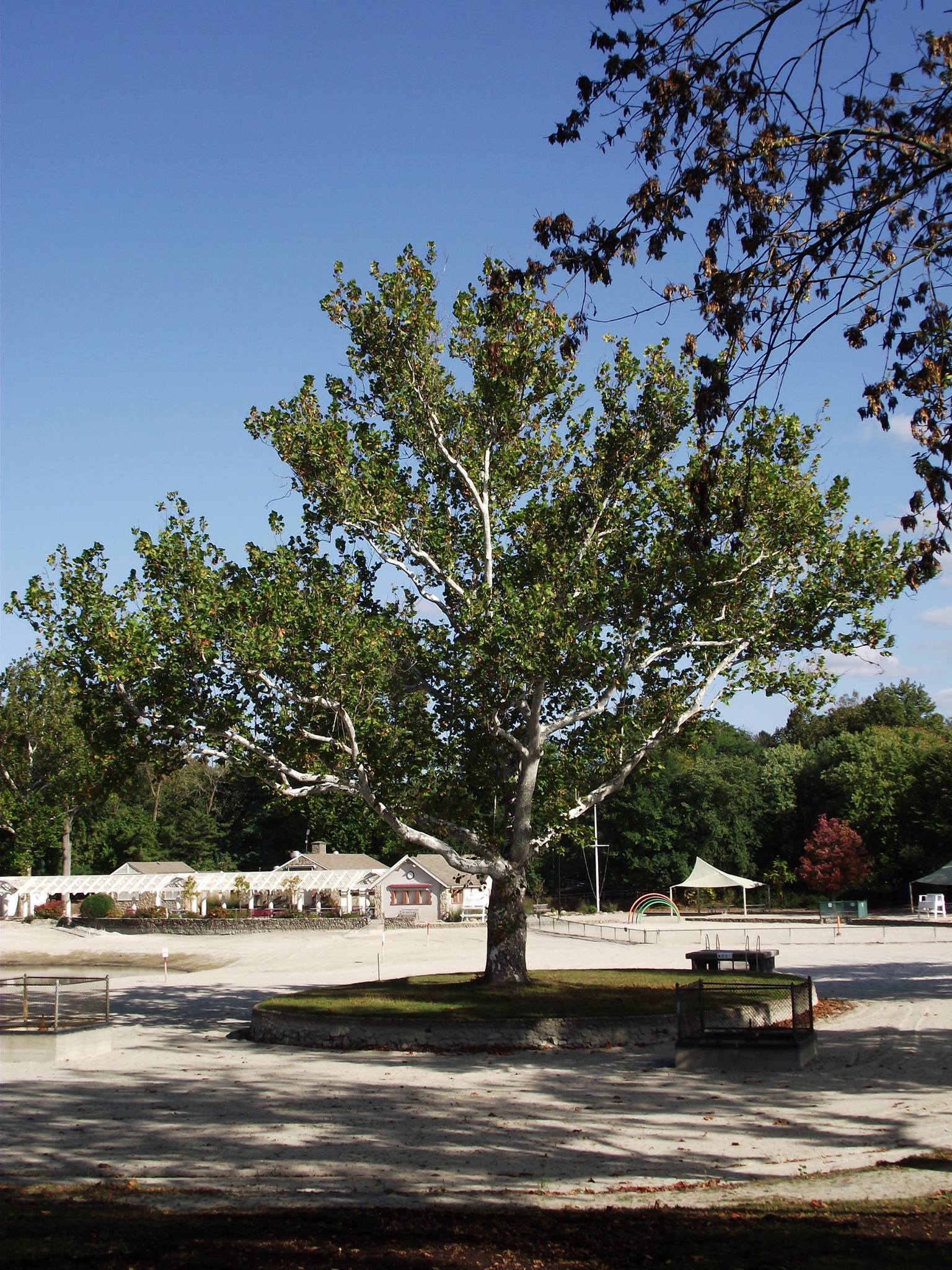
Interesting that this announcement appeared the day after I submitted an OPRA request for the arborist’s report. Here is my argument: Is it possible that this is all accurate and the tree poses a danger? Sure. But if your doctor says, “There’s nothing I can do; you’re dying,” do you buy a cemetery plot or seek a second opinion? Rutgers has an expert in every county and the one in Hackensack might conceivably agree to look at the sycamore. This is not just any tree, but one that has been admired, photographed, and painted by residents and others for many decades. The decision to cut it down would feel a lot more valid if confirmed by another tree expert. If Rutgers can’t do it, the town can pay for it. An expert arborist has agreed to do a complete report for $750. That is only $50 more than was spent in tax money to create a video that has now been officially deemed an ethical failure. Our sycamore deserves a second opinion. It will hardly be free to take it down. Having a professional written report in the records would help to protect the village in case of an accident. When the town talks about safety, what percentage of that is fear of liability?
Regarding the age of the tree: the Ridgewood Library’s local history section has photos of the sycamore taken before the federal Works Progress Administration (WPA) built the stone wall around the periphery of the Graydon swimming area and a smaller version of the wall around the tree island. (There used to be two such islands with trees along the Linwood Avenue side; one was removed when the swimming area was formalized from its earlier swimmin’-hole past.) The WPA also built the Skaters Shelter, now used as the badge office and food concession but intended as a place to warm one’s toes while ice skating. The cornerstone of that building, located in the lower right corner as you face the door to the badge office, says “1936.” The angles at which the sycamore’s limbs are extended in both old and more recent photos make it clear that the same tree has been there all along, watching Ridgewood go by for over 80 years and perhaps far more. Let’s give it a second look before we knock it down.
P.S. Anyone wishing to endorse this proposal (a second opinion) can reach the Village Manager by calling Village Hall at 201-670-5500 ext. 201 or via email at [email protected]. If this interests you, please don’t wait.