Ridgewood NJ, according to Village Manager Heather Mailander , “At this time, we are not going to extend the office hours, due to the fact that there is no lead time in letting people know about it. It has been on our website since last week. Over the past three weeks, hundreds of residents have called in to get information or have come in to prepay their 2018 taxes and continue to do so. Today alone, the line to prepay taxes has extended past the Building Department and over 500 residents have prepaid their 2018 taxes today.”
IMPORTANT INFORMATION REGARDING PRE-PAYMENT OF REAL ESTATE TAXES
Office hours Monday – Friday 8:30am – 4:30pm
Ridgewood NJ, The Village of Ridgewood Tax Office will accept any regular payment or pre-payment toward real estate taxes.
Your pre-payment of 2018 taxes (or any portion thereof) must be received in this office no later than December 29, 2017. We do not accept postmark.
Payments may be dropped in the yellow mail box marked “Village Mail Only” at the rear entrance of Village Hall.
Neither the Tax Collector nor employees of the tax collector’s office can give information or advice pertaining to the deductibility of any payment of real estate taxes for personal income tax purposes. Residents are encouraged to seek advice from their personal tax professionals on such matters.
If your taxes are paid through your mortgage company, you must contact them first to confirm that they will not also make payment. We have already reported payment amounts due for the February quarter to all of the mortgage companies.
Also, if you should request a refund, we will send you a 1099.
Trenton NJ, Governor Chris Christie today signed the following Executive Order:
Executive Order No. 237 – Directs the Director of the Division of Local Government to notify municipalities to accept payments for 2018 property taxes in calendar year 2017 and require them to credit those payments as received in 2017 if the payment is postmarked on or before December 31, 2017.
“The action I took today will ensure that local governments are flexible and accommodating of their local property taxpayers as we transition to the new federal tax code for 2018,” Governor Christie said. “This executive order requires local officials to dedicate the resources and staffing to serve New Jerseyans who are planning in this way for their families and their futures.”
Ridgewood NJ, CPA James Brown says Home Mortgage Interest , (Schedule A – Lines 10-12) under the old tax law, a taxpayer could deduct the interest on up to $1 million of acquisition debt for the purchase of the taxpayer’s first and second homes. In addition, taxpayers were allowed to deduct the interest on up to $100,000 of home equity debt. The new law reduces the $1 million limit on home acquisition debt to $750,000 ($375,000 for married separate filers) for first and second homes, except the lower limit won’t apply to indebtedness incurred before December 15, 2017. That is, the $1 million cap continues to apply to acquisition mortgages on a primary and second residence already in existence prior to December 15, 2017. However, starting with 2018 returns, the new law does not permit a deduction for any equity debt, which can have an adverse impact on individuals who have used their home equity to pay for costs of tuition, travel, cars, and other purposes.
Hackensack NJ, the Bergen County Historical Society proposes that moving forward in the 21st Century, a new way of thinking must exist in New Jersey when dealing with the threat facing historic structures….the very structures that define who we are, whether they were built in the 18th century to the 20th century.
One example may for officials on the County or State level to look to a state like Virginia. which has an interesting program, Here is the report, while lengthy it shows the benefits of their plan which provides economic tax incentives that homeowners can or private small businesses can take advantage of to help in the restoration and maintenance of historic properties.
There does seem to be a distinctive effort from certain sectors of our society to wipe out the past.
History is the study of the past as it is described in written documents. Events occurring before written record are considered prehistory. It is an umbrella term that relates to past events as well as the memory, discovery, collection, organization, presentation, and interpretation of information about these events. Scholars who write about history are called historians.
ROSELAND NJ, Upon the release of its White Paper exploring what it calls “The most complex environment ever to legalize recreational cannabis use,” lawyers at Brach Eichler observed that the initial organization of the industry could result in a windfall to the State exceeding $1 billion — before a single ounce is delivered.
The figure is based on the State creating an aggressive privatization of the industry in which large technology, testing, cultivation, transportation and other industry participants compete for roles and pay upfront licensing, franchising, and other fees.
“The State needs $3 billion to close its budget gap and it so far has identified cannabis as contributing $300 million from sales tax,” says John D. Fanburg, Managing Member and Chair of the Health Law Practice at Brach Eichler. “Presumptively, if there is a $2 billion recreational cannabis market in New Jersey, privatized functions could be offered in RFPs that provide lengthy contracts – the type that attract investors who pay-up for predictable returns. A billion dollars is probably a modest estimate of the opportunity New Jersey can potentially realize as it legalizes recreational cannabis.”
The White Paper, The Business, Regulatory and Legal Challenges — and Opportunity — of Legalized Cannabis in New Jersey, which explores the differences between New Jersey’s presumed recreational cannabis legalization versus circumstances in states with existing programs, warns that “New Jersey holds complexities not faced by other states unrelated to the production, distribution, sale, and use of marijuana, but attributed to a simple fact of life: this is New Jersey, and almost everything is harder here.”
“Home rule is the principal culprit,” says Charles X. Gormally, Member and Chair of the Litigation Practice for Brach Eichler. “It’s the third rail of New Jersey politics, so great care will be taken to protect the will of municipalities in drafting the Cannabis Statute.
“Part of the social justice initiative will be to provide economic opportunities in urban communities, which will be very appealing to some municipalities. However, it’s inevitable that there will be great tension between local officials and regulators about who gets what part of the pie – and why.”
The White Paper observes solutions developed in other states around not only Industry Structure, but a variety of oversight, taxation, and participation issues, including sections on Home Rule, Property Taxes, Delivery, Banking, Commerce, Public Health, Testing Product Safety, Regulatory Authority, Criminality, and Cannabis as Tourism. While the Administration has not indicated any specific direction on any of the issues broached in the White Paper, Mr. Gormally says it will be “unavoidable” that fiscal issues dominate the dialogue.
“The ultimate social justice would be to immediately decriminalize possession, but that does not provide the long-term political leverage that will lead to a healthy industry and a leveraging of the state’s interests. You have a lot of smart people in the incoming Administration who have already seen that current legislative proposals will not generate the $300 million they already have allocated to programs they are committed to enact immediately.
“At the edges of this industry you have a black-market cohort that wants to legitimize its crop and reduce the risks of its current distribution program; and another cohort with access to a massive pool of capital if margins are protected,” says Mr. Fanburg. “In the middle is a new administration desperate to lead the State back to economic relevance and a legislature determined to protect programs that are threatened by fiscal realities. So, while it is unlikely that the state goes all the way and monetizes every component of the industry, as they start to tinker with a new Statute, the opportunity to generate upfront cash will prove at least partially irresistible.”
the fly has learned that there is some resistance to in the Central business community to accept the estate card , which offers credits to residents toward payment of property taxes . Some resident groups are considering boycotting the central business district over their lack of enthusiasm …
Ridgewood NJ, the Village of Ridgewood is currently executing a ticket blitz on employees that use street parking instead of the employee parking lots. After much effort was made by the Village to support the merchants and restaurants the employee parking lots have not been used and there is a resistance to use them from both the Chamber and the Guild . The ticket blitz is seen a way for tax payers to collect money and help mitigate parking garage costs .
Ridgewood NJ, Here is the newest leaf of date as per the Village Hall ; as of 12/21/17 we are currently working in Area D. It is anticipated that we will begin collection in Area A on Wednesday, December 27th. After Area A is completed we will perform a final collection through Area C, Area, D, Area B and Area A weather permitting. You can always bag your leaves in paper biodegradable bags or bring leaves to the Recycling Center. The hours of operation at the Recycling Center are Monday through Saturday, 8:00 AM – 3:00 PM. If you bag your leaves please call the Street Division at (201) 670-5585 and we will collect them up to February 28th.
Ridgewood NJ, new vision for Schedler Field is a grand compromise . Like many of you we immediately thought here we go again. However the Schedler ad hoc committee attempted to balance historical preservation, sports , passive parks , the neighborhood , traffic and the environmental impact.
First a little back ground :
Zabriskie–SchedlerHouse isone of the lastremaining 1820’sDutchwood framehousesinBergenCounty
In 2003, Ridgewood Open Space Committee submitted plan identifying Schedler property as a “first-priority” target for acquisition by Ridgewood
In 2007, Village was informed that family would be selling Schedler property
In 2008, Open Space Committee provided Council with report recommending that “the initial development [of Schedler property] consist of a parking lot, a baseball diamond and overlay multipurpose field (without lights or restrooms), with the remainder of property left as passive recreation space with wooded areas and a disabled-accessible (ADA compliant), senior-friendly paved walking path around the perimeter”
In 2008, Open Space Committee urged Village to acquire Schedler property, warning that “if the property is acquired by a private developer, the Village will face the possibility of a ‘builder remedy’ suit forcing the Village to accept high-density multi-family residential development of the property including affordable housing units”
In 2009, Village purchased Schedlerproperty for $2.7 million with grants from the Bergen County Open Space Trust Fund
In 2013, Village purchased Shotmeyerproperty, a .358 acre parcel of land that was surrounded by the Schedler property, for approximately $90,000.
In 2015, Council passed resolution adopting Open Space Committee’s recommendation for passive and active park that included playground, walking path, 90 ft. baseball diamond, and a 120 x 75 yd. multi-purpose field. Resolution also provided road map for stabilization and possible restoration of Schedler house
In 2017, the Council rescinded 2015 resolution, deciding instead to re-analyze the proposed plan for Schedler, and appointed this Ad Hoc Committee to propose a development plan.
In the end they came up with a very scaled down sports field with no baseball diamond , some parking , removal of dead and or dangerous trees , an eye on preservation and enriched passive park options with respect to the neighbors and neighborhood.
It appears to be a nice balance between the neighborhood, sports and historical preservation and recreation.
WASHINGTON DC, President Trump’s Executive Order on Enhancing Public Safety in the Interior of the United States requires the Department of Homeland Security (DHS) and the Department of Justice (DOJ) to collect relevant data and provide quarterly reports on data collection efforts. On December 18, 2017, DHS and DOJ released the FY 2017 4th Quarter Alien Incarceration Report, complying with this order.[1] The report found that more than one-in-five of all persons in Bureau of Prisons custody were foreign born, and that 94 percent of confirmed aliens in custody were unlawfully present.
“While the administration is working diligently to remove dangerous criminal aliens from our streets, this report highlights the fact that more must be done,” said Secretary of Homeland Security Kirstjen M. Nielsen. “We will continue to pursue President Trump’s immigration priorities, including securing the border, enhancing interior enforcement, and pursuing a merit-based immigration system, but Congress must act immediately to adopt obvious solutions to strengthen DHS and DOJ efforts to confront dangerous criminal aliens.”
“The American people deserve a lawful system of immigration that serves the national interest,” Attorney General Sessions said. “But at the border and in communities across America, our citizens are being victimized by illegal aliens who commit crimes. Nearly 95 percent of confirmed aliens in our federal prisons are here illegally. We know based on sentencing data that non-citizens commit a substantially disproportionate number of drug-related offenses, which contributes to our national drug abuse crisis. The simple fact is that any offense committed by a criminal alien is ultimately preventable. One victim is too many. It’s time for Congress to enact the President’s immigration reform agenda so that we start welcoming the best and brightest while turning away drug dealers, gang members, and other criminals.”
Section 16 of the Executive Order directs the Secretary of Homeland Security and the Attorney General to collect relevant data and provide quarterly reports regarding: (a) the immigration status of all aliens incarcerated under the supervision of the Federal Bureau of Prisons; (b) the immigration status of all aliens incarcerated as federal pretrial detainees under the supervision of the United States Marshals Service; and (c) the immigration status of all convicted aliens in state prisons and local detention centers throughout the United States.
A total of 58,766 known or suspected aliens were in in DOJ custody at the end of FY 2017, including 39,455 persons in BOP custody and 19,311 in USMS custody. Of this total, 37,557 people had been confirmed by U.S. Immigration and Customs Enforcement (ICE) to be aliens (i.e., non-citizens and non-nationals), while 21,209 foreign-born people were still under investigation by ICE to determine alienage and/or removability.
Among the 37,557 confirmed aliens, 35,334 people (94 percent) were unlawfully present. These numbers include a 92 percent unlawful rate among 24,476 confirmed aliens in BOP custody and a 97 percent unlawful rate among 13,081 confirmed aliens in USMS custody.
This report does not include data on the foreign-born or alien populations in state prisons and local jails because state and local facilities do not routinely provide DHS or DOJ with comprehensive information about their inmates and detainees—which account for approximately 90 percent of the total U.S. incarcerated population.
Information Regarding Immigration Status of Aliens Incarcerated Under the Supervision of the Federal Bureau of Prisons
The Department of Justice’s Bureau of Prisons (BOP) has an operational process for maintaining data regarding foreign-born inmates in its custody. On a quarterly basis, BOP supplies this information to U.S. Immigration and Customs Enforcement (ICE). ICE, in turn, analyzes that information to determine the immigration status of each inmate and provides that information back to BOP.
Out of the 185,507 inmates in BOP custody, 39,455 (21%) were reported by BOP as foreign-born. Further details regarding these 39,455 foreign-born inmates are as follows:
20,240 (51%) were unauthorized aliens who are subject to a final order of removal;
14,979 (38%) remain under ICE investigation;
2,374 (6%) were unlawfully present and now in removal proceedings;
1,852 (less than 5%) were lawfully present aliens but are now in removal proceedings; and
10 were aliens who have been granted relief or protection from removal.
Information Regarding the Immigration Status of Aliens Incarcerated as Federal Pretrial Detainees
USMS identified 19,311 aliens and foreign-born inmates under ICE investigation detained at USMS facilities. Further details regarding these 19,311 foreign-born inmates are as follows:
11,459 (59%) were aliens who are subject to a final order of removal;
6,230 (32%) remain under ICE investigation;
1,261 (6.5%) were unlawfully present and now in removal proceedings;
358 (less than 2%) were lawfully present but are now in removal proceedings; and
3 were aliens who have been granted relief or protection from removal.
Immigration Status of All Convicted Aliens Incarcerated in State Prisons and Local Detention Centers Throughout the United States
The Departments continue to progress towards establishing data collection of the immigration status of convicted aliens incarcerated in state prisons and local detention centers through the Department of Justice’s Office of Justice Programs, Bureau of Justice Statistics and the Department of Homeland Security’s Office of Immigration Statistics.
WASHINGTON DC, the Department of Homeland Security and Federal Bureau of Investigation released a public service announcement urging the public to remain vigilant during the holidays:
“As you travel, shop, and gather together to celebrate the holiday season, we ask you to stay alert. While we are not aware of any specific, credible threats at this time, the recent attempted attack in New York is a reminder that we must remain vigilant.
“You play a critical role in keeping our nation and our neighborhoods safe. So if you see something suspicious, or notice behavior that doesn’t seem quite right, say something. Contact local law enforcement. Tell them who and what you saw, where and when you saw it, and why it seemed suspicious.
“Hopefully, it’s nothing. But maybe, it could save your life. Help us make the holidays safer. If you see something, say something.”
Watch the PSA featuring Christopher Krebs, the Senior Official Performing the Duties of the Under Secretary for DHS’s National Protection and Programs Directorate; Nikki Floris, Deputy Assistant Director of the FBI’s Counterterrorism Division; and David Glawe, the DHS Counterterrorism Coordinator.
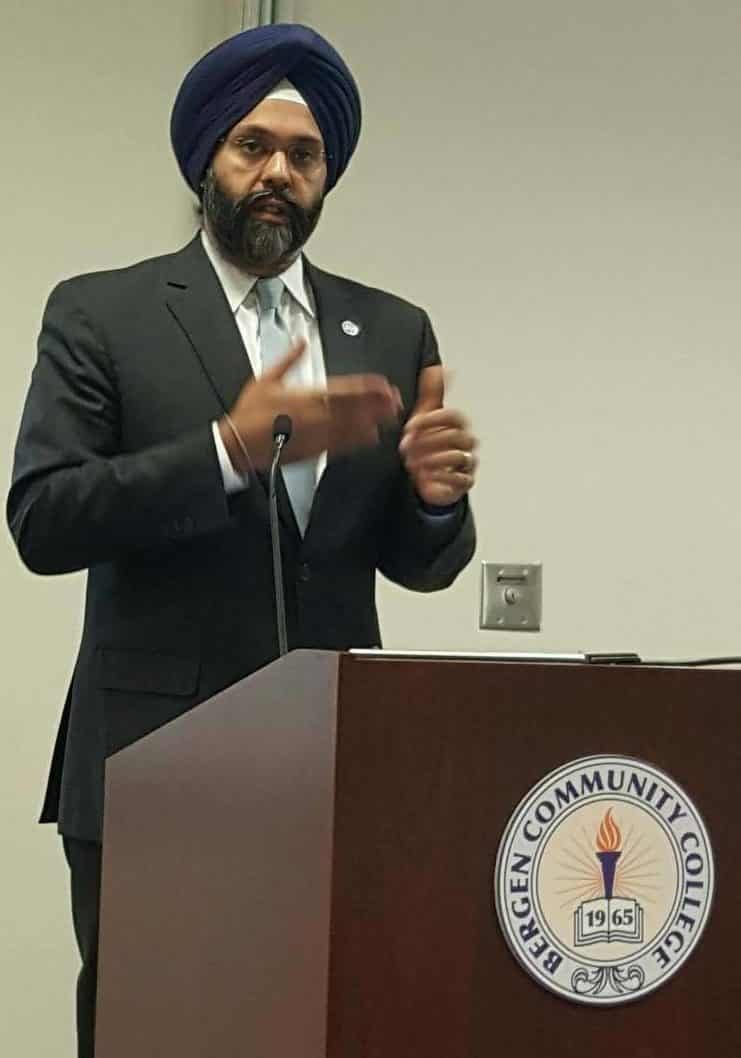
Hackensack NJ, Two police-deployed Narcan saves on 12/15 & 12/16 brought two overdose victims back to life. But two recent deaths have raised the year-to-date number of lives lost to drug overdoses to 117. This fight continues. Prosecutor Gurbir S. Grewal said , “Last year, hardly a day went by in Bergen County without a heroin arrest, an overdose, or a Narcan save. There’s just more work to do.”
Ridgewood NJ, the Bergen County Historical Society mention the Historical Archibald Vroom House, which adds, and does not detract, from the charming downtown. This is just one of many examples where historic structures add to the charm of an area but also are able to be reused in unique ways privately. These historic structures define our communities and who we are.
Please. Ridgewood Villagers, follow the ball on this. It could easily turn into a huge, hazardous money pit like Habernickle. Ridgewood residents are almost completely supporting the business at Habernickle. Free lights. free watering, free groundskeeping. free ramp for the disabled and a paltry rent that was written in the favor of the tenant. Is there nothing we can do to at least make them pay their way if we can’t evict them? Isn’t there a law that says land purchased using Green Acres money may not be used for a profit company. (They probably refer to themselves as non-profit but that should easily be proved to be incorrect. (If she had to pay for any of the services that Ridgewood supplies; then she might be able to declare herself non-profit. But as long as her bills are paid for through Ridgewood, she can’t help but make money on the deal.