Ridgewood NJ, Ridgewood PD and FD personnel responded to a reported lightning strike in front of 125 Sunset Avenue, Ridgewood on the morning of Wednesday, 03/01. Responding units found evidence of significant lightning damage to a tree, whose fallen limbs had struck a primary electric power line. A PSE&G crew was summoned to remove the dangling limbs and restore electric power to any nearby homes that had lost it.
The spring home-buying season is about to be in full swing and all the single ladies will be helping to drive the market, according to new real estate data.
In New Jersey, first-time homebuyers are a big portion of the market — 35 percent. And single women — mostly in the millennial generation — make up 19 percent of that portion.
Nationally, single women are twice as likely to buy a home than single men.
But why?
Ralph DiBugnara, vice president of Parsipanny-based Residential Home Funding, based in Parsipanny says many millennial women are getting married and having children later in life.
“It’s become an empowering thing to own their own home,” he said. “They don’t have to start a family, they don’t have to get married.”
By Adam Clark | NJ Advance Media for NJ.com
on February 28, 2017 at 7:15 AM, updated February 28, 2017 at 7:53 AM
TRENTON — When Gov. Chris Christie delivers his 2018 budget address on Tuesday, New Jersey school officials will be listening especially closely.
How Christie will address education funding is the biggest question about his final budget, leaving administrators bracing for the possibility of funding cuts.
There’s some concern Christie could follow through with the “Fairness Formula,” a plan he unveiled last summer to give every district $6,599 per student regardless of income or other needs. Though many education groups are convinced Christie won’t do that, they still don’t have high hopes for increases in school funding.
“I’m not expecting any good news in the budget,” said Richard Bozza, executive director of the New Jersey Association of School Administrators.
Tuesday, February 28, 2017 05:51PM
EWING, N.J. (WPVI) —
A New Jersey college gave students a new way to learn about the world around them, but it was not for those with a weak appetite.
Aleena Andrews was among hundreds of students and staff at the College of New Jersey who tasted crickets for the first time Tuesday.
“Kind of crunchy and I think that one was sour cream flavored, so, yeah, like potato chips,” Andrews said.
Students’ opinions were mixed.
“You could like feel the legs and the head as you crunch it so it wasn’t very pleasant for me,” student Eric Beyer said.
“The flavor is not off-putting, I must admit. It’s actually pretty good. It’s like eating popcorn,” student Claudio Bizaro said.
The crickets were part of the college’s “Tasting the Tree of Life” event, a fun and filling way to understand biodiversity and how it relates to food.
“We eat everything from animals to plants to fungi,” Plant Evolutionary Biologist Wendy Clement said.
And each of the 149 different items on the menu reflected that.
Ridgewood NJ, Ms. Justine Kawash, BFMS Choral Director, reports that seven Benjamin Franklin Middle School student musicians have been selected for Region I Choir, including: Francesca Alvidrez (Soprano 1, top score); Sydney Strauss (Soprano 2); Maeve Marron (Soprano 2); Sophie Hartstein(Alto); Nikki Bernabe (Alto); and Georgia Young (Alto).
Ridgewood NJ, Ridgewood Police Officer Ptl. Raymond Tarino responded to a business located on Wilsey Square to investigate a theft on February 25. Upon arrival the business owner reported the theft of a life-sized fiberglass sheep. The sheep was displayed outside of the business and reportedly valued at $750. The Ridgewood Detective Bureau is investigating the incident.
Sometimes a speech is just a speech. And sometimes it heralds the prospect of a great national revival.
Donald Trump gave the best speech of his short political life last night, and it had nothing to do with grand oratory. He was thoroughly presidential, speaking plainly and yet masterfully in projecting an optimistic vision of the America he aims to build.
It is a vision so optimistic and encompassing that even steaming Democrats had to join boisterous Republicans in the applause at times.
Anything you could possibly want, he served it up in a feast of ideas and promises. Trump was at turns resolute, as when he talked about the “broken promises” of ObamaCare.
And he never once mentioned the media or fake news. Hallelujah!
His speech was well written, and well delivered, chock full of initiatives and full of changes in mood.
Trump was aggressive when he wondered how Democrats opposed to border control would feel if they talked to an American who lost his job and maybe a loved one because of an illegal immigrant.
He showed flashes of humor and talked with compassion about the power of school choice to save children from failing schools while recounting the story of a young woman in the audience. She was one of several nonwhites he singled out in a display of diversity that most Dems couldn’t resist.
Ridgewood NJ, Ridgewood Police Officer Ptl. Peter Tuchol responded to a business on East Ridgewood Avenue to investigate suspicious acts in the past. Upon arrival the business manager reported a party entered the business and requested assistance. The male party reported he locked himself out of his apartment and requested $25 cash to pay a locksmith to open the door. The suspicious male borrowed the cash and he reported he would immediately return to replace the money after he gained entry into the apartment. The male party never returned to refund the business. The business wished to document the incident to possibly warn others of the suspicious white male, large build, approximately 6’2” and weighing 270 lbs. with strawberry blonde colored hair. If anyone has a similar incident please contact the Ridgewood Police.
Reminder: RIDGEWOOD VILLAGE COUNCIL Meeting
MARCH 1, 2017
PUBLIC WORKSHOP AGENDA – REVISED
1. 7:30 pm – Call to Order – Mayor
2. Statement of Compliance with Open Public Meeting Act
Mayor: “Adequate notice of this meeting has been provided by a posting on the bulletin board in Village Hall, by mail to the Ridgewood News, The Record, and by submission to all persons entitled to same as provided by law of a schedule including the date and time of this meeting.”
3. Roll Call – Village Clerk
4. Flag Salute/Moment of Silence
5. Public Comments (Not to Exceed 3 Minutes per Person – 40 Minutes in Total)
6. Motion to Suspend Work Session and Convene Special Public Meeting
7. Motion to Adjourn Special Public Meeting and Reconvene Work Session
8. Special Public Meeting – See Attached Agenda (below)
9. Presentation – Removed from Agenda
10. Discussion
a.Ridgewood Water
1.Award of Contract – Water Billing and Data Collection Services – Second Year
2.Proposed Ordinance – Water Emergencies
3.Agreement to Exchange Geographical Information System Data with Bergen County
a.Parking – None
c. Budget
1.Budget Reserve Transfer
2.Award of Professional Services Contract – Vehicle Parts & Service
3.Award of Contract – Horticulture Supplies – Year One
4.Award of Contract – Coach Bus Transportation Services
5.Award of Contract – Graydon Pool Water’s Edge Cafe – Concession Refreshment Service
11. Discussion Cont’d
d. Policy
1.Proposed Ordinance – Facility Use and Rental Fee Updates
2.Proposed Ordinance – Land Use and Redevelopment
12. Review of March 8, 2017 Regular Public Meeting Agenda
13. Manager’s Report
14. Council Reports
16. Public Comments (Not to Exceed 5 Minutes per Person)
17. Resolution to go into Closed Session
18. Closed Session
A. Legal – Valley Hospital Litigation; Settlement for Property Damage; Contract for Parking
B. Contracts/Negotiations – Bulk Water Purchase; Potential Purchase of Property
C. Personnel – Blue Collar & White Collar Negotiations; Appointments to Boards and Committees; Village Planner Consulting Services
19. Adjournment
VILLAGE COUNCIL SPECIAL PUBLIC MEETING
MARCH 1, 2017 7:30 P.M.
1. Call to Order – Mayor
2. Statement of Compliance with the Open Public Meeting Act
MAYOR: “Adequate notice of this meeting has been provided
by a posting on the bulletin board in Village Hall,
by mail to the Ridgewood News, The Record, and by submission to all persons entitled to same as provided by law of a schedule including the date and time of this meeting.”
3. Roll Call
4. RESOLUTIONS
17-56 Appointment of Planning Consultant – COAH Matters and Related Litigation
17-57 Appointment of Planning Consultant for Land Use Boards,Village Council, and Review of Applications
17-58 Appoint Members to Planning Board
17-59 Appoint Members to Library Board of Trustees
17-60 Appointment Members to Community Relations Advisory Board
17-61 Appoint Members to Stigma-Free Task Force
17-62 Appoint Members to Parks, Recreation and Conservation Board
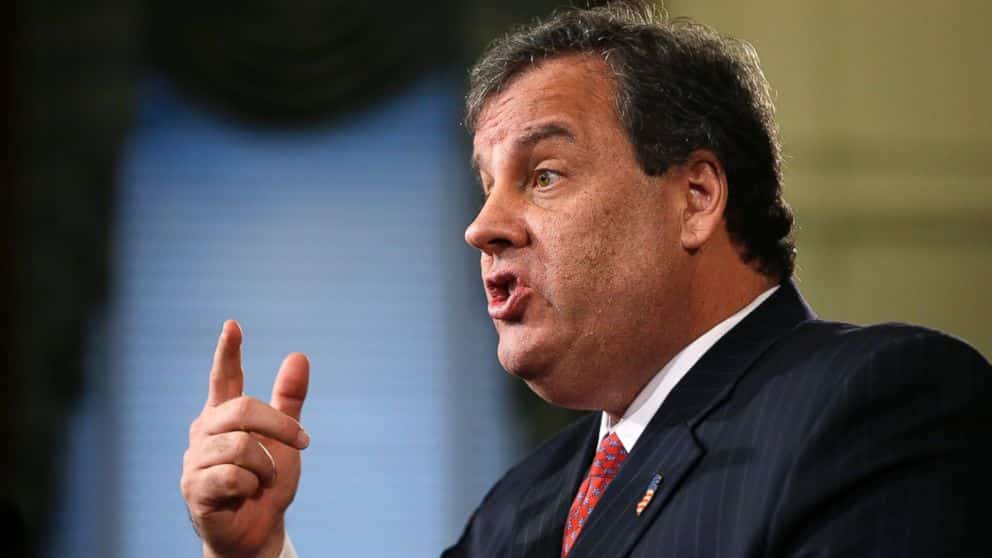
Trenton NJ, Governor Christie unviels his final budget as governor ;
“This is the ninth time I’ve come before a joint session to address our state’s budget. Each time I’ve had specific goals in mind; guiding principles to follow. Government should get smaller. Taxes shall not be increased. Our core commitments must be met. Each time, with varying degrees of struggle, harmony and acrimony, we have reached these goals – I have stuck to those principles. Let me assure you that today will be no different.
– Governor Chris Christie, New Jersey State Budget Address, February 28, 2017
The Fiscal Year 2018 budget will be the eighth and final state budget of Governor Chris Christie’s tenure. When Governor Christie entered office in 2010, New Jersey was enduring an unprecedented fiscal crisis, with an immediate $2.2 billion mid-year fiscal deficit, as well as an unthinkably large $10.7 billion projected budget gap for Fiscal Year 2011 — more than a third of the prior year’s budget. At that time, it was uncertain whether the State would be able to meet its payroll within two months.
The staggering $13 billion two-year gap represented the culmination of years of reckless tax-and-spend policies and shortsighted budgeting practices that ignored economic realities. While state and national economies faltered, spending in Trenton under the previous administration continued unabated at unsustainable levels — increasing 58 percent from 2001 to 2008. The previous governor’s Fiscal Year 2010 budget was propped up with temporary income tax hikes, corporate surtaxes, reliance on one-time federal stimulus funds, temporary employee furloughs and other desperate gimmicks.
Today, Governor Christie is presenting his eighth consecutive balanced budget built on a foundation of fiscal restraint and responsibility. The Fiscal Year 2018 budget will fund $2 billion less in discretionary spending than was spent in Fiscal Year 2008.
The Governor’s Proposed Fiscal Year 2018 Budget:
• Calls for $35.5 billion in State appropriations, a 2.6 percent increase, largely due to non-discretionary costs.
• Contains $2 billion less in discretionary spending than the Fiscal Year 2008 budget.
• Includes the largest pension payment in New Jersey history with a $2.5 billion contribution to the State’s defined benefit funds.
o This will bring total pension contributions by the Christie Administration to $8.8 billion.
o That will be more than two and a half times the total contributions made by all governors combined during the 16-year period from Fiscal Year 1995 through Fiscal Year 2010.
• Renews the Governor’s commitment to higher education in New Jersey. Overall, higher education funding is maintained at a total of $2.2 billion in Fiscal Year 2018.
• Proposes a seventh-consecutive year of the highest amount of school aid supporting Pre-K through Grade 12 education in New Jersey history. The Fiscal Year 2018 budget proposes more than $13.8 billion for education, an increase of $523.2 million.
• Provides more than $17 billion in direct and indirect property tax relief, nearly half the total budget, including $13.8 billion in school aid and $1.5 billion in municipal aid.
• Continues more than $1 billion for direct property taxpayer relief programs:
o 423,300 seniors and citizens with disabilities will receive an average Homestead Benefit of $511, while 169,500 other homeowners earning up to $75,000 will receive an average Homestead Benefit of $397.
o 138,200 seniors and citizens with disabilities will continue receiving Property Tax Freeze benefits averaging $1,401, while 25,100 new beneficiaries will receive their first year of benefits averaging $219.
Investing In New Jersey’s Transportation Infrastructure
Today, Governor Christie proposed a $400 million supplemental appropriation in this Fiscal Year. These funds will be invested and spent quickly over the next 100 days to address bridge deficiencies and road conditions in all of New Jersey’s 21 counties. Further, these funds will be used to expedite technology enhancements and other infrastructure improvements for New Jersey Transit and will allow the New Jersey Department of Transportation to deliver the largest construction program in state history. The results will be smoother roads, safer bridges and a more technologically sound mass transit system.
In October 2016, Governor Christie signed legislation that reauthorized the New Jersey Transportation Trust Fund Authority Act. As a result of that legislation, Governor Christie’s fiscal 2018 budget provides a record $2 billion State Transportation Capital Program. The Program includes over $1.3 billion for State and local highway and bridge projects, and another $677 million for mass transportation projects.
Ensuring Access To Care While Keeping Down Costs
The NJ FamilyCare program currently provides comprehensive health care coverage to more than 1.8 million New Jersey residents at a projected $4.2 billion cost to the Fiscal Year 2018 budget. The program serves individuals eligible for both Medicaid and the Children’s Health Insurance Program (CHIP), and represents a partnership between the State and the federal government. The NJ FamilyCare program, while having some of the highest income limits in the nation, has traditionally provided health coverage exclusively to low-income families, seniors and people with disabilities. On January 1, 2014, Governor Christie expanded the program, using 100 percent federal funding, to provide health coverage to low-income childless adults.
The proposed Fiscal Year 2018 budget represents the fourth full fiscal year of the NJ FamilyCare expansion, and while a fraction of the costs associated with this eligibility group have shifted to the State budget, the expansion continues to represent a tremendous value for New Jersey. Since the Governor’s decision to expand NJ FamilyCare in 2014, an additional 487,000 uninsured New Jersey residents have gained coverage under this program. Not only did this expansion provide reliable medical coverage to many formerly uninsured residents, the infusion of federal dollars has generated meaningful savings to the State budget. Through Fiscal Year 2018, the shift of State costs to the federal government combined with the reduction in demand for Charity Care has resulted in a cumulative savings of $2 billion to the State.
Commitment To World-Class Healthcare
With the goal of ensuring a stable and accessible hospital system that provides care of the highest possible quality, the Department of Health’s budget makes significant investments in three hospital subsidy programs: Charity Care, Graduate Medical Education and Delivery System Reform Incentive Payments.
• Charity Care. Governor Christie’s expansion of NJ FamilyCare has led to a dramatic increase in NJ FamilyCare enrollment, which continues to be funded almost entirely by the federal government. The associated decrease in uninsured residents has reduced by more than half the documented claims for uncompensated care submitted by New Jersey’s hospitals. Since the expansion took effect on January 1, 2014, 487,000 low-income residents have gained health insurance through NJ FamilyCare, a 38-percent increase in program enrollment. This fundamental shift allows for a $25 million reduction in State funding for Charity Care in Fiscal Year 2018. The Fiscal Year 2018 budget provides $252 million in combined federal and State support to offset the costs hospital facilities incur in treating the uninsured.
• Graduate Medical Education (GME). The Fiscal Year 2018 budget increases support to New Jersey’s teaching hospitals by $30 million, with the total amount available through the Graduate Medical Education program now totaling $218 million. This marks the third year in a row that funding for this critical program has been increased, with the total amount available now more than triple the funding provided when Governor Christie took office. This enhanced commitment to GME will help to ensure that New Jersey residents have continued access to an adequate number of well-trained doctors.
• Delivery System Reform Incentive Payment (DSRIP). Funded at $166.6 million, the Delivery System Reform Incentive Payment (DSRIP) program was launched in Fiscal Year 2014 as a replacement for the Hospital Relief Subsidy Fund. The program continues to reward innovation and quality by distributing funds to hospitals based on measurable improvements in health outcomes.
Continued Emphasis On Community-Based Care And Services
Governor Christie is committed to fundamentally changing the way services and programs support individuals with developmental disabilities and their families, by moving away from a system that has historically focused on institutionalization to one that emphasizes home and community-based services and supports. To this end, resources have been refocused to provide people with intellectual and developmental disabilities with the ability to live as independently as possible with the proper supports.
The five-year Olmstead settlement agreement, signed February 2013, covered fiscal years 2013 to 2017 and required 600 placements over that time period. By the end of Fiscal Year 2018, the Department expects to have placed a total of 737 individuals, well exceeding the requirements of the Olmstead agreement due in large part to the acceleration of placements from the closure of North Jersey Developmental Center and Woodbridge Developmental Center in Fiscal Year 2015.
In addition to the Olmstead commitment to move individuals with developmental disabilities out of developmental centers, Governor Christie’s determination to provide services in the community includes funds to develop additional community placements and services that divert admissions to developmental centers. The Fiscal Year 2018 budget provides $89.7 million of new State and federal funding to create community placements and services, including Olmstead placements.
As a result of reforms initiated under the Medicaid Comprehensive Waiver, adults with intellectual and developmental disabilities that are living independently or with family are becoming eligible for substantially increased in-home support services for which the State will receive a federal match. When the Supports Program is fully implemented, it is expected to generate approximately $100 million in matching funding on previously State-only costs to create an estimated $200 million program, which will allow for the further expansion of services.
Family Services
The Fiscal Year 2018 budget continues and enhances the Christie Administration’s commitment to providing a wide array of services to children and families throughout New Jersey through Department of Children and Families (DCF) programs.
• Child Protection and Permanency (CP&P). The Fiscal Year 2018 budget includes a total of $986.6 million in State and federal funds for the operations and services provided by this DCF Division that is responsible for investigating allegations of child abuse and neglect
• Children’s System of Care (CSOC). This program helps more youth remain at home, in school and in their own communities, while still receiving the full scope of services they require, and provides coordinated care for more than 61,000 children and adolescents. The Fiscal Year 2018 budget includes a total of $592.5 million in State and federal funds for the operations and services provided by this Division, an increase of $24.3 million over the fiscal 2017 Appropriations Act.
• Family Success Centers. The Governor’s proposed budget protects funding for these centers which are community-based organizations that provide a wide array of services ranging from day care, resume writing and parenting classes to domestic violence prevention and substance use disorder services. The number of Family Success Centers in New Jersey will increase to a total of 58 in Fiscal Year 2018.
Lead Safety
Through continuing and increased appropriations, Governor Christie’s Fiscal Year 2018 budget continues to address lead concerns in New Jersey, ensuring the State remains a national leader on this issue. Governor Christie has added $10 million in additional State funding to effectuate the update in lead regulations to make New Jersey’s standards for identifying elevated blood-lead levels in children consistent with those of the federal Centers for Disease Control and Prevention.
The Department of Community Affairs will continue working through nonprofit organizations to remediate lead-based paint hazards affecting low- and moderate-income households in New Jersey.
The Fiscal Year 2017 budget provided $10 million to reimburse school districts for costs related to lead testing between July 13, 2016, and July 13, 2017. School districts that tested their water during that time period can continue to seek reimbursement in Fiscal Year 2018 from unexpended Fiscal Year 2017 balances.
N.J. pension crisis explained with popsicle sticks
Samantha Marcus | NJ Advance Media for NJ.comBy Samantha Marcus | NJ Advance Media for NJ.com
on February 28, 2017 at 7:30 AM, updated February 28, 2017 at 8:37 AM
TRENTON — New Jersey’s government worker pension funds lost a lot of ground last year, as the state’s pension debt rose from $43.8 billion to 49.1 billion, newly released actuarial reports reviewed by NJ Advance Media show.
Even as Gov. Chris Christie made a record-high contribution to the pension system, the state’s unfunded liabilities climbed ever higher, making the outlook for the weakest public pension system in the country appear worse still.
The pension fund lost nearly 1 percent on its investments last year, and the state still contributed far less than what’s recommended. And notably, the state winds up owing more because the treasurer reduced the funds’ long-term assumed rate of return on its investments.
The state’s unfunded liability is a portion of the overall debt. The local side of the system is in much better shape but still $17.1 billion short of what it would cost to pay for future retirement benefits. The combined unfunded liability rose from $59 billion in the 2015 fiscal year to $66.2 billion in the fiscal year that ended in June.
By Claude Brodesser-Akner | NJ Advance Media for NJ.com
on February 28, 2017 at 9:45 AM, updated February 28, 2017 at 10:46 AM
TRENTON — Furious after watching pension investment fees triple over the last three years even as their funds lost value, police and firefighter union leaders are seeking to wrest control of their underfunded pensions from the state.
As Gov. Chris Christie is set to deliver his final budget address, state Senate President Sweeney (D-Gloucester) on Monday introduced a bill (S3040) that would transfer management of the Police and Firefighters Retirement System to a newly expanded board of trustees.
“They’ve been screwing up pensions for decades now,” Ed Donnelly, president of the New Jersey State Firefighters’ Mutual Benevolent Association told NJ Advance Media, referring to the $11 billion that the state has yet to pay into his retirement system.
A new federal study shows less pollution in most New Jersey streams, but salt levels rising in some places.
The study by the U.S. Geological Survey found that levels of two key pollutants, nitrogen and phosphorus, either declined or stayed about the same over the last four decades in most of the 28 streams surveyed. But it also found salt levels rose, probably due to the increasing use of road salt during the winter that washes into waterways.
The New Jersey Department of Environmental Protection commissioned the federal agency to study long-term trends. The findings were consistent with other studies done in the Northeastern U.S.
Bob Martin, department commissioner, said the study was the largest ever done on nutrient trends in the state’s streams. Contributing to the decline in pollutants, he said, were better management of stormwater at the local level and upgrades to wastewater treatment plants beginning in the 1980s and early 1990s, with regional plants replacing smaller local plants.
New Jersey has the strictest standards in the nation for phosphorus in fertilizer. Nitrogen and phosphorus are essential for plant and animal life, but high levels in water can cause algae blooms, drinking water concerns and low levels of dissolved oxygen, which harms marine life.
At Valleau Cemetery, Ridgewood NJ placing flags at the graves of Veterans. Thanks to American Legion Post 53 and Andy Haderthauer for allowing us the opportunity to participate in this beautiful tradition.
EOD Warrior Foundation helps EOD veterans and recognizes the importance of historical organization, The American Legion
February 28,2017
the staff of the Ridgewood blog
Ridgewood NJ , Over the course of two days in 1919, March 15-17, members of the American Expeditionary Force met for the first caucus of The American Legion in Paris, France. Little did they know the organization they would form, would go on to become the nation’s largest wartime veterans service organization, and one of the most influential nonprofits in the U.S.
“We are very proud of The American Legion, and appreciative of all of the great work they have done over the last 98 years,” explains Nicole Motsek, executive director of the EOD Warrior Foundation. “They have touched many lives, set an incredible example, and made a tremendous impact on our country.”
There are many reasons to love The American Legion, including these five:
Advocating patriotism and honor. Especially during the times when people are questioning and marching against the government, it’s great to have an organization that reminds people why it is important to have a spirit of patriotism. It is this patriotism that reminds us that we have a country are worth fighting for, and it is one of the American Legion’s primary focus areas.
Mentoring youth. The youth of the nation are the next ones who will help care and protect it. Today’s youth will step into the active duty boots of tomorrow’s veterans. Mentoring them is crucial and is a big part of what The American Legion does. They have created a wide variety of youth programs, ranging from baseball and scholarships to youth cadet law enforcement.
Promote national security. Without being able to defend the country and its borders, our national security is at risk. The American Legion works to promote a strong national security, making it part of their mission for the protection of us all.
Temporary financial assistance. The organization has programs to help veteran’s families and veterans themselves when financial crisis arises. Their programs range from providing temporary financial grants to help cover shelter, food, utilities, and health expenses, as well as programs that help veterans who have experienced disasters.
Fight for veterans. While veterans have fought for the country, The American Legion has their back and fights for them. The organization advocates for benefits for them, offers resources to homeless vets, and has programs and initiatives to help care for the nation’s veterans.
“The organization has helped many people around the country, with no signs of slowing down as they approach their 100th year,” added Motsek.
The American Legion, an organization dedicated to helpfulness, has 2.4 million members, with 14,000 posts around the world. The group was evolved from a group of war-weary veterans during World War I.
The EOD Warrior Foundation is an organization that helps the families of the 7,000 people in our military who are Explosive Ordnance Disposal (EOD) technicians, who perform bomb disposal duties. The EOD Warrior Foundation helps this elite group by providing financial relief, therapeutic healing retreats, a scholarship program, care of the EOD Memorial Wall located at Eglin AFB, Fla. and more. Their work is supported by private donations and the generosity of those who support the organization. To learn more about the EOD Warrior Foundation, or see their fundraising events calendar, visit their site at: www.eodwarriorfoundation.org.
Ridgewood NJ, according to sources the old IRS phone scam is in full swing in New Jersey once again !
The Ridgewood blog is reposting the IRS updated notice on these scam calls. Ridgewood was the scene of many of these calls last year and continues to be a prime target.
Scam Phone Calls Continue; IRS Identifies Five Easy Ways to Spot Suspicious Calls
Update September 2016 — To file a complaint using the FTC Complaint Assistant, choose “Scams and Rip-Offs” and then “Impostor Scams.”
IR-2014-84, Aug. 28, 2014
WASHINGTON — The Internal Revenue Service issued a consumer alert today providing taxpayers with additional tips to protect themselves from telephone scam artists calling and pretending to be with the IRS.
These callers may demand money or may say you have a refund due and try to trick you into sharing private information. These con artists can sound convincing when they call. They may know a lot about you, and they usually alter the caller ID to make it look like the IRS is calling. They use fake names and bogus IRS identification badge numbers. If you don’t answer, they often leave an “urgent” callback request.
“These telephone scams are being seen in every part of the country, and we urge people not to be deceived by these threatening phone calls,” IRS Commissioner John Koskinen said. “We have formal processes in place for people with tax issues. The IRS respects taxpayer rights, and these angry, shake-down calls are not how we do business.”
The IRS reminds people that they can know pretty easily when a supposed IRS caller is a fake. Here are five things the scammers often do but the IRS will not do. Any one of these five things is a tell-tale sign of a scam. The IRS will never:
Call to demand immediate payment, nor will we call about taxes owed without first having mailed you a bill..
Demand that you pay taxes without giving you the opportunity to question or appeal the amount they say you owe.
Require you to use a specific payment method for your taxes, such as a prepaid debit card.
Ask for credit or debit card numbers over the phone.
Threaten to bring in local police or other law-enforcement groups to have you arrested for not paying.
If you get a phone call from someone claiming to be from the IRS and asking for money, here’s what you should do:
If you know you owe taxes or think you might owe, call the IRS at 1.800.829.1040. The IRS workers can help you with a payment issue.
If you know you don’t owe taxes or have no reason to believe that you do, report the incident to the Treasury Inspector General for Tax Administration (TIGTA) at 1.800.366.4484 or at www.tigta.gov.
You can file a complaint using the FTC Complaint Assistant; choose “Other” and then “Impostor Scams.” If the complaint involves someone impersonating the IRS, include the words “IRS Telephone Scam” in the notes. [See update at top of page.]
Remember, too, the IRS does not use unsolicited email, text messages or any social media to discuss your personal tax issue. For more information on reporting tax scams, go to www.irs.gov and type “scam” in the search box.