By Mark Di Ionno | The Star-Ledger
on November 27, 2016 at 8:53 AM, updated November 27, 2016 at 12:41 PM
Welcome to Trumplandia: How this N.J. town reflects national trends
Chuck Monjoy couldn’t find a Donald Trump sign, so he made one.
He took a cardboard box, drew the word “TRUMP” with a heavy black felt-tip pen, then propped it up outside his commercial property on Route 9 in the Forked River section of Lacey Township.
The fact that he couldn’t find a Trump sign struck him as unusual. Lacey is a large municipality in Ocean County, one of the reddest regions of New Jersey.
And in this election, Lacey was the second reddest of the red.
In New Jersey towns with more than 10,000 people, only nearby Lakewood had a greater percentage of voters (74.4) who pulled the lever for president-elect Donald Trump.
the staff of the Ridgewood blog
Ridgewood NJ, It’s decision time for the 55 million Americans covered by Medicare.
Open enrollment, when people can enroll in Medicare or make changes to their plans, runs every year from Oct. 15 to Dec. 7. But anyone who thinks that signing up for the medical plan for seniors is simple could be in for a rude awakening – and a costly one.
“People need to realize that enrolling in Medicare can be complicated,” says Chris Orestis, a senior-care advocate and author of the books “Help on the Way” and “A Survival Guide to Aging.”
“If you don’t pay attention you can end up missing needed coverage or paying more out-of-pocket expenses in premiums, co-pays and deductibles than you realize – or can afford.”
This year open enrollment comes during a presidential election and a time when there are concerns about Medicare’s long-term future and whether it can remain solvent. At the final presidential debate, Donald Trump and Hillary Clinton were asked what they might do to make sure the program, first implemented in 1965, will be there for seniors for decades to come.
Trump said he would grow the economy, which in turn would help Medicare. Clinton said her plan is to reduce the cost of health care and to emphasize wellness.
But any future political decisions about Medicare can seem far off to anyone whose main concern is figuring out how they fit into what’s offered right now, says Orestis, CEO of Life Care Funding (www.lifecarefunding.com).
He says some important things to keep in mind or understand during Medicare enrollment include:
• Medicare coverage comes in two primary forms that participants can choose from. They are original Medicare, the traditional program administered through the federal government which anyone 65 and older qualifies for automatically, and Medicare Advantage plans, which are sold by private insurance companies. The Advantage plans sometimes offer additional services, such as routine vision, hearing and dental care. • Most people probably have heard references to Medicare Part A or Medicare Part D. Here’s how that alphabet breaks down: Medicare Part A pays for hospital and skilled nursing facility care. Medicare Part B pays 80 percent of costs for doctors, outpatient services and medical equipment. Medicare Part C is a private Advantage Plan. Medicare Part D pays for prescriptions. • Anyone who visits a doctor or has been hospitalized knows that deductibles and co-pays can add up quickly. That’s where Medicare Supplemental Insurance (Medigap) comes in. It’s a private insurance that pays the gaps in the varieties of Medicare coverage. • Want to learn more? Orestis says a good place to check is the Center for Medicare and Medicaid Services website (www.cms.gov), which provides a wealth of information and resources to review and assist enrollment.
Orestis says it’s important to act as soon as possible and not wait until the last minute.
“When it comes to Medicare enrollment,” Orestis says, “not being informed and missing deadlines can cause delays and penalties that could have a negative impact on your coverage – and your wallet.”
About Chris Orestis
Chris Orestis is CEO of Life Care Funding (www.lifecarefunding.com) and a 20-year veteran of both the insurance and long-term care industries. A former Washington, D.C., lobbyist, he is a nationally known senior-care advocate and author of the Amazon best-selling books “Help on the Way” and “A Survival Guide to Aging.” Orestis also is a legislative expert, featured speaker, columnist and contributor to a number of insurance and long-term care industry publications. He is a frequent guest on national radio programs, and has been featured in the Wall Street Journal, the New York Times, USA Today, Fox Business News and PBS.
5 Tips For Success That Nobel Laureates Can Teach Us
November 28,2016
the staff of the Ridgewood blog
The scientists, artists and peacemakers who win the Nobel Prize every year are as diverse as the work that ultimately brings them to the world’s attention.
That makes it a daunting task to try to glean any secrets they might have for reaching the pinnacle of achievement.
“Their personalities and paths to accomplishment are so varied that generalizations are elusive,” says David Pratt, author of “Nobel Laureates: The Secret of Their Success” (www.davidpratt.ca).
Though the typical laureate is from a professional or academic family, and grew up in the relative privilege of the middle class, that profile doesn’t hold true for all.
Some spent their childhood in absolute poverty, in poor health or were on their own from an early age. Others were eccentric loners or late-bloomers.
But even if their backgrounds aren’t that revealing, Pratt says, there are lessons to be learned from how they pushed and challenged themselves. He says ways to emulate them include:
• Seek out good teachers/mentors. The advantages of being born into an academic family are obvious, Pratt says. Family friends and relatives provide intellectual stimulation and emphasize scholarship and achievement. But laureates also cite the value of finding a good mentor along the way – a teacher, boss or patron who generously cleared the path to success and gently (or not so gently) prodded them down it. • Be a teacher/mentor yourself. “There is no better way of getting a good grasp of your subject, or one more likely to start more ideas for research, than teaching it,” said Daniel Tsui, who won the prize in physics in 1998. Pratt says many laureates, including novelist Toni Morrison, take their teaching as seriously as their award-winning work, because it allows them to share their passion with others and keeps the fire burning. • Persevere. Pratt notes that President Jimmy Carter, who won the Peace Prize in 2002, was the first American politician to be awarded for work undertaken after his presidency. Though he failed to win a second term, and many of his policies were reversed during the Reagan administration, Carter was determined to keep working on the causes that were dear to him. Groundbreakers have to be prepared for push-back, Pratt says. “Great discoveries are rarely made by people who are averse to risks.” • Be ready to be lucky. Many laureates have spoken of the role luck played in their discoveries and successes. Some do it with humor, some with humility. But always there is the understanding that, to be lucky, you have to recognize what you have when you see it. “As Louis Pasteur said, ‘Fortune favors the prepared mind,’ ” Pratt says. • Be passionate about what you do. Again and again, the laureates show that zeal is the key to achievement, Pratt says. They work very hard. They take many risks. But their work is their joy.
That final characteristic may be the most important.
That passion for their work comes close to obsession, Pratt says. It leads to a level of industry that’s extraordinary, a near-total immersion in their field of endeavor and a dedication that makes their work supremely fulfilling. That may be the true secret of their success.
About David Pratt
David Pratt is the author of “Nobel Laureates: The Secret of Their Success” (www.davidpratt.ca). A long-time teacher and freelance writer for scholarly and literary publications, he has published eight books. Pratt was born in Britain in 1939 and moved to Canada in 1962. He has a bachelor’s degree from the University of Oxford and a Ph.D. from the University of Toronto.
Ridgewood NJ, The Financial Planning Association of New Jersey (FPANJ) is launching a new, five-part video series to stress the importance of learning about your money, and how a Certified Financial Planner(TM) can play a role in reaching your financial goals.
The series features “man on the street” interviews with people, asking them questions based on the following topics:
Estate Planning
Taxes
College Planning
Social Security
Health Care
“These are topics that everyone – regardless of their income – is impacted by every day, whether or not they want to think about it,” said FPANJ President Rob Rafano. “The purpose is to demonstrate all of the various issues that CFP®s help clients handle, and why not knowing what you don’t know can keep you from building wealth, planning for retirement and so much more.”
“We are hoping that this will start the conversation among consumers about how to get started learning more about their finances, saving and investing more, and leaning on the expertise of financial professionals to get them there,” Rafano said, adding, “we are also relying on our local media to help educate the public, as there is always something happening in the news that these videos relate to.”
Patricia Laya PattyLaya
November 23, 2016 — 10:00 AM ESTUpdated on November 23, 2016 — 10:30 AM EST
Consumer confidence rose more than previously reported to a six-month high in November, showing Americans became more optimistic about their finances and the economy after Donald Trump won the presidential election.
The University of Michigan said Wednesday that its final index of sentiment rose to 93.8 from 87.2 in October, after a preliminary reading of 91.6 that reflected pre-election views. The split was stark between respondents in the month’s survey before and after the Nov. 8 vote, with sentiment rising 8.2 points in the post-election group from the pre-election cohort.
The lift suggests that Americans were heartened on the whole by Trump’s victory over Democrat Hillary Clinton, with broad gains in confidence across incomes, ages and regions, according to the report. At the same time, the increase may reflect a “honeymoon” period that could fade unless actual economic conditions improve, said Richard Curtin, director of the Michigan survey.
The Left’s Appalling Whitewashing of Castro’s Legacy
Mike Gonzalez / @Gundisalvus / November 26, 2016 / comments
“Fidel Castro’s legacy is one of firing squads, theft, unimaginable suffering, poverty, and the denial of fundamental human rights,” President-elect Donald Trump said of the Cuban dictator’s death.
COMMENTARY BY
Mike Gonzalez@Gundisalvus
Mike Gonzalez, a senior fellow at The Heritage Foundation, is a widely experienced international correspondent, commentator, and editor who has reported from Asia, Europe, and Latin America. He served in the George W. Bush administration, first at the Securities and Exchange Commission and then at the State Department, and is the author of “A Race for the Future: How Conservatives Can Break the Liberal Monopoly on Hispanic Americans.”Read his research.
You will hear some people today excuse Fidel Castro’s crimes by begging that he accomplished social goals. Canada’s Prime Minister Justin Trudeau and British Labour leader Jeremy Corbyn have already beclowned themselves on that front. They were merely the first.
Our own President Barack Obama opted for washing his hands, choosing to neither praise Castro after his death Friday, nor to condemn the tragedy his communist dictatorship has inflicted on the Cuban people for 57 years.
“History will record and judge the enormous impact of this singular figure on the people and world around him,” said Obama, playing Pilate.
No social accomplishment, to be sure, could justify keeping an entire people hostage, denying them the right to elect their own leaders or exercise any human rights for half a century. But there weren’t any accomplishments.
On the contrary, Castro destroyed a thriving society and imposed penury, either out of Marxist dogma or out of resentment that his out-of-wedlock birth had left him with a stigma among Cuba’s middle classes.
Cuba had problems in 1958, as many societies do. But on a number of fronts, it was the lead country in Latin America, or among the very top. Its social indicators were not just ahead of Asia and Africa, but also ahead of many European countries.
Many Europeans, including half of all my great-grandparents, immigrated to Cuba in the 20th century—barely a century ago—seeking to improve their lives economically. They did, and their granddaughter, my mother, went to law school.
After 57 years of communism, it is risible to think of a single European immigrating to Cuba to improve his fortunes. Risible in a dark, macabre way.
That’s anecdotal, but the numbers back up what 2 million Cuban-Americans today (i.e., Cuban-born people who can speak freely) know to be true.
A study by the State Department’s Hugo Llorens and Kirby Smith shows, for example, that in infant mortality, literacy rates, per capita food consumption, passenger cars per capita, number of telephones, radios, televisions, and many other indicators, Cuba led when Castro took over on New Year’s Eve 1958.
The United Nations statistics leave no doubt. In infant mortality, Cuba’s 32 deaths per 1,000 live births was well ahead of Japan, West Germany, Luxembourg, Ireland, France, Italy, Spain (40, 36, 39, 33, 34, 50, and 53 respectively), and many others.
In food consumption, in terms of calories per day, Cuba was ahead of all of Latin America except cattle-rich Argentina and Uruguay. In automobiles per 1,000 inhabitants, Cuba’s 24 was ahead over everyone in Latin America expect oil-producing Venezuela (27).
As for literacy rates, Cuba’s 76 percent in the late 1950s put it closely behind only Argentina, Chile, and Costa Rica. Giant Brazil’s percentage, by comparison, was 49 percent.
And Cuba’s gross domestic product per capita in 1959 was higher than those of Ireland, Italy, Spain, Portugal, Greece, most of Latin America, Asia, and Africa, again according to U.N. statistics.
In most vital statistics, therefore, Cuba was on a par with Mediterranean countries and southern U.S. states.
And today? Castro’s communism has not just left Cubans economically pauperized, but politically bereft, a situation that Obama’s unilateral concessions to Castro’s little brother, the 85-year-old Raul, Cuba’s present leader, has only made worse.
According to the Cuban Committee for Human Rights and National Reconciliation, which is recognized by Amnesty International and Freedom House, so far this year there have already been over 8,505 political arrests during the first eight months. This represents the highest rate of political arrests in decades.
Meanwhile, we are in the midst of a new Cuban migration crisis. The United States is faced with the largest migration of Cuban nationals since the rafters of 1994. The number of Cubans fleeing to the United States in 2015 was nearly twice that of 2014.
Some 51,000 Cubans last year entered the United States, and this year’s figures will easily surpass that. The numbers of Cuban nationals fleeing Cuba have now quintupled since Obama took office, when it was less than 7,000 annually.
President-elect Donald Trump has promised he will reverse Obama’s opening unless Raul Castro opens up Cuba politically. This Castro won’t do and there were reports today that dissidents are being rounded up and carted off.
And so far, Trump’s statement on the “brutal dictator” Castro has been the moral one and the one closest to the mark: “Fidel Castro’s legacy is one of firing squads, theft, unimaginable suffering, poverty and the denial of fundamental human rights.”
Today, therefore, will be a day for clarity. What world leaders say about the departed tyrant will reveal whether they have an inner moral compass or not.
Ridgewood NJ, Ridgewood Mayor Susan Knudsen chatted with resident Boyd Loving during Saturday’s “Winterfest” event at Van Neste Memorial Park, guess who was watching them intently from several feet away,former mayor Paul Aronsohn.
Ridgewood NJ, Two (2) persons were injured during a crash in which a Jeep traveling southbound on Northern Parkway in Ridgewood struck a vehicle backing out of a driveway at 576 Northern Parkway on Sunday evening, 11/27. One (1) person was transported by a Ridgewood EMS ambulance to The Valley Hospital, the other victim refused medical aid at the scene. Both vehicles were heavily damaged, however only the Jeep was removed from the scene by tow truck; the other vehicle remained disabled in the driveway from which it was backing out. Ridgewood PD, FD and EMS personnel were all dispatched to the scene.
Donald Trump’s incoming chief of staff suggests Hillary Clinton is backing away from a deal worked out between the two presidential campaigns on how the loser would concede to the winner.
Reince Priebus tells “Fox News Sunday” that Clinton’s team “cut a deal” with Trump’s team specifying that once The Associated Press called the race in favor of one candidate, the other would call within 15 minutes to concede.
Priebus says that’s just what happened election night.
But now he’s questioning whether Clinton campaign lawyer Marc Elias is backing down from that deal by announcing Clinton will participate in a recount in Wisconsin and may do the same in Michigan and Pennsylvania. The push is being led by the Green Party’s Jill Stein.
AP’s director of media relations, Lauren Easton, says AP “calls races when it is clear that one candidate has prevailed over the other. We have no knowledge of what the candidates do with that information until there is a public claim of victory or a concession.”
Ridgewood NJ, A new professor watchlist, brought to you by Turning Point USA. The list has been compiled of professors who profess a radical agenda in lecture halls.
Welcome to the Professor Watchlist, brought to you by Turning Point USA.
This website is an aggregated list of pre-existing news stories that were published by a variety of news organizations throughout the past few years. While we accept tips for new additions on our website, we only publish profiles on incidents that have already been reported somewhere else.
TPUSA will continue to fight for free speech and the right for professors to say whatever they wish; however students, parents, and alumni deserve to know the specific incidents and names of professors that advance a radical agenda in lecture halls.
Below are professors who are currently featured on The Watchlist. Check out our full listing to see if any of your professors have made the list.
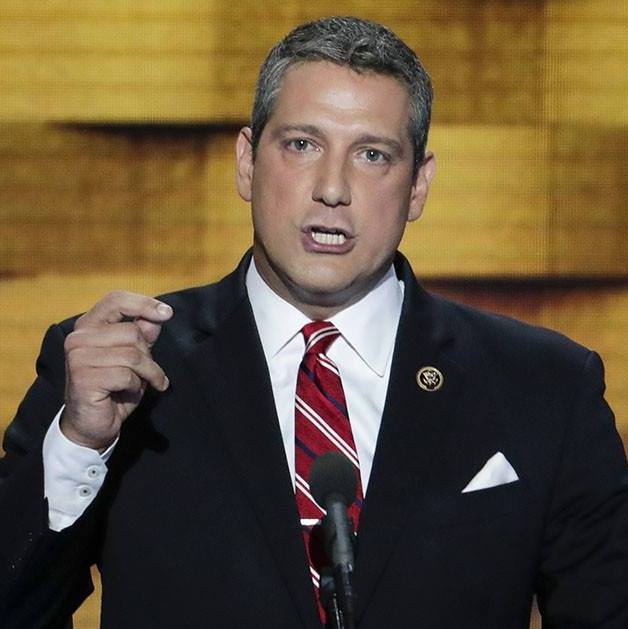
YOUNGSTOWN, OHIO — Dressed in a grey sweater, jeans and white sneakers, Tim Ryan looks more like the college-football star he aspired to be than a man about to take on the most powerful woman in Washington, DC.
Tall, lanky and fit, the seven-term congressman still retains the slim build from his days as a stand-out quarterback from John F. Kennedy High School in Warren, Ohio. “I work out in the same gym as Paul Ryan. I definitely have the better six-pack,” he says of the speaker of the House, who also hails from a Midwestern Catholic background.