The Reorganization/Regular Public Meeting of the Ridgewood Board of Education will be held on Monday, January 5, 2015 at 7:30 p.m.
The public is invited to attend the meeting at the Ed Center, 49 Cottage Place, Floor 3. The meeting will be aired live on FiOS channel 33 and Optimum channel 77. Or it may be viewed live via the district website at www.ridgewood.k12.nj.us using the “Link in Live” tab.
Click here to view the agenda for the January 5, 2015 Reorganization/Regular Public Meeting.
Valley’s Research Center Participates in International Trial of New Bypass Device
December 31, 2014
Ridgewood NJ, The Valley Hospital Heart and Vascular Institute is one of 17 preeminent cardiac surgery centers in the United States and Europe selected to participate in a clinical feasibility trial of a new implant designed to support vein grafts used in performing a cardiac bypass procedure. The trial is included among a robust list of clinical trials currently underway through The Valley Hospital Okonite Research Center.
Alex Zapolanski, M.D., Director of Cardiac Surgery, and Juan B. Grau, M.D., Director of Cardiac Translational Research and site principal investigator of the trial at Valley, recently performed their first implant of an eSVS® Mesh as part of the Kips Bay Medical eMESH I clinical feasibility trial.
The Company expects to enroll up to 120 patients at 10 European and seven U.S. sites. In addition to The Valley Hospital, the U.S. sites include the Cleveland Clinic, Emory University Hospital Heart and Vascular Center, the Mayo Clinic, the Lenox Hill Hospital, Northeast Georgia Medical Center and the Texas Heart Institute.
“After completing my first case, I found the eSVS Mesh to be remarkably easy to implant and feel very comfortable with the device” Dr. Zapolanksi said. “I am pleased that we are able to be part of the eMESH I trial and it is my hope that this device will open the door to improved long-term outcomes for CABG surgery patients.”
An estimated 82 million Americans suffer from one or more types of cardiovascular disease. It is the cause of 1 out of every 6 deaths in the U.S., and every year more than 395,000 Americans undergo coronary artery bypass surgery to mitigate its effects.
The Kips Bay Medical eSVS Mesh is designed to address the limitations of saphenous vein grafts used in coronary artery bypass graft (CABG) surgery. The eSVS Mesh is fitted like a sleeve on the outside of saphenous vein grafts to strengthen the grafts. By strengthening the graft and preventing the damaging expansion of the vein graft, Kips Bay hopes to reduce or prevent the resulting injury which can lead to graft failure and potentially costly and complicated re-interventions for patients undergoing CABG surgery. This innovative design is also intended to ensure that blood flow is faster and more laminar, by reducing the diameter mis-match between the graft and target artery.
For more information about open clinical trials, including trials at The Valley Hospital, please visit www.clinicaltrials.gov.
Scott Garrett U.S. Representative for New Jersey’s 5th congressional district, senior member of the House Budget Committee
Republicans take the reins in Congress with Commanding Majorities
By Alexander Bolton – 01/05/15 06:00 AM EST
It’s game time for Mitch McConnell and John Boehner.
For the first time since 2006, Congress is convening this week under full GOP control, with McConnell (Ky.) reaching the pinnacle of Senate majority leader and Boehner (Ohio) poised to win a third term as Speaker.
ADVERTISEMENT
With a 54-46 majority in the Senate, and an expanded majority in the House, Republicans are under pressure to deliver on their promises and move a raft of legislation to President Obama’s desk in the first few months of the year.
But in order to achieve that goal, McConnell and Boehner will need to unify their troops around a shared agenda — a task that will begin in earnest later this month, when House and Senate Republicans will hold a joint retreat in Hershey, Pa., to prepare for what one GOP aide described as the “frictions that will inevitably arise.”
Right off the bat, Boehner will have to deal with the political fallout from the revelation that House Majority Whip Steve Scalise (R-La.) spoke to a white supremacist group in 2002, which has cast a cloud over the new session. The Chicago Tribune and conservative commentator Charles Krauthammer have called on Scalise, the No. 3 ranking House Republican, to step down.
Boehner has stood behind Scalise, putting his clout on the line ahead of Tuesday’s vote for Speaker. Defections are expected, but Boehner can afford to lose up to 28 Republicans before the Speaker vote would go to a second ballot.
Once the pageantry of Congress’s opening days is through, Republican leaders are hoping to get off to a fast start.
McConnell and Boehner, who consult weekly, set the tone after the midterm elections with an agenda that emphasizes jobs and the economy.
“That means a renewed effort to debate and vote on the many bills that passed the Republican-led House in recent years with bipartisan support, but were never even brought to a vote by the Democratic Senate majority,” Boehner and McConnell wrote in a joint op-ed in The Wall Street Journal.
The bicameral retreat, meanwhile, will give House and Senate Republicans an opportunity to coordinate their strategy for 114th Congress, which is likely to be dominated as time goes on by the politics of the 2016 presidential race.
My family and I would like to offer our most heartfelt gratitude for the support that has been shown to us during these difficult days since our house fire on the day after Thanksgiving. Living in Ridgewood for over 20 years, we have always known our community to be extremely special and we now know just how blessed we are to be counted among you.
In the bleary-eyed days after our fire, my family was deeply touched by people dropping off gift cards, bags of bedding, clothing and necessities, hugging us, crying with us, and offering anything to help ease our losses. These were not empty gestures, the concern and the tears in their eyes helped us realize we were not alone and had the support of an entire community – whether close friends, I taught their child, or we see each other in the supermarket. My family knows now, more than ever, what an exceptional community we have and how lucky we are to be among such gracious and caring people.
We know we are incredibly blessed to have been shown such kindness and concern. Whether people cooked and delivered a meal, brought much-needed clothing, donated a gift card, treated our dog to a toy she lost, or just hugged me and cried with me on our dear friends’ porch, please know that none of us will ever forget what was done to help ease our transition through this turmoil. We will continue to pay this kindness forward and continue to support community members in need, in the ways that have bolstered us, whether it was through RHS Cares, Benjamin Franklin Home & School Association, Ridgewood Veterinary Hospital, BF staff (where I am lucky enough to work!), Ridgewood Lacrosse Association (which replaced equipment for my son so that he could play that weekend!) or through an individual gesture.
JANUARY 2, 2015 LAST UPDATED: FRIDAY, JANUARY 2, 2015, 12:31 AM
THE RIDGEWOOD NEWS
Leaf removal was better this year
To the Editor:
The leaf removal was very successful this year, thanks to our new village manager.
The only problem is the fact that some residents still placed leaves on the street after the final removal. The removal dates published for each area should have mentioned that the actual removal could be done as early as the first day mentioned. Or simply it may be better not to indicate several days, but only the first day for each area, as was done in prior years.
According to the dictionary, “civility” means being polite and courteous.
So, really, most everything we know about acting polite and courteous we learned in kindergarten, so to speak, as kids learning how to get along in school and entering the adult world.
In England in the House of Commons, known for its loud unrestrained behavior, recommendations to enforce civility were defeated last year and in years past.
Why? Members of the House believe that uninhibited speech helps to ensure the continuation of a flourishing democracy because it encourages the free expression of ideas.
Yet their society has a much lower incidence of violent crime.
Are we to expand the definition of civility to include illegal acts, or are we going to limit civility to mean acting polite and courteous?
And how about our town meetings? How restrained do we want members of the public to be in their speech?
What is the relationship between civility and a civilized society?
These are questions we have to ask ourselves as we think about civility.
Readers look to rename Village as council sells out to developers
Absolutely dead on regarding the Village ( https://theridgewoodblog.net/ridgewood-will-pay-the-price-if-zoning-changes-are-approved/ ) — our so-called planner sat on the witness stand dithering about how the “devil is in the details” but how conceptually this is great for some undefined state goals about putting housing on rail road tracks. Its appalling and pathetic that we have a council in place that will allow the Village’s demise.
Perhaps we should have contest for the new name of the Village once our master plan is ditched because council members don’t have the back bone to stand up to the developers, or they are being guided by their own self-interest to sell out the Village.
Reader says why not a word from Mrs. Hauck or Mr. Pucciarelli to defend their constituents from the Hospital’s lawsuit
I wonder when the Council members with close ties to Valley are going to have a comment on plans to defend their constituents from the Hospital’s lawsuit against us. Not a word from Mrs. Hauck or Mr. Pucciarelli. Not even the usual “We plan to vigorously defend the Village against this lawsuit” type of rhetoric. Makes me wonder if there is any defense planned at all or if some sort of back room deal is in the works to give Valley what it wants.
This is such a classic conflict of interest and nobody has said a word about it. Even our Chief Civility Officer Mr. Aronsohn has been silent. Hmmm.
Unlike the ARC tunnel the Gov Christie cancelled the Gateway Project will go direct to Penn Station and will not be entirely funded by NJ tax payers
N.J. lawmakers present a united front for new rail tunnel
JANUARY 4, 2015, 10:32 PM LAST UPDATED: SUNDAY, JANUARY 4, 2015, 10:39 PM
BY HERB JACKSON
RECORD COLUMNIST |
THE RECORD
With both houses of Congress about to be controlled by Republicans, whose hard-liners denounce expensive federal projects as wasteful pork and have banned lawmakers from earmarking funds for pet projects, a bipartisan delegation from New Jersey is gearing up to win support for a new rail tunnel under the Hudson River.
Both Sen. Bob Menendez, a Democrat, and Rep. Rodney Frelinghuysen, a Republican, said they are hopeful they can get a commitment at least to start Amtrak’s Gateway project when Congress takes up a multiyear transportation financing bill next spring.
Frelinghuysen, of Harding, said he thought the chances of some success are “pretty good.” Menendez, of Paramus, said he was “cautiously optimistic.”
“I’m not saying it’ll be the whole kit and caboodle … but once we are committed to the project, then we have a better chance to ensure its totality,” Menendez said.
Rail access to New York City has taken on a new urgency following Amtrak’s revelation last year that the existing two-track tunnel, built 104 years ago, will fail within 20 years because of damage from Superstorm Sandy flooding. Before then, delays will become common for Amtrak and NJ Transit, which uses Amtrak’s Hudson tunnel, because of periodic closures to stabilize it.
Gateway calls for a new two-track tunnel under the river and other construction, including new or rebuilt bridges in the Meadowlands, to provide four tracks between Newark and New York City. The next few months will be critical in determining whether the project moves off the drawing board, because Congress faces a May deadline for a new transportation bill.
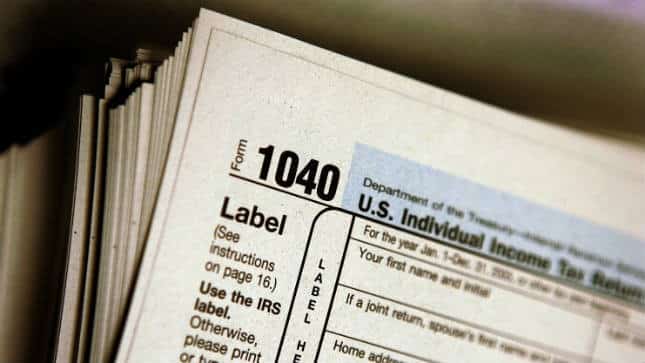
This much is true: Both President Obama and top Republicans are saying the right things about tax reform right now.
Whether that means that the two sides will make the progress in 2015 necessary to overhaul the tax code before Obama leaves office is another question entirely.
ADVERTISEMENT
At his year-end news conference, Obama insisted that he would put out more specific tax reform proposals in the coming months, answering GOP critics who’ve said the White House hasn’t put in the necessary work on rewriting the code.
Incoming Senate Majority Leader Mitch McConnell (R-Ky.), has said that tax reform is on the short list of issues – also including trade and infrastructure improvements – with the best chance for bipartisan cooperation once Republicans take full control on Capitol Hill in January.
And Rep. Paul Ryan (R-Wis.), who will be the House’s top tax writer next year, has said he’s willing to compromise on one of the GOP’s top priorities for reform – that the individual and corporate systems be revamped together.
A Beginner’s Guide to Austrian Economics
by Jason Peirce
“Everyone carries a part of society on his shoulders; no one is relieved of his share of responsibility by others. And no one can find a safe way out for himself if society is sweeping towards destruction. Therefore everyone, in his own interests, must thrust himself vigorously into the intellectual battle. None can stand aside with unconcern; the interests of everyone hang on the result. Whether he chooses or not, every man is drawn into the great historical struggle, the decisive battle into which our epoch has plunged us.” – Ludwig von Mises
December 16, 2014—Of course, Mises above is addressing the need for “everyone” to understand basic, sound economics. This is why it’s heartening to see such renewed interest in the Austrian School since the 2008 financial crisis.
Here is a beginner’s guide in which we’ll briefly examine the basic principles and answer the basic questions about Austrian economics.
The “Austrian School” of economics grew out of the work of the late 19th and 20th century Vienna economists Carl Menger, Eugen von Bohm-Bawerk, Ludwig von Mises, and Friedrich Hayek (though of course Austrian School economists need not hail from Austria). Austrians focus strongly on the analysis of individual human action. This is known as praxeology, the study of the logical implications of the fact that individuals act with purpose, from which all economic theory can be deduced. Austrians also note the correlation between greater economic freedom and greater political and moral freedom. This in part explains why Austrian economics is the intellectual foundation for libertarianism. Austrians rightly attribute the repeated implosions of mainstream Keynesian economics to the latter’s focus on empirical observations, mathematical models, and statistical analysis.
It’s important to note that Austrians sound a minority voice in economics and are widely marginalized by mainstream Keynesian economists in academia and media. Consider why this may be. It’s certainly not due to unsound theory. Perhaps because of academic group-think, since tenure is largely denied for Austrians? Or maybe because there is a lack of financial incentive to be Austrian, because Austrians cannot be “Jonathan Gruber-ized” and bought and sold by government, bankers, and the moneyed lobbyists and powers-that-be? What do you think?
The Austrian contributions to economic thought are best-evidenced when comparing Austrian economics to mainstream Keynesian economics. Here are 3 examples of how Austrians differ from Keynesians:
Example 1: The Role of Savings, Capital, and Prices
Keynesians assert that consumer and government spending drive economic growth and that GDP determines the strength of the economy. Seeing savings as the enemy of growth, Keynesians advocate government deficit spending, monetary inflation, and artificially low interest rates to boost “aggregate demand.” Of course, inflation, spending, and debt destroy savings, capital, and prices.
“Keynes did not teach us how to perform the ‘miracle of turning a stone into bread’ but the not-at-all miraculous procedure of eating the seed corn.” – Mises
On the other hand, Austrians rightly see that savings and production drive economic growth and determine the strength of an economy. Also, Austrians recognize that prices act as signals in the economy, and that natural interest rates and prices determine the amount of savings and production in the economy.
“The essence of Keynesianism is its complete failure to conceive the role that saving and capital accumulation play in the improvement of economic conditions.” – Mises
Ex-Ridgewood police chief to lead regional dispatch center
JANUARY 4, 2015 LAST UPDATED: SUNDAY, JANUARY 4, 2015, 1:21 AM
THE RECORD
Print
Ridgewood’s Northwest Bergen Central Dispatch has a new director — the village’s former police chief, Lou Mader.
Mader’s appointment was announced by Ridgewood officials on Thursday.
Mader will replace Jack Tancos, who tendered his resignation in late October.
Tancos remains at Bergen Central Dispatch, working as a public safety dispatcher.
Mader, who holds a degree in public administration from William Paterson University, was most recently director of public safety for Hunter College, a position he held for nearly 14 years.
Prior to that, Mader spent eight years running Ridgewood’s police force. He begins his new job Jan. 20.
Republicans are putting the Keystone XL pipeline at the top of the agenda as they seek to move a stack of legislation to President Obama’s desk in 2015.
Incoming Senate Majority Leader Mitch McConnell (R-Ky.) has promised that a vote on approving the $8 billion oil sands project would be his first order of business in the majority, and legislation is set to move quickly in the opening days of the new Congress.
A Senate panel will hold a hearing on legislation to approve construction of the pipeline next week, followed by a markup on Thursday, raising the potential for a final vote in mid-January.
If all goes as planned, Keystone proponents will have the filibuster-proof majority needed to get a bill to Obama, setting the stage for what could be his first veto in the new Republican Congress. But securing a veto-proof majority will be challenging in both the House and the Senate.
“The Senate needs to get back to work, and Leader McConnell chose Keystone, a bipartisan infrastructure bill, as the first for consideration because a final decision on this pipeline project is grossly overdue,” said McConnell spokesman Michael Brumas.
The Threat to Political Speech Online: Q&A With Former Elections Chief Lee Goodman
Melissa Quinn / @MelissaQuinn97 / January 03, 2015
The Federal Election Commission has steered clear of regulating political speech on the Internet. But the FEC’s outgoing chairman, Lee Goodman, warns that the commission could well impose rules on Americans who disseminate information on blogs, video channels or podcasts.
Goodman, a Republican, last year headed the six-member FEC, which oversees campaign finance laws. In an exclusive interview with The Daily Signal before his term ended, he discussed a 3-3 decision by the six-member commission in response to a complaint filed against a nonprofit group called Checks and Balances for Economic Growth.
The nonprofit had posted two campaign videos on YouTube without making disclaimers or divulging production costs. The complaint alleged that Checks and Balances violated the Federal Election Campaign Act of 1971 because it didn’t disclose the information.
Goodman and the two other Republicans on the panel contended that free postings on the Internet are exempt from the law. However, FEC Vice Chairman Ann Ravel, a Democrat, called for a “re-examination of the commission’s approach to the Internet.” Such a review, Ravel said, is “long overdue.”
Ravel has not made definitive proposals for new Internet regulations, a spokesman told The Daily Signal, but she plans to meet with technology and media leaders this year.
This transcript of the interview with Goodman was edited for style, clarity and length.
The Daily Signal: What was the basis for your ruling that Checks and Balances for Economic Growth did not violate the Federal Election Campaign Act?
Goodman: In 2004 and 2005, the FEC undertook a rulemaking specifically addressing Internet communications and Internet political activity. The commission heard public comments from over 800 citizens and organizations. The commission drew a fairly bright line in its regulations as a result of that process. And under the 2006 rule, the commission will regulate paid advertising on the Internet.
If my organization wants to take out a banner ad or place an Internet video on a commercial website and pay a fee for that advertising space, the FEC regulates that expenditure just like it would a TV ad or radio ad. However, if an organization places content for free on the Internet, there is no expenditure to regulate because the dissemination cost is free.
In the process of drawing that line in the rulemaking process, certain organizations proposed that the FEC count production costs of websites and podcasts and YouTube videos as an expenditure, and the commission declined to adopt that proposal.
Since 2006, if your dissemination on the Internet is free or low-cost, such as posting a free video on YouTube or building a website or organizing a social media platform, or any number of Internet-based political activities, you are unregulated.
The American public has embraced this freedom, as evidenced by the hundreds of thousands of YouTube videos, blogs, websites, podcasts, social media posts, social media platforms and other Internet-based activities that have gone unregulated without so much as an inquiry from the FEC.
I don’t think there is any evidence that this robust exercise of freedom on the Internet has corrupted any politician in America. Moreover, it’s clear that the Internet has facilitated a free marketplace of ideas and political expression, where individuals and small groups compete with large, well-funded voices on a level playing field.
For all these reasons, my two Republican colleagues and I voted the way we did in the Checks and Balances matter, and will oppose efforts to impose far greater regulation of political speech on the Internet.
Republicans on the FEC ‘will oppose efforts to impose far greater regulation of political speech on the Internet,’ Goodman says. (Photo: Newscom)
The Daily Signal: If this discussion is brought before the FEC as Vice Chairman Ann Ravel said, what implications could this have on the blogging community, on any Web-based news organization, on people with YouTube channels or organizations posting YouTube videos?
Goodman: I don’t think we can begin to contemplate all of the severe consequences to online political speech as a result of even opening this discussion within the FEC.
First, I believe that opening this issue will serve only to deter low-cost and free discussion of political issues on the Internet. As people begin to hear that the Federal Election Commission is considering a crackdown on Internet political speech, some people will be discouraged from participating. I think that’s a shame, and that’s one reason I’m speaking out loudly and clearly that three Republican commissioners will oppose any effort to restrict freedom on the Internet.
“Republican commissioners will oppose any effort to restrict freedom on the Internet,” says 2014 FEC Chairman Lee Goodman of online political speech
Second, I cannot imagine how the Federal Election Commission will begin to regulate hundreds of thousands of blogs, YouTube videos, chat rooms, emails and links, and all sorts of Internet-based political discussion because of how vast political discussion on the Internet currently is.
The problem for the FEC as a practical matter — put aside the philosophical and policy implications — what the vice chair is inviting the FEC to do is to establish an Internet review board where a room full of government bureaucrats sit on a daily basis and troll the Internet for political commentary — to identify online commentators who did not register or report their expenses in connection with their website, and to issue subpoenas seeking information about their expenditures.
I know of no other way that the FEC could regulate the hundreds of thousands of posts on the Internet, absent such a review process.
The Daily Signal: It seems like this would hurt the little guys starting blogs, as opposed to big companies and news organizations. Is that the case?
Goodman: The specter of regulation of Internet political speech will discourage small groups and individuals from using the Internet to express their political opinions. If we regulate it, we will necessarily discourage it and get less of it. It’s an axiom that if you regulate it, you will deter it and get less of it.
Under current law, there are two important exemptions from FEC regulation: One is the media exemption. Congress wrote in the Federal Election Campaign Act an explicit exemption for the media, the press.
The second important exemption, created in the commission’s 2006 rulemaking, is the Internet exemption. If the commission were to abolish the Internet exemption, many online bloggers who have been protected by it would resort to protection under the media exemption.
However, the distinction between a bona fide media organization and blogger online is a blurred line. And there are three Democratic commissioners on the FEC today who have consistently voted to constrict the definition of the press entitled to the media exemption.
It is unclear whether online bloggers would be exempt from regulation under the press exemption, and it would embroil the FEC in determining which bloggers are the press and which bloggers are not the press. That would be a significant consequence and complication if the FEC were to follow Vice Chair Ravel’s proposal.
The Daily Signal: Would this, then, be regulated by the government combing blogs to see if the blogs meet the qualifications for what the FEC rules as a media organization?
Goodman: That’s correct. Look at the medium. This is not as easy as identifying who has a broadcast license from the Federal Communications Commission. The Internet has placed a printing press in the hands of every citizen in America. And many small groups and individuals have started political commentary pages or websites on their kitchen tables and have grown those blogs into being significant daily publications.
The Internet has democratized not just political speech generally, but journalism specifically. Imagine the FEC having to comb all blogs in America to determine which ones are exempt, are bona fide press entities, [and] which ones are not bona fide press entities and would be regulated because the Internet exemption has been abolished. I believe this is an area where the government ought to leave well enough alone.
On Nov. 5, national and local newspapers in New York report on the results of the previous day’s mid-term elections. (Photo: Richard B. Levine/Newscom)
The Daily Signal: Isn’t it the First Amendment right of Americans to record podcasts and write on the Internet?
Goodman: Absolutely, and let me take it a step further. This is the fundamental error in the proposal to regulate the Internet. The Supreme Court consistently has ruled that the FEC has no constitutional authority to regulate speech for the sake of regulating speech.
The FEC exists solely to regulate large contributions to candidates and to require public disclosure of large expenditures to influence elections because the money involved in the contributions and the expenditures has the potential to corrupt politicians.
The vast majority of posts on the Internet, from YouTube videos to websites to blogs, are low cost or free. Therefore, if we were to begin regulating online political speech, the FEC would be in the position of regulating speech and not expenditures for speech.
Absolutely it’s a First Amendment right to speak to the world through your personal computer without governmental interference, so long as you’re not corrupting politicians.
The Daily Signal: Is the concern that someone who is running for Congress is going to find a blog and be corrupted?
Goodman: I cannot speak for the vice chairman. I infer from her statement that my Democratic colleagues are concerned that Internet speech has become highly effective and influential in the political process.
Pew issued a report one year ago indicating that one-half of Americans report the Internet as a primary source of obtaining political news, information and advocacy. So the Internet clearly is an influential medium in America today.
I believe that’s what captured the attention and regulatory impulses of Vice Chairman Ravel. Just because it is influential or effective does not give the FEC a writ to regulate it.
“Just because it is influential or effective does not give the FEC a writ to regulate it,” says 2014 FEC Chairman Lee Goodman of online political speech
The Daily Signal: It seems this is a nonpartisan issue. You have Democrats and Republicans who would benefit from an unregulated Internet.
Goodman: The proposal to regulate Internet political speech would have ecumenical consequences. It would deter political speech on the right and the left of the political spectrum. More importantly, it would deter thousands of populist voices that have found a voice on the Internet.
The Daily Signal: Do you think this move has anything to do with the U.S. Supreme Court’s rulings in Citizens United and McCutcheon v. FEC, even though those decisions deal with monetary contributions?
Goodman: I haven’t heard anyone articulate that being the problem. But the major concern after Citizens United was that large, corporate-funded voices would drown out all other voices in the political process. On the Internet, the smallest of bloggers has the level playing field to make their ideas heard as easily as the largest of corporations.
The decentralized architecture of the Internet gives each citizen an equal place to have his voice heard. What goes viral on the Internet is interesting political speech that resonates with people. Much of what goes viral — by “going viral” I mean gets millions of viewers — is creative and interesting content, and not necessarily well-funded content.
Look at “Obama Girl” in 2008. I daresay that video has had, on YouTube alone, 30 million hits. And because it goes viral and other people pick it up and send links to it, who knows how many Americans have seen that video. JibJab.com [animation with political themes] went viral. I don’t think the production cost of JibJab cartoons is very expensive.
What large corporations tend to do and what well-funded advocacy groups tend to do is they buy advertising. They buy banner ads, for example, and we regulate those expenditures. If you pay Yahoo or AOL to post a banner ad [for] your advocacy message, we regulate that. But what’s going viral and being seen by millions of Americans on the Internet is predominantly low-cost production.
What’s viral on the Internet is a populist phenomenon. Someone posts something interesting or something that resonates, and then millions of Americans talk to each other through email and links and say, ‘Look at this.’ I believe that the Internet is the antidote to the concerns raised after Citizens United. We don’t need to ruin it for the American people.
The Daily Signal: Those are interesting examples. How would FEC regulation change that process?
Goodman: BarelyPolitical.com produced “Obama Girl” and other videos — all politically themed – about John McCain, about Rudy Giuliani. There were at least a dozen politically themed videos that they produced and posted for free on YouTube. It was the first one that went viral. They had millions of viewers for all of them.
Under a regulatory regime, there would be several implications. First, each video would have to carry a disclaimer at the bottom indicating who paid for it and whether it was authorized by a political candidate. Second, BarelyPolitical.com would have to file expenditure reports with the Federal Election Commission disclosing the first date on which they post each YouTube video and how much they spent on the production.
Screen shot from an “Obama Girl” video. (Photo: BarelyPolitical.com/YouTube)
The FEC would have to issue regulations on what would be included in the production costs – do I consider purchasing costs of your personal computer, the editing equipment that you used? What about the video cameras you use? Did you pay the girl who performed in the video? Did you pay anyone else?
We would have to have a regulation prescribing what is described in production costs. The software that you purchased — and by the way, that goes for individual bloggers, too — up to computer, the software you purchased, your monthly Internet access charge. The FEC would have to get into this granular level of prescriptive regulation to tell people what to include in their expenditure reports to the FEC.
Then the content creator would have to disclose anyone who contributed money for the purpose of supporting the blog or YouTube post. And then, last but not least, if they coordinated their communication at all with a campaign or political party — for example, if they republish any campaign materials from a candidate — then that would count as a contribution to the candidate if the blogger or YouTube poster is incorporated. And that would mean the expenditure being reported is an illegal corporate contribution.
These are the consequences of regulating what has been a wholly constructive forum for Americans to speak and share ideas. Government needs to know when to leave well enough alone. The specter of government regulation of hundreds of thousands of websites and YouTube posts and chat rooms is ominous. It’s the regulatory Pandora’s box.
$589,000 in Ridgewood
MLS # 1435831
242 W Glen Ave, Ridgewood, NJ 07450
4 Bedroom, 1 Full Bath,
1 Half Bath, Col
Janis Fuhrman, Sales Associate
Terrie O’Connor Realtors/Ridgewood
Open House: 1:00 P.M. – 4:00 P.M. Sun. 1/4
20
$689,999 in Ridgewood
MLS # 1500062
251 Steilen Ave, Ridgewood, NJ 07450
6 Bedroom, 2 Full Bath,
1 Half Bath, S/L
Diane LoDrago, Sales Associate
Weichert Realtors, Wayne
Open House: 12:00 P.M. – 4:00 P.M. Sun. 1/4
14
Open Houses for Sun 1/11
$7,500 in Ridgewood
MLS # 1445893
221 Bedford Rd, Ridgewood, NJ 07450
4 Bedroom, 4 Full Bath, House
Pam Christian, Sales Associate
Keller Williams Village Square Realty
Open House: 1:00 P.M. – 4:00 P.M. Sun. 1/11
15
$425,000 in Ridgewood
MLS # 1443545
1103 E Ridgewood Ave, Ridgewood, NJ 07450
3 Bedroom, 3 Full Bath, C/C
Jane L. McGuire, Sales Associate
Coldwell Banker, Wyckoff/Franklin Lakes
Open House: 1:00 P.M. – 4:00 P.M. Sun. 1/11
4
$1,360,000 in Ridgewood
MLS # 1445312
221 Bedford Rd, Ridgewood, NJ 07450
4 Bedroom, 4 Full Bath, Col
Pam Christian, Sales Associate
Keller Williams Village Square Realty
Open House: 1:00 P.M. – 4:00 P.M. Sun. 1/11
– See more at: https://www.njmls.com/NJ/BERGEN/RIDGEWOOD-open-houses#sthash.SyywpI7B.og8etjbN.dpuf