(CNN)Experts say the United States is in the throes of an opioid abuse epidemic, causing 91 overdose deaths each day. Yet the total number of opioid-related deaths may still be underestimated, suggests new research from the US Centers for Disease Control and Prevention.
“In early spring, the Minnesota Department of Health was notified of an unexplained death: a middle-aged man who died suddenly at home,” said Dr. Victoria Hall, a CDC field officer based in Minnesota. He’d been on long-term opioid therapy for back pain, and his family had worried he might be abusing his medication. The medical examiner assigned to the autopsy tested for and diagnosed both pneumonia and a toxic level of opioids.
New Jersey gasoline prices dropped more than 3 cents in the past week and are expected to continue falling because of a glut of inventory, an analyst said Monday.
An oversupply of gasoline exists as refiners ramp up production, said Dan McTeague, senior petroleum analyst with GasBuddy, a price-tracking website. The peak driving time in the U.S. is in the summer, when gasoline is generally more expensive than in the winter.
New Jersey’s new Uniform Crime Report found crime in the Garden State is on the decline. The latest official numbers, which cover 2015, show a 5 percent drop in overall crime and a one percent drop in violent crime.
Preliminary data for last year shows a similar downward trend.
For the past several months, Gov. Chris Christie has focused his energy and attention on combating New Jersey’s opioid and heron epidemic.
The effort has included numerous appearances at drug clinics and rehabilitation centers around the state, as well as ads on radio, TV, and in print.
But is it making a difference?
Last year in Ocean County there were 209 overdose deaths and 505 naloxone revivals. According to Ocean County Prosecutor Joe Coronatom so far in 2017 the numbers are very similar to where they were at this time last year, but he said increasing attention and exposure about the epidemic is vitally important.
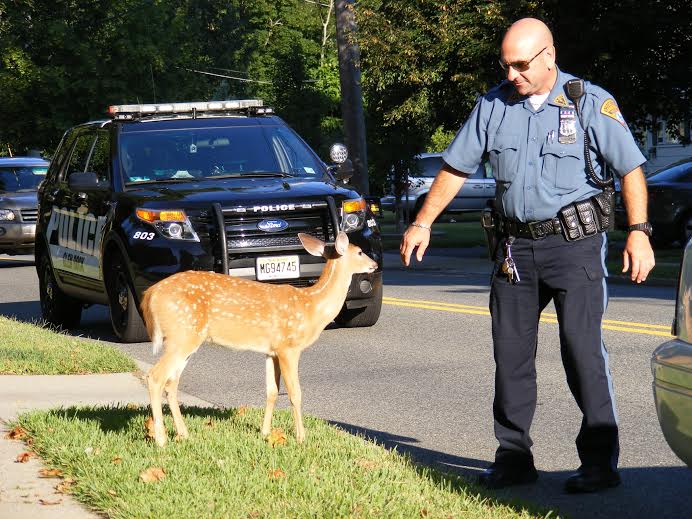
In Bergen County the deer are plentiful and the number of dead ones collected by the Department of Transportation from its roadways back up that fact. In 2016 308 deer carcasses were picked up. That’s 43 more than were removed in 2015
Updated May 01, 2017
Posted May 01, 2017
Bill Gallo Jr. | For NJ.com
There was a time in New Jersey and the northeastern U.S. when white-tailed deer were a rarity. A little over a century ago local newspapers heralded the news when the state Game Commission sent deer for release in local woods. A deer sighting was an item of note. How times have changed. Today deer are everywhere in New Jersey from the most rural to residential and even urban areas.
Accidents involving deer common
Deer cause millions of dollars of damage to crops in New Jersey, according to one Rutgers University overview of the population. They can also carry tick-borne illnesses. One of the greatest dangers, however, is when deer and motor vehicles meet. Especially in rural areas of the state, motor vehicle accidents involving deer are commonplace, sometimes resulting in major damage and injuries. In many cases, the deer becomes the victim when it runs into a road into the path of an oncoming vehicle. One of the most dangerous times for motorists — and deer — is in the breeding or rutting season from mid-September through November.
New Jersey is clearly moving to join the many states that have legalized recreational marijuana – eight in just the last five years.
We could do this in two ways: either by making pot a legal substance and taxing it, or by permitting people to possess a small amount, instead of arresting them.
So now that a renewed effort is underway to reform our failed marijuana policy, time to revive that critical debate: legalization, or decriminalization?
Company head continues to sound drumbeat for nuclear subsidies, even though plants will remain profitable through 2019
Oyster Creek nuclear plant
The closing of nuclear power plants serving New Jersey could lead to higher electricity prices for consumers, according to Ralph Izzo, chairman, CEO, and president of Public Service Enterprise Group, the owner of the units.
Izzo, speaking Friday on a quarterly earnings call for the Newark energy company, continued the drumbeat of lobbying for incentives to subsidize the operation of the three units run by the company’s subsidiary, PSEG Power, in South Jersey.
“You cannot remove 40 percent of the supply without having an increase in prices in New Jersey,’’ Izzo said, in response to a question from a Wall Street analyst. “And that’s something New Jersey consumers should not like.’’
In an editorial a year ago, NJBIZ noted that Sports Authority was hitting the showers and closing its stores. Sports Authority stores? No offense intended, but who remembers them now?
Since then, the drop in brick-and-mortar retail sales and the closing of stores throughout New Jersey has become what we feared just 12 months ago — the new normal.
Reports of store closings come almost daily now. J.C. Penney, Macy’s, Payless, HHGregg, Rue21, Bebe — they all have closed stores in New Jersey and elsewhere in recent weeks. And the pace is accelerating. Credit Suisse has said that more than 8,600 stores will close in 2017 — a deluge worse than the record 6,163 stores that closed in the recession year of 2008. That would translate into 147 million square feet of retail space, the brokerage firm said in a research report. Sears, which owns Kmart — Sears! — has said it has “substantial doubt” that it can survive.
It all reminds us of Ernest Hemingway’s famous line in “The Sun Also Rises” about how a character went bankrupt: “Two ways. Gradually, then suddenly.” Online commerce, of course, is the culprit. Approximately two-thirds of American consumers prefer to shop online, according to surveys.
The bad news about retail stores in New Jersey has been somewhat mitigated by the opening of seven Amazon warehouses in the state in recent years and plans to open three more. The largest so-called Amazon “fulfillment center” opened in Carteret less than two weeks ago, with more than 2,000 employees working in a 1-million-square-foot facility.
The lives of more than 80 wildlife species in New Jersey are either in immediate danger or close to it.
Bobcats, bald eagles and multiple species of snake, sea turtles and birds should have a healthy presence in the Garden State, but they’re struggling to survive, according to the latest endangered and threatened list from the state Division of Fish & Wildlife.
The database describes endangered species as those whose prospects for survival in New Jersey are bleak “because of a loss or change in habitat, over-exploitation, predation, competition, disease, disturbance or contamination.” Threatened species may become endangered if conditions around them begin to or continue to worsen.
Several species on New Jersey’s list are endangered federally as well.
The piping plover, a small shorebird on both the state and national list, is considered “one of New Jersey’s most endangered species,” according to the division. “Without intense protection and management, it is unlikely that the piping plover would survive in New Jersey,” the species description states.
Ridgewood NJ, Bergen County Parks Department initiated a master planning process for the Bergen County Park system. The goal is to identify the characteristics of the Bergen County recreation and open space system, accommodate the needs of current residents, and respond to projected future growth of the County.
WHO: All Bergen County residents interested in parks YOU’RE INVITED!
WHY: Topics for discussion include: • balance of nature conservation and active recreation • environmental & historical stewardship • enhancement of existing park facilities • multi-modal transportation • potential green connections • events and concessions management …and more!
This is your opportunity to voice any ideas, concerns and desires for the future of County parks. Please join us for some more great conversations!
At this second series of Community Meetings, we will discuss conceptual ideas for the parks using what we learned from 8 Public Information Sessions in Jan/Feb and more than 2100 survey responses. To help create a Master Plan for parks & recreation in the future.
5/9 HACKENSACK Two Bergen County Plaza (next to the Bergen County Court House) 7-10 PM
5/10 WYCKOFF James A. McFaul Environmental Center 150 Crescent Avenue 7-10pm
5/11 LYNDHURST Bergen Community College at the Meadowlands 1280 Wall Street West, (5th Floor) 7-10pm
Republican gubernatorial candidate Hirsh Singh today said he filed a formal request with the New Jersey Election Law Enforcement Commission (ELEC) to allow him to participate in the 2017 Republican primary gubernatorial interactive debates.
Singh argued that although he has not accepted public funds for his campaign he nonetheless “has over $900,000 in campaign contributions on hand.”
“As I’ve said all along, our campaign has the resources we need to compete with the other candidates in the race, to get our message out, and to defeat Phil Murphy in November,” said Singh, who cited N.J.A.C. 19:25-1.4 as the basis for his legal argument demanding entry to the debate forum.
Washington Township NJ ,The resultant force of a two (2) vehicle crash sent one (1) vehicle up onto the lawn of a home at 575 Washington Avenue, Washington Township on Friday morning, 04/28. Washington Township PD and EMS responded to the incident. One (1) driver, an adult male, complained of minor injuries and was evaluated on the scene by EMTs, but refused ambulance transport to a hospital. The other driver, also an adult male, was not injured. Both wrecked vehicles were removed by flatbed tow trucks. No word as to whether any summonses were issued in connection with the incident.
What this article omits is that the cost of this boondoggle is $1.3 billion and climbing. So for $130,000,000 a mile, we will get what the proponents project to be 24,000 trips. At $2.25 per trip ( current light rail ticket price) assuming the projected number of rides are taken every single day of the year (a heroic assumption), it will take 65 years to pay this off, not counting interest.
The money for this comes from the newly hiked gas tax which will apparently be diverted from fixing roads and bridges to pleasing a few of Loretta’s constituents.
Dr. Salomon Melgen, a key figure in the bribery and corruption case against Democratic Sen. Bob Menendez, was convicted on Friday of improperly billing the federal government for more than $100 million in medical insurance payments.
After three days of deliberations, a jury in West Palm Beach, Fla. delivered 67 guilty verdicts against Melgen on charges that he submitted claims to Medicare for eye procedures and tests that were either unnecessary or never performed.
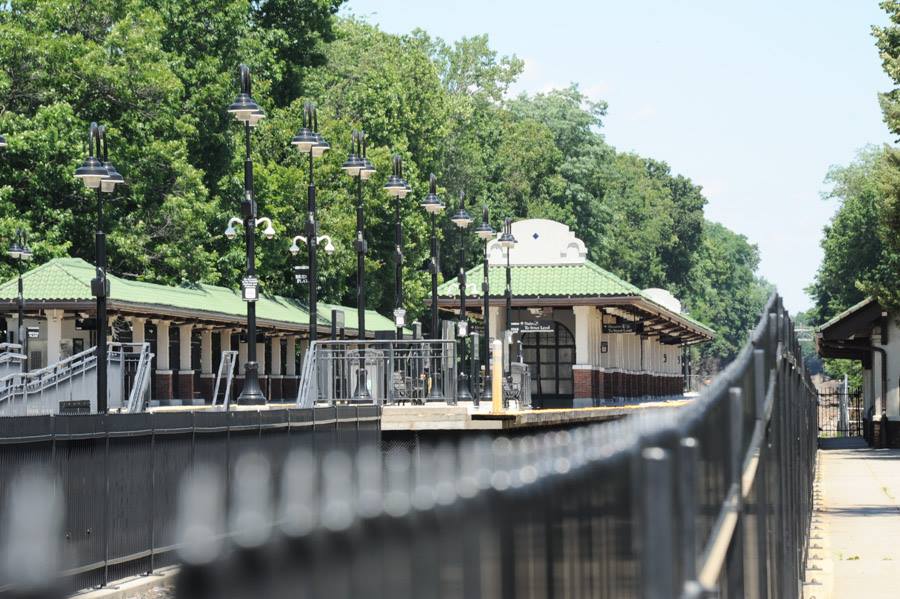
Ridgewood NJ, NJT reminder , delays Estimated at 30 Minutes in/out of New York due to Amtrak Track Maintenance, Track Inspection & Speed Restrictions this Weekend – April 29-30, 2017
Resulting in Possible Delays for Raritan Valley Customers during this Weekend’s Busing Service between Cranford and Union Stations
For Amtrak service delays, click HERE.
For Raritan Valley weekend busing service info, click HERE.
THIS WEEKEND (Saturday, April 29 and Sunday, April 30), NJ TRANSIT rail service in/out of New York should anticipate estimated delays of 30 minute due to Amtrak track maintenance, track inspection and speed restrictions.
As a result, Raritan Valley Line customers may experience delays this weekend during the planned outage due to NJ TRANSIT and Conrail’s track and switch maintenance work between Cranford and Roselle Park stations.
During this time, buses will replace trains between Cranford and Union stations. Conrail work is scheduled to be completed at 7:30 Sunday, April 30.
PLEASE NOTE: This weekend, Raritan Valley customers can expect train delays in and out of New York due to Amtrak track maintenance, track inspection and speed restrictions. Customers should anticipate estimated 30 minute delays as some tracks may become out of service from time to time. Please allow for extra travel time.
PLEASE NOTE – SYSTEMWIDE CROSS-HONORING: This Weekend ONLY, NJ TRANSIT rail tickets and passes will be cross-honored on NJ TRANSIT Bus, Light Rail, Private Carriers and with PATH at Newark Penn Station, New York-33rd Street and Hoboken.
We sincerely apologize for any inconvenience.
For further information, please call NJ TRANSIT Customer Service at (973) 275-5555 between the hours of 8:30 a.m. and5 p.m. daily.