Posted on Leave a comment

Rep Scott Garret’s Bipartisian JOBS Act spurs business formation and jobs

House Budget Panel Holds Hearing to Receive  Views on Fiscal 2012
April 15,2016
the staff of the Ridgewood blog

Chairman Scott Garrett Opening Statement for Hearing Entitled

“The JOBS Act at Four: Examining Its Impact and Proposals to Further Enhance Capital Formation”

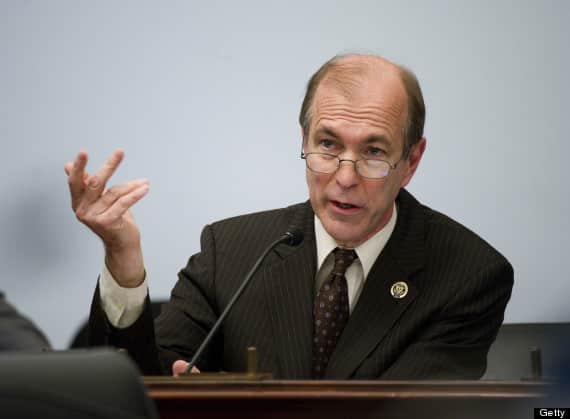
WASHINGTON, D.C. – Capital Markets and Government-Sponsored Enterprises Subcommittee Chairman Scott Garrett (NJ-05), delivered the following remarks at a hearing entitled “The JOBS Act at Four: Examining Its Impact and Proposals to Further Enhance Capital Formation”:

Congressman Scott Garrett’s opening remarks as prepared for delivery:

It’s not very often that Congress can look back at a major piece of legislation and be able to measure the tangible, positive impact it is having on peoples’ lives and on our economy

Too often, we find ourselves – particularly on this Committee – counting up the costs of misguided Washington mandates and comparing them with the phantom benefits promised by the bureaucratic class

Fortunately, that is not the case today

The Jumpstart our Business Startups – or “JOBS” Act – signed into law four years ago this month has by most measures been a resounding success for our economy and the future of innovation in America

The JOBS Act did this not by creating new federal mandates or spending taxpayer money on wasteful programs, but by empowering entrepreneurs and innovators who were struggling under a regulatory regime that was better suited for 1934 than it was for 2016

Just consider some of the following:

·        The JOBS Act has led to a resurgence in the initial public offering (IPO) market, with some 85% of IPO’s since April 2012 coming from emerging growth companies

·        Companies have raised some $50 billion under the new Reg D provision that allows business to solicit an offering to the general public

·        While the newly modernized “Reg A+” is only a year old, business are already beginning to issue securities under this exemption

·        And recent reports indicate that the SEC has already received up to 30 applications for portals under the new crowdfunding rules, which are set to go live next month

So while it’s clear that many parts of the JOBS Act are working as intended, the point of this hearing is not to pat ourselves on the back and say “job well done”

For starters, because the Senate tried its best back in 2012 to neuter the crowdfunding title and the SEC has taken some liberties with other rulemakings, the JOBS Act needs some “fixing”

So I want to thank the gentleman from North Carolina, Mr. McHenry, for putting forward the “Fix Crowdfunding Act” which makes some necessary changes to help ensure Title III reaches its full potential

Additionally, I have put forward a bill – the Private Placement Improvement Act – that will prohibit the SEC from implementing burdensome new rules for Reg D issuers that were uncalled for by the JOBS Act

We’ll also consider two other bills today

Mr. Emmer has introduced an innovative bill that would create a safe harbor for so-called “micro offerings”, and Mr. McHenry has another bill which would raise the threshold for when venture capital funds would have to register with the SEC

In addition to these targeted fixes, I’m also interested in hearing from our witnesses about further areas that Congress should be addressing in order to maintain the competitiveness of our capital markets

For example, we should be exploring the cumulative burdens that come with being a public company – including, unfortunately, some of the ridiculous disclosure requirements of Dodd-Frank as well as the outsized influence that proxy advisory firms have in the corporate governance arena

It’s also time to think more about the lack of research and liquidity that exists for certain public companies, and whether the equity research Global Settlement of 2003 swung the pendulum too far and has led to a dearth of research for small cap stocks

These are all important questions, and I look forward to hearing from our witnesses today.

Posted on Leave a comment

Congressional Letter Highlights Awkward Consequence of MetLife Case

lew_2447543b

photo Treasury Secretary Jacob Lew

Wall Street Journal – Congressional Letter Highlights Awkward Consequence of MetLife Case

Apr 11, 2016
By Ryan Tracy

A letter sent to Treasury Secretary Jacob Lew by a member of Congress on Monday highlights the awkward international consequences of a U.S. federal judge’s decision to rescind federal oversight of MetLife Inc.

Rep. Scott Garrett (R., N.J.), chairman of the House Financial Services Committee’s subcommittee on capital markets, wrote to Mr. Lew asking how, after the decision, the U.S. now will proceed with applying new regulatory standards to insurers designated “systemically important.”

The awkward subtext: The U.S. effectively has promised other countries it will apply tighter standards to MetLife, but the federal government no longer has the authority to do so. That could be reversed if the Obama administration wins the case on appeal, a process that could take months.

Mr. Garrett’s criticisms are ones long held by the U.S. insurance industry and state insurance regulators regarding the Financial Stability Board, a group of global regulators from the U.S. and other countries.

On July 18, 2013, the FSB published a list of insurance companies it called “globally systemically important insurers” and agreed they should face tighter supervision. The Treasury Department, the Federal Reserve and Securities and Exchange Commission are U.S. representatives on the FSB. Since the FSB operates by consensus, Mr. Lew and other FSB members effectively endorsed the list of globally systemically important insurers.

That has long irked the insurance industry and regulatory critics such as Mr. Garrett, who point out the list was developed before U.S. regulators on the U.S. Financial Stability Oversight Council decided to apply stricter rules to domestic insurance companies. MetLife was on the July 2013 FSB list, along with rivals American International Group Inc. and Prudential Financial Inc., but MetLife wasn’t designated “systemically important” in the U.S. until December 2014. Prudential received the label in September 2013, and AIG received it July 8, 2013.

Mr. Garrett on Monday asked for a series of documents from Mr. Lew related to the FSB work. He also asked whether Mr. Lew plans to continue pursuing the stricter international standards the U.S. has agreed to apply to MetLife, now that the court has rescinded the federal government’s authority to do so.

MetLife is still overseen by state regulators, including in its home state of New York, and it is possible those regulators could take the view the firm deserves stricter rules because of its size and potential impact on the economy. But state regulators aren’t part of the FSB—a fact that has long frustrated them—so it is far from clear that they would keep up the U.S. end of the international bargain.

A Treasury spokesman didn’t immediately respond to a request for comment.

Mr. Lew previously has said that the U.S. and international processes for determining “systemically important” firms are separate and that U.S. regulators made their own decision about applying stricter rules MetLife and the other firms without regard to any international agreement.

Posted on Leave a comment

Baby Boomers And Millennials May Share More Similarities On The Job Than They Realize

sony and cher

April 8,2016

the staff of the Ridgewood blog
Ridgewood Nj, Baby Boomers and Millennials often are portrayed as two generations that don’t always see eye to eye in the workplace.

But they may share something in common that could help bridge the generation gap.

Both groups long to find a purpose in their careers beyond a paycheck, say Jackie Dryden and Bethany Andell, co-authors of “Get Your Head Out of Your Bottom Line: And Build Your Brand on Purpose” (www.savagethinking.com).

“Millennials are not only worried about how much money they earn, but also about how they earn it,” says Andell, president of Savage Brands, which works with companies to build purposeful brands.

“They gain satisfaction from their work when they feel they are contributing to something larger and more valuable than the company’s earnings.”

Baby Boomers, idealistic in their youth, somewhere along the way became part of the system they fought to change, she says.

Now, nearing retirement, many look back and wonder what kind of legacy they will leave.

“They’re reigniting their earlier desire to add meaning to life,” Andell says.

Dryden and Andell say that tapping into the two generations’ longing for meaningful work can create an improved outlook for businesses. Here are a few reasons why:

 Everything a company says and does contributes to building its brand. Because of this, the actions and attitudes of employees are central to the brand experience for the customers.
 Too many companies begin their pursuit of success by focusing on profit. Dryden and Andell say a better route to sustainable success is to flip traditional business thinking upside down and start with purpose. Purpose drives performance, they say, and performance drives profits.
 Customers feel better about buying from or working with brands they connect with in some way. When they connect with the purpose for why a company exists they begin to feel as if they are a part of something meaningful, just as the employees do. This deeper relationship adds value to every interaction customers have with the company, building loyalty for the brand.

“When you have two generations – one older, one younger, but both seeking greater meaning at work – there’s an incredible opportunity,” Dryden says. “But that opportunity can only be seized if a company’s purpose and values align and connect with employees on a level beyond the bottom line.”

About Jackie Dryden

Jackie Dryden, co-author with Bethany Andell of “Get Your Head Out of Your Bottom Line” (www.savagethinking.com), is Chief Purpose Architect with Savage Brands, which works with companies to build purposeful brands. She also is author of “Just Me: What Your Child Wants You to Know About Parenting.”

About Bethany Andell

Bethany Andell, co-author with Jackie Dryden of “Get Your Head Out of Your Bottom Line,” is president of Savage Brands. She is an MBA graduate from Rice University’s Jones School of Management, a regular speaker and author of several articles recently published in the Houston Business Journal.

Posted on 3 Comments

“fiduciary rule” one step closer to the Fed’s Stealing your Retirement Savings

r-FLORIDA-RETIREMENT-large570

“Saving for the future shouldn’t be a privilege for the wealthy, and Washington doesn’t need to put another roadblock between people and their financial goals. By ignoring the advice of the SEC and Congress, the DOL’s rule will increase the cost of retirement advice for lower- and middle-income Americans while creating a preferred class of rich investors. I will continue to fight for everyone’s right to get good financial advice because—unlike this administration—I believe in the people of New Jersey to make the best choices for their families and their futures.” Rep Scott Garrett

April 7,2016
the staff of the Ridgewood blog

Ridgewood NJ, Yesterday’s editorial (opening paragraphs below) point out that this set of rules is slanted to capture investment accounts with the goal of making small and medium sized savers invest in government run plans. Follow the money — those government run plans are going to lean toward investing in government paper with associated pitiful returns. That’s the conflict of interest that’s not being disclosed.

From the editorial…
President Obama’s regulators aren’t slowing down, alas. And on Wednesday they unveiled another part of their plan to push Americans out of private investment accounts and into government-run plans.

The Department of Labor says its so-called fiduciary rule will make financial advisers act in the best interests of clients. What Labor doesn’t say is that the rule carries such enormous potential legal liability and demands such a high standard of care that many advisers will shun non-affluent accounts. Middle-income investors may be forced to look elsewhere for financial advice even as Team Obama is enabling a raft of new government-run competitors for retirement savings. This is no coincidence.
Bu
Labor’s new rule will start biting in January as the President is leaving office. Under the rule, financial firms advising workers moving money out of company 401(k) plans into Individual Retirement Accounts will have to follow the new higher standards. But Labor has already proposed waivers from the federal Erisa law so new state-run retirement plans don’t have the same regulatory burden as private employers do.

This competitive advantage could be significant. Last month the board of California’s new “Secure Choice” retirement plan wrote to state legislators about their “exciting win” in Washington. They reported that employers enrolling workers in the new government-run plan “would have no liability or fiduciary duty for the plan.” Score! The California bureaucrats added that “we have been given the green light to auto-enroll workers into an Individual Retirement Account (IRA).”

Meanwhile, there are only losses for private competitors. The final rule Labor Secretary Tom Perez unveiled Wednesday is being marketed as less onerous than an earlier draft. Thus much of the financial industry is going to take a few weeks to decide on its response. But the main question is exactly how many billions of dollars in costs and lost opportunities will be visited upon investors. And how big the incentive will be to seek government options…

Posted on Leave a comment

The Correlation Between Credit Scores, Celebrities, Sports & More

creditcards

April 7 2016

the staff of the Ridgewood blog

Ridgewood Nj, the folks at WalletHub sent us some polling data on the correlations between credit scores and life style choices , here is what they found :

The free-credit-score website WalletHub today released its 2016 Credit Score Fun Facts, which are based on a nationally representative survey that revealed a number of crazy correlations between our credit standing and our likes, dislikes and lifestyles.
You can find a handful of highlights below:

  • Celebrities: 88% of people with excellent credit prefer Taylor Swift to Kanye West.
  • TV Hosts: Charlie Rose has the most fans with excellent credit (66%), while James Corden has the most fans with bad credit (41%).
  • Music: Pop music has the most fans with excellent credit (52%), and Hip-Hop has the most fans with bad credit (43%).
  • Sports: Hockey has the most fans with excellent credit (53%), and soccer has the most fans with bad credit (34%).
  • Pets: Dog lovers are more likely to have excellent credit than cat owners (46% vs. 40%).
  • Politics: John Kasich has the most supporters with excellent credit (60%) and Hillary Clinton has the most supporters with bad credit (26%).
  • Banking: USAA is the most trusted bank among people with excellent credit, and Capital One is the most trusted among those with bad credit.
  • Tech: iPhone users are the most likely to have excellent credit (56%), while Blackberry users are the most likely to have bad credit (46%).

For WalletHub’s complete list of Credit Score Fun Facts, please visit:
https://wallethub.com/blog/credit-score-fun-facts/20561/

And if you would like to get your free credit score, just sign up for WalletHub:
https://wallethub.com/free-credit-score/

Posted on Leave a comment

China jitters could trigger global market bloodbath, IMF warns

43204d1333141997-ferrari-design-overtones-going-ferrari_profits_china_chadglass

Szu Ping Chan

4 APRIL 2016 • 2:55PM

Jitters over the health of the Chinese economy could trigger a bloodbath on financial markets if a hard landing materialises, the International Monetary Fund has warned.

The IMF said policy choices in the world’s second largest economy would also have “increasing implications for global financial stability” in the coming years as the country opens up its bond and equity markets.

The fund said emerging market economies such as China, India, Brazil and Russia had driven more than half of global growth over the past 15 years.

https://www.telegraph.co.uk/business/2016/04/04/china-jitters-could-trigger-global-market-bloodbath-imf-warns/

Posted on Leave a comment

Prosecutors open probes as world’s wealthy deny ‘Panama Papers’ links

bag_of_money

LONDON/PANAMA CITY | BY KYLIE MACLELLAN AND ELIDA MORENO

Governments across the world began investigating possible financial wrongdoing by the rich and powerful on Monday after a leak of four decades of documents from a Panamanian law firm that specialized in setting up offshore companies.

The “Panama Papers” revealed financial arrangements of politicians and public figures including friends of Russian President Vladimir Putin, relatives of the prime ministers of Britain, Iceland and Pakistan, and the president of Ukraine.

While holding money in offshore companies is not illegal, journalists who received the leaked documents said they could provide evidence of wealth hidden for tax evasion, money laundering, sanctions busting, drug deals or other crimes.

The law firm, Mossack Fonseca, which says it has set up more than 240,000 offshore companies for clients around the globe, denied any wrongdoing and called itself the victim of a campaign against privacy. Mossack Fonseca, in a statement posted on its website on Monday, said media reports had “misrepresented the nature of our work.”

“We routinely resign from client engagements when ongoing due diligence and updates to sanctions lists reveal that a beneficial owner of a company for which we provide services is compromised,” it said.

https://www.reuters.com/article/us-panama-tax-idUSKCN0X10C2

Posted on Leave a comment

Millennials are being dot.conned by cult-like tech companies

Soylent Green lg

By Kyle Smith

April 3, 2016 | 11:25am

Tech startups love millennials. Tasty, tasty millennials who get underpaid, overworked, churned up and turned into nourishment for venture capitalists. Millennials are the Soylent Green of the tech world.

As each batch gets mashed up, there’s a long line of new hires eager to be made into the next meal for the execs and their billionaire backers, as tech survivor Dan Lyons shows in a scathingly funny new book, “Disrupted: My Misadventure in the Start-Up Bubble” (Hachette Books).

Lyons became a strange kind of celebrity a decade ago when he began posting nutty but funny insights as “Fake Steve Jobs.” Today he’s a writer for HBO’s brilliant tech comedy “Silicon Valley,” but in between he blogged for a Boston tech company called HubSpot and wrote this book about it.

https://nypost.com/2016/04/03/millennials-are-being-dot-conned-by-cult-like-tech-companies/

Posted on 1 Comment

4 Business Lessons Drawn From Riots, Robberies And Mob Threats

Ridgewood-CBD_goingonutof-business_theridgewoodblog

March 30 ,2016

the staff of the Ridgewood blog

Ridgewood Nj , Business can lead to cutthroat competition – in more ways than one – but Tom Nix learned that the darkest moments also can lead to the greatest triumphs.

“It’s the worst experiences that sometimes teach us the most important lessons,” says Nix, a successful businessman and author of “Nixland: My Wild Ride in the Inner City Check Cashing Industry” (nixland.net).

The incredible rise of his multimillion-dollar enterprise, Nix Check Cashing, is a case in point. Nix encountered turbulent times in the inner city of Los Angeles as he built his company into a trusted institution among underserved communities.

He and his employees faced harrowing experiences, such as armed robberies and threats from the mob, which hoped to block some of his expansion plans.

The 1992 riots that erupted after a jury acquitted police officers in the beating of Rodney King proved especially distressing. Many businesses were looted or burned to the ground, and Nix scrambled to protect his check-cashing locations.

He was gratified to learn that loyal customers prevented some branches from being torched.

“We even had a gang member call us,” Nix says. “He said he had always been treated with respect at Nix, and his gang decided not to burn Nix because we were part of the community.”

Nix says his experiences taught him valuable lessons that relate both to business and life, such as:

• Take responsibility. This applies to everything that happens, including things you can’t control. Once when an economic downturn left him unable to pay bills, Nix contacted each creditor to explain his predicament and work out a plan. That upfront approach helped the business avoid bankruptcy.
• Never play the victim role or blame game. Avoid replaying misfortunes over and over in your mind. Accept setbacks gracefully and concentrate on getting back on track. In the 1990s, a business deal that went awry nearly forced Nix to sell his company, but he focused on solving the problem and persevered.
• Be courageous. The most debilitating human emotion is fear. Learn to keep it in perspective, minimize it when applicable and harness it to your benefit when need be. Nix says standing up to bullies as a child set the stage for standing up to the mob.
• Maintain integrity. Operating with fair play and compassion is important in building trust. “The way community members protected some of our branches during the riots was a reflection of this,” Nix says.

“Treating people fairly and supporting community programs paid off.”

Good times may be more enjoyable, but challenging times provide more opportunity for growth, he says.
“Realize that bad people, tough times and mistakes are your teachers,” Nix says. “Always ask yourself, ‘What do I need to do to capitalize on these events?’ ”

About Tom Nix

Tom Nix, author of the memoir “Nixland” (Nixland.net), is a pioneer of the check-cashing industry. He built Nix Check Cashing into a multimillion-dollar operation before selling it in 2007. Recently, Nix has turned to public speaking and writing with the goal of helping people overcome obstacles and have similar success.

Posted on 1 Comment

Carl’s Jr. CEO wants to try automated restaurant where customers ‘never see a person’

robot forbidden planet

POSTED 4:57 PM, MARCH 17, 2016, BY KFOR-TV & K. QUERRY

NEW YORK – A CEO of a fast-food company is causing a stir on social media after claiming that he wants to create a fully automated restaurant.

“We could have a restaurant that’s focused on all-natural products and is much like an Eatsa, where you order on a kiosk, you pay with a credit or debit card, your order pops up, and you never see a person,” Carl’s Jr. CEO Andy Puzder told Business Insider.

Puzder says the automated restaurant would be cheaper since he wouldn’t have to worry about rising minimum wage.

https://kfor.com/2016/03/17/carls-jr-ceo-wants-to-try-automated-restaurant-where-customers-never-see-a-person/

Posted on Leave a comment

Obamanomics: Why Aren’t More Americans Working?

crisi-america-1929-I-want-a-job

MAR 4, 2016 5:30 PM EST
By Justin Fox

According to today’s employment report, 59.8 percent of Americans ages 16 and older had jobs in February. That’s the highest employment-to-population ratio in years, and the rate of increase is clearly on the rise.

Look back some more years, though, and the story is different. The recent gains are real, but by the standards of the past few decades, a 59.8 percent employment-to-population ratio isn’t impressive.

Let this be another lesson in how the presentation of information shapes our understanding of it. The second chart paints a gloomy picture — the picture that Donald Trump may be referring to when he says the true unemployment rate is 40 percent or higher. A 59.8 percent employment-to-population ratio means that 40.2 percent of American civilians 16 and over don’t have jobs. That percentage includes high-school students, 100-year-olds and lots of other people who don’t want or need jobs, so the true unemployment rate clearlyisn’t 40 percent. Still, in April 2000 the employment-to-population ratio peaked at 64.7 percent. Now it’s significantly lower. What’s going on?

The answer that I keep gravitating to is that despite the 4.9 percent unemployment rate, the job market is still pretty weak, and probably malfunctioning in some way. This isn’t the only possible answer. In 2014, for example, two economists at the Federal Reserve Bank of New York divided people responding to the Census Bureau’s Current Population Survey (from which the unemployment rate and the charts in this article are derived) into 280 cohorts defined by “birth, sex, race/ethnicity, and educational attainment.” They determined that most of the decline in the employment-to-population ratio since 2000 could be explained by the changing makeup of the population.

But demographics aren’t destiny. The employment-to-population ratios by age group, for example, have changed a lot since 1990. First, the women:


https://www.bloombergview.com/articles/2016-03-04/why-aren-t-more-americans-working

Posted on Leave a comment

How Fiduciary Rule May Censor Financial Broadcasters Like Dave Ramsey

dave ramsey ridgewood blog

John Berlau

Popular financial radio show host Dave Ramsey caused a firestorm on Twitter last week when he weighed in against the “fiduciary rule”—the controversial pending Department of Labor regulation that would impose new restrictions on a vast swath of financial professionals who handle IRAs and 401(k) accounts. Yet, Ramsey was only echoing concerns about the costs of the rule already expressed by Members of Congress from both parties.

Ramsey Tweeted, “this Obama rule will kill the Middle Class and below ability to access personal advice.” A war of Tweets then broke out between opponents of the rule, and supporters, the latter of which includes fee-based investment advisers expected to benefit from the new costs the rule will shower on their broker competitors.

Fittingly, even before Ramsey came out against the rule, one of his critics called for using the rule against Ramsey, supposedly for providing advice said critic deemed harmful to savers. In an Octoberarticle in LifeHealthPro, an online trade journal for insurance agents and financial advisers, Michael Markey, an insurance agent and owner of Legacy Financial Network, called for Ramsey to “be regulated and to be held accountable” by the government for the opinions he gives to listeners. Markey hailed the Labor Department rule as ushering a new era in which “entertainers like Dave Ramsey can no longer evade the pursuit of regulatory oversight.”

https://www.forbes.com/sites/johnberlau/2016/03/04/how-fiduciary-rule-may-censor-financial-broadcasters-like-dave-ramsey/#1ccf2841e696

Posted on 7 Comments

Rep .Scott Garrett Sponsors Bills to Assure Due Process with the SEC and give Main Street businesses new tools to to Access Capital Markets

scott garrett

Happy 75th anniversary to M&M’s! I’m proud to represent such an iconic American candy that is made right in Hackettstown! Such a source of New Jersey pride.

Financial Services Committee Passes Two Garrett-Sponsored Bills  

Bills would enforce Constitutional rights and give Main Street businesses new tools to succeed
Mar 2, 2016

the staff of the Ridgewood blog

Ridgewood NJ,  Today the Financial Services Committee passed two bills introduced by Congressman Scott Garrett (NJ-05), Chairman of the Financial Services Subcommittee on Capital Markets and Government-Sponsored Enterprises. The bills were H.R. 4638, The Main Street Growth Act, and H.R. 3798, The Due Process Restoration Act.

“One of the biggest concerns I hear from my constituents that the executive branch has run wild and Congress needs to regain control to protect the Constitutional rights of all Americans. For that reason, I’m pleased that today the Financial Services Committee passed my bill to restore the due process rights of all Americans by allowing them to have their case before the SEC heard by a federal court. I’m also happy to announce that my bill to allow Main Street businesses to raise capital by accessing public markets passed the committee. Because if we want to revive America’s economy, we need to give Main Street businesses the tools they needs to innovate and succeed.”

H.R. 3798, The Due Process Restoration Act Would:

Provide a mandatory right of removal allowing the defendant to request that the case be moved to a district court
Grant a right of removal to defendants who are subject to a cease and desist order and monetary penalty that the commission is seeking
Raise the burden of proof for cases that remain in the ALJ to a higher “clear and convincing evidence” standard

The Main Street Growth Act Would:

Authorize the creation of “venture exchanges” which would be registered as a national securities exchange with the SEC and be specifically tailored to list the shares of emerging growth companies and companies that issue shares under the newly finalized “Reg A+”
Exempt venture exchanges from Regulation NMS, Regulation ATS, and would be exempt from extending unlisted trading privileges to companies that list on them;
Subject venture exchanges to all of the existing anti-fraud and investor protection statutes administered by the SEC
Permit all investors— not just Silicon Valley billionaires or the well-connected—to invest in companies that list on venture exchanges.

Posted on Leave a comment

Garrett Hits Back at SEC Official’s Defense of Commission’s Overuse of In-House Tribunals and callously disregard due process

Scott Garrett

Feb 2, 2016
the staff of the Ridgewood blog

Ridgewood NJ,  Rep. Scott Garrett (NJ-05), Chairman of the Financial Services Subcommittee on Capital Markets and Government-Sponsored Enterprises, issued the following statement after a senior SEC enforcement official last week defended the Commission’s increased use of in-house administrative law judges.

“It’s extremely distressing to see a senior SEC enforcement official so callously disregard the Constitutional and due process concerns that have been raised over the SEC’s in-house tribunals.  The Commission is missing the point that this isn’t about how many cases are won or lost – it’s about protecting every American’s due process rights and their ability to have a fair trial.  The SEC has become more concerned about making headlines than executing an effective enforcement program, and these comments are reflective of that approach.”

Garrett continues to put pressure on the SEC unlike Garrett’s Democratic challenger Josh Gottheimer who is a big proponent of Dodd – Frank and the institutionalization of the “too big to fail ” policies for all financial institutions . Gottheimer would have the government continue to bail out poorly run banks and Wall Street firms .

Garrett is the author of the Due Process Restoration Act that would  rein-in the Securities and Exchange Commission’s controversial overuse of in-house administrative law judges and ensure that all Americans are given due process by allowing defendants the option of having their case heard before a federal court.

In the wake of the 2010 Dodd-Frank Act, which granted the SEC expanded administrative enforcement powers, the SEC started trying an increasing number of alleged wrongdoers before its in-house administrative panels rather than in the federal courts established by Article III of the Constitution.

The SEC has heard repeated criticism of these in-house panels from defendants who feel they weren’t given due process, former SEC judges who felt pressure to rule in favor of the Commission, and U.S. District Judges who find the panels unconstitutional.

The Commission announced that it will be giving more legal safeguards to defendants that come before its in-house administrative panels. Unfortunately, the SEC’s proposed changes fall well short of addressing many of these concerns and its enforcement practices continue to violate the separation of powers guaranteed by the Constitution.

Posted on Leave a comment

Showdown over iPhone reignites the debate around privacy

iphone_2018021b

By Todd C. Frankel and Ellen Nakashima February 19 at 11:32 PM

The Justice Department calculated that it held a winning hand — the passcode-locked Apple iPhone of a terrorist — when it went to a federal court in Riverside, Calif.

Not only did the agency want Apple to build special software to help the FBI crack open the phone, but the government also knew the order would be made public.

After a mass killing that provoked national outrage, the government hoped to win support far outside the courtroom in its bid to gain access to encrypted phones in criminal and terrorism cases.

“They picked this case to increase the chances of getting public opinion on their side,” said a former federal prosecutor.

Now, a single iPhone has reignited a broad debate about government surveillance and the needs of law enforcement vs. the need for privacy. The showdown escalated Friday with the Justice Department accusing Apple of putting its “brand marketing” ahead of the law. The stakes have soared, well beyond the fate of any particular iPhone.

https://www.washingtonpost.com/business/economy/2016/02/19/cd99473e-d740-11e5-9823-02b905009f99_story.html