Posted on 1 Comment

Prosecutor who investigated deaths of former N.J. official, wife being replaced

John and Joyce Sheridan

ASSOCIATED PRESS

SOMERVILLE  — A prosecutor under scrutiny for his murder-suicide finding in the deaths of a prominent New Jersey couple will be replaced by a federal prosecutor, Gov. Chris Christie’s office announced Thursday.


https://www.northjersey.com/news/prosecutor-who-investigated-deaths-of-former-n-j-official-wife-being-replaced-1.1514281

Posted on 4 Comments

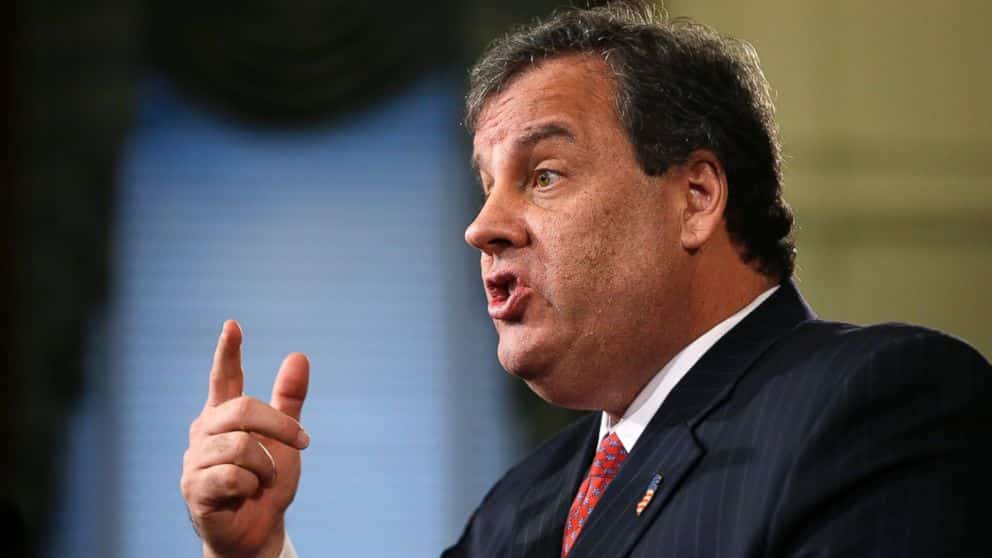
Governor Chris Christie’s Fiscal Year 2017 Budget Address

gov christie press lrg2

Feb. 16, 2016 – Governor Chris Christie’s Fiscal Year 2017 Budget Address As Prepared for Delivery

_____________________________________________________________

Trenton, New Jersey
February 16, 2016

Senate President Sweeney, Speaker Prieto, Lieutenant Governor Guadagno, members of the New Jersey State Legislature, friends, and my fellow New Jerseyans:

Today I come before you to present my budget for Fiscal Year 2017.

This is the seventh time I have presented a budget to this chamber, and I’m proud to say this for a seventh time.

This budget is balanced.

And once again it is balanced through fiscal responsibility, and not on the backs of our citizens, for the seventh straight year, this budget imposes no new taxes on the people of New Jersey.

I want to begin by saying thank you to the people of New Jersey for allowing me the great privilege of running for President of the United States.

It was the governing experience of this great state, the reforms we tackled here in New Jersey, the bi-partisan hard choices we made, and the recovery from one of the largest natural disasters in our country’s history, that I felt, prepared me for higher office.

While the result was not what I had hoped for, the experience has made me a better Governor, a better American, and a better person.

I owe that growth to the people of New Jersey and I intend to use it to make the next two years great ones for our state.

We have more work to be done here in New Jersey.

And I look forward to working together with all of you to get it done.

There are two key principles that are the foundations of the proposal I’m sharing with you today.

The first is fiscal restraint.

We’ve put New Jersey’s financial house back in order.

And we’re going to keep it that way.

The 2017 fiscal year budget calls for $34.8 billion in State appropriations.

Discretionary spending is $2 billion less than in 2008.

That means that 95% of all the growth in this budget is for pensions, government worker health benefits, and debt service.

We’ll return to that subject later.

We have showed that smart fiscal management and focusing on our real priorities allows us to do more with less.

The days of taxing and spending and wasting taxpayer money have gone to the dustbin of history where they belong.

The second principle is to continue advancing the hard reforms New Jersey needs, so we can build a stronger economy and make this State a better place to live — for our generation and the next.

These are the same principles that have underpinned everything my administration has done over the last six years and we’ve seen the results.

This budget builds upon these principles.

In it, we meet our obligations, we further our commitment to the most vulnerable, and we continue to make investments in the future.

This budget provides a pension payment that is the largest in our state’s history more than any administration ever before, contrary to the hyperbole from special interest groups.

With the State no longer forced to rely on one-shot gimmicks, non-recurring revenues are at the lowest level in more than a decade.

When we took office, one shot revenues were 13% of the state budget.

Today, they are less than 1%.

That is responsible fiscal management.

The surplus is higher than any budget proposed during the past 10 years, nearly triple the fund balance we inherited from the last Administration.

It reflects the reforms and hard-fought gains we have secured over the last six years to end waste and right the fiscal ship.

One additional example — the Unemployment Insurance Trust Fund.

When we took over it was billions in debt.

We have repaid the federal government, lowered taxes, and it now runs a healthy surplus, bolstered by an unemployment rate that has been nearly cut in half in the last six years.

We’re now in our sixth consecutive year of private-sector job growth, the fastest in our state in fifteen years.

Consider that for a moment: since the turn of the century, private sector job growth in New Jersey has never been stronger than it is today, in this moment, under our leadership and reforms.

If you listened to the left wing groups and some in this chamber, you would think it is just the opposite.

But facts are a stubborn thing.

The housing market has experienced double-digit growth and building permits are at their highest number in a decade.

We’ve shrunk the size of our government, and are doing more with less.

We’ve achieved historic investment in our school system, seen our crime rates drop, and have closed a state prison.

And we’ve helped thousands of people whose lives have been blighted by drug addiction to get a fresh start.

All of this progress can lead us, with continued reforms, to a strong, stable economic outlook.

With every budget that I have presented in this chamber, New Jersey has continued to advance down the path towards a future of greater justice and opportunity for all.

When it comes to making the investments we need, we’ve never hesitated.

But we’ve shown that we can live within our means.

And today, it’s important that we continue to hold our course.

Because no matter how much progress we’ve achieved, all this can still be undone.

That’s right, reversed.

The private sector job growth, reversed.

The housing market recovery, reversed.

The smaller government we have achieved, bloated once again.

We live in a time when our national economy and the global economy face new threats.

New Jersey cannot stand alone — our state has to be ready to weather the economic storms as well as the actual storms.

In the eight years before I took office, taxes and fees had been increased 115 times, making New Jersey the most heavily taxed state in the nation and placing an undue burden on residents and job-creators alike.

Since taking office, I’ve held the line on taxes.

I’ve vetoed the millionaire’s tax every time it’s come to my desk.

I vetoed a legislative proposal to increase the Corporate Business Tax.

I have vetoed five income tax increases passed by this body.

As Governor, I’ve also provided well-needed tax relief.

Last year, I raised the State earned income tax credit from 20% to 30% of the federal credit in concert with the signing of the FY16 budget.

My 2011 Business Tax Reforms have saved the business sector over $3 billion.

And by far, the broadest impact benefitting New Jersey taxpayers was our collaboration on the 2% property tax cap, which has brought property tax growth to a near halt, averaging less than 2% statewide since we passed the cap.

That compares to 7% per year in the 10 years before the law was enacted.

We are making real progress rolling back taxes that should never have been enacted in the first place.

If we stop exercising this type of fiscal restraint, if we back away from the reforms we all fought to achieve these past six years, then we’re going to go back to the bad old days.

Bureaucracy and mediocrity and wastefulness are like weeds.

You need to keep ripping them up and we know there are plenty of powerful special interests who would like to go back to the old days of giveaways on the back of our taxpayers.

We need to continue our work together and enhance the competitiveness of New Jersey.

Instead, just in the past two weeks, yet another economically irresponsible constitutional amendment was proposed by the Legislature that would mandate a near doubling of the minimum wage, which will have a chilling effect on the steady growth of our small business sector.

This proposed increase is on top of those imposed just three short years ago through, again, a constitutional amendment.

The New Jersey Business and Industry Association just released a report on out-migration from New Jersey caused by high taxes and expensive mandates.

Their study concluded that 2 million residents and $18 billion in annual income left our State over the last 10 years.

These facts are not debatable.

They come directly from internal revenue service statistics, not from the rantings of some left-wing think tank.

Are they leaving for Florida, North Carolina, and South Carolina?

Yes, their warmer climates and more inviting tax structures are tempting.

But who are the top two states we are losing citizens to?

Pennsylvania and New York.

The only thing warmer there is their lower taxes.

Those who propose higher taxes and more regulation in this chamber better look in the mirror and to our borders before they act.

62% of businesses surveyed said they would not open another location in New Jersey if they were to expand.

66% said they would not retire here.

67% said they take the estate and inheritance taxes into consideration when making business decisions.

This isn’t a hypothetical policy debate anymore, 2 million people and $18 billion have fled our State as a result of our tax structure.

It is not only older New Jerseyans.

In fact, New Jerseyans 18 to 34 years old leave more than any other age group.

We are losing both, with our antiquated and tone-deaf tax policies.

The time to act is now.

I’ve already called for repeal of the Estate Tax.

What has the legislature done?

They’ve called for yet another government mandated doubling of wages, and an amendment that will cause a $3 billion tax increase on all New Jerseyans.

Where does it end?

Some people in this room want to address the next generation of funding for the Transportation Trust Fund solely on the back of taxpayers by imposing a hike on gas prices without any discussion of tax fairness.

Never mind that we’re already one of the most heavily taxed states in the country, and excessive taxes are driving people and businesses to other states.

And never mind that my administration has repeatedly welcomed, and continues to welcome, the Legislative leadership to reach a sensible, equitable agreement on this issue.

In fact, I was ready to act last year and Democrats refused because of your mid-term elections.

That’s the fact.

The TTF was last renewed five years ago, and that authorization is expiring because that was the length of its term.

To imply that the TTF is in crisis and is suddenly and unexpectedly “running out of money” is a politically driven mischaracterization.

Remedies for any fix of the TTF cannot be made in a vacuum.

The reality is that New Jersey is fully able to support the current capital program as originally proposed in the current five-year authorization.

My administration continues to examine ways to control cash flow and make the most of every taxpayer dollar that the TTF spends.

So, while we wait for realistic proposals and for a legitimate discussion on tax fairness, not just tax hikes, my administration has been hard at work analyzing cost drivers and ways to maintain its roadways in a more cost-effective manner.

There is time to reach a reasonable agreement.

But it will need to be the right one for the hardworking taxpayers of New Jersey.

As if an isolated gas tax hike and 79% government mandated wage increase on our small businesses isn’t enough, New Jersey families and businesses continue to face the potential of another economy-killing proposed constitutional amendment, championed by some in this room, which seeks to divide our state between the government world and the real world.

The constitutional amendment mandates pension payments and places government workers ahead of every other citizen of the state in our state budget.

Approval of this amendment would place government workers:

Ahead of our students.

Ahead of our hospitals.

Ahead of the disabled.

Ahead of our seniors.

And the burden of the cost would be put on the backs of the taxpayers.

Taxpayers who do not receive anything close to these levels of benefits in their lives, would be required to pay for exactly what the public sector unions demand.

Platinum level health benefits.

Exorbitant pensions for life.

How out of line are these benefits from the real world every day New Jerseyans live in?

Take the average government worker who pays $126,000 for their pension and health benefits over 30 years.

Their return?

$2.4 Million in benefits.

This is not the real world New Jerseyans live in.

This chamber cannot divide our state between government workers with huge benefits and every day New Jersey taxpayers who not only don’t have those benefits, but also must pay for them for a privileged few.

There is an option to avoid this, our non-partisan commission has put forward a plan to save $2 billion on government worker health benefits and use it to save the pension system.

Failure to do this will raise taxes, cut municipal aid, hurt students and the disabled, and take aid from our seniors.

We can work together to avoid this.

I am ready to work with you.

Can we put aside partisanship and special interests and put all New Jerseyans first?

If we don’t, only our people will suffer.

And, if you were going to write a playbook for how to wreck the economy and divide a state, this would be it.

Pensions and health benefits already present the largest burden on our budget.

Increased pension, employee health benefits, and debt service together account for an astounding 95% of the growth of this budget.

You heard correctly, 95%.

On pensions, we are proposing to make a $1.9 billion contribution to the State’s pension funds.

This is $550 million more than last year, and in fact, it’s the largest contribution in New Jersey history.

Our overall commitment to the State pension system is bigger than any previous administration.

With this payment, my administration will have made more than $6.2 billion in pension payments.

That is nearly double the total of the last five Governors combined.

The problem is a broken system created by unsustainable giveaways, by politicians to special interests.

The reality is that continuing to bury our heads in the sand only grows the problem and diminishes those with the courage to take on this challenge.

I know you have the courage to make hard choices.

We’ve made them together in the past.

For our children and grandchildren, we simply cannot move in the wrong-headed and backwards direction of locking in platinum-plated benefits into the constitution, at the expense of hardworking, taxpaying families.

Now at the same time, I’m not willing to let gridlock and politics stop our progress on this issue.

In order for the State to be able to afford this pension payment and protect valuable priorities for the rest of our citizens, this budget calls for $250 million in savings from public employee and retiree health costs.

Through reasonable reforms such as requiring the use of generic drugs when available, modest increases in co-pays to discourage unnecessary visits, and establishing new delivery methods for primary care services, we can continue to provide quality care, but with important savings.

Absent any reforms, State costs for government worker and retiree health insurance would increase by $487 million, and at a comparable rate moving forward.

We cannot afford this.

Let me be clear, all of you cannot afford this type of spiraling growth.

Left unchecked, this will kill our ability to cover the cost of essential services that we expect of government, protecting our most vulnerable, making investments in our schools and infrastructure, attracting business, and for those who care about the future viability of their pensions — our ability to make adequate payments.

Or, it will require massive tax increases our citizens cannot sustain.

A 10% sales tax?

A 23% income tax increase?

Insanity.

These are common sense reforms that will save everyone money while still providing great coverage to employees.

As a first step, I’m looking for $250 million in savings in this budget.

Let’s talk more about what that $250 million means.

That’s $250 million in State savings, but this will help everyone.

$250 million in State savings means another $200 million in savings for local governments, school districts, and property taxpayers that fund them.

That’s real property tax relief.

And more than $100 million in savings for State and local employees, who will benefit from reduced premium sharing.

That’s less money coming out of the employee’s paycheck.

It’s a win-win-win for our citizens.

And this isn’t a pie in the sky request or experimentation.

It’s been done before, with great success here in New Jersey.

There are local governments that have already moved out of our State Health Care Plan to address the escalating costs.

They are innovating with new health plans, collaborating with their employees, and generating year over year savings.

They’ve just done this in Burlington County. We can do this statewide.

This is how we achieve the hard reforms our state needs, and put New Jersey on a sustainable path to the future.

We can continue to serve all the people of our state well, while preserving the fiscal restraint that has brought stability to our state over the last six years.

And if we do that, we can also deliver a fairer and better deal for taxpayers.

This fiscal responsibility will allow us to maintain the State’s other commitments.

My proposed budget includes over $16 billion in direct and indirect property tax relief, including $13.3 billion in school aid, $1.5 billion in municipal aid, and $1 billion in direct property taxpayer relief programs.

More than 440,000 seniors and citizens with disabilities will receive an average Homestead Benefit of $515, and more than 160,000 will receive an average Property Tax Freeze benefit of more than $1,200.

More than 200,000 other homeowners earning up to $75,000 will receive an average of more than $400 in Homestead Benefit.

We’re also going to continue working to extend our support for the most vulnerable members of our society.

We’re going to continue investing in housing assistance programs for low-income individuals as well as individuals with developmental disabilities.

Some of you in this room have begun to turn your attention to some of these issues affecting our most in-need residents.

I want to welcome you to that discussion about how we are serving the most vulnerable, those facing housing uncertainty, and how we are helping those in grips of poverty.

This year, we’re maintaining more than $17 million in State and Federal funding for the Division of Family Development’s Social Services for the Homeless Program.

We’re also committing $42 million for the State Rental Assistance Program, and more than $14 million for homelessness prevention and emergency shelters throughout New Jersey.

Because of this commitment, we have made startling progress in reducing homelessness and giving people the hand up they need to end the cycle that housing uncertainty contributes to.

In 2015, homelessness is a staggering 41% lower than it was in 2007.

From 2014 to 2015 alone, we reduced the number of homeless in New Jersey by nearly 14%.

Rates of homelessness among families with children declined by 25% in the last year.

Through a volatile and tough economic period, we protected these programs and reformed government to work better and the results have been extraordinary in helping people get off the streets.

When it comes to healthcare too, we’re making some important investments that will change and save lives.

Last month I called on this Legislature to join me in doubling down on our State’s fight against drug addiction.

We have a chance to help people beat this disease.

We have a chance to reclaim the lives of thousands of our fellow New Jerseyans.

In fact, 2015 saw the first decline in overdose deaths in four years.

That’s why we’re making a historic investment of more than $100 million in state and federal funds to extend access to care for mental health and substance use.

By providing more competitive reimbursement rates for services and providers, we have a chance to dramatically increase access to treatment.

This is the first significant Behavioral Health rate increase in more than a decade, and it’s going to make a big difference by improving critical services, getting more people into treatment earlier, and reducing the size of the burden which currently falls on Emergency Rooms.

With our highly successful Drug Court Program, we’re going to continue investing to provide mandatory treatment to more first-time, non-violent drug offenders.

My budget proposal includes funding of nearly $64 million to maintain and expand this program.

For individuals with developmental disabilities, there will be an additional $48.8 million to create community placement and services, continuing our commitment to transition individuals with developmental disabilities out of institutions and into the community, with the opportunity to live full lives among their families, friends, and neighbors.

For families, we’re providing an additional $25.8 million to support children with needs including behavioral health, substance use, and intellectual and developmental disabilities.

For women, we’re going to continue funding vital preventative and reproductive services.

We’re providing more than $15 million to support pregnant mothers and young children through the Home Visitation Program.

Over $20 million will also go towards supporting women’s services and domestic violence reduction programs.

And to invest in training our next generation of medical professionals who can deliver the world-class care that New Jerseyans deserve, we’re also making a $60 million investment in graduate medical education for New Jersey’s teaching hospitals.

Since 2010 we’ve more than tripled our funding to offset the cost of educating our doctors, and this is important to continue investing in our long-term challenges as well as the short term.

That’s why we’re also continuing to invest in improving the quality of public education.

In the last five years, we’ve changed the face of education in New Jersey.

And we’ve given more of our young people a fighting chance for the future.

This budget proposes our sixth year of historic investments in education, with $13.3 billion in direct aid to schools, and pension and health benefits payments.

I’m proposing nearly $100 million in additional K-12 school aid for New Jersey school districts, taking our total investment to more than $9 billion.

Under this plan, every single school district will have increased funding.

We’re going to continue investing in our incredibly successful charter schools system.

The number of students attending charter schools has nearly doubled during the course of my administration, and we’ve seen charter schools having a huge impact in allowing students to achieve their full potential and turn around education results for at risk communities.

For fiscal year 2017, funding will be provided to support Charter School Aid to ensure per student funding for charter schools remains steady.

Up to six new charter schools will open in the next fiscal year, supporting an additional 1,100 students.

We’re going to continue working to expand charter school opportunities for families in failing school districts.

And as I said before you last month, at my direction the Department of Education has begun to take steps to aggressively slash regulation for New Jersey charter schools and give them the tools they need to serve even more students in even greater ways.

We’re also going to continue strengthening Higher Education in New Jersey, so that all our students can reach their full potential.

Our overall Higher Education funding will be more than $2.2 billion, with steady funding for our institutions of Higher Education.

Investment in student aid programs will also continue, and we’re going to invest an extra $17.8 million in Tuition Aid Grants to bring our total funding to more than $400 million.

Grants are vital for allowing tens of thousands of New Jersey students to go to college, so this is a reasonable investment that will make a big difference for a lot of students.

We’re also going to add a fifth class to the Governor’s Urban Scholarship program, so we can support more than 600 students in targeted school districts.

Finally, let’s talk about how we’re investing in the overall management and administration of our State.

I’m pleased that today’s budget reflects our continued trend towards greater savings and efficiency, with a State workforce that is 10,000 people smaller than when I took office.

Funding for executive operations continues to remain flat.

We can all do more with less and the executive branch is leading by example.

At the same time, there are other areas of administration where we need to continue investing so all our communities have the governance they need.

So we’re also going to continue providing over $1.5 billion in Municipal Aid.

That includes more than $107 million in Transitional Aid to support cities with the biggest financial and management challenges, which will go along with providing valuable State support and expertise to promote good government and sustainable operations for local authorities.

The success of New Jersey depends on the success of all our communities.

So that’s our budget for Fiscal Year 2017.

Now for the final big question.

Will we work together to make progress for our citizens or will we just engage in partisanship?

Many of you are already focused on the next election, raising money, some spending their own money to run advertisements already.

Let me remind you, the election of our next Governor is 630 days away.

630 days.

Are we going to waste those days on partisanship and politics?

Or will you work with me to use those 630 days to help bring relief to our overburdened taxpayers?

We have made so much progress over the 2,220 days together.

Against all odds … nearly 10% unemployment when we started.

5.1% unemployment today.

$11 billion deficit when we started.

$800 Million surplus today.

7% yearly property tax increases when we started. Less than 2% average per year today.

Zero net private sector job growth in the eight years before we started.

230,000 new private sector jobs in the last six years and, this year, the best private sector job growth in 15 years.

The largest public University merger, between Rutgers and UMDNJ, in American history which previous governments had tried and failed over and over again.

Over $1.3 Billion invested in capital improvements to our colleges and universities for the first time in 30 years.

Over $24 Billion invested in our infrastructure in the last six years.

Criminal justice reform which made bail available to those who deserve it and keeps the truly violent off our streets.

Crime rates down.

Prison population down and a state prison closed.

Drug courts in every county and a new emphasis on treating this disease and saving lives.

More of our developmentally disabled in group homes and fewer in institutions.

More of our poor receiving good health care and charity care in our hospitals dramatically reduced.

A dramatic expansion of solar energy and the meeting of our 2020 clean air goals, all without taxing our citizens through the discredited Regional Greenhouse Gas Initiative.

More money is being spent on K-12 education than anytime in history and more families being saved by charter schools in our cities than ever before.

And all of this has been done with no new state tax increases in six years, no radical expansion of government regulation and 10,000 fewer state employees.

We did all of this together in the last 2,220 days.

Regardless of our party differences.

Regardless of the relentless selfishness of the special interests.

Regardless of the constant negativity of the media.

Are we willing to do this again over the last 630 days or will we succumb to politics, selfishness, and negativity?

I am standing here to tell you I am willing to continue to fix the remaining problems.

Let’s take the next steps to insure our future.

Lower taxes to stop people leaving New Jersey.

Build infrastructure in a way that is fair to our taxpayers.

Fix our pension and health benefit system in a way that will not divide and burden our taxpayers, but will bring closer together the real world and the excesses of the government world.

I am ready to work with you if you are willing to stop the partisanship and the reckless amending of our constitution to score political points.

We can sit and reason together for the next 630 days or we can fight for the next 630 days and leave our citizens without hope.

I want to face the future with faith and hope in the people we elected and appointed to make life better.

All the problems created by people can be solved by people — and we’re the ones who have to make it happen.

Over the years I’ve also been honored to work with all of you to make good things happen in New Jersey.

We might not always agree on everything, but we’ve always been able to have the hard conversations we need to move our State forward.

Let’s do that now, and continue to invest in making New Jersey the greatest State possible for all our people.

Thank you, God Bless You, and God Bless New Jersey.

Posted on Leave a comment

New Jersey Governor Chris Christie Releases Statement on Trenton Born Justice Antonin Scalia

scalia_theridgewoodblog

photo Justice Antonin Scalia

February 14,2016
the staff of the Ridgewood blog

Ridgewood NJ, Governor Chris Christie issued a statement through Twitter upon the great Supreme Court Justice’s passing on Saturday:

The tragic passing of Justice Antonin Scalia is an enormous loss to our entire country. Justice Scalia was the bedrock of the Court who, with unmistakable wit and good humor, was unwavering in his fidelity to the Constitution and a fierce advocate and protector of the liberties and freedoms it grants to us all as Americans.“Justice Scalia was a Trenton-born New Jerseyan and the first Italian American to serve on the Supreme Court. He was an example and inspiration, and a leader we are proud to call a native son of New Jersey. Mary Pat and I send our thoughts and prayers to his family and loved ones, and the countless friends who mourn him tonight.”

Posted on Leave a comment

Critics Hit Democrat Fulop on $1million Super PAC donation

Mayor Steven Fulop

Democrat Fulop critics slam $1M ‘dark money’ donation to super PAC

Local activists who worked with Mayor Steve Fulop in 2008 to enact the city’s pay-to-play ban are blasting a super PAC with ties to Fulop for accepting a $1 million donation from a company whose leadership is all but anonymous. Terrence T. McDonald, The Jersey Journal Read more

Posted on 5 Comments

Poll Finds 49% of New Jerseyans Favor Gas Tax Amendment

garber_square_roadwork_theridgewoodblog

file photo by Boyd Loving

A Fairleigh Dickinson poll released Monday find that 49 percent of New Jersey residents would support a proposed constitutional amendment dedicating gas tax revenue to the Transportation Trust Fund, the depleted funding source for the state’s roads and bridges. JT Aregood, PolitickerNJ Read more

Posted on 2 Comments

New Jersey Taxpayers faced the 3rd highest state tax burden

New Jersey Democrats Move to Raise Taxes

State-Local Tax Burden Rankings

We’ve just released our annual State-Local Tax Burden Rankings. According to the report, 9.9 percent of income in America went toward state and local taxes (in FY 2012).

The report highlights the state-local tax burden on taxpayers in each of the 50 states, details how much residents pay to their state and other states, and illustrates taxburden trends over time and within each state.

New Yorkers faced the highest burden, with 12.7% of income in the state going to state and local taxes. Connecticut (12.6%) and New Jersey (12.2%) followed closely behind. On the other end of the spectrum, Alaska (6.5%), South Dakota (7.1%) and Wyoming (7.1%) had the lowest burdens.

The study’s key findings include:

During the 2012 fiscal year, state-local tax burdens as a share of state incomes decreased on average across the U.S. Average income increased at a faster rate than tax collections, driving down state-local tax burdens on average.
On average, taxpayers pay the most taxes to their own state and local governments. In 2012, 78 percent of taxes collected were paid within the state of residence, up from 73 percent in 2011.
State-local tax burdens are very close to one another and slight changes intaxes or income can translate to seemingly dramatic shifts in rank. For example, Delaware (16th) and Colorado (35th) only differ in burden by just over one percentage point. However, while burdens are clustered in the center of the distribution, states at the top and bottom can have substantially different burden percentages—e.g. New York (12.6%) and Alaska (6.5%).

It’s important to remember that a significant amount of taxation occurs across state lines, and that this shifting is not uniform. For instance, one might pay sales taxes at their local corner store, but also pay sales taxes when on vacation in another state. This shifting should not be ignored when attempting to understand the burden faced by taxpayers within a state.


FULL REPORT : https://taxfoundation.org/article/state-local-tax-burden-rankings-fy-2012?utm_source=Tax+Foundation+Newsletters&utm_campaign=d4f19c7dbb-Promo_Income_Taxes_Illustrated_copy_01_11_5_2015&utm_medium=email&utm_term=0_8387957ec9-d4f19c7dbb-427656697&ct=t(Promo_Income_Taxes_Illustrated_copy_01_11_5_2015)&mc_cid=d4f19c7dbb&mc_eid=c834f22e2e

Posted on 7 Comments

McGreevey pushes latest Boondoggle in Paterson

Jim_McGreevey_by_David_Shankbone_theridgewoodblog

McGreevey comes to Paterson to defend controversial prison reentry initiative

JANUARY 6, 2016, 9:57 AM    LAST UPDATED: WEDNESDAY, JANUARY 6, 2016, 10:02 AM
BY JOE MALINCONICO
PATERSON PRESS

PATERSON — Former Gov. Jim McGreevey made a surprise appearance at Tuesday night’s City Council meeting in an attempt to defuse criticism aimed at the new prisoner reentry program he is launching in Paterson.

Speaking to the council members, McGreevey said a similar reentry initiative he oversees in Jersey City has achieved low recidivism rates and high employment among its participants by providing them with counseling, job training and other services to ease their transition to life outside prison.

Then the former governor addressed council members’ concerns about Paterson’s use of municipal public works department employees working overtime to complete renovations on the privately-owned Montgomery Street building where some of the post-prison services will be provided.

McGreevey said the “crazed drive to get this done quickly” stemmed from concerns that the city could lose the $180,000 federal grant paying for the work if it were not completed quickly. McGreevey’s explanation matched the one provided by Mayor Jose “Joey” Torres on Monday. The mayor has said the overtime costs would be covered by the federal grant.

In an interview after his presentation to the council, McGreevey said he expected the program to begin operation in the middle of this month with its first group of 11 to 15 participants. He said that it would serve between 175 and 250 released inmates per year. In an effort to dispel some residents’ concerns that parolees would be living at the Montgomery Street building, McGreevey said the site would only be used during business hours to provide services and referrals.

“I believe we’re changing lives through the process of reentry,” said McGreevey, chairman of the board of the New Jersey Reentry Corporation, the nonprofit organization working on the project.

For the most part, council members seemed to show deference to the former governor as they complimented his efforts. Not until later in the night, long after McGreevey had left the building, did several council members sharply question administration officials about the project

https://www.northjersey.com/news/mcgreevey-comes-to-paterson-to-defend-controversial-prison-reentry-initiative-1.1485818

Posted on 22 Comments

“able-bodied adults” between the ages of 18 and 49 without dependents no longer qualify for food assistance in New Jersey

ebt-sign

Christie administration ends waiver for food stamp work requirement

About 11,000 New Jerseyans may have their food assistance discontinued after Gov. Chris Christie’s administration said Thursday that the state is no longer offering a certain waiver in the program. Brent Johnson and Samantha Marcus, NJ.com Read more

Posted on 2 Comments

Lame Duck NJ Redistricting Scheme Raises More Questions than It Answers

Assemblywoman Holly Schepisi

In the days prior to Christmas, two hastily called Judiciary committee hearings were called in an effort to change the NJ State Constitution, ensuring one party control of the State in perpetuity. Practically no notice was provided, no information was shared, no questions were answered and no experts testified. Regardless of your political leanings, anyone who favors open, transparent, good government should reject what transpired. So far the Star Ledger and the Daily Record editorial boards have denounced this political gamesmanship. Below please find an Op Ed piece regarding this issue.

Lame Duck Redistricting Scheme Raises More Questions than It Answers

By Assemblyman Michael Patrick Carroll and Assemblywoman Holly Schepisi

Schemes hatched in lame duck sessions of the Legislature should always give reason for pause, but changing voting rights without considerable public discussion is reckless. A proposed constitutional amendment with a significant but unknown impact on the voting rights of New Jersey’s citizens deserves more than the hasty, slapdash, non-transparent treatment the Democrats are giving this measure.

Ignoring the Legislature’s responsibility to hold fact-finding hearings, Chairman John McKeon dismissed concerns about fast-tracking the proposal changing the way the state redraws its legislative districts. “The people of New Jersey will have the opportunity to vote on whatever is on the ballot,” he said at last week’s Assembly Judiciary Committee hearing.

We did not support this plan in part because the sponsors couldn’t answer basic questions. How can voters make an informed decision about a constitutional amendment when the Legislature itself does not fully understand it?

What’s the rush? Legislative districts won’t be reconfigured again until 2021. When the 1966 Constitutional Convention considered the standards used today, it met for three months and had 14 meetings full of expert testimony. Additionally, there were six meetings specifically on apportionment. In this process, the Democrats are advancing a plan after only two brief committee meetings with no expert testimony and only one member of the public commenting.

Their amendment relies on a decades-old report by Dr. Donald Stokes, who served on the Apportionment Commission in 1981 and 1991. Many of his assumptions are based on demographics from almost a generation ago. No one can deny that New Jersey has changed significantly in a quarter century. Does Stokes’ modeling still hold true? Were the demographics he used in 1993 accurate on what we know today?

The amendment deviates from the report on even more critical aspects. Stokes used legislative elections to create his models and proposal, but this amendment ignores them. Instead, it relies on federal and gubernatorial elections that have little to do with drawing up legislative districts. Why exclude legislative races to determine how those districts should be drawn? That’s like using baseball statistics to figure out how football should be played.

Their plan requires only a quarter of districts to be competitive, but allows the remaining 75 percent to have no contest at all. Why not maximize the number of competitive districts? The Stokes test for determining whether a map is fair requires the popular vote across the state to be represented among the districts as a whole and be responsive to the shifts of public opinion. When electoral tides move strongly toward one party, that party should fairly quickly win an effective majority of seats. Using the 2011 legislative election returns, a fair map should have resulted with 21 Democrat and 19 Republican Senators, rather than the 24-16 split that has remained since that election.

Further, the amendment intentionally excludes the equal representation requirement in the state Constitution. Every state respects equal population requirements, the bedrock of American democracy since “no taxation without representation.” Yet, the Democrats intentionally left it out in favor of gerrymandering districts, which almost always shift groups of voters to limit the voting rights of others. They may point to the compactness requirement in the constitution, but this amendment makes federal law pre-eminent.

Why do the sponsors want to make this change? Democrats have held a legislative majority since 2001 and hold their largest majority in 40 years.

The plan was conceived behind closed-doors by Democratic political operatives with essentially a super PAC in East Brunswick. They introduced it to the Assembly Judiciary Committee on November 17, even though it was not mentioned during a previous meeting just three days earlier. With little more information than a Politico article, it passed on a party-line vote the week before Christmas.

By the end of the next day, the Democrats wanted to limit the number of members on the redistricting commission in their plan without explanation. They called the committee back the following Monday, but that meeting started four hours late after most of the media and public left. This contempt for transparency and lack of serious inquiry into this proposal’s ramifications is striking and should be a matter of serious concern to anyone who values New Jersey’s voting rights.

While parties may disagree on the result of the map every ten years, New Jersey’s electoral process has been routinely praised by academics when compared to other states. Why weren’t those experts invited to the committee hearing? Shouldn’t we know what other states do before moving forward with a constitutional amendment? Surely if this plan were all the Democrats say, there would have been a line of academics ready to back them up.

In no other profession would you first enact a policy to know what is in it. The lack of information, transparency and candor is reason enough to be concerned with where the state is headed under a Democratic majority. This constitutional amendment blindly leads the public into forever changing the way New Jersey votes.

Posted on Leave a comment

How to check to see if you have unclaimed property in N.J. and reclaim it

Trenton_New_Jersey

By Samantha Marcus | NJ Advance Media for NJ.com
on December 28, 2015 at 7:08 PM, updated December 29, 2015 at 7:15 AM

TRENTON — New Jersey’s Unclaimed Property Administration connected $123 million in unclaimed assets with their rightful owners or heirs in the fiscal year that ended in June, according to an audit of the agency.

The state paid out $125 million in 2014 and $107.5 million in 2013.

But plenty remains unclaimed. Nearly $264 million was turned over to the state in the last fiscal year alone.

“It is common that in the normal course of business that individuals or businesses lose track of either checks that were issued to them or bank holdings,” according to the state website. “Once property reaches the defined abandonment period with no activity, the holder of this property will turn the property over to the state.”

The Unclaimed Property administration is merely the custodian. You never give up your right to claim these assets. “If property is not claimed it remains in the Unclaimed Property Trust Fund in perpetuity or until a valid claim is submitted and processed,” the website said


https://www.nj.com/politics/index.ssf/2015/12/how_to_locate_claim_your_unclaimed_property_in_nj.html?ath=9c46bfc08d76232bb5a5e00eeaf0bfa2#cmpid=nsltr_strybutton

Posted on 9 Comments

New Jersey: The least liked state in America

GSP

file photo by Boyd Loving
New Jersey is the only state which Americans tend to have an unfavorable opinion of

As America prepares to celebrate its 239th birthday this Saturday, YouGov compiled a ‘State of the States’, asking Americans how they feel about each and every state that forms our country.
This research shows that New Jersey is the only state in the country which people tend to have a negative opinion of. 40% of Americans have an unfavorable opinion of New Jersey while 30% have a favorable opinion of the state, giving the state a net favorability rating of -10%. In contrast, Alabama, the second least popular state in the country, has a net favorability rating of +8%, as 39% of Americans have a favorable view of Alabama and 31% have an unfavorable opinion. After Alabama the least popular states are Illinois (+9%), Mississippi (+9%) and Indiana (+12%).
Hawaii is the most popular state in the union with a net favorability rating of +56%, with 67% of Americans having a favorable view of the state and only 11% having an unfavorable opinion. Hawaii is followed by Montana (+43%), Wyoming (+42%), Alaska (+42%) and Maine (+42%).

https://today.yougov.com/news/2015/07/01/new-jersey-least-liked-state-america/

Posted on 3 Comments

N.J. state workers were paid $2.7M to ‘watch TV, play cards’ after facility closed

Trenton_New_Jersey


In the final weeks before the Christie administration closed a facility in Woodbridge for people with developmental disabilities, hundreds of state workers earned $2.7 million just for showing up — including some seen playing cards and watching TV, according to a report by the Office of the State Auditor. Susan K. Livio, NJ.comRead more

Posted on Leave a comment

NJ Democrats Push Union Demands with four proposed amendments to state constitution

Senate President Sweeney_theridgewoodblog

N.J. Democrats to address four proposed amendments to state constitution

DECEMBER 15, 2015, 10:56 PM    LAST UPDATED: TUESDAY, DECEMBER 15, 2015, 10:56 PM
BY DUSTIN RACIOPPI
STATE HOUSE BUREAU |
THE RECORD

As Governor Christie prepares for a four-day bus tour of New Hampshire to bolster his presidential campaign, Democrats in New Jersey will set in motion a plan to circumvent Christie’s executive authority by pushing for changes to the state constitution that would dedicate funding for transportation and pensions, allow casinos in North Jersey, and amend how legislative districts are drawn.

On Thursday, Democrats — who control the state Legislature — also plan to vote on three separate measures to override Christie vetoes. And that’s in addition to more than 100 bills scheduled for votes as the legislative session heads into its final weeks. Whatever bills aren’t addressed by the end of the session would have to be reintroduced next year.

Adding to the customary frenzy of the lame-duck session are the potential implications that some of the legislative actions could have on Christie’s White House bid and on the next gubernatorial election, in 2017.

Lame-duck sessions are “usually pretty busy with little things that people want to get done,” Loretta Weinberg, the Senate majority leader, said. “This is major stuff.”

The four proposed constitutional amendments would bring wide changes to the state: allowing up to two casinos in North Jersey; requiring the state to make quarterly payments into the public employee pension fund; dedicating all gas tax proceeds to the nearly-broke Transportation Trust Fund; and adjusting the legislative redistricting process. Changes to the state constitution must be approved by New Jersey residents. The votes scheduled for legislative committees Thursday would begin the process of getting those proposals on the 2016 ballot.

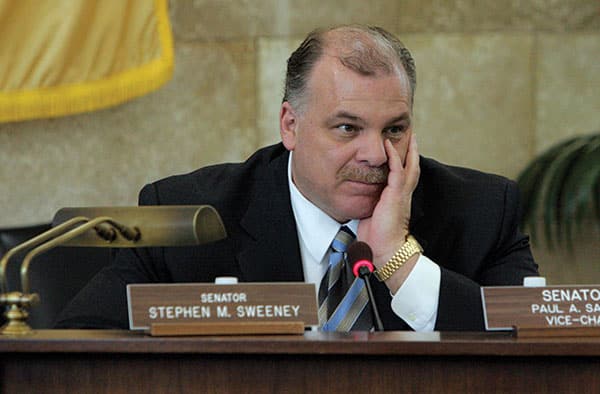
Although Christie has been supportive of the idea of expanding gambling outside Atlantic City and putting it to voters to decide, he has called amending the constitution for measures that don’t require it “governance by temper tantrum.” He was especially critical last week of Senate President Stephen Sweeney’s proposal to require quarterly pension payments, calling it a guaranteed tax increase to New Jersey residents and businesses.

Sweeney, D-Gloucester, joined with Christie, a Republican, in 2010 and 2011 to reform the public employees’ pension and health benefits system, including requiring the state to make increased contributions into the pension fund over seven years. After three budgets of Christie’s that reduced those payments, and a state Supreme Court decision telling lawmakers and the governor to find a solution, Sweeney has proposed making the payments a constitutional requirement.

Christie accused Democrats of catering to unions and said during his radio show last week that Sweeney’s proposal is “totally about playing politics” since Sweeney is expected to run for governor in 2017. Any Democratic gubernatorial candidate is likely to seek the support of unions, who have strong influence in the state and spend heavily in state elections.


https://www.northjersey.com/news/n-j-democrats-to-address-four-proposed-amendments-to-state-constitution-1.1474114

Posted on 1 Comment

NJ Democrats bearing gifts in the Christmas Season Trot out Huge Gas Tax Increase

Holiday gifts theridgewoodblog.net

NJ Senator Mike Doherty (R-23) questioned New Jersey’s outsized spending on transportation infrastructure, saying that he has not found a satisfactory explanation as to why the state pays more  than ten times what similarly populous states like Massachusetts pay to fix their roads, bridges and highways

Sweeney Trots out ‘New Jersey – Investing in You’ with Key Senators

They came bearing gifts in the Christmas season, – $174 million’s worth, to be precise – state Senate President Steve Sweeney (D-3) and his colleagues in the Senate Democratic Caucus, the statehouse cough-up of seven weeks-worth of round table visits around New Jersey in the respective districts of the senators who now stood sedately at attention with Sweeney. Max Pizarro, PolitickerNJ Read more