
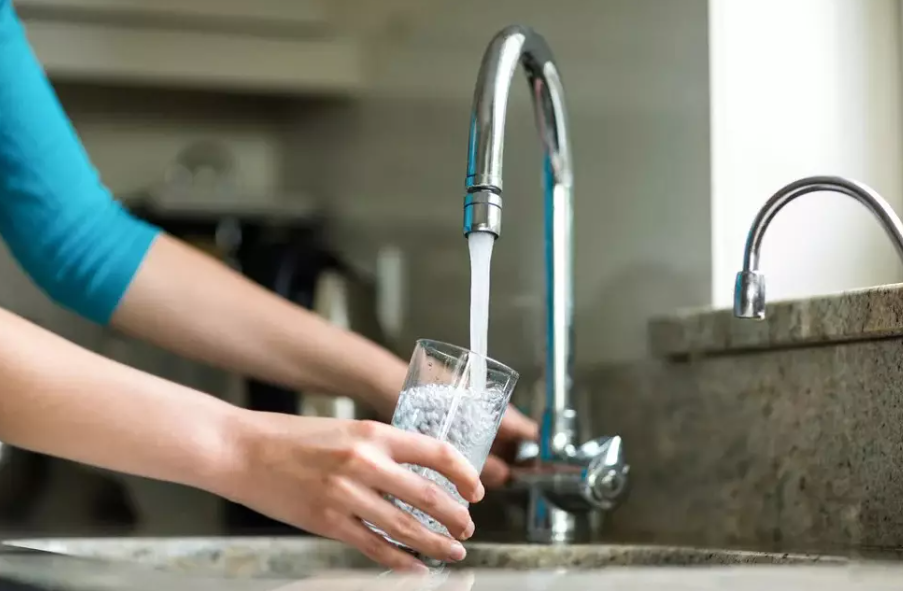
What is actually hiding in your family’s drinking water? The federal government is aiming to find out—and map a path to clean it up
the staff of the Ridgewood blog
Ridgewood Water has announced that 11 of its 12 brand-new, state-of-the-art PFAS Treatment Facilities are expected to be fully operational by the end of 2026. This major milestone means that the local utility provider will achieve system-wide compliance four years ahead of the federal mandate.
But in a historic joint announcement, the Department of Health and Human Services (HHS), led by Secretary Robert F. Kennedy Jr., and the U.S. Environmental Protection Agency (EPA) unveiled a major crackdown on contaminants in the nation’s public water systems.
For the first time in the history of federal water monitoring, microplastics and pharmaceuticals are being designated as priority contaminant groups. They join a drafted regulatory watchlist alongside notorious “forever chemicals” (PFAS) and disinfection byproducts.
What is the EPA’s CCL 6 List?
Every five years, the EPA is mandated to release a Contaminant Candidate List (CCL). The newly drafted Sixth Contaminant Candidate List (CCL 6) highlights 75 chemicals and nine microbes currently found in public water systems that are not yet subject to national safety regulations.
By adding a substance to the CCL, federal agencies unlock critical funding for focused research, data gathering, and potential future mandates under the Safe Drinking Water Act (SDWA).
Federal officials noted that adding these emerging threats is a “direct response to the concerns of millions of Americans who have long demanded answers about what they and their families are drinking every day.”
Introducing STOMP: The $144 Million Microplastics Battle
While the health risks of chronic exposure to microplastics remain an emerging field of study, the government is taking preventative action. Principal Deputy Chief of Staff for HHS, Stefanie Spear, called microplastics “one of the most pervasive and least understood environmental health challenges we face.”
Because scientists lack validated, scalable methods to safely extract these particles, Secretary Kennedy announced the launch of a new initiative: STOMP—the Systematic Targeting of Microplastics program.
-
The Budget: A $144 million national investment.
-
The Goal: To measure, analyze, and ultimately figure out how to safely remove microplastics from the human body and the environment.
The Hidden Threats: Microplastics & Pharmaceuticals Explained
But how do these elements end up in our taps in the first place, and what harm do they cause?
-
Microplastics in Water: These are microscopic plastic fragments that have already been detected in human blood, breast milk, and major organs. While research shows tap water contains significantly fewer microplastics than bottled water (which averages a staggering 240,000 plastic fragments per liter), they carry chemical and biological risks, including the formation of toxic biofilms.
-
Pharmaceuticals in Water: This broad class includes trace amounts of antibiotics, hormones, antidepressants, and other medications. They primarily infiltrate public water systems through human waste and improper drug disposal.
Part of a Broader Wellness Strategy
This aggressive stance on water purity is a key pillar of a wider federal push to address skyrocketing chronic health issues across the United States. Beyond microplastics and PFAS, the administration continues to audit other widespread water additives, including fluoride, to ensure public safety.
While environmental engineers note that expanding the candidate list is a routine regulatory procedure, the inclusion of modern consumer bi-products marks a monumental shift in how the government defines “clean” drinking water.
Tell your story #TheRidgewoodblog , #Indpendentnews, #information, #advertise, #guestpost, #affiliatemarketing,#NorthJersey, #NJ , #News, #localnews, #bergencounty, #sponsoredpost, #SponsoredContent, #contentplacement , #linkplacement, Email: [email protected]
-
Tags:
#DrinkingWater#EPA#Microplastics#PFAS#RFKJr#PublicHealth#CleanWater





