Ridgewood NJ, this week, OnlineDoctor.com put out a survey that found 18% of Americans haven’t seen a doctor in 5+ years. Women are also 20% more likely than men to have seen a doctor and had a doctor’s appointment within the last year.
Newark NJ, new legislation allowing Horizon Blue Cross Blue Shield of New Jersey to change its corporate form to a more modern structure and one that would enable the nonprofit to invest a far greater amount into emerging technologies — passed in the NJ Senate and General Assembly on Thursday afternoon.
Montvale NJ, CityMD, the leading urgent care provider in the New York metropolitan area, today announced the opening of a new site located at 62 Farm View in Montvale. Uniquely situated at a historic farm turned retail experience – The Shoppes at DePiero Farm – the latest CityMD marks the 21st location in New Jersey and the fifth in Bergen County.Continue reading CITYMD OPENS NEW URGENT CARE CENTER IN MONTVALE
The Health Insurance Portability and Accountability Act (HIPAA) training program was designed to improve the healthcare industry via securing patients’ sensitive information, facilitating the administrative processes for healthcare industries, and, ultimately, reducing costs. Because any person with access to PHI is required to take that training, it is important to understand how it works and why healthcare providers have to give that training to their employees. Healthcare staff in group health plans, healthcare clearinghouses, or healthcare insurance companies are required to take this training as well. If you want to know why this training is so important, continue reading these following points.
Trenton NJ, NJBIA Chief Government Affairs Officer Chrissy Buteas issued the following statement on today’s passage of bill S-2676/A-4389, which levies a 2.5% tax on health insurance plans, increasing costs for businesses and nonprofits.
Who we are is one of the biggest questions in life. Answering the question about one’s origin is not easy, especially for people who are not aware of the depth of their history and culture. If you are sensitive, it can make you feel inferior. Knowing your past is crucial as it helps you determine the person you are while creating the future. Researching to discover your history has multiple benefits. This article explains the reasons why knowing your past is essential. They include the following:
Pill dispensers have immensely helped patients that needed assistance to follow their medication plans. Primary caregivers also benefited, especially those working with the elderly.
While the traditional set achieved impressive success, the modern electronic pill dispenser is promising to play an even bigger role in healthcare. Electronic connectivity will allow it to help the patient, caregivers, and even pharmacists coordinate and monitor the patient’s medication.
Trenton NJ, Acting to improve health care access for New Jersey residents, Governor Murphy today announced that the State of New Jersey will move to a State-Based Health Exchange for the year 2021 .
Transitioning to a State-Based Exchange (SBE) will give the state more control over the open enrollment period; access to data that can be used to better regulate the market, conduct targeted outreach and inform policy decisions; and allow user fees to fund exchange operations, consumer assistance, outreach and advertising. By redirecting the assessment on premiums, currently paid to the federal government to utilize a Federally-Facilitated Exchange (FFE), New Jersey can operate an exchange that is tailored and efficient for New Jersey residents.
River Vale NJ, Assemblywoman Holly Schepisi speaks with reporters at a press conference on Feb. 14, 2019, about why public opinion polls increasingly show that Gov. Phil Murphy is taking New Jersey in the wrong direction.
Schepisi says, “We must work together, put aside partisan posturing and implement policies to ensure affordability for the middle class. NJ’s tax increases and Governor Murphy’s policies are crushing our middle class.”
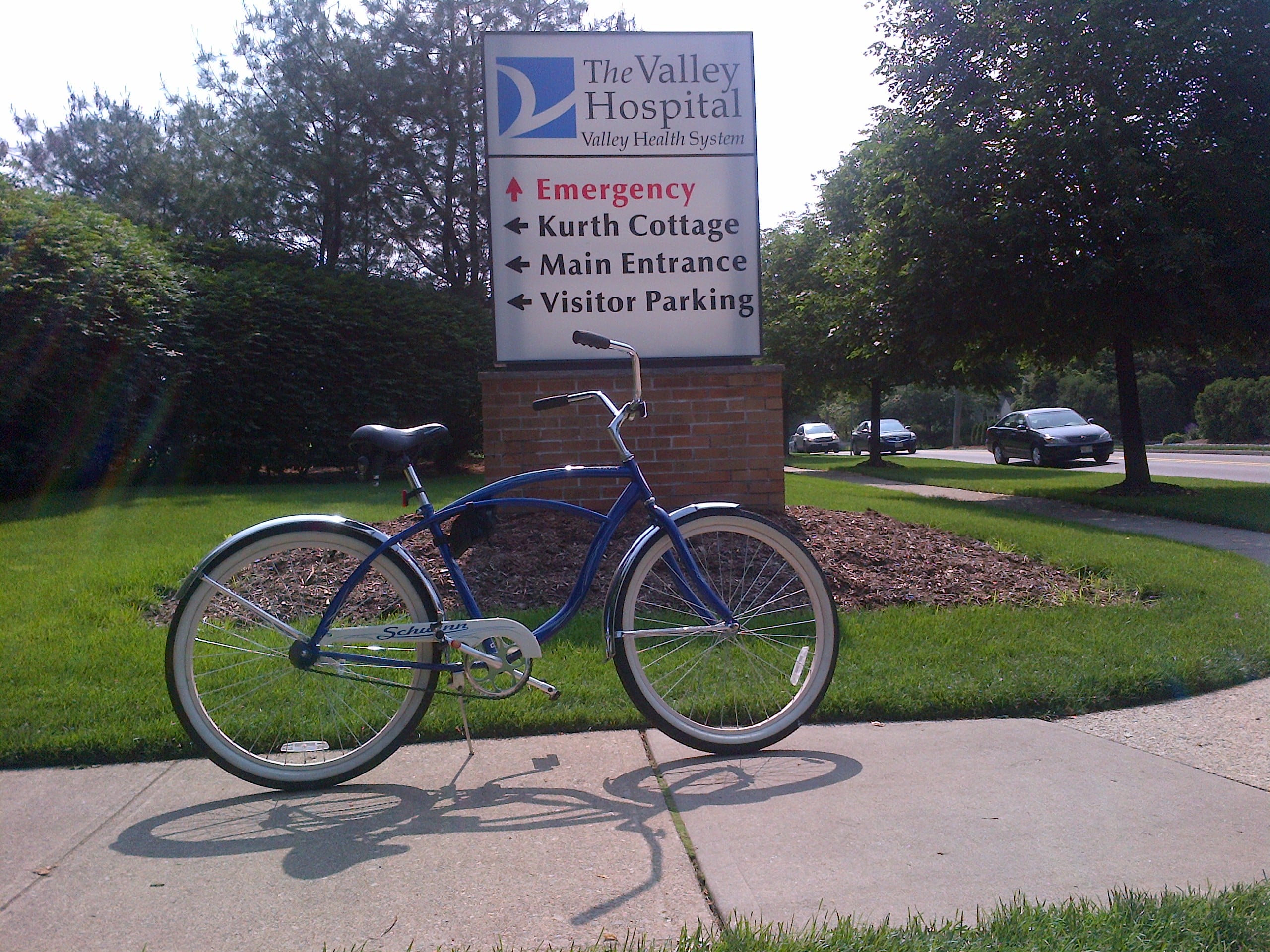
Ridgewood NJ, Valley Health System has selected an enterprise master patient index from NextGate to support automated medical record matching. With population health management supported with analytics becoming a top priority for many healthcare organizations, so is the need to collect data and clean it of duplicate information to better identify and manage patients across all settings of care.
That is the impetus for Valley Health System in Ridgewood, N.J., which has selected enterprise identification company NextGate as its vendor for records management, says Michael Burke, assistant vice president of information systems.
“Incomplete or inaccurate data in one’s health record can be detrimental to patient safety and a major barrier to providing highly-coordinated and individualized care,” he asserts. “Safe and effective care management hinges on the ability to view a holistic, real-time portrait of patients during every encounter. NextGate’s platform will play a significant role in our transformational journey toward improved data exchange, provider collaboration and operational efficiency for value-based care success.”
Valley , which serves 440,000 residents in northern New Jersey and southern New York using cleaner data to analyze and better understand the needs of patients with COPD, congestive heart failure and total joint replacement, and they’ll have the data to back up the level of quality given to patients and show it to insurers to get higher reimbursement.
Trenton NJ, Senate President Steve Sweeney (D-Gloucester/Salem/Cumberland) issued the following statement in response to Governor Phil Murphy’s veto of legislation (S2455 – Sweeney, Oroho/Murphy, McKnight, Mosquera) which would produce substantial cost savings in health care expenses by transferring county college employees and retirees from membership in the School Employees Health Benefits Plan to membership in the State Health Benefits Plan:
“The Governor’s veto will cost the county colleges and their employees millions of dollars in future healthcare savings. Once again, the Governor has chosen to stand with the New Jersey Education Association’s union leaders and against the interests of the taxpayers of New Jersey, the county colleges, their hardworking professors and staff, and the students who will be forced to pay higher tuition. It is a terrible irony when we have a Governor calling for free county college tuition at the same time that he refuses to reduce health care costs and produce savings that could be used in support of the colleges and their students.”
Washington DC , a simple idea to lower healthcare costs continues to be ignored by New Jersey state legislator ,according to Alieta Eck, MD ,”this was a hearing in 2011. Our bill, NJ S239, is still waiting to be heard by the NJ Senate Health Committee. We believe we have enough votes to pass it through, but Senator Vitale refuses to post it. What we are asking, and I fear I did not make this clear enough in the hearing, is that we are asking the state to cover the liability of the PRIVATE practices of physicians who donate 4 hours/week in or through a non-government free clinic. The federal government already protects us for the work we do in the free clinic via the Federal Tort Claims Act. ”
She goes on , “This would improve access to care for the ambulatory Medicaid population, for people who have no insurance or funds to pay for primary care, for people who are undocumented and need medical care– and it would take a huge burden off the taxpayers. If the federal government would block grant those Medicaid dollars back to the states, the states could use the funds to continue to care for the poor and disabled and for indigent nursing home patients– and the state contribution to the Medicaid system would be far less. State budgets would be much easier to balance and taxes would be lower.”
“The hospitals complain that they cannot publish their prices because they would have to ask the insurer in order to state the price up front. What other industry thinks like that? “How much is this dress?” Answer, “What credit card are you using?” Forget the insurer. What is the best CASH, check or credit card price? ” Alieta Eck, MD For Real Health Care Reform
By Rachel Bluth July 25, 2017
COLUMBUS, Ohio — Two years after it passed unanimously in Ohio’s state Legislature, a law meant to inform patients what health care procedures will cost is in a state of suspended animation.
One of the most stringent in a group of similar state laws being proposed across the country, Ohio’s Healthcare Price Transparency Law stipulated that providers had to give patients a “good faith” estimate of what non-emergency services would cost individuals after insurance before they commenced treatment.
But the law didn’t go into force on Jan. 1 as scheduled. And its troubled odyssey illustrates the political and business forces opposing a common-sense but controversial solution to rein in high health care costs for patients: Let patients see prices.
Many patient advocates say such transparency would be helpful for patients, allowing them to shop around for some services to hold down out-of-pocket costs, as well as adjust their household budgets for upcoming health-related outlays at a time of high-deductible plans.
Despite New Jersey’s lack of regulatory guidance when it comes to telemedicine, a California-based digital startup group called PlushCare, which provides urgent care treatment electronically, has opened for business in the Garden State.
Telemedicine is an online service designed to make it easier to be treated by a doctor or nurse without leaving home — via smartphone or computer.
The service is not intended for broken bones, wounds, or other serious injuries, but has become popular among patients suffering from bronchitis, sinus infections, pink eye, sore throat and urinary tract infections.
8Apr – by Daniel Steingold – 189 – In Health Studies
ROCHESTER, Minn. — When it comes to treating a serious illness, two brains are better than one. A new study finds that nearly 9 in 10 people who go for a second opinion after seeing a doctor are likely to leave with a refined or new diagnosis from what they were first told.
Researchers at the Mayo Clinic examined 286 patient records of individuals who had decided to consult a second opinion, hoping to determine whether being referred to a second specialist impacted one’s likelihood of receiving an accurate diagnosis.
The study, conducted using records of patients referred to the Mayo Clinic’s General Internal Medicine Division over a two-year period, ultimately found that when consulting a second opinion, the physician only confirmed the original diagnosis 12 percent of the time.
A new study finds that 88% of people who go for a second opinion after seeing a doctor wind up receiving a refined or new diagnosis.
Among those with updated diagnoses, 66% received a refined or redefined diagnosis, while 21% were diagnosed with something completely different than what their first physician concluded