
>
Sorry folks we were out of commission for a couple of days
Tag: Ridgewood NJ
>Mail Art Request ,Theme ,"it takes a Village"
>
In conjunction with the First International Mail Art Installation at the stable ArtChick would like to invite all to send her your Mail Art or Fun Mail to James Foytlin Attn ArtChick PO Box 213 Ridgewood NJ 07451 and the theme is you guessed it ,”it takes a village” *Mail Art received will be installed at the stable for the current show ! must be recieved by March 25! (ArtChick suggests post cards)
WHAT MAIL-ART IS ABOUT
Here is a brief way what the main things are that define Mail-Art. But, of course, there are more.
1) SENDING ARTFUL THINGS
It is the desire to make sending things something special. If you can send it you can make it Mail-Art.
2) CREATIVE COMMUNICATION
Communicating in a way that redefines sending messages. For some people it is the fun of “a little creativity every day”
3) MAKING PROJECTS AND SHOWS
Creating a forum for activities and projects free from the rules of the main-stream art-market. Give and receive artworks and make or join in on exhibitions and shows
4) GLOBAL CULTURE
Be a part of a large global community – share culture, lifestyle and interests with each other in a peaceful and creative way.
5)FREEDOM
Work for borderless liberty and human rights ALL over the world. Help people fight for freedom of the mind .
6) FUN AND HUMOR
Celebrating humor and fun for artful or nonsensical reasons. Have fun by doing Mail-Art with others.
History of a Village
History of Ridgewood’s Municipal Government
WHAT MAIL-ART IS ABOUT
Here is a brief way what the main things are that define Mail-Art. But, of course, there are more.
1) SENDING ARTFUL THINGS
It is the desire to make sending things something special. If you can send it you can make it Mail-Art.
2) CREATIVE COMMUNICATION
Communicating in a way that redefines sending messages. For some people it is the fun of “a little creativity every day”
3) MAKING PROJECTS AND SHOWS
Creating a forum for activities and projects free from the rules of the main-stream art-market. Give and receive artworks and make or join in on exhibitions and shows
4) GLOBAL CULTURE
Be a part of a large global community – share culture, lifestyle and interests with each other in a peaceful and creative way.
5)FREEDOM
Work for borderless liberty and human rights ALL over the world. Help people fight for freedom of the mind .
6) FUN AND HUMOR
Celebrating humor and fun for artful or nonsensical reasons. Have fun by doing Mail-Art with others.
History of a Village
History of Ridgewood’s Municipal Government
The Village of Ridgewood wasn’t organized as a separate municipality until 1876. By then, the settlement we call Ridgewood was almost two centuries old. The land that Ridgewood occupies was originally a hunting and fishing ground of the Lenni Lenape Indians that became a part of the Dutch colony of New Amsterdam founded in 1624. Forty years later, the British captured New Amsterdam and renamed it New York.
After New Amsterdam became British, King Charles 2nd gave New Jersey to Sir Carteret and Lord Berkeley, two of his most loyal supporters. In 1674, Lord Berkeley needed money to finish his mansion in London, and sold his half of the colony to two Quakers. New Jersey was then divided into the Province of East Jersey owned by Sir Carteret and the Quaker Province of West Jersey. In 1687, the East Jersey Proprietors granted several hundred acres in Bergen County to Isaac Kingsland. Johannes Van Emburgh bought some of this land in 1698. The area was then known as Hoachas (now Ho Ho Kus) and as Paramus by 1725.
After the Revolution, the settlement had grown to about 20 families and was known as Godwinville, after a war hero. However, Godwinville was never a separate municipality. The entire northwest corner of Bergen County was a large municipality known as Franklin Township formed in 1771 from a section of Saddle River Township. Within Franklin Township, there were numerous unincorporated settlements such as Godwinville.
In 1848, the Patterson and Ramapo Railroad was completed providing Godwinville with easy access to New York City. In 1853, Samuel Dayton bought the Van Emburgh estate and with the idea of establishing a suburb. Cornelia Dayton renamed Godwinville “Ridgewood” to attract buyers from the city. The population exploded from several hundred in 1850 to over 1,200 by the time of the centennial. Ridgewood built its own school but was still a part of Franklin Township. The population doubled again by the turn of the century.
On March 30, 1876, Ridgewood finally became a separate Township. Actually, Ridgewood was fifteen years ahead of the rest of the state. It wasn’t until the early 1890s that New Jersey adopted legislation requiring each municipality to establish a Board of Education and fund all public schools with a municipal-wide property tax. In just a few months in 1894, numerous settlements with schools incorporated as separate municipalities. Twenty-eight municipalities were incorporated in Bergen County alone. Part of Ridgewood Township went to the new Borough of Midland Park and another part went to the new Borough of Glen Rock. At the same time, Ridgewood changed its municipal form of government from a Township to a Village. However, to this day the school system is still officially known as the “Ridgewood Township Board of Education”.
Almost all of the 1894 municipalities were incorporated as Boroughs, the most common plan of municipal government in New Jersey. In a Borough, the governing body consists of six Council Members and a directly elected Mayor who acts as the chief executive.
Ridgewood was one of the few municipalities that incorporated as a “Village.” In this rare form of local government, the public elected five trustees who selected one of their members as Village President to preside over the meetings. There was no Mayor. The Village plan proved unsuccessful because it lacked clearly defined management responsibilities.
During this period, the Trustees organized the village departments and planned a civic center just west of the train station. However, the civic center was defeated in 1909 and the Village built a municipal building and firehouse at Hudson and Broad streets. This remained as the municipal complex until 1955 when the Village purchased the Elk lodge built in 1928 on North Maple Avenue and converted it into the current Village Hall.
In 1911, Ridgewood reorganized for a second time adopting the Commissioner plan of municipal government, but retaining the name “Village”. The municipality was divided into three departments – Public Safety, Finance and Public Works. The voters elected three Commissioners who each had full executive authority over one of the departments. The Commissioners also selected one of their members as Mayor to preside over the meetings, but the Mayor had no executive power other than as a Commissioner of one of the departments. At the time, the Commissioner form was considered as a reform, but today few municipalities retain this plan. Each department tends to become a fiefdom and is too dependent on the management skills of its Commissioner.
In 1970, Ridgewood recognized the need to professionalize municipal management and adopted the more modern Faulkner Act Council-Manager plan. Under this form, the public elects five Council Members who act as a Board of Directors. Their principle responsibility is to hire and oversee a professional Village Manager who has full executive power for all departments. The Council also selects one of its members as Mayor who presides over the meetings but has no executive authority.
Ridgewoods First international Mail Art Installation and Rock Star DJ Photos
>

Stable Gallery, 259 N. Maple. Ave. Weekdays, 8:30 a.m. to 4:30 p.m. First international Mail Art Installation to take place in Ridgewood, NJ. Come see ArtChick’s (Kristine Di Grigoli Paige) personal collection of Mail Art from places such as Italy, Portugal, California, Brazil, among many others. ArtChick enjoys trading Mail Art with other artists as well as participating in mail art exhibitions around the world and sending work to private art collectors. Visit: www.TheSoundandVision.com to view ArtChick’s creations. This installation also exhibits ArtChick Nightclub Photography. Come see some of the worlds top DJ’s displayed on Metal Murals and pop style dancing silhouettes. Each mural displays the DJ in focus surrounded by impressionistic color light movements. These photos simply display the raw talent of digital photography and this generation defining themselves. Come by the Stable Gallery Mon-Fri at your own leisure. Its Free and ArtChick hopes to inspire you!
>Finally – An Economical Parking Solution That Makes Sense!
>
Despite her recently announced “lame duck” status, Councilwoman Kim Ringler-Shagin is still actively seeking sensible ways to address the Village’s downtown parking shortage. To that end, Ms. Shagin offered up an economical solution during Wednesday evening’s Village Council Work Session. Not a new solution, but a good one nonetheless.
Citing a proposal contained within a 2001-2002 parking study commissioned by Village officials, and one she’d observed during a recent visit to Summit, the two-term Councilwoman suggested the erection of signage directing visitors to municipal parking lots. Currently, no such signs exist anywhere in the Village.
The Fly wonders why Village officials never erected “Municipal Parking This Way” signs. Village Council members don’t seem the least bit hesitant to construct at 60 foot tall, $7 million plus parking facility, but won’t spend the money for a few signs?
What’s the story here Mayor Pfund?


>Bergen County Prosecutor Announces Aggressive DWI Crackdown
>Bergen County Prosecutor John L. Molinelli announced today an aggressive campaign to combat drunk driving. Effective immediately, Molinelli will urge local police chiefs to conduct DWI checkpoints beginning this Spring. To assist them in these endeavors, Molinelli has committed as much as $200,000 of forfeited funds to pay police officer overtime incurred as a result of conducting these checkpoints. Forfeited funds are monies that are the proceeds of criminal activities that have been seized by law enforcement.
Historically, DWI checkpoints have proven to be an effective tool in combating the crisis that is drunk driving. DWI checkpoints serve two purposes. First, the unannounced and unexpected checkpoint conducted in an area where drunk drivers are believed to be, takes them off the road, punishes them and as such, saves lives. Secondly, the existence of these DWI checkpoints raises the community’s awareness of the perils of drunk driving and of law enforcement efforts to prevent terrible tragedies.
According to the statistics published by the Bergen County Office of Highway Safety, there has been a steady increase in DWI fatalities since 2005. In 2005, DWI fatalities accounted for 16% of the total fatalities within the county. In 2006, 17% of all fatalities were alcohol related and in 2007 that number skyrocketed to 24%.
>Killion and Rutishauser address South Broad Street traffic safety issues
>Police Captain Keith Killion and Village Engineer Christopher Rutishauser last night revealed their jointly devised plan to control speeding automobile traffic on South Broad Street.
The duo recommended that a double yellow line be painted from the Glen Rock border north to East Ridgewood Avenue. The double yellow line strategy has been used successfully before in the Village, most notably along Overbrook Road.
Rutishauser advised Village Council members that since South Broad Street continued into another municipality (Glen Rock), NJDOT regulations would prohibit the construction of speed humps in the affected area. A speed hump is currently deployed in front of the Somerville School.
Citing concerns over possible noise issues in a residential neighborhood, Mayor David Pfund flatly rejected a proposal made by Councilman Jacques Harlow to install “rumble strips” along the route.
Killion, who owns residential property on South Broad Street, and Rutishauser expect that the double yellow line will be in place within 5-6 weeks.
>Harlow Reportedly Distributing His Election Nomination Petitions At Village Hall
>It is rumored that Councilman Jacques Harlow has been distributing his election nomination petitions to Village employees, at Village Hall, and during normal working hours.
The Fly received telephoned reports from several Village employees who indicated that they felt “intimidated” by Harlow, and signed the petitions fearing reprisal if they didn’t. Most told The Fly that Harlow is “our boss’ boss; what was I going to do?”
The Fly suggests that Harlow now be banned from Village Hall until the election is over. What do you think?
>Village Council Debates Spending $129K for yet ANOTHER Habernickel Park Study
>
During last night’s Village Council Work Session, Mayor David Pfund, Councilman Jacques Harlow, and Councilwoman Kim Ringler-Shagin each expressed their personal dissatisfaction with a request by Ridgewood Parks and Recreation Director Timothy Cronin to allocate $129K in capital funds for a “Habernickel Park Development Plan.”
Deputy Mayor Betty G. Wiest was the only member of Council to defend Cronin’s request. Councilman Patrick Mancuso offered no opinion on the issue.
Pfund, Ringler-Shagin, and Harlow all publicly chastised Cronin each saying that “enough was enough” with respect to the continued engagement of expensive consultants in connection with developing plans to transform Habernickel into multi-use recreational facility.
Further discussion of Cronin’s request is scheduled to take place at a future Council Work Session.
>Lays Out Truce In Math Wars
>Education Panel
Lays Out Truce
In Math Wars
Effort to Fix ‘Broken’ System
Sets Targets for Each Grade,
Avoids Taking Sides on Method
By JOHN HECHINGER
March 5, 2008; Page D1
A presidential panel, warning that a “broken” system of mathematics education threatens U.S. pre-eminence, says it has found the fix: A laserlike focus on the essentials.
The National Mathematics Advisory Panel, appointed by President Bush in 2006, is expected to urge the nation’s teachers to promote “quick and effortless” recall of arithmetic facts in early grades, mastery of fractions in middle school, and rigorous algebra courses in high school or even earlier. Targeting such key elements of math would mark a sharp departure from the diverse priorities that now govern teaching of the subject in U.S. public schools.
FORUM
1
How does the quality of math education in schools today compare to when you were in school? Discuss2
The panel took up its work amid widespread alarm at the sorry state of math achievement in America. In the most recent testing by the Program for International Student Assessment, released late last year, U.S. 15-year-olds achieved sub-par results among developed nations in math literacy and problem-solving, behind such countries as Finland, South Korea and the Netherlands.
“Without substantial and sustained changes to the educational system, the United States will relinquish its leadership in the twenty-first century,” reads a draft of the final report, due to be released next week by the Department of Education.
MATH ESSENTIALS
The National Mathematics Advisory Panel is expected to call for the following “critical foundations” or benchmarks for U.S. school children.
Fluency with whole numbers:
1. By the end of grade three, students should be proficient with the addition and subtraction of whole numbers.
2. By the end of grade five, students should be proficient with multiplication and division of whole numbers.
Fluency with fractions:
1. By the end of grade four, students should be able to identify and represent fractions and decimals, and compare them on a number line or with other common representations of fractions and decimals.
2. By the end of grade five, students should be proficient with comparing fractions and decimals and common percents, and with the addition and subtraction of fractions and decimals.
3. By the end of grade six, students should be proficient with multiplication and division of fractions and decimals.
4. By the end of grade six, students should be proficient with all operations involving positive and negative integers.
5. By the end of grade seven, students should be proficient with all operations involving positive and negative fractions.
6. By the end of grade seven, students should be able to solve problems involving percent, ratio and rate and extend this work to proportionality.
Geometry and measurement:
1. By the end of grade five, students should be able to solve problems involving perimeter and area of triangles and all quadrilaterals having at least one pair of parallel sides (i.e. trapezoids).
2. By the end of grade six, students should be able to analyze the properties of two dimensional shapes and solve problems involving perimeter and area, and analyze the properties of three-dimensional shapes and solve problems involving surface area and volume.
3. By the end of grade seven, students should be familiar with the relationship between similar triangles and the concept of the slope of a line.
Source: Draft of National Mathematics Advisory Panel final report
Unlike most countries that outperform the U.S., America leaves education decisions largely to state and local governments and has no national curriculum. School boards and state education departments across the country are likely to pore over the math panel’s findings and adjust their teaching to make sure it aligns with the nation’s best thinking on math instruction. The federal government could also use the report to launch a national program in math instruction, as the government did for literacy after findings from a similar advisory panel on reading in 2000.
The math panel’s draft report comes amid the so-called math wars raging in the nation’s public classrooms. For two decades, advocates of what has come to be known as “reform math” have promoted conceptual understanding over drilling in, say, multiplication and division. For example, to solve a basic division problem, 150 divided by 50, students might cross off groups of circles to “discover” that the answer was three. Some parents and mathematicians have complained about “fuzzy math,” and public school systems have encountered a growing backlash.
The advisory panel’s 19 members include eminent mathematicians and educators representing both sides of the math wars. The draft of the final report declines to take sides, saying the group agreed only on the content that students must master, not the best way to teach it.
The group said it could find no “high-quality” research backing either traditional or reform math instruction. The draft report calls a rigid adherence to either method “misguided” and says understanding, which is the priority of reform teachers, and computation skills, emphasized by traditionalists, are “mutually supported.”
Larry Faulkner, the panel’s chairman and president of the Houston Endowment, a philanthropic foundation, said in an interview that the group had “internal battles” but decided “it’s time to cool the passions along that divide.” The panel held 12 meetings around the country, reviewed 16,000 research publications and public-policy reports and heard testimony from 110 individuals.
The advisory group also doesn’t take a position on calculator use in early grades, a contentious issue among educators and parents. The draft says the panel reviewed 11 studies that found “limited to no impact of calculators on calculation skills, problem-solving or conceptual development.” But the panel, noting that almost all the studies were more than 20 years old and otherwise limited, recommended more research on whether calculators undermine “fluency in computation.”
Still, the draft report says calculators shouldn’t be used on tests used to assess computation skills. Some states allow disabled children to use calculators on tests of arithmetic.
The draft report urges educators to focus on “critical” topics, as is common in higher-performing countries. The panel’s draft report says students should be proficient with the addition and subtraction of whole numbers by the end of third grade and with multiplication and division by the end of fifth. In terms of geometry, children by the end of sixth grade should be able to solve problems involving perimeter, area and volume.
Students should begin working with fractions in fourth grade and, by the end of seventh, be able to solve problems involving percent, ratio and rate. “Difficulty with fractions [including decimals and percents] is pervasive and is a major obstacle to further progress in mathematics, including algebra,” the draft report says.
These benchmarks mirror closely a September 2006 report by the National Council of Teachers of Mathematics, which many viewed as a turning point in the math wars because it recognized the importance of teaching the basics after the group for years had placed more emphasis on conceptual understanding.
Francis Fennell, president of the math teachers group and a panel member, said the group’s specific recommendations could help parents determine whether their kids are on the right track.
The draft report recommends a revamp of the National Assessment of Educational Progress, a widely followed test administered by the Education Department, to emphasize material needed for the mastery of algebra, especially fractions. The draft calls for similar changes to the state tests children must take under the federal No Child Left Behind Law.
The document urges publishers to shorten elementary and middle-school math textbooks that currently can run on for 700 to 1,000 pages and cover a dizzying array of topics. Publishers say textbooks often must cover a patchwork of state standards.
Write to John Hechinger at [email protected]
Wheres the Beef?

>NEWS FROM THE ED CENTER via rps eNews
Beef Recall Update The RPS district is in regular communication with Pomptonian, our food services provider, about the NJ Department of Agriculture beef recall.
Until the recall has been fully satisfied, the district has elected to remove beef from all K-12 menus.

>1st Mail Art Installation & Rockstar DJ Installation By Artist: Kristine Di Grigoli Paige (aka ArtChick) March 1st – March 31st 2008
> 1st Mail Art Installation & Rockstar DJ Installation By Artist: Kristine Di Grigoli Paige (aka ArtChick) March 1st – March 31st 2008 Stable Gallery, 259 N. Maple. Ave. Weekdays, 8:30 a.m. to 4:30 p.m. First international Mail Art Installation to take place in Ridgewood, NJ. Come see ArtChick’s (Kristine Di Grigoli Paige) personal collection of Mail Art from places such as Italy, Portugal, California, Brazil, among many others. ArtChick enjoys trading Mail Art with other artists as well as participating in mail art exhibitions around the world and sending work to private art collectors. Visit: www.TheSoundandVision.com to view ArtChick’s creations. This installation also exhibits ArtChick Nightclub Photography. Come see some of the worlds top DJ’s displayed on Metal Murals and pop style dancing silhouettes. Each mural displays the DJ in focus surrounded by impressionistic color light movements. These photos simply display the raw talent of digital photography and this generation defining themselves. Come by the Stable Gallery Mon-Fri at your own leisure. Its Free and ArtChick hopes to inspire you! All images are for display only. However if you really would like to make an offer contact ArtChick: [email protected] WHAT IS MAIL ART? WHAT MAIL-ART IS ABOUT Here is a brief way what the main things are that define Mail-Art. But, of course, there are more. 1) Mail-Art is about: SENDING ARTFUL THINGS It is the desire to make sending things something special. If you can send it you can make it Mail-Art. 2) Mail-Art is about: CREATIVE COMMUNICATION Communicating in a way that redefines sending messages. For some people it is the fun of “a little creativity every day” 3) Mail-Art is about: MAKING PROJECTS AND SHOWS Creating a forum for activities and projects free from the rules of the main-stream art-market. Give and receive artworks and make or join in on exhibitions and shows 4) Mail-Art is about: GLOBAL CULTURE Be a part of a large global community – share culture, lifestyle and interests with each other in a peaceful and creative way. 5)Mail-Art is about: FREEDOM Work for borderless liberty and human rights ALL over the world. Help people fight for freedom of the mind . 6) Mail-Art is about: FUN AND HUMOR Celebrating humor and fun for artful or nonsensical reasons. Have fun by doing Mail-Art with others.
Valley Executives on “Schmooze Patrol”

>
Susan Sherrill, Editor of The Ridgewood News, photographed at a recent social event with Audrey Meyers and Megan Fraser of The Valley Hospital. This photograph appears on page 136 of the most recent “201 Magazine.”
The Fly wonders if Ms. Meyers, The Valley’s President and CEO, and Ms. Fraser, her Director of Marketing and Public Relations, were trying to ensure favorable print media coverage of The Valley’s Renewal Plan.
A picture is indeed worth one thousand words . .
>Ridgewood F.M.B.A. Local #47 & Fire Officers Association Opposes Plan to Reduce Career Firefighter Ranks
>*****YOUR IMMEDIATE ATTENTION IS NEEDED*****
**PLEASE READ**
The Village Council is considering replacing Career Firefighters who are assigned to the Fire Prevention Bureau with Civilian Fire Inspectors.
This idea has been discussed by the Village Council on three occasions:
Village Council first discussed this idea on August 16, 2006 at a Village Council Long Range Planning Meeting. Click on the link to read the minutes of the meeting Meeting Minutes.
Excerpts of the minutes, “Councilman Harlow again spoke about the elimination of the Fire Prevention Bureau. Councilman Mancuso said that the support of the Fire Chief is crucial for this to be accepted because the community will not be happy if they think safety is being compromised.”
The topic was again discussed in the Five Year Financial Forecast Update on July 6, 2007. On page two of this document there is a bullet point which says:
Fire Prevention-analyze civilian provision of services.
More recently at the February 13, 2008 Council meeting, Village Manager James Ten Hoeve stated that since there are four Firefighters retiring this year, and one of them is assigned to the Fire Prevention Bureau, it would be a good time to conduct a study of the Fire Department.
Every time this issue has come up, Fire Chief James Bombace has advised Village Manager James Ten Hoeve that he could not support the idea of replacing Career Firefighters who are assigned to the Fire Prevention Bureau with Civilian Fire Inspectors. In the Chief’s opinion, any reduction in the current Firefighting staff would comprise the safety of the members of the Fire Department and the citizens of Ridgewood.
Mr. Ten Hoeve has failed to convince the Fire Chief to agree to replace Fire Inspectors (Career Firefighters) with Civilian Fire Inspectors. We question the timing, need, and rationale of conducting an audit. Is this an attempt to circumvent the Chief’s recommendation? Councilman Mancuso said that the community would not be happy if their safety is compromised and that the Chief’s recommendation was “crucial”. We agree with that statement. We are concerned that the safety of our community will be compromised, as well as our own safety, if any cuts are made to the current staffing levels of the Fire Department.
>Beef sent to Ridgewood Public Schools Ordered Destroyed
>8 school districts added to beef recall
THE RECORD, Wednesday, February 27, 2008
BY WILLIAM LAMB
Eight North Jersey school districts were added Wednesday to a list of districts that must destroy meat as part of the nation’s largest beef recall.
The state Agriculture Department expanded its list of schools and school districts affected by the recall after officials identified two additional food processors that shipped meat for consumption by Garden State students enrolled in the national school lunch program.
The school districts added to the recall list Wednesday are:
• Bergen County Technical Schools
• Englewood
• Fort Lee
• Leonia
• North Bergen
• Passaic
• Ridgewood
• Wayne
Nationwide, federal officials have recalled more than 143 million pounds of meat that originated at the Hallmark/Westland Meat Packing Co., of Chino, Calif. The company is accused of slaughtering sick cows.
The U.S. Department of Agriculture has ruled it a “class two” recall, meaning the meat poses only a “remote possibility” of sickening those who eat it.
The North Jersey schools and districts identified on Monday as part of the recall were:
• Bergenfield
• Fair Lawn
• Hackensack
• Lodi
• Midland Park
• Palisades Park
• North Haledon
• West Milford
• Paterson Catholic
• Passaic County Vocational-Technical
• St. Gerard School
• St. Mary Elementary
• St. Mary Paterson
• St. Philip the Apostle
• St. Therese School
• Boonton
• Riverdale
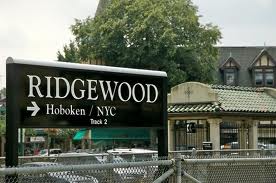
Train Station Renovation Trumps Ground Breaking of Planned North Walnut Street Parking Garage
>
During this evening’s Village Council Work Session, Village Manager James M. Ten Hoeve revealed that ground breaking for the proposed parking garage on North Walnut Street will not take place until at least the year 2011.
New Jersey Transit has officially informed Village officials that bids for the ADA compliant renovation of Ridgewood’s train station will be advertised in June of 2008. The New Jersey Transit Board of Directors expects to award bids in September of 2008, with construction scheduled to begin in early 2009. The train station renovation project will take until 2011 to complete.
Since existing parking at and near the train station will be disrupted during New Jersey Transit’s massive construction project, Village Council members have wisely elected to avoid their own project, which will cause the temporary elimination of approximately 100 parking spaces on North Walnut Street.
The Fly believes that between now and 2011, parking requirements within the Central Business District will change significantly. Let’s wait at least until 2010 before committing any more money and resources to a parking plan that may be obsolete before construction even begins.





