JANUARY 4, 2016, 6:47 AM
BY JOHN CICHOWSKI
NORTHJERSEY.COM
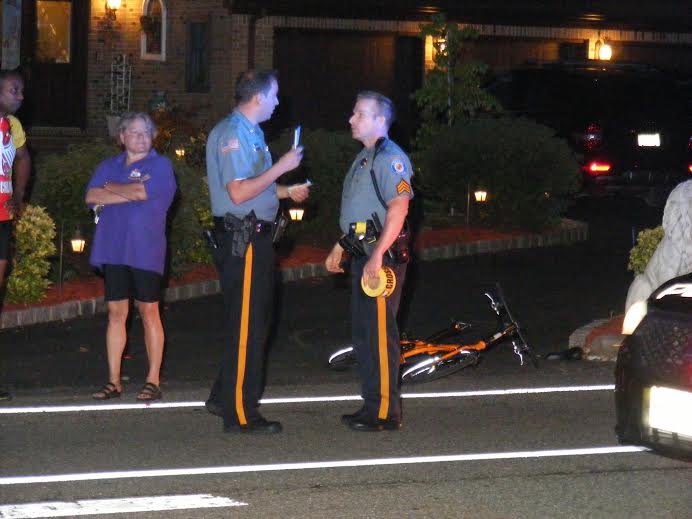
Officer Tim Franco offered one final wish as he left his job for the final time last week.
“Cameras,” said Fair Lawn’s retiring traffic safety officer.
Most cops love recent improvements in law-enforcement technology, especially surveillance cameras that provide powerful evidence for documenting shoplifters, cheats, liars and worse. But Franco likes them for recording what happens at busy intersections.
“Not just crashes,” he said. “Close calls, too.”
Police usually know crash details from accident reports. But unlike pilots who must report close calls to aviation authorities, it’s rare for drivers or police to document events that almost happen – except when regaling colleagues or reporters about the harrowing experiences that nearly become the big events of their day.
But as Franco learned over his 31½-year career, these experiences have value beyond locker-room chatter.
That’s because workplace bean counters figured out years ago that there are about 30 close calls for each accident. If cops and engineers had access to a huge sample of these “what ifs,” as Franco calls them, they could be added to the small number of crashes they record. Doing so would add more precision to their ability to improve road safety – either through enforcement or through charges made in signage or the design of troublesome intersections.
“Right now, the system for gathering crash data is very limited,” Franco said. “But the camera technology exists to do a better job,”
file photo by Boyd Loving
Check out your own state’s cost per mile with Reason Foundation’s Annual Highway Report.
Nick Gillespie|Dec. 7, 2015 12:09 pm
This new video uses data from Reason Foundation’s 21st Annual Highway Report to make a simple but devastating point: New Jersey’s roads are paved not with asphalt but wasted taxpayer dollars. (Disclosure: Reason Foundation is the nonprofit that funds this website.)
Indeed, according to the report, the Garden State spends way, way more than other states to maintain its roads:
South Carolina and West Virginia spent just $39,000 per mile of road in 2012 while New Jersey spent over $2 million per state-controlled mile. Rhode Island, Massachusetts, California and Florida were the next biggest spenders, outlaying more than $500,000 per state-controlled mile.
See where your state stacks up here.
Spoiler alert: if you live in California, Massachusetts, Rhode Island, New Jersey, Alaska, or Hawaii, you can suck it in terms of road costs and road quality. But you already knew that, didn’t you?
Legislators in Jersey (and many other states) are eyeing ways to pay for more road construction. Recent polls show about 57 percent of Jersey residents are against a gas-tax hike even as five roadways popped up on a list of the “worst traffic bottlenecks” in the country.
Critics of Reason Foundation’s methodology counter that a fairer accounting of costs finds that Jersey spends “only”$270,000 per mile on its roads.
Yeah, maybe, but almost certainly not.
Jersey’s gas tax is a relatively cheap-o 14.5 cents per gallon while neighboring New York’s is a relatively whopping 45 cents per gallon. These taxes are supposed to fund capital road projects and maintenance but neither is accomplishing that basic task. Capital New York notes that while New Jersey’s transportation fund is wallowing in debt (about one-third of receipts go to debt service), New York’s fund is giving away money to a wide range of activities, with less than a quarter of receipts going to road projects. Give the state too little money and they need more; give it too much and they spend it on whatever they want to.
And there’s this for Jersey folks:
New Jerseyans pay an average $601 annually in extra repairs due to driving on roads in need of fixing, according to [Department of Transportation] data.
36 cents – Mass transit 23 cents – “Local System Support,” including regional planning and state aid for county and local roads 12.6 cents – Behind-the-scenes work on implementing the capital program, such as research, planning and design. 12 cents – Road upgrades, including pothole repairs, resurfacing, drainage, landscaping and environmental compliance 8 cents – Bridge maintenance, rehabilitation and replacement 3 cents – Support facilities, such as office buildings and highway rest areas 2 cents – Congestion relief, including road widening 2 cents – Safety improvements at intersections, railroad crossings, traffic signals, restriping highways 1 cent – Multimodal programs, including bicycle, pedestrian, ferry and freight programs 0.4 cents – Airport improvement program
As Garden State residents prepare for winter driving conditions, they’re still likely to encounter roads and bridges in continued need of repair, having been ravaged by time, the elements, and insufficient funding. One proposal for addressing our state’s infrastructure needs involves raising the gas tax, which is currently among the lowest in the nation (14.5 cents per gallon). The most recent statewide survey of adults from Fairleigh Dickinson University’s PublicMind finds that support for raising the gas tax has increased slightly since January, but so too have doubts that any money raised would be used for its intended purpose. Politicker Staff, PolitickerNJRead more
NOVEMBER 12, 2015 LAST UPDATED: THURSDAY, NOVEMBER 12, 2015, 1:21 AM
BY JOHN CICHOWSKI
THE RECORD
Ping!
As anyone with one foot on the gas pedal and an eye on the GPS knows, that sound is technology’s quaint way of telling us there’s traffic congestion ahead – a turn of events that can make grown-ups talk back to their global positioning systems.
“Tell me something I didn’t know,” I told the noisy little screen on my dashboard.
When you drive on Route 17, you expect such things. It was Monday and my Honda and I were approaching the Garden State Parkway in Paramus where crews were toiling at revising a connection that might someday make moving between these two asphalt marvels the kind of safer, seamless driving experience it should be.
But no, this wasn’t the sour song that my GPS was singing or pinging about. This backup was centered on the Ridgewood Avenue exits where a new restaurant is being built. It’s the same location that a persistent caller, Richard Compagnone, had been telling me about.
“In 55 years of driving, I can’t remember a construction job so small taking so long,” said Compagnone. “What’s going on?”
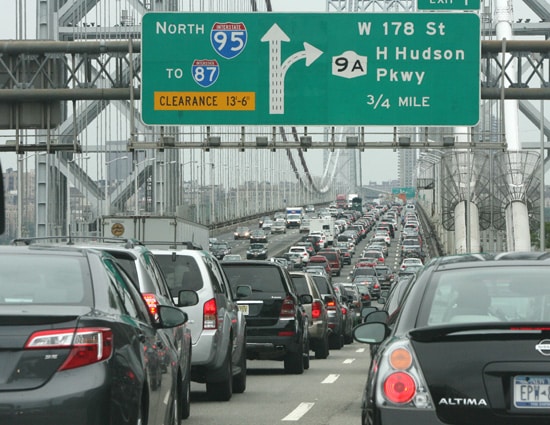
On the surface, what’s going on is a relatively small job to build a Panera Bread sandwich shop and connect it to necessary pipes and wires. But what was really going on was a tiny example of the daily delays and heart-pounding danger that, according to reader feedback, easily make Route 17 Bergen County’s least-favorite highway. Spurred by low gas prices and population growth, this north-south artery is experiencing some retail growth and even heavier-than-usual traffic.
TRAVEL ADVISORY – GWB LOWER-LEVEL LANES TO CLOSE NEXT WEEK, IN ALTERNATING DIRECTIONS, TO ACCOMMODATE ONGOING WORKDate: Oct 23, 2015
The Port Authority announced today that the George Washington Bridge’s lower-level lanes will close in alternating directions during nighttime hours next week to accommodate ongoing construction work.
Key Question will the New Press blame it all on Christie ?
Next week’s lower-level closures are currently scheduled as follows:
On Monday night, October 26, the lower level eastbound lanes to New York will close from 9 p.m. to 5 a.m.
On Tuesday night, October 27, the lower level westbound lanes to New Jersey will close from 9 p.m. to 5 a.m.
On Wednesday night, October 28, the lower level westbound lanes to New Jersey will close from 9 p.m. to 5 a.m.
On Thursday night, October 29, the lower level westbound lanes to New Jersey will close from 9 p.m. to 5 a.m.
On Friday night, October 30, the lower level westbound lanes to New Jersey will close from 11 p.m. to 8 a.m.
Similar weeknight closures, alternating between the lower-level eastbound and westbound lanes, will continue through mid-November. The Port Authority will provide weekly advisories about the closures.
The closures will allow for the removal of temporary construction platforms used for the upper-level deck installation. The Port Authority will alert the public through its own and its regional partners’ highway variable message signs, with messages directing drivers to use the upper level in the affected direction.
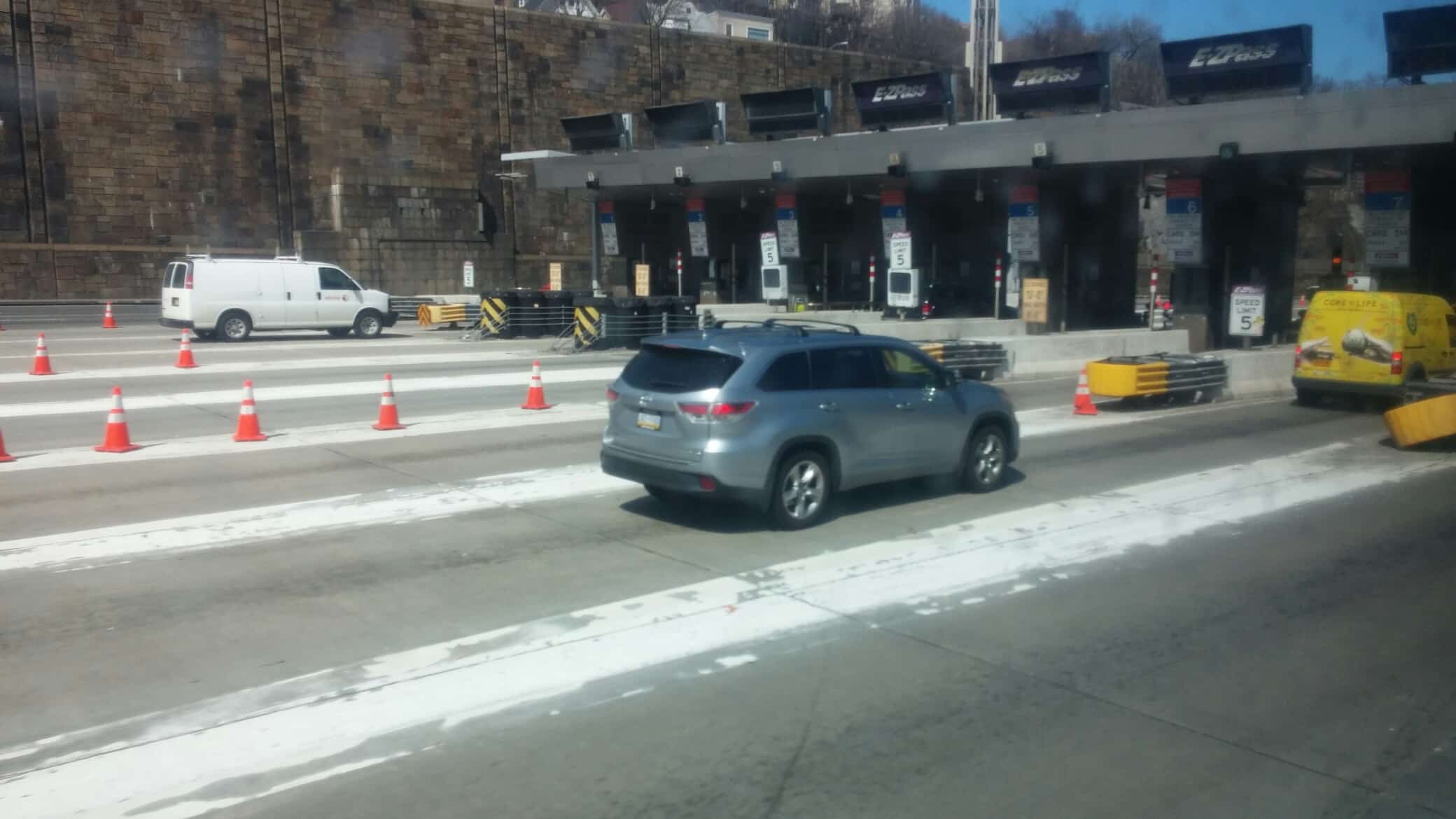
The top three tolling agencies in the country are all in the New York-New Jersey region, and together account for nearly a third of all tolls collected nationwide, an industry group says.
The top three are: the New Jersey Turnpike Authority, which collected $1.42 billion in tolls on the turnpike and the Garden State Parkway in 2013; the Port Authority of New York and New Jersey, which took in $1.33 billion at its four bridges and two tunnels linking the two states; and the Metropolitan Transportation Authority, which collected $1.23 billion at its New York City bridges and tunnels.
The top ten list was compiled by the International Bridges, Tunnels and Turnpike Association, a group based in Washington, D.C. The $4 billion in tolls the three agencies took in was nearly a third of the $13 billion collected from motorists nationwide, the IBTTA found.
SEPTEMBER 30, 2015 LAST UPDATED: WEDNESDAY, SEPTEMBER 30, 2015, 1:21 AM
BY ADRIAN MOORE
THE RECORD
THE New Jersey Legislature is working hard to figure out how to take more money from you, ostensibly for transportation. Both parties look willing to stick it to taxpayers once again with a gas tax hike of as much as 25 cents per gallon.
That tax hike will hit you directly in the wallet every time you fill up your tank — even if gas prices go down. And it will hit you again in the prices of everything you buy, since companies providing goods and services require transportation and pay fuel taxes as well.
State leaders keep talking about how New Jersey has a transportation funding crisis and the only way, they claim, to fix the roads is to raise taxes. That doesn’t pass the laugh test, though, let alone stand up to any real analysis.
State transportation spending is not falling, and lack of money is not the crisis. According to data that all states report to the federal government, transportation spending in New Jersey on state highways nearly doubled from 2007-2012. New Jersey spends more than $2 million per mile of state roads — more than 12 times the national average.
The real crisis is how transportation money is used. New Jersey spends nine times the national average per mile to build roads and bridges, almost six times the national average per mile to maintain its state highways, and four times the national average per mile on office and administration costs.
While New Jersey Gov. Chris Christie and state lawmakers consider a 25-cent a gallon gas tax hike to raise $2 billion a year to fund transportation projects, a war of words and statistics has erupted over the high cost of highways in the Garden State.
New Jersey pays in excess of $2 million a mile per year, more than 12 times higher than the national average, to maintain 3,338 miles of state-administered roads, according to aReason Foundation study.
Three days after a New Jersey Watchdog report, New Jersey Department of Transportation Commissioner Jamie Fox called the study “inaccurate and unfair” in acolumn published by NJ.com.
“Without the benefit of having the numbers the Reason Foundation used to base its calculations, there is no way to independently review its findings,” Fox wrote.
“That’s strange,” replied David Hartgen, the annual study’s senior author for 21 years. “Our annual highway report is based on data that New Jersey and other states provide themselves to the federal government. And we’ve readily shared the report’s data with state transportation departments and members of the media across the country.”
In his column, Fox argued the Reason study is flawed because it did not take into account increased costs associated with New Jersey’s multi-lane urban highways.
“It’s clear that the $2 million a mile statistic makes a nice headline but doesn’t hold up to scrutiny,” Fox said.
“If the spending per mile metric is punishing New Jersey for having highways that are six or eight lanes wide, as Mr. Fox alleges, then it would make sense that other states with wide highways would suffer too,” Hartgen responded. “But that is not the case.
“California, home to many of the busiest and widest highways in the country, spends $500,000 per mile,” Hartgen said. “New Jersey spends four times that — $2 million per mile. New Jersey spends three times as much as Massachusetts ($675,000 per mile), three-and-a-half times more than Florida ($572,000 per mile), four times as much as New York ($462,000 per mile), and 12 times more than Texas ($157,000 per mile), which is home to six of the 20 most populous cities in America.”
While Fox challenged the $2-million per mile figure from Reason Foundation, a nonpartisan libertarian think-tank, the transportation commissioner did not offer an alternate number.
“There’s no escaping the conclusion that New Jersey spends a lot of money on its state-administered highways and delivers poor performance in return,” Hartgen concluded. “The key question now is what will New Jersey do about it?”
That may be the biggest question of all. The state Transportation Trust Fund is out of cash and faces a $17 billion debt.
Christie is expected to address New Jersey’s highway dilemma Tuesday during the governor’s annual budget address to the State Legislature.
The Battle Against PSEG Spreads to Woodland Park Following Jersey City Mayor Steven Fulop’s Monday decision to shut down PSEG projects in Jersey City, Woodland Park Mayor Keith Kazmark has decided to do the same. (Alyana Alfaro, PolitickerNJ.com) Read more
see below
Fulop Shuts Down PSEG in Jersey City Jersey City Mayor Steven Fulop wants to send a message to PSEG. Effective today, the mayor shut down all of the utility company’s non-essential projects in Jersey City because, according to the mayor and other local and county officials, the company is doing an inadequate and unacceptable job in terms of repairing city streets that have been dug up in order to perform maintenance underground. (Alyana Alfaro, Politickernj.com)https://politickernj.com/2015/08/fulop-shuts-down-pseg-in-jersey-city/
JULY 4, 2015, 10:59 PM LAST UPDATED: SATURDAY, JULY 4, 2015, 11:25 PM
BY SHAWN BOBURG
STAFF WRITER |
THE RECORD
At the Port Authority, even the lawyers are getting lawyers.
More than 15 officials — including three in-house attorneys — have lawyered up amid an escalating investigation into the Port Authority’s decision to redirect $1.8 billion in toll money from its Hudson River crossings to fix roads in New Jersey.
The development signals that the 15-month-old joint investigation by the Manhattan District Attorney’s Office and the U.S. Securities and Exchange Commission has entered a more serious phase. And the focus on at least three of the agency’s top staff attorneys suggests prosecutors and federal regulators are closely examining the legal justification for shifting toll dollars to New Jersey-owned roads.
The investigation is focused on whether the Port Authority misled investors and bondholders in 2011 when it agreed to use toll money to rebuild the 3.5-mile Pulaski Skyway and three other major New Jersey state roads at the behest of the Christie administration. Laws limit the bi-state agency’s spending to projects associated with its own facilities.
The Port Authority quietly justified the spending by labeling the highways as access roads to the agency’s Lincoln Tunnel — even though they are miles from the tunnel, do not connect to it directly and do not generate any revenues for the Port Authority. Agency lawyers described the repairs in bond documents as “access infrastructure improvements” to the Lincoln Tunnel.
Editors note : once again another editorial that failed to address :
1- what happened to the presidents stimulus money ?
2- where has the TTF money been spent?
3- why does road work cost so much in New Jersey
4- why haven’t we audited the TTF ?
5- we already have enormous revenues from tolls and taxes how is it being spent?
answer any of these questions and you may get some public support for “solutions”June 28, 2015We were disappointed to learn earlier this month that, despite overwhelming opposition from riders and public officials, NJ Transit will be proceeding with the planned fare hikes and service cuts it proposed earlier this year.The action is unavoidable, says NJ Transit, because the agency has a $56 million budget gap; to close it, fares will jump 9 percent, on average, and rail and bus routes will be cut back.This is bad news for commuters, no doubt about it, but it’s bad news for business owners, too. Earlier this month, NJ.com published a report on the median property values along NJ Transit rail lines, and unsurprisingly, people are willing to pay quite a price to live near access to employment hubs such as Newark, Morristown, New Brunswick, Princeton and others. That gives companies incentive to locate in these areas, which gives developers incentive to make investments in these towns, which in turn brings more businesses — especially smaller ones — and powers downtown revitalization. Towns such as Summit and Montclair would be a much tougher sell for commuters if they lacked reliable rail transportation.This is just another example of New Jersey’s poor transportation planning coming home to roost. The depleted Transportation Trust Fund, starved by an insufficient gas tax, has made major rail investment an afterthought. Raising fares is only going to push more cars on the road at rush hour, exacerbating what many consider to be the Garden State’s worst problem, and will harm investment in rail towns by developers and businesses. No one likes a tax hike, but a small increase in the gas tax is preferable to another big transit fare hike. It would be nice if legislators wised up and ensured this is the last increase for the foreseeable future.
Part of the reason we’re here is poor policy. No public transit agency is going to break even, much less turn a profit, but NJ Transit has often been a victim of not getting what it needs from the state, combined with its own share of dunderheaded decisions, such as rail car storage during Sandy. The state must take a hard look at the impact rail service has on municipalities when it thinks about funding infrastructure upgrades or new station construction. And that goes for bus and light rail projects, too — the tremendous impact of the Hudson-Bergen light rail line on property values was long ago demonstrated. Given that the only new jobs being talked about in New Jersey are at casinos or megamalls, professionals are likely to need reliable access to New York to find the work they want — and they’re paying for that privilege.
JUNE 9, 2015 LAST UPDATED: TUESDAY, JUNE 9, 2015, 1:21 AM
BY SCOTT GARRETT
THE RECORD
By reducing funding to the program that gives grant money to transit agencies for new projects by 4 percent, Congress could have fully funded our nation’s rail safety and operations.
WHAT WOULD be your top priority if the roof on your house was caving in? Would you build a new addition? Renovate the kitchen? Put in a swimming pool? Of course not — you would fix the roof, because it protects your home and your family.
Just as you wouldn’t add a new addition before fixing your home, Congress shouldn’t prioritize new transit over the immediate safety needs of our freight and passenger rail lines.
The number of train accidents is a growing concern among all Americans. Just this year we have seen oil train derailments in West Virginia and North Dakota, and more than a dozen Amtrak-related accidents. Most recently, a tragic crash in Philadelphia claimed eight lives and injured dozens more.
In New Jersey alone, we have more than 1,000 miles of commuter railroad tracks and 2,400 miles of freight railroad tracks. Furthermore, New Jerseyans travel more than 100 million miles on commuter trains every year. Americans both here and across the nation need assurance that Congress and the rail industry are taking the appropriate steps to ensure rail safety.
The Federal Railroad Administration’s Safety and Operations Account funds safety projects for both freight and commuter trains across the country. In light of the recent concerns over train safety, I was disappointed that the FRA’s safety account did not receive an increase in funding in the Transportation, Housing, and Urban Development Appropriations Bill.
Village of Ridgewood Street Resurfacing and Repair Program – 2015
Ridgewood Receives NJDOT Paving Grant
Ridgewood has been selected to receive funding from the New Jersey Department’s (NJDOT) Fiscal Year 2015 Municipal Aid Program for Morningside Road in the amount of $149,000.
NJDOT’s Municipal Aid Program is a very competitive program. This year the Department received 630 applications requesting more than $253 million. There is $78.75 million available in funds from the Transportation Trust Fund (TTF).
Streets and Schedule – 2015
For the 2015 street paving list
Click Here
For the criteria for paving and maintaining streets
April 10, 2015 Last updated: Friday, April 10, 2015, 1:21 AM
By John Cichowski
The Record
Like Superman to the rescue, Bill Pascrell Jr. swooped down on his native Paterson on Thursday to save our roads, our rail system and, by extension, the whole federal transportation trust fund.
In a speech inside an NJ Transit bus garage to a crowd of local politicians, transit managers and businessmen, the 10-term congressman unveiled an ambitious plan calling for a $27.5 billion transfusion to bail out the ailing U.S. Transportation Trust Fund that will run dry May 31 if Congress doesn’t reauthorize funding.
“This legislation, if it passes, would provide a consistent, dedicated stream of money to fix our crumbling bridges, roads and transit system for the next 10 years,” he said to applause.
Everybody in this spacious Market Street venue had heard comparable speeches lately to rally the troops behind political efforts to cope with looming state and federal funding shortages that will likely arise if Congress continues to finance transportation with yearly doles that don’t keep up with inflation and increased demand.