Posted on 3 Comments

Tax Freedom Day 2018 Will Not Fall In New Jersey until May 3rd

26992040 1573347669452308 3407901945734657736 n1

Tax Freedom Day falls on April 19th

April 15,2018
the staff of the Ridgewood blog

Ridgewood NJ, according to the Tax Foundation ,Tax Freedom Day is the day when the nation as a whole has earned enough money to pay its total tax bill for the year. In 2018, Tax Freedom Day falls on April 19th, 109 days into the year, three days earlier than last year. Tax Freedom Day is significant because Americans will collectively spend more on taxes in 2018 than they will on food, clothing, and housing combined. If you include annual federal borrowing, which represents future taxes owed, Tax Freedom Day would occur 17 days later, on May 6th.

This year Tax Freedom Day will be three days earlier than it was in 2017, in large part due to the recent federal tax law, the Tax Cuts and Jobs Act, which significantly lowered federal individual and corporate income taxes.

The Tax Foundation defines Tax Freedom Day® as the day when the nation as a whole has earned enough money to pay its total tax bill for the year. Tax Freedom Day takes all federal, state, and local taxes and divides them by the nation’s income. In 2018, Americans will pay $3.39 trillion in federal taxes and $1.80 trillion in state and local taxes, for a total tax bill of $5.19 trillion, or 30 percent of national income. This year, Tax Freedom Day falls on April 19th, 109 days into 2018.

This year, Americans again will work the longest to pay federal, state, and local individual income taxes (44 days). Payroll taxes will take 26 days to pay, followed by sales and excise taxes (15 days), corporate income taxes (seven days), and property taxes (11 days). The remaining six days are spent paying estate and inheritance taxes, customs duties, and other taxes.

The total tax burden borne by residents of different states varies considerably due to differing state tax policies and the progressivity of the federal tax system. This means that states with higher incomes and higher taxes celebrate Tax Freedom Day later: New York (May 14), New Jersey (May 3), and Connecticut (May 3). Residents of Louisiana and Alaska bear the lowest average tax burden in 2018, with Tax Freedom Day having arrived on April 4. Also early were Tennessee, Oklahoma, and Alabama, all on April 5.

Posted on Leave a comment

People always say to me I hate Politics

BergenCountyCourthouse

April 9,2018

John Wohlberg

“People always say to me I hate Politics, I can’t deal w all the back and forth and the fighting. Well Politics is all around you. Its in that check you write to your Mortgage Company every month and its in the Schools you drive your kids to everyday. NJ Politicians have completely lost control especially in Bergen and Passaic Counties and they don’t want you to know it. We pay the most ridiculous amount in taxes yet we know the least about what’s happening in Our Town and County Governments. It defies all logic. “

Posted on 1 Comment

Reader says Every Village administrator thinks money grows on trees

stock-photo-12048329-money-grows-on-trees

Ridgewood will soon rank #1 in the state for taxes. Every Village administrator thinks money grows on trees and continues to use it wildly without contemplating the effect on the residents. I have actually been told “What’s YOUR problem? THIS is RIDGEWOOD and we can afford ANYTHING.” In many cases we can conveniently forget about losses incurred (Health Barn, Valet program, parking meters, proposed garage etc.) as Ridgewood has plenty of money so we can afford to experiment. The worse thing about the above is that NONE of these esteemed people can open their eyes, ears and noses (some of these actions have raised a huge stink (Health Barn and others) and see the problems, listen to the tax payers, and accomplish anything but throwing good money after bad. And this DOES include everyone running for election as well as others (the School Board etc.)

Posted on 2 Comments

The Organization For Economic Growth Calls On N.J. Legislators To Reject Gov. Murphy’s Toxic Budget Proposal

Phill Murphy -Sara Medina del Castillo


March 14,2018

the staff of the Ridgewood blog

Wayne NJ , Calling Gov. Phil Murphy FY-2019 budget another nail in New Jersey’s economic coffin, the New Jersey Organization for Economic Growth is calling on all legislatures to reject the governor spending plan and create a fiscally responsible budget.

“The governor’s economic plan in no way represents the fiscal reality facing New Jersey; nor does it address the concerns of the business community,” said OEG Chairman Joseph Caruso. “New Jersey leads the nation in taxes and has the worst business reputation in the country — and Gov. Murphy, unfortunately, wants to continue those trends”.

Murphy’s $37.4 billion spending plan is $2.7 billion – or 8 percent higher than the state’s current budget. Murphy’s FY-2019 budget increases spending by $1.5 billion and calls for an increase in the sales tax, as well as increases in the corporate business tax and another millionaire’s tax .

Murphy called his budget proposal “fiscally and morally sound,” which raised the ire of OEG Executive Director Alex Cucciniello.

“There is nothing moral about raising taxes on hardworking people and those who are trying to run businesses,” said Cucciniello. “There is nothing moral about supporting a budget plan that will lead to fewer jobs. The governor’s sense of morality is out step with residents of this state,” said Cucciniello.

“This budget will crush small businesses and the middle class in New Jersey. If the Governors goal is to get people to leave the state he is doing the right thing, ” said OEG Vice-Chairwoman Katie Cericola, an accountant. “New Jersey already has the highest corporate tax in the nation, increasing it will result in fewer jobs.

“Young people like me want to stay in New Jersey; it’s our home. But politicians like Gov. Murphy are making it hard for us to live here. He and his administration are out of touch with the economic struggles of Millennials,” added Cericola.

The governor’s proposed increased in taxes and spending — including adding $2.1 million to pay for legal fees for illegal immigrants who face federal justice, is an attack on working people in New Jersey, said Vice-Chairman John DePinto.

‘There are hard working legal residents of our state who cannot afford an attorney; yet we have a governor who wants those working people to pay for the legal bills of illegal immigrants so they can continue to violate federal law. That is not a morally or fiscally acceptable position,” said DePinto.

“The governor wants the already overtaxed people of New Jersey to pay for his progressive ideology. His personal priorities are wrong for the state,” added DePinto.

OEG officials said Murphy’s FY 2019 budget proposal failed to even consider cutting spending.

“In a state that is recognized as the most overtaxed in the nation; a state that is losing jobs and business investment; the fiscally prudent thing to do would be to find ways to reduce spending. But it appears that the governor’s team just larded more fat on an already bloated state budget,” said Cucciniello.

DISAPPOINTING

Caruso called the governor’s introduction of his first budget disappointing beyond expectations.

“The people of New Jersey elected a governor who ran on a platform of raising taxes. and that’s just what he intends to do. But I don’t think anyone could imagine that it would be this bad,” he said.

Caruso noted that the governor’s budget proposal fails to address the state’s very real and very damaging pension deficit.

“Like governor’s before him, Mr. Murphy actually believes New Jersey taxpayers can afford the public pension system the politicians created. And to continue the deception, Gov. Murphy, like governor’s before him, has greatly exaggerated the return on pension investments so he doesn’t have to deal with the giant pension and retiree benefits hole that gets bigger every month.”

REJECT THE PROPOSAL

Cucciniello said he hopes the legislature will reject the governor’s proposal and start over.

“Hopefully there are fiscally responsible people in Trenton who will not ignore the fact that New Jersey’s fiscal policies are causing great damaging the people of this state Hopefully, they will not continue to ignore the plight of many people — Millennials and retirees – who have to make the tough decision to leave New Jersey because our elected officials simply don’t want to make the tough decisions required to make this state affordable for the middle class,” said Cucciniello.

Posted on 6 Comments

Murphy Plans to Deliver on Promises to Raise Your Taxes

murphys las

march 14,2018

the staff of the Ridgewood blog

Trenton NJ, Gov. Murphy introduces 2019 budget in State House address, and no surprise he rattled off a series of significant tax increases for the garden State . Murphy had run on a platform of raising taxes or what critics called “Murphy’s Law” and here is just a few he wants to start with ; a sales tax increase to 7%, tax on AirBnB rentals , new taxes on Uber and Lyft, E- Cigarette taxes, legal Marijuana taxes of 25% plus sales tax, income tax for $1 million plus and new business taxes.


Posted on 4 Comments

New Jersey Republican Leadership Stands Together On 2018 Priorities

Phill Murphy -Sara Medina del Castillo

February 11,2018

the staff of the Ridgewood

Trenton NJ,  NJGOP Chairman Doug Steinhardt, Senate Republican Leader Tom Kean, Assembly Republican Leader Jon Bramnick and GOP Chair of Chairs Jose Arango released the following statement regarding their shared commitment to protect New Jersey families from the dangerous agendas of Democrats at all levels of government and to promote the Republican ideas that will make our state more affordable and prosperous:

“NJ Republicans stand together ready to offer a responsible alternative to Bob Menendez, Nancy Pelosi and Phil Murphy’s liberal agenda of promised tax hikes, cumbersome government regulations, and misplaced priorities,” said NJGOP Chairman Steinhardt. “We’re ready to fight for all New Jerseyans, with a collective voice, in all 21 counties, and all 565 municipalities. Now is the time for action.”

Senate Republican Leader Tom Kean reiterated his sentiment that Republicans are the party of common sense and solutions, “The people of New Jersey are facing a growing affordability crisis and raising taxes for new government spending is a recipe to exacerbate our state’s biggest problem. Republicans stand united behind our solutions and ideas to transform the Garden State into a place where affordability and opportunity abound.”

“Republicans may be in the minority, but we will stand up for the people of this state in a civil and serious manner,” said Bramnick. “We pledge to work collectively as a party to pass reforms that are so desperately needed to reduce New Jersey’s property taxes and make this state more competitive.”

GOP Chair of Chairs, Jose Arango vigorously vowed to create the necessary contrast to give Republicans momentum in their fight to win elections this year, “The four of us all stand together in agreement that the Phil Murphy, Nancy Pelosi, Bob Menendez plan to raise taxes and make New Jersey a sanctuary state is unacceptable and we will be proactively fighting it every step of the way. We’re working together to build a coalition that will reject Bob Menendez and stop the Nancy Pelosi takeover of New Jersey in November.”

Theresa Winegar, Executive Director of the NJGOP added, “All four leaders are entering 2018 unified and energized. The NJGOP has a dedicated team of 42 State Committee members, 21 County Chairs, 15 Senators, 26 Assembly members and countless municipal leaders, community activists and volunteers dedicated to making New Jersey more affordable; and ready for the 2018 election cycle.”

Now lets see if they actually follow through .

Posted on Leave a comment

TAX IDENTITY THEFT AWARENESS WEEK: January 29-February

NJ Attorney General

February 1,2018

the staff of the Ridgewood blog

Trenton NJ,New Jersey Attorney General’s Office  TAX IDENTITY THEFT AWARENESS WEEK: January 29-February 3 is New Jersey Cybersecurity and Communications Integration Cell “Tax Identity Theft Awareness Week” to spread awareness of tax-related identity theft and IRS imposter scams. Stay tuned throughout the week for the best ways to avoid tax identity theft.

New Jersey Attorney General’s Office Today’s tip: NEVER provide personal information to anyone purporting to be an IRS representative who contacts you via an unsolicited telephone call. Instead record the caller’s name, badge number and a call back number. Hang up and then contact the IRS at 1-800-366-4484 to determine if the caller is an IRS employee with a legitimate need to contact you. Also, remember that the IRS will never call demanding immediate payment of taxes owed or a specific method of payment, such as a prepaid debit card, gift card, or wire transfer.

Posted on 1 Comment

Murray Sabrin , “property taxes are coercive levies on citizens to pay for schools, roads, police and other activities of local governments”

Murray Sabrin


I sent the following letter to The Record the other day about property taxes.

Regarding “Property taxes as charity debated” (Page 1A, January 15″):

The article unwittingly highlights the intellectual confusion – and bankruptcy – of the tax debate in America. First, property taxes are coercive levies on citizens to pay for schools, roads, police and other activities of local governments. In other words, homeowners have no choice but to pay for services they may not want nor “consume” in their local community.

Second, charitable contributions are voluntary payments to organizations that the donor believes is meeting a noble goal. Nonprofit organizations have a long history of serving the needs of people going back to colonial times. It is this ethos that is one of the foundations of America’s experiment as a limited government Republic.
However, since the Great Depression the welfare state has expanded exponentially “crowding out” organizations that provided unemployment insurance, life insurance, medical insurance and other vital services for their members before the economy’s implosion in the 1930s.

The new tax law places a $10,000 cap on the amount of property and state and local income taxes taxpayers can deduct on their federal tax return. This restriction obviously increases the federal tax burden of taxpayers who live in New Jersey and other high tax states.

The solution is crystal clear: abolish the federal income tax and have local services paid for just as we pay for cable TV, Internet access, cell phones and other services people want for themselves and their families, by voluntary exchange. This would reduce the vast coercion government exerts over its citizens.


Murray Sabrin Ramapo College Professor of Finance1985 to presentMahwah, New Jersey

Posted on 15 Comments

New Jersey Heading Toward “a potentially catastrophic failure of its government pensions”

CBD oldtimers

file photo by Boyd Loving

January 21,2018

the  staff of the Ridgewood blog

Ridgewood NJ, according to the Manhattan Institute for Policy Research New Jersey is running out of time projections show that the pension system, already the worst-funded in the nation, will continue taking on debt for at least five more years.

The Rockefeller Institute of Government at the State University of New York defines a government pension system that’s below 40% funded as in crisis. New Jersey’s pension system is well below that line, and the cost to fix the system, even under optimistic economic and financial-market projections, is already enormous. After a nine-year expansion, if America’s economy turns down in the coming months, the price of fixing New Jersey’s pension system will surge higher still. Yet even when the costs were considerably less, the state’s political leaders balked at fixing the system. We’ve now reached the point where neglecting to construct an adequate and lasting fix pushes the pension system on a path toward failure, a catastrophic scenario for New Jersey’s public employees and taxpayers.

Key takeaways from the report :

As this report demonstrates, to stay on pace to reach the new plan’s required yearly contributions into the pension system by 2023, state government must increase the revenue that it dedicates to its pension system by more than threefold. At that point, pension payments could equal 12%–15% of New Jersey’s budget.

Based on the historical growth of New Jersey’s revenues, rising pension payments alone will likely consume virtually all the state’s additional tax collections over the next five years, even under an optimistic scenario where tax collections accelerate. That would leave little money for increasing funding of local schools, higher education, municipal services, or property-tax relief.

If the economy were to experience even a mild recession, the resulting slowdown in tax collections would likely mean that New Jersey would fall short by at least an additional $3.5 billion in meeting its pension obligations, sparking a more substantial rise in new pension debt.

After years of relying on unrealistic investment assumptions, New Jersey recently cut its projected rate of investment returns to a more realistic 7%. Even so, this is higher than forecasts made by independent experts for pension fund performance over the next five to 10 years. If the outside experts are correct, the investment returns on the state’s pension portfolio will fall significantly short, requiring New Jersey to dedicate further tax revenues to its pension system or allow additional new debt to pile up—a dangerous situation because the system’s funding levels are already so low that some pension experts fear that fixing a system this poorly funded is nearly impossible.

Absent some unexpectedly robust acceleration of the economy, it is highly unlikely that New Jersey will generate enough new revenues to meet its pension commitments without severely hobbling the rest of the state’s budget. At the same time, allowing its pension system to continue to accumulate debt by not contributing adequately to it will push New Jersey toward a potentially catastrophic failure of its government pensions.

full report :

https://www.manhattan-institute.org/sites/default/files/R-SMJM-0118.pdf

Posted on 4 Comments

Murphy agenda will only exacerbate outward migration putting further pressure on the states limited resources

for sale Ridgewood_Real_Estate_theRodgewopodblog

January 16,2018

the staff of the Ridgewood blog

Trenton NJ, Illinois, New Jersey, and New York were the top states in the nation for outbound moves in 2017, according to data from United Van Lines. We have in the past reported similar statistics from other moving companies .

United Van Lines, which tracks state-to-state migration patterns, found that Illinois was the top state for outbound migration with 63 percent of moves going out of state.

“The Northeast continues to experience a moving deficit with New Jersey (63 percent outbound), New York (61 percent) and Connecticut (57 percent) making the list of top outbound states for the third consecutive year,” the report states. “Massachusetts (56 percent) also joined the top outbound list this year.”

While taxes are often cited as the reason for the move , New Jersey just elected Phil Murphy who promised to raise taxes when elected . The Murphy agenda will only exacerbate this outward migration putting further pressure on the states limited resources .


Posted on 5 Comments

Legalization of Recreational Cannabis Use could result in a windfall to the State exceeding $1 billion

Cheech-Chong-Up-In-Smoke

NJ Deficits Could Go Up in Smoke 

December 26,2017

the staff of the Ridgewood blog

ROSELAND NJ,  Upon the release of its White Paper exploring what it calls “The most complex environment ever to legalize recreational cannabis use,” lawyers at Brach Eichler observed that the initial organization of the industry could result in a windfall to the State exceeding $1 billion — before a single ounce is delivered.
The figure is based on the State creating an aggressive privatization of the industry in which large technology, testing, cultivation, transportation and other industry participants compete for roles and pay upfront licensing, franchising, and other fees.

“The State needs $3 billion to close its budget gap and it so far has identified cannabis as contributing $300 million from sales tax,” says John D. Fanburg, Managing Member and Chair of the Health Law Practice at Brach Eichler. “Presumptively, if there is a $2 billion recreational cannabis market in New Jersey, privatized functions could be offered in RFPs that provide lengthy contracts – the type that attract investors who pay-up for predictable returns. A billion dollars is probably a modest estimate of the opportunity New Jersey can potentially realize as it legalizes recreational cannabis.”

The White Paper, The Business, Regulatory and Legal Challenges — and Opportunity — of Legalized Cannabis in New Jersey, which explores the differences between New Jersey’s presumed recreational cannabis legalization versus circumstances in states with existing programs, warns that “New Jersey holds complexities not faced by other states unrelated to the production, distribution, sale, and use of marijuana, but attributed to a simple fact of life: this is New Jersey, and almost everything is harder here.”
“Home rule is the principal culprit,” says Charles X. Gormally, Member and Chair of the Litigation Practice for Brach Eichler. “It’s the third rail of New Jersey politics, so great care will be taken to protect the will of municipalities in drafting the Cannabis Statute.

“Part of the social justice initiative will be to provide economic opportunities in urban communities, which will be very appealing to some municipalities. However, it’s inevitable that there will be great tension between local officials and regulators about who gets what part of the pie – and why.”

The White Paper observes solutions developed in other states around not only Industry Structure, but a variety of oversight, taxation, and participation issues, including sections on Home Rule, Property Taxes, Delivery, Banking, Commerce, Public Health, Testing Product Safety, Regulatory Authority, Criminality, and Cannabis as Tourism. While the Administration has not indicated any specific direction on any of the issues broached in the White Paper, Mr. Gormally says it will be “unavoidable” that fiscal issues dominate the dialogue.

“The ultimate social justice would be to immediately decriminalize possession, but that does not provide the long-term political leverage that will lead to a healthy industry and a leveraging of the state’s interests. You have a lot of smart people in the incoming Administration who have already seen that current legislative proposals will not generate the $300 million they already have allocated to programs they are committed to enact immediately.

“At the edges of this industry you have a black-market cohort that wants to legitimize its crop and reduce the risks of its current distribution program; and another cohort with access to a massive pool of capital if margins are protected,” says Mr. Fanburg. “In the middle is a new administration desperate to lead the State back to economic relevance and a legislature determined to protect programs that are threatened by fiscal realities. So, while it is unlikely that the state goes all the way and monetizes every component of the industry, as they start to tinker with a new Statute, the opportunity to generate upfront cash will prove at least partially irresistible.”

Posted on Leave a comment

Reader says NJ residents are hurt in the new tax bill because NJ Democrats bleed them dry at the state level

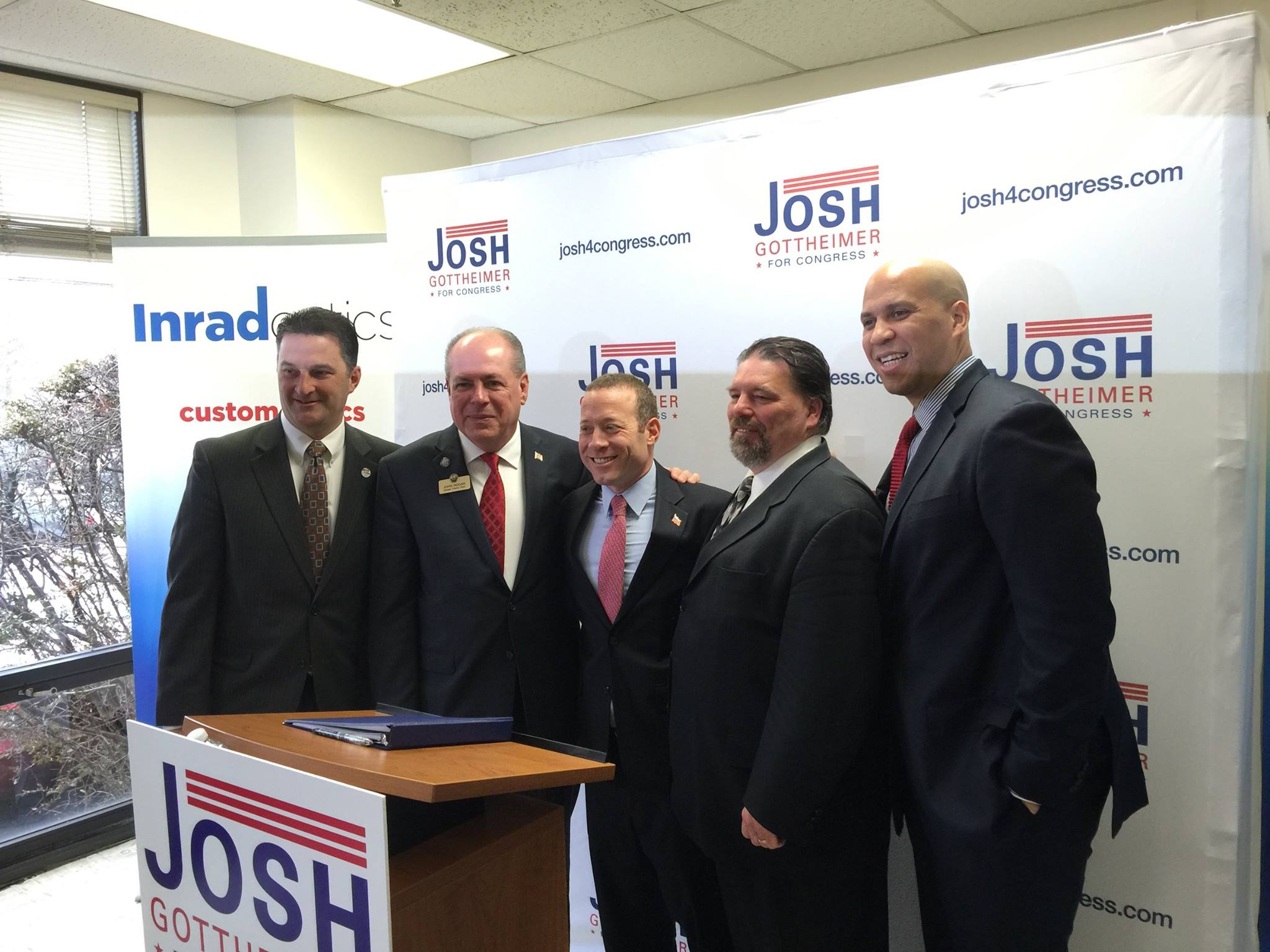
Josh Gottheimer

I am the original poster and I am VERY aware of which NJ residents get hurt by this bill.
These are the same NJ residents that Obama forced a tax hike on in 2010. These are the same NJ residents that NJ Democrats are chomping at the bits to hike taxes on.
These NJ residents are hurt in the new tax bill because NJ Democrats bleed them dry at the state level. Someone earning the same amount in Texas is going to get a net tax cuts.
Repeat after me – these NJ residents are being looted by Democrats, such as Josh Gottheimer.

Posted on 14 Comments

Trump Tax Cut Got You Down ; why pay less when you can still pay more

taxes why pay less when you cans till pay more

December 23,2017

the staff of the Ridgewood blog

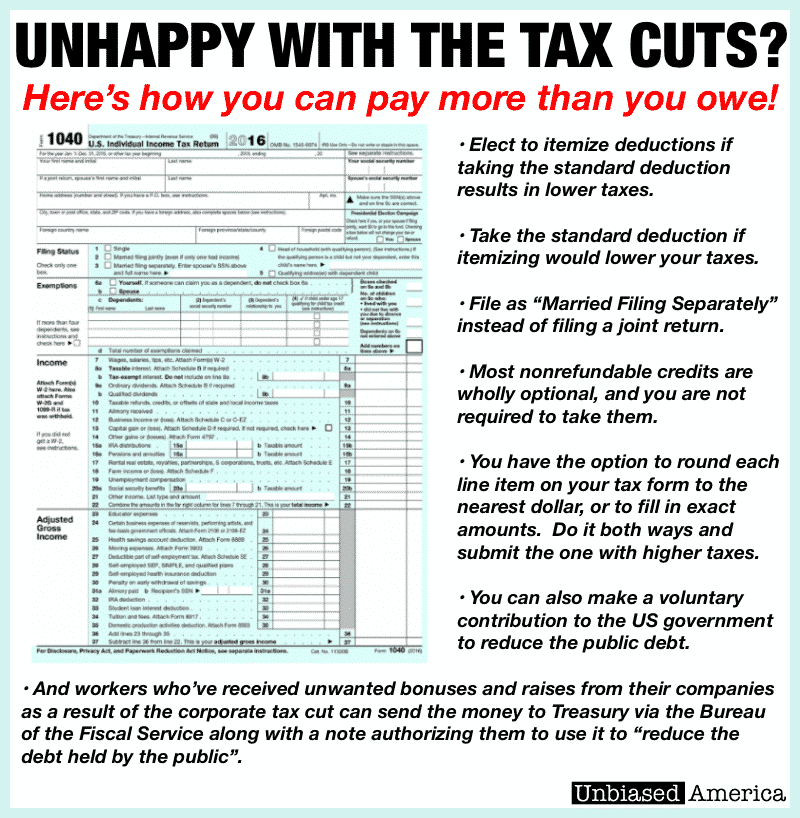
Ridgewood NJ, in “A GUIDE TO PAYING HIGHER TAXES FOR PEOPLE UPSET BY THE TAX BREAKS” by Kevin Ryan, the author spells out how you can continue paying the old higher rates .

Ryan begins , “Are you upset about the tax cuts? Have no fear! I’ve written this handy guide for people who’d like to continue paying higher taxes.”

He reminds taxpayers ,  “It’s not as simple as sending the government more money than your tax return says you owe. Unfortunately, the IRS will send your overpayment back to you as a refund (or apply it toward your next year taxes if you specify them to). ”

Then he gets into the options you have to pay more taxes .

However, there are options that you can select when filing your taxes that will result in you paying more money:

• Elect to itemize deductions even if the standard deduction would be greater.

• Elect to take the standard deduction if itemizing would lower your taxes.

• File as “Married Filing Separately” instead of filing a joint return will usually result in higher taxes owed.

• Most nonrefundable credits are wholly optional, and you are not required to take them if you do not want to.

• You have the option to round each entry line item on your tax form to the nearest dollar, or to fill in exact amounts. Do it both ways and submit the result that comes out with higher taxes.

• You can also make a voluntary contribution to the US government by sending a separate payment to the Treasury via the Bureau of the Fiscal Service along with a note authorizing them to use it to “reduce the debt held by the public”. Be careful, though, such contributions are tax deductible as a charitable donation. Luckily you don’t have to take the deduction.

• And businesses have been doing their part to mitigate the devastating impact of Trump’s corporate tax cut, with some of the biggest companies in America announcing that they will voluntarily give the savings to their workers in the form of higher wages and/or bonuses. Now all that’s needed are for workers to give these bonuses back to the government, and they could basically cancel out the effects of Trump’s tax cuts!

If enough people choose to pay more than they owe and to give their bonuses and higher wages back to the government, they can help prevent or minimize the devastation and deaths that Democrats predict these tax cuts will cause. Happily, half of all Americans say they disapprove of the new tax cuts, so there will be millions of people lining up to give the government their money back!

Posted on 3 Comments

Reader says Wake up New Jersey

Trump

Wake up NJ. Boeing, ATT (who move down out of NJ), Comcast, Wells Fargo, and about 12 more companies so far have announced employee bonuses, wages, increased capital spend, and hiring all due to tax cut. That is all great for middle class and everyone else
Illoinis (another high tax state) like NJ calculate it is losing people at the rate of one every 4 minute every to low tax states. Wonder how NJ is doing for mid to high income families leaving the state? How many will leave when Murphy gets his way.
How can anyone defend a 11-13% state income tax in a state that is bankrupt. How can anyone defend ridgewood property tax that is some cases are 50-100k on houses that lose value every year, with schools getting worse, services declining, and no end in sight. Can we really defend a 110 million annual school budget? How many adminstrators do we need? How many vehicles does the schools need? We neeed to really look into this budget and trim the fat. The kids are getting shortchanged. Walk into the high school and look at the teacher absense list and how many kids get assigned to just sit in a large room with a supervisor but no lessons.
We need to wake up, the federal government is finally doing something. Local should be easier with proper leadership.

Posted on 1 Comment

The Tax Cuts Act means less money taken out of Americans’ paychecks

Trump

December 21,2017

the staff of the Ridgewood blog

TAX CUTS FOR AMERICAN FAMILIES: The Tax Cuts Act means less money taken out of Americans’ paychecks.
The Tax Cuts Act provides $5.5 trillion in tax cuts, $3.2 trillion, or nearly 60 percent, of which go to families.
The Tax Cuts Act nearly doubles the standard deduction.
For individuals, the standard deduction will be increased from $6,500 to $12,000.
For single parents, the standard deduction will be increased from $9,550 to $18,000.
For married couples, the standard deduction will be increased from $13,000 to $24,000.
The vast majority of American families will now be able to file their taxes on a single page because they lower taxes by claiming the standard deduction.
American families will see their Child Tax Credit doubled to $2,000 per child under age 17.
Families will receive a new $500 tax credit for dependents age 17 or older.
The full Child Tax Credit will now be available for families with incomes of up to $200,000 for single households and incomes of up to $400,000 for married households.
Lower and Middle-Income families will benefit from a 40 percent increase in the refundable portion of the Child Tax Credit.
The Tax Cuts Act will repeal Obamacare’s burdensome individual mandate.
The repeal of Obamacare’s individual mandate will provide relief to households with income below $50,000, which made up nearly 80 percent of the households that paid the mandate penalty in 2016.
The vast majority of family farms and businesses will be exempt from the estate tax.
Investments in education will be protected under the Tax Cuts Act.
Families will now be able to use up to $10,000 from 529 college savings accounts on primary and secondary education.
Tax-free stipends for graduate students will be maintained.
Student loan interest will continue to be deductible.
The Tax Cuts Act preserves tax benefits important to American families.
The Earned Income Tax Credit for low-income workers will be preserved.
The Child and Dependent Care Tax Credit will be preserved.
The Adoption Expense Tax Credit will be preserved.
Retirement savings tax benefits will be preserved.

PRO-GROWTH REFORM FOR AMERICAN BUSINESSES: The Tax Cuts Act enacts pro-growth reform, putting American businesses on a level playing field with foreign competitors.
America’s corporate tax rate will be lowered from the highest in the developed world to below the Organisation of Economic Co-operation and Development (OECD) average.
The corporate tax rate will be cut from 35 percent to 21 percent, below the OECD average of 22.5 percent.
Businesses will receive $1.8 trillion in total tax cuts, spurring economic growth and generating more revenue.
The Council of Economic Advisers estimates that these tax cuts will grow the economy an additional 3 percent.
This economic growth will generate even greater economic opportunity for all Americans.
The Tax Cuts Act provides $415 billion in additional tax cuts for S corporations, partnerships, and sole proprietors.
More than 90 percent of all American businesses are organized as one of these “pass through” entities.
Owners of these businesses will be able to deduct 20 percent of their qualified business income.
Businesses will immediately be able to deduct 100 percent of the cost of their capital investments for the next five years.
The Tax Cuts Act will get rid of our outdated worldwide taxation system, which penalizes companies headquartered in the United States when they bring foreign profits back home.
Companies will be able to bring back future profits without paying additional taxes.
A one-time tax will be imposed on corporate earnings stashed overseas, ending the incentive for companies to keep their profits outside of the U.S.
A one-time tax of 15.5 percent on cash and cash equivalents will be imposed, as well as a one-time 8 percent tax on illiquid assets.

ELIMINATING SPECIAL INTEREST TAX BREAKS: The Tax Cuts Act will eliminate dozens of special interest tax breaks and loopholes.
The Tax Cuts Act will raise $4 trillion in revenue by getting rid of dozens of special interest tax breaks and closing loopholes for corporations and wealthy individuals.
The revenue generated by eliminating these tax breaks and loopholes will be used to help offset the tax cuts for American workers, families, and businesses.
Numerous tax breaks and loopholes exploited by special interests will be eliminated.
A 20 percent excise tax will be imposed on stock compensation when a company uses corporate inversion to avoid U.S. taxes.
The deduction for local lobbying expenses will be eliminated.
The loophole used to deduct executive compensation over $1 million will be eliminated.
A 21 percent excise tax will be imposed on compensation over $1 million paid to executives at tax-exempt organizations.
Members of Congress will no longer be able to deduct their living expenses.