The Senate CIA Report and Democratic Treachery
December 10, 2014 by Arnold Ahlert 65 Comments
Arnold Ahlert is a former NY Post op-ed columnist currently contributing to JewishWorldReview.com, HumanEvents.com and CanadaFreePress.com. He may be reached at [email protected].
n Tuesday, the Senate Intelligence Committee released the 500-page executive summary of the report on the CIA’s enhanced interrogation of terrorist detainees. Democrats, the media and Republican Sen. John McCain (R-AZ) are using it as an opportunity to hammer the CIA and the Bush administration, while American embassies, military units and other U.S. interests are preparing for possible reprisals. But adding further threats to Americans already in harm’s way matters not. Beleaguered congressional Democrats are desperate for a political boon and have turned to an old standby: sabotaging national security and sacrificing American lives.
Since their betrayal of the Iraq war, Democrats, particularly in the Senate, have panned the techniques used by the CIA to garner critical information in the days following 9/11 as “torture,” and have claimed that they yielded no useful intel. Though the use of these techniques was long known to Democrats — with virtual indifference toward them at the outset — many Democrats have since claimed they were unaware of what was occurring, which explains their lack of opposition to their government supposedly engaging in “torture.”
Having deprived Congress of regular order for nearly the entire tenure of the current administration, Harry Reid and his cohorts have milked every partisan advantage from this circumstance that they could possibly dream up. The same goes for his shamelessly executed plan to eliminate the Senate filibuster rule, so helpful in ushering committed statists and hardcore political progressives into important appointive federal government posts by depriving the political opposition of their only effective means of applying political leverage during the Senate confirmation process.
Senator Reid now stands ready to take full political advantage of his political opponent’s stated desire to restore Regular Order in the federal budgetary process, and to bring back the filibuster rule. Come January, leaders in the new majority party in the Senate will (or at least should) be torn between two different goals or aspirations, each with its own unique merits:
On the one hand, they will wish to repair the institutional damage done to the Senate and restore its potency as a strong and independent actor in our republican form of government under the U.S. Constitution. This means moving Congress out from underneath the dark cloud of executive branch dominance that has overspread all of Washington D.C. in recent year, as well as re-establishing the unique power of a single senator to stand in the way of ill-advised legislative measures, to the chagrin and consternation of reason-blind ideologues who rely on group-think and public shaming techniques to achieve their public policy goals.
On the other hand, they will wish to make of Congress an even greater and more insurmountable obstacle to the current administration’s stated goal of fundamentally transforming this country. Along the way, they will also be eager to cooperate freely with the House of Representatives to pass a series of clean bills for the president to sign or veto (most likely the latter) that will serve to draw into the starkest possible relief two competing and contrasting visions for how this country should move forward. To be the beneficiary of such an historic mid-term electoral landslide without then seizing and exploiting every available partisan advantage would be to appear naive and unwilling to engage in the largest and most momentous political struggle this country has seen since the Adams versus Jefferson ‘Clash of the Titans’ circa 1797-1800 (culminating, of course, with Jefferson’s historic inauguration, preceded that day by the remarkable scene of a humiliated but still office-holding John Adams emerging from the cavernous new executive mansion in the pre-dawn mist, hailing a ride in a passing public carriage like any other ordinary citizen, and high-tailing it back to New England to enjoy the rest of his life as America’s first one-term president).
So to say that Mitch McConnell could (or at least should) be experiencing mixed feelings about acting in good faith to restore the filibuster rule as it applies to Senate debates, or to plot a return to Regular Order in support of the Constitutionally-required process of preparing and passing an annual budget for federal governmental outlays, is the understatement of this rapidly ending but remarkable year.
‘What Are You Willing to Fight For?’: Democrats’ Depressing New Reality
The divisions that were on full display during the debate over a $1 trillion spending bill may become the norm in 2015.
To the very limited extent that congressional Democrats have enjoyed the last four years of gridlock on Capitol Hill, they have derived pleasure from watching the Republican Party rupture over and over again, its divisions between the conservative Tea Party and the establishment leadership preventing just about any real legislative accomplishments.
As afternoon turned to evening on Thursday, it was the Democrats who were turning on each other. House Minority Leader Nancy Pelosi and Senator Elizabeth Warren, the liberal darling, railed against a White House-backed spending deal that narrowly passed the House just a couple hours before a midnight deadline for keeping the government open. During a marathon, closed-door meeting in the Capitol basement, Democrats debated two key questions: whether a pair of onerous giveaways for Wall Street and wealthy donors in a $1 trillion bill were cause for shutting down the government, and whether they could get a better deal from Republicans by rejecting this one.
“It does not get better.”
“It does not get better,” Representative Gerry Connolly, a Virginia Democrat who voted for the bill, said on Friday morning. “There were a number of us that respectfully had a different point of view that we didn’t have the kind of leverage that Elizabeth Warren was suggesting.” He was referring to the spending package, but he could have been talking about his party’s prospects as a whole in 2015. Come January, Republicans will run not just the House but also the Senate, and the debates among Democrats about exactly how far they should retreat will become familiar. In lobbying for the bill, which passed the Senate on Saturday night, the White House highlighted increased funding to fight Ebola and for regulatory agencies like the FCC, but officials focused just as much on what the Republicans didn’t gut, namely Obamacare, the president’s climate plan, and his immigration policy. That, too, will become the norm.
It Doesn’t Matter Whether Republicans or Democrats Win: the National Debt Keeps Rising
Stephen Moore / @StephenMoore / December 13, 2014
Sorry, but this one you can’t blame on either party. Yes, President Obama has made the problem much, much worse, but the scary truth is that the national debt keeps rising inexorably no matter who or which party is in office. That’s the new law of American politics.
When I first arrived in Washington in the early 1980s, the debt was roughly $2 trillion. This week, 30 years and five presidents later, the debt for the first time exceeded $18 trillion. We have been in the red in all but four of the last 40 years.
That’s $18,000,000,000,000. We all know that $18 million is a lot of money. This is $18 million times another million. The number is so gigantic we won’t or can’t try to fathom it.
Why worry? We owe it to ourselves, we’re told. The mighty American economy is big enough to absorb it. This country was built on debt. There is no better time to borrow than when interest rates are at a 40-year low.
There’s some truth in all these claims. Sure, we have a near–$18 trillion economy, but the problem is that the debt is outgrowing the economy. In just the last seven years — the last year of George W. Bush’s presidency and the first six of Obama’s — the debt has increased by roughly $7.4 trillion. That’s ten times the entire debt incurred in our first 200 years as a nation.
My view is that government debt isn’t inherently evil. The wisdom of borrowing depends on what you use the money for. We borrowed trillions (in today’s dollars) to win World War II. Surely that was worth it. We borrowed another $1.8 trillion during the Reagan years to finance winning the Cold War and rebuilding the private economy with growth-hormone tax cuts. That has clearly benefited future generations — so they should bear some of the cost.
But what we have bought with most of our debt of the last two decades has been a bigger, more expansive welfare state. Almost half of all American households, according to the Census Bureau, get a government check or some direct benefit from government today. More than one-third of households get some kind of unearned welfare.
Obama called his spend-and-borrow policies a “stimulus.” Really? What do we have to show for Obama’s debt? Solyndra. Forty-six million people on food stamps. The Obamacare debacle. Etc. Etc. This is one of only two times in American history (the post–Vietnam War era is the other) that we have opened up the flood gates on borrowing even as we have severely slashed the military budget.
Here is the biggest worry about an $18 trillion debt: What happens if/when interest rates start to drift back upward? Answer: This is the economic equivalent of the nuclear option.
Each 1-percentage-point rise in interest rates causes the U.S. deficit to rise by more than $1 trillion over ten years. So a 300-basis-point rise in rates — nothing more than a return to normalcy — would mean about $5 trillion in federal deficits.
If that happens, the debt-servicing costs grow astronomically and interest payments would become the biggest expense item in the budget. We start to pay more and more taxes just to finance past borrowing. This is what happened in Detroit; look at how that turned out.
Maybe this debt bubble won’t burst. Let’s pray that it doesn’t. If it does, the 2008–09 real-estate crash could look like a picnic by comparison.
The politicians think they are pulling a fast one here, but the vast majority of Americans feel in their gut that the economy is headed in the wrong direction, in no small part because of this debt time bomb. It explains why Barack Obama’s policies were so thoroughly routed during November’s midterm elections. A great nation doesn’t ring up unpaid bills month after month, year after year, decade after decade. The basic common sense of Americans tells us that you don’t borrow your way to prosperity.
Oh, and we’re still borrowing half a trillion a year, so the debt will likely hit $20 trillion sometime before 2018. Have a nice day.
DECEMBER 12, 2014 LAST UPDATED: FRIDAY, DECEMBER 12, 2014, 12:31 AM
THE RIDGEWOOD NEWS
Name: Albert J. Pucciarelli
Occupation and/or volunteer position: Partner, McElroy, Deutsch Mulvaney & Carpenter, LLP; chair of the firm’s hotels and resorts and aviation law practice groups; member of the Board of Directors, Skytop Lodge Corporation; member of the Board of Directors, Hospitality Industry Bar Association; President, Mid-Atlantic Pilots Association; Deputy Mayor and Councilman, Village of Ridgewood.
How long I have lived in Ridgewood: 35 years (since October 1979)
Interests and hobbies: Flying my airplane – I am a commercial, instrument-rated pilot; visiting museums and restaurants in NYC; admiring the architecture there, new and old; watching the great series available on TV and tablets, such as Mad Men, Downton Abbey and Breaking Bad.
My favorite place to relax in Ridgewood: In a cell-phone/iPad-free meditation room that I added to my home for just that purpose.
A “perfect day” in Ridgewood would include: Gym, then Mens’ Fellowship discussion at Christ Episcopal Church, work in my yard, lunch with my grandchildren in town, afternoon swimming with my children and their children in our pool; dinner at La Lanterna with special friends and good wine.
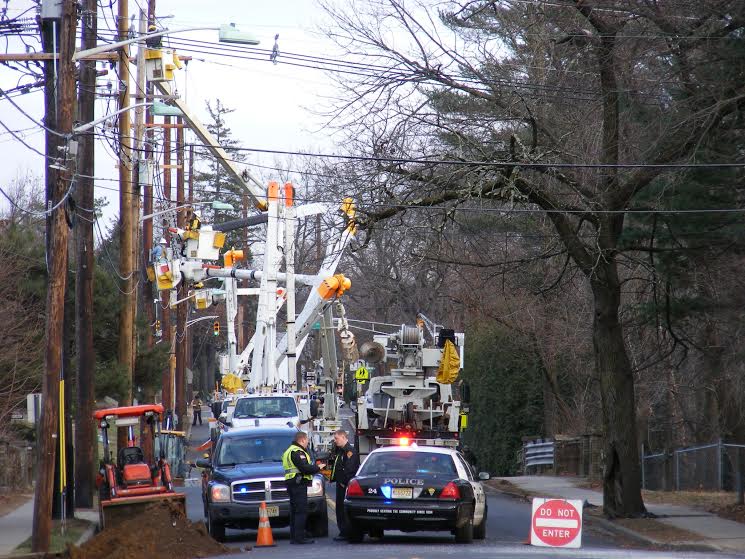
PSE&G – Energy Strong Gas Upgrade Project – Phase II
Elements of the Village Gas Service Upgrade Project :
• Ferreira Construction will again use Village Police Officers for traffic control, like they did for the work in the East Glen Avenue area earlier this year.
• There will be no steel road plates used. All parties agreed to this.
• Trenches will be topped with hot mix I-5 asphalt mix, followed by final restoration later.
• The contractor’s crews would like to work 6 days per week, weather and Village permitting. No work on Sunday.
• Trenches will be generally 18-inches wide.
• House services will be done after the main work is complete, but coordinated to minimize natural gas service interruptions during the winter heating days.
• Ferreira will continue to use their current staging area. Some equipment will be left on streets overnight in the Lawns area.
• Work will not occurred during inclement weather periods.
Senate urged to approve $1.1 trillion spending bill to keep government running
DECEMBER 12, 2014, 4:03 PM LAST UPDATED: FRIDAY, DECEMBER 12, 2014, 11:48 PM
BY DAVID ESPO AND ANDREW TAYLOR
ASSOCIATED PRESS
WASHINGTON — President Obama on Friday urged the Senate to ratify a $1.1 trillion, House-passed spending bill that has roiled his Democratic Party, judging it an imperfect measure that stems from “the divided government that the American people voted for.”
What’s in the bill
The $1.1 trillion, 1,603-page bill awaiting a Senate vote is mostly spending choices, such as adding $5.4 billion to fight the Ebola virus or trimming the Environmental Protection Agency’s budget by $60 million. But it’s also packed with a mishmash of “riders,” many of which couldn’t get through Congress on their own.
Here are some things the bill would affect:
SCHOOL LUNCHES: Eases rules requiring more whole grains in school lunches and suspends the lower sodium standards due to take effect in 2017, while keeping other healthy-eating rules. Some school nutrition directors — and some students complaining of yucky lunches — lobbied for a break from the standards championed by first lady Michelle Obama.
TRUCK SAFETY: Rolls back safety rules that were supposed to keep sleepy truckers from causing wrecks. The government’s rules had effectively shortened truckers’ maximum workweek from 82 hours to 70. The trucking industry fought back.
BANKING: Loosens rules imposed after the 2008 financial crisis. The change relaxes regulation of high-risk investments known as “derivatives” — rules that were imposed to reduce risk to depositors’ federally insured money and prevent more taxpayer bailouts. Banks said the crackdown stifled the competitiveness of the U.S. financial industry.
MARIJUANA: Offers a mixed bag for pot smokers. The bill blocks the Justice Department from raiding medical marijuana dispensaries in states that permit them. But it also blocks federal and local spending to legalize marijuana in Washington, D.C., where voters approved recreational use in a November referendum. It’s unclear what the practical effect of the spending ban will be.
PENSIONS: Allows some pension plans to cut benefits promised to current and future retirees. The change is designed to save some financially strapped plans from going broke. It applies to multiemployer plans, which cover more than 10 million people mostly at small, unionized employers, often in the construction business.
CAMPAIGN MONEY: Allows more money to flow into political parties. Under the new rules, each superrich donor could give almost $1.6 million per election cycle to political parties and their campaign committees. The comparable limit for 2014’s elections was $194,400.
THE SAGE GRO– USE: Says “no” to putting the greater sage grouse and three related birds on the endangered species list. Environmentalists say time to save them is running out as their sagebrush habitat disappears. But oil and gas companies and other businesses argued that protecting the chicken-sized birds on Western lands would hurt business and local economies.
LIGHT BULBS: Attempts to switch off federal rules that are making it harder to find old-fashioned incandescent bulbs. The bill extends a ban on the government spending money to enforce the ongoing phase-out of incandescent bulbs. It may not have much effect, since manufacturers and stores are already well-along in the switch to spiral bulbs and other energy-saving alternatives.
HUNTING AND FISHING: Prohibits the EPA from regulating lead in ammunition or fishing tackle. Lead in fishing sinkers and bullet fragments are being blamed for poisoning birds, such as loons and the endangered California condor. Republicans said EPA regulation would be overreach and just the threat of it was making it hard to find bullets in stores.
OFFICIAL PORTRAITS: Continues a ban on spending money on portraits of Cabinet secretaries, Congress members and other big shots, a Washington tradition that some lawmakers felt had gotten out of hand.
THE CAPITOL DOME: Spends $21 million to continue restoration of the leaky, cracked U.S. Capitol dome.
One day after House Democratic leader Nancy Pelosi publicly chastised him for supporting the bill, the president said there were provisions “I really do not like.” At the same time, he said there were other portions that “fund health insurance, early childhood education, the fight against climate change, and expand manufacturing hubs to grow jobs.”
He offered his assessment as Senate Democratic leader Harry Reid also announced support for the legislation, further underscoring the split inside the party. The Democrats will lose control of the Senate in January because of heavy losses in midterm elections last month and will go deeper into a House minority than at any time since 1928.
DHS: 100 Million Americans Could Lose Power in Major Sun Storm
Document says FEMA unsure of damage to grid from magnetic storm
Sun emits a mid-level flare Dec. 4, 2014 / AP
BY: Bill Gertz
December 12, 2014 5:00 am
Millions of Americans face catastrophic loss of electrical power during a future magnetic space storm that will disrupt the electric grid and cause cascading infrastructure failures, according to a Department of Homeland Security (DHS) document.
DHS’ Federal Emergency Management Agency (FEMA) stated in an internal 2012 fact sheet outlining its response plan for severe “space weather” that the actual impact and damage from a future solar storm is not known.
“An analysis of the space weather impacts indicates that the greatest challenge will be to provide life-saving and life-sustaining resources for large numbers of people that experience long-term power outage from damage to the U.S. electrical grid,” the FEMA document, dated March 1, 2012, states.
The FEMA fact sheet noted the findings of a 2010 study by the National Oceanic and Atmospheric Administration, the agency that monitors sun storms, warning that an extreme solar storm could leave “130 million people without power for years,” and destroy or damage more than 300 hard-to-replace electrical grid transformers.
Major solar storms are rare. Two major solar disruption events took place in 1859 and 1921, times when electricity was less prevalent than today.
The study said a future solar storm like the great magnetic storm of May 1921 would black out most states east of the Mississippi River along with most states in the Pacific Northwest.
The long-term loss of electrical power likely would produce catastrophic loss of life.
However, the FEMA document disputed that worst-case scenario, noting that in 2011 DHS experts were “not convinced” about the dire consequences outlined in the earlier study.
Still, DHS scientists in 2011 warned that the U.S. electric grid remains vulnerable to damage from an extreme geomagnetic storm. The scientists said the extent of damage to high-voltage transformers from a space storm “are not well known” and the matter needs further study, the report says.
So-called torture report is Democrats’ distraction from these six unpleasant issues
Published by: Herman Cain
No. Look this way. Not that way.
You have to ask: If it’s such a serious issue for the Bush Administration to have “tortured” detained terrorists back when we still had a president who cared about fighting terror, why did Senate Democrats wait seven years to release their report on this purported atrocity?
The answer is simple: Politics. On the one hand, they’re running out of time as the Senate majority. But more importantly, there are serious issues that demand the attention of the public, and it’s not in Democrats’ interests to have the public pay attention to these things. That’s why, having kept this assortment of their uninformed opinions diguised as a “report” in their back pockets for seven years, they’re releasing it now.
It’s time for a series of lectures about how horrible it is to “torture” terrorists so we don’t talk about a whole host of other things, particularly these things:
The election results, both federal and state. With Democrats having gotten their clocks cleaned at every level, we can’t spend time mulling the aspects of governance under the Democrats that have everyone so dissatisfied. Better to rehash things the Democrats used to upset people a decade ago when Republicans were in power. That’s much more relevant.
Grubergate. Coincidence that the “report” on “torture” came out the same day Jonathan Gruber was hauled in front of Congress to testify about the Democrats’ misleading of the American people – made necessary, he explains, by our “stupidity”? I think not. Speaking of which . . .
ObamaCare. It’s imploding, and even past and present Democrat senators like Chuck Schumer and Tom Harkin are now admitting it’s a train wreck and was a bad idea in the first place. What do you do with that? Change the subject to “torture,” of course!.
Unemployment. Now you might think Democrats would want to talk about this because the unemployment rate as traditionally announced by the Labor Department is down. But you know what? The real unemployment rate, which counts the underemployed and those who have given up looking for work, exceeds 10 percent. Pay much attention to the real employment picture and it’s trouble for Democrats.
The IRS scandal. Oh no, this hasn’t gone away. Lois Lerner’s e-mails have finally been recovered and they are sure to contain a treasure trove of information about how the IRS targeted conservative groups. We already know that certain senators, including Chuck Schumer and Carl Levin, publicly demanded that the IRS do this. Any bets on whether it was understood to be a priority of the Obama White House as well?
The national debt passed $18 trillion in the last couple of weeks, and you barely heard a word about it from the media. Now the “report” on “torture” gives them another excuse to ignore the story. By the way, in case you’ve forgotten, $10 trillion of that was accumulated under the 43 presidents from Washington to Bush. That means $8 trillion has been accumulated under Obama. Now that’s some achievement.
Better change the subject to something! Hey Senator Feinstein! Do we still have that torture report sitting around somewhere? Better release it now or the news cycle is going to kill us!
Ridgewood schools to give update to special needs program
DECEMBER 10, 2014 LAST UPDATED: WEDNESDAY, DECEMBER 10, 2014, 10:50 AM
BY JODI WEINBERGER
STAFF WRITER |
THE RIDGEWOOD NEWS
Ridgewood is revamping its innovative special needs program with a new name and different structure to better reflect how it works and benefits students.
The Ridgewood Board of Education on Dec. 1 unanimously voted to rename the Ridgewood High School SAIL (Strategic Actions and Innovations for Learning) program to PREP (Practical, Real-Life Education and Preparation), to better describe what it does.
The program will also have a delayed start going forward, and students will not be moved into it until their sophomore year of high school.
Currently students are assigned to the program in eighth grade, but next year will be assigned at the end of ninth grade so they will have a year of classes in the high school’s resource room program before being designated as PREP students in their sophomore year.
The program, which readies students for vocational jobs, has allowed many special education students to stay in district, a benefit to both students and the district’s coffers.
DECEMBER 10, 2014, 9:14 AM LAST UPDATED: WEDNESDAY, DECEMBER 10, 2014, 4:36 PM
BY GEOFF MULVIHILL
ASSOCIATED PRESS
New Jersey’s three largest pension funds for public workers sued Gov. Chris Christie on Wednesday over his decision to cut contributions earlier this year.
The lawsuit was filed in state chancery court on behalf of the Public Employees Retirement System, Police and Fire Retirement System and the Teachers’ Pension and Annuity Fund. Unions representing public workers previously sued over the contributions cut after a surprise fiscal crunch this year.
“The unions were doing their thing on behalf of their membership,” said Tom Bruno, chairman of PERS. “Our thing is a little different. Ours is a matter of trusteeship.”
The funds also represent nonunion public workers. Bruno says the three members of the PERS board who represent Christie’s administration abstained from the vote on whether to sue and the state attorney general’s office recused itself from the issue.
One key accomplishment of Christie’s first term as governor was an agreement to catch up funding for pension funds. For decades, governors had skimped on or skipped pension payments. As part of the agreement, retired public employees saw their cost-of-living increases suspended and current employees had to increase their retirement contributions.
Before Hiking Gas Taxes, Michigan Needs to Spend Money for Roads More Wisely.
Joel Griffith / @joelgriffith / December 10, 2014
Michigan Gov. Rick Snyder (R) is leading an effort to gradually double the state’s 19-cent per gallon gas tax. Doing so would boost the state’s transportation coffers by over $1 billion new tax dollars.
But Snyder isn’t sure that’s enough, saying, “The money I’m talking about is to get us to fair to good roads. They’re not even going to be great roads, folks. We can’t afford to have great roads in this state given what we need to invest.”
Admittedly, Michigan’s nearly 10,000 miles of state highway are in need of repair. The 2014 annual highway report from the U.S. Department of Transportation[?] ranks Michigan at a lackluster 32nd, in terms of overall highway performance ranking. Certain aspects of the system rank even lower, such as its urban interstate pavement condition (38th) and rural interstate pavement condition (40th).
Trouble with Michigan’s approach is, simply hiking taxes without fixing underlying spending problems isn’t the responsible solution. As a recent Reason Foundation report on state highway funding comparisons suggests, Michigan and other states seeking to raise taxes on drivers are overlooking a big problem: they aren’t spending existing tax revenue on the right things to benefit the people paying the taxes in the first place. And they’re squandering money on counterproductive regulations
Consider Wyoming, which has mountain terrain and primarily rural expanses of highway. The state ranks first overall in highway performance–although its spending per mile is nearly 63 percent less than Michigan. Texas, which has more than 80,000 miles of state highway, ranks far higher than Michigan on both the condition of rural highways and urban highways, yet spends nearly 24 percent less each year per mile.
Neighboring Ohio—with large urban centers of Cincinnati, Cleveland and Columbus—easily thumps Michigan as well. Spending 15 percent less per mile overall, Ohio manages to rank twelve spots higher on rural highways and nine spots higher on urban ones.
And let’s not forget the administrative costs of the state highway system, Michigan lacks efficiency. Administration costs gobble up nearly $10,000 per mile every year. To put that figure in context, consider that it’s ten times as much as Kentucky spends per mile on administration, nearly five times that of Arkansas, nearly three times Texas, more than double that of North Carolina, and close to twice the level of Virginia.
In Michigan, maintenance per mile is nearly $30,000 per year— more than twice as high as fifteen states (including Georgia, North Carolina and South Carolina) and more than triple the cost of eight states.
The fact is, from 1984-2012, across the country, the pace of increase for capital expended on roads and bridges has been nearly triple the inflation during this period (330 percent vs. 121 percent). And this occurred during a stretch where the nation’s population grew by only one-third.
Michigan taxpayers are suffering more than residents in many other states from this spending binge. The more than $113,000 per mile spent each year on state highway capital projects is higher than 33 other states— and it’s more than double the amount of spending per mile in a dozen states.
How did this happen?
One possible problem: many road projects require union wage rates that inflate costs. Get rid of those inflated salaries and more roads can be built with fewer dollars.
Even worse is the money that Michigan has wasted and continues to waste on urban transit systems, such as the notorious People Mover in Detroit, with few riders and spectacular operating costs and subsidies. If existing gas tax dollars went to roads, not white elephants, the crisis would be largely alleviated without higher costs. Also, Michigan would have a better grasp on what funding level is actually needed to maintain and repair its roads and bridges.
In the end, Michigan spends more $200,000 per mile each year for each mile of state –controlled highway—more than thirty other states without much to show for it. It’s time to reign in the spending first—not hike taxes on the working man without a second thought.
This article has been modified from its original version.
Port Authority security costs have risen 40 percent in five years
DECEMBER 9, 2014, 10:12 PM LAST UPDATED: TUESDAY, DECEMBER 9, 2014, 10:12 PM
BY SHAWN BOBURG
STAFF WRITER |
THE RECORD
Few agencies know the horrors of terrorism as does the Port Authority. But more than 13 years after the 9/11 attacks toppled the Twin Towers, the cost of its police and security apparatus continues to mushroom at a rate some top officials are calling unsustainable.
The Port Authority’s 1,835-member police force is bigger than ever and growing still. Some officers racked up so much overtime last year that they tripled their salaries and ranked among the agency’s top earners. At the same time, the Port Authority is paying an unprecedented amount to private security companies to help guard airports and other facilities. And the costs could continue to climb as the agency assumes increasing responsibility for securing a nearly rebuilt World Trade Center.
When Port Authority commissioners meet this morning, they are scheduled to vote on a 2015 spending plan that dedicates nearly a quarter of every dollar spent on operations to police and security. The $658 million slated for public-safety operations is 40 percent higher than it was only five years ago and quadruple the 2000 level. That growth has come as the rest of the agency’s operating expenses remained flat the last decade, its non-police workforce shrinking.
“Neither the trajectory of the expenses nor the current level is sustainable,” Port Authority Chairman John Degnan said in an interview on Tuesday.
Report of Izod Center deal was ‘error,’ American Dream developers say
DECEMBER 9, 2014 LAST UPDATED: TUESDAY, DECEMBER 9, 2014, 6:40 PM
BY JOHN BRENNAN
STAFF WRITER |
THE RECORD
American Dream Meadowlands developer Triple Five, which has been touting scores of leases and commitments to the 2.9 million-square-foot shopping and entertainment complex, on Tuesday backed away from a claim about taking over the adjacent Izod Center.
The four-page “Monthly Status Update” distributed to a number of real estate brokers at a shopping center conference in New York this week refers to an intention to “Re-brand Izod Center to American Dream Center in partnership with the owners of Barclays Center & Live Nation.”
But the 33-year-old arena is owned and operated by the New Jersey Sports and Exposition Authority, and agency President Wayne Hasenbalg said “that decision hasn’t been made, and we have no conversations with [Triple Five] about that. We are the entity that would decide to whom we turned over operations.”
Alan Marcus, a spokesman for Triple Five, said the arena notice was in error, but said he could not explain how it ended up in the status update. The update, distributed to many attendees at the International Council of Shopping Centers convention at the Javits Center, which ended Tuesday, also listed FAO Schwarz, Saks Fifth Avenue, Lord & Taylor and scores of other retailers.
“The only thing that would be accurate to say is that should Izod become available for lease, purchase or otherwise, we would undoubtedly participate in any privatization process, given our commitment to expanding entertainment opportunities in conjunction with American Dream,” Marcus said.
Enclave to Host On-Site Open House at 257 East Ridgewood Avenue
Enclave to Host On-Site Open House December 9th
RIDGEWOOD, NJ, December 9, 2014 – The developers of Enclave, a proposed 52-unit luxury apartment building on Maple Avenue between East Ridgewood and Franklin, will host an open house to present new data that answers lingering questions about prospective resident populations and other issues that have arisen during recent Planning Board hearings.
The meeting will be held at 257 East Ridgewood Avenue – the property that has applied to be considered to a Master Plan Amendment that would allow upscale apartments in Downtown Ridgewood – at 7:30 p.m. on Tues., Dec. 9th.
“Ridgewood’s planner has done a thorough job in modeling impacts and assessing benefits from prospective luxury apartment development in Downtown Ridgewood, but the legally required format to convey information has frustrated the public,” says John Saraceno, developer of the Enclave and himself a Ridgewood resident.
“Ridgewood residents have asserted a nearly unprecedented challenge to their planning professionals and planning board members to assure rents and household sizes,” says Mr. Saraceno. “Some cynics believe those demands are a ploy to confound the process; but we took our neighbors at their word and we have developed data that supports the previous submissions of professionals – including those employed by the Village. The numbers are undeniably persuasive and to sincerely interested people, the resulting data set that should allay their concerns.”
Of the four properties that have applied for consideration as luxury apartment locations, two are on the sites of former car dealerships; one is the site of the former DMV inspection location; and the final is the Enclave. Each of the sites is zoned for office and/or other commercial uses whose traffic and quality of life impacts will be greater than the proposed residential development, but whose property tax contributions will be lower. Each site essentially allows the same scope of development for other uses and each allows residential development. The proposed amendment increases allowable heights modestly (by less than 4 feet) and would allow the developers to use their current buildable area (square footage) for residential rather than the currently permitted commercial or residential-above-retail.
“We have held five previous sessions in discussion formats where we can explore the data and explain things in a friendlier environment, and it is very helpful for people who are truly interested in obtaining information. We also think that actually having people on the site will bring the project to life and demonstrate the advantageous of allowing retail rather than currently permitted uses.
“With the testimony of the Planner behind us and the final public comment period in front of us – plus now knowing the prospective resident profile – we felt it was a good time to have one last session to clear up any remaining doubts about the appeal of adding luxury residences downtown to sites where they are clearly the most beneficial, least impactful future use.”
www.downtownridgewood.com hosts a variety of documents related to the submissions to the Planning Board from the four developers applying for status under the proposed amendment.