Ridgewood NJ, According to the Ridgewood police ,on 8/11/16 the staff at Ridgewood High School found a large amount of damage within the High School. Patrol units and the detective bureau responded to investigate the incident. The security video captured juveniles committing burglary by entering the school during the overnight hours and then commit criminal mischief and thefts within the building. The detective bureau is investigating the incident.
On Friday, August 1, The Ridgewood News published a letter to the editor entitled: “New driver frustrated by lack of village parking.”
Not surprisingly, the author of the aforementioned letter, Mr. James F. Schimmel, failed to mention that his family owns the commercial building located at 20-26 East Ridgewood Avenue, which is less than 150 feet away from the proposed Hudson Street parking garage.
Certainly, the value of said property would increase if the parking garage were built and rental fees for it could be increased as well.
Yet another letter writer who chose to omit key information from a letter to the editor about the proposed parking garage. When will it end?
Boyd A. Loving
Ridgewood resident
Note: The Ridgewood News opted not to publish a response from me, almost identical to the above letter, regarding Mr. Schimmel’s letter.
Most Americans who immigrated to the U.S. support Donald Trump’s call for a temporary immigration ban from some countries, along with other proposals that appear to view foreigners with suspicion, according to a new Morning Consult poll.
The online survey, conducted after Trump unveiled his national security platform on Monday, shows that the views of immigrants and descendants of recent immigrants do not differ much from those of the general electorate.
As with the entire electorate, about six out of 10 immigrants (61 percent) said they back Trump’s proposal to have all foreigners take an ideological test when applying for a visa to make sure they share American values. About a quarter of immigrants (26 percent), as with the electorate as a whole (23 percent), said they opposed it.
Immigrants, or children or grandchildren of immigrants, also hold similar views to the entire electorate on Trump’s proposal to temporarily ban entry to the U.S. from people residing in countries with a history of terrorism. But there were small differences among those voters who differ by generation.
Americans who immigrated to the U.S. were the least likely to back the proposal, with 52 percent expressing support for it and 39 percent in opposition. At 68 percent, support for the ban was stronger among first generation Americans than the entire electorate (59 percent). Only 22 percent of that generation said they oppose it, compared with 27 percent of all voters.
Second generation Americans supported the proposed ban by a 27-point margin (59 percent to 32 percent) and third generation Americans backed it 55 percent to 34 percent.
Trump’s call to end “nation-building” was better received by recent immigrants and first generation Americans than the voting electorate as a whole. While about four in 10 voters (42 percent) said they support an end to such operations abroad, nearly five in 10 first-generation immigrants (49 percent) and recent immigrants (47 percent) said they back a more disengaged approach to foreign affairs. Forty-two percent of second-generation Americans and 44 percent of third generation Americans also said they support ending “nation building.”
The State Department admitted Thursday that the US would not hand over $400 million in cash to Iran until it released four American hostages — two weeks after President Obama insisted the payment was not a “ransom.”
State Department spokesman John Kirby was asked at Thursday’s press briefing: “In basic English, you’re saying you wouldn’t give them $400 million in cash until the prisoners were released, correct?”
Ridgewood NJ, The use of robo-advisors is on the rise among investors looking for an alternative way to get help with financial planning.
In fact, a report by the consulting firm A.T. Kearney predicted that robo-advisors will be managing 5.6 percent of Americans’ investment assets by 2020, up from 0.5 percent when the report was done in 2015.
Despite the intriguing name, don’t imagine that robo-advisors resemble something from a science fiction movie, with lights flashing as they dole out warnings about dangers to your portfolio.
Instead, a robo-advisor is an online wealth-management service that uses a software program to provide automated advice based on an algorithm.
Robo-advisors have their merits. Clients save money, at least on the front end, because fees are usually lower, says Rick Rivera, a partner at Safeguard Investment Advisory Group (www.safeguardinvestment.com).
The required minimum investment also usually is low, which could be helpful for young investors who haven’t had time to build wealth.
“If you’re a do-it-yourselfer, it might work for you,” Rivera says. “But is it something that saves you money for the long term? Maybe not.”
Investors should weigh the advantages against the disadvantages, he says. Examples of when robo-advisors fall short include:
• Looking at the big picture. Robo-advisors are limited to what their software is designed to handle. Human financial planners don’t have that limitation. They can provide advice based on the bigger picture of how all of a person’sassets, tax liabilities and other factors interact and affect each other.
• Adapting to market fluctuations. Questions remain about just how well robo-advisors react to rapid market changes. Recently, when U.S. markets experienced extreme volatility because of Brexit – the United Kingdom’s vote to leave the European Union – at least one robo-advising firm halted all its trading. “People were saying this could have been negative for those trying to buy when stock prices dropped,” Rivera says.
• Helping with estate or long-term care planning. Older clients often are concerned about how to best leave wealth to their heirs through trusts or other means. They also worry about whether they will need expensive long-term care that
can eat away at their savings. These aren’t areas robo-advisors usually venture into, but human ones do. “We can say here are your options, here is what we can do to protect you,” Rivera says. “We can show them avenues that robo-advisors
can’t.”
Ultimately, robo-advisors may appeal to those who have uncomplicated portfolios and can get by on general advice, but for many investors a one-size-fits-most approach doesn’t cut it, Rivera says.
“I can’t tell you how many times someone has come to me and said they heard that all life insurance is bad, or all annuities are bad, or all mutual funds are bad,” Rivera says.
“But each of those things is created for a specific purpose. Whether they are good or whether they are bad depends on your needs. That’s where human advisors can step in and help you weigh just what those needs are.”
About Rick Rivera
Rick Rivera is a partner at Safeguard Investment Advisory Group (www.safeguardinvestment.com) and has more than two decades of experience in the financial industry providing guidance to those planning for retirement. He is an investment advisor representative holding a series 65 license, as well as Life-Only and Accident and Health licenses in California.
By Times of Trenton Editorial Board
on August 17, 2016 at 6:08 AM, updated August 17, 2016 at 10:18 AM
If the words on this page were written in cursive, chances are few people under the age of 18 could read them.
That’s not a lament – just an observation. The dependency on computers, email and texting for communicating has rendered what we used to call “script” all but obsolete.
In the not-too-distant past – say, 2004 or so – New Jersey’s third graders were required to “write legibly in manuscript or cursive to meet district standards.”
That requirement has gone the way of the floppy disc, photographic film and cassette tapes.
But now two state lawmakers are pushing a bill that would force every school district to teach reading and writing in cursive as part of the elementary school curriculum.
Exchange was tightly scripted and specifically timed to the prisoner release
By
JAY SOLOMON and
CAROL E. LEE
Updated Aug. 17, 2016 7:37 p.m. ET
WASHINGTON—New details of the $400 million U.S. payment to Iran earlier this year depict a tightly scripted exchange specifically timed to the release of several American prisoners held in Iran.
The picture emerged from accounts of U.S. officials and others briefed on the operation: U.S. officials wouldn’t let Iranians take control of the money until a Swiss Air Force plane carrying three freed Americans departed from Tehran on Jan. 17. Once that happened, an Iranian cargo plane was allowed to bring the cash home from a Geneva airport that day.
President Barack Obama and other U.S. officials have said the payment didn’t amount to ransom, because the U.S. owed the money to Iran as part of a longstanding dispute linked to a failed arms deal from the 1970s. U.S. officials have said that the prisoner release and cash transfer took place through two separate diplomatic channels.
But the handling of the payment and its connection to the Americans’ release have raised questions among lawmakers and administration critics.
According to the Justice Department, certain donations to the Oscar winner’s charity came directly from a multibillion-dollar embezzlement drama in Southeast Asia.
On the evening of July 20, under a tent at a vineyard in St. Tropez brimming to his specifications with booze, billionaires and babes, Leonardo DiCaprio was preparing to host one of the glitziest charitable events of the year: the third annual fundraiser for his Leonardo DiCaprio Foundation. Earlier that same day, under far less glamorous auspices half a world away, the U.S. Department of Justice was filing a complaint with the U.S. District Court in downtown Los Angeles that suggested the recent Oscar winner is a bit player in the planet’s largest embezzlement case, totaling more than $3 billion siphoned from a Malaysian sovereign wealth fund called 1MDB.
Ridgewood NJ, Families and children of all ages are invited to a Blessing of the Animals and celebration of the life and ministry of St. Frances of Assisi on Saturday October 1, 2016 at 11:00 a.m. at Christ Episcopal Church in Ridgewood.
Everyone is invited to bring their favorite pets: dogs, cats, goldfish, rabbits and even stuffed animals….any beloved creature, great or small. A short service celebrating all animals will be followed by individual blessings of each animal. The service will be held inside of the church and refreshments will be provided.
There will also be some orphaned animals from the Ramapo-Bergen Animal Refuge who are eligible for adoption joining us. Please consider bringing a donation from the RBARI wish list found on their website:
www.rbari.org to this event.
Contact the church office at 201.652.2350 with any questions or visit www.christchurchridgewood.org. The church is located at 105 Cottage Place, at the corner of Franklin Avenue, in Ridgewood, NJ.
Trenton, NJ – Governor Chris Christie announced his enactment of Executive Order 213, with the State Transportation Trust Fund Authority days away from exhausting all of its available funds.
“No evident progress has been made by the Legislature to pass a single, viable bill to reauthorize the TTFA,” Governor Christie stated. “A well-maintained transportation infrastructure is essential to the operation of New Jersey’s economy and the people who rely upon it in all aspects of their daily lives. The current situation will persist until the Senate and the General Assembly pass an acceptable TTFA funding bill. Until they do so, the State must use money from the General Fund for emergency road, bridge, and mass transportation work.”
Under Executive Order 213, attached, the state Treasurer is directed to make available general funds for expenses determined to be absolutely essential for the protection of the health, safety, and welfare of the people of the State of New Jersey, or that are required to ensure the receipt of federal funding, in accordance with Executive Order 210, until the Governor determines an emergency no longer exists.
Ridgewood NJ, Every August since 1968, Graydon Pool has hosted summer day campers from Paterson for 3 afternoons a week for 3 consecutive weeks. These 9 days at Graydon provide a cool respite for these city kids with little, if any, opportunity to swim in their own community. Plus, thanks to the Ridgewood YMCA, the children receive swim instruction every day, providing them with water safety skills that will help keep them safe for a lifetime.
This year corporate donors were scarce and there is a short fall of about $3000 so Citizens for Swimming needs your help.
Citizens for Swimming needs $110 per child to host the child for the full program. They need donations of money, new swimsuits, towels, and volunteers to make this work. Checks should be made payable to Citizens for Swimming.
The address to mail checks to is:
Citizens for Swimming
c/o Jorgensen & Company
42 West Allendale Avenue
Allendale, NJ 07401
Ridgewood NJ, the ex mayor Paul Aronsohn and his cronies have flooded the membership of the Ridgewood League of Women Voters. According to their website the League of Women Voters is a non-partisan political organization encourages the active and informed participation of citizens in government and influences public policy through education and advocacy.
The League does not support or oppose any candidate or party. Operating on a non-profit, voluntary basis, its work is financed by dues and contributions from members and the general public. Membership is open to all citizens of voting age.
Readers claim, “This could be the LWV’s best-ever new member drive…or the worst, since nobody wants to be with those people. Newbies include Wyne, Winograd, Sonenfeld. All at once.” While other say ,”Aronsohn has now joined the league, and Rurik and Gwenn. Must miss.”
Most readers are quite skeptical over a group of clearly proven partisan hacks joining a supposed “non-partisan political organization” .Will attempts be made to manipulate the electorate and misrepresent information like past Aronsohn campaigns ie… “the Vote Yes” for the Hudson Street garage campaign ? Or will Aronsohn be shut down in dead end political never land ?
And of coarse what about credibility ,just when the league had finally began to regain some relevance after years of filtering on the edge of extinction but who will now take them seriously ?
This is the way upcoming meetings are listed on the “improved” village website. The current method is inept because:
Meetings of the Village Council, Planning Board, and Zoning Board of Adjustment are all mixed together. People want to know about one particular kind of meeting (not “I wonder what meetings are happening, any kind is fine”) and should not have to read through the entire list to find it. Categories (each council or board) should be listed separately, under a heading.
Nowhere does it state that those three groups are the only ones whose meetings are listed. In fact, numerous boards, committees, commissions, and councils will hold their meetings during the same period. Doing as suggested above would make it clear that those were the only ones, because the headings would say that.
Village Council meetings are not identified as such. “Public Meeting,” “Special Public Meeting,” and “Public Work Session” provide insufficient information. Everything on the list is a public meeting. Yet it’s probably council meetings that most people are interested in.
Upcoming meetings should be listed in chronological order, not in reverse chronological order just because some software does it that way automatically. It’s counter intuitive and unnecessarily hard for the user.
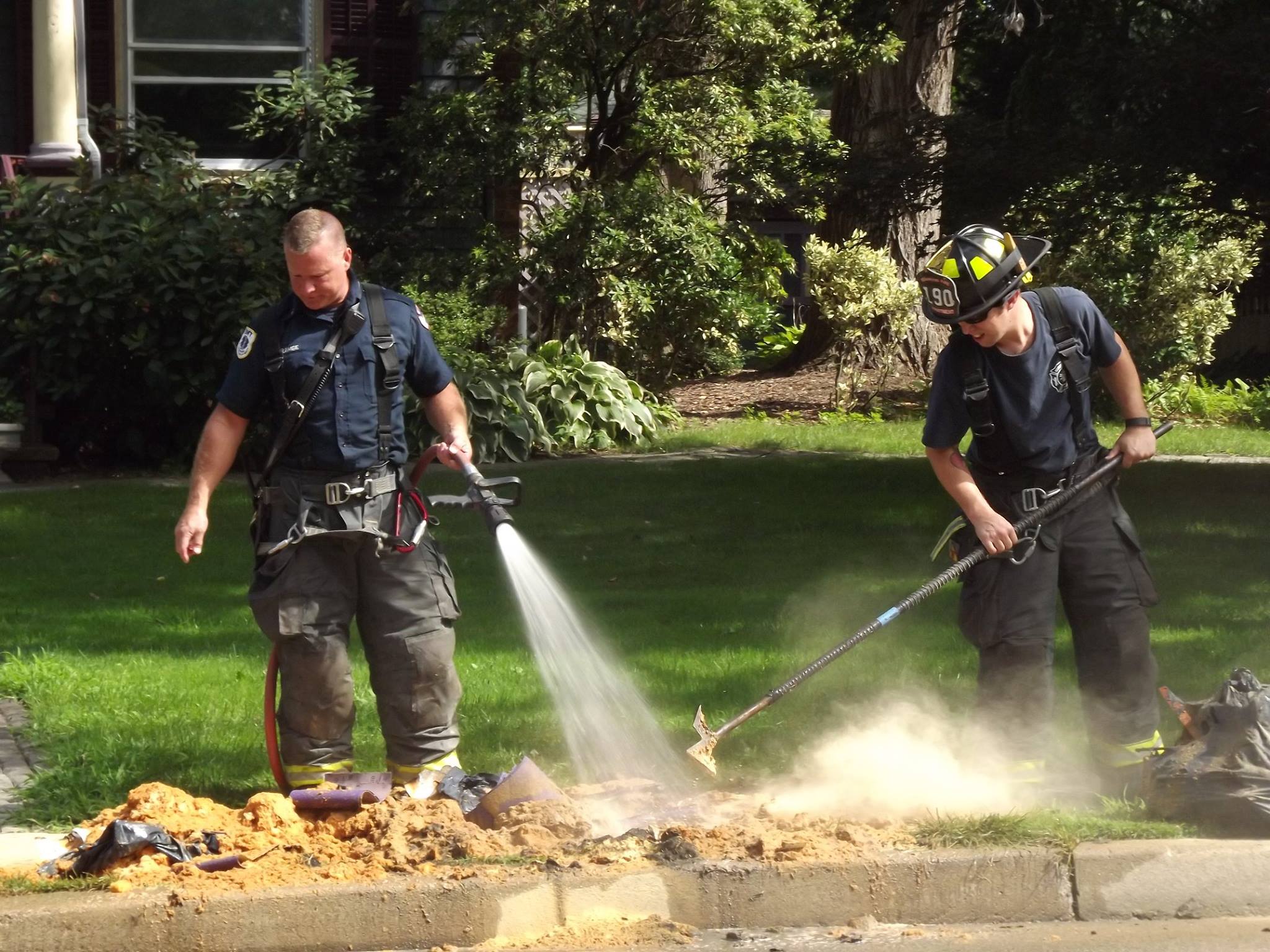
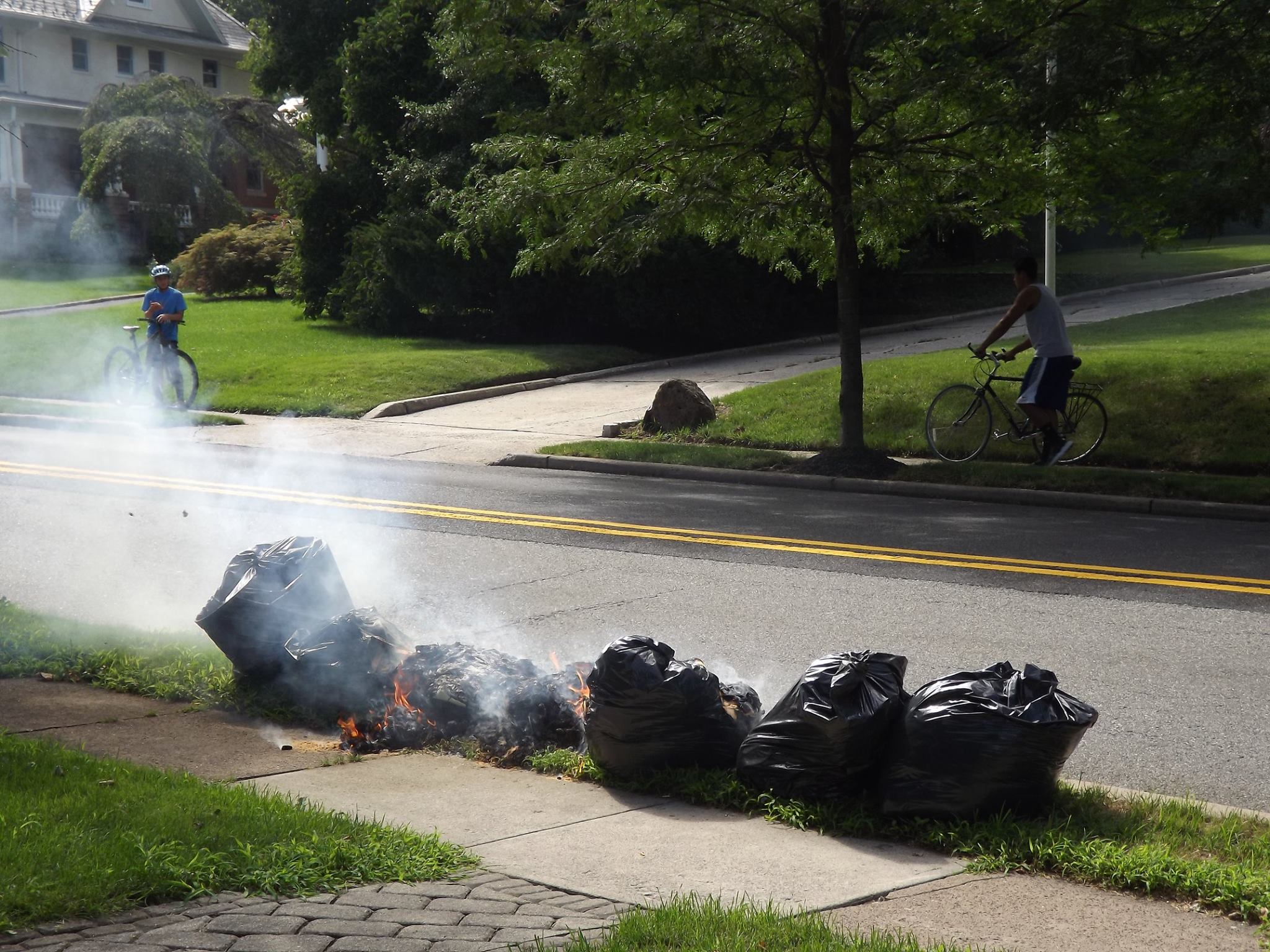
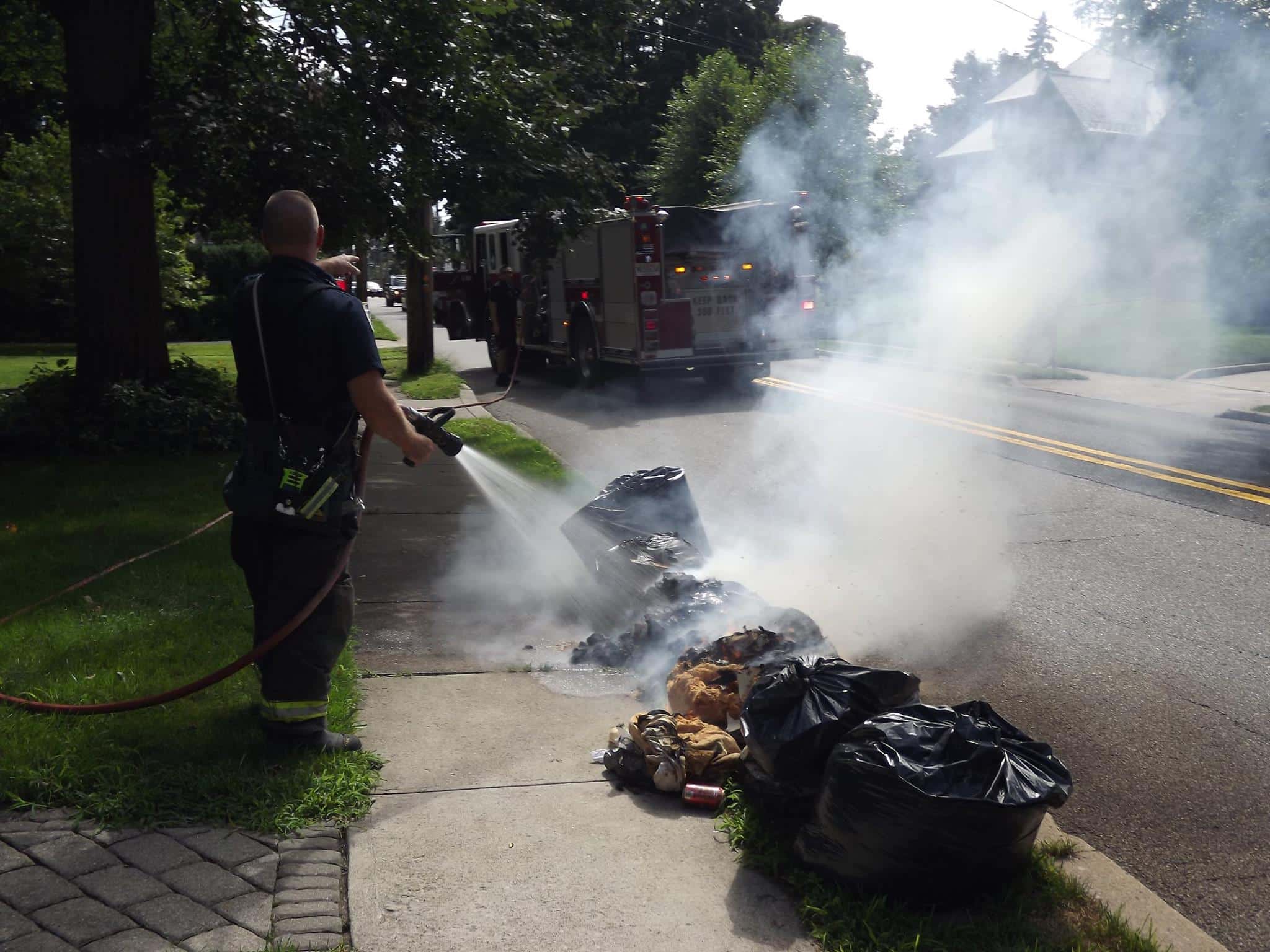
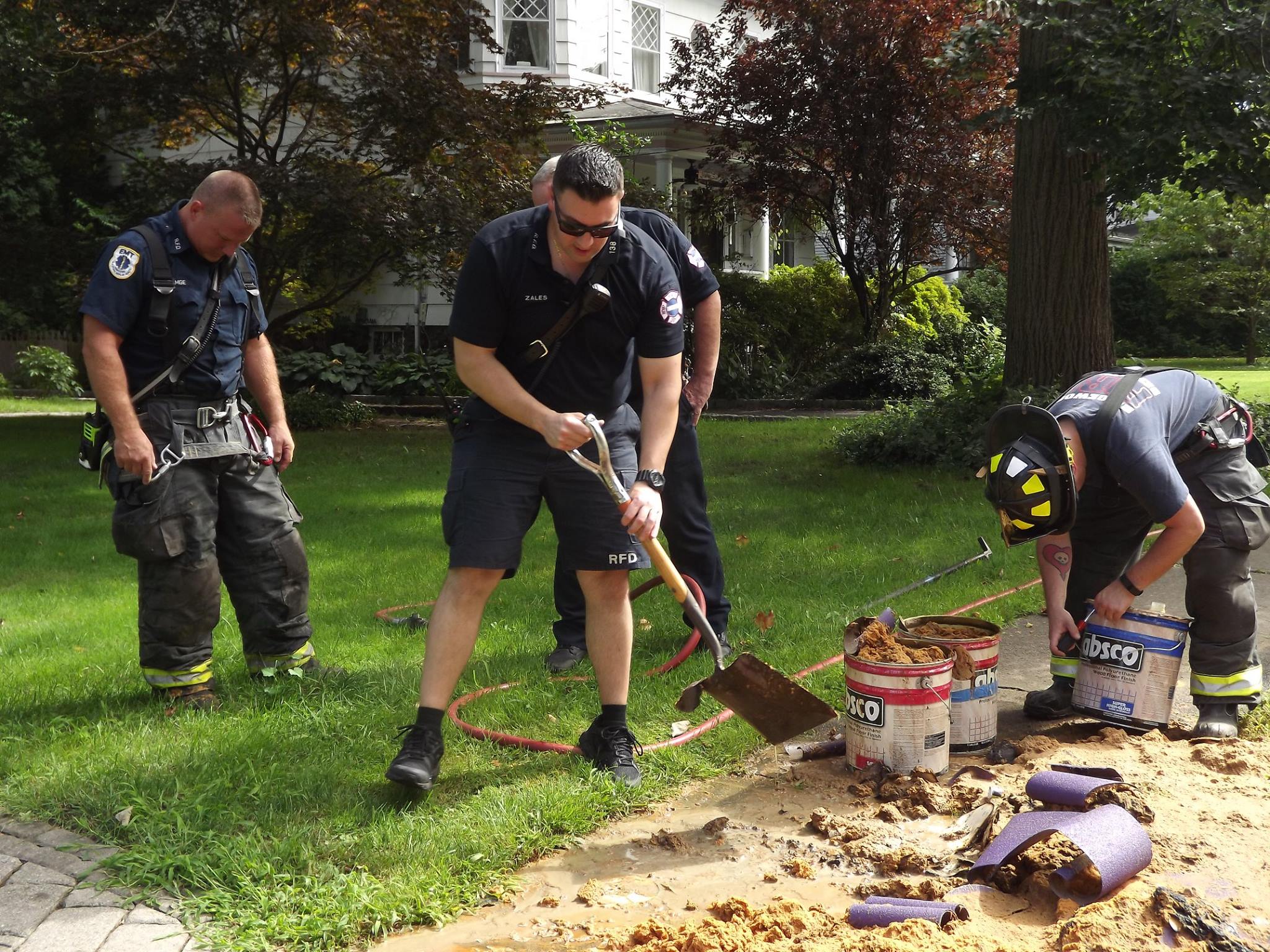
Ridgewood NJ, Discarded waste associated with the sanding of hardwood floors ignited unexpectedly after being placed at the curb in large plastic trash bags for pickup in front of 347 South Maple Avenue, Ridgewood on the afternoon of Wednesday, 08/17. The crew from Ridgewood Engine Company #35 extinguished the small blaze using the apparatus’ booster line and hosed down all other debris left at the curb to avoid a repeat incident. Ridgewood PD provided traffic control while firefighters worked.
By Larry Higgs | NJ Advance Media for NJ.com
on August 16, 2016 at 2:49 PM, updated August 16, 2016 at 3:49 PM
A former writer for “The Daily Show” has produced a video explaining how red tape could delay the Gateway Tunnel project, potentially increasing gridlock and costing billions in tax dollars.
The video by Alex Marino explains the complex tunnel issues in “Transportation Armageddon.” It was produced for Common Good, which advocates cutting red tape and bureaucratic reform.
It warns how road gridlock would expand in New York and New Jersey if one of the existing 106-year old tunnels has to be taken out of service for rehabilitation and rail commuters instead have to use their cars.