Ridgewood NJ, every four years, we encounter an anomaly in our calendar: the phenomenon known as leap year. But what exactly is leap year, and why does it exist? To unravel this mystery, let’s embark on a journey through history to discover the origins and significance of leap year.
This self-deprecating comment is perhaps the most famous Abraham Lincoln one-liner from the Douglas debates. Lincoln made the quip in response to Douglas’ accusation that he was two-faced.
“Honestly, if I were two-faced, would I be showing you this one?”
Ridgewood NJ, Presidents’ Day is an American holiday celebrated on the third Monday in February. Originally established in 1885 in recognition of President George Washington, it is still officially called “Washington’s Birthday” by the federal government. Traditionally celebrated on February 22—Washington’s actual day of birth—the holiday became popularly known as Presidents’ Day after it was moved as part of 1971’s Uniform Monday Holiday Act, an attempt to create more three-day weekends for the nation’s workers. While several states still have individual holidays honoring the birthdays of Washington, Abraham Lincoln and other figures, Presidents’ Day is now popularly viewed as a day to celebrate all U.S. presidents past and present.
Ridgewood NJ, Abraham Lincoln is widely regarded as one of the greatest presidents in American history. His leadership during one of the nation’s most tumultuous periods, the Civil War, and his efforts to preserve the Union, abolish slavery, and promote equality have left an indelible mark on the United States.
Bergen County Historical Society celebrates Sinterklaas Day on Sunday December 3rd 1 pm-3 pm.
Bergen County Historical Society for our 40th Annual Colonial Christmas Concerts and Tavern Fare on Saturday, December 16th, or Sunday, December 17th at Historic New Bridge Landing 1201 Main Street, River Edge.
George Washington’s Thanksgiving Prayer – abridged from his Thanksgiving Proclamation of 1789. You may wish to share this with your family and friends at your Thanksgiving table.
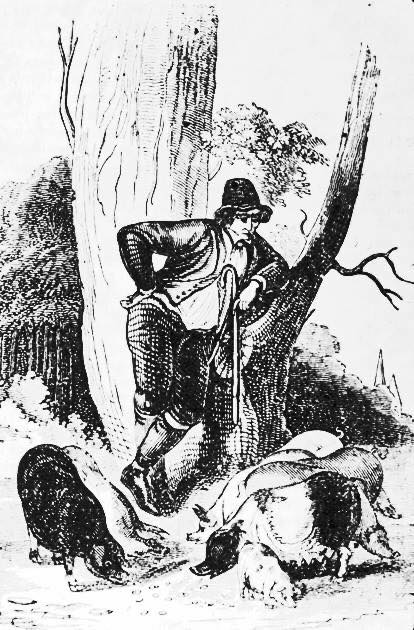
As compared with present consumption, the colonial diet included relatively little fresh meat. Families reared swine and turkeys in great numbers and those destined for winter market were fenced in an appropriate place at the lower end of the garden. Pork was preferred over beef, except among Jewish colonists whose religious observance proscribed its consumption. Pigs generously fattened on forest mast, field pumpkins, buckwheat, and a sweet mash of skimmed milk and bran.
Each year at this time school children all over America are taught the official Thanksgiving story, and newspapers, radio, TV, and magazines devote vast amounts of time and space to it. It is all very colorful and fascinating.
It is also very deceiving. This official story is nothing like what really happened. It is a fairy tale, a whitewashed and sanitized collection of half-truths which divert attention away from Thanksgiving’s real meaning.
On the chilly and drizzly morning of November 20, 1776, a mere four months following the declaration of independence by the Second Continental Congress, the formidable British army launched an invasion of Bergen County. Their objective was to capture the American garrison stationed at Fort Lee, with the garrison’s sole escape route leading across a small wooden drawbridge at New Bridge Landing, now located in River Edge and New Milford.
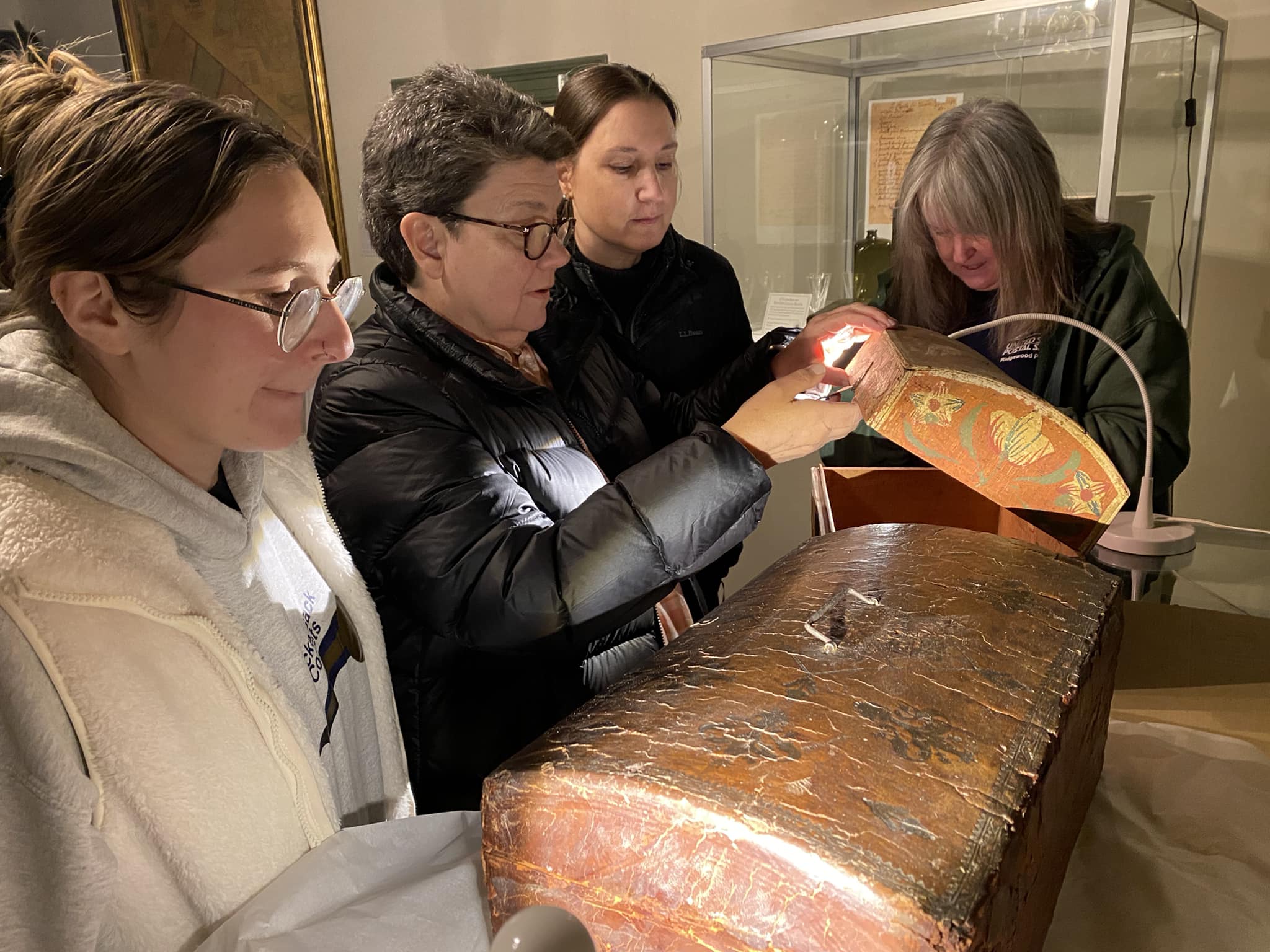
Photo of the Museum Collections Committee recently preparing exhibit.
the staff of the Ridgewood blog
River Edge NJ, this year Bergen County Historical Society has an exhibit of 18th document box for the Retreat event at New Bridge. It has the GR King George stamp seal impressed in the leather lid by the handle.
The box has been conserved by Cultural Preservation & Restoration since the last time on exhibit several years ago.
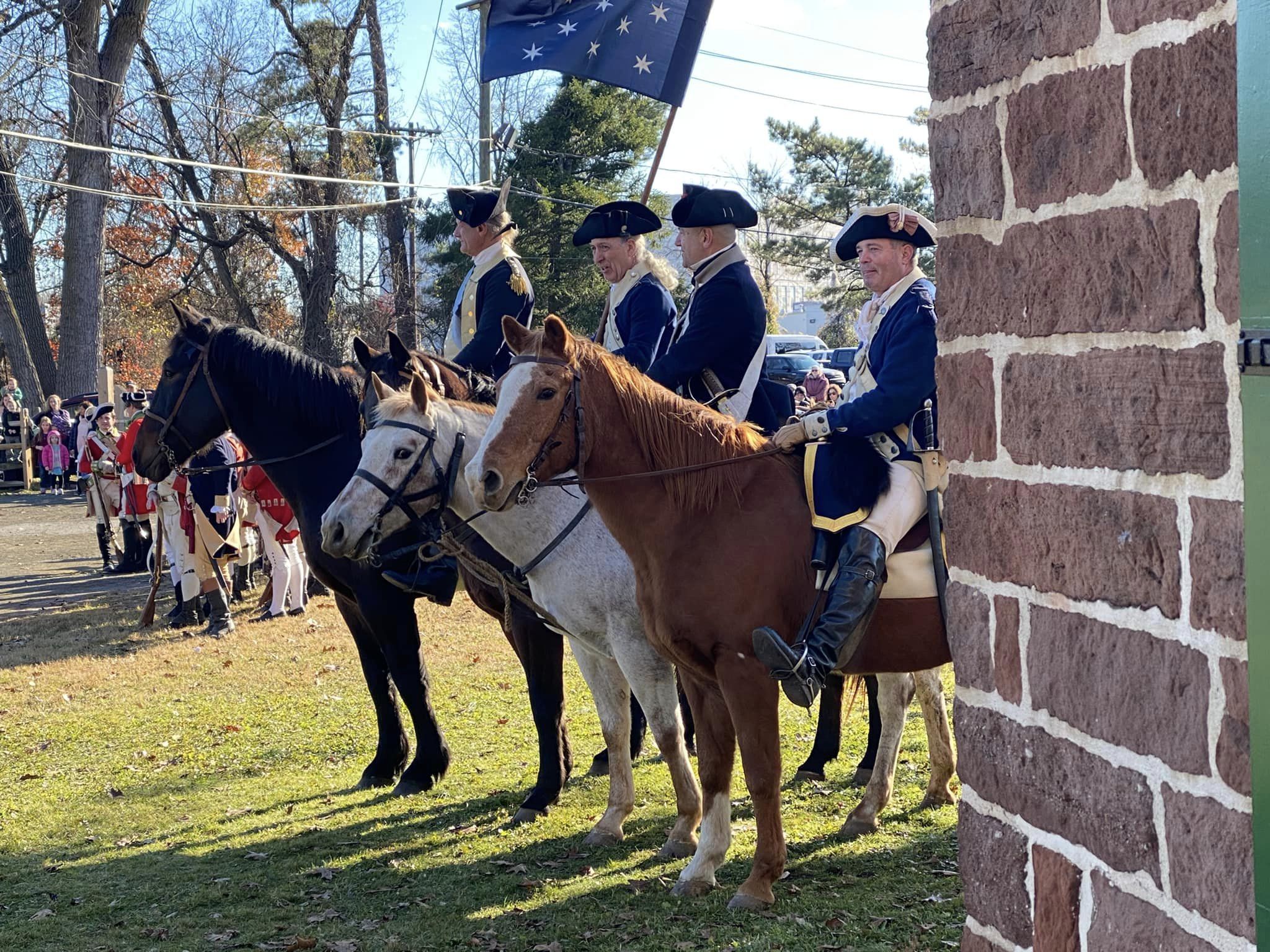
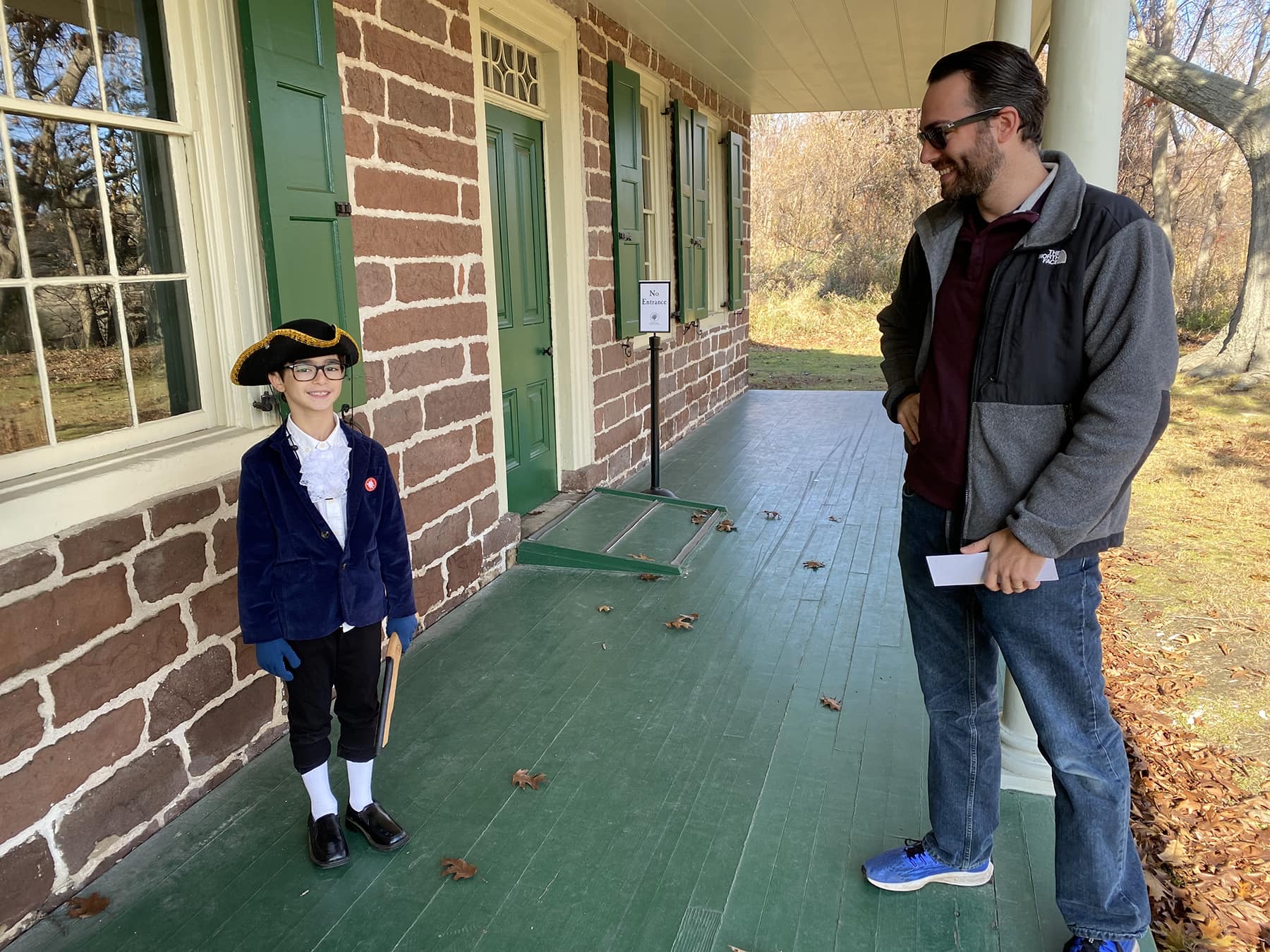
Some visitors come dressed for the part too, like this student of history. Come find out more at this year’s event Nov 18 & 19th.
photo courtesy of Bergen County Historical Society
the staff of the Ridgewood blog
River Edge NJ, On the cold, drizzly morning of November 20, 1776, a mere four months after the Second Continental Congress declared us to be an independent nation, the mighty British army mounted an invasion of Bergen County. Their goal was the capture of the American garrison at Fort Lee; the garrison’s only means of escape lay across a small wooden drawbridge at New Bridge Landing in what is now River Edge and New Milford.
photos courtesy of Bergen County Historical Society and the Brigade of the American Revolution
by James McKane BAR Retreat Weekend Committee- lead BAR board member at-large, Co-Inspector Commander, 3rd NJ Grays
Fort Lee NJ, the Brigade of the American Revolution’s (BAR) annual Fort Lee event will take place on Saturday, November 18th. Please plan to arrive at Fort Lee prior to 8:30am to make preparations for the event. Fort Lee will be an accurate representation of the chaos of retreat with the central goal of true interpretation for spectators to understand the sacrifices of 247 years ago. Throughout the whole day, soldiers will work on making last-minute defenses while civilians of both armies will do their best to share stories of the struggles of being behind or on the lines of the fighting. There will be presentations and demos throughout the day on 18th century cricket, coffee making, music, and artillery; plus merchants selling goods and the infamous Civilian Contingent fabric sale inside the museum. Prior to the battle reenactment, a quick parade to the center of the city will again take place to honor those that gave the ultimate sacrifice. General Washington and his staff will also be on site to ensure the retreat goes as planned. The Brigade invites all members attending Fort Lee to also attend the Retreat to New Bridge Landing on Sunday, with that in mind, Fort Lee has generously offered their grounds and visitor center for anyone wishing to stay overnight on Saturday.Continue reading 247th Anniversary Weekend Retreat Fort Lee & New Bridge Landing November 18th -19th