Hawthorne NJ , No injuries were reported following the rollover crash of a BMW SUV and a Jeep Wrangler at the intersection of Grandview Avenue and Vennik Place in Hawthorne on Wednesday evening, 01/25. Hawthorne PD, Wyckoff PD, and Wyckoff FD units responded to the incident. Both vehicles were removed from the scene by separate flatbed tow trucks.
By Susan K. Livio and Carla Astudillo | NJ Advance Media for NJ.com
on January 25, 2017 at 2:56 PM, updated January 25, 2017 at 7:01 PM
TRENTON — New Jersey’s infamously high property tax bills topped $8,500 per home in 2016, a 2.35 percent increase over the previous year, according to figures released Wednesday by the Department of Community Affairs.
Property owners paid $8,549 — $196 more than they did in 2015 when the average tax bill rose about 2.2 percent, according to the analysis.
The average residential bill has risen from $8,161 in 2014 to $8,353 in 2015 to $8,549 in 2016.
Each year, the average bill set a new high bar for what Garden State property owners
If you missed last week’s affordable housing decision from the N.J. Supreme Court, Save Jerseyans, then get caught up ASAP right here.
The bottom line?
New Jersey communities face NEW property tax-busting affordable housing requirements, as many as 150,000 unit state-wide; the numbers are being fought-out in a number of trial level venues as we speak.
Some of you have asked me what this could look like on a town-by-town basis.
Not pretty, that’s for damn sure, but our friend Assemblywoman Holly Schepisi (R-39) shared one pro-affordable housing organization’s projections via social media this morning to illustrate the challenge ahead for New Jersey’s municipalities.
RIDGEWOOD VILLAGE 2016 avg: $17,181 2015 avg: $16,798 Change: 2.30%
By Michael Symons January 24, 2017 7:26 PM
Property taxes increased by more than $700 million across New Jersey in 2016, the most in six years, according to a New Jersey 101.5 compilation of tax data.
That added $196 to the average residential property tax bill, a 2.35 percent jump to $8,549. That’s the same percentage increase as in 2015, which was the most since 2011.
The tax levy increased by 2.54 percent statewide, or nearly $703 million. The levy last rose by that percentage in 2011, and the last time it grew by that many dollars or more was in 2010.
The levy can increase by more than Gov. Chris Christie’s signature 2 percent cap because of exceptions for pensions, health benefits, debt, construction and emergencies. Also, governments that are under the cap one year can “bank” that increase to use in any of the next three years.
Christie spokesman Brian Murray said the governor didn’t want the exemptions. Murray said rising property values largely triggered the slight tax increase and that annual increases in property taxes have averaged 2.04 percent since 2010.
“The annual increase would have been lower had the Legislature not incorporated exceptions to the 2 percent caps, exemptions the governor advocated against,” Murray said. “But more importantly, the rate of increase is far below the astounding 7 percent-per-year tax growth New Jersey averaged during the decade preceding the governor’s arrival in office.”
Trenton, NJ – Governor Chris Christie delivered draft legislation today mandating that people seeking immediate treatment for diagnosed substance abuse disorders should no longer wait for prior authorization from their insurance carriers, making good on a promise he made during his State of the State address earlier this month.
“When a person who is in the throes of a deadly drug addiction realizes he or she needs help, they should not be blocked at the treatment center doors because their insurance carrier requires a prior evaluation that could take weeks to complete. Their lives hang in the balance; they cannot wait, which is why I am expediting the legislative process by delivering a draft bill to legislators who are eager to introduce it,” said Governor Christie.
The proposed legislation carries multiple provisions, including:
• No one will be turned away for insurance reasons from treatment if a licensed provider prescribes substance abuse disorder treatment
• Insurance coverage for treatment of a substance abuse disorder will be required and any waiting period that could derail a person’s recovery will be eliminated
• No longer will lives be put at risk by layers of needless bureaucracy; people diagnosed with a substance abuse disorder will have covered treatment for 180 days, starting the day they need it, including long term out-patient treatment with no interference from their carrier
• Covered medication-assisted treatments will be required to be provided without the imposition of prior approval from a carrier
• Onerous pre-payment obligations imposed by providers will be prohibited, and instead, patients will only be required to pay their copayment, deductible or co-insurance for their treatment
• In addition, treatment for substance abuse disorders must be covered by the carrier to the same extent as any other covered medical condition without increased copayments, deductibles or co-insurance
• The Office of Attorney General will be tasked with monitoring this system to prevent waste, fraud or abuse, and to ensure providers are not improperly treating patients or filling beds that could be used by others in need of treatment.
Ridgewood NJ, Gannett owner of the Bergen Record is issuing layoff notices to 141 employees in a second major round of job cuts since it purchased North Jersey Media group.
Many long-time readers of the Ridgewood blog know there was not much love loss between this blog and the former owners of the Bergen Record, the Borgs. The Ridgewood blog was frequently the target of their ire.
The Record like most of New Jersey’s local media worked in collusion with the far left and seemed to support every new tax, and regulation chasing every business out of the state along with most retirees and high earning tax payers.
While we hate to see people lose their job, we know the same consideration would not be given to us.
The company said Monday the cuts will take place across its North Jersey Media Group, which includes The Record, the Herald News of Passaic County and NorthJersey.com
The McLean, Virginia-based Gannett Co. Inc. has previously eliminated over 100 jobs at the newspaper group right after purchasing the papers last summer.
The company says North Jersey Media Group is reorganizing to meet the growing digital demands of its readers and advertisers.
“This news article, about the increased number of storefront vacancies in an “upscale” Bergen County downtown, may be of interest to many of you, particularly since Joseph A. Banks Clothiers shut their store on East Ridgewood Avenue last week.” Boyd Loving
Editors note : “I am a Joseph A. Banks customer , yet I never set foot in that store , always shop on line ” PJ blogger
By Fausto Giovanny Pinto | NJ Advance Media for NJ.com
on January 22, 2017 at 7:30 AM, updated January 22, 2017 at 7:32 AM
ENGLEWOOD — Signs that advertise available space are prominent on the windows of empty storefronts along Palisades Avenue in the heart of Englewood’s downtown shopping district.
A man walks by two empty storefronts on Palisade Avenue in downtown Englewood.Fausto Giovanny Pinto
Officials and realtors say the changing landscape of retail shopping has affected this area, filled with ritzy boutiques, chain stores and a host of eateries.
“Englewood is not the only one with empty stores,” said Carol Rauscher, president of the Englewood Chamber of Commerce. “Two things have contributed to the decline, online shopping and off-price stores, and that’s something we don’t have and won’t get.”
Recent departures from downtown include Victoria’s Secret, Chico’s, Nine West and Wendy’s. The downtown currently has a 5 percent vacancy rate, according to recent survey by the city’s Economic Development Corp.
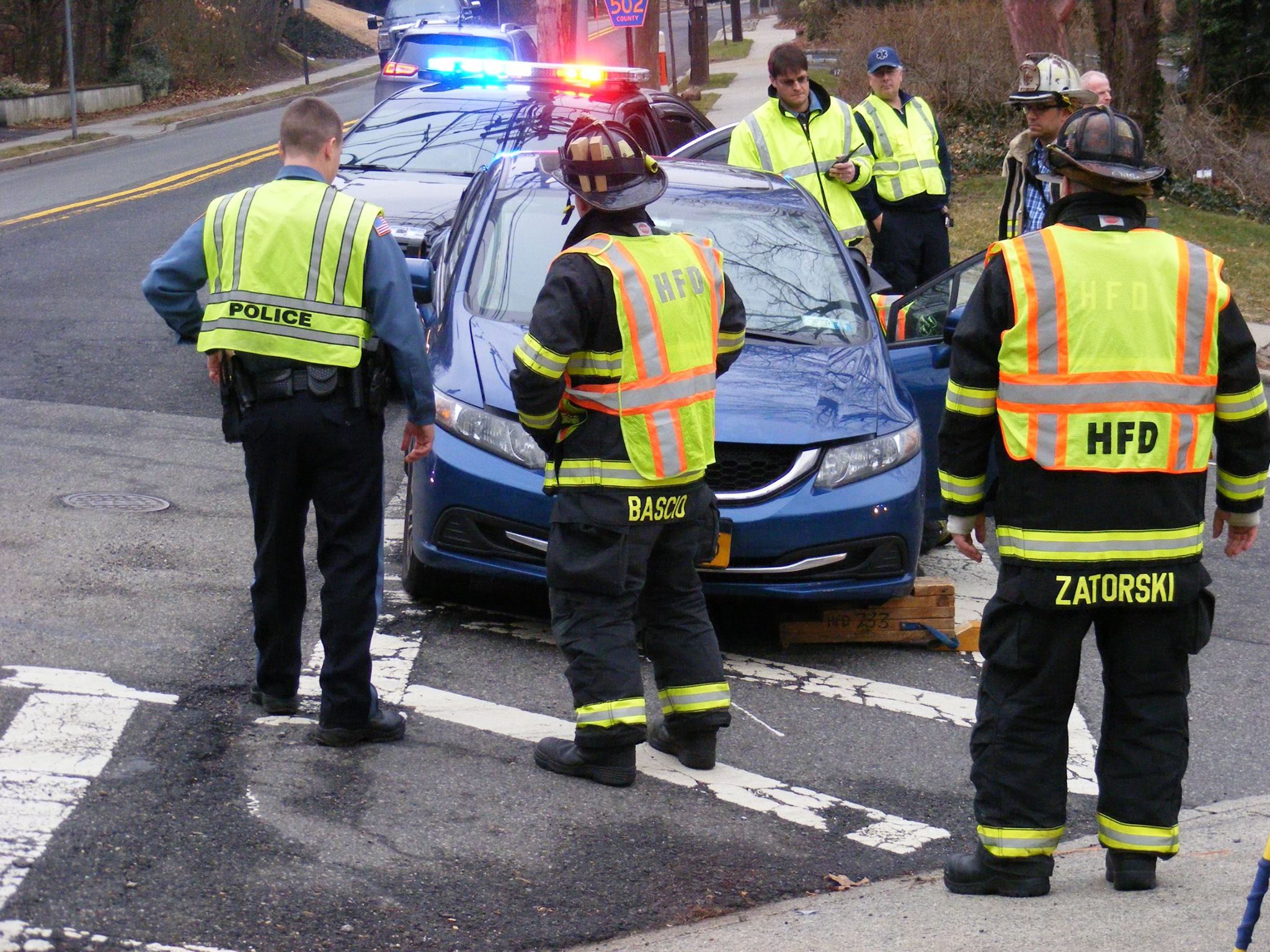
Ho Ho Kus NJ, Two (2) individuals were transported by ambulance to The Valley Hospital following a collision at the intersection of Hollywood Avenue and North Franklin Turnpike in Ho-Ho-Kus on Sunday afternoon, 01/22. A 4-door Honda sedan was removed from the scene by a flatbed tow truck. Ho-Ho-Kus PD, FD, and EMS personnel responded to the incident.
Death Of Media Icon Dorothy Kilgallen Latest Case Drawing Renewed Interest
January 23,2017
the staff of the Ridgewood blog
Ridgewood Nj, America loves a good murder mystery, as evidenced by endless TV dramas, movies such as The Girl on the Train, and novels by writers such as Patricia Cornwell and Michael Connelly.
But the infatuation isn’t limited to fiction. The public is also riveted by every detail of real-life homicides, whether it’s the O.J. Simpson trial, the murder of 6-year-old JonBenet Ramsey, or the extraordinary phenomenon of the TV documentary Making a Murderer.
“People can’t help but be captivated with the human drama when another person’s life ends in violence,” says attorney and investigative reporter Mark Shaw, author of The Reporter Who Knew Too Much (www.thereporterwhoknewtoomuch.com).
Shaw’s own fascination these days is focused on the mysterious death of Dorothy Kilgallen, the Pulitzer-Prize nominated newspaper columnist and panelist on the popular TV show What’s My Line. She was a household name in 1965 when she was discovered dead in her home at age 52.
“With Dorothy, I think you have all the compelling elements,” says Shaw, who served as a legal analyst for USA Today and CNN during the O.J. Simpson trial. “We have a famous journalist killed in the line of duty for writing a ‘tell-all’ book and there are celebrity suspects galore who were never investigated.”
Officially, Kilgallen’s death was ruled accidental, caused by a fatal mixture of sleeping pills and alcohol. Shaw says his research uncovered new evidence that points to murder (posted at www.thedorothykilgallenstory.org.) The motive: Her book that would have exposed a mobster’s involvement in the assassination of President John F. Kennedy. Shaw has called on the NYC District Attorney to investigate since “murder is the worst form of censorship” and a main suspect remains at large.
Kilgallen’s own journalistic career serves as evidence that fascination with true-crime stories is nothing new. She wrote about seemingly every “trial of the century” of her era, including the Lindbergh baby kidnapping, the Dr. Sam Sheppard case that gripped Americans and inspired the TV series The Fugitive, and the trial of Jack Ruby, who killed Lee Harvey Oswald, the man accused of assassinating Kennedy.
Why are we so enthralled by these cases? Shaw says there are several reasons:
• A belief in justice. Most people want to see justice served, whether they suspect a guilty culprit got away with murder or worry that an innocent person was wrongly accused. “In fiction, everything usually gets wrapped up very tidily,” Shaw says. “In real life, justice can be a whole lot messier.” • A natural attraction to mystery. People are captivated by the unknown, whether it’s the “whodunit” at the end of an Agatha Christie novel, the contents of the large package under the Christmas tree, or the very meaning of human existence. “This is probably one reason there’s still so much interest in the JFK assassination,” Shaw says. “There are elements of mystery all around it and we can’t help but want to get at the truth.” • A preoccupation with death. As gruesome as it seems, people have been drawn to stories about violent death for thousands of years. Even the Bible wastes little time working in a murder, with Cain offing his brother Abel in a fit of jealousy in one of the earliest chapters.
“One other reason may be that we have empathy for the victim and feel they deserve their ‘day in court,’ so to speak,” Shaw says. “And that’s true whether the murder happened five days ago or 50 years ago as it did with Kilgallen. She deserves justice today and I’m determined to get that for her at all costs.”
About Mark Shaw
Mark Shaw, author of The Reporter Who Knew Too Much(www.markshawbooks.com), is a former criminal defense attorney and legal analyst for CNN, ESPN and USA Today. He is an investigative reporter and the author of 25 books including The Poison Patriarch, Miscarriage of Justice, and Beneath the Mask of Holiness. Shaw, a member of the American Society of Journalists and Authors, has written for USA Today, Huffington Post, and the Aspen Daily News.
Paramus NJ, A 64-year-old, 12-inch, cast iron gas main cracked in Paramus last week. Traffic snarled on Rt. 17 while we made emergency repairs…again. That was the third time in two years we’ve had to patch up this section of pipe. Installation of a replacement gas main is underway.
After decades of freezing and thawing, unprotected steel and cast iron pipes can become brittle and crack, and the joints that tie them together can leak. Along that stretch of Rt. 17, nearby construction may be another contributing factor. We have 4,000 miles of this cast iron pipe, and another 1,000 miles of unprotected steel, in our system. That’s the largest inventory of any utility in the U.S. We have so much old piping because PSE&G has been serving customers for 113 years.
As part of a $905 million program approved by the New Jersey Board of Public Utilities, we’re replacing old pipes three times faster than in the past. Last year alone, we installed 189 miles of new gas mains across our service area, including nearly 6 miles in Paramus. And we’re replacing them with highly durable plastic piping and protected steel pipes that rarely leak and will ensure safe, reliable gas service now and in the future.
For us to replace all this pipe in Paramus, we are working closely with Paramus Mayor Richard LaBarbiera. Mayor LaBarbiera knows the investments PSE&G is making in his town’s infrastructure ensure residents and businesses will continue to have safe and reliable gas service. By working together, we are minimizing disruption and able to complete the work safely. And we are all grateful to the residents of Paramus for their patience.
We expect to have the pipes along that stretch of Rt. 17 replaced by April. There is never a good time to close traffic lanes. So while the work is a one-time inconvenience, rest assured we won’t be back to make repairs on those new mains for a long, long time.
Waldwick NJ, Waldwick PD, FD, and building department personnel responded to 11 Ridge Street, Waldwick on Saturday afternoon, 01/21, in response to an incident in which a 4-door Saab left the roadway, went down an embankment, and crashed into a single family home. No one in the vehicle, nor any occupant of the home, was injured in the mishap. The vehicle was removed from the scene by a flatbed tow truck. Damage to the structure was moderate; the occupants are believed to still be occupying the premises post crash.
TEANECK, N.J. – Transit police say they’ve arrested a New Jersey man who avoided paying tolls nearly 900 times and owes more than $56,000 in unpaid tolls and fees.
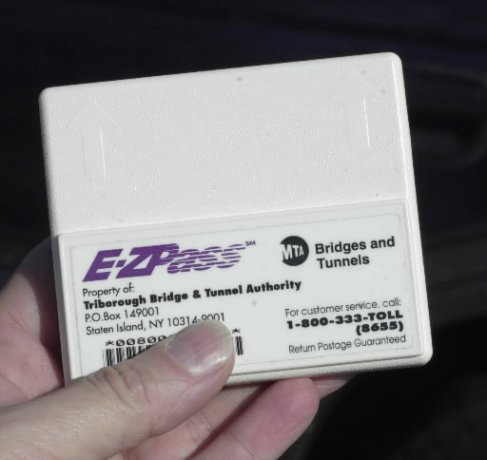
Port Authority of New York and New Jersey police say an officer stopped Alesandel Rodriguez’s car Friday morning after it failed to post a payment in an EZ-Pass lane on the George Washington Bridge.
Authorities say the car was missing front and rear license plates, and a temporary New York tag inside the vehicle had expired.
URGENT - WEATHER MESSAGE
NATIONAL WEATHER SERVICE NEW YORK NY
652 PM EST SAT JAN 21 2017

...DENSE FOG TONIGHT INTO SUNDAY MORNING...
...STRONG EAST WINDS LIKELY ALONG THE COAST FROM LATE SUNDAY
NIGHT INTO MONDAY NIGHT...

...DENSE FOG ADVISORY IN EFFECT UNTIL 10 AM EST SUNDAY...

THE NATIONAL WEATHER SERVICE IN UPTON HAS ISSUED A DENSE FOG
ADVISORY...WHICH IS IN EFFECT UNTIL 10 AM EST SUNDAY.

* VISIBILITIES...ONE QUARTER MILE OR LESS AT TIMES.

* TIMING...INTO SUNDAY MORNING.

* IMPACTS...SIGNIFICANTLY REDUCED VISIBILITIES WILL MAKE
  TRAVEL DIFFICULT.

PRECAUTIONARY/PREPAREDNESS ACTIONS...

A DENSE FOG ADVISORY MEANS VISIBILITIES WILL FREQUENTLY BE
REDUCED TO ONE QUARTER MILE OR LESS. IF DRIVING...SLOW DOWN...USE
YOUR LOW BEAM HEADLIGHTS...AND LEAVE PLENTY OF DISTANCE AHEAD OF
YOU IN CASE A SUDDEN STOP IS NEEDED.
Tax policies sometimes have unintended consequences that outweigh their benefits.One consequence of high state cigarette taxes is increased smuggling. People procure discounted packs from low-tax states to sell in high-tax states.
Excessive tax rates on cigarettes approach de facto prohibition in some states, inducing black and gray market movement of tobacco products into high tax states from low tax states or foreign sources.
New York has the highest inbound smuggling activity, with an estimated 55.4 percent of cigarettes consumed in the state deriving from smuggled sources in 2014. New York is followed by Arizona (49.6 percent of consumption smuggled), New Mexico (46.2 percent), Washington (45.2 percent), and Minnesota (35.5 percent).
New Hampshire has the highest level of outbound smuggling at 81.1 percent of consumption, likely due to its relatively low tax rates and close proximity to high tax states in the northeastern United States. Following New Hampshire is Idaho (24.8 percent outbound smuggling), Virginia (24.4 percent), Delaware (23.9 percent), and Wyoming (21.2 percent).
Following a cigarette tax increase from $2.51 to $3.51 in midyear of 2013, Massachusetts has seen a substantial increase in cigarette smuggling. Since the last year’s edition of this report, the state has jumped from 12 percent inbound smuggling to 29.3 percent inbound smuggling, the seventh highest in the country.
Cigarette tax rates increased in 31 states and the District of Columbia between 2006 and 2014.
Public policies often have unintended consequences that outweigh their benefits. One consequence of high state cigarette tax rates has been increased smuggling as people procure discounted packs from low-tax states to sell in high-tax states. Growing cigarette tax differentials have made cigarette smuggling both a national problem and in some cases, a lucrative criminal enterprise.
Each year, scholars at the Mackinac Center for Public Policy, a Michigan think tank, use a statistical analysis of available data to estimate smuggling rates for each state.[1] Their most recent report uses 2014 data and finds that smuggling rates generally rise in states after they adopt cigarette tax increases. Smuggling rates have dropped in some states, however, often where neighboring states have higher cigarette tax rates. Table 1 shows the data for each state, comparing 2014 and 2006 smuggling rates and tax changes.
New York is the highest net importer of smuggled cigarettes, totaling 55.4 percent of total cigarette consumption in the state. New York also has the highest state cigarette tax ($4.35 per pack), not counting the additional local New York City cigarette tax (an additional $1.50 per pack). Smuggling in New York has risen sharply since 2006 (+62 percent), as has the tax rate (+190 percent).
Smuggling in Massachusetts has notably increased since the last data release. The state implemented a tax increase from $2.51 to $3.51 per pack in midyear 2013, and smuggling rates increased from 12 percent to 29.3 percent between the 2013 data and 2014 data. Over the same period, outbound smuggling increased in nearby low-tax New Hampshire, from -28.6 percent to -81.1 percent, suggesting that many cartons of cigarettes are crossing the border from one state to the other.
Other peer-reviewed studies provide support for these findings.[2] Recently, a study in Tobacco Control examined littered packs of cigarettes in five Northeast cities, finding that 58.7 percent of packs did not have proper local stamps. The authors estimated 30.5 to 42.1 percent of packs were trafficked.[3]
The study’s authors, LaFaive and Nesbit, note that smuggling comes in different forms: “casual” smuggling, where smaller quantities of cigarettes are purchased in one area and then transported for personal consumption, and “commercial” smuggling, which is large-scale criminal activity that can involve counterfeit state tax stamps, counterfeit versions of legitimate brands, hijacked trucks, or officials turning a blind eye.[4]
The Mackinac Center has cited numerous examples over the many editions of this report, including stories of a Maryland police officer running illicit cigarettes while on duty, a Virginia man hiring a contract killer over a cigarette smuggling dispute, and prison guards caught smuggling cigarettes into prisons.
Policy responses in recent years have included banning common carrier delivery of cigarettes,[5] greater law enforcement activity on interstate roads,[6] differential tax rates near low-tax jurisdictions,[7] and cracking down on tribal reservations that sell tax-free cigarettes.[8] However, the underlying problem remains: high cigarette taxes amount to a “price prohibition” of the product in many U.S. states.[9]
Ridgewood NJ, Bergen County Parks Department initiated a master planning process for the Bergen County Park system. The goal is to identify the characteristics of the Bergen County recreation and open space system, accommodate the needs of current residents, and respond to projected future growth of the County.
CUES is leading the project team that will analyze existing strengths, programs, and opportunities, as well as future active and passive recreational options for each of the individual park properties. This analysis will consider how the various parks can best be integrated into the overall Bergen County open space and recreational context. In order to meet future needs of Bergen County residents, demographic and economic trends will be considered. The Edward J. Bloustein School of Planning and Public policy will provide input for these scenarios using existing data and forecasts describing future population and demographic trends in Bergen County.