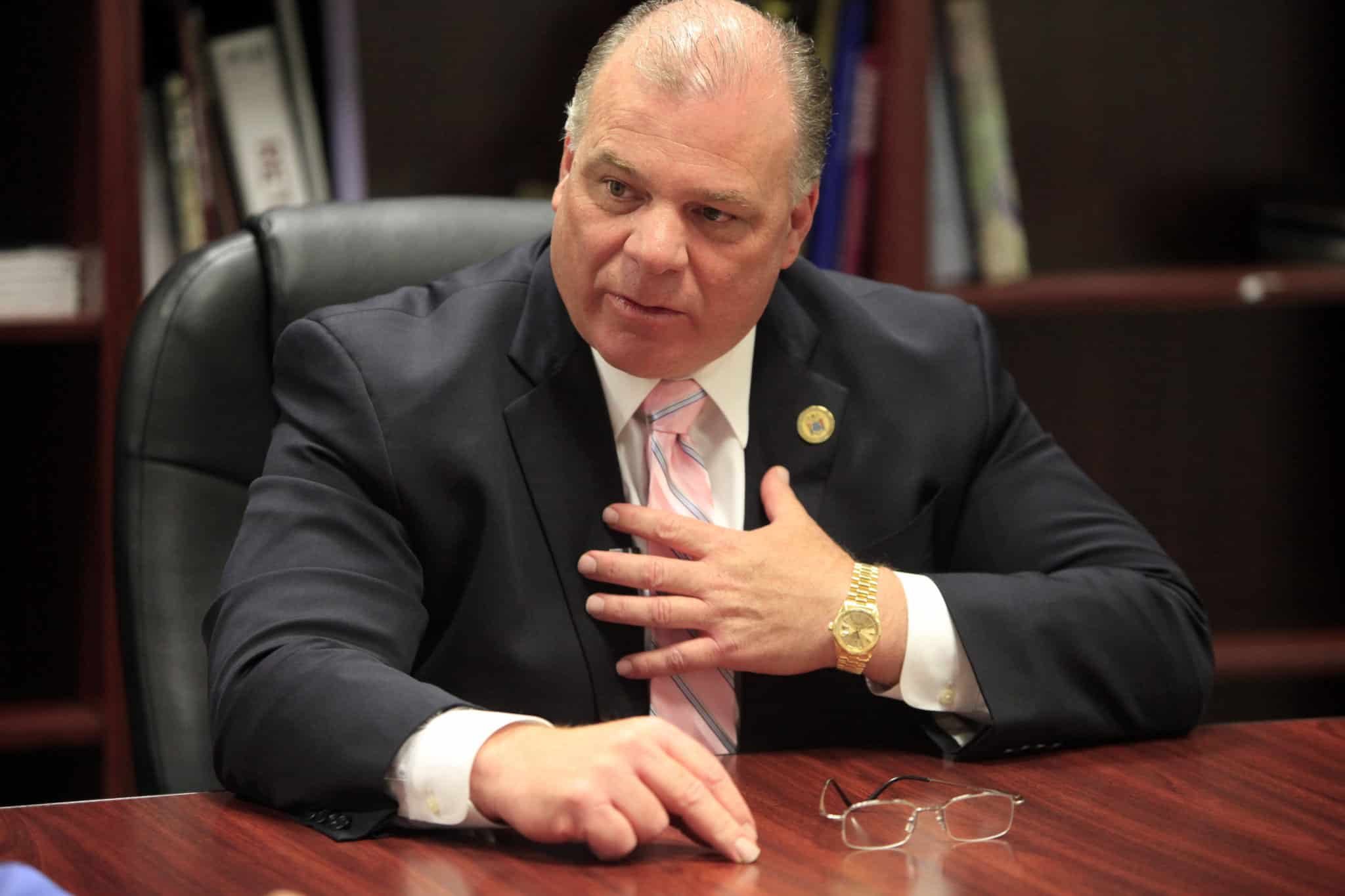
Ridgewood NJ, New Jersey Democrats push “Hail Mary” saying that they will be moving ahead with a legally-dubious plan to let residents make charitable contributions in lieu of property taxes, promising to vote on the bill in the state Senate on Monday and threatening to take the fight to court if necessary.
The bill (S1893) is designed to be a workaround to the new federal tax law that capped the state and local tax deduction at $10,000, a move that Democrats say will harm high-tax states like New Jersey, which has the highest property taxes in the nation. Average property taxes in Bergen County in 2017 were $11,564 . The new Federal rules allow deductions of up to $10,000 . The $10,000 limit on deductions is for state and local taxes and will take effect in 2018. That $10,000 limit combines both local property and income taxes.
The legislation would effectively allow homeowners to keep deducting their property taxes by calling those payments charitable deductions. Under the bill, local governments would be permitted to set up charitable funds for specific public purposes—from police to parks—that residents could pay into and get a credit of up to 90 percent toward their property tax bills. Those contributions could then be written off as charitable deductions on federal tax bills, officials said. It’s unclear whether the plan withstands legal and IRS scrutiny.
Trenton NJ, in another reason to leave the state , New Jersey Policy Perspective is championing returning the state sales tax rate to seven percent ,NJPP claims it could raise $600 million more for the state while having little impact on most residents.
The far left think tank New Jersey Policy Perspective is a group that also recommends , “A $15 Minimum Wage Would Help Over 1 Million Workers and Boost New Jersey’s Economy ” , “New Jersey Should Replicate ACA Penalty to Keep Coverage Affordable” , and our personal favorite “Why Unauthorized Immigrants Should Be Permitted to Drive Legally” .
Their website reads like a Christmas list of every New Jersey politician.
According to their website New Jersey Policy Perspective has never met a tax it didn’t like .
In the report on the proposal by NJ101.5, a senior policy analyst for New Jersey Policy Perspective said the tax rate cut adopted as part of the push to hike the state gas tax “was a gimmicky tax policy that no one asked for, and reversing it back to its original rate will largely go unnoticed.” But the move would have a big impact on the state’s finances, analyst Sheila Reynerston said in the radio station report.
NJPP also suggested the tax should be broadened to include accounting and bookkeeping, architects, attorney and engineer fees, among other things.
In the report, Reynerston said cutting spending alone won’t help New Jersey’s budget problems and that the state needs to consider ways to raise revenues. Interesting we have not herd anyone in New Jersey talk about cutting spending for over 40 years , thus the fiscal calamity the state now faces.
On the NJ101.5 Reynerston said , “Keep throwing things at the wall until something sticks. If it’s not the millionaires’ tax, then let’s revisit the estate tax. If it’s not the estate tax, let’s revisit the sales tax code,” she said in the radio station report.
Trenton NJ, Attorney General Gurbir S. Grewal today announced that a state grand jury has returned an indictment charging seven members of a major gun trafficking ring in Camden with first-degree racketeering, including the alleged leader of the ring, his “straw purchaser” in Ohio, and five middlemen who allegedly brokered black market sales of guns – including assault rifles – to criminals in the city.
The indictment was obtained by the Division of Criminal Justice in a joint investigation by the New Jersey State Police, U.S. Drug Enforcement Administration Camden HIDTA Task Force, Camden County Metro Police, and U.S. Bureau of Alcohol, Tobacco, Firearms and Explosives (ATF), with assistance from the DEA Philadelphia Division, West Virginia State Police and Henrico County (Va.) Police Division. Four defendants were arrested after the indictment was returned on Tuesday, Feb. 6.
These men are charged with racketeering (1st degree), conspiracy (2nd degree), and transporting firearms into the state for illegal sale (2nd degree) for allegedly trafficking guns from April 2016 through July 2017:
Leader
Chucky Scott, 25, of Columbus, Ohio, the alleged leader of the ring, also faces first-degree charges of leader of a firearms trafficking network and promoting organized street crime.
Straw Purchaser
Anthony Hammond, 26, of Columbus, Ohio, allegedly acted as a “straw purchaser,” purchasing the guns for Scott in Ohio and delivering some guns to Camden with Scott.
Middlemen
The following five men, including two cousins of Scott (Moore and Jennings), allegedly were “middlemen,” acting as wholesale distributors who arranged sales of the guns in Camden after Scott purchased them in Ohio through Hammond:
Eduardo Caban, 40, of Camden, N.J. Eric Moore, 47, of Camden, N.J. Tymere Jennings, 35, of Marlton, N.J. Jamar Folk, aka Ibraheem Abdullah, 33, of Camden, N.J. Darren Harville, 51, of Camden, N.J.
“Dismantling prolific weapons trafficking is the best way to reduce the number of illegal guns being sold to criminals in our communities and used to inflict murder and terror,” said Attorney General Grewal. “Each gun that we seize or prevent from reaching the street represents countless lives saved. The potential sentences that these men face should also serve as fair warning to those who illegally traffic firearms into New Jersey.”
“More than three out of four of the guns recovered in New Jersey and traced by the ATF in 2016 originated in other states,” Attorney General Grewal added. “Simply put, to reduce gun violence in our communities and reduce the threat to our police officers from assault rifles and other illegal firearms, we need to stop the flow of illegal guns into our state. We are committed to putting an end to this iron pipeline of firearms.”
“We are working closely with the State Police and our other federal, state and local law enforcement partners to arrest the gun traffickers responsible for the proliferation of lethal firepower on our streets,” said Director Elie Honig of the Division of Criminal Justice. “Through this far-reaching investigation, which extended to Ohio and West Virginia, we were able to bring first-degree racketeering charges against this criminal ring.”
“The only purpose Scott and others had by flooding the Camden area with illegal guns was profiting off of the innocent lives of area residents,” said Colonel Patrick Callahan, Acting Superintendent of the New Jersey State Police. “I am very proud of the investigative efforts and solid police work exhibited by the members of the New Jersey State Police Trafficking South and Fugitive Units along with our federal, state and local partners.”
“All of these men have allegedly played a role in contributing to the violence in Camden,” said Valerie A. Nickerson, Special Agent in Charge of the DEA’s New Jersey Division. “They showed no concern for the violence which may have resulted from their actions. The men and women conducting this investigation are dedicated to reducing gun violence in the community.”
“We appreciate the efforts of our law enforcement partners to remove these guns from our streets,” said Chief Scott Thomson of the Camden County Metro Police Department. “These high capacity firearms would have been used to undermine our community and destabilize our neighborhoods, so making these arrests and eliminating this pipeline was imperative for the safety of our city.”
“This firearms trafficking case represents the highest level of cooperation, across multiple agencies, jurisdictions, and states,” stated Trevor Velinor, Special Agent in Charge of ATF’s Columbus Field Division. “There is no place in our society for those who use firearms for criminal purposes, nor is there a place for those who supply criminals with those firearms. ATF is proud to work with our law enforcement partners to stop those who would foster violence in our communities.”
Scott and Caban were arrested previously and ordered detained pending trial in New Jersey. The following men were arrested on warrants after the indictment was returned, and the Attorney General’s Office is seeking their detention: Moore, Jennings, Folk and Harville.
The investigation led to a separate indictment on Feb. 6 charging Caban and Baron Coleman, 38, of Philadelphia, Pa., with second-degree conspiracy to distribute heroin. Caban also is charged with first-degree distribution of heroin for allegedly conducting multiple sales of heroin from May through August 2017. Coleman allegedly supplied heroin to Caban, who in turn allegedly supplied heroin to other dealers in Camden. When DEA Philadelphia Group 31 arrested Coleman and executed a search warrant at his home, they seized a kilo of heroin and a kilo of cocaine.
The investigation began when the New Jersey State Police, the DEA Camden HIDTA Task Force and the Camden County Metro Police Department developed information that Caban allegedly was trafficking both heroin and guns in Camden. It is alleged that during the course of the investigation, Caban illegally sold 10 guns that were recovered by the investigating agencies, including two illegal assault rifles with large-capacity magazines, six 9mm pistols, four of which had illegal large-capacity magazines, a .45-caliber pistol and a .40-caliber pistol. The investigators learned that Caban allegedly was obtaining the guns from Scott. That was further corroborated with evidence seized by the West Virginia State Police when they arrested Scott during a motor vehicle stop on July 9, 2017. Meanwhile, the New Jersey State Police traced the weapons to Hammond in Ohio. Working with the ATF and the U.S. Attorney’s Office for the Southern District of Ohio, which already were investigating Scott and Hammond, investigators learned that Hammond allegedly had been buying multiple weapons at a time for Scott, including assault rifles, at stores around Columbus, Ohio, or online through a website that features classified ads marketing firearms.
The investigation revealed that Hammond and Scott would go together to stores, where Hammond would buy multiple guns for Scott. It is alleged that Scott would then take photographs of the guns and text them to his middlemen in Camden, who would find individuals to purchase the guns for prices set by Scott. The middlemen allegedly would add a “tax” to the price set by Scott and keep the tax as their profit. Once Scott had orders in place, he would drive to Camden to deliver the weapons to his middlemen. On some occasions, Scott would be paid via money transfers, but mostly he collected cash from the middlemen. Scott himself never conducted the sales with the ultimate purchasers. Hammond at times allegedly traveled with Scott to Camden to deliver the firearms to the middlemen. The assault rifles were resold for up to $2,000. Hammond allegedly purchased more than 30 firearms that were trafficked into Camden by Scott and the other defendants. A total of 17 guns linked to the weapons trafficking ring were recovered in the investigation, including 14 handguns, two AK-47 assault rifles, and an AR-15 assault rifle.
Deputy Attorney General Cassandra Montalto presented the indictments to the state grand jury for the Division of Criminal Justice Gangs & Organized Crime Bureau, under the supervision of Deputy Bureau Chief Erik Daab and Bureau Chief Lauren Scarpa Yfantis. Detective Sgt. 1st Class Erik Hoffman was lead detective for the New Jersey State Police Intelligence Section, Violent & Organized Crime Control Bureau South, Trafficking South Unit.
Attorney General Grewal commended the following agencies for their work on the indictment and investigation: New Jersey Division of Criminal Justice Gangs & Organized Crime Bureau New Jersey State Police Trafficking South Unit New Jersey State Police Fugitive Unit DEA Camden High Intensity Drug Trafficking Area (HIDTA) Task Force Camden County Metro Police Department ATF Columbus, Ohio, Field Division ATF Camden, N.J., Field Office U.S. Attorney’s Office for the Southern District of Ohio DEA Philadelphia Group 31 West Virginia State Police (Trooper Eric McFarland) Henrico County (Virginia) Police Division
Scott, Hammond, Caban and Folk face added counts of unlawful possession of a weapon (2nd degree) and other weapons offenses, and Caban and Folk face charges of possession of a weapon as a convicted felon (2nd degree). All seven weapons defendants also are charged with money laundering (3rd degree).
First-degree charges carry a sentence of 10 to 20 years in prison and a fine of up to $200,000. The first-degree racketeering charge carries a mandatory period of parole ineligibility equal to 85 percent of the sentence imposed. Second-degree charges carry a sentence of five to 10 years in prison and a fine of up to $150,000. The charge of possession of a weapon as a convicted felon carries a mandatory minimum sentence of five years without parole, and the second-degree unlawful possession of a weapon charges carry a mandatory term of parole ineligibility of half the sentence imposed or 3 ½ years, whichever is greater. Third-degree charges carry a sentence of three to five years in prison and a fine of up to $15,000, while fourth-degree charges carry a sentence of up to 18 months in prison and a $10,000 fine.
The indictment is merely an accusation and the defendants are presumed innocent until proven guilty. The indictment was handed up to Superior Court Judge Mary C. Jacobson in Mercer County, who assigned the case to Camden County, where the defendants will be arraigned in court at a later date.
Trenton NJ, since the election of Phil Murphy New Jersey’s unemployment rate has continued to increase putting it now almost one full percentage point higher than the U.S. unemployment rate.
New Jersey’s economic growth has lagged behind the rest of the country for years, according to the U.S. Bureau of Labor Statistics (BLS). But in late 2015, New Jersey’s unemployment rate started to improve. Governor Chris Christie applauded the state’s economic growth.
Last summer, though, the state’s unemployment rate increased again, sharply departing from the national trajectory. The rate increased for nearly four months before dipping slightly in January.
Now, New Jersey’s rate sits at 5.0 while the U.S. rate is 4.1. Critics of the Governor Murphy point out his push for massive tax increases may have already had the effect of increasing flight out of the state of jobs .
Union County, NJ yesterday Bob Hugin, formerly the CEO and Executive Chairman of worldwide bio-tech leader Celgene, kicked off his campaign for U.S. Senate to unseat the embattled and sometime ethically challenged Bob Menendez .
Menendez, whose approval ratings plunged as he was under the cloud of a long-running federal investigation, hasn’t officially announced his reelection campaign. But with the probe over, his top adviser has said there’s a “100 percent” chance he will run.
Hugin, 63, retired late last month as executive chairman of Celgene Corp., a global biopharmaceutical company based in Summit, N.J.
Hugin grew up in a diverse, hardworking neighborhood in Union City, Hudson County, where his parents instilled in him an obligation to serve others. He was the first person in his family to attend college, earning a full scholarship to Princeton University. After graduation, at a time when it wasn’t popular, Bob joined the United States Marine Corps where he served as an active duty infantry officer from 1976 to 1983. Bob participated in multiple deployments and was an instructor at the Landing Force Training Command, Atlantic. He continued to serve as a Reserve Officer from 1983 to 1990, where his assignments included commanding officer roles in Virginia and Battalion staff officer assignments in New York.
Upon leaving active duty in 1983, Hugin earned his MBA from the Darden School of Graduate Business Administration at the University of Virginia. In 1985, he joined J.P. Morgan, ultimately leading several businesses and rising to be a Managing Director, until joining a struggling bio-tech company called Celgene in 1999.
At the time, Celgene had approximately 200 employees and less than six weeks of cash. Under Hugin’s leadership and through the work of its employees, Celgene was transformed into one of New Jersey’s largest private sector employers – an innovative bio-tech company that is now known around the world for leading the fight against cancer and chronic disease. Forbes honored Celgene as #5 on a list of “America’s Best Midsize Employers” and #14 on a list of the “World’s Best Employers” in 2017.
Hugin recently completed 19 years of leadership in healthcare and has been a leading advocate for modernizing the American healthcare system during his time as Chairman and CEO of the Celgene Corporation and as a Trustee of the Atlantic Health System for the last decade.
Hugin also volunteered his time to the Board of Trustees of Princeton University, the Darden Foundation at UVA, and Family Promise, a national non-profit network assisting homeless families. He has also served on the NJ-based think tank Garden State Initiative and is the President of the trustees of his church. Bob also previously served on the board of Choose New Jersey and as past Chairman of the Healthcare Institute of NJ.
At home Bob Hugin and his wife of thirty years, Kathy, are the proud parents of three children. Daughter Hilary is a Manager of Media Investments and Connections Planning at Chobani. Sons Robbie and Mac are both officers in the United States Marine Corps. Bob and Kathy are strongly committed to their community and not-for-profit work. A community service-focused individual, Kathy has positions on the Institutional Review Board of the Atlantic Health System and the Board of Directors of Georgetown University. Kathy also previously served as a trustee of the Kent Place School and the Pingry School.
Trenton NJ, NJGOP Chairman Doug Steinhardt, Senate Republican Leader Tom Kean, Assembly Republican Leader Jon Bramnick and GOP Chair of Chairs Jose Arango released the following statement regarding their shared commitment to protect New Jersey families from the dangerous agendas of Democrats at all levels of government and to promote the Republican ideas that will make our state more affordable and prosperous:
“NJ Republicans stand together ready to offer a responsible alternative to Bob Menendez, Nancy Pelosi and Phil Murphy’s liberal agenda of promised tax hikes, cumbersome government regulations, and misplaced priorities,” said NJGOP Chairman Steinhardt. “We’re ready to fight for all New Jerseyans, with a collective voice, in all 21 counties, and all 565 municipalities. Now is the time for action.”
Senate Republican Leader Tom Kean reiterated his sentiment that Republicans are the party of common sense and solutions, “The people of New Jersey are facing a growing affordability crisis and raising taxes for new government spending is a recipe to exacerbate our state’s biggest problem. Republicans stand united behind our solutions and ideas to transform the Garden State into a place where affordability and opportunity abound.”
“Republicans may be in the minority, but we will stand up for the people of this state in a civil and serious manner,” said Bramnick. “We pledge to work collectively as a party to pass reforms that are so desperately needed to reduce New Jersey’s property taxes and make this state more competitive.”
GOP Chair of Chairs, Jose Arango vigorously vowed to create the necessary contrast to give Republicans momentum in their fight to win elections this year, “The four of us all stand together in agreement that the Phil Murphy, Nancy Pelosi, Bob Menendez plan to raise taxes and make New Jersey a sanctuary state is unacceptable and we will be proactively fighting it every step of the way. We’re working together to build a coalition that will reject Bob Menendez and stop the Nancy Pelosi takeover of New Jersey in November.”
Theresa Winegar, Executive Director of the NJGOP added, “All four leaders are entering 2018 unified and energized. The NJGOP has a dedicated team of 42 State Committee members, 21 County Chairs, 15 Senators, 26 Assembly members and countless municipal leaders, community activists and volunteers dedicated to making New Jersey more affordable; and ready for the 2018 election cycle.”
John Taylor (Born: Oct 06, 1836,Died: Feb 10, 1909 )was an American businessman and politician who served in the New Jersey Senate. He formed Taylor Provisions Company and created John Taylor’s Pork Roll. He also founded the Taylor Opera House in Trenton, New Jersey. Taylor Street in Trenton is also named for him.
But his legacy was created in 1856 Mr. John Taylor of Hamilton Square, NJ began producing a meat product that he called Taylor’s Prepared Ham. He used chopped pork and spices, sugar curing and then hickory smoked. Taylor was a state senator as well as a businessman and there are still streets and buildings in Trenton that bear his name to this day.
Taylor kept the recipe for the product he created in 1856 secret. Taylor originally called his product “Taylor’s Prepared Ham”, but was forced to change the name after the Pure Food and Drug Act of 1906 was passed, since the product did not meet the new legal definition of “ham”. The new name was “Pork Roll” and it was marketed as both “Taylor’s Pork Roll” and “Trenton Pork Roll”. Competitors marketed products with similar names like “Rolled Pork” and “Trenton style Pork Roll” and were sued by Taylor. A 1910 legal case ruled that the words “Pork Roll” could not be trademarked.
Since then several manufacturers make the generic named product “Pork Roll,” John Taylor’s Original Pork Roll is what most New Jerseyans ask for by name. Made since 1856 it ia a main staple of diners, kitchens, Holiday tables, and boardwalks of the Garden State.
Renews Pledge to Preserve Tax Deductions for New Jersey
February 10,2018
the staff of the Ridgewood blog
Marlboro NJ, in what some critics call a last act of a desperate man ,Governor Phil Murphy today called upon mayors to take steps to counteract the effects of the federal tax legislation that gutted New Jersey’s State and Local Tax (SALT) deduction and limited the amount of money state homeowners can deduct from their property taxes.
“When the disastrous federal tax legislation passed, I committed to pushing back and taking steps to ensure that the people of New Jersey are not subjected to unfair double taxation,” Governor Murphy said. “We have begun working with legislative leadership to protect our residents and prevent this plan from further hurting our taxpayers. We must eliminate any and all barriers to creating a system that will provide tax relief to property taxpayers who make charitable contributions to their municipality.”
If the system is implemented, taxpayers can make voluntary contributions to funds that pay for local services like schools, law enforcement, and infrastructure. They will then receive an offsetting tax credit on their property tax bill and contributions will be deductible for federal tax purposes under existing law.
Governor Murphy today was joined by a bipartisan group of mayors who have pledged to allow taxpayers in their towns to make payments to local governments as charitable donations and offset property tax liability. Marlboro Mayor John Hornik, Ocean Township Mayor Christopher Sciciliano, Manasquan Mayor Edward Donovan, Belmar Mayor Matt Doherty, and Aberdeen Mayor Fred Tagliarini pledged to introduce the this plan in their municipalities. They join the mayors of Fair Lawn, Paramus, and Park Ridge who made that pledge in January.
On Thursday, Governor Murphy promised to sign any legislation that reduces existing state roadblocks to municipalities reforming their property tax system to allow for charitable contributions, a system that will preserve local revenues while also providing residents with significant deductibility of their payments from their federal income taxes.
NEW BRUNSWICK NJ, this poll and others continue to inadvertently report on voter disconnect . While New Jerseyans worried most about taxes and economic issues , they voted for Phil Murphy who campaigned specifically on raising taxes .
2018 RUTGERS-EAGLETON POLL STATE OF THE GARDEN STATE REPORT:
New Jerseyans are in a malaise these days when it comes to the Garden State: they are angry about the state’s economic climate, and even though they still rate the state positively as a place to live, they are mostly pessimistic about the direction the state is headed. While the vast majority love the neighborhood they are living in, a sizeable number of residents – more than in the past – say they would like to move somewhere else. These are some of the main findings from a Rutgers-Eagleton Poll late last year, as detailed in the newly released “2018 State of the Garden State” report.
Nothing upsets New Jerseyans more than the way their state government has handled taxes: 82 percent of residents say they are dissatisfied – 60 percent, alone, are “very” dissatisfied – with how the government has managed the issue. Three quarters say the same about cost of living and government spending.
“In a state that ranks near the top when it comes to outbound migration and taxation, it’s no surprise that New Jerseyans are upset with how state government is handling important financial matters – most of all, taxes,” said Dr. Ashley Koning, assistant research professor and director of the Eagleton Center for Public Interest Polling (ECPIP) at Rutgers University-New Brunswick. “It will be a challenge for Governor Murphy to balance fulfilling those of his campaign promises that require new resources with citizens’ current dissatisfaction with taxes and the high cost of living in the state.”
Yet despite grave financial concerns, New Jerseyans clearly like living here. A majority of residents continue to rate the state as an “excellent” or “good” place to live – though these ratings are down from where they once were prior to 2004.
However, in homage to the long-standing tradition of home rule in the state, the closer one looks, the better home looks. Residents rate the neighborhoods they live in better than their towns or cities, and they rate their municipalities ahead of the state as a whole. But when asked to compare New Jersey to most other states, residents are once again lukewarm: three in 10 say New Jersey is a “better” place to live, with about the same number each saying it is “worse” or the “same” as other states.
Results are from a statewide poll of 1,203 adults contacted by live callers on both landlines and cell phones from Nov. 15-27, 2017. The sample has a margin of error of +/-3.0 percentage points. Some questions reported in this release were asked of a sub-sample, resulting in approximately 600 respondents and a margin of error of 4.3 percentage points. Interviews were done in English and, when requested, Spanish. To read the full report, click here.
Life in the Garden State not so great?
Residents’ itch to move out of New Jersey has grown in the past decade – from 22 percent in March 2010 to now 30 percent. Forty-six percent want to stay exactly where they are and continue living in their current neighborhood, a double-digit drop from when the question was last asked almost eight years ago. Six percent now say they want to move somewhere else in their current town, and 15 percent want to move elsewhere within the Garden State. Millennials are one of the biggest flight risks for New Jersey, with more than a third wanting to move out of the state entirely.
Yet despite an increase in those who want to leave the state, residents continue a longtime pattern of being more positive than negative about New Jersey as a place to live – 61 percent (“excellent”/”good”) to 39 percent (“only fair”/”poor”). Yet this is a notable drop-off from how residents rated quality of life at the turn of the century and for decades before that, with ratings frequently surpassing the 70-percent mark for most of the poll’s history.
Residents are much more positive when it comes to their towns and especially their neighborhoods, however: 70 percent say the former is an “excellent” (26 percent) or “good” (44 percent) place to live, while 79 percent (38 percent “excellent,” 41 percent “good”) say the same about the latter. These patterns have remained steady throughout the past several decades.
But even though a majority of New Jerseyans like where they live, they don’t necessarily think the Garden State is the best around. Twenty-nine percent say New Jersey is a better place to live than any other state, 28 percent say it is worse, and 31 percent think it is the same as everywhere else. Residents have been increasingly more likely to say New Jersey is worse than other states in the last decade and a half, with the number who say so today almost triple what it was back in 2001.
Widespread dissatisfaction with state on finances; residents most positive on environment, education
Dissatisfaction pervades other financial areas of government beyond taxes: three quarters are “very” or “somewhat” dissatisfied with how the state has handled cost of living and affordability, as well as government spending and the state budget. Almost two thirds are dissatisfied with what the state government has done for New Jersey’s cities and urban areas.
Satisfaction with how the government is handling taxes does not pass 30 percent for any demographic, with most groups rating their satisfaction as somewhere in the teens or single digits. Not a single demographic reaches the 50-percent mark on satisfaction with New Jersey’s cities and urban areas, cost of living and affordability, and government spending and the state budget.
In contrast, residents are most satisfied with how the government is dealing with air and water quality in the state, as well both higher education and K-12 public education: about six in 10 are “very” or “somewhat” satisfied with each of these items. Over half of residents are also at least “somewhat” satisfied about the job the state government is doing with public safety and crime, as well as business and employment opportunities.
Residents are more split, however, when it comes to transportation and infrastructure. They are also mixed when it comes to how the government is managing issues like senior citizen services, Superstorm Sandy recovery, programs for the poor, and mental health and addiction.
Trenton NJ, State lawmakers were back to their old tricks on Monday quietly advancing legislation that would raise the salaries of judges, county prosecutors, gubernatorial Cabinet members and senior legislative staffers, passing the bill out of committee without a single word of discussion.
The measure, sponsored by state Senate President Steve Sweeney and two of his top Democratic allies giving the governor the ability to boost the salaries of all his Cabinet members from $141,000 to $175,000 a year.
The new legislation would allow for higher pay for the four top legislative staff members, enshrining in law the right of the Assembly speaker, the Senate president and each of the minority leaders to pay their top aides up to $175,000.
The salaries of all state judges, Supreme Court justices, prosecutors, surrogates, county clerks, registers of deeds and mortgages and sheriffs would increase by $24,000. The hikes would be phased in over three years in $8,000 increments. Further raises would be linked to the consumer price index.
County prosecutors and Superior Court judges now make $165,000, and Supreme Court justices about $186,000, while the chief justice makes about $193,000. Current salaries vary for the other positions.
Governor Murphy Signs Executive Order Requiring All ISPs that Contract With New Jersey to Adhere to Fake Net Neutrality Principles
February 6, 2018
the staff of the Ridgewood
Trenton NJ, in another huge step backwards for New Jersey ,Governor Phil Murphy signed an Executive Order mandating that all Internet Service Providers (ISPs) that do business with the State of New Jersey follow the principles of net neutrality, a critical step in securing a free and open Internet for state residents.
Murphy once again shows he is a dangerous threat to personal freedom .
Governor Murphy’s Executive Order responds to a recent decision by the Federal Communications Commission (FCC) to rescind net neutrality and potentially limit access to the Internet, allow companies to pay more to have their content treated favorably, or force consumers to pay more to access websites.
Murphy seems dead set to attempt to limit choice and control and manipulate internet searches instead sending New Jersey backwards with fake “Net Neutrality”.
Making the straw man argument, “We may not agree with everything we see online, but that does not give us a justifiable reason to block the free, uninterrupted, and indiscriminate flow of information,” Governor Murphy said. “And, it certainly doesn’t give certain companies or individuals a right to pay their way to the front of the line. While New Jersey cannot unilaterally regulate net neutrality back into law or cement it as a state regulation, we can exercise our power as a consumer to make our preferences known.”
Governor Murphy’s Executive Order will make New Jersey the third state –along with New York and Montana—to mandate that ISPs adhere to net neutrality rules or lose the ability to contract in state. The Executive Order will apply to all contracts between state entities and ISPs that are executed on or after July 1, 2018. The Attorney General’s Division of Consumer Affairs will work with the Division of Purchase and Property to carry out the Executive Order and monitor its enforcement.
Desperate to limit and manipulate what you can access on the internet ,Governor Murphy’s Executive Order coincides with an announcement from Attorney General Gurbir Grewal who today announced that New Jersey will join 21 other states and the District of Columbia in a lawsuit aimed at blocking the FCC’s rollback of net neutrality. That lawsuit was filed by New York Attorney General Eric Schneiderman in December.
With your freedom in their sights Murphy says , “We are committed to taking whatever legal action we can to preserve the internet rights of New Jersey consumers, and to challenge the federal government’s misguided attack on a free and open internet,” said Attorney General Grewal. “Our position is that the Federal Communications Commission acted arbitrarily and against the evidence before it when doing its about-face on net neutrality.”
Trenton NJ,New Jersey Attorney General’s Office TAX IDENTITY THEFT AWARENESS WEEK: January 29-February 3 is New Jersey Cybersecurity and Communications Integration Cell “Tax Identity Theft Awareness Week” to spread awareness of tax-related identity theft and IRS imposter scams. Stay tuned throughout the week for the best ways to avoid tax identity theft.
New Jersey Attorney General’s Office Today’s tip: NEVER provide personal information to anyone purporting to be an IRS representative who contacts you via an unsolicited telephone call. Instead record the caller’s name, badge number and a call back number. Hang up and then contact the IRS at 1-800-366-4484 to determine if the caller is an IRS employee with a legitimate need to contact you. Also, remember that the IRS will never call demanding immediate payment of taxes owed or a specific method of payment, such as a prepaid debit card, gift card, or wire transfer.
Ridgewood NJ, FDU’s Public Mind released a poll showing Governor Phil Murphy garnering a 35% approval rating in his first two weeks in office, with 21% disapproving and 40% who don’t know yet. His predecessors fared better in their first weeks in office: Governor Christie had a 48-31%, while Governor Corzine had 47-16%.
One bright spot for Murphy, is according to the poll, there is optimism among the respondents in the direction of the state: 39% believe the state is on solid footing with Murphy at the helm, compared to 18% in October when Christie was still in office. President Trump has a 31-60% favorable/unfavorable rating, according to the same poll.
Trenton NJ, Attorney General Gurbir S. Grewal announced that two men have been sentenced to prison in connection with a record-setting seizure last year by the New Jersey State Police of the super-potent synthetic opioid fentanyl. The seizure of 45 kilos of fentanyl – 40 kilos seized in North Bergen, together with five kilos seized in a related search in Willingboro – was the largest seizure ever in New Jersey.
Fentanyl is one of the deadliest opioids, with a potency that is 50 times greater than heroin. The 45 kilos – or nearly 100 pounds – of fentanyl seized by the New Jersey State Police in this investigation could have yielded over 18 million lethal doses, since a dose as small as 2 to 3 milligrams can be fatal.
The following two men pleaded guilty on Dec. 18 and were sentenced today and Wednesday, respectively, in Hudson County by Superior Court Judge Nesle A. Rodriguez:
Jesus Carrillo-Pineda, 31, of Philadelphia, Pa., was sentenced today to 10 years in state prison, including four years of parole ineligibility, on a charge of possession of heroin with intent to distribute (1st degree), and a concurrent sentence of seven years in prison on a charge of possession of fentanyl with intent to distribute (2nd degree).
Daniel Vasquez, 28, of Somerton, Ariz., was sentenced on Wednesday, Jan. 24, to six years in state prison on a charge of possession of fentanyl with intent to distribute (2nd degree).
“Many lives were undoubtedly saved as a result of this record-setting fentanyl seizure by the New Jersey State Police,” said Attorney General Grewal. “The 100 pounds of fentanyl trafficked into our state by these drug dealers could have generated enough lethal doses to kill the entire populations of New Jersey and New York City combined. Because dealers use this super-potent opioid to boost heroin and create counterfeit oxy pills, drug users are left to play a deadly game of Russian roulette each time they give way to their addiction.”
Attorney General Grewal added, “We’ll continue to fight the opioid epidemic on every front, by locking up major drug traffickers like these men, prosecuting crooked doctors who indiscriminately prescribe pain pills for profit, going after drug manufacturers who promote addiction through their illegal and mercenary marketing of opioids, deploying Narcan, and supporting drug treatment programs.”
“The 45 kilograms of fentanyl seized last year in this investigation brought home the scope of the problem we face in New Jersey with this highly lethal opioid,” said Director Elie Honig of the Division of Criminal Justice. “Three years ago, fentanyl was found in only about 2 percent of the heroin tested by the State Police; by late last year, it was found in nearly one-third of the heroin tested.”
“A seizure of this magnitude, which had enough lethal doses to wipe out the entire population of New Jersey twice over, in all likelihood prevented someone from ever taking their first dose, saving them from a life of misery and addiction,” said Colonel Patrick Callahan, Acting Superintendent of the New Jersey State Police. “I am proud of the outstanding work of the State Police Trafficking North and South Units and our law enforcement partners who are deeply committed to fighting the opioid epidemic both on the streets and off.”
While it has been spotlighted for killing Prince and other celebrities, fentanyl also is responsible for a growing death toll in New Jersey, where there were 417 overdose deaths from fentanyl in 2015, and over 800 deaths from fentanyl in 2016. Dealers commonly mix fentanyl with heroin or cocaine, or sell it in powder compounds or counterfeit pills disguised as heroin, oxycodone or Xanax. Given the tiny size of a lethal dose, drug users are dying because dealers are careless about how much fentanyl they put in such mixes and pills. Fentanyl is so potent that medics and police have been sickened by contact with it while responding to overdoses or making arrests. In addition to fentanyl, seven fentanyl analogs have been sold on the street in New Jersey. The Attorney General’s Office issued an emergency order last year adding those fentanyl knockoffs to the list of drugs subject to the strictest level of state control.
In the investigation involving Carillo-Pineda and Vasquez, detectives of the New Jersey State Police Trafficking North Unit developed information that a shipment of drugs was being delivered to a location in North Bergen. On June 28, 2017, State Police detectives, assisted by members of the North Bergen Police Department, located and arrested Carrillo-Pineda and Vasquez in the parking lot of a business in North Bergen after observing a drug transaction in which the 40 kilograms of fentanyl were transferred from a tractor-trailer occupied by Vasquez and a second man to the trunk of a Mercedes Benz driven by Carrillo-Pineda. The man with Vasquez, Jesus Yanez-Martinez, also was arrested, but the charges against him were dismissed on Wednesday, Jan. 24. The State Police searched the trunk of the Mercedes and seized the 40 kilos of fentanyl, which were individually wrapped inside two black duffel bags. They also found a handbag containing $1,050 in cash and a small quantity of heroin in the car.
Carrillo-Pineda also was charged – along with Omar Zeus Rodriguez, 38, of Willingboro – in connection with the seizure the next day in Willingboro of five kilos of fentanyl, nearly 40 kilos of heroin, and a smaller quantity of methamphetamine. The drugs were seized by the State Police Trafficking South Unit at Rodriguez’s residence, where Carrillo-Pineda had been staying. Rodriguez was loading suitcases into a Range Rover outside his residence when he was approached by detectives. The drugs were found in the suitcases and an open Fed Ex box in the vehicle’s trunk. Rodriguez, who currently is a fugitive, faces charges that include possession of heroin with intent to distribute (1st degree), possession of methamphetamine with intent to distribute (1st degree), and possession of fentanyl with intent to distribute (2nd degree).
Deputy Attorney General Norma Garcia is prosecuting the case for the Division of Criminal Justice Gangs & Organized Crime Bureau, under the supervision of Deputy Bureau Chief Annmarie Taggart and Bureau Chief Lauren Scarpa Yfantis. Detective Sgt. Jeovanny Rodriguez was the lead detective for the investigation for the State Police Intelligence Section, Violent & Organized Crime Control Bureau North, Trafficking North Unit. Detective Garrett Cullen was the lead detective for the investigation for the State Police Intelligence Section, Violent & Organized Crime Control Bureau South, Trafficking South Unit. Attorney General Grewal commended the attorneys and all of the detectives and troopers who participated in the investigation for the State Police. He also thanked the North Bergen Police Department and Willingboro Police Department for their assistance.
(Wayne, NJ) New Jersey Organization for Economic Growth Chairman Joseph Caruso said the Republican Party should choose someone with private business experience to fill the seat of Rep. Rodney Frelinghuysen (R-11) who announced today that he is retiring from the House of Representatives “We commend Rep. Frelinghuysen for his service to our state and our nation,” said Caruso, a Wayne resident who started the NJOEG PAC in December.
“In choosing a successor to Rep Frelinghuysen we think it is very important that the GOP be creative. We urge the Republican leaders select someone with a solid background in the private sector – someone who has run a business and knows what businesses need to thrive both in New Jersey and in the country.”
Caruso said, “to beat a Democratic challenger in CD-11 in November, the GOP has to back a candidate who has bona fide business credentials and who is committed to backing an economic growth strategy while appealing to Millennials and other young voters who want good jobs and the ability to afford a house.”
“The Republican candidate needs to be someone who understands and will support the new Trump Tax reform plan and can articulate how that tax plan, along with other measures, will create a more prosperous nation -and hope for young people,” said Caruso.
The OEG chairman added that political experience is not necessarily an asset for a candidate to succeed Frelinghuysen.
“There are many fine people the GOP can choose for CD-11, but if the party is going to end up selecting a career politician, someone who has been in county or state government voting for bad budgets, a burdensome public pension system and tax hikes — while doing nothing to really work for economic growth — then I don’t see how that helps the Republicans win in November, ” added the chairman.
“Middle class voters are tired of the same old faces saying the same old thing. They want someone new, a fighter who will appeal to young voters as well as older residents. We hope the Republicans give them such a candidate,” said Caruso.



![Taylor-Ham-Pork-Rolls11[1]](https://theridgewoodblog.net/wp-content/uploads/2018/02/2-3lbs-Taylor-Ham-Pork-Rolls111.jpg "John Taylor Creator of Taylor Ham Died on this Day in 1909")