Ridgewood NJ, In the United States, on average 400 people die from electrocution and 4,400 are injured each year. Most of these deaths and injuries can be prevented. May is National Electric Safety Month and Public Service Electric and Gas Company (PSE&G), New Jersey’s largest utility, takes this opportunity to remind customers of a dozen ways to avoid electrical safety hazards.
Never handle electric appliances with wet hands: Electricity and water don’t mix. Do not handle electric appliances with wet or damp hands, and never use electric appliances in wet or damp conditions unless the appliances are specifically rated for this use.
Secure electric sockets around toddlers and babies: Toddlers can easily insert objects into electric outlets that are not covered properly. All outlets within reach should be protected with plastic closures that fit snugly and cannot be removed easily.
Eliminate defective or worn electric wires: Inspect all appliances and extension cords regularly to ensure that they are in good condition. Cords should not be loose or frayed and should have a grounding prong intact if so equipped.
Never pour water on an electric fire: Water acts as a conductor and can cause shock. You must use a fire extinguisher that is rated as Class C for use on electric fires.
Leave wiring to the professionals: Proper electric wiring for any building is critical and must meet codes and standards of safety. Employ the services of a licensed professional who can do the job safely and correctly.
Watch for overheating bulbs and lights: Lights and bulbs can be sources of heat and must be kept away from flammable materials, including upholstery, drapes, lampshades, bedding and cribs. Never exceed the maximum wattage specified for the device. Consider replacing bulbs with a lower wattage bulb.
Never work on electric equipment with the power on: When doing work on electric equipment, ensure that all sources of electricity to the appliance are turned off. When working on or near outlets, overhead lights, or cutting into drywall, be sure to shut off the correct breaker. A simple voltage tester can be purchased for home use at a local electrical supply store. Making contact with household currents can result in death or severe burns.
Don’t misuse extension cords: Never use extension cords as a permanent substitute for additional outlets. Also, never overload extension cords. Discard them if they have worn out wires or loose connections.
Check for covered cords and wires: Electric wires and cords radiate heat. Never cover wires with rugs or furniture. They could overheat and start a fire.
Protect electric outlets close to sources of water: Electric outlets in bathrooms, kitchens, laundry rooms and garages should be ground fault circuit interrupting (GFCI) outlets to reduce the chance of electric shock. GFCI outlets are required around pools and spas. Arc fault circuit interrupters (AFCI), especially in homes with aging wiring systems, can also be added to enhance protection from fires.
Keep ladders at least 10 feet from power lines: When working outside of your home, always make sure that, if the ladder fell, it would not contact any power lines or other electrical equipment.
Never touch a downed power line or go near one: Always assume the power line is live. Immediately call PSE&G at 800-436-PSEG (7734) or your local utility to report downed wires.
To learn more about potential electrical hazards and how to use electricity safely, contact the Electrical Safety Foundation International at www.esfi.org.
PSE&G GAS MAIN REPLACEMENT PROGRAM – STARTING MAY 2
April 30,2016
the staff of the Ridgewood blog
Ridgewood NJ, PSE&G gas will be starting a major construction project on May 2nd, and continuing for four months. The majority of the work will be on W. Glen Ave. between N. Monroe St. and N. Maple Ave. During the construction W. Glen Ave. will be closed to all vehicular traffic. . A detour plan will be in place during the entire project, with the minimum impact as possible to the public in mind. These detours will be monitored for traffic impacts by police officers daily. PSE&G has sent out notices and a robo-call alert to their customers about the work. Please see the attached plan for phase one detour.
If you have any questions please feel free to call. Below is the list of streets that will have work done on them. Phase one will run with the longest and will run as the other streets are also being worked on.
Streets to be used in the Detour Plan –
West Glen Avenue, between N. Monroe St. and N. Maple Ave
E. Glen Ave., between Fairfield Av. and George St.
Lawrence Court,
Heights Road, Monte Vista and Madison Pl.
Alpine Tr.
Colwell Ct.
Douglas Place
Park Slope, between Monte Vista and Madison Pl.
Ridge Road, Heights Rd. and Crest Rd
Sterling Place, between E. Glen Ave. to Kensington Dr.
Glenwood Road
The work is scheduled to take approximately 4 months. We will be working with the contractor, Fletcher Creamer, and PSE&G to minimize disruptions to residents.
Village Police Department Traffic Control Officers will be utilized.
For further information and FAQ’s please Click Here
PSE&G GAS MAIN REPLACEMENT PROGRAM BEGINS- STARTING IN RIDGEWOOD APRIL 25TH
Rmidgewood NJ, This is to alert you to PSE&G’s Energy Strong gas main replacement project that will be commencing shortly in the Village.
J. Fletcher Creamer will be the contractor. Tentative start date will be this week.
Work will be in the following streets: West Glen Avenue, East Glen Avenue, Lawrence Court, Heights Road, Alpine terrace, Colwell court, Douglas Place, Park Slope, Ridge Road, Sterling Place and Glenwood Road. Streets may need to be partially or fully closed for the work to be done, depending on the situation.
The work is scheduled to take approximately 4 months. We will be working with the contractor and PSE&G to minimize disruptions to residents.
Village Police Department Traffic Control Officers will be utilized.
For further information and FAQ’s please Click Here
Ridgewood NJ, April is National Safe Digging Month and Public Service Electric and Gas Co. (PSE&G), New Jersey’s largest utility, reminds customers, contractors and excavators to call 811 to request a mark-out before digging to avoid hitting underground pipelines, conduits, wires and cables. The service is free, and absolutely critical to avoiding injuries and disruptions to vital utility services.
Nationwide, every six minutes, someone damages an underground utility line when digging without first calling 811, according to the Common Ground Alliance, the national association that promotes safe digging practices. In 2015, PSE&G responded to more than 360,000 utility mark-out requests called into the New Jersey 811 call center. Despite the high number of mark-out requests, almost 30 percent of damages to PSE&G facilities were the result of people digging without first calling 811.
PSE&G has more than 8,200 circuit miles of underground electric lines, and about 35,000 miles of buried natural gas distribution lines. Striking an underground electric or natural gas pipe can cause serious injury and service interruptions, resulting in repair costs and fines. Every digging project, even a small project like planting a tree or building a deck with hand tools, requires a call to 811.
When you call 811, you are automatically connected to the New Jersey one-call center, which collects information about your digging project. The one-call center then provides the information to the utility companies, who send representatives to mark the locations of underground lines in the immediate vicinity of the planned work location with flags, paint or both. Once lines have been properly marked and your request becomes valid, you are free to carefully dig around the marked areas.
In New Jersey, the marks are valid for 45 business days. The call must be made whether you are hiring a professional or planning to do the job yourself.
Important information to consider:
Call 811 at least three full business days before each job to have underground pipes, wires and equipment located. Utility workers will respond and place markers where utility lines are buried, free of charge.
If you hired a contractor, confirm that a call to 811 has been made. Do not allow work to begin if the lines are not marked.
Property owners must maintain and respect the marks. Always hand dig within two feet of marked lines.
Various colors are used when marking lines. To learn what each color represents and for more information go to www.pseg.com/call811.
If you accidentally damage gas piping or smell gas when excavating, call 911 immediately from a safe area. Call before you dig is more than a good idea — it’s the law.
Ridgewood NJ, This is to alert you to PSE&G’s Energy Strong gas main replacement project that will be commencing shortly in the Village.
J. Fletcher Creamer will be the contractor. Tentative start date will be next week.
Work will be in the following streets: West Glen Avenue, East Glen Avenue, Lawrence Court, Heights Road, Alpine terrace, Colwell court, Douglas Place, Park Slope, Ridge Road, Sterling Place and Glenwood Road. Streets may need to be partially or fully closed for the work to be done, depending on the situation.
The work is scheduled to take approximately 4 months. We will be working with the contractor and PSE&G to minimize disruptions to residents.
Village Police Department Traffic Control Officers will be utilized.
For further information and FAQ’s please Click Here
NOTICE: PSE&G ELECTRIC UPGRADE IN RIDGEWOOD CBD – APRIL 14
April 14,2016
the staff of the Ridgewood blog
Ridgewood NJ, PSE&G has notified the Village that they will begin the electric upgrade project this week – starting at Highwood and South Broad, working their way northward. This is to alert you to potential traffic issues.
Ridgewood NJ, In recognition of National Work Zone Awareness Week, Public Service Electric and Gas Company (PSE&G) urges customers to stay alert when driving near work zones. When driving in and around work zones drivers must be attentive and alert to changes – changes that a distracted driver may not notice in time to prevent an accident.
“Every day we have hundreds of employees working in the street to keep the lights on and homes safe and warm,” said John Latka, senior vice president of electric and gas operations for PSE&G. “To ensure their safety and yours, please slow down and pay full attention when driving through work zones.”
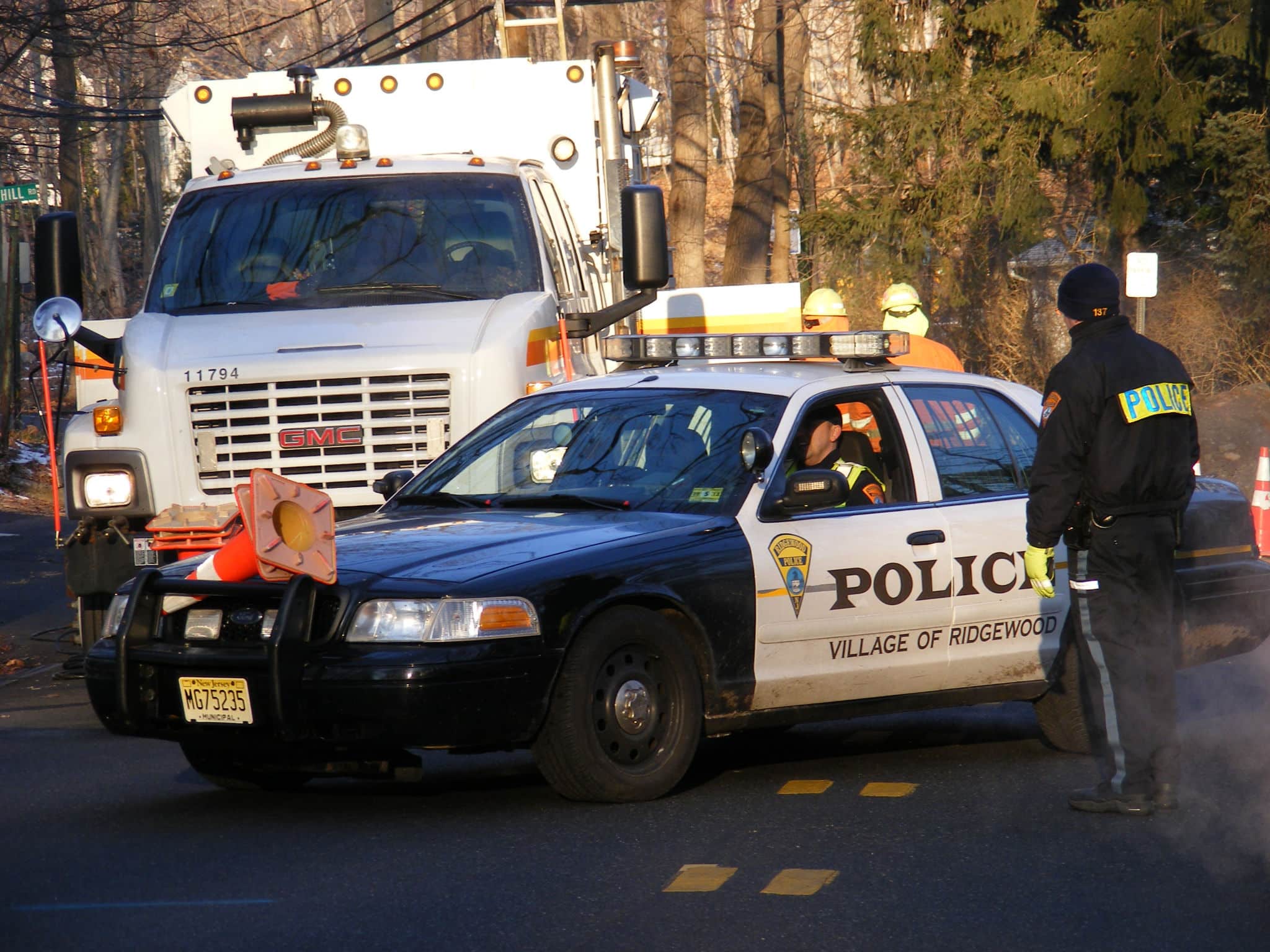
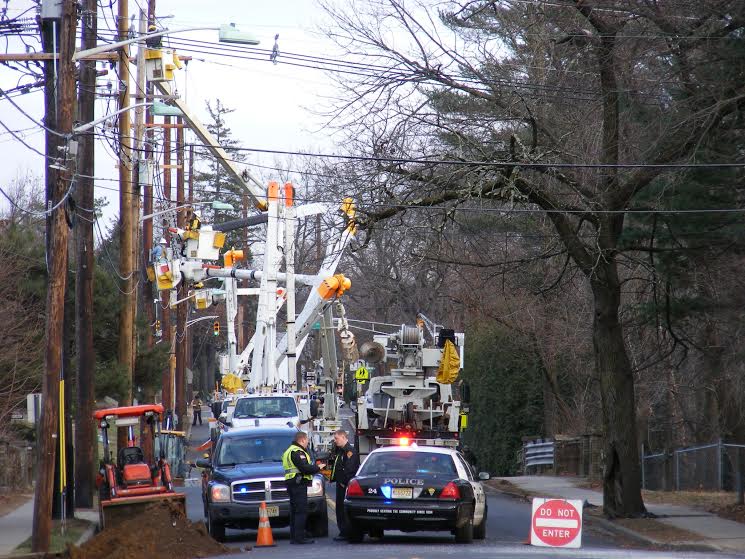
PSE&G crews are continuously working on projects to improve electric reliability and ensure that we can continue to support a safe, clean and reliable gas system well into the future. To ensure traffic moves safely, PSE&G employees, local police, and licensed and approved contractors provide cones, flagmen and signage at work sites, as needed, to minimize interruptions.
National Work Zone Awareness Week is an annual spring campaign to encourage safe driving through work zones. Driver-related factors that affect work zone crashes include speeding, in-vehicle distractions and inattentive or aggressive driving. In 2014, the most recent year for which national data is available, distracted driving was a factor in 16 percent of fatal crashes in work zones, while speeding was a factor in 29 percent.
Ridgewood NJ, Officials from the Valley Hospital and Public Service Electric and Gas Company (PSE&G) cut the ribbon on a five station electric vehicle (EV) charging system and announced the completion of more than $2.5 million in energy efficiency upgrades at the Ridgewood, NJ hospital.
The Valley Hospital EV charging system is part of a PSE&G pilot program designed to help spur the adoption of electric vehicles in the utility’s electric service territory and the energy efficiency measures were funded in part by the PSE&G Hospital Efficiency Program, which helps pay for the installation of energy efficiency measures at hospitals in the utility’s service territory.
“The Valley Hospital is committed to the environment and the installation of these electric charging stations are just one of the ways that Valley can bring sustainable initiatives directly to our employees and physicians, promoting the reduction in the carbon footprint of our operations on the well-being of the planet,” said Maria Mediago, Vice President of Facilities Management at Valley.
As part of the PSE&G EV charging station pilot program, The Valley Hospital committed to immediately utilizing the five charging stations for staff members who own and drive electric vehicles to the hospital. In return, PSE&G provided the EV charging equipment free-of-charge and the hospital paid for the installation of the units and will pay for ongoing maintenance and electricity costs.
“There are a lot of reasons to like EVs in New Jersey but the lack of charging stations is clearly an impediment to their continued growth,” said Courtney McCormick, vice president – renewables and energy solution, PSE&G. “By partnering with organizations like The Valley Hospital to offer workplace charging, we are hoping to increase the convenience of current EV owners, demonstrate to potential owners that EVs are a viable option and also gather information that we can use down the line as EVs become more popular.”
In addition to providing a convenient charging option for EV drivers, the PSE&G pilot program also allows the utility to collect real-world data about how the chargers are used. This will allow PSE&G to better understand the impact that large-scale EV charging could have on the electric grid, identify areas of potential high-EV charger density and plan for infrastructure upgrades and modifications that may be needed.
The PSE&G EV charging pilot program currently has 50 EV charging stations in service at nine customer locations around the state, including The Valley Hospital. There are 20 additional charging stations under construction at four other customer sites. The utility is also in talks with several other customers with the goal of installing a total of 125 individual charging stations at 25 customer locations by the end of 2016.
In addition to the EV charging system, the $2.5 million in energy efficiency upgrades through the PSE&G Hospital Efficiency Program helped pay for a new air conditioning chiller plant and new variable frequency drives on garage exhaust fans at the hospital. These energy efficiency improvements are expected to save more than 1.8 million kilowatt hours of electricity annually, which is enough to power about 250 average-size New Jersey homes for a year.
PSE&G’s Hospital Efficiency Program helps fund the installation of energy efficiency measures at hospitals in the utility’s service territory. Through the program, PSE&G provides an investment grade energy audit at no cost to hospitals, recommends energy efficiency improvements and provides up-front funding for the total cost of the energy efficiency measures. Hospitals typically repay between 35-40 percent of the project costs on their PSE&G bill over a period of 36 months at zero percent interest.
“Hospitals are vital resources in New Jersey,” added McCormick. “Our program allows them to make energy efficiency improvements and save money on energy costs, which frees up resources that they can better use for their core healthcare mission.”
The Valley Hospital will save more than $200,000 a year in energy costs and repay about 40 percent of the project total interest-free over the next three years.
“In 2011, Valley was the first hospital in New Jersey to sign on to the Healthier Hospitals Initiative, a coalition of U.S. health systems committed to, among other things, reducing the use of natural resources and promoting sustainability principles throughout the organization. In addition, Valley is a member of Practice GreenHealth,” Mediago said. “Partnering with PSE&G on this initiative is a cooperative community benefit to reduce the effects of carbon emissions in our community, and these stations serve as a constant reminder that there is a role for everyone in sustainability.”
Ridgewood NJ, PSE&G will be commencing Energy Strong electric improvements in Ridgewood .
PSE&G will begin overhead construction activities along existing pole routes as part of our Energy Strong electric improvements. We are installing two new circuits to improve reliability and convert some existing 4kv service in Ridgewood to 13KV.
Some overhead construction activities have begun and are expected to continue over the coming months. We anticipate the majority of the project to be complete in the next two to three months however, ancillary work is expected intermittently. PSE&G crews will be working from approximately 7:00 AM – 5:00 PM, Monday – Friday. This work is expected to be complete in September, 2016, weather permitting.
Work locations are expected in the following locations:
Maple Ave from Cameron to Mastin Pl
Mastin Pl from Maple to Walnut St
Walnut St from Mastin to Franklin Ave
Broad St – Hudson St to Dean St
Doremus Ave – Orchard to Ackerman
Safety is our primary concern. PSE&G will work with the Village of Ridgewood Police Department to minimize any traffic concerns or inconvenience to the public. As part of our collaboration with the Village Police Department, traffic control officers will be at our active work sites to assist with directing traffic and pedestrians.
Ridgewood NJ, On 2/9/16 a building owner received a call from a person who stated they were from Public Service Electric and Gas and that a service crew was on their way to replace their gas meter. The caller gave accurate account information and an 800 number similar to the PSE&G number for him to call back. The caller advised the building owner go to a retail store in Midland Park and pay for the meter upgrade or gas would be shut off at the building. Although the caller sounded convincing patrol contacted PSE&G directly and confirmed that it was a scam. PSE&G offers a variety of payment options, and would never require a customer to use one specific type of payment. PSE&G customers scheduled for disconnection due to nonpayment receive written notice on their bill at least 10 days in advance.
Any customer who has doubts about the legitimacy of a call from PSE&G — especially one in which payment is requested — should call them directly at 1-800-436-PSEG (7734).
Ruptured Gas Main Closes Route 4 in both Directions
January 30,2016
the staff of the Ridgewood blog
Paramus NJ, A construction company performing work on Route 4 westbound under Forest Avenue in Paramus accidentally struck and ruptured a 6 inch high pressure natural gas main shortly before 1 AM on Saturday, 01/30 causing the complete closure of Route 4 in both directions near the incident site.
As of 2 AM on Saturday, PSE&G supervisors on the scene anticipated the leak would not be stopped and repaired until at least 5 AM or 6 AM on Saturday. Paramus PD, FD, and Rescue Squad personnel are all on the scene. Traffic control assistance is being provided by numerous Bergen County law enforcement agencies along with NJDOT personnel. No incident related injuries have thus far been reported.
Ridgewood NJ, At 1 pm this afternoon on Fairfield Ave, near the Travell school, a transformer on a pole started sparking.Residents called PSE&G. who sent a truck . Ridgewood police and fire also showed with 5 Ridgewood vehicles. PSE&G as of 4 pm. had 7 trucks here.
Residents said , “We thought there were fireworks originally hearing the loud noises.”
Ridgewood NJ, Public Service Electric and Gas Company (PSE&G), New Jersey’s largest electric and gas utility, is preparing for the approaching storm system that could bring snow, freezing rain and high winds to the company’s service territory. The utility is scheduling additional personnel in the field, fueling trucks and has spare poles and other equipment available.
“While snow and wind normally don’t pose a serious problem, icing on lines and trees can increase the possibility of downed wires and power outages,” said John Latka, senior vice president of electric and gas operations for PSE&G. “Those types of conditions also make it difficult for our crews to get around, and we can’t go up in buckets to make repairs if there are high winds. We will respond to outages and no-heat calls around the clock — as quickly and safely as possible.”
In advance of the storm, PSE&G advises customers to prepare an emergency kit that includes:
Water, one gallon of water per person per day for at least three days
Food, at least a three-day supply of non-perishable food
Battery-powered or hand crank radio
Flashlight and extra batteries
First aid kit
Manual can opener for food
Cell phone with chargers
PSE&G urges its customers to be cautious during and after the storm:
To prevent carbon monoxide poisoning, do not run any gasoline powered engine, including generators and snowblowers, in a garage or any other enclosed space.
Downed wires should always be considered “live.” Do not approach or drive over a downed line and do not touch anything that it might be in contact with.
To report downed wires or power outages, call PSE&G’s Customer Service line at 1-800-436-PSEG. Also, customers can report outages by logging into their PSE&G account online or by texting “OUT” to 4PSEG (47734). The utility’s mobile-friendly website includes an “Outage Map” that is updated every 15 minutes and displays the location and status of power outages in PSE&G’s service area.
Ridgewood NJ, Public Service Electric & Gas Company (PSE&G), New Jersey’s largest utility, cautions that while carbon monoxide (CO) poisoning is a year-round threat, it is more common in cold weather when more fuel heating appliances are in use. PSE&G urges customers to take extra preventative measures this winter to avoid carbon monoxide poisoning, and maintain a heightened awareness of the symptoms.
CO is odorless, tasteless and can be deadly. Small amounts of CO are in the air whenever fuel such as oil, natural gas, coal or wood is burned. These amounts are usually not harmful. However, if a heating system or chimney is not working properly, too much CO can build up in the air and cause carbon monoxide poisoning.
Symptoms of poisoning include headache, dizziness, weakness, nausea, vomiting, chest pain and confusion. Symptoms can occur immediately or gradually after long-term exposure. People who are sleeping can die from CO poisoning before ever experiencing any of these warning signs. It affects people of all ages, but infants and children are even more susceptible than adults.
For safety’s sake:
The first line of defense against CO poisoning is to make sure all fuel-burning appliances operate and are maintained properly. These appliances include furnaces, water heaters, ranges, space heaters, and clothes dryers. Improperly vented fireplaces and charcoal grills can also give off CO. Never use ovens or clothes dryers to heat the house.
Install carbon monoxide detectors as back-up protection, not as a substitute for proper use and maintenance of the fuel-burning appliances. CO alarms can provide an early warning to consumers before CO builds up to a dangerous level. The U.S. Consumer Product Safety Commission recommends placing a carbon monoxide alarm in every area of your house or business. If just one alarm is installed, it should be placed near the sleeping rooms of the house. Check the batteries regularly.
Do not allow vehicles, lawnmowers, snow blowers or any gasoline powered engine to idle in a garage, basement or any enclosed space.CO can drift into the living space and create a hazardous situation.
Be prepared: In your mobile phone, program the emergency service line of your natural gas provider. PSE&G’s emergency service line is 1-800-880-PSEG (7734).
If you think high levels of CO are in your home or business: Go outside! If there’s a medical emergency, such as someone falling unconscious, get the person outside to fresh air and call 911. Then call PSE&G’s emergency service line. Wait outside, or go to a neighbor’s home, until help arrives.
Ridgewood NJ, Frigid weather is here, and heating systems are working extra hard. With three months of bill credits this winter, PSE&G residential customers will pay about 30 percent less for gas this season. But there are simple ways to lower bills even more:
Lower your thermostat by just one degree, which may reduce your heating bill by up to 3 percent. Save even more by lowering your thermostat 2 degrees during the day when you are home, and 5 to 10 degrees when you are away and at bedtime, if health conditions permit. Close fireplace dampers when not in use. Close and latch your windows. Set your hot water heater to no more than 120 degrees. Move furniture and drapes away from heating registers, radiators, and baseboard element covers. Open any register or baseboard dampers. Remove or cover window air conditioners to reduce drafts. Install insulated or lined drapes on your windows. Open your curtains and blinds that face the sun on sunny days to warm your home, and close them at night to keep the warm air inside. Use weather stripping or caulk to seal up cracks and prevent drafts in windows and doorframes. Beneath doors, install draft guards available at hardware stores. Use a shrink film insulation kit, commonly available at home improvement centers, on drafty windows or make one yourself from plastic sheeting and double-faced tape. Seal wall switches and electrical outlets on exterior walls of your home with small foam gaskets available from home improvement centers and hardware stores. Remove the cover plate, insert the gasket, and screw the cover plate back in place. Keep your garage door closed if the garage is attached to the house. If your budget permits, install (or have installed) a programmable thermostat that you can set to automatically lower room temperatures when rooms are not in use and at bedtime, if health conditions permit. Check for sufficient water levels in the sight glass for steam heating systems to ensure maximum efficiency. Clean or replace the furnace filter on hot air heating systems.
Visit PSE&G’s Home Energy Toolkit at www.pseg.com/toolkit. You can calculate the energy efficiency of your home and find out how to save energy and money on appliances and heating systems.
When making home improvements, always wear the appropriate safety equipment such as eye protection, gloves and a mask to protect against dust; and remember to check your carbon monoxide and smoke detectors for proper operation and replace their batteries at least once every year.