Breath testing deters alcohol use at Ridgewood dance
JUNE 27, 2014 LAST UPDATED: FRIDAY, JUNE 27, 2014, 2:40 PM
BY DARIUS AMOS
STAFF WRITER
There were approximately half the number of alcohol-related incidents at last Friday’s Backwoods dance than in previous years, and event organizers chalk up the improvement to the Ridgewood Police Department’s use of random breath tests on the attendees.
Of the 950 Ridgewood High School students to attend last week’s event, which took place in Memorial Park at Van Neste Square, “only six” were reported to test positive for alcohol consumption, according to co-organizer Paul Vagianos. In comparison, 11 juveniles were cited for alcohol-related reasons at the September dance, while 10 were sent home from Backwoods in June 2013.
“We’re out of the double digits. This was the best Backwoods ever for that and other reasons,” Vagianos said.
In a conversation with The Ridgewood News on Wednesday, Vagianos noted that the dance had a different vibe than prior events, and the feeling wasn’t necessarily related to the ambiance created by the “Neon Safari” theme. Last week’s event marked the first time in the dance’s brief history that the Ridgewood Police Department conducted random breath tests on the students.
In previous years, Vagianos and David Zrike, co-organizer, greeted each attendee at the gates to the park and performed visual observations, a practice that continued last week. Any student they suspected had been drinking was directed to speak with an officer.
– See more at: https://www.northjersey.com/towns/breath-testing-deters-drinking-1.1042905#sthash.g3UZO9Xx.dpuf
Tag: technology
Ridgewood Library to unveil 3D printer
JUNE 27, 2014 LAST UPDATED: FRIDAY, JUNE 27, 2014, 12:31 AM
BY LIZ WELLINGHORST
STAFF WRITER
Imagine designing an image of the Eiffel Tower on a computer, saving it to a zip drive, then heading to the local library to make or “print” the three-dimensional plastic miniature statue.
It’s now possible with the Ridgewood Library’s new MakerBot 3D Replicator, a new consumer-grade, desktop-size 3-D printer.
The 3-D printer arrived in mid-May, but hasn’t been officially unveiled yet because the library’s IT department has been working out the kinks.
“We’ve been generating programming, learning its new features and design programs,” said Charles Gallo, technology manager at the Ridgewood Public Library and an alumnus of Ridgewood High School. “What I can say is that the 3D MakerBot is extremely user friendly and accessible to all age groups, and when it’s officially open to the public, they will really enjoy it.”
Friends of the Ridgewood Library, a fundraising arm of the library, donated a $5,000 grant to make the 3-D printing possible.
– See more at: https://www.northjersey.com/community-news/at-the-library/printouts-will-be-seen-from-all-sides-1.1042484#sthash.q2SIAwiB.dpuf
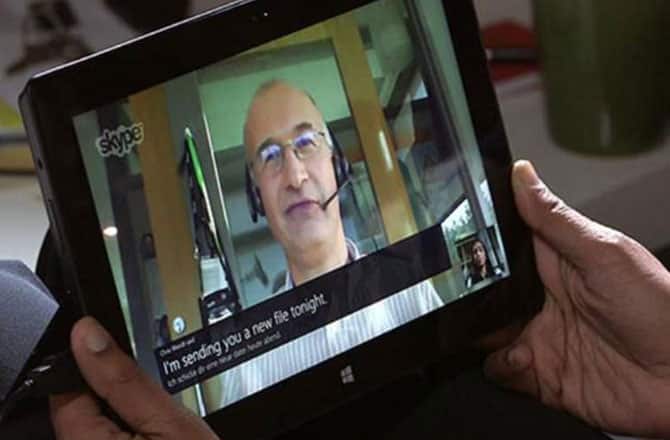
Ridgewood students Skype with scientists
JUNE 27, 2014 LAST UPDATED: FRIDAY, JUNE 27, 2014, 12:31 AM
BY SALVATORE TRIFILIO
CORRESPONDENT
On Thursday, June 12, about 60 students at Willard School took a trip more than 1,400 miles south and nine miles off the coast of Florida, to the world’s only underwater marine habitat and laboratory, all without leaving the comfort of room 122.
“There is only so much an individual teacher can offer, and when we have other people sharing information with these kids, that enhances their education and their experience,” Altieri said.
Altieri’s second-grade class, in collaboration with first- and fifth-grade classes, became the first and only New Jersey classes to join Fabien Cousteau and his crew’s Mission-31 during a half-hour Skype session.
– See more at: https://www.northjersey.com/news/education/students-skype-with-scientists-1.1042447#sthash.dD4xQsze.dpuf
Ridgewood Education Foundation Commits to 1:1 Technology
June 9, 2014
Specifically, the grant will allow the district to purchase and distribute Google tablet Chromebook technology at all levels, K-12, starting in September at the high school and moving into the middle and elementary schools over the next several years.
Chromebooks and the accompanying suite of apps called Google Apps for Education (GAFE) and Google Drive allow users to store and share files from any device that has an Internet connection. As part of the1:1 initiative, the district has provided GAFE accounts to all students. Students in grades 6-12 have also been issued email accounts for internal use only. Using GAFE and Google Drive, students will be able to
access their work at school and home throughout their years in the district. Teachers will be able to provide instant feedback to students on their assignments and easily monitor student contributions to group work. All work done using GAFE is managed by the Ridgewood Public Schools in a safe and closed environment and is the property of the Ridgewood Board of Education
“Clearly from the district’s vision and plan the role of technology will be increasingly important in enhancing academics,” said The Foundation president Jennie Wilson. “The Trustees of The Foundation felt this was an important initiative for Ridgewood schools and vital to twenty-first century learning skills across the district. The vote to fund this grant to the schools was unanimous and very exciting for all trustees. It supports academics and fits perfectly with our mission to enhance education in the Ridgewood Public Schools.”
What science, technology, engineering, and math (“STEM”) Shortage?
The sector isn’t seeing wage growth and has more graduates than jobs.
By Steven Camarota
The idea that we need to allow in more workers with science, technology, engineering, and math (“STEM”) background is an article of faith among American business and political elite.
But in a new report, my Center for Immigration Studies colleague Karen Zeigler and I analyze the latest government data and find what other researchers have found: The country has well more than twice as many workers with STEM degrees as there are STEM jobs. Also consistent with other research, we find only modest levels of wage growth for such workers for more than a decade. Both employment and wage data indicate that such workers are not in short supply.
Reports by the Economic Policy Institute (EPI), the RAND Corporation, the Urban Institute, and the National Research Council have all found no evidence that STEM workers are in short supply. PBS even published an opinion piece based on the EPI study entitled, “The Bogus High-Tech Worker Shortage: How Guest Workers Lower U.S. Wages.” This is PBS, mind you, which is as likely to publish something skeptical of immigration as it is to publish something skeptical of taxpayer subsidies for the Corporation for Public Broadcasting.
https://www.nationalreview.com/article/378334/what-stem-shortage-steven-camarota
A Retiree Digitizes 27 Million Old Newspaper Pages in His Living Room (and Libraries Fight to Catch Up)
Jim Epstein|May. 18, 2014 1:00 pm
Last March, I profiled Tom Tryniski, an eccentric retiree who has digitized (so far) about 27 million newspaper pages working alone in his living room and has made them free for anyone to search. (Click above to watch the video or click here to read the article.) The story offered an example of Tryniski’s prowess: In 2003, the Brooklyn Public Library (BPL)spent $400,000 digitizing the first 62 years of theBrooklyn Daily Eagle, which was among the most widely read and influential papers in 19th century America. A decade later, the library was still raising money to finish the remaining 52 years of the Daily Eagle’s run. In the meantime, Tryniski digitized all 115 years of the paper in about five months working alone.
The BPL has caught up. The entire run of the paper is now digitized and the library just launched a beautiful new portal that makes it easy to search. The BPL Daily Eagle site is far more limited than Tryniski’s—he’s digitized 639 newspapers including several other Brooklyn titles—but it’s quite a bit faster and easier to use.
So how much did the BPL pay to finish the job? Absolutely nothing.
https://reason.com/blog/2014/05/18/a-retiree-digitizes-27-million-old-newsp
The Internet’s 51 New Regulators
The FCC goes ahead with its plan to control Web pricing.
For two decades Congress has wisely refused to give the FCC the same power over the Internet that it holds over the telephone system. And for two decades the Internet has enabled a gusher of creativity that was unimaginable over a century of regulated telephony. Mr. Wheeler’s brainstorm to change all this is simply to pretend the Internet is a phone network.
This would apply to today’s broadband networks common-carrier rules that were designed for monopoly telephone companies—and created decades before the inventors of smart phones and social media were even born. Since this designation would automatically impose myriad obligations that have nothing to do with current customer needs—and that many modern firms could not possibly fulfill—the commission would then have to issue a flurry of exemptions (“forbearance” in FCC parlance) to prevent chaos in the market for Internet connections.
Yik Yak is just the latest we may be able to limit it use or get rid of it altogether but there will be another one just like it along 5 minutes later
Unfortunately Yik Yak is just the latest mole to whack. We may be able to limit it use or get rid of it altogether but there will be another one just like it along 5 minutes later. Maybe as parents we should step up and teach our kids about respect, responsibility and self confidence instead of focusing our fear and rage at this and other social media outlets.
I installed Yik Yak a couple weeks ago to see what it was about and 99% of the posts are pure sophomoric drivel. Hopefully this should dilute some of the sting associated with the other 1% assuming it’s at all dangerous or hurtful. Comments like “Jimmy is a poopy head” should raise as much concern for our kids collective intelligence level as anything else.
A notice went out that some kid posted something about shooting up a school and the police didn’t seem to give it any credence whatsoever. After reading a couple of days worth of posts myself I have to say that I’m not very concerned either.
I don’t disagree with the doctor here in that the Ap, like any social media outlet, has the potential to be used as a vehicle for hate and bullying. I also agree that social media in general has begun to replace real human interaction and conversation with horrible consequences.
As parents it’s our job to teach our kids about responsible, moderate use of social media since it’s probably here to stay. As for Yik Yak, my message to my kids is why would you want to associate with the morons that post on it in the first place?
Psychiatrist’s view: Yik Yak is most dangerous app I’ve ever seen
By Dr. Keith Ablow
Published May 09, 2014
FoxNews.com
Click here to read a letter from Dr. Fishbein to Ridgewood parents and guardians, regarding the negative use of the new social media app Yik Yak by teens.
Here’s something important our society seems to be afraid to say out loud: Despite its name, “social media” is an inherently antisocial medium.
As a psychiatrist I can tell you that Facebook contributes to narcissism, depression and impaired interpersonal relationships. This likely happens because users craft appealing profiles of themselves, twisting their stories along the way, fooling themselves into thinking they have hundreds or thousands of “friends” and finally using a keystroke to block unwanted feedback.
Thank you, Mark Zuckerberg.
But the new Yik Yak app, originally designed for college campuses, is the most dangerous form of social media I’ve ever seen.
Yik Yak can turn a school into a virtual chat room where everyone can post his or her comments, anonymously. Untruthful, mean, character-assassinating short messages are immediately seen by all users in a specific geographic area.
According to ABC News: “Yik Yak works like an anonymous bulletin board, displaying messages from people in a user’s area that can be voted ‘up’ or ‘down’ on the page. Tyler Droll, founder and CEO of Yik Yak, said the app was designed to be like ‘a city’s central plaza or campus bulletin board.’”
“‘Yik Yak users interact with everyone around them,’ Droll said.
“’Yakking’ is the welcoming, authentic and anonymous version of tweeting.”
Translation: Anyone using Yik Yak can turn a school into a virtual chat room where everyone can post his or her comments, anonymously. Untruthful, mean, character-assassinating short messages are immediately seen by all users in a specific geographic area.
If a student writes, “Susie has an STD,” there’s no way to know if the “yak” is true. But hundreds of other students may see the electronic message, leaving it to the target to defend herself.
Psychologically, Yik Yak actually removes all pretense of being a person with empathy, genuinely connected to other human beings.
https://www.foxnews.com/opinion/2014/05/09/psychiatrist-view-yik-yak-is-most-dangerous-app-ive-ever-seen/
Ridgewood Police : Here are some tips to help you identify online scams
Protect yourself by reading up on some of the latest and most prevalent scams. If something sounds “off” to you, chances are it’s a scam. By educating yourself, you can learn how to spot a scam, whether it is a soliciting email, a false transaction alert from an auction site, or a work-from-home offer. Empower yourself to know the difference between legitimate online opportunities and cybercrime scams. Below are some very common cybercrime scams:
It’s most likely a scam if…
1. You receive an email stating you won or are inheriting money.
2. It looks or sounds too good to be true.
3. You are asked to wire money instead of sending a check or using an online payment method.
4. The person you are dealing with is out of the country.
5. You are purchasing a vehicle or any other item, and the seller claims to be in a different location than the vehicle.
8. You receive an email from your bank asking for any login info, bank account info, or personal info.
9. An offer is unsolicited.
If you ever have any suspicions or questions regarding online transactions, please call your local law enforcement agency to discuss the possibility of the situation being an Internet scam.
Learn more at https://www.victimvoice.org/
F.C.C., in a Shift, Backs Fast Lanes for Web Traffic
By EDWARD WYATTAPRIL 23, 2014
WASHINGTON — The principle that all Internet content should be treated equally as it flows through cables and pipes to consumers looks all but dead.
The Federal Communications Commission said on Wednesday that it would propose new rules that allow companies like Disney, Google or Netflix to pay Internet service providers like Comcast and Verizon for special, faster lanes to send video and other content to their customers.
The proposed changes would affect what is known as net neutrality — the idea that no providers of legal Internet content should face discrimination in providing offerings to consumers, and that users should have equal access to see any legal content they choose.
The proposal comes three months after a federal appeals court struck down, for the second time, agency rules intended to guarantee a free and open Internet.
Tom Wheeler, the F.C.C. chairman, defended the agency’s plans late Wednesday, saying speculation that the F.C.C. was “gutting the open Internet rule” is “flat out wrong.” Rather, he said, the new rules will provide for net neutrality along the lines of the appeals court’s decision.
https://www.nytimes.com/2014/04/24/technology/fcc-new-net-neutrality-rules.html?partner=rss&emc=rss&smid=tw-nytimes&_r=0
“The US has lost the moral authority to talk about a free and open internet,”
By Richard Waters in San Francisco
A meeting in Brazil this week will reveal whether Washington has succeeded in preventing international anger over the Edward Snowden revelations clouding discussions about future governance of the internet.
São Paulo is to host a two-day international meeting, starting on Wednesday, called by Brazilian president Dilma Rousseff, one of the international leaders who was a target of US surveillance.
International unrest over US and British internet surveillance has weakened Washington’s ability to shape the debate about the internet’s future, according to people involved in the process.
“The US has lost the moral authority to talk about a free and open internet,” said a former senior US government official.
The São Paulo meeting had the potential to become deeply political and expose rifts between countries over future control of the internet, said Greg Shatan, a partner at law firm Reed Smith in Washington. “It was called under extraordinary circumstances, it’s a reaction to a perceived crisis,” he said.
The US made a highly symbolic gesture last month in an attempt to defuse the situation.
In a move that had long been urged by Brussels, Washington said it planned to give up its last remaining direct role in controlling the internet. This involves checking the accuracy of changes to internet addressing made by ICANN, the international body that oversees the system. Though a limited and highly technical function, this has long been a focus for international discontent at US influence over the internet.
https://www.ft.com/cms/s/0/4529516c-c713-11e3-889e-00144feabdc0.html#axzz2zVSW5HCG
Reader says Technology is evolving at such a rate that we will eventually no longer have libraries
Technology is evolving at such a rate that we will eventually no longer have libraries in the physical books and brick and mortar sense that we know of them today. This probably sounds unthinkable, and I hear the arguments that libraries do a lot more than loan books, but it will simply come down to a continual lessening of library usage and economics. The only reason they will remain operational as long as they will is due to political resistance and a misguided hankering for community spirit.
‘Antisocial network’ Cloak helps users avoid their friends
UPI 3/20/2014 8:10:00 PM
LOS ANGELES, March 20 (UPI) —
A pair of U.S. developers have created Cloak, an iPhone “antisocial network” to help users avoid running into their friends.
Cloak, created by programmer Brian Moore and former Buzzfeed creative director Chris Baker, is billed as the “antisocial network” and uses check-in data from Foursquare and Instagram to allow users to see the locations of their friends on a map, the Los Angeles Times reported Thursday.
“Avoid exes, co-workers, that guy who likes to stop and chat — anyone you’d rather not run into,” the app description in the iTunes store reads.
The app also allows users to “flag” certain friends and they will receive notifications when the flagged friends show up within a certain range.
The developers said they are planning to add more social networks to Cloak.
https://www.breitbart.com/system/wire/upiUPI-20140320-160456-1784
iPhone usage tips
iPhone usage tips
March 15,2014
Marc A. Hirschinger
1:43 PM