By Marisa Iati | NJ Advance Media for NJ.com
on February 24, 2017 at 10:58 AM, updated February 24, 2017 at 11:17 AM
ELIZABETH — The mayor of Elizabeth, where almost half the population is foreign-born, said he won’t give the municipality a “sanctuary city” designation despite concerns of immigration advocates.
Mayor J. Christian Bollwage said this week he believes the “sanctuary” phrasing would put a target on the back of unauthorized immigrants.
“If you become a ‘sanctuary city,’ you’re kind of encouraging the national officials (and saying), ‘Come look at us. Here’s where the people are,'” he said.
The term “sanctuary city” has no official definition under U.S. law, but it usually means local police will decline to help the federal government find and detain unauthorized immigrants.
By Matthew Stanmyre and Steve Politi | NJ Advance Media for NJ.com
on February 24, 2017 at 7:30 AM, updated February 24, 2017 at 2:39 PM
UPDATE, Feb. 24, 1:35 p.m.: The Paterson Public School District has announced wide-ranging penalties to its athletics department, including the suspensions of three district employees and the withdrawal of the Paterson Eastside High School girls basketball team from next week’s state tournament. For details click here.
PATERSON — At least eight international boys and girls basketball players have shown up seemingly out of nowhere to play for Paterson Eastside High School’s powerhouse teams over the past four years, broadening state investigations and drawing the attention of federal agencies, NJ Advance Media has learned.
The discovery of the international pipeline comes a little less than three weeks after an NJ Advance Media report found as many as six players living with Eastside boys coach Juan Griles. Three of the boys were from Puerto Rico and not among the eight who may have violated federal immigration laws.
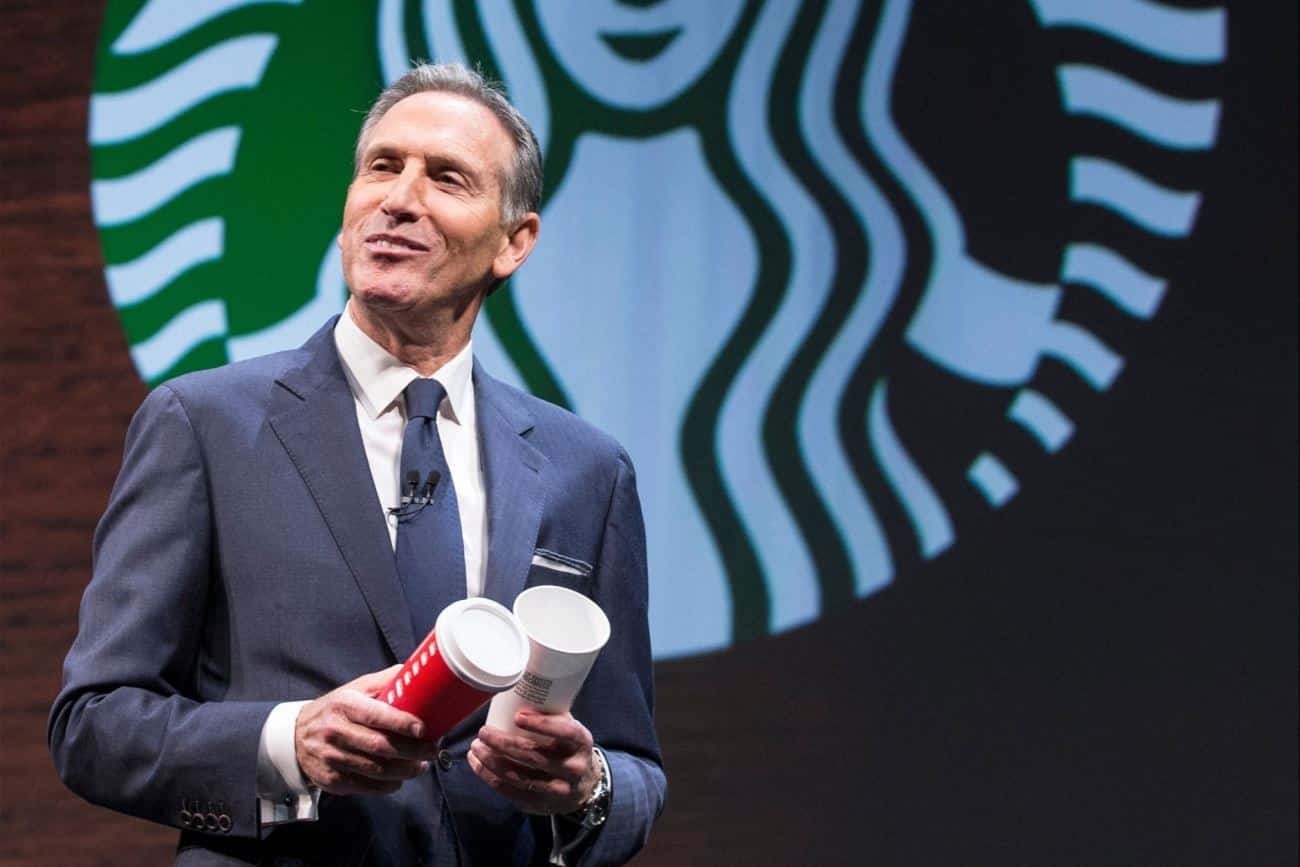
About a month ago, Starbucks CEO Howard Schultz decided to ‘take a stand’ in defiance of Trump’s immigration executive order and penned a message to the world vowing, among other things, to hire 10,000 refugees over the next 5 years and “build bridges, not walls, with Mexico”. Here are some excerpts from the politically charged message drafted by Schultz with “deep concern and a heavy heart”:
I write to you today with deep concern, a heavy heart and a resolute promise. Let me begin with the news that is immediately in front of us: we have all been witness to the confusion, surprise and opposition to the Executive Order that President Trump issued on Friday, effectively banning people from several predominantly Muslim countries from entering the United States, including refugees fleeing wars. I can assure you that our Partner Resources team has been in direct contact with the partners who are impacted by this immigration ban, and we are doing everything possible to support and help them to navigate through this confusing period.
Hiring Refugees: We have a long history of hiring young people looking for opportunities and a pathway to a new life around the world. This is why we are doubling down on this commitment by working with our equity market employees as well as joint venture and licensed market partners in a concerted effort to welcome and seek opportunities for those fleeing war, violence, persecution and discrimination. There are more than 65 million citizens of the world recognized as refugees by the United Nations, and we are developing plans to hire 10,000 of them over five years in the 75 countries around the world where Starbucks does business.
Building Bridges, Not Walls, With Mexico: We have been open for business in Mexico since 2002, and have since opened almost 600 stores in 60 cities across the country, which together employ over 7,000 Mexican partners who proudly wear the green apron. Coffee is what unites our common heritage, and as I told Alberto Torrado, the leader of our partnership with Alsea in Mexico, we stand ready to help and support our Mexican customers, partners and their families as they navigate what impact proposed trade sanctions, immigration restrictions and taxes might have on their business and their trust of Americans.
Unfortunately, Schultz quickly found out the hard way that while most adult-aged Americans can agree that they like coffee, roughly 50% disagree with his leftist political opinions. Which, according to Yahoo Finance, has sent the company’s “brand perception” into a downward spiral since January 29th.
Washinton DC, Friday, President Donald J. Trump signed an Executive Order requiring every agency to establish a Regulatory Reform Task Force to eliminate red tape.
Each Regulatory Reform Task Force will evaluate existing regulations and identify candidates for repeal or modification.
Each agency’s Task Force will focus on eliminating costly and unnecessary regulations.
To hold the Task Forces accountable, agencies will measure and report progress in achieving the President’s directives.
COSTLY REGULATIONS: Regulations have grown unchecked in past Administrations, imposing a steep cost on the American economy.
The regulations from the last Administration cost American taxpayers $873 billion in total.
The Obama Administration finalized more than 3,000 regulations.
BUILDING ON PRESIDENTIAL ACTION: President Trump has been steadfast in his commitment to reducing the regulatory burden on everyday Americans, their pocketbooks, and their businesses.
President Trump has required that for every new Federal regulation, two existing regulations be eliminated.
President Trump signed an Executive Order instructing Federal agencies to minimize the burden of the Affordable Care Act on Americans while he works to repeal and replace it.
President Trump signed legislation, House Joint Resolution 38, to prevent the burdensome “Stream Protection Rule” from causing further harm to the coal industry.
President Trump signed legislation, House Joint Resolution 41, to eliminate a costly regulation that threatened to put American mining and energy companies and their employees at an unfair disadvantage.
President Trump directed the Secretary of Commerce to develop a plan to streamline Federal permitting processes for domestic manufacturers.
President Trump signed an Executive Order expediting the environmental review and approval processes for domestic infrastructure projects.
President Trump directed the Secretary of the Treasury to conduct a full review of the burdensome regulations required by the Dodd-Frank Act.
President Trump ordered a re-examination of the Department of Labor’s “fiduciary rule,” to make certain that it does not harm Americans as they save for retirement.
It is time to repeal each and every one of Obamacare’s tax increases. The full list is below:
Individual Mandate Non-Compliance Tax: Anyone not buying “qualifying” health insurance – as defined by President Obama’s Department of Health and Human Services — must pay an income surtax to the IRS. In 2014, close to 7.5 million households paid this tax. Most make less than $250,000. The Obama administration uses the Orwellian phrase “shared responsibility payment” to describe this tax.
For tax year 2016, the tax is a minimum of $695 for individuals, while families of four have to pay a minimum of $2,085.
Households w/ 1 Adult
Households w/ 2 Adults
Households w/ 2 Adults & 2 children
2.5% AGI/$695
2.5% AGI/$1390
2.5% AGI/$2085
A recent analysis by the Congressional Budget Office (CBO) found that repealing this tax would decrease spending by $311 billion over ten years.
Medicine Cabinet Tax on HSAs and FSAs: Since 2011 millions of Americans are no longer able to purchase over-the-counter medicines using pre-tax Flexible Spending Accounts or Health Savings Accounts dollars. Examples include cold, cough, and flu medicine, menstrual cramp relief medication, allergy medicines, and dozens of other common medicine cabinet health items. This tax costs FSA and HSA users $6.7 billion over ten years.
Flexible Spending Account Tax: The 30 – 35 million Americans who use a pre-tax Flexible Spending Account (FSA) at work to pay for their family’s basic medical needs face an Obamacare-imposed cap of $2,500. This tax will hit Americans $32 billion over the next ten years.
Before Obamacare, the accounts were unlimited under federal law, though employers were allowed to set a cap. Now, parents looking to sock away extra money to pay for braces find themselves quickly hitting this new cap, meaning they have to pony up some or all of the cost with after-tax dollars. Needless to say, this tax especially impacts middle class families.
There is one group of FSA owners for whom this new cap is particularly cruel and onerous: parents of special needs children. Families with special needs children often use FSAs to pay for special needs education. Tuition rates at special needs schools can run thousands of dollars per year. Under tax rules, FSA dollars can be used to pay for this type of special needs education. This Obamacare tax increase limits the options available to these families.
Chronic Care Tax: This income tax increase directly targets middle class Americans with high medical bills. The tax hits 10 million households every year. Before Obamacare, Americans facing high medical expenses were allowed an income tax deduction to the extent that those expenses exceeded 7.5 percent of adjusted gross income (AGI). Obamacare now imposes a threshold of 10 percent of AGI. Therefore, Obamacare not only makes it more difficult to claim this deduction, it widens the net of taxable income. This income tax increase will cost Americans $40 billion over the next ten years.
According to the IRS, approximately 10 million families took advantage of this tax deduction each year before Obamacare. Almost all were middle class: The average taxpayer claiming this deduction earned just over $53,000 annually in 2010. ATR estimates that the average income tax increase for the average family claiming this tax benefit is about $200 – $400 per year.
HSA Withdrawal Tax Hike: This provision increases the tax on non-medical early withdrawals from an HSA from 10 to 20 percent, disadvantaging them relative to IRAs and other tax-advantaged accounts, which remain at 10 percent.
Ten Percent Excise Tax on Indoor Tanning: The Obamacare 10 percent tanning tax has wiped out an estimated 10,000 tanning salons, many owned by women. This $800 million Obamacare tax increase was the first to go into effect (July 2010). This petty, burdensome, nanny-state tax affects both the business owner and the end user. Industry estimates show that 30 million Americans visit an indoor tanning facility in a given year, and over 50 percent of salon owners are women. There is no exception granted for those making less than $250,000 meaning it is yet another tax that violates Obama’s “firm pledge” not to raise “any form” of tax on Americans making less than this amount.
“Cadillac Tax” — Excise Tax on Comprehensive Health Insurance Plans: In 2020, a new 40 percent excise tax on employer provided health insurance plans is scheduled to kick in, on plans exceeding $10,200 for individuals and $27,500 for families. According to research by the Kaiser Family Foundation, the Cadillac tax will hit 26 percent of employer provided plans by 2020 and 42 percent of employer provided plans by 2028. Over time, this will decrease care and increase costs for millions of American families across the country.
Health Insurance Tax: In addition to mandating the purchase of health insurance through the individual mandate tax, Obamacare directly increases the cost of insurance through the health insurance tax. The tax is projected to cost taxpayers – including those in the middle class – $130 billion over the next decade.
The total revenue this tax collects is set annually by Treasury and is then divided amongst insurers relative to the premiums they collect each year. While it is directly levied on the industry, the costs of the health insurance tax are inevitably passed on to small businesses that provide healthcare to their employees, middle class families through higher premiums, seniors who purchase Medicare advantage coverage, and the poor who rely on Medicaid managed care.
According to the American Action Forum, the Obamacare health insurance tax will increase premiums by up to $5,000 over a decade and will directly impact 1.7 million small businesses, 11 million households that purchase through the individual insurance market and 23 million households covered through their jobs. The tax is also economically destructive – the National Federation for Independent Businesses estimates the tax could cost up to 286,000 in new jobs and cost small businesses $33 billion in lost sales by 2023.
Employer Mandate Tax: This provision forces employers to pay a $2,000 tax per full time employee if they do not offer “qualifying” – as defined by the government — health coverage, and at least one employee qualifies for a health tax credit. According to the Congressional Budget Office, the Employer Mandate Tax raises taxes on businesses by $166.9 billion over the ten years.
Surtax on Investment Income: Obamacare created a new, 3.8 percent surtax on investment income earned in households making at least $250,000 ($200,000 for singles). This created a new top capital gains tax rate of 23.8% and increased taxes by $222.8 billion over ten years.
The capital gains tax hits income that has already been subjected to individual income taxes and is then reinvested in assets that spur new jobs, higher wages, and increased economic growth. Much of the “gains” associated with the capital gains tax is due to inflation and studies have shown that even supposedly modest increases in the capital gains tax have strong negative economic effects.
Payroll Tax Hike: Obamacare imposes an additional 0.9 percent payroll tax on individuals making $200,000 or couples making more than $250,000. This tax increase costs Americans $123 billion over ten years.
Tax on Medical Device Manufacturers: This law imposes a new 2.3% excise tax on all sales of medical devices. The tax applies even if the company has no profits in a given year. The tax was recently paused for tax years 2016 and 2017. It will cost Americans $20 billion by 2025.
Tax on Prescription Medicine: Obamacare imposed a tax on the producers of prescription medicine based on relative share of sales. This is a $29.6 billion tax hike over the next ten years.
Codification of the “economic substance doctrine”: This provision allows the IRS to disallow completely legal tax deductions and other legal tax-minimizing plans just because the IRS deems that the action lacks “substance” and is merely intended to reduce taxes owed. This costs taxpayers $5.8 billion over ten years.
Elimination of Deduction for Retiree Prescription Drug Coverage: The elimination of this deduction is a $1.8 billion tax hike over ten years.
$500,000 Annual Executive Compensation Limit for Health Insurance Executives: This deduction limitation is a $600 million tax hike over ten years.
As promised two days ago on the Sean Hannity radio show, James O’Keefe and his team at Project Veritas just released covertly captured, previously unheard audio footage from within the CNN newsroom. But unlike his usual undercover sting operations, this footage was allegedly sourced from a CNN insider who apparently grew frustrated with the perpetually biased reporting of the “fake news” media outlet.
Per O’Keefe’s website, today’s release includes 119 hours of secretly recorded raw footage from an inside source at CNN with another 100 hours of footage still to be released. Given the volume of footage to be released, O’Keefe is asking for help to transcribe and investigate the recordings and encourages users to provide tips on interesting discoveries here.
The audio was secretly recorded in 2009 by an anonymous source inside CNN’s Atlanta headquarters who we are identifying as Miss X. The tapes contain soundbites from current and previous CNN employees Joe Sterling, Arthur Brice, and Nicky Robertson, as well as numerous others.
Posted by Alexander Roubian 176sc on February 22, 2017 · Add your reaction
The Ramsey Town Council is doubling down on its attempt to ban gun ranges. Our threat of an immediate lawsuit still stands and we will make good on our promise if the ordinance passes. The bad news for Ramsey is that the odds that they succeed in court are slim.
For those of you unfamiliar with the Ramsey story, you can read a refresher here. Ramsey is trying to pass an ordinance that would ban firing a gun anywhere inside the town, with no exceptions. This would have the effect of banning all gun ranges. This would prevent a gun range that has already been approved for construction from being operational. They couldn’t manage to stop the physical building, so now they’re telling the gun range owners, “You can have your range, but you can’t use it.” There’s just one problem with this.
Notwithstanding the 10th Amendment, the federal government has repeatedly stepped in when the states’ political systems failed to bring about necessary action
Andrew Sidamon-Eristoff
Prediction: Sometime in the foreseeable future, the federal government will step in to address the self-inflicted crisis in state and local government pension and health-benefits funding. The only real question for us in New Jersey is whether it will happen soon enough to save us from ourselves.
How and why? Let’s review where we are:
First, state and local governments in the U.S. face a multi-trillion-dollar shortfall in public sector pension and health benefits funding. This is a genuine and growing financial crisis that clearly threatens our nation’s long-term economic prosperity.
Second, although some Democratic states with powerful public-sector unions like New Jersey and Illinois are comparatively worse off, few if any states can afford to relax and ignore the problem, especially if the analysis considers local government liabilities, rising healthcare costs, and unfunded post-retirement health benefits alongside pension liabilities.
Finally, the existing political environment, in which public employees are by far the most active and powerful constituency in state and local government, means that most blue states and many red states lack the political capacity or will to “solve” their benefits funding crisis on their own.
Unfortunately, New Jersey provides a convenient case study. By some calculations, New Jersey’s unfunded liability for state and local pensions and state health benefits combined tops $178 billion, among the worst in the nation. Further, 2017 is a gubernatorial election year. The Democratic frontrunner (and thus likely next governor) has secured the support of the state’s public-sector unions in part by rejecting a bipartisan commission’s well-regarded reform recommendations. Those reforms include a proposal to use savings from aligning public employees’ health benefits with Obamacare “Gold” level benefits to help fund the state’s annual pension contribution. Instead, the frontrunner would fully fund pensions along with an ambitious spending agenda by increasing taxes on “millionaires” and closing corporate tax “loopholes.” Trouble is, as even the multimillionaire frontrunner might admit in private, New Jersey’s economy and voters do not have an infinite tolerance for higher taxes, even on corporations and the rich. The likely result will be half measures to keep the ship afloat a while longer and continued deferral of comprehensive reform.
Cue federal intervention. Notwithstanding the 10th Amendment, over the course of history the federal government has repeatedly stepped in when the states’ political systems failed to bring about necessary action. An early example is the Compromise of 1790, whereby the federal government assumed the former colonies’ Revolutionary War debts. A more recent example is federal civil rights legislation made necessary by many states’ demonstrated political incapacity (refusal) to extend the rights of citizenship to all their citizens.
Today, New Jersey and many other states have political systems that are failing to address the escalating benefits-funding crisis. As the crisis begins to restrict and ultimately bar some cities’ and states’ access to the capital markets, exposing the national economy to widespread risk, the federal government will be forced to intervene. Although I cannot predict precisely when or how this will happen, I’ll throw out some ideas to stimulate thinking.
What form will federal relief take? There are many possibilities, but it’s safe to say that rescuing pension systems will be the first priority because rating agencies and current government counting rules place a greater emphasis on unfunded pension liabilities, often protected by state constitutions, than on unfunded retirement health benefit obligations. (Look for that to change soon, but one thing at a time!)
One option would be to extend the federal Pension Benefit Guarantee Corp.’s pension-insurance programs for private employers to public employers. However, the PBGC’s insurance only supports a statutorily defined maximum guaranteed benefit, which in practice results in substantial reductions to middle- and-higher income retirees’ benefits. Moreover, the PBGC is already functionally bankrupt and the model of providing insurance to pay pension benefits on behalf of terminated private employer plans may not be readily transferable, or appropriate, for state and local public employers.
In the absence of a new federal insurance scheme, the most likely option is federal assistance that helps state and local government pension systems refinance their unfunded accrued liability (UAL). For instance, the federal government might lend the states the money on favorable terms, or it could provide a debt-service guarantee in support of state and local pension-refinancing bonds. Either approach would be tantamount to nationalizing state and local pension liabilities, and as such would be controversial. Not impossible, but highly unlikely.
A more limited, and perhaps more politically palatable, approach would be to provide a federal interest subsidy for pension-refinancing bonds. There is precedent. The federal Build America Bond program, part of the 2009 American Recovery and Reinvestment Act, subsidized 35 percent of the interest on state and local bonds issued for capital expenditures.
As he nears end of second term, governor still struggling with state’s deeply troubled public-worker pension system, while some stakeholders look to a new administration for relief
Credit: Governor’s Office/Tim Larsen
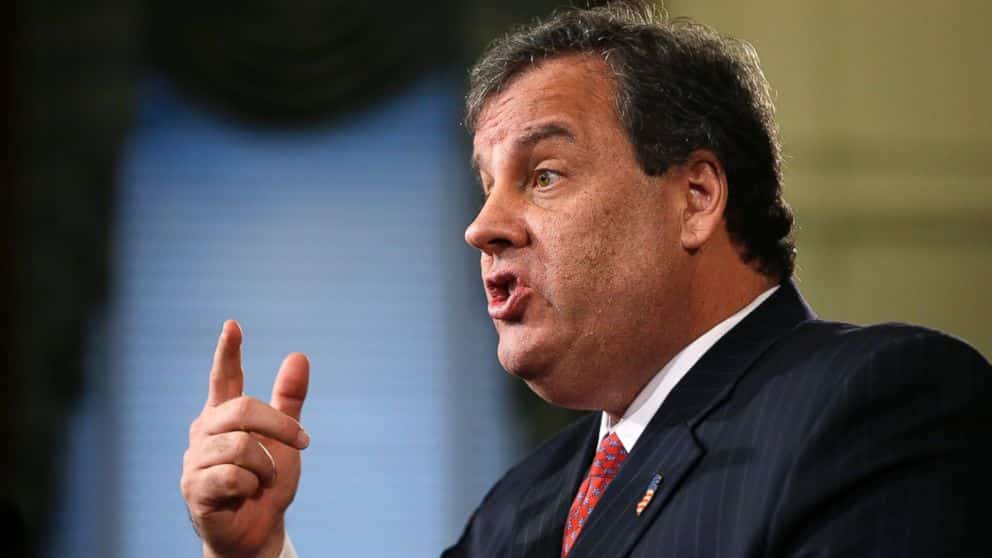
Gov. Chris Christie once bragged about “fixing” New Jersey’s beleaguered public-employee pension system with a series of reforms that were enacted during his first two years in office.
But now, as the second-term Republican prepares to present a final state budget to lawmakers next week, the retirement funds for public workers remain a huge problem, and any long-term solution will likely not come from Christie, but from a successor who will be elected later this year.
Christie confirmed during a recent NJ 101.5 FM radio appearance that he’s planning to boost the annual state pension contribution up to $2.5 billion in the 2018 fiscal year spending plan. The increase would set a record for state pension funding in a single budget, but also fall well short of the full amount that actuaries say is needed to return the retirement system to overall good health. And it was Christie, in 2010, who signed a law that committed the state to fully funding the actuarial estimate by the 2018 fiscal year.
Christie, meanwhile, also left the door open during the radio interview to calling on lawmakers to approve new benefits cuts for public workers along with the next state budget. That comes even after he bragged in 2011 that benefits changes passed that year were “providing real, long-term fiscal stability for future generations.”
It would appear the mainstream media (along with several celebrities and Swedish politicians) is going to be apologizing to President Trump once again.
Having spent the entire new cycle trying to ignore the immigrant crisis facing Sweden, and pin the ignorant tail on Trump, both Dagbladet and Expressen reports riots breaking out in the highly immigrant concentrated Stockholdm borough of Rinkeby, Sweden with police firing warning shots as 100s of young people throw stones and burn cars.
During the evening hundreds of young people gathered in the center of Rinkeby, well known for its high concentration of immigrants and people with immigrant ancestry.
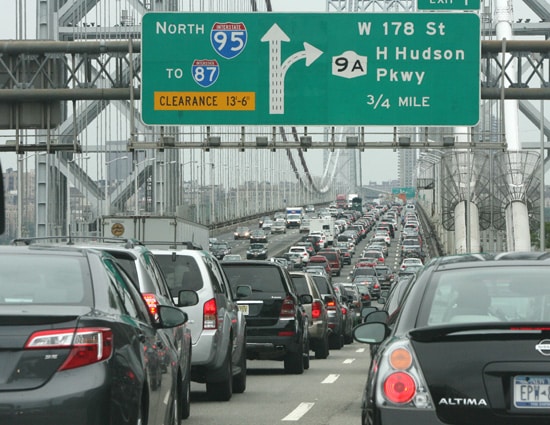
At least one Emergency Service Unit tandem — two cops equipped with harnesses — would be permanently stationed on the George Washington Bridge to more quickly respond to people trying to jump from the iconic span, according to a proposal under consideration.
The Port Authority Police Department’s top cop said Monday that the plan would be discussed Tuesday — among other options — to address safety concerns raised by union officials and officers assigned to the agency’s suicide prevention team.
“The safety of our officers is the most important thing,” said Port Authority Police Superintendent Michael Fedorko. “I want to give them all the support they need.”
The Daily News reported Sunday that members of the Port Authority Police Department’s Suicide Prevention Walkway Patrol-Suicide Prevention Team saved 70 people from jumping from the George Washington Bridge last year.
By Stephen Dinan – The Washington Times – Tuesday, February 21, 2017
Homeland Security Secretary John F. Kelly officially ordered federal agents this week to begin arresting and deporting more illegal immigrants, releasing them from the handcuffs the Obama administration had imposed, and making headway on one of President Trump’s chief campaign promises.
While young adult illegal immigrant “Dreamers” are still exempted, agents were told there are no longer any other special classes of people that should be considered off limits for deportation.
Those caught at the border are to be swiftly shipped back, Mr. Kelly said, and he freed agents to target a broader universe of illegal immigrants for deportation from within the interior of the U.S. The secretary said agents are still to give priority to those with criminal rap sheets, but are free to use discretion — taken away from them in the Obama years — to detain anyone they believe to be in the country illegally.
Ridgewood NJ, Ridgewood Emergency Services Director and Chief, Tony Lillo reported the Departments statistics for the year 2016. The volunteer department handled over 1797 requests for assistance. Chief Lillo stated that “call numbers alone don’t tell the story of our volunteers. Looking at the volume of hours the members donated, gives a better picture of the dedication of our volunteers who donated 20,593 hours to the Village.”
On the average, each volunteer donated 326 hours to the Village. There are of course a few who far exceeded the average. The following volunteers, who donated over 800 hours each to Ridgewood Emergency Services:
James Bigos, Robert Kearney, Jonathan Papietro, Steven Chiesa, Ryan Savaria
Liz Heberling, Eric Frielink
Those statistics only include time tracked while on Emergency Services duty covering the Village. It doesn’t count all the hours spent planning and preparing for events, as well as time maintaining equipment, vehicles and our headquarters as well as training.
Chief Lillo announced that Recognition Awards were presented to members of the Department.
Top Call Award – Eric Frielink
EMT of the Year – Mary Hefferan
Volunteer of the Year – Jonathan Hyslop
TIES member of the Year – Madison Murphy
Service Awards were presented to:
5 Years – Ace Antonio, Emily Benjamin, James Bigos, Eric Frielink
10 Years – Michael Butler, Murray Yang
15 Years – Lee Anderson, Ashley Mormino, Corinne Scarpa
25 Years – Dr. Robert Lahita
Chief Lillo, announced that the Departments 2017 Officers are:
Deputy Chief – Ryan Savaria
Medical Director – Dr. Bob Lahita
Public Information Officer– Bob Krane, Dick Breining
EMS Captain – Murray Yang
EMS Lieutenants– Ace Antonio, Robin Johnson, James Bigos, Emily Benjamin
Special Operations Captain – Lee Anderson
Special Operations Lieutenants – John Baker, Matt Hendrickson, Steven Chiesa, Rick Tarleton
TIES Captain – Corinne Scarpa
TIES Lieutenant – Kevin Scarpa
“Please consider supporting our organization with a financial contribution so that the community can continue to count on the volunteers to respond to all its needs,” said Director and Chief Tony Lillo.
Please make checks payable to F.O.R.E.S.T. (Friends of Ridgewood Emergency Services Teams), 131 North Maple Ave Ridgewood NJ 07450. Online at www.ridgewood911.org. F.O.R.E.S.T. is a charitable organization under IRS section 501(c) (3) so all contributions are tax deductible.
Should you be interested in exploring the idea of becoming a member, please call us at (201) 670-5570. The comprehensive training you’ll receive is free, and while rigorous, it is personally rewarding.
Washington DC, New York Minute: President Donald Trump sets a very fast pace for his first month in office,working very hard to deliver results for the American people .
JUMPSTARTING JOB CREATION: President Trump is looking out for American workers that Washington has left behind.
President Trump signed a Presidential Memorandum ordering the United States to withdraw from the Trans-Pacific Partnership negotiations and agreement.
President Trump hosted the CEO of Intel to announce Intel’s plan to invest $7 billion in a United States factory that will create 10,000 American jobs.
President Trump signed a Presidential Memorandum to clear roadblocks to construction of the Keystone XL Pipeline.
President Trump signed a Presidential Memorandum declaring that the Dakota Access Pipeline serves the national interest and initiating the process to complete construction.
President Trump signed a Presidential Memorandum ordering that all new pipeline construction and repair work use materials and equipment from the United States.
President Trump signed legislation, House Joint Resolution 38, to block the burdensome “Stream Protection Rule” from causing further harm to the coal industry.
President Trump signed legislation, House Joint Resolution 41, to eliminate a costly regulation that threatened to put domestic extraction companies and their employees at an unfair disadvantage.
SAVING TAXPAYERS MONEY: President Trump is fighting to save Americans’ hard-earned tax dollars.
After negotiations with Lockheed Martin, President Trump saved Americans $700 million on a new batch of F-35 fighters.
Secretary of Defense Mattis has ordered a cost-cutting review of Boeing’s next-generation Air Force One fleet, after President Trump was able to cap the cost at millions below that which was agreed to by the Obama administration.
RESTORING PUBLIC SAFETY: President Trump will work to reduce the threats of crime and illegal immigration to public safety.
President Trump signed an Executive Order to enhance the safety and security of the United States by, among other things, constructing a wall on the southern border.
President Trump signed an Executive Order to make sure Federal immigration laws are faithfully enforced throughout the country and that Americans’ tax dollars do not go to jurisdictions that obstruct the enforcement of immigration laws.
President Trump signed an Executive Order that directs the Attorney General to develop a strategy to more effectively prosecute people who engage in crimes against law enforcement officers.
President Trump signed an Executive Order that establishes a task force, led by the new Attorney General, to reduce crime and restore public safety in communities across America.
President Trump signed an Executive Order that re-focuses the Federal Government’s energy and resources on dismantling transnational criminal organizations, such as drug cartels.
GETTING GOVERNMENT OUT OF THE WAY: President Trump understands that excessive regulations stifle job-creation and harm our businesses.
President Trump signed an Executive Order instructing Federal agencies “to minimize the burden” of the Affordable Care Act.
President Trump has required that for every new Federal regulation, two existing regulations be eliminated.
President Trump directed the Commerce Department to streamline Federal permitting processes for domestic manufacturing and to reduce regulatory burdens on domestic manufacturers.
President Trump signed an Executive Order expediting the environmental review and approval processes for domestic infrastructure projects.
AN AMERICA FIRST FOREIGN POLICY: The President’s first priority is the safety and security of the American people.
Under President Trump’s leadership, the Department of the Treasury sanctioned 25 entities and individuals involved in Iran’s ballistic missile program.
President Trump signed a Presidential Memorandum directing the Secretary of Defense to work with other cabinet members to develop a plan to defeat ISIS.
President Trump has called or met with more than 30 foreign leaders.
DRAINING THE SWAMP: President Trump has taken action to ensure that all members of his Administration are working for the American people.
President Trump signed an Executive Order establishing new ethics commitments for all Executive branch appointees, putting in place a five-year lobbying ban and a permanent ban on lobbying for foreign governments, so appointees serve the American people instead of their own interests.
President Trump put in place a hiring freeze for Federal civilian employees to stop the growth of a bloated government.
KEEPING HIS PROMISE TO DEFEND THE CONSTITUTION: President Trump promised a Supreme Court justice in the mold of late justice Antonin Scalia.
President Trump nominated Judge Neil M. Gorsuch to the Supreme Court because of his consistent record defending the Constitution.
HELPING WOMEN SUCCEED IN BUSINESS: President Trump knows the country cannot reach its potential unless every American has a chance to prosper.
President Trump and Canadian Prime Minister Justin Trudeau launched the United States-Canada Council for Advancement of Women Entrepreneurs and Business Leaders.
With milestone, bridge becomes the Port Authority’s first all-cashless tolling facility
The Bayonne Bridge’s new elevated roadway will open to drivers on Monday at 5 a.m., ushering in a new era for the 85-year-old arch bridge that will now become the Port Authority’s first all-cashless tolling facility.
The new roadway is 215 feet above the Kill van Kull and 64 feet above the original bridge deck. It is part of the Port Authority’s “Raise the Roadway” initiative to provide navigational clearance for the larger container vessels now using the expanded Panama Canal that are expected to arrive at all agency port facilities later this year.
The project represents a unique engineering achievement, during which the new roadway was built while the existing roadway remained in service with limited disruption to traffic.
When the new roadway opens, the existing toll plaza will be taken out of service and replaced with an overhead gantry, mounted with electronic toll collection equipment. Drivers will no longer slow down or stop at a toll booth, and will benefit from being able to continue driving through the crossing at the posted speed limit.
More than 90 percent of Bayonne Bridge drivers already use E-ZPass and they will experience no other changes. However, E-ZPass users must make sure their tag is properly mounted in the vehicle’s windshield, to ensure it will be detected by the electronic toll collecting equipment.
For the less than 10 percent of Bayonne Bridge drivers who do not use E-ZPass, an overhead camera will photograph the vehicle’s license plate and a toll bill will be mailed to the vehicle’s registered owner. These bills must be paid by the due date noted on the bill. Unpaid toll bills will be assessed additional fees and ultimately escalate to violations, with a $50 fee assessed for each violation.
Further information about cashless tolling at the Bayonne Bridge can be found at www.panynj.gov/BayonneToll.
The Port Authority aggressively enforces toll payment through a multi-pronged approach that focuses primarily on persistent toll violators. Unpaid toll violations are sent to a collection agency and may be pursued through litigation. Toll evaders also may face criminal charges and arrest by Port Authority Police. The agency also partners with the New York State Department of Motor Vehicles to seek the suspension of vehicle registrations for persistent violators with New York-registered vehicles.
When the new roadway opens, all traffic crossing Route 440 between Bayonne, N.J. and Staten Island, N.Y. will be directed by signs to the bridge’s new approach roadways and over the elevated span.
“On February 20, we will make history,’’ said Steven Plate, the Port Authority’s chief of major capital projects. “The Bayonne Bridge, a marvel of 20th century engineering, will become a groundbreaking innovation of the 21st century.’’
At first, the new Bayonne Bridge roadway will continue to accommodate one lane of traffic in each direction. The new roadway will reach its full width – four 12-foot lanes plus inner and outer shoulders, a median barrier and a 10-foot shared-use path for cyclists and pedestrians – by 2019.
The Bayonne Bridge “Raise the Roadway” project will enable today’s larger, more efficient and more environmentally beneficial container ships to pass beneath the Bayonne Bridge when traveling to Port Newark/Elizabeth and Howland Hook. The project is under construction by the joint venture of Skanska/Koch/Kiewit Infrastructure Co. (JV).