Locke said tolerance was the chief characteristic of the true Christian.
Jon Miltimore | June 14, 2016
John Locke (1632-1704) was one of the most influential thinkers of the Enlightenment. The English philosopher’s ideas are at the core of the American Founding; in fact, it can be argued that his thoughts shaped the minds of the American Revolution more than any single thinker.
While Locke is best known for his treatises on government, he also wrote on religion.
Locke was a Christian who grew up during the Thirty Years War (1638-1648), one of the most destructive conflicts in Europe’s bloody history. The war was largely a religious conflict, the product of the Protestation Reformation that divided European states into more than a thousand Protestant and Catholic states.
The conflict no doubt shaped Locke’s views and Christian philosophy.
A deeply religious man, Locke made the case for religious tolerance in a famous letter he wrote in 1689 titled “A Letter Concerning Toleration.”
“Since you are pleased to inquire what are my thoughts about the mutual toleration of Christians in their different professions of religion, I must needs answer you freely that I esteem that toleration to be the chief characteristic mark of the true Church.”
Locke said Christian tolerance (“charity, meekness, and good-will in general”) should be extended to all people, not just fellow Christians, and those who fail in this regard fall “short of being a true Christian himself.”
By what authority does he draw on to make this claim? The New Testament.
“If the Gospel and the apostles may be credited, no man can be a Christian without charity and without that faith which works, not by force, but by love.”
Locke closed his essay by stating that Christians seeking to advance the Christian Church through “arms that do not belong to the Christian warfare.”
Homeland Security Secretary John F. Kelly has signed sweeping new guidelines that empower federal authorities to more aggressively detain and deport illegal immigrants inside the United States and at the border.
In a pair of memos, Kelly offered more detail on plans for the agency to hire thousands of additional enforcement agents, expand the pool of immigrants who are prioritized for removal, speed up deportation hearings and enlist local law enforcement to help make arrests.
The new directives would supersede nearly all of those issued under previous administrations, Kelly said, including measures from President Barack Obama aimed at focusing deportations exclusively on hardened criminals and those with terrorist ties.
“The surge of immigration at the southern border has overwhelmed federal agencies and resources and has created a significant national security vulnerability to the United States,” Kelly stated in the guidelines.
He cited a surge of 10,000 to 15,000 additional apprehensions per month at the southern U.S. border between 2015 and 2016.
Smart companies (and states) make long-range plans based on the most accurate data available. But New Jersey’s real estate and home-building industries, the state’s water utilities and, indeed, any N.J. company that depends on a reliable water supply can’t do that right now. The Statewide Water Supply Plan — a document that details where the water for New Jersey’s future is and is not — has not been updated since 1996, despite a state statute requiring that an updated report be provided every five years.
Certainly, the Department of Environmental Protection has been working on an update. But, as Rutgers professor and former DEP official Daniel J. Van Abs said in a Feb. 7 column for NJSpotlight, a new draft plan was “last seen” in 2012, when it was presented to the Water Supply Advisory Council — a panel of water company officials, academic scientists and various nonprofits that advises the DEP on water issues. Since then, nothing has happened.
The DEP says it is still collecting data, but Van Abs and others believe Gov. Chris Christie is sitting on the report because the news is not likely to be good. Their theory is that an updated report could stymie development in the state, and the Christie administration does not want to be bound by it.
Updated February 18, 2017
Posted February 18, 2017
By Susan K. Livio | NJ Advance Media for NJ.com
With the Governor and the entire Legislature on the ballot this election year, New Jerseyans will likely hear numerous politicians promise to reduce their especially high property tax bills.
We pay among the highest property taxes in the nation. Last year, the average homeowner paid $8,500 per home, a 2.35 percent increase over 2015, according to the most recent state calculations.
Both the Christie administration and the Legislature agree the annual increases would have been worse had they not passed a 2 percent spending cap on most local expenses.
As unpleasant as it is to admit, there are several facts about the Garden State that make bringing down property taxes very difficult, according to Marc Pfeiffer, assistant director for the Bloustein Local Government Research Center at Rutgers Center. (He previously helped manage six municipalities in central and north Jersey, then more than a quarter-century at the state office overseeing local government spending.)
“New Jersey has had property tax problem for roughly 140 years. We have been talking about this forever,” Pfeiffer said. “If we could have solved it easily, it would have been done.”
In no particular order, here are 7 reasons why they’re so high.
An Obama-tied activist group training tens of thousands of agitators to protest President Trump’s policies plans to hit Republican lawmakers supporting those policies even harder this week, when they return home for the congressional recess and hold town hall meetings and other functions.
Organizing for Action, a group founded by Obama and featured prominently on his new post-presidency website, is distributing a training manual to anti-Trump activists that advises them to bully GOP lawmakers into backing off support for repealing ObamaCare, curbing immigration from high-risk Islamic nations, and building a border wall.
In a new Facebook post, OFA calls on activists to mobilize against Republicans from now until Feb. 26, when “representatives are going to be in their home districts.”
As the New Jersey Senate debated a pair of symbolic resolutions on immigration last week, a new bill that has the potential to devastate our state budget and cause unbelievable harm to New Jersey taxpayers was introduced by Senate Democrats with little fanfare.
This new legislation, S3007, follows a proposal floated by President Trump to withhold federal funds from so-called sanctuary cities that refuse to cooperate with federal immigration law enforcement efforts.
The president’s proposal has yet to become actual federal policy or law.
Still, Democrats in the state Senate rushed forward with an ill-conceived response which would require the state to reimburse local governments for the loss of any federal funds resulting from their status as a sanctuary jurisdiction.
Our concern with S3007 centers on the great cost that may result from this reckless bill. We worry about the harm it could cause to hard-working New Jersey families that already struggle to get by in our extremely expensive state.
The potential impact of this legislation on our friends and neighbors is beyond immense.
Special Rates for Early Summer Art Camp Registration!
Summer Art Camp
EARLY REGISTRATION NOW OPEN
Walk Ins Welcome!
Half Day 8:30AM – 12:30PM
Full Day 8:30 – 4:30PM
Cost: 1/2 Day: $35 or Full Day: $65 (Best Value)
Summer Early Registration
Reg. $325 Sale: $275 Full Week
Making Art like Matisse
June 19 – June 21
Join us as we paint, draw and create
colorful art inspired by Matisse!
Fun with Picasso
June 26 – June 30
Young artists explore a fun filled, color
and shape learning experience
as they dive into Picasso’s world
drawing, painting and more!
Where does the time Van Gogh?
July 10 – July 14
From starry nights to rich and colorful
landscapes, students will enjoy drawing
and painting in the impressionist style.
Doing it like Da Vinci!
July 17 – July 21
Explore this master of the Renaissance
as we build, paint and draw many of
Da Vinci’s most famous creations!
Making All Things Monet
July 24 – July 28
Explore this master of the Renaissance
as we build, paint and draw many of
Da Vinci’s most famous creations!
Create Your Own Tees and Hats
August 7 – August 11
Custom tees and color filled hats
will be created using fabric paints. Fun
filled days with exciting themes. Wear
your own artwork and have fun!
Get Hopping With Haring
August 14 – August 18
Pop art is alive and well as we
learn about Keith Haring and his colorful
creations. Paintings and drawings in
mixed media to be created.
Mad About Emojis
August 21 – August 25
We love emojis and so will you as
we create our favorite ones in clay,
paintings and drawings!
Call 201-932-0202 or visit https://www.artbrainz.com/summer-camp.html
PORT AUTHORITY BOARD AUTHORIZES PLANNING FOR NEW BUS TERMINAL, INTERIM SOLUTIONS FOR EXISTING TERMINAL
February 17,2017
the staff of the Ridgewood blog
Ridgewood NJ, The Port Authority Board of Commissioners today authorized the agency to begin the first phase of a comprehensive planning process for the replacement of the midtown bus terminal – including the hiring of environmental and technical consultants to ensure compliance with federal, state and local review processes.
The planning process will include evaluation of potential intermediate bus staging and storage facilities and other initiatives to sustain and meet capacity requirements for efficient operations of the interstate bus network, including the existing PABT facility. These initiatives will help ensure the existing Port Authority Bus Terminal is able to continue to meet current bus and passenger demand.
“We continue to acknowledge that, while the new Port Authority Bus Terminal is a critical first step in improving trans-Hudson commuting, it is only one piece of a menu of options that must be in place to meet the needs created by future demand increases,” said Port Authority Chairman John Degnan. “The Port Authority will work with our stakeholders to take their important views into account, as we did at the 2015 Trans-Hudson Summit and in the 2016 Trans-Hudson Commuting Capacity Study.”
“Meeting the needs of the growing number of the region’s bus commuters is an essential component of the Port Authority’s transportation mission, and this project will be done while fully respecting and minimizing the impacts on Manhattan’s West Side after and considering the input of residents there in a formal environmental process,’’ said Port Authority Executive Director Pat Foye.
The board authorized the agency to hire environmental and technical consultants to provide project management and planning services for the bus terminal replacement, and to evaluate interim solutions for the existing terminal. These consultants would ensure that all planning stages comply with the National Environmental Policy Act (NEPA) and/or all applicable review processes, and that there is coordination with stakeholders and adherence to eligibility requirements for federal funding.
Planning for a new bus terminal will include identifying an optimal location based on ongoing engagement with the City of New York and other New York and New Jersey stakeholders. Additionally, it will include reviewing the agency’s previous midtown bus master planning effort, the analysis and suggestions of the Port Authority Bus Terminal International Design + Deliverability Competition and the findings of the Trans-Hudson Commuting Capacity Study commissioned by the board.
The Port Authority Bus Terminal, located on Manhattan’s West Side, opened in 1950 and last underwent a major expansion in 1979. Each weekday it accommodates approximately 232,000 passenger trips and 7,800 bus movements. Demand is expected to increase by 51 percent, with up to 337,000 weekday passenger trips, by 2040.
Even at today’s levels of bus demand, the bus terminal routinely operates beyond capacity during peak travel hours. Through an ongoing Quality of Commute initiative, the Port Authority has partnered with bus operators on operational changes that have reduced crowding within the terminal and relieved congestion caused by buses on nearby streets.
However, a lack of strategically located bus parking, and facilities for the staging of empty buses ready to enter the terminal to pick up afternoon commuters, remains a persistent problem. The Trans-Hudson Commuting Capacity Study suggested that the addition of parking and staging facilities is needed to help the bus terminal accommodate growing demand.
Ridgewood NJ, So, you’re a smart, imaginative, persuasive millennial and – contrary to the bad rap your generation usually gets – you’re willing to work REALLY hard. You’re just waiting for all those boomers and Xers to get the heck out of the way so you can have your turn at the brass ring.
But why wait?
You and your well-educated and connected friends are in a great position to create your own success – by creating your own business. Survey after survey finds that millennials have a true entrepreneurial mindset; you like flexibility and independence, and you’re determined to pursue your passions. And, thanks to the accomplishments of others before you (the young founders of Airbnb and Uber, Facebook’s Mark Zuckerberg), you’re likely to get more support and less eye-rolling should you strike out on your own.
“With more resources available to start-up founders, and a new respect for what innovative thinkers can do, there’s no need to wait around for your corner office and executive title,” says Matt Stewart, an entrepreneur and co-founder of College Works Painting (www.collegeworks.com/about), an internship program that provides practical business experience for college students. “Why sit and dream about climbing the ladder at someone else’s business when you can create your own?”
The idea of building something from nothing is daunting but doable, says Stewart, who started his company with just four employees in 1993 and now operates nationwide. Here are some of his tips for getting started:
You don’t have to reinvent the wheel. Create opportunity by finding a business model that delivers solutions to an urgent need that customers have. Your customers should already understand your product or service and believe in its necessity, not just think that it would be “nice to have.” • Define what makes you unique. Once you’ve picked a service or product to focus on, find out what makes you different. Research competitors to determine their customers’ likes and dislikes. How can you pair your individual experience with a solution that addresses what’s missing in the marketplace? • Understand that competition is good. Try to avoid starting a business that doesn’t already exist. If there are similar products or services to yours, it means there’s a demand. Now it’s up to you to figure out how you can deliver something that’s different and better. • You don’t need to start the next Facebook. Don’t worry about entering the market with a huge company. Instead, focus on providing a great solution for a niche group of customers ¬and then over-deliver. You can’t service 1 million customers if you don’t know how to service 10. Focus on your first 10 customers. • Ready, shoot, aim. Don’t wait to get started. You won’t know if you’re onto something unless you start making sales. Your idea isn’t validated until you have paying customers. Don’t spend too much time planning; start engaging with potential customers as soon as you can.
If the fear of failing is holding you back, Stewart says, remember that there’s no better time to take a risk than when you’re first starting out.
“Meanwhile, you’re gaining work experience, learning to be a leader, and doing it on your own terms,” he says.
About Matt Stewart
Matt Stewart is co-founder of College Works Painting (www.collegeworks.com/about), which provides business experience for thousands of college students each year. The award-winning program also offers high-quality house-painting services for homeowners.
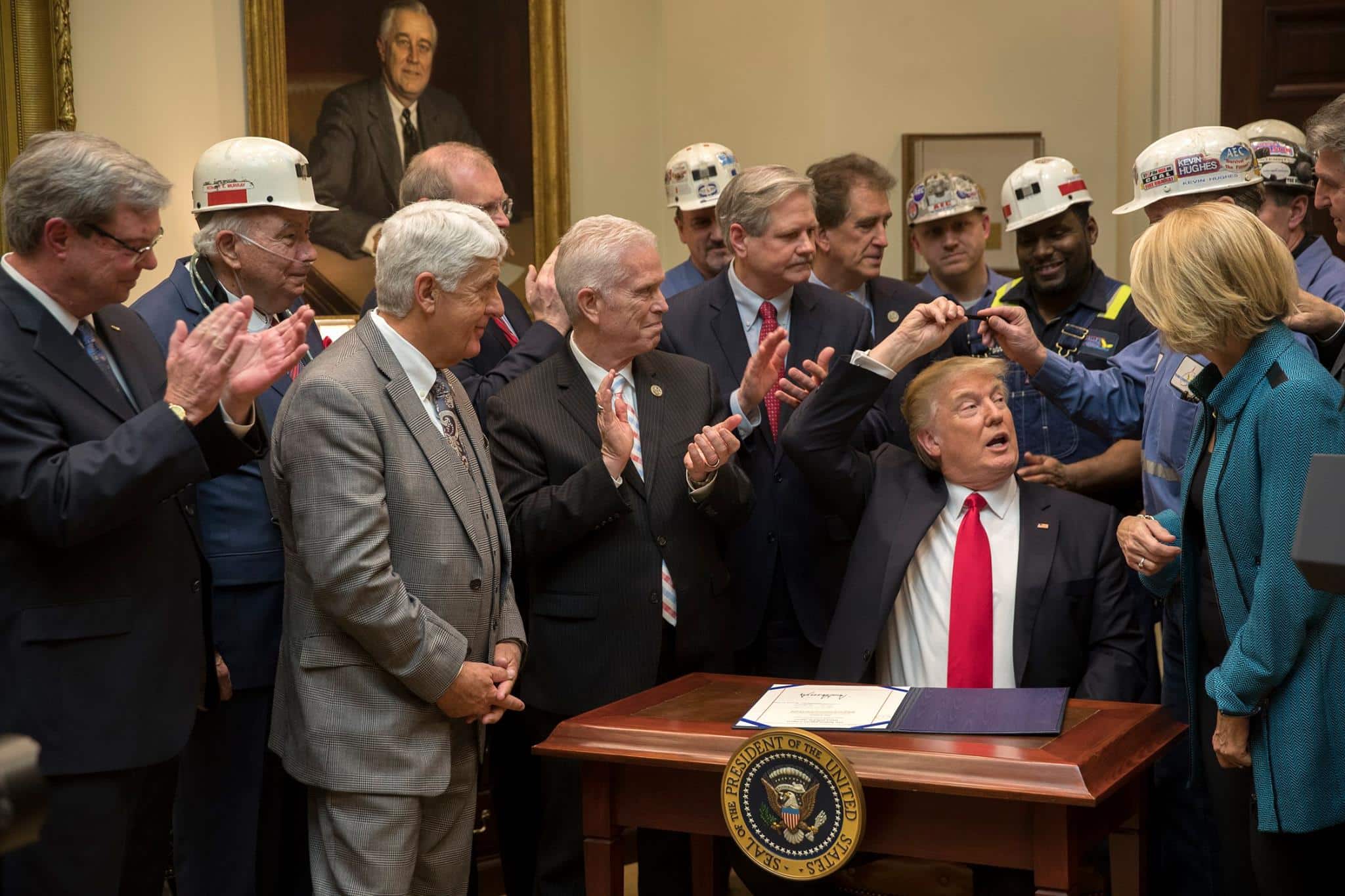
Washington DC, On Thursday , President Donald J. Trump signed legislation (House Joint Resolution 38) to stop the costly “Stream Protection Rule” from further harming coal workers and the communities that depend on them.
H.J. Res. 38 blocks an overly burdensome regulation from harming the coal industry.
The regulation was expected to reduce coal production, leading to fewer coal jobs across the country.
The blocked regulation threatened the coal industry with millions of dollars in compliance costs.
Complying with the regulation would have put an unsustainable financial burden on small mines, most of which are in the Appalachian Basin.
The blocked regulation would have duplicated existing regulations already in place to protect Americans.
GIVING COAL COUNTRY RELIEF: Since 2009, the coal industry has declined, leaving workers and communities without a lifeline.
Since January 2009, the coal mining industry has lost over 36,000 jobs without any relief in sight.
From 2009 to 2015, coal production declined by over 177,000,000 tons across the country.
From 2009 to 2015, over 600 coal mines closed.
A PROMISE TO COAL WORKERS: Before President Trump’s inauguration, he promised coal workers he would support them and reverse the harmful actions of the past administration.
November 21, 2016, the Trump-Pence Transition Team pledged to “end the war on coal” and review harmful regulations created under the Obama Administration.
September 22, 2016, then-candidate Donald Trump called out harmful coal regulations: “I will rescind the coal mining lease moratorium, the excessive Interior Department stream rule, and conduct a top-down review of all anti-coal regulations issued by the Obama Administration.”
August 8, 2016, then-candidate Donald Trump pledged to the American people: “We will put our coal miners and steel workers back to work.”
GETTING GOVERNMENT OUT OF THE WAY: President Trump has been steadfast in his commitment to reducing the regulatory burden on all Americans, their pocketbooks, and their businesses.
President Trump has required that for every new Federal regulation, two existing regulations be eliminated.
President Trump has placed a moratorium on all new regulations by executive departments and agencies that are not compelled by Congress or public safety.
President Trump directed the Commerce Department to streamline Federal permitting processes for domestic manufacturing and to reduce regulatory burdens on domestic manufacturers.
President Trump signed an Executive Order expediting the environmental review and approval processes for domestic infrastructure projects.
President Trump signed legislation to eliminate a costly regulation that threatened to put domestic extraction companies and their employees at an unfair disadvantage.
President Trump directed the Secretary of the Treasury to conduct a full review of the Dodd-Frank Wall Street Reform and Consumer Protection Act to ensure associated, burdensome regulations receive proper scrutiny.
President Trump ordered re-examination of the Department of Labor’s fiduciary rule, to make certain that it does not harm Americans as they save for retirement.
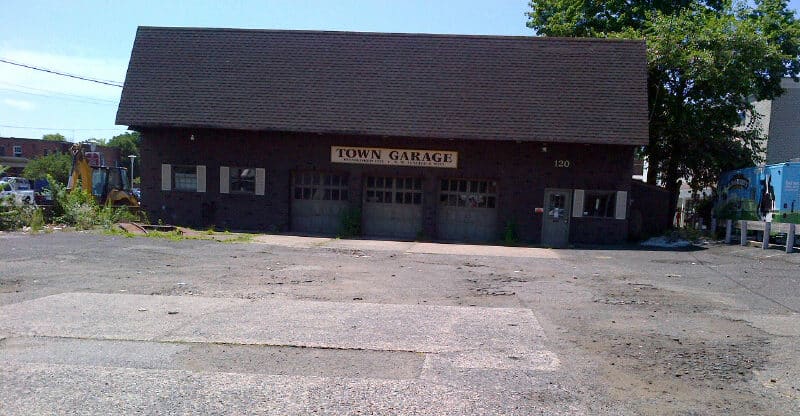
Ridgewood NJ, reader questions the ownership status of the “Town Garage” , “Last I heard an LLC or such owned it. Did they manage to pass it off to the town w/o cleaning it? The Village would be nuts to have bought it in an “as is” condition. The owner of the Town Garage property was bought out by the LLC (?) with little or no warning. I assume he sold “as is” because he really had not planned on selling it. I hope they didn’t make a tidy profit by selling it “as is” to the town. Or worse, the Village cleaning it up for the present owners with a deal to then buy it at a reasonable price.”
One of the more effective tools on the Ridgewood blog is the “timeline ” it continues to roll and record the ups and downs of the Village of Ridgewood. Will a little search we found comments from March 1st, 2007 discussing the ownership of the Town Garage.
The Town Garage, 120 Franklin Avenue; the eye of the storm . . .
>
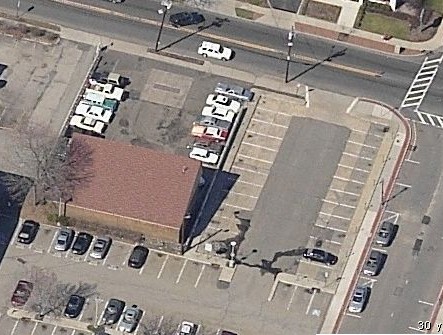
The current hot discussion topic among those who monitor Village Hall happenings is how an out of town firm was able purchase the Town Garage property from right out under the noses of Village Council members. Village ownership of the subject property (see posted photo) is seen as key to the successful construction of a municipal parking garage.
Reportedly, Village officials had offered previous owner Richard Agnello more than the $1.265 million sale price. However, it is being reported that Mr. Agnello refused to sell until the Village found a suitable location nearby for him to relocate his motor vehicle repair facility.
So the fly would like to know: 1) How was the Wells partnership able to buy the property for less than what Village officials had offered Mr. Agnello? 2) Will Mr. Agnello be closing up shop, or has the Wells partnership found a location for him to move his operation to? And, 3) What prompted the Wells partnership to purchase a piece of property destined for involvement in eminent domain proceedings?
And in May of 2007 we asked if the Town Garage was for sale yet again.
Is the former Town Garage property for sale, again?
Village Council members met behind closed doors on Wednesday evening to
discuss possible options for acquiring 120 Franklin Avenue, formerly home of
the Town Garage. Acquisition of this property is key to the planned
construction of a municipal parking garage at the northwest corner of North
Walnut Street and Franklin Avenue.
It is now rumored that Ridgewood 120 LLC, the site’s current owners, have
offered the property for sale to Village officials at a price much higher
than the $1.265 million paid in November of 2006. Scuttlebutt is that
Ridgewood 120 LLC’s asking price is at least $1.865 million, and possibly as
high as $2.265 million. The current owners have made no improvements to the
property since purchasing it from the Agnello family late last year.
Council members must decide whether to: 1) pay the asking price, or 2) enact
the right of eminent domain, or 3) revise parking garage building plans to
eliminate the need for that parcel. Still unanswered is the question: “How
did Village Council members manage to get themselves in such an expensive
jam? In other words, how was a real estate investment group able to acquire
the Town Garage property from right under the Council’s noses?”
Plan reflects agency’s return to its core transportation mission; Leverages private sector dollars to help rebuild region’s aging infrastructure; Creates 235,400 job years and $56 billion in overall economic activity
Ridgewood NJ, The Port Authority Board of Commissioners today approved the agency’s largest ever $32.2 billion 2017-2026 Capital Plan, which reflects the agency’s continuing return to its core transportation mission and is expected to generate hundreds of thousands of jobs and billions in overall economic activity for the region.
The plan allows for $11.6 billion in major redevelopment projects to advance at the region’s major airports during the next decade, including the $4 billion LaGuardia Terminal B replacement, the largest transportation public-private partnership in the United States. It also provides for the advancement of work on Terminal A at Newark Liberty International Airport and the redevelopment of John F. Kennedy International Airport, under which Port Authority investments are expected to leverage billions of dollars of private sector investment.
At the agency’s tunnels, bridges and terminals, the plan provides $10 billion to greatly enhance trans-Hudson commuting, including the construction of new facilities and the upgrading of existing ones. Funds are included to complete the $1.5 billion Goethals Bridge Replacement, being done through the first true surface transportation PPP in the Northeast. It also provides funding to complete the rebuilding of the Bayonne Bridge, a $1.6 billion project that will effectively provide a brand new bridge for travelers and remove an existing navigational impediment to allow modern ships to pass underneath it and keep the ports competitive. The plan includes $3.5 billion to begin planning and construction of a new Port Authority Bus Terminal in Manhattan and nearly $2 billion to complete the largest overhaul and rehabilitation of the George Washington Bridge ever undertaken in the bridge’s 85-year history.
The Capital Plan also includes funding to rebuild some of PATH’s aging rail stations and to upgrade other critical rail system infrastructure to ensure safety and service reliability. Funds also are included to plan and build an extension of the PATH system from its current terminus at Newark Penn Station to the Newark Liberty International Airport Air Link Station, a project designed to improve airport access and enhance trans-Hudson commutation.
To further address the region’s critical trans-Hudson transportation needs, the plan also provides the largest contribution of any stakeholder to date — $2.7 billion — for the critical trans-Hudson rail tunnel link between New York and New Jersey and Portal Bridge North projects. The contribution will pay debt service on expected borrowing by the Gateway Program Development Corporation from low-interest federal Railroad Rehabilitation and Improvement Financing loans.
The 10-year plan will accelerate the rebuilding of the region’s aging infrastructure by leveraging billions in private sector dollars including through public-private partnerships on major transportation and terminal projects, including those at the airports and bridges. The plan’s multibillion investment is expected to result in the creation of 235,400 job years, $20 billion in total wages and $56 billion in overall economic activity.
“There’s no question that the region’s transportation needs are growing at a far greater rate than the resources that are available to address them,” said Port Authority Chairman John Degnan. “For that reason, this Board has spent tireless hours coming to a consensus on how our resources will be spent to benefit the region and the customers we serve. We have developed a plan that invests in the most critical projects including critical improvements to trans-Hudson capacity, while providing the flexibility to make future changes should new, more vital needs emerge.”
“This region needs state-of-the-art airports, new mass transit infrastructure, and bridges designed to handle 21st Century traffic levels if we are to meet growth projections,” said Port Authority Executive Director Pat Foye. “This 10-year plan provides a record level of investment in all of these areas that will meet and support the region’s growth and serve as a major job creator for the next decade.”
“This plan provides significant benefits for the millions of travelers who use the region’s airports, tunnels, bridges, terminals and mass transit system, and it’s also a lifeline for thousands of our members given the tens of thousands of good paying jobs these projects will create. We strongly support the Port Authority’s continuing plans to invest in public sector transportation projects that are good for the region and good for those who live and work here,” said Gary LaBarbera, president of the Building and Construction Trades Council of Greater New York.
“The Port Authority’s proposed 10-year, $32 billion capital plan provides the strategic investments necessary to support the modernization of critical transportation infrastructure, including JFK and LaGuardia Airports, Port Authority Bus Terminal and Bayonne and Goethals Bridges, as well as funding for the Gateway Program, possibly the most important set of projects in the country. The Port Authority’s plan, along with Governor Cuomo’s pledge to invest in aging infrastructure, provide the extensive commitments necessary to support the sustained growth of the metropolitan region. We look forward to working with the Port Authority to build, repair, and renew all of these vital assets,” said New York Building Congress President & CEO Carlo A. Scissura.The approval followed a month-long public comment period – including two first-ever public meetings in each state that were attended by commissioners and agency leadership. Prior to the Board’s vote to move the proposed plan forward on January 5 for public comment, there was robust debate and discussion by Board members over how to parcel out limited resources to the agency’s growing list of capital investment needs.
Since the Board’s January 5 meeting, the agency received 429 comments on its plan from 365 individuals. Fifty-five speakers attended the public meetings in both states to comment on specific items in the document and 9 people Tweeted comments about it. An additional 327 comments were emailed and 12 comments were received by mail. The Board of Commissioners received periodic summaries of the public comments prior to today’s Board meeting.
The 10-year plan approved today includes $29.5 billion in direct spending on Port Authority projects and the $2.7 billion commitment to support debt service on the Gateway passenger rail tunnel project.
The plan outlines specific funding commitments for major capital projects the agency will invest in over the next 10 years. All projects remain subject to Board authorization processes, and, before they proceed, are subject to a rigorous “gates” review process before they proceed that look at agency revenue and the ability to finance them.
Ridgewood NJ, in the latest Rasmussen Reports daily Presidential Tracking Poll for Thursday shows that 55% of Likely U.S. Voters approve of President Trump’s job performance. Forty-five percent (45%) disapprove.
The latest figures include 38% who Strongly Approve of the way Trump is performing and 36% who Strongly Disapprove. This gives him a Presidential Approval Index rating of +2.
Also, in the Poll a plurality (47%) of voters believe America’s intelligence agencies have their own political agenda after questions about the source of top-secret information leaked to the media to hurt the Trump administration.
Nearly half of those polled (48%) also believe most reporters are biased against the president. Only 12% think they are biased for Trump, while 31% feel most reporters try to be fair and balanced. Needless to say, Republicans and Democrats strongly disagree in their assessments of the media.
Jean Morrow / @Jean_Morrow2013 / February 15, 2017
While the House and Senate plan to repeal and replace Obamacare, members of Congress are hosting town hall meetings with their constituents and have been greeted by hostile crowds.
These folks seem to have amnesia about Obamacare’s glaring failures.
Here’s a quick refresher on Obamacare’s top four broken promises.
1. Costs are exploding.
President Barack Obama promised that his reform proposal would cut typical family costs by $2,500 annually. That, of course, never materialized.
The typical family today pays about 35 percent of their income for health care.
The small group and individual insurance markets were hit hard by big premium increases. An eHealth report concluded that from 2013 to 2017, the average individual market premium increases were 99 percent for individuals and a jaw-dropping 140 percent for families.
Costs have also increased for those with employer-sponsored insurance, according to the Kaiser Family Foundation, from 2010 to 2016, average family premiums for employer-sponsored plans nearly increased 32 percent.
Higher premiums are not the only shock. Out-of-pocket costs in the Obamacare exchanges, particularly deductibles, have been stunning. HealthPocket analyzed that for the lowest tier bronze plans in 2017, the average deductible for an individual is $6,092 and $12,383 for a family.
2. Competition and choice are declining.
Obama told America his proposal would increase competition in the health insurance markets but that hasn’t happened either.
On Tuesday, news broke that Humana will be leaving the Obamacare exchange markets next year. This was just the latest in a growing list of insurers who are jumping ship from this massive public policy failure.
Town hall audiences should take a good look at county-level data. A new Heritage Foundation analysis found that Obamacare’s exchanges, in their fourth year of operation, offer Americans little health insurer choice.
The downward slide in competition means that in 2017, consumers in 70 percent of U.S. counties are left with just one or two insurer options on the exchanges. The 70 percent figure is way up from 36 percent in 2016.
3. Forget about keeping your plan.
Perhaps the most famous health care promise of all, Obama’s promise: “If you like your health care plan, you’ll be able to keep your health care plan.” In fact, there were 37 instances where Obama or a high-ranking administration official repeated that infamous promise to keep you plan and your doctor.
Rarely has there been such a disconnect between rhetoric and reality. In 2014, the first year that Obamacare was fully implemented, the Associated Press reported that there were at least 4.7 million canceled policies across 30 states. The law’s insurance rules and mandates forced many insurers to cancel plans that people liked and wanted.
Sadly, the disruption only continued from there. For example, hundreds of thousands of people signed up for plans offered by insurers under Obamacare’s co-op program.
But 18 out of 23 of these federally-funded insurers have already collapsed, meaning taxpayers are highly unlikely to be repaid the more than $1.9 billion in loans they received—not to mention the thousands of co-op enrollees that lost their health care plans, some in the middle of the year.
Not exactly a proud moment in public policy.
4. No, you can’t necessarily keep your doctor.
Obama promised patients that they would be able to keep their doctors. For many patients, that also turned out to be untrue.
Obamacare’s rising costs, and its limited flexibility in federally fixed benefit designs, resulted in plans resorting to narrow provider networks. Narrow networks limit access to doctors and other medical professionals as a way to contain costs.
Enough is enough. For seven years, Obamacare has proved to be one giant bundle of broken promises and policy failures. Congress needs to get serious—quickly—and repeal Obamacare.
This is a crucial first step in moving America toward the patient-centered health care system our country deserves.
Let’s compare what President Trump has accomplished since the inauguration (with that enormous crowd!) with what congressional Republicans have done.
In the past three weeks, Trump has: staffed the White House, sent a dozen Cabinet nominees to the Senate, browbeat Boeing into cutting its price on a government contract, harangued American CEOs into keeping their plants in the United States, imposed a terrorist travel ban, met with foreign leaders and nominated a Supreme Court justice, among many other things.
(And still our hero finds time to torment the media with his tweets!)
What have congressional Republicans been doing? Scrapbooking?
More than 90 percent of congressional Republicans kept their jobs after the 2016 election, so you can cross “staffing an entire branch of government” off the list. Only the Senate confirms nominees, which they’ve been doing at a snail’s pace, so they’ve got loads of free time — and the House has no excuse at all.
Where’s the Obamacare repeal? Where are the hearings featuring middle-class Americans with no health insurance because it was made illegal by Obamacare?
The House passed six Obamacare repeals when Obama was president and there was no chance of them being signed into law. Back then, Republicans were full of vim and vigor! But the moment Trump became president, the repeals came to a screeching halt.
After the inauguration (gigantic!), House Speaker Paul Ryan and Senate Majority Leader Mitch McConnell put out a plan for repealing Obamacare … in 200 days. They actually gave their legislative agenda this inspiring title: “The Two Hundred Day Plan.”