Weather Channel Founder To Retire–Called Global Warming A ‘Scam’ –Said Al Gore was full of it
John Coleman, a TV weatherman for more than 60 years, including the last 20 at KUSI Channel 9/51, has decided to retire.
The station planned to announce Coleman’s decision on its 6 p.m. news Thursday, at which time it would air a retrospective of his career.
Coleman, 79, currently is on vacation. He notified the station he is retiring immediately, so there will be no farewell appearance. Late in the afternoon, after the news broke of his decision, Coleman tweeted: “On the beach and I did it my way No speeches. Just out the door. LIG”
Known for his trademark “K-uuuuuuuuuuu-S-I” exclamation, Coleman wrote a farewell letter to his KUSI colleagues titled “THANK YOU AND GOOD BYE.” He wrote, in part, “now is the time for me to wind down the professional, working part of … my life and make the most of my private time in the years I have left.”
Pondering the complexity of the tax code on Tax Day
By SCOTT GARRETT
As you finalize this year’s tax returns, I hope you realize you are not the only one feeling frustrated. In fact, Albert Einstein once quipped that “The hardest thing in the world to understand is the income tax.” Interestingly, this wasn’t always the case.
In 1913, the tax code was a far more manageable 400 pages. When Einstein passed away in 1955, the U.S. tax code had grown to about 14,000 pages — 10 times as long as the novel “War and Peace.”
Today, now eclipsing 74,000 pages, the code is more than five times as large as it was in Einstein’s time. For those of you doing the math that means since its adoption in 1913, policymakers have added an average of two new pages to the code every day for the last 100 years.
Besides causing a headache for you, your loved ones and your neighbors, the complicated tax code is a colossal drag on our nation’s economy. According to a 2013 report published by Mercatus Center scholar Jason Fichtner, “Americans spent more than 6 billion hours complying with the tax code in 2011.” He writes, “The compliance burden results in estimates of foregone economic growth from $148 billion to $609 billion annually.”
A simpler, fairer and flatter tax structure is the solution to this problem. It is time for us to simplify every Americans’ tax filing, saving time and hard-earned money, and creating much-needed certainty for job creators and small business owners.
Before the House Ways and Means Committee last April, Sam Griffith, president and chief executive officer of National Jet Co., said “the current tax code is a maze of mismatched provisions which provide disincentives to grow our businesses and hire new employees.” The 2013 Small Business Survey compiled by the U.S. Chamber of Commerce has found that eight out of 10 small businesses support reforming the tax code.
State tax policy is a good, small-scale example of what can happen on the federal level. The governors of Texas, Wisconsin and Indiana, for example, have openly and actively recruited out-of-state businesses to relocate and enjoy their states’ lower taxes and less burdensome regulations. It’s time for the federal government to follow suit.
Just like the states near Wisconsin, Texas, and Indiana, the United States loses business to other countries because of our high, overly complex tax code. But, rather than working to enact across-the-board reform, our policymakers just insert exemptions or “carve-outs” for politically favored businesses.
These tax carve-outs are unfair to Main Street coffee shops, florists, local factories and any business that doesn’t get the same kind of treatment. As we know, when the government picks winners and losers, we end up with stories like that of Flabeg Solar U.S. Corp. — the failed solar energy company that cost the American taxpayers more than $10 million.
Americans want to be treated fairly and they want to earn a living to support their families. The tax code is crying out for significant, substantive reform. Meaningful, structural reform will free up Americans’ time and money so they can put it into greater creativity and productivity.
With comprehensive tax reform, we have a chance to reignite the entrepreneurial, hardworking American spirit that is being stifled by mountains of antiquated tax policies that no one — even a world-renowned physicist — can understand.
U.S. Rep. Scott Garrett represents the 5th Congressional District of New Jersey, which includes most of Warren County.
Codey slams DiVincenzo, over Norcross controlled Assembly comments
TRENTON — What’s that? Did state Sen. Richard Codey saying something nice about George Norcross, the state’s most influential Democrat and the lawmaker’s political nemesis?
Well, kind of — but at the expense of another frequent target of his, Joseph DiVincenzo, the Essex County executive and fellow Democrat.
In a profile of Gov. Chris Christie that appeared in last week’s New Yorker magazine, DiVincenzo longingly described Norcross’ considerable clout, noting that the South Jersey insurance executive and newspaper owner could count on the votes of seven senators and 12 Assembly members.
“I don’t have what George has,” DiVincenzo whined to the reporter. “George has seven and 12! I have two senators and five Assembly people.”
To Codey, DiVincenzo wasn’t just saying those legislators were his allies. He was saying he controlled them.
“I think it’s disgraceful,” Codey said. “It’s belittling those senators and those Assembly people. … To say that is so demeaning, and shows you not only is he corrupt and unethical, he’s also dumb as dumb can be.”
Codey then gave Norcross credit. (This is where the reader asks to be pinched.) “I’ve never seen George say that he controls them,” he said. “He has a brain. Joe doesn’t.”
DiVincenzo aimed his own barbs at the veteran lawmaker. (The Auditor/Star-Ledger)
APRIL 14, 2014, 10:30 PM LAST UPDATED: MONDAY, APRIL 14, 2014, 10:32 PM
BY JOHN REITMEYER
STATE HO– USE BUREAU
THE RECORD
Four days after a downgraded credit rating, New Jersey has more bad financial news: Tax collections were once again short of Governor Christie’s already lowered expectations.
This time, the gap was $145 million for March – a full 7 percent short of what Christie projected for the month, according to data released Monday by the state Department of Treasury.
That means the Christie administration has to make up that gap with just three months left in the state’s fiscal year, time that includes the crucial income tax collection month of April. Already, the administration has said it cut nearly $700 million in spending to help balance Christie’s $33 billion budget after an earlier shortfall. More money was also raised this year by restructuring state tobacco bonds.
Treasury officials attributed the weaker-than-expected March tax collections to the lingering effects of harsh weather in February, and also to taxpayers’ use of new technology that is allowing income tax refunds to go out at a much faster rate than in prior years.
“Accelerated refund payments, in addition to February’s harsh weather, constrained March cash collections compared to projections,” Treasurer Andrew Sidamon-Eristoff said. “We do not believe these factors will carry over to April and the balance of the fiscal year.”
The latest Reason-Rupe poll asked Americans if they would support or oppose changing the federal tax system to a flat tax, where everyone pays the same percentage of his or her income, finding that 62 percent favor the flat tax and 33 percent are opposed. When asked where they would set the flat tax, the aveage response was 15 percent.
This reflects another recent Reason-Rupe poll finding that 67 percent of Americans say it is “not the responsibility of the government to reduce the differences in income between people with high incomes and those with low incomes,” while 29 percent say it is.
Strong support for a flat tax extends across income groups (62 percent) among those making less than $30,000 a year and 73 percent among those making more than $110,000 a year. Similarly across education groups and age groups, 6 in 10 say they support the flat tax.
Support for a flat tax extends beyond partisanship, with 66 percent of Republicans, 68 percent of independents, and 52 percent of Democrats in support. Nevertheless, Democrats are more likely to oppose the flat tax (43 percent) compared to Republicans (29 percent) and independents (29 percent).
Americans who say the less government the better and that the free market can better solve problems than a strong government, favor a flat tax by a margin of nearly 50 points (roughly 72 to 25 percent). However, those who think government should be doing more and that we need a strong government to solve problems favor a flat tax by only 8 points (roughly 51 to 45 percent).
IRS chief: New rule on the way for tax-exempt groups
WASHINGTON – The Internal Revenue Service is prepared to rewrite a proposed rule regulating the political activities of non-profit groups to address complaints from the right and left that it goes too far, IRS Commissioner John Koskinen said Monday.
“In all likelihood we will re-propose a redefined rule and ask for more public comment,” Koskinen told USA TODAY’s Capital Download. It’s a process he predicts will take “until the end of the year and beyond” to complete. The proposed regulation of groups known as 501(c)(4)s drew a record 150,000 comments before the deadline in late February.
He said the new rule would take into account backlash from conservative Tea Party groups as well as some liberal advocacy organizations that the agency’s proposal – intended to address concerns that the tax-exempt groups were engaged in partisan warfare – would bar, even voter education and registration programs.
He was interviewed on the eve of Tax Day, the April 15 deadline for Americans to file their returns.
“I think we have to take all of that into consideration,” Koskinen told the weekly video newsmaker series. “There are very thoughtful comments and concerns, and one of the questions that has evoked a lot of comment is, once you define what political activity is, to what organizations should it apply in the 501(c) context and how much of it should be allowed? All of that is going to be very important.”
After reading comments from Village personal made on this blog the last several weeks it would seem a closer look at “shared services ” is an idea whose time has come .
The New Jersey Shared Services Association (NJSSA) is a non-profit association that proactively promotes increased efficiency in the delivery of services, while reducing the costs of local government. NJSSA members focus in the areas of advocacy, policy development, and education; while offering non-partisan advisory services to all local public entities and selected non-profit associations.
In 2007, Middlesex County Freeholder H. James Polos, recognized statewide as long time advocate for shared services, brought together the county shared services coordinators in New Jersey with the purpose of establishing a statewide professional association. The vision was to create an opportunity for improved communication among the coordinators, sharing of information, professional development and advocacy for shared services.
Established in 2008, the New Jersey Shared Services Association (NJSSA) is a non-profit 501(c)3 association that proactively promotes increased efficiency in the delivery of services, while reducing the costs of local government. NJSSA members focus in the areas of advocacy, policy development, and education; while offering non-partisan advisory services to all local public entities and selected non-profit associations.
The overall goal of the NJSSA is to establish substantial and long-term shared service agreements throughout NJ counties and municipalities to help reduce the cost of local government to the taxpayers and improve the availability and efficiency of government services.
NJSSA consists of representatives from across NJ counties with 17 out of 21 counties participating in the NJ Department of Community Affairs, Division of Local Government Services Share Grant Program, which funds a 3-year start-up position for a county Office of Shared Services.
The NJSSA members work to identify areas where county and local government can work collaboratively to combine resources for more efficient service delivery while at the same time helping to lower capital and operating costs for participating government entities, resulting in relief to local taxpayers.
Services Currently Being Shared
• Information Technology (IT)
• Centralized Police Dispatch, 911 Emergency Communications
• Consolidation of Public Work Facilities & Departments
• Animal Control / Animal Shelters
• Mosquito Control & Gypsy Moth Spraying
• County Records Management /Retention for Municipalities
• Transportation Resources for the Disadvantaged and Elderly
• Countywide Fleet Maintenance & Purchasing
• Regional Vehicle Wash Facilities
• Parks and Recreation Facilities / Staff and Maintenance
• Police Protection Mergers
• Countywide Tax Assessments and Revaluations
• Countywide Storm & Wastewater Management
• County Health Department / Regionalized Health Services
• County Library System
• County Sponsored Municipal Job Fairs
• Shared School District Superintendents and Personnel
• Customized Training Programs
• County Recycling Programs
• County Landfill
• Police and Fire Training Academies
• Regional Planning and Economic Development
• GIS ( Geographical Information Systems)
• Coop Purchasing Programs
• Weights and Measures
Ridgewood officials discuss potential shared service with Bergen County
APRIL 14, 2014 LAST UPDATED: MONDAY, APRIL 14, 2014, 4:24 PM
BY DARIUS AMOS
STAFF WRITER
Village officials have learned that the county is slated to open a new vehicle maintenance facility just three miles outside of Ridgewood, putting a new twist on the municipality’s ongoing efforts to improve and potentially relocate its fleet repair operations.
Based on recent conversations with Bergen County administrators, Village Manager Roberta Sonenfeld said construction on the county garage is already underway and is scheduled for completion later this year. Sonenfeld, who took over as the full-time manager less than two weeks ago, informed Ridgewood Council members this week that the project has gone relatively under the radar, as little information was available until she and other village officials broached the topic with the county.
“This has not really been publicized, but the county is building a state-of-the-art facility that they think will be operational in November,” said Sonenfeld. “The great news is that it’s not far away. It’s right down Ridgewood Avenue in Paramus.”
Specifically, Bergen’s new Department of Public Works Maintenance Complex will be located just south of Ridgewood Avenue along Jerome Avenue, a mostly residential street. On Wednesday, the village manager was unable to specify the total number of vehicle repair bays that the county intends to build, but she indicated that the overall goal is to offer services to municipalities.
Candidates Night for Municipal Election – Tuesday, April 29th at 7:30PM
Meet the 3 candidates for Village Council and hear their views!
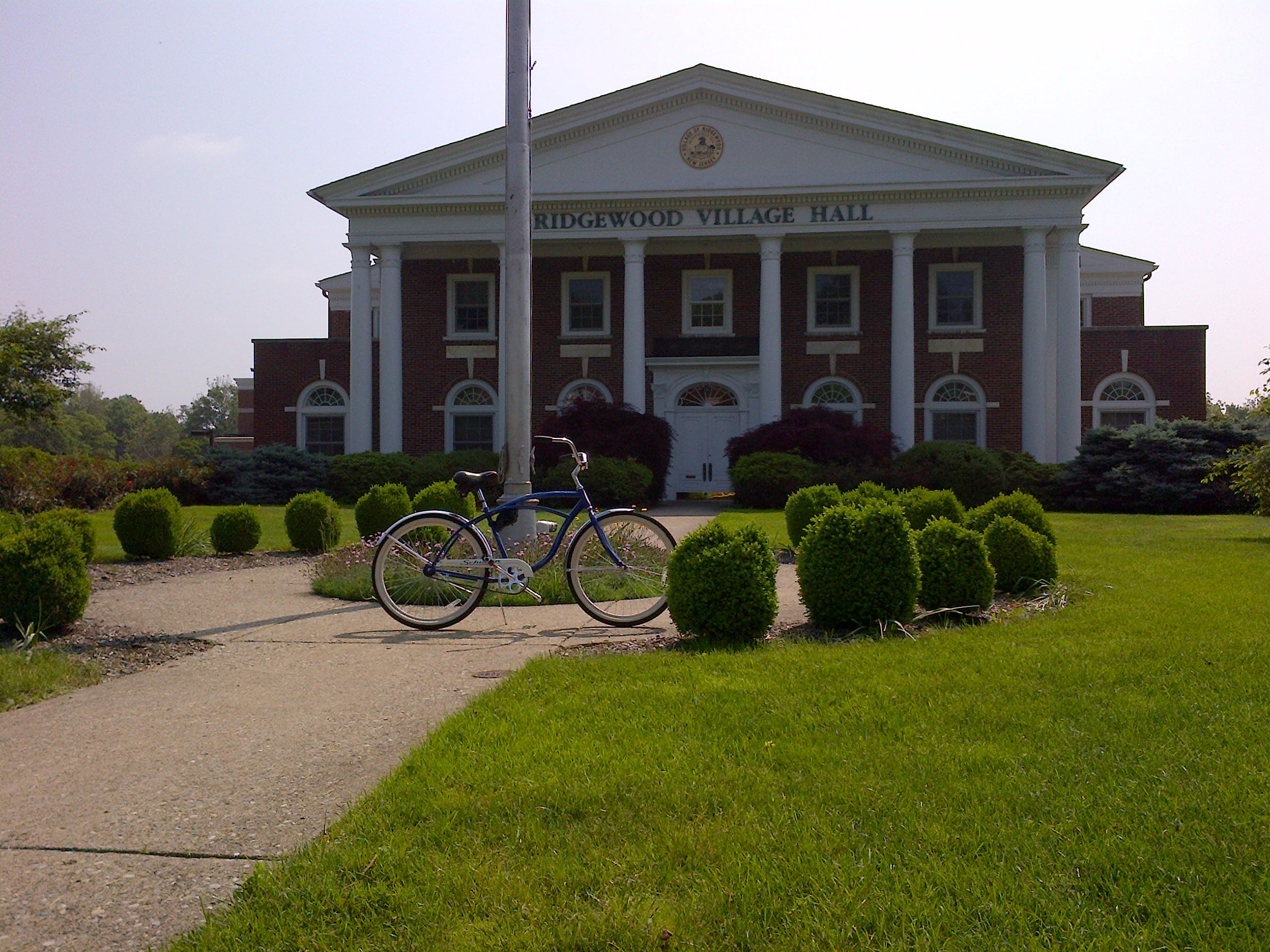
The League of Women Voters is holding Candidates Night for the Village Council on Tuesday, April 29 at The Village Hall , Fourth Floor, 131 North Maple Avenue at 7:30.. There are three candidates vying for two open Village Council seats: James Albano, Susan Knudsen and Michael Sedon. There will also be television coverage on Channel 77 for Cablevision users and Channel 34 for Fios users. The League of Women Voters of Ridgewood is a NON PARTISAN, yet political organization whose members become active and informed participants in government.
The Ridgewood Municipal Election will take place Tuesday, May 13.
Obama has Proposed 442 Tax Hikes Since Taking Office
Since taking office in 2009, President Barack Obama has formally proposed a total of 442 tax increases, according to an Americans for Tax Reform analysis of Obama administration budgets for fiscal years 2010 through 2015.
The 442 total proposed tax increases does not include the 20 tax increases Obama signed into law as part of Obamacare.
“History tells us what Obama was able to do. This list reminds us of what Obama wanted to do,” said Grover Norquist, president of Americans for Tax Reform.
The number of proposed tax increases per year is as follows:
-79 tax increases for FY 2010
-52 tax increases for FY 2011
-47 tax increases for FY 2012
-34 tax increases for FY 2013
-137 tax increases for FY 2014
-93 tax increases for FY 2015
Perhaps not coincidentally, the Obama budget with the lowest number of proposed tax increases was released during an election year: In February 2012, Obama released his FY 2013 budget, with “only” 34 proposed tax increases. Once safely re-elected, Obama came back with a vengeance, proposing 137 tax increases, a personal record high for the 44th President.
In addition to the 442 tax increases in his annual budget proposals, the 20 signed into law as part of Obamacare, and the massive tobacco tax hike signed into law on the sixteenth day of his presidency, Obama has made it clear he is open to other broad-based tax increases.
During an interview with Men’s Health in 2009, when asked about the idea of national tax on soda and sugary drinks, the President said, “I actually think it’s an idea that we should be exploring.”
During an interview with CNBC’s John Harwood in 2010, Obama said a European-style Value-Added-Tax was “something that would be novel for the United States.”
Obama’s statement was consistent with a pattern of remarks made by Obama White House officials refusing to rule out a VAT.
“Presidents are judged by history based on what they did in power. But presidents can only enact laws when the Congress agrees,” said Norquist. “Thus a record forged by such compromise tells you what a president — limited by congress — did rather than what he wanted to do.”
Read more: https://www.atr.org/obama-has-proposed-442-tax-hikes-taking-office#ixzz2ywy1aEkN
Follow us: @taxreformer on Twitter
IRS Scandal Continues: An IRS Employee Urged People to Reelect Obama
Hans von Spakovsky
April 13, 2014 at 12:03 pm
The latest news from the U.S. Office of Special Counsel (OSC) about illegal political activities at the IRS will certainly not help the administration’s (and Representative Elijah Cummings’) current narrative that there is not a “smidgen of corruption” at the IRS.
OSC is an independent agency that investigates violations of the civil service rules that govern federal employees and the federal statute that protects whistleblowers, as well as violations by federal employees of the Hatch Act, which restricts the political activity of civil servants. One of those rules is an absolute prohibition on partisan political speech and activity in the federal workplace.
On April 9, OSC announced that it was seeking “significant disciplinary action” against an IRS customer-service representative who fielded taxpayer questions on the IRS customer-service helpline. Apparently, the IRS employee “urged taxpayers to reelect President Obama in 2012 by repeatedly reciting a chant based on the spelling of his last name.” OSC did not indicate what the “chant” was, and a spokesman for OCS told me he could not reveal the chant because of privacy rules, since it spelled out the employee’s name.
Another tax specialist in the Kentucky office of the IRS was given a 14-day suspension for telling a taxpayer she was “for” the Democrats because “Republicans already [sic] trying to cap my pension and…they’re going to take women back 40 years.” The tax specialist added that her mother told her that “if you vote for a Republican, the rich are going to get richer and the poor are going to get poorer.”
Unfortunately for the tax specialist, the taxpayer recorded the illicit telephone conversation. The recording even caught the IRS employee telling the taxpayer that “I’m not supposed to voice my opinion so you didn’t hear me saying that.” This particular IRS employee had been advised about the restrictions of the Hatch Act on this type of behavior “just weeks before the conversation,” according to the OSC.
The OSC also announced it had “issued cautionary guidance to all IRS employees” in the Dallas Taxpayer Assistance Center after it received complaints that the employees were “wearing pro-Obama political stickers, buttons, and clothing to work and displaying pro-Obama screensavers on their IRS computers.” It turned out that this was “commonplace throughout the office.” It makes one wonder how much of this was going on in other IRS offices where no one complained.
And it is more evidence that there is bias and partisan political behavior spread throughout the IRS, and not just in the Washington office where Lois Lerner worked before she retired to a nice federal pension.
Originally published in The National Review Online.
Tax Day 2014: How Tax Reform Would Make Filing Taxes Better
By Curtis S. Dubay
April 15, the day Americans’ tax returns for the previous year are due to the IRS, is fast approaching. Families all over the country are scrambling to find documentation for their incomes and any expenses they incurred that might be deductible, creditable, or exemptible. It is a day of consternation for most families because of the mind-numbing complexity of completing this annual task.
The best that can be said of Tax Day is that it provides a yearly reminder of just how convoluted the tax code is and how much damage it does to the economy. It should also serve as a periodic reminder that filing taxes does not have to be this way. Tax reform, if done right, would help Americans in numerous ways.
Raise Incomes
The biggest difference taxpayers would notice would be increased annual incomes. Families would see their incomes grow because tax reform would lessen the severe disincentives that the tax code currently imposes on the fundamental activities of economic growth—working, saving, investing, and taking on risk. This would allow the economy to grow stronger, which would mean more opportunities for Americans at all income levels to find higher-paying jobs and earn larger wage increases.
Done correctly, tax reform would also mean that families earn more but would not pay higher marginal tax rates on their higher earnings. The tax code would not punish families as it does today for being more successful and for earning higher compensation because they are more productive.
Simpler to File
Since tax reform would make what is taxable—i.e., the tax base—easier to define and would have at most only a few deductions and credits necessary to maintain neutrality, filing taxes annually would be immensely simpler for all families.
There would be no need for pricey software, and only those families with the most complex financial arrangements would require paid tax preparers. Highly skilled lawyers and accountants could put their considerable talents to more productive uses, which would further boost the economy.
Increased Fairness
A renewed confidence in the fairness of the system would result because of the more easily understandable tax base and minimal number of deductions and credits. Tax liabilities would be more transparent because there would be few if any ways for taxpayers with more knowledge of the tax code (or ability to pay accountants and lawyers who have it) to lower their tax liability in ways that are largely inaccessible for average taxpayers.
It would also be readily apparent that everyone was paying their fair share. Families with similar financial circumstances would be confident that they were paying similar amounts of tax. It would also be clear that higher-earning families were paying commensurately higher taxes. High earners pay almost all federal income taxes today—the top 10 percent of earners pay 71 percent[1]—but because the tax code is so convoluted, many believe they get away with paying less than they rightfully owe.
Less Influential Government
The government would be less influential in citizens’ personal decisions because taxes would no longer pick winners and losers in the market, nor would it seek to reward or punish families for making certain economic decisions.
For instance, no longer would taxes reward taxpayers who choose to purchase certain government-determined environmentally friendly products or make it relatively more appealing to provide child care outside the home. Taxes would not influence the decisions of families to have a second earner enter or stay in the workforce. Families would make these decisions based on market considerations and the unique preferences of every family.
Reduced Chances of IRS Abuse
The IRS has the almost impossible job of trying to enforce the incomprehensible tax system Congress has created. However, that does not excuse the agency for its behavior in targeting certain conservative groups for enhanced and unwarranted scrutiny. Those actions badly damaged its credibility, which is regrettable because most people who work at the IRS are hardworking and dedicated professionals who do not deserve to be tarred with the misdeeds of others.
Nevertheless, the IRS will need reform to restore its credibility. Although there will always be the need for a revenue-collecting agency, tax reform should significantly curtail the mischief in which the agency is able to engage.
The job of determining taxpayers’ taxable income and whether they paid the proper amount of tax on it would be simplified, meaning the agency could significantly shrink in size. A smaller agency would lessen the chances of bad behavior. Although taxpayers would likely still have to provide some personal information to the agency, it would be far less than they have to report today, which would further reduce the ability of the agency to act improperly.
Current Efforts Increase Chances of Achieving Tax Reform
Despite these benefits that would accrue if Washington made tax reform a reality, tax reform is unlikely this year because of the one-sided nature of current efforts.
Tax reform is being led in the House of Representatives by Ways and Means Committee Chairman Dave Camp (R–MI). Camp released a thorough and detailed proposal for tax reform recently that will keep debate alive,[2] but he is finding little willingness to advance the cause beyond what either President Obama or the Senate is prepared to do.
Given their reluctance, Camp and the rest of the House of Representatives will have to keep making the case to the American people that we need tax reform while making clear to them the ample benefits they will experience if it becomes a reality. Those efforts will not be in vain, because the heightened visibility they create will increase the chances for passing tax reform sooner rather than later.
—Curtis S. Dubay is Research Fellow in Tax and Economic Policy in the Thomas A. Roe Institute for Economic Policy Studies at The Heritage Foundation.
Feds Forced to Surrender to American Citizens
Infowars.com, April 13, 2014
In an epic standoff that Infowars reporter David Knight described as being like “something out of a movie,” supporters of Nevada cattle rancher Cliven Bundy advanced on a position held by BLM agents despite threats that they would be shot at, eventually forcing BLM feds to release 100 cattle that had been stolen from Bundy as part of a land grab dispute that threatened to escalate into a Waco-style confrontation.
THIS LAND WAS YOUR LAND ;REID SMELLING ANYTHING BUT ROSY IN RANCH FIGHT
NJTPC
Desert showdown blows lid off long-standing plans with Chinese
An investigative report published last week by Infowars.com drew a connection between Senate Majority Leader Reid’s involvement with Chinese energy giant ENN, Chinese efforts to build massive solar facilities in the Nevada desert and the showdown between Bundy and the U.S. Bureau of Land Management, or BLM.
It wasn’t the first report to notice curious dealings involving the Chinese and America’s top Democrats.
Harry Reid’s last roundup: Exclusive: Joseph Farah exposes China deal possibly driving fed action against rancher
On Jan. 20, 2013, WND warned Chinese government-backed economists were proposing a plan to allow Chinese corporations to set up “development zones” in the United States as part of a plan proposed by the Chinese government to convert into equity the more than $1 trillion in U.S. Treasury debt owned by the Chinese government.
The next day, Jan. 21, 2013, WND documented the Obama administration had begun to allow China to acquire major ownership interests in oil and natural gas resources across the USA.
China grabs oil interests in USA
The first major intrusion of China in the U.S. oil and natural gas market can be traced to the Obama administration decision in October 2009 to allow state-owned Chinese energy giant China Offshore Oil Corporation, or CNOOC, to purchase a multi-million dollar stake in 600,000 acres of South Texas oil and gas fields.
By allowing China to have equity interests in U.S. oil and natural gas production, the Obama administration reversed a policy of the Bush administration that in 2005 blocked China on grounds of national security concerns from a $18.4-billion dollar deal in which China planned to purchase California-based Unocal Corp.
China’s two, giant, state-owned oil companies acquiring oil and natural gas interests in the USA are CNOOC, 100-percent owned by the government of the People’s Republic of China, and Sinopec Group, the largest shareholder of Sinopac Corporation, an investment company owned by the government of the People’s Republic of China, incorporated in China in 1998, largely to acquire and operate oil and natural gas interests worldwide.
On March 6, 2012, the Wall Street Journal compiled a state-by-state list of the $17 billion in oil and natural gas equity interests CNOOC and Sinopec have acquired in the United States since 2010.
Colorado: CNOOC gained a one-third stake in 800,000 acres in northeast Colorado and southwest Wyoming in a $1.27-billion pact with Chesapeake Energy Corporation.
Louisiana: Sinopec has a one-third interest in 265,000 acres in the Tuscaloosa Marine Shale after a broader $2.5-billion deal with Devon Energy.
Michigan: Sinopec gained a one-third interest in 350,000 acres in a larger $2.5-billion deal with Devon Energy.
Ohio: Sinopec acquired a one-third interest in Devon Energy’s 235,000 Utica Shale acres in a larger $2.5-billion deal.
Oklahoma: Sinopec has a one-third interest in 215,000 acres in a broader $2.5-billion deal with Devon Energy.
Texas: CNOOC acquired a one-third interest in Chesapeake Energy’s 600,000 acres in the Eagle Ford Shale in a $2.16-billion deal.
Wyoming: CNOOC has a one-third stake in northeast Colorado and southeast Wyoming after a $1.27-billion pact with Chesapeake Energy. Sinopec gained a one-third interest in Devon Energy’s 320,000 acres as part of a larger $2.5-billion deal.
On March 6, 2012, in a separate story, the Wall Street Journal described that China’s strategy implemented since 2010 by Fu Chengyu, who has served as chairman of both CNOOC and Sinopec, involved the following components: “Seek minority states, play a passive role, and, in a nod to U.S. regulators, keep Chinese personnel at arm’s length from advanced U.S. technology.”
Valley Hospital to Offer Free Lung Cancer Screening
Is Lung Cancer Screening Right for You?
Earlier this year the United States Preventive Services Task Force, a government panel, recommended annual low dose computed tomography (CT) scans for current and former smokers at high risk for developing lung cancer. The recommendations and the screening guidelines apply to current heavy smokers and to those who have quit within the last 15 years.
Lung cancer is the leading cause of cancer death in men and women. An estimated 160,000 people die from lung cancer every year. Many of these deaths could be prevented by following these screening guidelines. Studies have shown that treatment for lung cancer can be highly successful if the tumor is detected in its earliest stages, before there are any signs or symptoms of the disease.
The Valley Hospital is currently offering a limited number of free, low-dose CT scans to those who are eligible based on the screening guidelines. The test is painless and only takes about 15 or 20 minutes. Click here to request an opportunity to be considered for a free screening, or you may call 201-634-5757.