Bergen County received a grade of F, with 22 “orange alert” days because of bad air quality.
Updated April 20, 2017
Posted April 20, 2017
By Len Melisurgo | NJ Advance Media for NJ.com
The air quality in New Jersey has gotten better during the past year, but it still ranks among the worst in the nation because of high concentrations of ground-level ozone pollution, according to a new report issued by the American Lung Association.
The New York-Newark metro area was listed among the “25 Most Polluted Cities” for both ozone smog and fine-particle pollution. The Philadelphia metro region, which includes Camden County and other parts of western New Jersey, was ranked the 22nd worst for ozone, even though it met the national standard for year-round particle pollution, the report says.
In terms of ozone pollution, 11 New Jersey counties received an F grade, one received a D and three received a C.
Ridgewood NJ, Several young artist participants speak about the Ridgewood Arts Council’s Emerging Artists Gallery Scavenger Hunt to be held on April 23rd at Van Neste Park from 11am-2pm.
Ridgewood NJ, April 20, or 4/20, is known by many as “Weed Day” in some circles because the date corresponds with a numerical code for marijuana. There are many legends and rumors as to where the name came from .
However one thing is true for Garden Stater’s it was first reported by The Star-Ledger’s Editorial Page Editor Tom Moran in a Sunday column arguing passionately for legalization. Joseph Rudy Rullo, a declared Republican candidate for New Jersey governor in 2017, also supports marijuana legalization.
Rullo claimed this morning that ,”420k revenue in the first quarter after recreational marijuana is passed when I’m Governor in 2018 will give new meaning to this day!”
Today many 4/20 supporters celebrate the day with events being held all over the country .
In Toronto, Canadian medical marijuana hub Lift will be out providing tokens for free rides on public transit on 4/20 to promote safe travel to those celebrating the holiday.
HIGH TIMES is hosting a Cannabis Cup in San Bernardino, California, April 21-23, which will include major musical acts like Wu-Tang Clan and A$AP Ferg, vendors, exhibitions, and much more.
The first-ever Bud Drop will countdown to 4:20 on 4/20 at a party in San Francisco. The event is hosted by greenRush, a cannabis delivery marketplace, which was founded by two people with years of previous experience behind New Year’s event promotion.
In New Jersey, the East Coast Cannabis Coalition will be holding a rally at Trenton City Hall (319 East State St.) at 2 p.m. followed by a march (leisurely, we presume) to the State House at 2:30 p.m., with a rally for marijuana legalization there followed by a smoke-out at 4:20 p.m.
Four states now permit the recreational use of marijuana, with certain restrictions, including age: Colorado, Washington, Oregon, Alaska, plus Washington, D.C., while other states have removed jail time for possessing of small amounts of marijuana, including New York, Maryland, Delaware, Connecticut and Massachusetts. And 23 states permit the use of medical marijuana, including New Jersey.
No More Bank Bailouts, Accountability for Wall Street and Washington, Economic Growth at the Core of Republican Plan
April 20,2017
the staff of the Ridgewood blog
WASHINGTON – Financial Services Committee Chairman Jeb Hensarling (R-TX) today announced that the Committee will hold a hearing to discuss the Financial CHOICE Act on Wednesday, April 26 at 10:00 a.m.
“Republicans are eager to work with the President to end and replace the Dodd-Frank mistake with the Financial CHOICE Act because it holds Wall Street and Washington accountable, ends taxpayer-funded bank bailouts, and unleashes America’s economic potential,” said Chairman Hensarling. “We want economic opportunity for all, bailouts for none. We want real consumer protections that will give you more choices. Our solution grows the economy from Main Street up, creates more opportunities for working families to get ahead, and levels the playing field with no more Wall Street bailouts.”
CHOICE stands for Creating Hope and Opportunity for Investors, Consumers and Entrepreneurs.
The ideas and principles behind the Financial CHOICE Act were first unveiled last June by Chairman Hensarling in a speech to the Economic Club of New York. The Financial Services Committee approved the Financial CHOICE Act in September. The Committee will discuss an updated version of the bill at Wednesday’s hearing.
“Supporters of Dodd-Frank promised it would lift the economy, end bailouts and protect consumers. Yet Americans have suffered through the worst recovery in 70 years, Dodd-Frank guarantees future bailouts for Wall Street, and consumers are paying more and have fewer choices. Dodd-Frank failed to keep its promises to the American people, but we will work with President Trump to follow through on his promise to dismantle Dodd-Frank. That’s not what Wall Street wants, but it is what hardworking Americans need to have a healthier economy with more opportunities so they can achieve financial independence.”
FINANCIAL CHOICE ACT AT A GLANCE:
BANKRUPTCY, NOT BAILOUTS
No more bailouts: that’s at the core of our plan and our commitment to hardworking taxpayers. With bipartisan changes to our bankruptcy code, large financial firms can fail without disrupting the entire economy or forcing hardworking taxpayers to pay for more bailouts.
ACCOUNTABILITY FOR WALL STREET AND WASHINGTON
The Financial CHOICE Act includes the toughest penalties in history for those who commit financial fraud and insider trading. Holding Wall Street accountable with the toughest penalties in history will deter corporate wrongdoing and better protect consumers. At the same time we hold Wall Street accountable, the Financial CHOICE Act also holds Washington accountable. Tougher accountability for Wall Street and Washington will protect the integrity of our markets so they benefit ordinary Americans who are working, saving and investing.
STRONGLY CAPITALIZED BANKS
Dodd-Frank’s one-size-fits-all regulations treat all financial institutions the same, regardless of their size. That makes no sense and hurts smaller, hometown banks and credit unions that did nothing to cause the last financial crisis.
The Financial CHOICE Act is based on two important principles: First, all banks need to be well-capitalized and, second, community banks and credit unions deserve relief from the crushing burden of over-regulation. Under the Financial CHOICE Act, banks and credit unions will qualify for regulatory relief if they elect to maintain enough capital to ensure that if they get in trouble, taxpayers won’t be forced to bail them out. Ninety-eight percent of the financial institutions that met the Financial CHOICE Act’s requirements for being well-capitalized did not fail during the financial crisis. Of the miniscule percentage that did fail, none posed a systemic risk.
EMPOWER AMERICANS
The Financial CHOICE Act grows our economy from Main Street up. Dodd-Frank tries to control the economy from Washington down. The Financial CHOICE Act will help get credit and capital into the hands of working men and women to fuel their economic growth.
Ridgewood NJ,Americans at one time lived their lives utterly unconcerned about the gluten in their diets. But an anti-gluten craze that erupted in the last decade has become so prominent that it spawned a $16-billion-a-year industry.
Gluten became branded as the enemy of good health, bestselling books scared the public away from wheat, and foods marketed as gluten-free popped up everywhere.
But it’s time everyone takes a deep breath and re-evaluates this whole “wheat-is-a-villain” attitude, says Dr. John Douillard, a leader in the natural health field and author of Eat Wheat (www.LifeSpa.com).
“Wheat was found guilty without a fair trial and there are risks when we just blindly take a food that people have eaten for 3.5 million years and remove it from our diets,” Douillard says.
He’s ready to lead the charge in the opposite direction, though even Douillard acknowledges that avoiding gluten is the right move for certain people.
May, for example, is Celiac Awareness Month, which brings attention to the genetic autoimmune disease that damages the small intestine.
“People with celiac disease should avoid gluten, there’s no doubt about that,” Douillard says. “But for the greater majority of people, the anti-gluten frenzy has gone too far and needs to dial it back.”
Far from being a dinner-table scoundrel, wheat can be beneficial, helping to lower the risk of diabetes, obesity and Alzheimer’s disease, he says.
“The real problem is that processed foods have changed our digestive systems,” Douillard says. “That’s why people often feel bad when they eat wheat. But taking foods out of the diet won’t fix what processed foods have done to your system. That just kicks the problem down the road, leaving people at risk for more serious health concerns later on.”
So if going wheat-free isn’t the answer, what can you do to begin to improve your digestive system? That can get complicated, but Douillard has a few suggestions to get you started in the right direction:
• Eat more fiber. Aim for 50 grams of fiber in your diet each day. Make half your plate green vegetables, one-fourth starch and another one-fourth protein. Increase the amount of beans you eat. Of course, beans can be difficult for some people to digest, but one easily digestible bean is the split yellow mung bean. As your digestion improves, you can re-introduce other beans. • Drink water between meals. The brain’s relationship with the rest of the body can be a funny thing. When people are dehydrated, the signals to the brain often get translated as hunger signals. So people scarf down an unhealthy snack when they should be reaching for a glass of water. A good guideline is 16 ounces 30 minutes before each meal. • Don’t overeat. Perhaps it can be traced back to our mothers telling us to eat every bite, but people have a tendency to eat until their plates are empty rather than stopping when they’re full. Douillard says it’s better to stop even before you’re full. About three-fourths full is the way to go, he says.
“Your digestive strength is the key to a long, healthy and vital life,” Douillard says. “Whether you eat gluten shouldn’t be decided for you because of weak digestion. It should be decided by you based on what you prefer.”
About Dr. John Douillard
Dr. John Douillard, DC, CAP, author of Eat Wheat (www.LifeSpa.com), is a globally recognized leader in the fields of natural heath, Ayurveda and sports medicine, and is author of six previous health books. He is the creator of LifeSpa.com, the leading Ayurveda health and wellness resource on the internet. Douillard also is the former Director of Player Development and nutrition counselor for the New Jersey Nets NBA team. He has been a repeat guest on the Dr. Oz show, and has been featured in Woman’s World magazine, Huffington Post,Yoga Journal and dozens of other national publications.
Ridgewood NJ, Ridgewood Water’s Journey from Rain to Drain, Daffodil Festival & Earth Day Fair will take place Sunday, April 23 from 11 a.m. to 2:00 p. m in Memorial Park at Van Neste Square. This is a free, fiun event for all ages!
Come join the celebration! There will be a plant sale, environmentally focused vendors and organizations, music and multiple activities for children including nature themed arts and crafts and educational displays.
The Conservancy for Ridgewood Public Lands and the Ridgewood Environmental Advisory Committee (REAC) in partnership with Ridgewood Water is hosting this year’s special event “From Rain to Drain”.
There will be food, educational programs and musical entertainment.
Its most significant intended purpose, and the one motivating past council members, is to compensate legally for building LESS parking at nearby apartment developments. Otherwise why would Aronsohn & Co. have cared so much that they made a video about it (on village tax money)? DO NOT BE FOOLED. Garage is a boondoggle to end them all. We have enough to worry about re: property tax increases without adding this unnecessary, voted-down, impossible-to-maintain monstrosity (at any size). ADD retail space? No, please. Let’s just reconfigure the Hudson St. lot.
Remember that the former Mayor and Mr. Saraceno conducted studies that showed that there would be LESS traffic and only 4 additional children in the schools as a result of this project. No really, they did – and expected us to believe it. The studies assumed that only empty nesters with no cars would be moving in to these apartments. They further assumed that apartment dwellers would simply walk to get everything they needed in Ridgewood and take the train everywhere else. What could possibly go wrong by trusting a real estate developer and a disgraced politician?
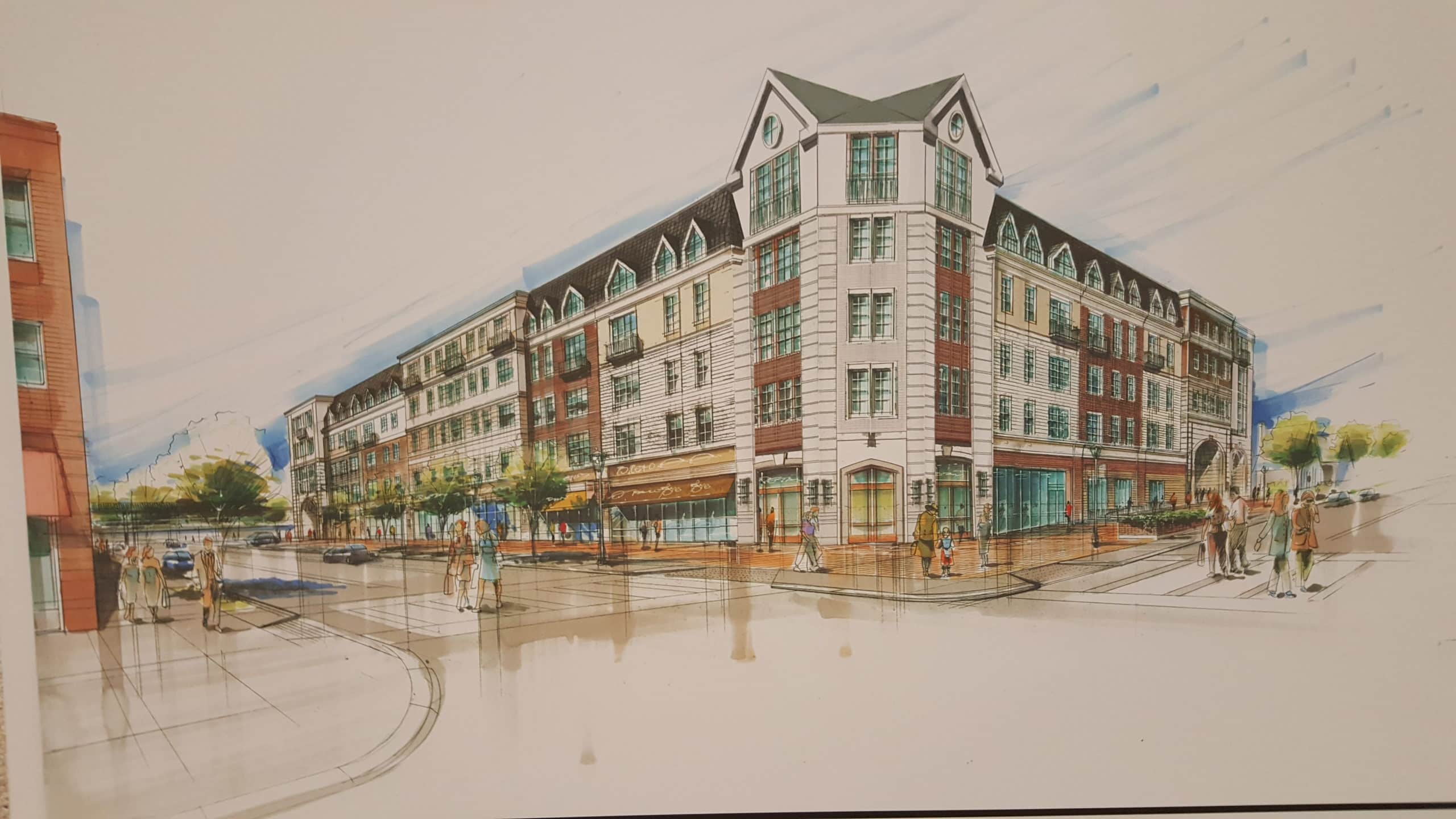
Members of the public suggesting that the proposed development project, when built, will produce unavoidable, intractable problems with vehicular and pedestrian traffic at the intersection of Broad Street and Franklin Avenue, reflect common sense and need not be deemed “out of order” by Saraceno’s henchmen. The idea that we need a developer’s attorney to tell us what is and is not a fact, and what to think of a given fact in terms of what it portends for our lives as Village residents, and that we can’t legitimately rely on our own minds and common sense, is insulting, preposterous and condescending. This is too reminiscent of the Valley travails before the planning board and we shouldn’t be so willing to put up with it now that we are familiar with the tactic.
Ridgewood NJ, the Gun Violence Archive is an online archive of gun violence data . The GVA claims :
“the Gun Violence Archive an online archive of gun violence incidents collected from over 2,000 media, law enforcement, government and commercial sources daily in an effort to provide near-real time data about the results of gun violence. GVA in an independent data collection and research group with no affiliation with any advocacy organization.”
The organization maps gun violence at a micro level. in 2015 New Jersey 252 gun-related deaths occurred. The results for New Jersey are as one would expect, the data shows that New Jersey’s gun violence was mainly concentrated in Newark and Camden. Well no surprise there.
Over all according to the Guardian News Paper ; “Using this data, the Guardian found that half of the United States’ gun murders in 2015 were clustered in 127 cities . We also found that violence was concentrated even further than simply the city level: census tract areas that contain just 1.5% of the country’s population saw 26% of America’s total gun homicides.”
There was no data on the gun ownership ,be they legal owners or unlawful owners a fact that seems conspicuously absent from this and other attempts to collect gun data.
Disadvantaged communities seemed to suffer the most pronounced impact from the violence, such as in Essex County, where gun violence fluctuated by the percentage of minority residents. The data for 2015 shows particularly low-income, disadvantaged neighborhoods can become hotbeds for gun violence.
There was also no tracking of the impact of sanctuary cites and immigration status although both Camden and Newark are considered sanctuary cities .
Anti gun groups can not glean much from the data , since it suggests that most gun violence is perpetrated on and by a very small portion of the population with no coloration to stringent gun restrictions. Causes seem as uncorrelated as well and solutions seem almost non existent.
TRENTON — With the guilty plea of a New York man for conspiracy to commit bank fraud, nearly two dozen people have admitted to various roles in a scam that netted the conspirators more than $200 million in bogus expenses and purchases.
Habib Chaudhry, 49, of Valley Stream, New York, pleaded guilty on Tuesday. New Jersey’s Acting U.S. Attorney William E. Fitzpatrick said Chaudhry had initially been charged in February 2013 but had been a fugitive until he was arrested in January of this year.
Fitzpatrick said the scam Chaudhry was involved in was a three-step process that included making fake identities, building up credit ratings for the identities and then borrowing or spending on the credit earned without repayment. He said before they were caught, the conspirators had caused more than $200 million in confirmed losses to businesses and other institutions.
For all the roiling anger and energy at the grassroots, the party still fell short in Georgia and Kansas. And Democratic prospects in upcoming elections aren’t promising. (??????????????? grassroots anger …nice try)
By GABRIEL DEBENEDETTI
04/19/17 05:06 AM EDT
As it became clear late Tuesday evening that Jon Ossoff would fall just short of the 50-percent mark in the first round of voting in a suburban Atlanta special election, Democrats back in Washington started leafing through their calendars and asking: When does the winning start?
Ossoff’s moral victory — capturing 48 percent of the vote in a conservative-oriented district — was welcome, but after two successive close-but-no-cigar finishes in House special elections in Georgia and Kansas, a new worry is beginning to set in.
Ridgewood NJ, Hirsh Singh who is running as a Republican Candidate for Governor of New Jersey 2017. Mr. Singh seems to be filled with common sense ideas ,well educated ,blessed with a likable personality , and good looks .
We sense he may be a bit naive as to the grittiness on New Jersey politics and perhaps underestimating the gravity of the of the financial crisis facing the state , but he certainly someone to keep an eye on.
Born in Atlantic City as the middle of three children, Hirsh learned at a young age the value of hard work and determination from his immigrant parents who were trying to make their American Dream possible.
He attended a public high school in Egg Harbor Township and learned from a group of dedicated, supportive, caring, and encouraging teachers. Through high school, Hirsh got involved in many extracurricular activities, which encouraged him to take on many leadership roles during his time in college at the New Jersey Institute of Technology. Hirsh went on to receive a Bachelor of Science from NJIT in Engineering.
Over the last nine years, Hirsh has become a result-driven leader who directs and manages small and large teams providing the most cutting edge engineering services nationwide across civilian and defense government agencies. As an executive and engineer working in the aerospace and defense industry, he has managed programs providing Aviation Safety and Security in the National Airspace System, National Missile Defense Program, and supporting Military Intelligence, Communication Systems development and Satellite Navigation Systems Engineering. The complexity and scope of the programs he has supported ensure the safety of countless Americans and the flying public.
The last 12 years have been a disappointment for everyone in New Jersey, and Hirsh has the experience and skills to turn New Jersey’s fate around. He believes problems that face this state are due to a flawed philosophy of government held by our state leaders, and believes the solution has always been right in front of us in the state motto: Liberty and Prosperity. Through Liberty we attain Prosperity.
Hirsh is the product of New Jersey, and symbol of the American Dream. His goal is to give that back. He is ready to lead the way, but he cannot do it alone. He hopes to earn your trust and your vote so together we can fix this great state!
Known for his impressions of Frank Sinatra and David Letterman, the conservative radio host plans to enter the gubernatorial race in November.
First came Al Franken. Will Joe Piscopo be the nextSNL alum to join the political fray?
The witty wiseguy — famed for impressions of Frank Sinatra and David Letterman from 1980 to 1984 — may heed the call of his AM radio listeners, mostly blue collar conservatives, to enter the New Jersey gubernatorial race in November. “They say, ‘You should run. You’ll rip it up!’ ” says Passaic-born Piscopo, 65. “And I’m like, ‘Who would want this job, really?'”
A lifelong Democrat, Piscopo switched teams in 2016 when he backed Donald Trump for president. (“I wanted somebody out of the box,” he says.) Ask him how he feels about POTUS’ performance so far, however, and he not-so-deftly deflects: “I’m more concerned with — and this is the answer to that question — what’s going to lower property tax in New Jersey.”
Governor candidate Murphy pitches his state bank plan to bankers. Opponents pounce.
By Brent Johnson | NJ Advance Media for NJ.com
on April 19, 2017 at 8:30 AM, updated April 19, 2017 at 10:54 AM
TRENTON — Phil Murphy, the early Democratic front-runner for governor, defended his proposal to create a state bank to an audience peppered with skeptics Tuesday: members of New Jersey’s banking industry.
Meanwhile, speaking to the same group, a number of his fellow candidates from both parties — including Lt. Gov. Kim Guadagno, the Republican favorite — assailed the idea as being dangerous for the Garden State.
Murphy was one of five gubernatorial hopefuls who addressed a gathering of the New Jersey Bankers Association at the Trenton Masonic Temple. The candidates pitched their plans to stimulate the state’s economy in the wake of Gov. Chris Christie, a Republican whose final term ends in January.
The speech came as critics are worried that Murphy’s proposal for a state bank — a key plank in his economic platform — would hurt local banks in New Jersey and that political influence and corruption could seep into the process.