I am writing this tonight because the gravity of what happened today seems to have been lost in the shuffle of the weekend l, and impending Halloween festivities.
A massive, tree-sized, tree branch fell across part of the playing field, the entire sidewalk and half of Bogert Ave at about 11:35 or so this morning. The entire 3rd grade was playing outside- 2 of whom are my children.
I am the Travell safety chair, and while this may seem frivolous, or decorative, it is in fact, a role I take VERY seriously. Twice in the last month, thanks to my persistent pressing of the safety issues brought to me by my fellow Travell parents, Travell safety has been on the agenda for the village council. I’ve attended the Citizen Safety Advisory Committee meetings to address them. I am the only parent in attendance to address the issues. I am the only person at all to represent our school and it’s safety issues.
I take this role very seriously, evidenced by the fact that in my own free time I have walked the streets surrounding the school, and I look for safety issues within the neighborhoods. Broken sidewalks, overgrown shrubs, parking issues, speeding concerns, sight triangles issues, property maintenance issues. These are just some of the issues I have seen. I bring them some times repeatedly- to the attention of the code enforcement officer. Sometimes she sends them on to a more appropriate party. Many, many violations have been addressed in the last few weeks thanks to our combined efforts.
I have mentioned several concerning trees to her. Many that are dead and overhang designated safe walking routes, or heavily traveled walking routes to Travell.
I walked all of the streets surrounding Travell with the assistant village engineer last spring. I mentioned several of the trees including the one which fell today. I was told trees really aren’t their department. A huge part of this tree fell in the early fall across the exact same area!! A Travell parent roped off the area until it could be addressed. This was on the walk to the school in the morning. Prime drop off time for hundreds of students. Another near miss. What else is it going to take?
Do we need a child to actually be struck and hurt- or worse, by a dead tree limb ON actual school grounds in order to take a very serious look at where there needs to be some work done?
We can have forum after forum about full day kindergarten. Spending God only knows how much money, just to spend more money, and then say we don’t have any money??
We can send newsletters and we can print signs and yet we can’t find it in the budget to hire a tree expert, an actual arborist, for the day, to ensure that the school grounds and the sidewalks surrounding them are safe? Or hire a safety expert to do a study of the area and see where we need some change? Often it’s small changes, signage or enforcement, that make ALL the difference. It doesn’t always have to be large ticket answers. It just requires some attention and concern.
I’m actually incensed at how close MY daughter was to this tree falling today.
Feet. She was feet from this. I happen to pass down this street EVERY day between 11:35- 11:45 on the way home from another school pick up. Many many days my daughter and her best friend see me and come run to the fence to yell hello to me as I pass. Today, I was running a touch late. I very literally went to turn left down Bogert and instead went the other way. It is absolutely chilling to know, unequivocally, that they would have been standing IN this exact spot saying hello to me had I made a left turn and not a right.
We need to stop addressing every other issue as if it is life and death and pay closer attention to the ones that actually are.
I heard from parents over the last weeks, as we begged parents to walk their children to school for walk to school month, a myriad of safety complaints. Several times I was informed that they no longer have crossing guards to cross their elementary school children (ages 5-11 as a reference) at Van Dien and Glen because the BF one now leaves too early due to new changes with the outsourcing.
I am on record for EIGHT years at CSAC meetings requesting advice and help about the repeated parking on the Bogert/Cambridge ave curves which force dozens of students to walk in to the center of the street on a blind curve to walk to their school. Eight years and I’ve been brushed off and given every answer or response you can possibly imagine. Not one has made the situation safer. Not one suggestion stopped my daughter from being thrown from her stroller in an attempt to get out of the way of a speeding, texting driver last year with no where to go due to cars parked in the long documented, dangerous spots along the curve.
We are year after year refused even the conversation of a crossing guard at Bogert and Glen where no less than 65 school children LIVE, and dozens more use as a pass through-it’s too expensive! It’s $8k! We can’t even get simple pedestrian crossing signs at that crossing or another along Glen (Northern Parkway) because the town refuses to pay for them (they’re about $400 each!!!imagine!) so the Generous Travell HSA, at my request, will pay for them. So to actually break that down, these parents will pay some of the highest taxes in NJ, we have one of the highest per student spending budgets in NJ, and then we are going to pay EXTRA, out of pocket, for the signage that allows for our kids to have a way to cross the street safely to access their school.
What is next? What will it take before all of YOU put the safety of these students ahead of an agenda, or just the belief that “it’s not really our department”??
Today, any number of children were FEET from this massive tree branch falling, and a complete tragedy. What will you do to ensure that this doesn’t happen again? What will you do now that a documented issue has now presented itself so many times? I guess we could give them hard hats, or we could solve the actual problem.
I know we can’t solve every safety problem at every school without which a miracle occurs, but we have repeated, documented safety issues that are being ignored or shuffled off to someone else to deal with. There are hundreds of children in YOUR care and we expect that that is something you take seriously enough to ensure their safety.
I am sure you’re all familiar with the areas in question, but I implore you to come and walk these streets with me, and any other interested parent.
In fact, at this point, I can’t see why you wouldn’t.
Thank you for your sincere attention to this matter.
$1.2 billion infrastructure upgrades are making New Jersey Energy Strong
October 29,2016
the staff of the Ridgewood blog
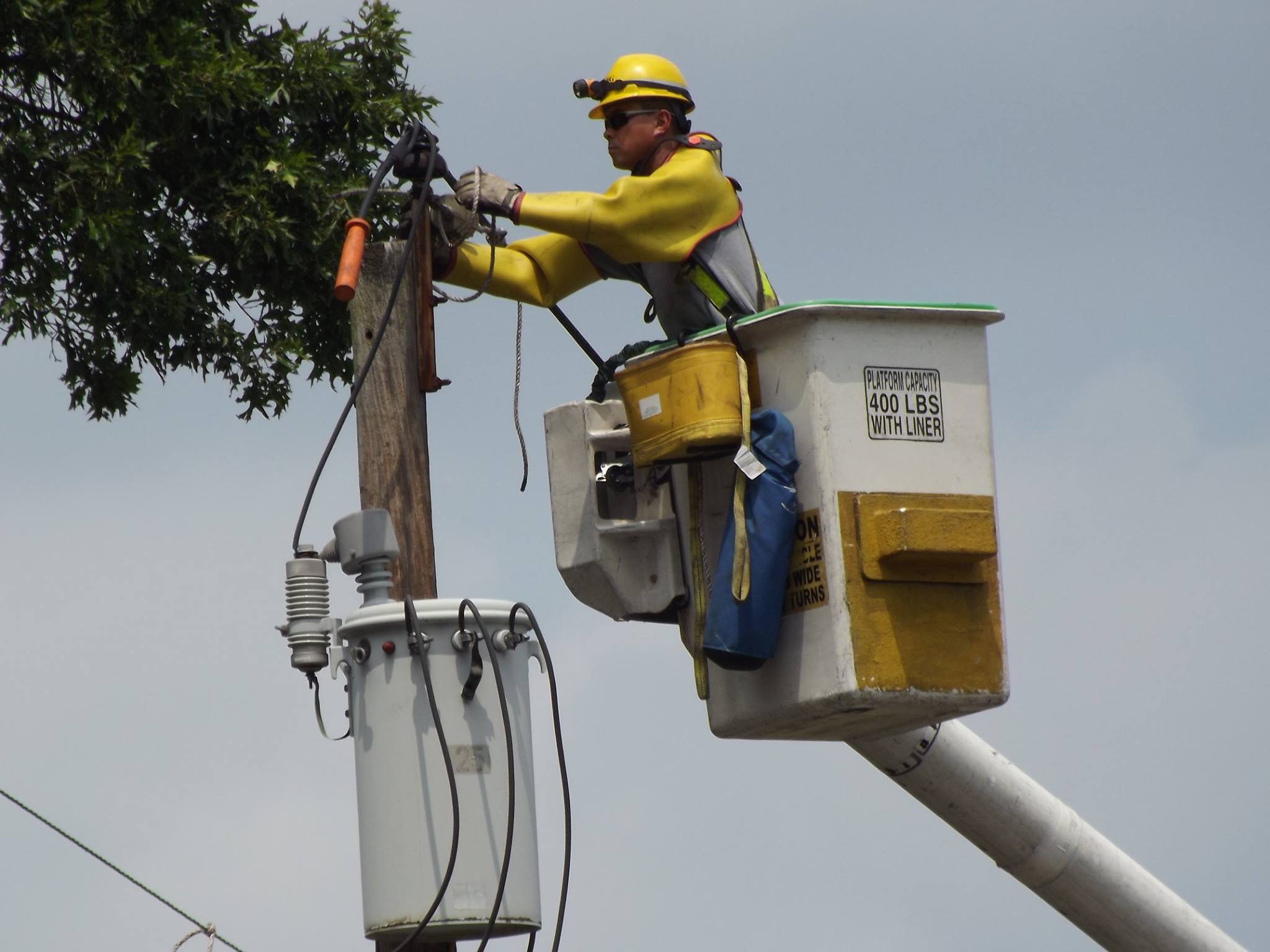
Hackensack NJ, Today, New Jersey Governor Chris Christie joined PSE&G President and COO Ralph LaRossa at a Hackensack substation to highlight the infrastructure investments made since Superstorm Sandy left millions of people without power in the state four years ago tomorrow. Two-thirds of the equipment at the substation, which flooded during Sandy, has been raised 4.5 feet, and the remaining switchgear will be raised in the spring, ensuring more reliable service during future storms.
“Sandy was the second-worst natural disaster in American history that shook the lives of just about everyone,” Governor Christie said. “Unseen before in modern New Jersey, this superstorm interrupted 71 percent of New Jersey’s electric distribution system, cut power for 2.8 million residential and commercial customers and taught us difficult lessons about energy reliability and utility infrastructure. Over the last four years, under my administration, PSE&G has made significant progress raising and rebuilding switching and substations like Hackensack, as well as making other improvements, to increase the resiliency of New Jersey’s infrastructure and create a distribution grid that is far stronger and smarter than before.”
During Sandy, 2 million of PSE&G’s 2.2 million electric customers lost power. “Hackensack is one of 29 switching and substations that are being raised or rebuilt to make them more resilient against storms,” LaRossa said. “Because of our infrastructure investments to date, if a Sandy-like storm were to occur today, about 225,000 customers impacted by flooded substations and switching stations during Sandy would not lose power. And customers who did lose power would be restored more quickly. We appreciate the support of the Governor and the BPU in getting this program started.”
LaRossa added, “This work is also benefitting New Jersey’s economy by creating thousands of jobs over the life of the program.”
The newly fortified stations are part of PSE&G’s $1.2 billion, multi-year Energy Strong program to make its infrastructure more reliable and resilient to severe weather. When the Energy Strong upgrades are complete, 460,000 PSE&G customers previously impacted would not lose power from flooding and all PSE&G electric customers would experience faster restoration times.
“When our Energy Strong program is complete, more than 250 hospitals and other critical customers who lost power during Sandy would either stay in service or have their restoration time greatly reduced,” said LaRossa.
Since Superstorm Sandy, PSE&G has invested $74 million in technology to reduce the number and duration of outages for hospitals and other critical customers. For example, when the Somerset Medical Center in Somerville experienced an outage during bad weather last year, the new technology enabled technicians to remotely switch them back into service in just 10 minutes – one-fifth of the time it would have taken without the upgrade. Also benefiting from this work are 400,000 customers and businesses in close proximity to critical customers where the technology has been installed.
In addition to Energy Strong electric upgrades, PSE&G has made great strides ensuring a more reliable and resilient natural gas system during flooding. The utility has installed 240 miles of new, sturdy and durable plastic natural gas pipes in flood-prone areas. Approximately 90,000 customers served by those pipes are no longer at risk of losing gas service from floodwaters seeping into these previously leak-prone mains. In addition, the danger of leaks of methane gas has been virtually eliminated in the new pipes.
The Energy Strong programs also provide the capability to remotely restore large numbers of customers. The program gives PSE&G the ability to remotely make changes on the circuits so they can be worked safely in the field, significantly improving crew productivity and restoration times.
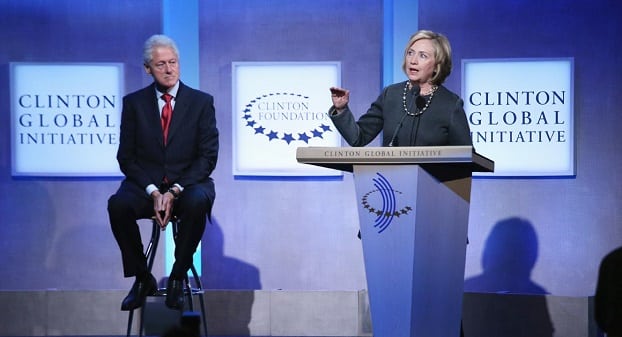
The Clintons don’t draw lines between their ‘charity’ and personal enrichment.
By KIMBERLEY A. STRASSEL
Oct. 27, 2016 7:26 p.m. ET
In an election season that has been full of surprises, let’s hope the electorate understands that there is at least one thing of which it can be certain: A Hillary Clinton presidency will be built, from the ground up, on self-dealing, crony favors, and an utter disregard for the law.
This isn’t a guess. It is spelled out, in black and white, in the latest bombshell revelation from WikiLeaks. It comes in the form of a memo written in 2011 by longtime Clinton errand boy Doug Band, who for years worked simultaneously at the Clinton Foundation and at the head of his lucrative consulting business, Teneo.
It is astonishingly detailed proof that the Clintons do not draw any lines between their “charitable” work, their political activity, their government jobs or (and most important) their personal enrichment. Every other American is expected to keep these pursuits separate, as required by tax law, anticorruption law and campaign-finance law. For the Clintons, it is all one and the same—the rules be damned.
The memo came near the end of a 2011 review by law firm Simpson Thacher & Bartlett into Clinton Foundation practices. Chelsea Clinton had grown concerned about the audacious mixing of public and private, and the review was designed to ensure that the foundation didn’t lose its charitable tax status. Mr. Band, Teneo boss and epicenter of what he calls “ Bill Clinton, Inc.,” clearly felt under assault and was eager to brag up the ways in which his business had concurrently benefited the foundation, Clinton political causes and the Clinton bank account. The memoed result is a remarkably candid look at the sleazy inner workings of the Clinton grifters-in-chief.
A remarkable 12-page document revealed by WikiLeaks bristles with a longtime Clinton aide’s resentment of his boss.
By JOSH GERSTEIN
As a longtime Bill Clinton adviser came under fire several years ago for alleged conflicts of interest involving a private consulting firm and the Clinton Foundation, he mounted an audacious defense: Bill Clinton’s doing it, too.
The unusual and brash rejoinder from veteran Clinton aide and Teneo Consulting co-founder Doug Band is scattered across the thousands of hacked emails published by WikiLeaks, but a memo released Wednesday provides the most detailed look to date at the intertwined worlds of nonprofit, for-profit, official and political activities involving Clinton and many of his top aides.
The memo at one point refers bluntly to the money-making part of Clinton’s life as “Bill Clinton Inc.” and notes that in at least one case a company — global education firm Laureate International Universities — began paying Clinton personally after first being a donor to the Clinton Foundation.
The 12-page document, prepared in November 2011 by Band with input from Clinton adviser John Podesta, came as Chelsea Clinton was pressing for changes to the foundation’s governance and complaining that Band, Teneo co-founder Declan Kelly and others were profiting from their ties to her father and the foundation.
“I need to open with a very critical breaking news announcement. The FBI has just sent a letter to Congress informing them that they have discovered new emails pertaining to former Secretary of State Hillary Clinton’s investigation, and they are reopening the case into her criminal and illegal conduct that threatens the security of the United States of America.
“Hillary Clinton’s corruption is on a scale we have never seen before. We must not let her take her criminal scheme into the Oval Office.
“I have great respect for the fact that the FBI and the DOJ are now willing to have the courage to right the horrible mistake that they made. This was a grave miscarriage of justice that the American people fully understand. It is everybody’s hope that it is about to be corrected.” – Donald J. Trump
Hawthorne NJ, Hawthorne PD units responded to a telephone call reporting a large buck (deer) wedged under an SUV parked at 1107 Goffle Road, Hawthorne on Friday morning, 10/28. It was not clear how the buck became entrapped under the vehicle. An agent of Tyco Animal Control Services was called to assist in freeing the animal, however, the seemingly uninjured buck freed himself and ran into a nearby wooded area prior to the agent’s arrival.
In September 2016, the Nevada Supreme Court upheld education savings accounts (ESAs) as constitutional in the Silver State. ESAs are distinct from other parental choice mechanisms in education, especially K–12 private-school vouchers. Other options only enable parents to choose the school for their children—something which, in the case of vouchers, opponents have argued constitutes state aid to religious institutions because some children attend religious schools. Teachers unions and other associations have used this argument in court, citing so-called Blaine amendments in state constitutions to block vouchers. Blaine amendments are state constitutional provisions that prohibit public funds from flowing to private religious institutions.
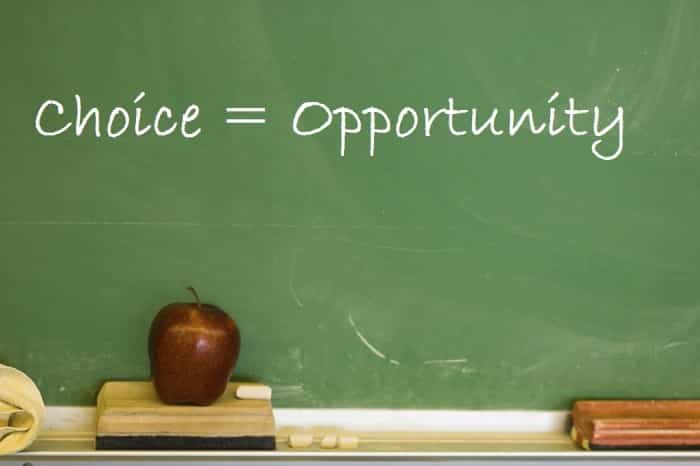
Both research and legal precedent demonstrate that the ability to direct ESA funds to multiple education services and products separates ESAs from school vouchers. This is a critical distinction for states to recognize when considering parental choice options. Blaine amendments to state constitutions, such as the provisions in the Arizona and Nevada constitutions, have an ignoble history and should be repealed. Moreover, the distinctive policy design of ESAs makes the accounts well-positioned to withstand legal challenges based on Blaine amendments.
Diversity and Customization in ESA Use Among Arizona Families
In 2011, Arizona lawmakers enacted the nation’s first law establishing ESAs. The state deposits a portion of a child’s allotted funds from the state education formula into a restricted-use bank account that parents use to buy educational products and services for their children. Parents and students can use the accounts for online classes, private school tuition, personal tutors, saving for college, and financing a variety of other learning experiences. Every child is different, and with an account, students and their parents can design an education as unique as they are.
After lawmakers enacted ESAs, teachers unions and other special interests challenged their legality in court. Arizona unions based their suit on the state’s Blaine amendment, which prohibits public funds from flowing to religious institutions. In 2014, Arizona courts ruled in Niehaus v. Huppenthal that ESAs do not violate the state constitution.
Arizona families have used these accounts to pay for a wide variety of education-related services, products, and providers. In 2013, the Friedman Foundation for Educational Choice (now EdChoice) conducted the first study of Arizona families’ purchases with the accounts.[1] Among those students, the study found that approximately 34 percent of account recipients used their funds for multiple learning experiences.[2]
Between 2012 and 2014, lawmakers expanded ESA eligibility to include children from active duty military families, children who had been adopted through Arizona’s foster care system, preschoolers with special needs, siblings of account holders, and students in public schools rated “D” or “F” on the state report card system. An updated analysis using ESA data from the Arizona Department of Education from the end of the 2013–2014 school year and the complete 2014–2015 school year, and including these new populations of eligible students, found relative stability in the proportion of families using their accounts to customize their children’s learning experience. Research from this time period found 28 percent of families using their ESAs to pay for multiple education services, products, and providers.
Although there was a modest decrease in the percentage of families using their ESAs for multiple services over the course of the two evaluations—from 34 percent to 28 percent—these results demonstrate that with a larger and different cohort of students over a different time period, a similar percentage of students still customized their learning experience with an account. In the analysis of families participating in the 2011–2012 school year, all participating students were children with special needs. These latest data include students made eligible through changes in the law since the first report. New eligibility criteria and the passage of time did not change how families value the accounts’ flexibility. Parents continue to access a diverse menu of products and services to meet their children’s learning needs.
Legal Challenge to ESA in Nevada
The American Civil Liberties Union (ACLU) brought a lawsuit similar to that in Arizona against a recently established ESA program in Nevada. In September 2016, the Nevada Supreme Court upheld the accounts as constitutional as far as the state’s own Blaine amendment provisions are concerned. The program remains suspended, however, because the court ruled that lawmakers must revise the statute’s funding provisions—statutes specific to Nevada law that do not have national implications.
The research findings from Arizona are relevant for Nevada families waiting to use ESAs. In 2015, Nevada lawmakers made history by making every child attending a public school in the state eligible for an ESA. Before any children were able to take advantage of the new option, the ACLU filed suit to block the program. In Duncan v. State of Nevada, the ACLU made claims similar to claims made by teachers unions in Niehaus v. Huppenthal. Citing the Nevada constitution’s Blaine amendment, the ACLU attempted to block the Silver State’s ESA program by arguing that it constitutes state aid to religious institutions.
Blaine Amendments’ Ignoble Roots
During the latter half of the 19th century, Catholic families sought to establish Catholic schools as an alternative to the publicly funded common schools emerging in the United States at the time. Common schools sought to assimilate all students to a general sort of Protestantism, including use of the King James Bible and conducting devotional activities.[3] Maine Senator James G. Blaine sought to prohibit aid to “sectarian” schools. As the U.S. Supreme Court acknowledged in Mitchell v. Helms, the effort had “a shameful pedigree that we do not hesitate to disavow…. Consideration of the amendment arose at a time of pervasive hostility to the Catholic Church and to Catholics in general, and it was an open secret that sectarian was code for Catholic.”[4]
Although the federal amendment failed, Congress subsequently required territories seeking admittance to the union to include similar prohibitions on public funds supporting religiously affiliated schools. That requirement, in conjunction with the 14 states that already had Blaine-type language prior to the federal effort, resulted in 29 states having such restrictions by 1890, and 38 states had adopted Blaine amendments by 1959.[5]
ESA Design: Helping to Withstand Blaine-Based Lawsuits
Nevada’s Blaine amendment says that “no public funds of any kind or character whatever, State, county or Municipal, shall be used for sectarian purpose.”[6] Thankfully for Nevada families, in September 2016, the state supreme court upheld ESAs as constitutional. The court held that ESAs provide money to families, who can use funds to pay for a variety of education-related products and services such as private tutors, private school tuition, and other expenses.[7] Families will be able to access ESAs pending identification of an appropriate funding source for the accounts.[8]
The defining feature of ESAs—that parents can make multiple choices for their children’s education—helped them survive a Blaine-based legal challenge in Arizona where the state supreme court had deemed a voucher program unconstitutional. In the 2013 Arizona Court of Appeals’ unanimous opinion, Judge Jon Thompson wrote that “[t]he ESA does not result in an appropriation of public money to encourage the preference of one religion over another, or religion per se over no religion. Any aid to religious schools would be a result of the genuine and independent private choices of the parents.”[9] In 2014, the Arizona Supreme Court denied the union’s appeal of the lower court’s decision, allowing the court of appeals decision to stand.
Critically, ESA funds are not reserved for specific schools or education providers. Funds are deposited into parent-controlled accounts, and parents can use the funds for an education-related provider, product, or service of choice. The ESA option “does not require any student to be enrolled in a private school, much less a ‘sectarian’ private school.”[10] The ability to direct dollars to multiple education services is a critical distinction between ESAs and other parental choices in education, including K–12 private school vouchers.
Customization Makes ESAs Unique Education Choice Mechanisms
The distinctive policy design of ESAs enables accountholders to finance multiple learning options beyond tuition at a private school. It also makes the accounts well-positioned to withstand Blaine amendment–based legal challenges. Such lawsuits against private school vouchers have alleged that these scholarships constitute state aid to religious institutions. Yet nearly 30 percent of Arizona ESA families are making multiple education decisions simultaneously in determining how and where their children learn. In this way, Arizona parents’ customization demonstrates what the courts have reasoned: ESAs are functionally different from other parental choices in education. Nevada courts reached the same conclusion.
—Lindsey M. Burke is Will Skillman Fellow in Education Policy Studies in the Institute for Family, Community, and Opportunity at The Heritage Foundation. Jonathan Butcher is the Director of Education Policy at the Goldwater Institute.
Ridgewood NJ, It’s that time of year again when beleaguered parents constantly remind disobedient children that it’s more important than ever to do the right thing.
Otherwise, they could end up on Santa’s notorious naughty list – the one specially reserved for kids who fight with siblings, refuse to do their homework, throw temper tantrums and don’t eat their vegetables.
While banishment to the naughty list has long been a handy tool in the disciplinary arsenal, any responsible parent wants their children to be good the rest of the year, too, when the threat of empty stockings holds less sway over those impressionable minds.
“I suspect most children deep down want to do the right thing, but they struggle with temptation,” says K.J. Hales, author of It’s Hard to Be Good, the first volume in the Ellie the Wienerdog (www.elliethewienerdog.com) series of educational picture books for children.
“A lot of it comes down to self-control – being able to control both your emotions and your actions when things don’t go your way or you don’t get what you want.”
Hales, who creates teachers’ guides and educational activities to go along with the lessons in her books, says the earlier parents start teaching children to do the right thing, the better.
She says some of the ways they can reinforce good behavior and discourage bad behavior include:
• Be generous with praise. Don’t underestimate the importance of your words. It’s easy to notice when children do the wrong thing and to chastise them about it. But take note when they do the right thing, too, and praise their good choices or good behavior. “Everyone loves words of approval and children will want to please you as a result,” Hales says. • Make good choices a fun activity. One way to encourage good decisions could be to set aside one week in which each day you ask your children to write or draw about a good decision they made or they saw someone else make. Hales says this is an activity she suggests for classroom teachers, but it can work in the home as well. Be sure to discuss those good decisions with the children. • Reward them. Discipline so often focuses on punishments for bad behavior, but children should also be rewarded for good behavior. This doesn’t have to be anything elaborate or expensive. A reward could be a picnic in the park or a favorite dessert after dinner.
“I’m sure every parent wants their child to gain independence, grow emotionally and learn to make good decisions about their own behavior,” Hales says. “And this is important 365 days a year, not just in the weeks before Santa Claus comes to town.”
About K.J. Hales
K.J. Hales (www.ellietheweinerdog.com) is author of the Ellie the Wienerdog series of educational children’s books for children. The first volume in the series is It’s Hard to Be Good. The Ellie character is based on Hales’ own dachshund also named Ellie.
Ridgewood NJ, The Ridgewood Crew team competed in their first regatta on October 8, the Tail of the Passaic. The team garnered two first-place finishes, including the Men’s Varsity 1x; and the Women’s Varsity 4x Ridgewood Crew also took home five-second place finishes.
In addition to the four semifinalists, 25 students have been identified as Commended Students in the most recent competition.
Paramus NJ, Paramus PD, FD, EMS, and Rescue Squad personnel responded to a rollover motor vehicle accident at the intersection of Century Road East and Route 17 North on Thursday morning, 10/27. Two (2) vehicles were involved in a collision that resulted in one (1) rolling over on its roof. The crash resulted in a fluid spill that required DOT/Hazmat response. A flatbed tow truck removed both vehicles from the location. The number of victims and condition of same was not made available at the scene. A paramedic unit from Hackensack University Medical Center was also dispatched to the incident. One (1) access ramp at the Century Road East/Route 17 North interchange were closed while emergency crews worked.
Ridgewood NJ, The Nation’s Report Card: 2015 Science shows scores have improved overall, and higher percentages of the nation’s fourth- and eighth-grade students demonstrated mastery of science on the 2015 assessment compared with the 2009 assessment. The results also show score gaps narrowing by race/ethnicity. The average score of 12th-grade students did not change between 2009 and 2015.
In 2015, 22 percent of 12th-graders performed at or above the Proficient achievement level, which denotes competency over challenging subject matter. Additionally, 38 percent of fourth-graders and 34 percent of eighth-graders performed at or aboveProficient — an increase of 4 percentage points at both grades compared with 2009.
“Seeing these gains in science from our fourth- and eighth-graders makes me hopeful about the future of our nation’s students,” said former Wyoming Gov. James Geringer, director of policy and public sector strategies at the Environmental Systems Research Institute and member of the National Assessment Governing Board, which sets policy for NAEP. “But that progress needs to continue since only about one-third of students, or even fewer, have the science skills they need.”
The National Assessment of Educational Progress (NAEP) — known as The Nation’s Report Card — is the largest nationally representative, continuing assessment of what America’s students know and can do in various subjects. The 2015 science assessment measured students’ knowledge of physical science, life science, and Earth and space sciences. The assessment also measured how well students implement science practices, like using scientific principles and engaging in scientific inquiry.
National science results are available for students at grades four, eight, and 12; state-level results are available at grades four and eight.
National highlights include:
Performance Improves at Grades Four and Eight
At grades four and eight, students scored higher in 2015 than in 2009 in all three science content areas: physical science, life science, and Earth and space sciences.
From 2009 to 2015, the percentage of students performing below the Basic achievement level decreased by 4 percentage points at grades four and eight.
Score Gaps Narrow by Race and Gender at Grades Four and Eight
The score gaps between black and white students and between Hispanic and white students at both grades four and eight have narrowed since 2009.
In 2015, fourth-grade male students scored about the same as fourth-grade female students, eliminating the gender difference.
At grade eight, male students scored higher than female students, but the difference between their scores in 2015 was smaller than the difference between their scores in 2011 (3 points versus 5 points).
At grade 12, male students outperformed female students by 5 points. The gap between their scores in 2015 was not statistically different from the 2009 gap.
State highlights include:
Some Sizable Gains Made at Grades Four and Eight
Between 2009 and 2015, scores at both grades rose in 15 states and jurisdictions: Arizona, Arkansas, Department of Defense Education Activity (DoDEA) schools, Florida, Georgia, Hawaii, Indiana, Mississippi, North Carolina, Oklahoma, South Carolina,Tennessee, Texas, Utah and Wyoming. Of these, DoDEA schools, Tennessee, Utah and Wyoming had a percentage of students performing at or above Proficient that was greater than the average percentage for national public schools in 2015.
From 2009 to 2015, four states and jurisdictions showed score gains at grade four that were larger than the national average score gain: Arizona, DoDEA schools, Georgia and Tennessee. At grade eight, three states had this distinction: Nevada, Tennesseeand Utah.
Score Gaps Narrow and Close by Race and Gender
The following states saw a statistically significant narrowing of average score gaps between black and white students from 2009 to 2015: Arkansas (a decline of 10 points), Oklahoma (8.9) and Tennessee (8.6) at grade four; and Illinois (7.8) at grade eight.
The following states saw a statistically significant narrowing of the average score gap between Hispanic and white students from 2009 to 2015: Massachusetts (a decline of 8.7 points), Connecticut (8.2), Illinois (6.7) and Nevada (5.9) at grade four; and New York (8.9), Illinois (7.4), Connecticut (7.1), Wyoming (6.9) and Arizona (5.6) at grade eight.
For fourth grade, several states closed the average score gap by gender — meaning statistically significant score differences between female and male students were found in 2009 but not in 2015 — specifically, Hawaii (a decline of 4.2 points), Maine(3.5), North Carolina (2.4), South Dakota (2.4) and Ohio (1.8).
The gender score gap closed at grade 8 in Wyoming (a decline of 6.5 points), Rhode Island (6.4), New Mexico (4.8), Georgia (4.6), and Montana (4.0), and in 13 other states.
Tennessee stands out as a state that showed large score gains at grades four and eight and narrowed score gaps between black and white fourth-graders from 2009 to 2015, and its students are outperforming the nation (public schools) at grades four and eight.
“We’ve set high expectations across the board for our students in Tennessee, and our NAEP performance continues to reflect the hard work and progress our students and teachers are making,” said Candice McQueen, Tennessee commissioner of education. “To me, the most encouraging part of today’s science results is that all of Tennessee’s students are showing what is possible. We’ve narrowed or eliminated gaps between groups of students, and we are continuing to make huge strides in where we have been historically to build a new future for our children.”
Emphasizing science in and outside of the classroom is tied to student performance in the subject, as shown in data collected through NAEP student and teacher questionnaires about educational experiences. Overall, students with more exposure to science scored better on the 2015 science assessment than students with less exposure:
Eighth-graders who participate in hands-on activities or investigations in science class every day or almost every day, as reported by their teachers, scored 12 points higher than students who never or hardly ever engage in these activities.
Eighth-grade students who self-reported that they have visited a museum, zoo or aquarium to learn about science outside of a school trip scored 7 points higher than students who have not participated in those activities outside of school.
Students who have teachers with access to school-provided scientific tools for teaching science — such as telescopes, microscopes and thermometers — also scored higher. Eighth-graders whose teachers reported the highest level of access to these tools scored 16 points higher than eighth-graders whose teachers reported no access. Twelfth-graders who reported having access to such tools scored 37 points higher than 12th-graders without access.
“Students who have more opportunities to dig in deep and fully engage do better in science,” said Missouri science teacher Susan German, a panelist at the Oct. 27 event announcing the NAEP results. “They should be spending less time buried in a textbook and more time doing hands-on activities, such as investigating which insulator works best in keeping soda cold or how height and mass influence the size of impact craters. Parents should do as much as they can to expose their children to science outside of the classroom too — even if it’s as simple as taking them on a walk through a park.”
About the Assessment
The 2015 science assessment was conducted in grades four, eight and 12 and reported at the national level for each. State-level results for grades four and eight are available for 46 states and U.S. Department of Defense schools that voluntarily participated in the assessment. (Alaska, Colorado, the District of Columbia, Louisiana and Pennsylvania did not have the necessary sample size in 2015 for state-level results to be reported.) For grades four and eight, national results reflect the scores of both public and private school students, while state-level results reflect the scores of public school students only.
NAEP performance results are presented as average scale scores and as achievement levels, reported as the percentages of students performing at or above Basic, Proficient and Advanced. Basic denotes partial mastery of the subject, Proficient denotes competency over challenging subject matter and Advanced represents superior work. Scale scores range from 0 to 300. Because NAEP scores and achievement levels are developed independently for each subject, results cannot be compared across subjects. Performance results also cannot be compared with data from before 2009, when the new science framework was introduced. The last assessment for fourth- and 12th-graders took place in 2009, and the last assessment for eighth-graders was administered in 2011.
Check out this video illustrating NAEP data to see how science education can translate into a related career path.
The National Assessment of Educational Progress is the largest nationally representative, continuing evaluation of the condition of education in the United States. It has served as a national yardstick of student achievement since 1969. Through The Nation’s Report Card, NAEP informs the public about what American students know and can do in various subject areas and compares achievement among states, large urban districts and various student demographic groups. The National Assessment Governing Board oversees and sets policy for NAEP. Follow NAEP on Facebook and Twitter.
NAEP is a congressionally authorized project sponsored by the U.S. Department of Education. The National Center for Education Statistics, within the Institute of Education Sciences, administers NAEP. The commissioner of education statistics is responsible by law for carrying out the NAEP project.
The National Assessment Governing Board is an independent, nonpartisan board whose members include governors, state legislators, local and state school officials, educators, business representatives and members of the general public. Congress created the 26-member Governing Board in 1988 to oversee and set policy for NAEP. Follow the Governing Board on Facebook and Twitter.
Ridgewood NJ, After months of name calling Gottheimer is a no show . Despite claiming he would be available to debate “any day,” Josh Gottheimer conveniently accepted a competing invitation in order to avoid debating Rep. Scott Garrett. Garrett for Congress has now learned that this competing debate was canceled last week, and yet Gottheimer chose to hide from tonight’s debate at Congregation Bnai Yeshurun.
“Josh Gottheimer is a liar,” said Garrett for Congress Campaign Manager Sarah Neibart. “He claimed he would be willing to debate Congressman Garrett, but Gottheimer is obviously only interested in political posturing – not actually explaining to Fifth District voters where he stands on the issues.”
This latest attempt at obfuscation comes on the heels of Gottheimer’s attempted cover-up of allegations he aggressively intimidated and assaulted a woman. He’s repeatedly lied to reporters, saying, “there was no settlement,” when in fact, there was.
Josh Gottheimer is a political insider willing to lie and scheme his way into Congress. The Fifth District deserves better than that.
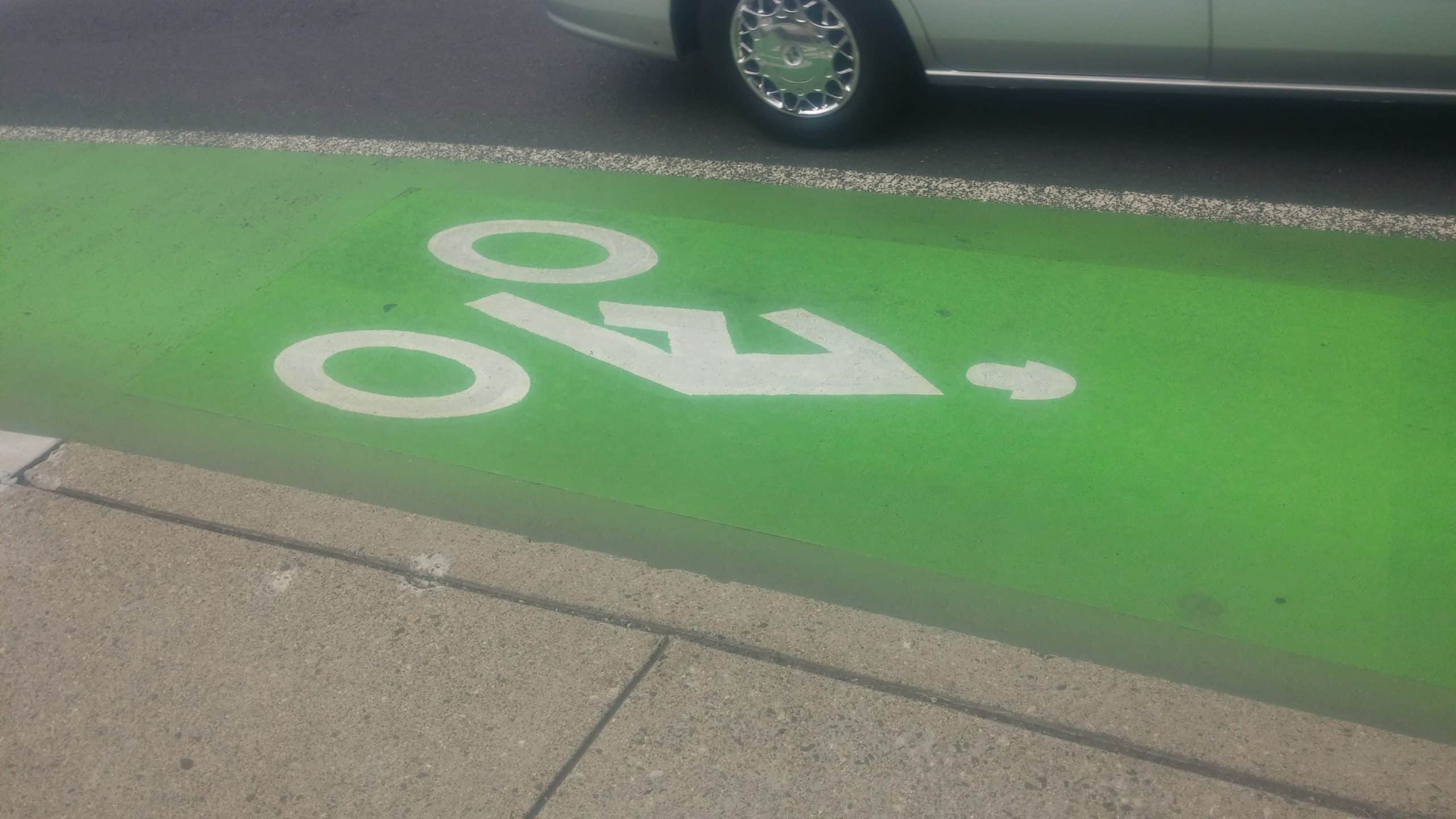
Readers say , “No one missed Rurik. No one. And we had plenty of insanity without him being there. Chris Rutishauser (he of the ghetto palms) and Jeanne Johnson (she of the ridiculous bike lanes) provided ample idiocy for one evening.
The dynamic duo of Chris and Jeanne should take their show on the road showing people how to accomplish nothing while antagonizing everyone. Also, the Bike Lane To No Where is hazardous to bikers as well as drivers. In stead of calming traffic, it makes us all annoyed and irritated!
Miss Jeanne actually said that the bike lanes would only be for experienced bikers (ie dangerous). Oh hell yes, this makes sense. Let’s put bike lanes that are dangerous for all but the most experienced bikers. Ummmm what happens when an inexperienced driver comes alongside an experienced biker. This whole thing is a disaster waiting to happen. Thank God it probably will not happen.
Jeanne Johnson was out of control ridiculous. And Rutishauser too. Who the hell do they think they are trying to pressure the council to sign off on a grant application when they have not seen the plans. Memo to Ruishauser: Aronsohn and Sonenfeld sent out grant applications that were filled with lies. This council does not play that way.”
Ridgewood NJ, A voluminous spill of hydraulic fluid at 205 East Glen Avenue, Ridgewood (Village of Ridgewood Recycling Center) required the response of trained personnel from Ridgewood FD and the Bergen County Department of Health Services Hazmat team on Thursday afternoon, 10/27. No injuries were reported in the mishap. Ridgewood PD also responded.
The story, as originally recounted by James V. Grimaldi and Rebecca Ballhaus of The Wall Street Journal, was, of itself, deeply troubling. In March 2009, after meeting with Swiss Foreign Minister Micheline Calmy-Rey, then Secretary of State Hillary Clinton intervened with the U.S. Internal Revenue Service (IRS) on behalf of Switzerland’s most powerful banking institution, UBS. The IRS, which at that time was seeking the identity of wealthy Americans who had stashed some $20 billion in 52,000 tax evading UBS accounts, then agreed that the Swiss bank need only turn over information on 4,450 accounts. Afterwards, UBS increased its previous $60,000 in donations to the Clinton Foundation ten-fold. By the end of 2014, UBS donations to the Clinton Foundation totaled $600,000. UBS also “paid former President Bill Clinton $1.5 million to participate in a series of question-and-answer sessions with UBS Wealth Management Chief Executive Bob McCann, making UBS his biggest single corporate source of speech income disclosed since he left the White House.”
Those facts, of themselves, raise disturbing questions. Did a bank that still ranks as “the world’s biggest wealth manager” and has at its disposal a bevy of economists and law firms have a legitimate reason for paying Bill Clinton $1.5 million in speaking fees? Or was the $1.5 million and the tenfold increase in Clinton Foundation donations a reward for the former secretary of State’s intervention? If the latter, that reward would have, under federal law (18 U.S.C. § 201(c)(1)(A)), amounted to an illicit bribe.