Ridgewood NJ, The Ridgewood Gilbert and Sullivan Opera Company, a nonprofit performing ensemble based in Ridgewood, New Jersey, has presented full productions of the works of Gilbert and Sullivan every fall and spring since its founding in 1937 by Kay and Jack Edson. For over 75 years, we have delighted audiences with the timeless jollity of The Pirates of Penzance, The Mikado, and H.M.S. Pinafore. As one of the oldest continuing musical theatre groups in the country, we also mount comic operas by Gilbert & Sullivan that are seldom seen elsewhere: Iolanthe, The Yeomen of the Guard, The Gondoliers, The Sorcerer, and several others.
We give full performances in Ridgewood, plus we perform elsewhere in Northern and Central Jersey (Bergen, Passaic, Essex, Ocean counties), Rockland County, New York City, and Connecticut. In addition, we take pride in making opera more accessible to the community by performing several free shows and staged concerts a year at facilities that cater to senior residents, patients, and veterans. We have also donated a series of musical scores, recordings, and books on Gilbert and Sullivan to the Ridgewood Public Library.
Although we are considered a community theatre group, our performers are given a more professional experience due to having a two-month performing schedule and having to learn heavy amounts of vocally challenging repertoire found in virtually all G&S comic operas. Our company members consist of both highly trained music professionals and serious amateurs.
Our talented workers (singers, orchestra, scenery and costume designers, etc.) have made it possible to give productions of professional quality. Young and old G&S fans have thanked us for helping keep alive the great musical entertainment of Gilbert and Sullivan.
Ridgewood Gilbert and Sullivan is proud to perform the musical production of Gilbert & Sullivan’s The Sorcerer (not to be mistaken with Walt Disney’s The Sorcerer’s Apprentice). This musical tells the timeless story of a man who refuses to believe that men and women should marry only those of the same social class. He hires a sorcerer to make each man in the village fall in love with the first eligible woman he sees —and chaos ensues.https://www.newjerseystage.com/articles/getarticle.php?titlelink=ridgewood-gilbert-and-sullivan-presents-the-sorcerer
Fall 2016: The Sorcerer! Tickets available soon!
Stage Director: Milly Gonzalez
Music Director: Paul Geidel
We will be doing both concerts and full performances!
Concert Schedule
Sat. October 22, 2 p.m., Fort Lee Public Library, Fort Lee, NJ
Sun. October 23, 2 p.m., Franklin Lakes Public Library, Franklin Lakes, NJ
Sun. October 30, 2 p.m., Finkelstein Memorial Library, Spring Valley, NY
Sun. November 6, possible concert performance – TBD.
Thurs., November 17, 8 p.m., Five Star Premier Residence, Teaneck, NJ
Performance Schedule
Sun., November 13, 3 p.m., Heritage Village, Southbury, CT
Sat., November 19, 7:30 p.m., Ridgewood United Methodist Church
Sun., November 20, 3 p.m., Ridgewood United Methodist Church
Sun., November 27, 3 p.m., Fair Lawn Community Center (might be canceled)
Fort Lee NJ, as the Ridgewood blog reported yesterday local activist Bill Brennan sued Christie in municipal court, alleging official misconduct related to the traffic jam.
Christie hired the New York Law Firm of Alston and Bird to defend him tomorrow. The waited until after the 6 O’Clock News aired to serve and file eight pages of evidence proving that they don’t understand NJ practice as it pertains to Probable Cause .
The judge ruled to advance the Bill Brennan’s complaint to the next level, rejecting the attempts by Christie’s lawyers to improperly interject themselves at this stage. On Facebook Brennan’s supporters claim,”
Today, the cause of justice was advanced a single notch…thanks to Bill Brennan!”
The criminal case complaint will now be given to the Bergen County prosecutor Gurbir Grewal to consider for indictment. Grewal a Democrat was appointed by Christie ,has some calling for him to recuse given his prior relationship as a Christie appointee. It is felt by Brennan supporters there is need a genuinely impartial special prosecutor to pick this up, indict, try and convict Governor Christie for official misconduct.
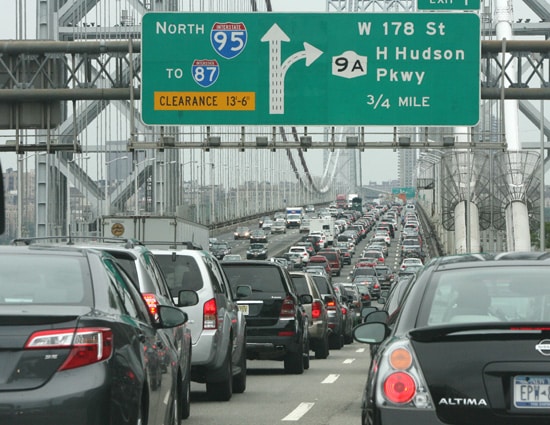
Ridgewood NJ, the staff of the Ridgewood blog is made up of many long-time commuters , so we have been ,to say the least, a bit skeptical this entire “Bridgegate ” or “Bridgeapolooza” episode. The reality is that the GWB has huge traffic jams averaging over 1-hour delays during rush hour every day.
The Port Authority is hardly and paragon of virtue it’s often been the dumping ground for on the lamb public employees from New York and New Jersey and New York and New Jersey can hardly claim the mantle of puritanicalism both states seem more often than not to be mired in corruption.
In recent “Bridgegate” not only did former Port Authority Official, David Wildstein, told Bill Baroni’s attorney, Michael Baldassare, that Governor Christie’s staff asked him to produce a list of Port Authority employees so that Democrats could be purged, just weeks after starting his $150,000-a-year job at the Port Authority in 2010.
Wildstien also claimed under oath he told Governor Christie about the lane closing. The prosecution’s star witness claimed Gov. Chris Christie was told of the traffic jams at the George Washington Bridge in the midst of the gridlock in Fort Lee in September 2013, and that Christie laughed when he heard about it.
Community Activist Bill Brennan found a way to file a lawsuit in Bergen County court against Governor Christie based upon Wildstein’s testimony.
Brennan says ,”There’s a statute in New Jersey, the Official Misconduct statute, which says that a public servant is guilty of official misconduct for the purpose to deprive another of a benefit or obtain a benefit for himself. If he refrains from taking an action that’s clearly inherent in the nature of his office. Clearly inherent in the nature in the office of the Governor is opening those lanes when you’ve been told they’re closed.
Tomorrow morning the Governor of NJ faces charges for something we all know he did. I fear life in a country where the government harms law-abiding citizens in fits of pettiness and revenge. It scares me to know that people are being coerced by officials who brag that they can destroy the lives of anyone who refuses their demands. It terrifies me that this is all out in the open and I might be alone in an open court room standing up against tyranny. “
Paul J. Larkin Jr. / David Rosenthal / @DL_Rosenthal / John-Michael Seibler
This week, the infamous “Bridgegate” scandal goes to trial, with former officials in New Jersey Gov. Chris Christie’s administration facing serious charges from the U.S. Department of Justice. Not since London Bridge came falling down in 1281 has an overpass caused such a stir.
The backstory: In 2013, Christie was running for re-election. Like every other politician in that position, he was trying to round up support from other state and local pols. Fort Lee Mayor Mark Sokolich, however, declined to get on board. That is when the plot thickened.
The story is that several officials in Christie’s administration agreed to shut down some (but not all) of the traffic lanes across the George Washington Bridge into New York, creating a huge traffic jam in Fort Lee. That would “punish” Sokolich for his failure to “get in line.” It was a prank. A dirty trick. Think the end of “Animal House,” just real life.
As pranks or dirty tricks go, it was tawdry, even stupid. (Did they think no one would find out?) Christie himself described the lane closure as “abject stupidity.”
Once the story broke, Christie and his cohorts predictably took a drubbing from the notoriously tough New York media. Christie certainly paid a price in the media for the imbroglio and likely also among the electorate during his later run for the Republican nomination for the presidency.
No one has a constitutional right to avoid traffic or to use three or four lanes when approaching a bridge.
One might think that a media firestorm and political retribution were adequate penalties for a stupid, cheap, political dirty trick. But not in 21st-century America, where the U.S. Justice Department believes that political dirty tricks are actually crimes. The Justice Department has charged Bridget Kelly, Christie’s former deputy chief of staff, along with David Wildstein and William Baroni, officials of the Port Authority of New York and New Jersey, with multiple federal felonies for their parts in the Great Gridlock Shenanigans. The 37-page, 9-count indictment alleges these officials committed theft of federal government property, fraud, the deprivation of the civil rights of New Jersey residents, and that they conspired to do all of the foregoing. (If the defendants had dynamited an empty bridge, they would have committed fewer crimes.)
Wildstein pleaded guilty in 2015 to two counts of conspiracy and implicated his alleged co-conspirators. He will likely regret that because, as explained below, he pleaded guilty to nonexistent crimes.
What property did they steal? The bridge is still there—and probably the traffic, too.
What property did they misuse? The government alleges that the defendants misused “the time and services of unwitting Port Authority personnel.” Really? If that is a form of theft, then the Justice Department inspector general should investigate to make sure no DOJ employee uses a DOJ fax machine to send a permission slip to a child’s school, or uses the government’s WATS line to call a sick parent, or uses an office computer to check the scores on ESPN, or wastes away the day chatting with colleagues—or any of the other matters that go on in the federal government on a daily basis.
What was the fraud? Neither the defendants nor anyone else derived any personal financial benefit from the scheme. Was the fraud an implicit representation that politicians would not act like politicians? Puhleeze! We’re talkin’ “New Joisey” here! Besides, any DOJ prosecutor who thinks that politicians do not pull stupid stunts like this one is guilty of defrauding the federal government for telling his superiors that he is savvy enough to be a DOJ prosecutor.
The only benefit that Christie’s associates got was schadenfreude. If that is sufficient to violate the fraud statute, the Supreme Court has been wasting its time trying to interpret that law because, as Cole Porter wrote, anything goes.
Most outrageous is the civil rights charge. What civil right did the defendants violate? The constitutional right not to be ensnarled in traffic? Fuggedaboutit! Perhaps there is a constitution somewhere that includes a Traffic Clause (right after the Sanity Clause), but the American Constitution sure doesn’t.
The Constitution guarantees everyone a right to interstate migration, not interstate commuting — and certainly not speedy interstate commuting, let alone a right to “localized” driving, as the government’s indictment alleges. No one has a constitutional right to avoid traffic or to use three or four lanes when approaching a bridge. Besides, the defendants didn’t corral Fort Lee residents. There are numerous bridges, tunnels, and ferries into New York. Perhaps someone should show the prosecutors a map.
Look at this matter another way. It would not violate the Constitution for officials to funnel traffic into fewer lanes to repave the bridge. The only difference between that scenario and this one is that these officials are said to have acted with the intent to injure someone—not the commuters, however; they were just the delivery vehicle for the pain.
The defendants’ intent was to injure Mayor Sokolich—not physically, just politically—for not being a “team player.” Yes, that is a shoddy way to treat the public (which always seems to take it in the shorts whenever politicians act like, well, politicians). But the Constitution protects us against political mischief. It lets us vote the perpetrators out of office. That is the proper remedy, not a criminal prosecution.
In a case involving alleged political misconduct (a trade association’s gifts to politicians), the late Justice Antonin Scalia wrote that “a statute in this field that can linguistically be interpreted to be either a meat axe or a scalpel should reasonably be taken to be the latter.” Here, the DOJ prosecutors have gone with a scythe.
A lawyer representing Kelly wrote that “the intentional causing of traffic” has never been the subject of federal civil rights allegations. “No other federal criminal case,” according to counsel, “has been prosecuted anywhere, at any time, with facts even remotely similar to the facts there.” We haven’t looked everywhere, but, by God, we sure hope he’s right.
Last spring, the Supreme Court unanimously spanked the DOJ in McDonnell v. United States for trying to stretch the federal criminal law to punish tawdry political behavior. McDonnell was not an anomaly. It was just the latest in a series of cases (including McNally, McCormick, Sun-Diamond Growers, Skillingand Yates) in which the Supreme Court has told the Justice Department that it is up to Congress—not the DOJ—to come up with newfangled crimes and to define them with precision.
The prosecutors need to listen to the music, not just read the lyrics, in the court’s opinions. The district court should have dismissed this indictment in an opinion that read simply, “GMAB.” Were this case to result in a conviction and ultimately reach the Supreme Court, the court will need to send the DOJ to its room without supper yet again. Why? Because with this indictment the Justice Department has essentially flipped off the court.
It is a good thing that there will be a presidential election in November. It offers every hope that there will be a new attorney general come January 2017. The Justice Department could use some adult supervision.
Ridgewood NJ, Every March, we are all faced with the arrival of Daylight Saving Time and its impact on our circadian rhythms,our sleep-wake pattern. The 1-hour shift in time can even temporarily disrupt our ability to fall asleep at night and to wake up in the morning. We not only lose an hour of sleep, but the time change disrupts the body’s biological clock and circadian rhythm. The effect is the same as jetlag in plane travel, in which our bodies remain on the prior schedule for a period of time.
“People who sleep well can usually adjust to the time shift with little difficulty,” says Jeffrey P. Barasch, M.D., Medical Director of The Valley Hospital Center for Sleep Medicine in Ridgewood, NJ. However, if someone has been coping with chronic difficulty sleeping, daylight saving time can worsen or uncover an undiagnosed and untreated sleep disorder, such as insomnia or sleep apnea.
It is important to keep in mind that the required amount of sleep per day changes with age, and studies indicate the following recommended sleep durations:
• Newborns — 16 to 18 hours a day
• Preschool-aged children —11 to 12 hours a day
• School-aged children — at least 10 hours a day
• Teens — 9 to 10 hours a day
• Adults (age 20-64) — 7 to 9 hours a day
• Elderly (age 65 and over) —7 to 8 hours a day
“Unfortunately, as you well know, sometimes life can prevent us from going to bed when we want to and many of us have experienced the frustration of not being able to fall asleep or stay asleep once we are in bed,” Dr. Barasch says. “Luckily, our bodies can adjust to occasional instances when we do not get enough sleep.”
But what happens when we are consistently not getting enough sleep? According to Dr. Barasch, sleep deprivation can impact the brain and every organ in the body. During sleep, a newly discovered network of water channels in the brain, called the glymphatic system, becomes active and functions as a waste disposal system, carrying toxins away which would otherwise accumulate and damage brain cells. The accumulation of one of those toxins, amyloid-beta, is associated with Alzheimer’s disease.
Dr. Barasch warns that those who suffer from chronic sleep deprivation, regardless of the reason, can experience adverse effects in many aspects of their lives. The lack of crucial restorative sleep can lead to daytime sleepiness, irritability, difficulty focusing, deterioration in work or school productivity, and impaired creativity and decision making. Sleep deprivation also affects performance and reaction time. Losing two hours of sleep is similar to the effect of alcohol intoxication. Sleep deprivation is also involved in many automobile, truck and airplane crashes. Lack of sleep also promotes weight gain and may lead to long term health consequences, such as depression, diabetes, hypertension, gastrointestinal disorders and colon cancer.
So what do you do if your struggle with sleep isn’t limited to a change in the clocks?
If you are having difficulty sleeping, the National Institute of Health suggests incorporating some of the following strategies into your nighttime routine:
• Go to bed and wake up at the same time every day.
• Try to keep the same sleep schedule on weeknights and weekends.
• Use the hour before bed for quiet time.
• Avoid heavy and/or large meals within a couple hours of bedtime.
• Avoid alcoholic drinks, nicotine and caffeine before bed.
• Spend time outside every day (when possible) and be physically active.
• Keep your bedroom quiet, cool, and dark (a dim night light is fine, if needed).
• Take a hot bath or use relaxation techniques before bed.
If you regularly experience daytime drowsiness, fatigue or disturbed sleep, consider consulting with a sleep medicine specialist to evaluate and treat the problem.
Kathleen Willey, one of the women who famouslyaccused Bill Clinton of sexual assault, and has said she suffered acts of intimidation to silence her, used a radio interview on Sunday to broadcast a message to other possible female victims of Bill Clinton.
Stated Willey:
I would just like to encourage any woman who has suffered at the hands of Bill Clinton to please try to find the courage and bravery to come forth. Because it’s okay now. Nobody can hurt you now. It’s as simple as that.
Nobody can touch you now. The word is out. You will be okay but you will be doing the right thing for all the right reasons and you will be helping your fellow sisters.
Speaking on “Aaron Klein Investigative Radio,” the popular Sunday talk radio program, Willey demanded that Hillary Clinton submit to a lie detector test to answer questions about whether she engaged in campaigns to silence or intimidate her husband’s female accusers. Klein doubles as Breitbart’s Jerusalem bureau chief.
Willey also telegraphed a message of encouragement for Donald Trump, who helped to skyrocket the issue of Clinton’s sex accusers to front-page status when the GOP frontrunner complained about the former president’s “terrible record of women abuse.” Trump was responding to Hillary’s claim that the billionaire exhibited a “penchant for sexism.”
“If Hillary thinks she can unleash her husband, with his terrible record of women abuse, while playing the women’s card on me, she’s wrong!” tweeted Trump.
Willey chimed in: “Thank you very much, Mr. Trump, for asking the right question at the right time. And please keep asking more.”
While some people are spending as much as $600 a night at hotels for Pope Francis’ highly anticipated visit to Philadelphia, a North Jersey church group is spending less money on a far less luxurious place to stay: the Philadelphia Zoo.
“The zoo makes it a little more down to earth because it’s more like a pilgrimage,” said Melissa Peters, a congregant at Our Lady of Mount Carmel Church in Ridgewood, New Jersey. “We’re not gonna be staying in a hotel room where we have showers or where we have continental breakfasts and things like that. Instead we’re sleeping with animals in order to see the pope.”
Peters and 220 other parents and children from the church will sleep on the floor of the Philly Zoo buildings housing the bird and insect exhibits during the Pope’s visit to Philly for the World Meeting of Families in September.
“A pilgrimage is very different from a vacation or a trip,” said Cathy Hunt, another congregant. “A pilgrimage is a prayer experience and any discomfort that you’ll feel the excitement will be tenfold that.”
AUGUST 29, 2015 LAST UPDATED: SATURDAY, AUGUST 29, 2015, 1:21 AM
BY LINH TAT
STAFF WRITER |
THE RECORD
FORT LEE – A school trustee in the midst of his third term resigned this week, creating a vacancy on the board that, by law, must be filled before the end of October.
Yusang “Jimmy” Park, the only Asian-American ever to serve as school board president in Fort Lee, said he and his family are moving to a house they purchased in Ridgewood, leaving him no choice but to resign. Trustees are required to live in the town in which they hold office.
Park was the top vote-getter when he was elected in 2007, outperforming the three incumbents in that race. Fellow board members nominated him as president in 2012 after former trustee Arthur Levine resigned.
“Looking back, I ask myself, ‘Are we in a better place than we were seven years ago when I started?’ I would say yes,” Park said, reflecting on the state of the district.
When he was first elected, Park noted, the district was reeling from the fallout of a superintendent who plagiarized a speech delivered to honors students. That was followed in 2009 by a grade-altering scandal when officials found that a high school counselor had tampered with college transcripts, and widespread frustration in the community over an absentee superintendent during the 2012-13 school year. That superintendent eventually parted ways with the district.
Now, Park said, the district has voter-approved funding to build and expand classroom space, has adopted new campus security measures and has hired a new permanent superintendent
Review of Harper Lee’s Go Set A Watchman, by artist Jen Bissu
I had very high hopes for this book. Perhaps that’s in part why I am so terribly disappointed. I must credit Harper Lee’s editors: it was a wise decision to insist that she rewrite this novel, and continue revising it, until it turned into the magnificent To Kill A Mockingbird that we all know and love. There are only perhaps two or three parts of this book that I found actually enjoyable; the rest I grudgingly endured. It had its good points: her vocabulary is strong, and some of the writing is eloquent. Unfortunately, much of the writing in this book is nebulous. There is a great deal of philosophizing, which I found tiresome. Also, most apparent in the beginning of the book, Lee chooses to “tell” the reader about her characters, rather than “show,” as she did in Mockingbird. “Showing” rather than “telling” is a much stronger writing technique. I found the “telling” juvenile, prosaic, and not engaging at all. Fortunately that ceased after the beginning of the book. If I weren’t so determined to read this book for its historical value, having been published some sixty years after it was written, I would’ve dropped it after the slow, poorly told beginning. So I pushed through, and upon completing it, I found myself with an empty, dissatisfied feeling. I’m almost sorry this book was published. I just re-read To Kill A Mockingbird very recently, in anticipation of this book, thus deepening the stark contrast between the brilliance and delightfulness of Mockingbird and this disappointing book. I do recommend reading it just for the sake of historical background, because it is interesting to see where one of the best, most revered pieces of American Literature got its start. I’m giving this three stars, which I feel is a bit generous, but I’ll allot extra credit for the admirable vocabulary.
Here is a video review/ discussion of the book that I feel hits the nail on the head. https://youtu.be/vPNk-0dv5_Y
Fort Lee man among three charged in alleged burglary scheme targeting seniors
MARCH 13, 2015, 8:49 PM LAST UPDATED: FRIDAY, MARCH 13, 2015, 9:38 PM
BY ABBOTT KOLOFF
STAFF WRITER |
THE RECORD
Police have arrested a Fort Lee man and two others who allegedly ran a scheme targeting elderly people across several states by distracting them while their homes were burglarized, authorities said Friday in a news release.
The men were caught by a law enforcement task force after they allegedly attempted to run the scam in Ridgewood on Tuesday but came away from a Greenway Lane home without taking anything, said Somerset County Prosecutor Geoffrey D. Soriano. The men were arrested in Lyndhurst, he said.
The task force had been assembled in Somerset County after the three men allegedly stole a safe with $75,000 cash and an undisclosed amount of jewelry from a 90-year-old woman in Somerville late last year; one of the men had distracted her by saying he was with the water company and had come to check the pipes, Soriano said.
People are fleeing N.J. faster than any other state, moving company says
By Jeff Goldman | NJ Advance Media for NJ.com
on January 05, 2015 at 1:30 PM, updated January 05, 2015 at 4:56 PM
Nearly two of every three families making an interstate move involving New Jersey last year were leaving the Garden State, the highest rate in the country.
New Jersey had the greatest percentage of outbound moves of any state nationally last year with almost 65 percent departing, according to a company which bills itself as the largest transporter of household goods in the country.
The Garden State has led the nation in outward migration for the fourth time in five years.
In all, United said it tracked 4,003 moves out of New Jersey in 2014 compared to 2,169 inbound.
Nearly half of those leaving New Jersey were bound for Florida (15 percent), California (14), Texas (9) and North Carolina (7.5), spokeswoman Melissa Sullivan told NJ Advance Media.
Retirement and jobs were the top reasons to leave the state last year, according to a United Survey of departing New Jerseyans.
About 42 percent reported leaving for a new job or company transfer. Forty-one percent attributed their move to retirement. More than half (56 percent) of people leaving New Jersey were over the age of 55, with 22 percent older than 65.