WAYNE — Full-day kindergarten supporters say a modest tax increase is a small price to pay for enhancing early childhood learning at a time of rising academic standards.
But if a special question on implementing full-day kindergarten passes in November, the cost to taxpayers per year will be much higher than the number supplied by the district.
VILLAGE OF RIDGEWOOD :NOTICE OF REQUEST FOR QUALIFICATIONS (RFQ) FOR BOND COUNSEL SERVICES
VILLAGE OF RIDGEWOODCOUNTY OF BERGEN, STATE OF NEW JERSEY
NOTICE OF REQUEST FOR QUALIFICATIONS (RFQ) FOR BOND COUNSEL SERVICES
The Village of Ridgewood is soliciting a Request for Qualifications (RFQ) for Bond Counsel Services, from July 1, 2016 through June 30, 2017, as it is frequently called upon to provide representation on behalf of the Village in bond and related financial matters. The selection of Qualified Respondents is not subject to the bidding provisions of the Local Public Contracts Law, N.J.S.A. 40A:11-1 et. seq.; however, it is subject to the “New Jersey Local Unit Pay to Play Law”, N.J.S.A. 19:44A-20.4 et. seq.
Date RFQ Package will be available: June 20, 2016 – June 30, 2016
Address where package is available: Village Clerk’s Office
Village of Ridgewood
131 North Maple Avenue
Ridgewood, NJ 07450
RFQ Submission Deadline: June 30, 2016 – 10:00 a.m.
RFQ submissions will be opened: June 30, 2016 – 10:00 a.m
Village Clerk’s Office, 5th floor
Ridgewood Village Hall
131 North Maple Avenue
Ridgewood, NJ 07450
All responses should be addressed to: Heather A. Mailander, RMC/MMC/CPM
Village Clerk
Village of Ridgewood
131 North Maple Avenue
Ridgewood, NJ 07450
The RFQ response should be returned in a sealed envelope which bears of the name of the Respondent to the RFQ and should be clearly marked:
RFQ BOND COUNSEL SERVICES
Attn: Heather A. Mailander, Village Clerk
The Village of Ridgewood reserves the right to waive any and all formalities or altogether reject any RFQ that is not in the best interest of the Village. Selections shall be made to the vendor whose proposal is most advantageous to the Village of Ridgewood. Factors include, but are not limited to experience and/or reputation in the field, knowledge of the subject matter to be addressed under the proposal and contract and other factors determined to be in the best interest of the Village of Ridgewood. All awards are subject to Village Council approval.
BOE Meets on June 27 at 6:30 p.m.
The Ridgewood Board of Education will hold a Regular Public Meeting on Monday, June 27, 2016 at 6:30 p.m. The meeting will be held in the Board Room at the Education Center, 49 Cottage Place. The public is invited to attend the meeting or view it live via the district website at www.ridgewood.k12.nj.us using the “Live BOE Meeting” tab on the district website, or on Fios tv channel 33 or Optimum 77.
Click here to view the agenda for the June 6, 2016 Regular Public Meeting.
Click here to view the minutes of the May 16, 2016 Regular Public Meeting.
Click here to view the 2016-2017 Budget presented at the May 2, 2016 Regular Public Meeting.
Click here to view the Full Day Kindergarten Recommendation presented to the Board at their March 7, 2016 Regular Public Meeting.
BOE-REA Negotiations
Click here to view the powerpoint presentation regarding the Fact Finder’s report and recommendations, presented at the June 6, 2016 Regular Public Meeting.Clickhere to view the presentation by Ms. Brogan and Mr. Morgan.
In accordance with New Jersey P.L. 2003, c. 126, the Board has made the May 16th Fact-finding Report and Recommendations public and has posted it to the District’s website. At the June 6th Board of Education Public Meeting, the Board will discuss the report and the recommendations. The Board will accept or reject the Fact-finder’s recommendations at that time. Click here to read the Fact Finders Report and Recommendations dated May 16, 2016.
Click here to read a Letter to the Editor of The Ridgewood News, published on April 8, 2016.
Click here to view the Ridgewood Board of Education’s Post Hearing Fact Finding Brief and attachments.
Click here to view an analysis of “Unused Funds’ identified by the REA during Fact Finding Proceedings, presented at the March 7, 2016 Regular Public Meeting.
Click here to read a Letter to the Editor of The Ridgewood News, which appeared in the paper on March 4, 2016.
Click here to read the Ridgewood Board of Education’s Fact-Finding Presentation with The Ridgewood Education Association.
Click here to view the backup for the Ridgewood Board of Education’s Fact-Finding Presentation with The Ridgewood Education Association.
If the landlords are content with empty storefronts for months on end, then that’s that. They could lower rents, but that hurts their bottom line. Their misguided solution is increase the crowd level with high density housing – so we’ll have more people ignoring the shops in the CBD, and more Amazon deliveries to the new apartment blocks. This is a market issue that can’t be legislated away.
Any business that provides an incremental service will continue to survive in the downtown setting. Restaurants provide cooking and service, in addition to a social atmosphere. Bars provide a meeting place, booze, and a bartender who will listen to your bellyaching when nobody else cares (the bartender doesn’t care either, by the way…and that dancer at Satin Dolls is not working her way through college, and doesn’t think you’re funny, but I digress). Certain goods, like high end clothes that need to be fitted, will still sell. Tailors, barbers, etc etc. See a pattern? Even a used guitar store that buys select instruments online, sets them up well, and offers them to be played before they’re bought might do well. But the traditional consumer goods re-seller is dead on arrival – they can’t pay their rent on razor thin markups necessitated by competition from Amazon.
The “toxic” situation has not arrived. You are imagining a Walking Dead future. Relax.
People will shop if there are products that they want, at a good price.
Restaurants do fine. They all wish that they could sell alcohol and make big bucks on the bar. The restaurants, like Valley, are regional businesses. People come to Ridgewood to dine out, many love the fact that we have so many byob establishments. This is the crux of the “parking problem”. People from all over Bergen county come to Ridgewood. The busineses would like more but feel that they are hampered by lack of parking.
They need to come up with a solution that does not rely on me for funding.
Governor Chris Christie’s Speech On The Fairness Formula As Prepared For Delivery (Full text)
Hillsborough, New Jersey
June 21, 2016
We have two separate, but completely intertwined crises in New Jersey that must be dealt with. They must be dealt with honestly and directly. We cannot wait any longer to do it. Property taxes and the failure of urban education.
Both of these crises are hurting all New Jerseyans, those affected both directly and indirectly.
Property taxes are the highest in America and the majority of those taxes are for local school taxes.
Urban education, despite 30 years of Supreme Court required intervention by the state, is still failing students and their parents at an alarming rate. The theory from the Supreme Court was that money would solve the problem.
They were wrong. Very wrong. And the results prove it. They have not solved our failures in urban education and, in the process, have led to New Jersey to be amongst the highest taxed states in America. They have required the legislature and Governors to craft ridiculous school funding formulas that cheat thousands of families out of funding and thousands more from a valuable education. Those days must end. It is time to change the failed school funding formulas and replace it with one that will force the end of these two crises—the property tax scandal and the disgrace of failed urban education.
New Jersey spends the 3rd most in the nation per pupil on K-12 education. For the upcoming fiscal year we spend 13.3 billion dollars on aid to K-12 education. How do we spend it? $9.1 billion goes back to school districts in direct aid. $3.25 billion is to pay for the pensions and health benefits for retired teachers. $936 million goes to pay the debt on schools, mostly in urban districts, to build new schools. $13.3 billion—and that does not count the money paid in local property taxes.
Who gets the $9.1 billion? Well, that begins to tell the story. By order of the Supreme Court, and coerced acquiescence by the elected branches of government, this coming year $5.1 billion goes to the 31 urban or SDA districts. $4 billion goes to the remaining 546 districts. That’s right. 58% of the aid from the state’s taxpayers goes to 5% of the state’s school districts. 42% of the aid goes to the remaining 95% of our districts. This is absurd. This is unfair. This is not working. And it hasn’t been working for 30 years.
Over the last 30 years, New Jersey taxpayers have sent $97 billion to the 31 SDA school districts. The other 546 districts in the state received $9 billion less over the same 30 years. $97 billion divided among only 31 SDA districts while the families in 546 other districts had to divide $9 billion less. The inequity is appalling and it has only gotten worse as the years have passed.
In 1990, 23% of the state’s students, representing the SDA districts, got 41% of the state aid. Today, while still representing only 23% of the state’s students, they receive 59% of the state aid.
Has that enormous differential in state aid brought greater achievement in the 31 districts? No. Absolutely not. Tragically so for the families in those districts and for the taxpayers all across New Jersey who have been footing the bill for the last 30 years.
Just take a sample of graduation rates. The statewide graduation rate is 90%. How have we done in the 31 districts where we have invested $97 billion over the last 30 years? Asbury Park—66%. Camden—63%. New Brunswick—68%. Newark—69%. Trenton—68%. 27 of the 31 districts are below the state average, despite the exorbitant spending over the last 30 years. Spending does not equal achievement—never has and never will. There are exceptions and those should be noted right here. In Harrison, Long Branch, Millville and Pemberton they have exceeded the statewide graduation rate. In Union City, the have seen extraordinary growth under very trying circumstances and the leadership in those districts deserve great credit. But despite nearly $100 billion to those 31 districts in the last 30 years from taxpayers all over New Jersey, failure is still the rule, not the exception. That is an unacceptable, immoral waste of the hard earned money of the people of New Jersey.
Worse than the wasted money is the lives that were not given the chance to reach their full potential. We accept that subpar performance and pay a fortune for it.
Do not let anyone tell you that failure is inevitable for children in those 31 districts or that money is the answer. The Academy Charter High School in Asbury Park had an 89% graduation rate compared to 66% in Asbury Park; Academy spends $17,000 per pupil while the traditional public schools spend $33,000 per pupil. The LEAP Academy Charter School has a 98% graduation rate in Camden, while the district has a 63% rate; LEAP spends 16,000 per pupil while the school district spends $25,000 per pupil. In Newark, the North Star Academy Charter has an 87% graduation compared to the citywide rate of 69%; North Star spends $13,000 per pupil compared to $22,000 per pupil district wide.
Over and over again we see the same issue: money spent without results for the families we are meant to serve. It is a false claim and always has been. It is failing families and their children. It is bankrupting our state. It is driving families from their homes and New Jersey.
The failure of the educational system in those 31 districts is the first tragedy. The second tragedy is this system has caused us to have the highest property taxes in the nation.
New Jerseyans regularly say that the issue that is their number one concern is property taxes. The highest in the nation and a burden on families in every corner of New Jersey. What drives these taxes? 52% of property taxes statewide are spent on the school tax and in many districts it is as high as two-thirds. But here is the unintended consequence of the unfair school funding formula: in those 31 SDA districts, they spend a fraction of their property taxes on schools as compared to the rest of the state. That’s right—the statewide average percentage of property taxes spent on schools is 52%; in the 31 SDA districts it is half that—only 26%. Are they taxing less? Oh no, they are just growing the size of their municipal government. The statewide average percentage spent on municipal government is 30%; in the 31 SDA districts it is nearly double—a whopping 54%! When you look at some of the individual districts, it is appalling. Asbury Park spends 60% less of their property tax dollars on schools than the state average, while their city spends 64% more than the state average on their municipal government. Trenton spends 18% less of their property taxes than the state average on schools but spends an enormous 387% more than the state average on their municipal government. In Paterson, 49% less on schools; 251% more on their city government. East Orange, 39% less on schools; 379% more on city government. It is outrageous. It is unacceptable. But it is perfectly predictable.
If you require the state to pay the overwhelming percentage of the school costs in these 31 districts, they are left with the choice: do we tax less or just spend more on the growth of government? The answer is resounding in most of the 31 SDA districts—the people of the rest of the state pay over 80% of the costs of our schools and we will spend our money to build oversized municipal governments—with no relief for local or state taxpayers. The abuses abound. Take Trenton for example. The Presidents of both the PBA and AFSCME locals receive full municipal pay to work only for the unions. No time working for the people; only for the unions. No wonder it costs so much.
How do we fix these problems? First, we must fix the tax problem because that is the one that affects each and every New Jerseyan and threatens the future of the affordability of our state. I propose we do this by changing the school funding formula. I propose the Fairness Formula; equal funding for every child in New Jersey.
If we were to take the amount of aid we send directly to the school districts today (in excess of $9.1 billion) and send it equally to every K-12 student in New Jersey, each student would receive $6,599 from the State of New Jersey and its taxpayers. Every child has potential. Every child has goals. Every child has dreams. No child’s dreams are less worthy than any others. No child deserves less funding from the state’s taxpayers. That goal must be reached, especially after watching the last 30 years of failed governmental engineering which has failed families in the 31 SDA districts and taxpayers all across New Jersey.
What would the effect of this change be for school aid in New Jersey? 75% of all New Jersey would get more state aid under the Fairness Formula. That is how fundamentally unfair the current formula is to students and taxpayers. And it is unfair in every part of this state.
In Margate, they would receive 428% more in aid. In Fairlawn, 815% more in aid. In that town, when combined with our 2% property tax cap, this new aid would result in average drop in their school property tax of over 2,200 per household. In Teaneck, 389% more in aid and an average drop in property taxes of nearly $1,600. In Wood-Ridge, an 801% increase in aid and a drop in property taxes of over $1,800. How about South Jersey? In Cherry Hill, an increase in aid of 411% and a drop in property taxes of over $1,700. In Haddonfield, an increase in aid of 1705% and a drop in property taxes of nearly $3,600.
The pattern is repeated everywhere. South Orange aid up 912%, taxes down over $3,700. In Readington Township, aid up 410%, taxes down nearly $2,000. In Robbinsville, aid up 666%, taxes down over $2,600. In Freehold Township, aid up 153%, taxes down over $1,500. In Chatham Township, aid up 1271%, taxes down $3,800. In Wayne, aid up 1181%, taxes down over $2,100. All over the state, we slay the dragon of property taxes by implementing the Fairness Formula. For the first time in anyone’s memory, property taxes plummeting not rising. And all through valuing each child and their hopes, dreams and potential the same.
Of course, we will make sure that we have the aid for special needs students so that they may reach their potential too. They are the exception though; the overwhelming majority of students deserve the Fairness Formula and we intend to pursue it for them.
We want to see major changes to the failed model of education in so many of these 31 SDA districts. We now see definitively that money has not made the difference over these 30 years but reforms have made the difference. We will continue to advocate for those reforms and we will insist that this new funding formula reward our successful charter schools with funding that comports with their success.
It is fundamentally wrong that students in the SDA districts receive 5 times more in state aid than students in non-SDA districts; it is unfair to those students and unfair to the residents of those towns who have been forced for more than three decades to foot the cost of that failure and unfairness.
A funding formula that puts a higher value on one child over another is morally wrong and it has been economically destructive. We cannot let it continue.
I will travel across the state this summer to talk about this plan to, for the first time in my lifetime, lower property taxes for the people of New Jersey and bring fairness to the funding of our schools.
We can do better and we must—in educating all of our children and in bringing fairness to our taxpayers. No one should be denied an education because of where they call home—an no one should have to sell their home because they can any longer afford the property taxes caused by a perverse school funding formula that devalues their children in the eyes of the state budget. After all, it is their tax dollars that, in part, fund that aid itself.
I have 18 months left in office and I will not permit these fundamental truths to not be spoken and acted upon. I will demand that the Legislature try defend the indefensible—that one child is worth more than another in the eyes of the state depending upon their zip code; or they can come along with me to fix this issue and put an end to the misery of our property taxpayers and make history in New Jersey. I am ready for the fight and I know the taxpayers of New Jersey are looking for us to finally solve this problem.
Thank you for your attention and, now, lets get to work.
RIDGEWOOD, NJ, Ridgewood voters decided today in a special election to repeal an ordinance to bond $11.5 million to construct the Hudson Street parking deck!
Voters turned out to overwhelming say NO in every district in what can only be called a landslide for the NO votes.
Full results
1425 yes votes 34.8%
86 absentee
2675 no votes 65.2%
81 absentee
total turn out 4097 24%
total registered voters 16901
Proposal – Ordinance No. 3521 for $11,500,000 Bond to Finance Hudson Street Parking Deck
I think we need to vote NO, I personally don’t trust what is going on regarding the garage project. I think we need to have the incoming council with the help of our residents and town professionals ie engineer and superintendent take a step back and come up with a plan that is acceptable to our residents. The vote that elected new council members basically was an outcry from our residents that enough is enough and we need a council that works together.
I went to many town council meeting over the last year and could not believe how Susan and Michael were not given information regarding the Garage. If they were given info it was hours before the meeting while the 3 amigos had all the information way ahead of the meetings. IT is apparent by the 2015 vote for a new garage our town wants additional parking, I say let’s let the new Council resolve this issue. I have lived in this town 26 years and can wait another 6 months to resolve this problem.
Many well-thought reasons for voting NO to the garage have already been posted. But here are my central questions? Why on God’s green earth are we considering building a $11,500,000 garage in a remote corner of the the central business district BEFORE we look to simpler solutions such as angled parking stalls, the often under utilized Cottage Place lot, and the potential of the more central N. Walnut Street lot?
Why the hyper focus on Hudson Street? (I think we all know why). I’m not saying that a parking garage should never be built. But the $11.5 MILLION “fix”, especially at that remote location, should not be the FIRST solution we consider to this 80 year old problem. Let’s take more prudent, incremental steps toward freeing up parking throughout the CBD, and then reassess. Tomorrow, please VOTE NO!
10 Easy and Inexpensive Ways for Village Residents to Save on Electric Bills
June 20,2016
the staff of the Ridgewood blog
Ridgewood NJ, On the first official day of summer, Public Service Electric & Gas (PSE&G), New Jersey’s largest utility, reminds customers that higher temperatures can also lead to more usage and higher electric bills. Customers can save energy and money this summer by following a few easy and inexpensive tips.
Seal holes and cracks around doors and windows with insulation or weather-stripping.
Don’t cool an empty house. Set your thermostat higher when you are away.
Don’t cool unused rooms. Close the vents and shut the door.
Ceiling fans cool fast and cost less than air conditioning.
Operate appliances in the morning or evening when it is cooler outside.
When washing dishes or clothes, run full loads.
Wash laundry in cold water.
Close blinds and draperies facing the sun to keep out the sun’s heat.
Replace air filters monthly. Dirty filters make your air conditioner work harder.
Use a microwave or crockpot instead of the oven. They won’t heat the house.
Prepared for Additional Power Demand
PSE&G expects to have no problem delivering the additional power required during the hot-weather months, but utility crews will be ready to respond to service interruptions should they occur. PSE&G’s rigorous, year-round preparedness program for summer includes conducting employee training; developing emergency summer operating plans; performing summer peak reliability analysis; helicopter and climbing inspections of transmission circuits; infrared inspections for “hot-spots” on transmission lines; and system reinforcements and transmission line work.
Payment Assistance Available
If your energy bills become unmanageable, a number of payment assistance programs are available for low and moderate income customers, as well as senior citizens and people with disabilities. Also, PSE&G offers customers the option of setting up a no-cost, equal payment plan. More information on these programs can be found atwww.pseg.com/help.
How to Report an Outage and Stay Informed
To report downed wires or power outages, call PSE&G’s Customer Service line at 1-800-436-PSEG. Also, customers can report outages online by logging into My Account at pseg.com or by texting “OUT” to 4PSEG (47734). The utility’s mobile-friendly website includes an “Outage Map” that is updated every 15 minutes and displays the location and status of power outages in PSE&G’s service area.
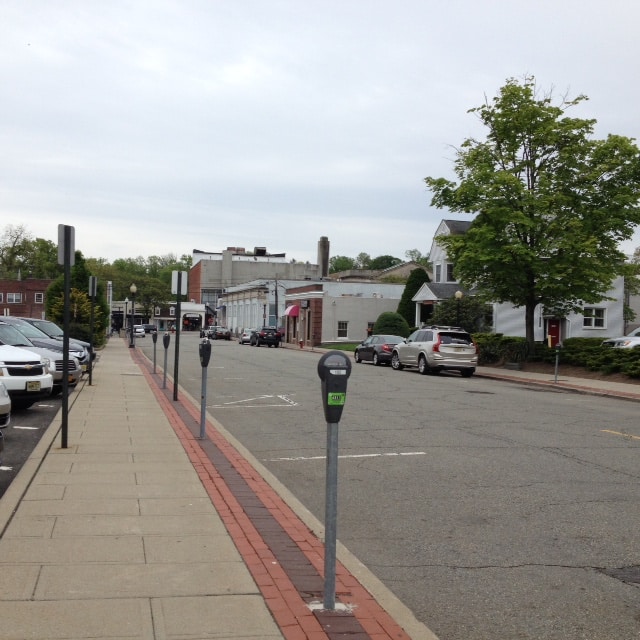
The Village Manager is correct. There currently is a parking surplus on several days during the week and on weekends. This information conflicts with data compiled over the years by trained parrking professionals who performed studies of the parking situation in Ridgewood.
So what has happened ?? Ridgewood did have a severe parking problem as outlined in study after study conducted by professionals over the past 89 years. More recently observations have been made by residents and others that the parking problem is not nearly as severe as heretofore thought. The question then is what has changed ? It is this writers belief there has been a fundamental and dramatic shift the way people shop…..and to a lesser extent how they dine. The web has deciminated retail stores both large and small and this is not going to change.More and more people prefer to shop online and this trend shall remain.
Downtown shopping may become obsolete as virtually anything you desire is only a few clicks away ….and can be delivered. right to your doorstep. The problem we are facing is the death of the traditional “downtown” as we know it. Businesses and restaurants will leave, empty buildings will profilerate and what was once described as a vibrant but “quaint” downtown comprised of older buildings containing a wide mix of tenants will suddenly be preceived as seedy and tired when vacancies rise and business flee town.
What will the new Council do to turn this toxic situation around and restore the vitality of the downtown. Some aergue that a garage would provide the majic cure. While it may help it will not provide the elixir that will get the CBD back on its feet again. It will take a garage AND a lot of work to re-build a downtown that can effectively compete with web providers and mega -stores. We can do it but it will cost money ….lots of it and it will take a comprehensive plan….whcih unfortunately no one seems interested in undertaking and.nor do we even have the skills to create such a plan. At present Ridgewood is in the worst possible position
Ridgewood NJ, Before you vote today, please take a moment to watch this video of Councilmen elect Ramon Hache. It will give you a clearer idea of what the New Village Council plans to do regarding a comprehensive parking solution. Ramon discuses parking, signage , and much much more.
Ridgewood NJ, Who is behind PROGRESS RIDGEWOOD and the massive Hudson Street Garage “VOTE YES” campaign? Here is the answer.
Progress Ridgewood ad placed in the Ridgewood News, April 29. The number listed for Progress Ridgewood belongs to Onyx Equities LLC, whose co-founder and managing principal is John Saraceno. The exact same developer looking to build high density housing in downtown Ridgewood. You might recognize him as the guy always seen with Mayor Aronsohn, around town, lobbying for the parking garage.
What the ballot doesn’t reveal and what residents face, if the referendum passes, is an open gateway to massive housing and overdevelopment. Don’t be fooled it’s not about parking.
This is a reminder that tomorrow is a Ridgewood-only election to vote yes or no on a binding referendum for the financing of a parking deck at Hudson Street.
The referendum question on the ballot tomorrow is:
Shall ordinance No. 3521 submitted by referendum petition providing for the Council of the Village of Ridgewood to issue $11,5000,000 bonds or notes to finance the cost of constructing the Hudson Street parking deck, be adopted? Yes or No
Please note that polls are open from 6 A.M. to 8 P.M.
You may also refer to the Village website at www.ridgewoodnj.net for more information.