New Jersey towns are on the hook for 280,000 affordable housing units through 2025, according to a new study by the Fair Share Housing Center.
To put the number in context, it averages out to 496 new units for each of the state’s 565 municipalities, although not all towns face the same requirements.
The affordable housing debate is as wonky as it is politically fraught in New Jersey, pitting Democrats against Republicans and local officials against judges. A small army of lawyers always seems to be in court somewhere fighting over how many units to build.
Senate President rejects Republican senator’s claim that new commission could politicize how projects are selected
Senate President Stephen Sweeney speaks during a news conference in Linden yesterday to announce state funding for a long-planned road project.
After last year’s renewal of the Transportation Trust Fund, there’s now $2 billion in state dollars to spend on infrastructure improvements every year in New Jersey. But that has also raised the question of exactly who decides which projects deserve top priority — the governor and his administration’s transportation officials or a special four-person commission that’s been championed by lawmakers?
A measure that’s expected to make it out of the Legislature in the coming weeks will ensure the new capital-project approval commission has the final say, though not until a year from now.
The passage of what’s being called the “TTF cleanup bill” will also make sure that a planned $2 billion in spending on infrastructure improvements during the state fiscal year that begins in early July can go forward even though the new commission has yet to be assembled.
And despite complaints from some lawmakers that the new commission could politicize New Jersey’s transportation-funding process and even be unconstitutional, Senate President Stephen Sweeney (D-Gloucester) said he remains committed to establishing the new format. He also disputed claims that the new selection method could be unconstitutional.
Fair Lawn NJ, A crash between a 4-door Honda Civic and a multi-axle dump truck resulted in two (2) injuries, a hazmat incident, and the temporary closure of a portion of Route 208 northbound in Fair Lawn on Wednesday morning, 04/12. 65 gallons of diesel fuel that originated from a ruptured fuel tank on the dump truck were spilled on crash impact. A large portion of the spilled fuel remained on the roadway, but some entered a nearby storm drain. Fair Lawn PD, FD, EMS, and Heavy Rescue units responded to the incident. NJDOT and the Bergen County HazMat unit were also on the scene. Tow trucks removed both damaged vehicles from the highway. Northbound traffic was diverted onto Saddle River Road, Fair Lawn. There was minor rubbernecking southbound. The crash victims sustained non life threatening injuries and were transported by ambulance to The Valley Hospital.
TRENTON NJ, Following months of sufficient precipitation, Department of Environmental Protection Commissioner Bob Martin today lifted a drought warning for 12 of 14 counties in the northern, central and northern coastal regions of New Jersey and removed a drought watch for four counties in the southwestern part of the state.
Commissioner Martin signed an Administrative Order removing, Bergen, Essex, Hudson, Mercer, Middlesex, Monmouth, Morris, Ocean, Passaic, Sussex, Union and Warren counties from drought warning status and removing Burlington, Camden, Gloucester and Salem counties from drought watch. These advisories had been in place since October.
Round Valley and Spruce Run reservoirs in central New Jersey both remain below normal capacity. Round Valley is at about 72 percent capacity and Spruce Run is at about 69 capacity, due in large part to less precipitation in this area over the winter.
As a result, Hunterdon County and Somerset County, which are primarily served by these reservoirs, will remain under a drought warning. This allows for continued modified passing flows designed to conserve storage.
“The return of soaking and well-timed precipitation over the winter and early spring has resulted in steady improvements in our drought indicators for most of the state,” Commissioner Martin said. “In particular, storage levels in the major reservoir systems that serve the densely populated portions of northern New Jersey are at full capacity entering the time of year when water demand peaks.”
“Water levels are increasing across the state in response to recent rains,” said State Geologist Jeffrey L. Hoffman. “Reservoirs, with the exception of Round Valley and Spruce Run, are more than 90 percent full. Stream flows and groundwater levels are trending upward, which is a good sign. We will continue to closely monitor indicators in all parts of the state.”
The Round Valley and Spruce Run reservoirs, operated by the New Jersey Water Supply Authority, is typically at 94 percent this time of year.
“By maintaining the reduced passing flow requirement, the authority would expect to save anywhere between seven to ten billion gallons in the reservoirs over the upcoming summer months, which will allow the reservoirs to continue to improve,” said Beth Gates, executive director for the authority.
While most regions of the state are now under normal water supply conditions, Commissioner Martin reminds the public to always practice water conservation, especially when watering lawns and landscaping, which accounts for a significant portion of water use in the spring and summer.
“I want to thank water suppliers and residents in the affected areas of the state for working with us to conserve water,” Commissioner Martin said. “I urge everyone to always be mindful of not wasting water. We should not forget the images from last fall of the muddy slopes of receding reservoirs as we turn our attention to maintaining our lawns and landscaping this spring.”
Some suggested lawn and garden water conservation tips include:
Do not over-water lawns and landscaping. Two times per week for 30 minutes in the morning or late afternoon during drier periods is typically sufficient.
Use a hose with a hand-nozzle to water flowers and shrubs.
Do not mow your grass too short. Set mowing height to at least three inches. Longer grass blades help retain soil moisture, improve root growth and encourage a healthier lawn.
Avoid watering lawns and plants during the heat of the day, since much of this water will evaporate without helping your lawn.
Reduce the size of your lawn by establishing gardens that use native, drought-tolerant vegetation.
Apply mulch around shrubs and flower beds to reduce evaporation, promote plant growth and reduce weeds.
Use barrels or other containers to capture rainfall for use in watering. Cover the openings with fine screens to prevent mosquitoes from laying eggs in the collected water.
Use a broom to sweep sidewalks and driveways rather than a hose.
To save water in the home:
Fix leaky faucets and pipes.
Turn off the faucet while shaving and brushing teeth.
Install faucet aerators.
Run washing machines and dishwashers when full, or make sure to select the appropriate wash cycle for the load size.
Take shorter showers.
Install a low-flow toilet.
For more state water supply status information, visit: www.njdrought.org
New Jersey politicians just can’t seem to leave Jon Corzine alone.
The former Democratic governor and U.S. senator, bounced out of office by Republican Gov. Chris Christie in 2009, has tried to keep a low profile in recent years, even as the GOP has portrayed him as the boogeyman. Christie used him to explain away the slow growth of the state’s economy and Republican lawmakers sought to tie their “Corzine Democrat” opponents to a governor viewed as hapless, uncharismatic and ineffective.
Mahwah Police Department; the Paramus Police Department; and the Lyndhurst Police Departments
April 11,2017
the staff of the Ridgewood blog
Paramus NJ, Bergen County Prosecutor Gurbir S. Grewal announced today the issuance of a Directive to all county law enforcement agencies concerning the implementation of the “Heroin Addiction Recovery Team” or “HART” program in Bergen County. The program is designed to direct those suffering from the disease of addiction towards treatment options by offering recovery resources at municipal police departments. Pursuant to the Directive, participating departments will establish walk-in hours one day per week staffed by a law enforcement officer and a clinician. Those seeking help, who have personal use quantity of narcotics or drug paraphernalia on their person, will not be charged for having such contraband.
While the Prosecutor’s Directive takes effect immediately, the HART program is being rolled out as a pilot program and only the following Bergen County law enforcement agencies are authorized to participate at this time: the Mahwah Police Department; the Paramus Police Department; and the Lyndhurst Police Department. In the future, the Bergen County Prosecutor’s Office anticipates authorizing additional agencies to participate in the program. In the meantime, however, these three pilot programs will allow for recovery resources to be available in the northern, middle, and southern part of Bergen County. In the weeks to come, each agency will be announcing its HART day and hours, as well as information concerning the recovery care providers with whom they are partnering.
“Heroin and opioid overdoses continue to rise across our country and across our state, including in Bergen County,” stated Prosecutor Grewal. “This increase is attributable to both an overall rise in the number of individuals abusing heroin and opioids and to an increase in the potency of the heroin being sold in our state, which is often mixed or substituted with fentanyl, a synthetic opioid up to 50 times more powerful than heroin. To combat this growing epidemic, the Bergen County Prosecutor’s Office has implemented a three-prong approach, which focuses on (1) innovative criminal enforcement, (2) treatment options for addicts, and (3) educational programming to prevent individuals from becoming addicted to opioids and heroin.” Grewal further stated, “The HART program is a natural extension of the BCPO’s efforts to offer treatment options to addicts. It is designed to reduce the impact of heroin and opioid abuse in Bergen County by encouraging those suffering from the disease of addiction to seek help and experience recovery.”
Prosecutor Grewal would like to thank Joseph Masciandaro, the President and Chief Executive Officer of CarePlus New Jersey, and Chief Kenneth Ehrenberg of the Paramus Police Department, for leading the efforts to implement the HART program in Bergen County. In addition, Prosecutor Grewal would like to thank Chief James Batelli of the Mahwah Police Department and Chief James O’Conner of the Lyndhurst Police Department for all of their efforts to battle the County’s heroin and opioid epidemic and for agreeing to participate in this pilot program.
Attorney General, Division of Highway Traffic Safety Introduce New Initiative to Combat Distracted Driving Rebranding of State’s #77 Program Will Allow Motorists to Report Dangerous Driving New Warning Letter to Motorists Will Be One of the First in Nation
April 11,2017
the staff of the Ridgewood blog
WEST TRENTON – Responding to an 8 percent spike in New Jersey traffic fatalities in 2016, largely attributable to the increasing scourge of distracted driving, Attorney General Christopher S. Porrino and the Division of Highway Traffic Safety are announcing a new initiative to provide state residents with a method to report dangerous drivers in order to protect motorists and pedestrians.
The state’s #77 alert system, previously used for reporting aggressive driving, will now be used to report all forms of dangerous driving, from those operating a vehicle while looking at a cell phone to those driving while impaired. Enforcement measures are being stepped up on the road, and in an initiative believed to be one of the first of its kind in the nation, warning letters will be directed to those spotted driving while distracted on New Jersey roadways.
Traffic fatalities in New Jersey rose from 562 in 2015 to 604 in 2016, an average of 12 deaths a week. Division of Highway Traffic Safety officials have said the increase is in part because of distracted driving, such as cell phone use behind the wheel. In 2015 alone, 3,477 people were killed, and 391,000 were injured in motor vehicle crashes involving distracted drivers, according to the National Highway Traffic Safety Administration. Teens were the largest age group reported as distracted at the time of fatal crashes.
“These deaths and injuries are not simply statistics. Those are husbands and wives, sons and daughters, parents and grandparents. How many would still be alive today if others had been paying full attention to driving?” said Attorney General Porrino. “The main mission of the Attorney General’s Office is to promote and protect public safety, and protecting motorists and pedestrians is as important any other initiative we take. We have an obligation to those who suffered losses to combat distracted driving with every means we have.”
“By employing #77 to fight distracted driving, we are giving everyone in New Jersey a role in making our roadways safer,” said Gary Poedubicky, Acting Director of the Division of Highway Traffic Safety. “Motorists and pedestrians can and should be our eyes on the road, helping to protect their neighbors and friends and perhaps changing attitudes as well.”
The current system allows motorists and pedestrians who witness aggressive driving to call #77 to report it. Those calls are answered in the call room of the New Jersey State Police Regional Operations and Intelligence Center in West Trenton. The calls are then forwarded to the local police agency with jurisdiction, which in certain circumstances can respond to the call and, if the behavior is witnessed, issue a summons.
The protocol of #77 will remain the same, but those who witness dangerous driving of all types will now be able to call the number. In addition, if the license plate of the alleged dangerous driver is gathered, a letter detailing the time and place of the observed offense may be sent to the vehicle owner’s home.
“We believe this will serve as a deterrent to future offenses,” said Attorney General Porrino. “And if, for instance, it is a teen driver operating a parent’s vehicle, the letter may serve as a teaching tool, hopefully spurring better driving habits in the future.”
This does not mean that those who spot distracted drivers should text while driving themselves. The Division of Highway Traffic Safety is urging drivers to either pull over in order to make the call, use a hands-free device or have a passenger in the vehicle make the call. Pedestrians, of course, may call #77 as well. Only report what you see when it is safe to do so.
The Attorney General and the Division of Highway Traffic Safety are partnering with the New Jersey State Police, Department of Transportation, the Motor Vehicle Commission, the New Jersey Police Traffic Officer’s Association and the New Jersey State Association of Chiefs of Police in order to bolster the effort to raise awareness about the dangers of distracted driving.
To aid with the rebranding of #77, road signage along the state’s major highways will be changed to note the new initiative and digital signage will also tout the effort. A public awareness campaign, including radio spots and advertisements on buses and billboards, will kick off in April as well.
The new #77 initiative runs parallel with the state’s 2017 distracted driving crackdown, called “U Drive. U Text. U Pay.” As part of that campaign, more than 190 police agencies throughout New Jersey have received a total of $1,204,500 in federal National Highway Traffic Safety Administration grants to help with enforcement efforts. That program runs from April 1 through April 21.
With that money, police departments, including the State Police, will be deploying plain-clothes officers to watch for cell phone users at intersections and interchanges along New Jersey roadways. Marked vehicles can then be contacted to stop and cite drivers. Also, departments will be using high-visibility patrol vehicles, such as SUVs, where officers in the passenger seat can look down into vehicles to spot distracted drivers for citation.
Follow the New Jersey Attorney General’s Office online at Twitter, Facebook, Instagram & YouTube. The social media links provided are for reference only. The New Jersey Attorney General’s Office does not endorse any non-governmental websites, companies or applications.
By Len Melisurgo | NJ Advance Media for NJ.com
on April 08, 2017 at 7:45 AM
Just a few months ago, New Jersey was struggling with its worst drought conditions in more than a decade.
Now, thanks to a persistent weather pattern that brought more snow than usual in March and a series of drenching rain storms the past two weeks, the Garden State’s drought woes are steadily washing away.
Ridgewood Nj, Trout Season Opens Saturday, April 8, 2017 at 8:00 a.m . Anyone age 16 and older must have a valid license (see Exceptions) to fish the fresh waters of New Jersey with handline, rod and line, or longbow and arrow. This includes privately owned lakes and other waters. New Jersey does not require a general saltwater fishing license but there are a limited number of saltwater licenses and permits required. Additionally, most saltwater anglers need to register with the free New Jersey Saltwater Recreational Registry Program. https://www.njfishandwildlife.com/fishneed.htm
TROUT STOCKING HOTLINE: 609-633-6765
NOTE: Due to a delay in the printing of the Trout Regulation Signs a number of waters have yet to be posted. All waters have been and will be stocked as scheduled.
BROOK, BROWN & RAINBOW TROUT (and their hybrids and strains) April 8 at 8 a.m.–May 31 9 inches 6 per day
LAKE TROUT REGULATIONS Jan. 1–Dec. 31 15 inches 2 per day
Bergen County:
Dahnert’s Lake—Garfield (4) Hackensack River—Lake Tappan to Harriot Ave., Harrington Park (4) Hohokus Brook—Forest Rd. to Saddle River (4) Indian Lake—Little Ferry (4) Mill Pond—Park Ridge (3) Pascack Creek—Orchard St., Hillsdale, to Lake St., Westwood (4) Potash Lake—Oakland (3) Saddle River—Lake St. to Dunkerhook Rd., Fair Lawn (5) Tenakill Brook—Closter, entire length (3) Whites Pond—Waldwick (4)
New Jersey offers some of the best trout fishing opportunities you will find in the northeast – and fishing has never been better! And its not just a spring thing anymore. Stocking programs in spring, fall and winter provide for excellent year-round trout fishing opportunities in the Garden State.
A progressive trout stocking program results in nearly 600,000 trout, raised at the Pequest Trout Hatchery, being stocked statewide each spring, followed by additional fall and winter trout distributions. The average size of trout stocked in the spring is 10.5 inches in length and ½ pound in weight, but be wary and watch your line as thousands of 2 pound to 5 pound fish are also mixed in and stocked with the regular production fish. Talk about excitement!
Come October and November, New Jersey anglers can gear up to hook into some 26,000 super-sized trout, which measure 14 inches to 24 inches, and can be caught throughout autumn and winter. New Jersey also boasts two fabulous Trophy Trout Lakes. Round Valley and Merrill Creek Reservoirs both support monster rainbow trout, brown trout and lake trout. Round Valley supports perhaps one of the most southern naturally reproducing populations of lake trout and boasts the current state record of more than thirty-two pounds!
Another super bonus for New Jersey trout anglers is a lesser-known fishery for the elusive sea run brown trout. These fish, also raised at Pequest, were stocked in the lower freshwater tidal section of the Manasquan River within the Manasquan River Wildlife Management Area until 2013. From there, they migrate out to the ocean and return larger, and more silver in color. Scattered reports indicate fish over 20 inches in length have been caught.
Angler fishing access abounds in New Jersey, and this is where this small state has it big on many of its larger counterparts. The state Green Acres Program has been acquiring land by leaps and bounds and the Division of Fish and Wildlife has been the advocate for, and recipient of, thousands of acres of land specifically designated as fishing access. So if you want to fish for trout and are not sure where to wet a line, there is a good chance a spot is being held open for you by the state.
So what are you waiting for? With more trout being stocked and more places to fish, trout fishing has never been better. Just remember a fishing license and trout stamp is required to fish for trout for anglers age 16 through 69. And to make it easy, licenses and stamps can be purchased and printed online or obtained through one of the many license agents throughout the state. In just minutes, you can be on your way to spectacular trout fishing in the Garden State.
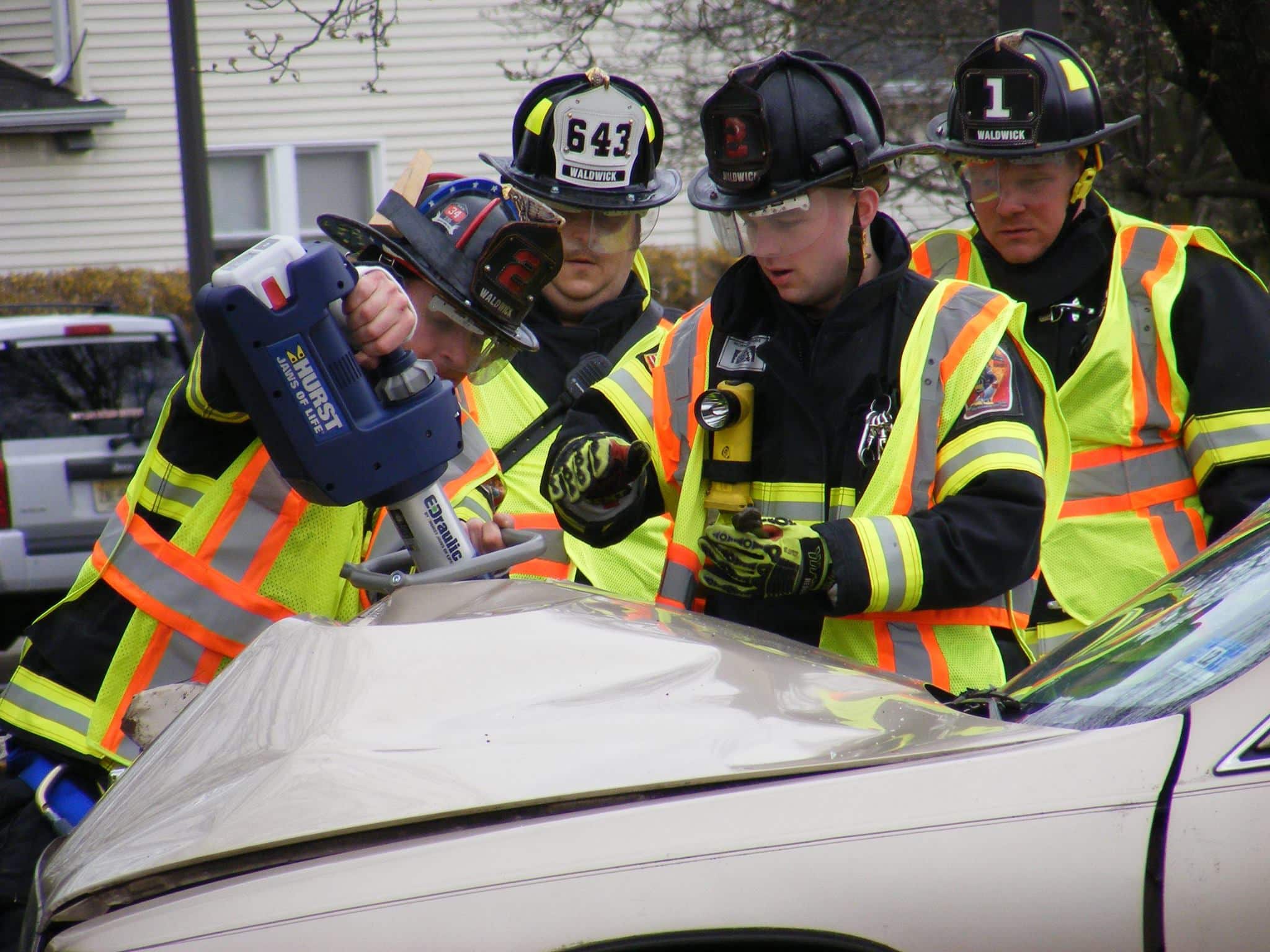
Glen Rock NJ, A rollover crash at the intersection of Jerome Avenue and Prospect Street in Glen Rock resulted in the destruction of a fire hydrant and two (2) utility poles on Thursday evening, 04/06. Glen Rock firefighters used the Jaws of Life to free the vehicle’s driver. The victim was transported by a Glen Rock EMS ambulance to Hackensack University Medical Center. A portion of Prospect Street near Jerome Avenue was closed for an extended period to facilitate repairs to utility services. The wrecked vehicle was removed from the scene by a flatbed tow truck. Glen Rock PD is investigating the incident.
By Jessica Mazzola | NJ Advance Media for NJ.com
on April 07, 2017 at 7:45 AM, updated April 07, 2017 at 7:47 AM
A New Jersey town has banned summertime commercial leaf blowing for good. (File photo)
MAPLEWOOD — The controversial leaf blower ban is back, and it’s here to stay.
The Maplewood town council this week unanimously passed an ordinance banning commercial landscapers’ use of the gas-powered blowers during the summer months – a move that cemented a pilot program enacted last year. The new rule, the town’s lawmakers said, is meant to decrease noise and environmental pollution in the community.
New Jersey has more places under the federal Superfund program, which prioritizes cleanups of dangerous contaminated sites, than any other state.
Many have histories more colorful than an oil slick: A massive chemical fire at a mob-controlled waste storage facility. Agent Orange in the Passaic River. Local wildlife turned green. And the only site ever to be put on the Superfund list twice.
While many of those sites have been cleaned up, they require longterm treatment and monitoring. With the EPA’s budget on the chopping block under President Donald Trump’s administration, advocates worry things will backslide for the Superfund, which has already been near-broke for decades.
“Just think about it: We’ve got over a hundred Superfund sites in this state. We’ve got 21 counties,” former Gov. Jim Florio, who wrote the Superfund law when he was in Congress in the early 1980s, said recently. “Nobody lives very far from these sites.”
BERGEN COUNTY
Garfield Groundwater Contamination
The former E.C. Electroplating company’s activity at this Garfield site spilled and leaked cancer-causing chromium into the ground, creating a plume of groundwater contamination at least a half a mile wide. One of New Jersey’s orphan sites, the EPA hasn’t identified a funding source for a cleanup, and says there’s “insufficient data” to measure the risk it poses to the surrounding community.
The city’s mayor appeared in front of a U.S. Senate hearing to plead for federal dollars for the site in 2014, but the cleanup still lacks funds.
Curcio Scrap Metal, Inc.
This active scrap metal yard in Saddle Brook saw a spill of oil containing PCBs in the 1980s and a major cleanup project in the 90s. Because of the nature of the work done there, it was also contaminated with heavy metals and volatile organic compounds, according to the EPA. Soil cleanup was completed long ago but groundwater cleanup is ongoing.
Fair Lawn Well Field
This site includes three municipal drinking water wells in the Bergen County borough. Volatile organic compounds were detected in the water in the late 1970s and traced to a nearby industrial park. Monitoring is ongoing, but the EPA says it has “insufficient data” to determine the site’s threat to human health.
(EPA)
Maywood Chemical Co.
The Maywood Chemical Works processed radioactive thorium ore from 1916 to 1955. The work generated chemical and radioactive waste.
The site is being cleaned up by the U.S. Army Corps of Engineers and the company deemed responsible for the contamination. Cleanup of radioactive soil is “underway” and the rest of the plan is “in development,” according to EPA.
Quanta Resources Corporation
This site saw nearly a century of coal tar, paving and roofing material production along what was once an industrial wasteland along the Hudson River. Now surrounded by booming waterfront development, the EPA is overseeing cleanup of PCBs and other contaminants, but says it has “insufficient data” to determine the site’s threat to human health.
Berry’s Creek Study Area
A small chunk of the Meadowlands in Bergen County is home to three distinct Superfund sites along Berry’s Creek, a six-mile tributary of the Hackensack River. The area includes the Scientific Chemical site in Carlstadt, Universal Oil Products site in East Rutherford and the Ventron/Velsicol site, which spans Wood-Ridge and Carlstadt.
All three sites are laden with PCBs and Berry’s Creek is considered among the most mercury-laden locations in the country. Only the Scientific Chemical site is listed as “under control.”
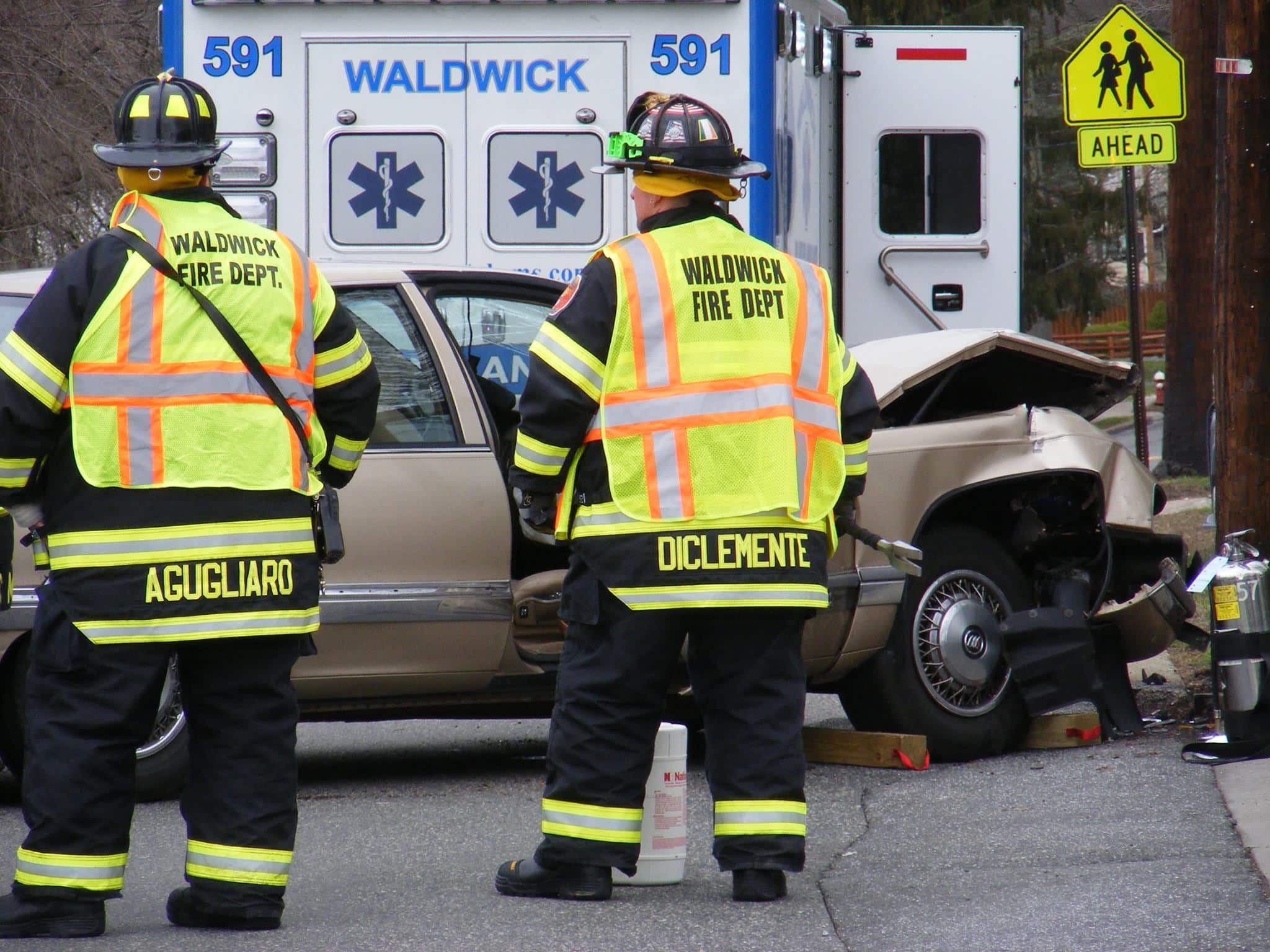
Waldwick NJ, The adult male driver of a 4-door Buick sedan required ambulance transportation to a local hospital following a crash in which her vehicle struck a utility pole near the intersection of Crescent and Wyckoff Avenues in Waldwick on Wednesday morning, 04/05. Waldwick PD, FD, and EMS responded to the incident.
Paramus NJ, An empty shipping container being transported by a tractor trailer on Route 17 southbound in Paramus, broke loose from its tie down devices, hit a overpass at Midland Avenue, and fell to the roadway striking an SUV in the process. No one was injured in the incident, which occurred early Wednesday afternoon, 04/05, but traffic on Route 17 southbound through Paramus was negatively impacted for several hours while the roadway was cleared of the container and the overpass was inspected. Paramus PD and NJDOT managed the incident scene. Two (2) heavy duty wreckers and a flat bed trailer were needed to remove and transport the damaged container from the scene.
Trenton NJ, GOP Assemblyman Ron Dancer introduced legislation to combat vandalism in cemeteries. People accused of intentionally damaging gravesites can be charged with bias intimidation under Dancer’s bill (A4778).
“Recent cemetery attacks in the national news have all had an element of bias intimidation, targeting and desecrated Jewish cemeteries,” said Dancer, noting that in February approximately 100 monuments or markers were destroyed or damaged at a Philadelphia graveyard. “These are not incidents of vandalism. These are hate crimes, and an attack on the Jewish people in our country.”
Defacing or damaging graves is a fourth degree offense. If bias intimidation is found, the charge is elevated to third degree, punishable by five years in prison and a $15,000 fine.
“This reprehensible behavior cannot be accepted,” said Dancer. “Intolerance, bigotry and hatred are diseases that spread like viruses. It’s crucial to fight every form of racial and religious bias.”